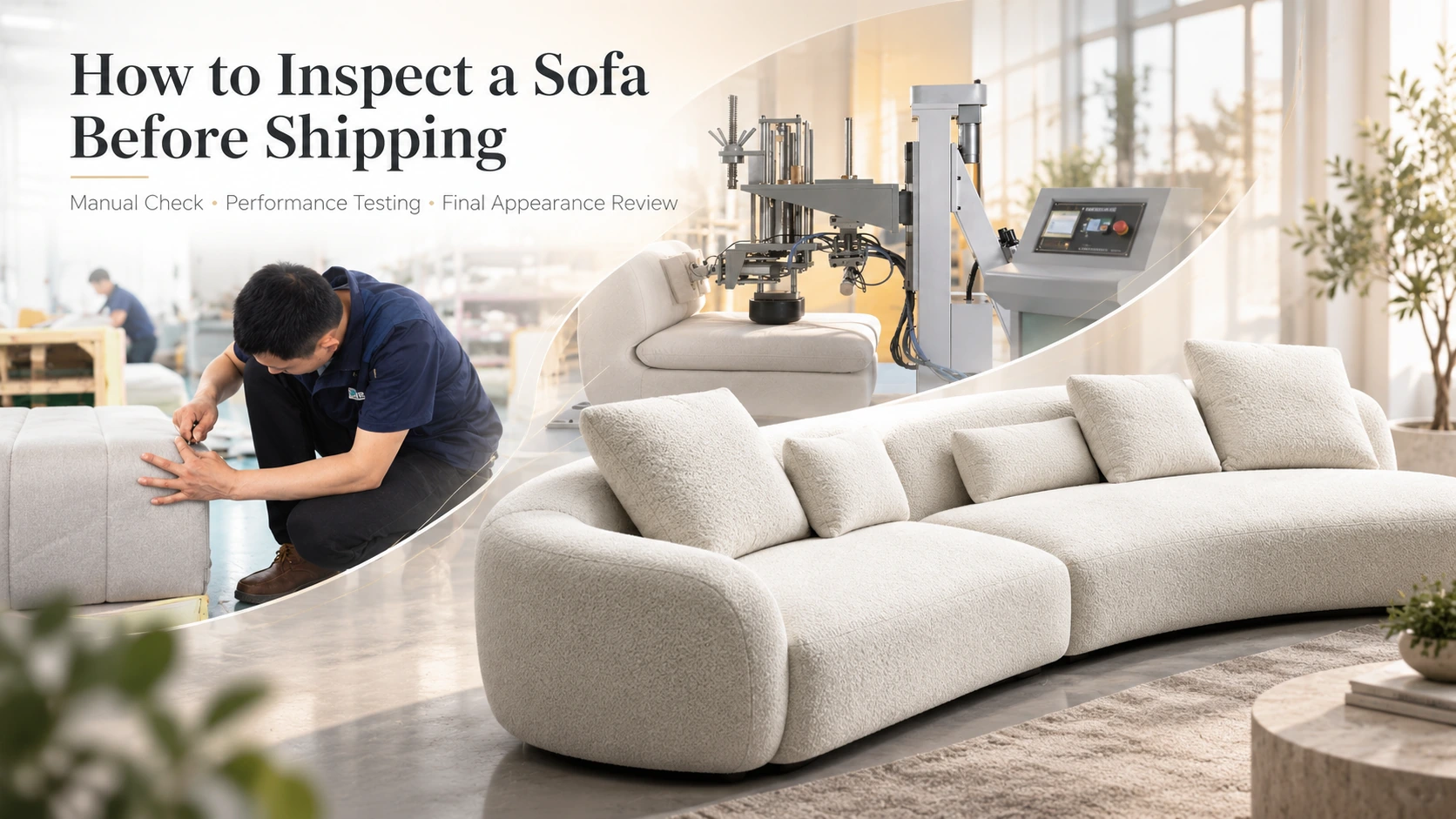
How to Inspect a Sofa Before Shipping
A sofa should be inspected as a complete system before it leaves the factory—not only as a finished upholstered object. A reliable pre-shipment check moves from structure to support, cushions, upholstery, hardware, comfort and final appearance, then confirms that the approved product is protected correctly for transport.
· Published
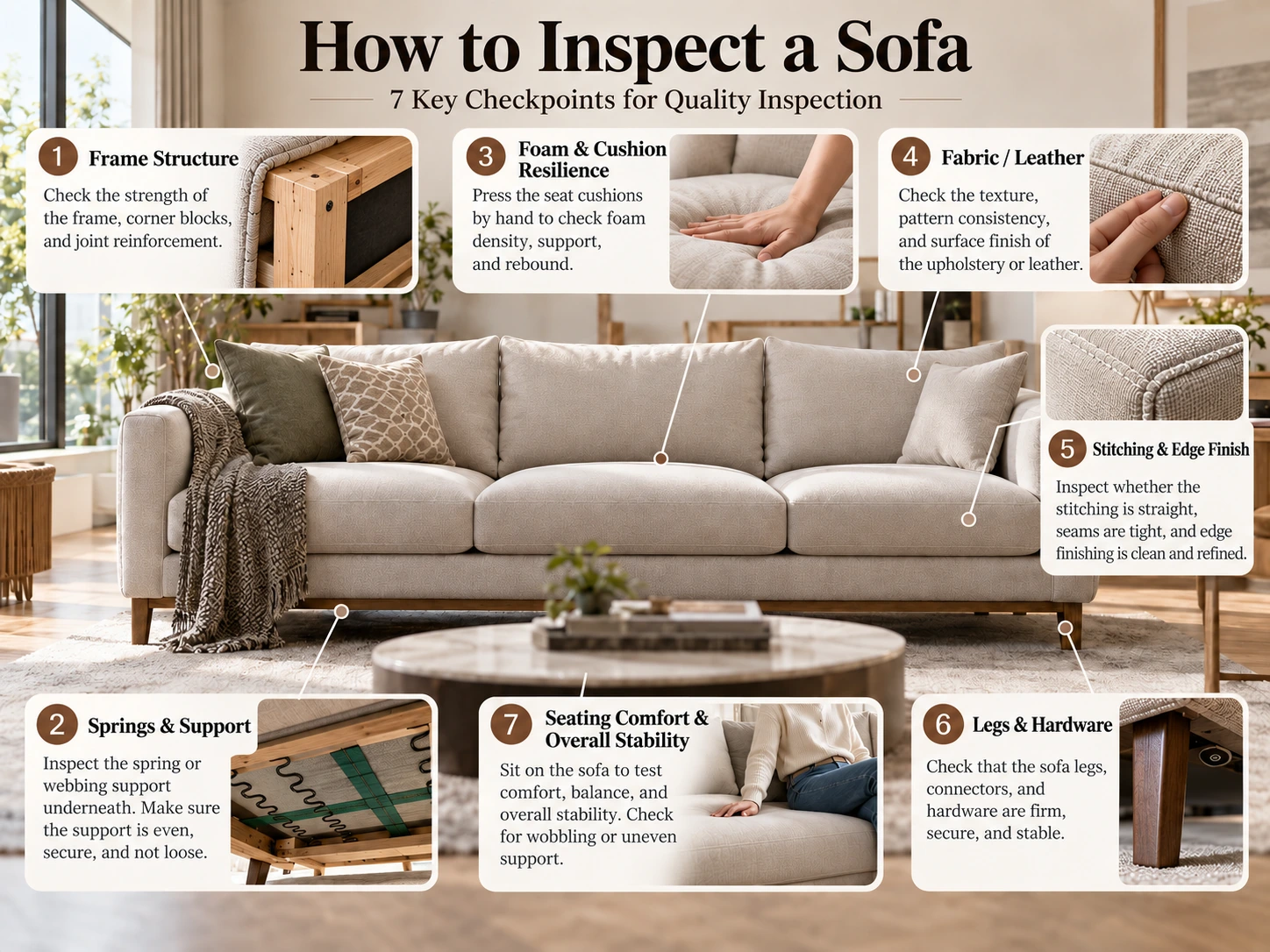
Use the visual checklist above as the first pass, then verify each point against the approved drawing, material sample and order specification. The goal is not simply to find visible defects. It is to confirm that the sofa was built to the agreed construction, feels consistent across every seat, operates correctly, and will reach the customer in the same condition in which it passed factory inspection.
This guide focuses on what buyers, designers and project teams can verify at the factory before shipment. For deeper construction context, see Ratahome’s sofa construction guide, springs vs. webbing guide and furniture joinery guide.
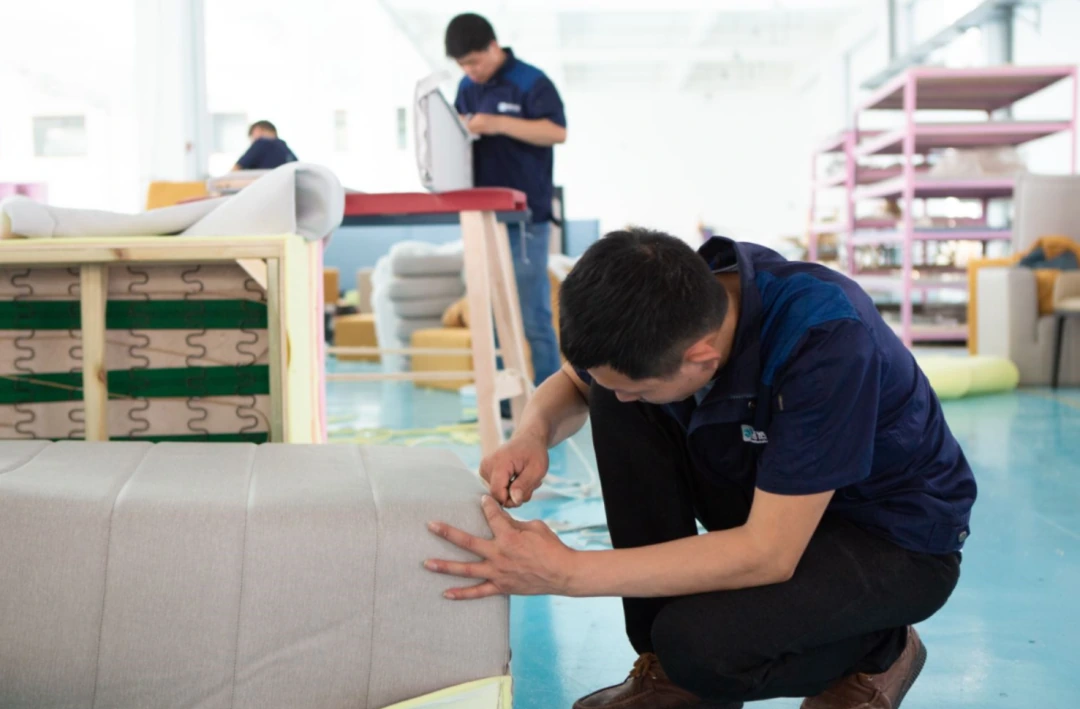
1. Start with the approved specification
Before touching the sofa, confirm the purchase order, approved drawing, model, quantity, dimensions, upholstery code, color, leg finish, cushion specification, module orientation and any project-specific details. This prevents a common QC error: inspecting workmanship carefully while missing that the factory produced the wrong configuration.
What should be on the inspection table?
- Approved drawing and overall dimensions
- Fabric or leather swatch and color reference
- Leg, hardware and finish sample
- Cushion construction and density specification
- Module plan, connector location and orientation
- Approved packing method and carton marks
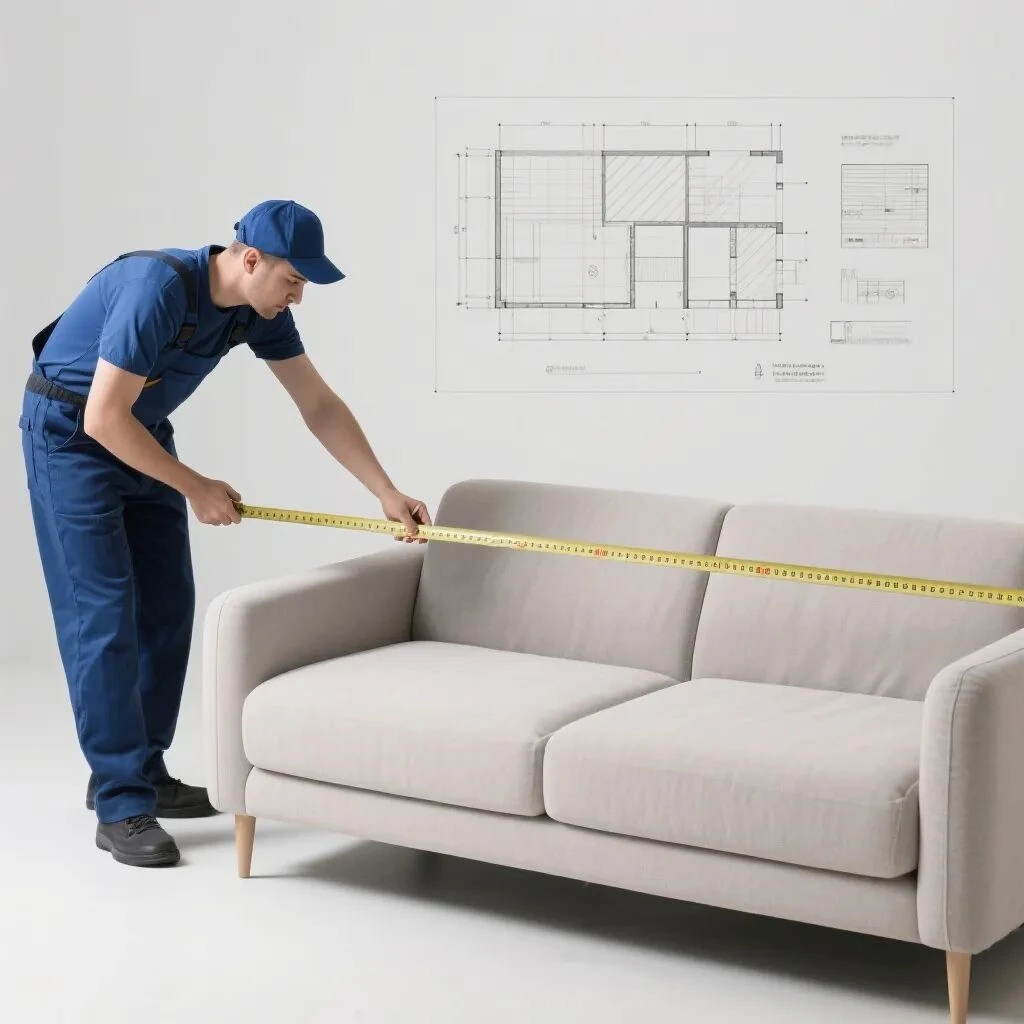

2. Check dimensions, symmetry and level
Measure overall width, depth and height first. Then check seat height, seat depth, arm height, back height, leg clearance and module-to-module alignment where relevant. Symmetrical designs should be checked from a centered front view because small height or line differences become obvious after installation.
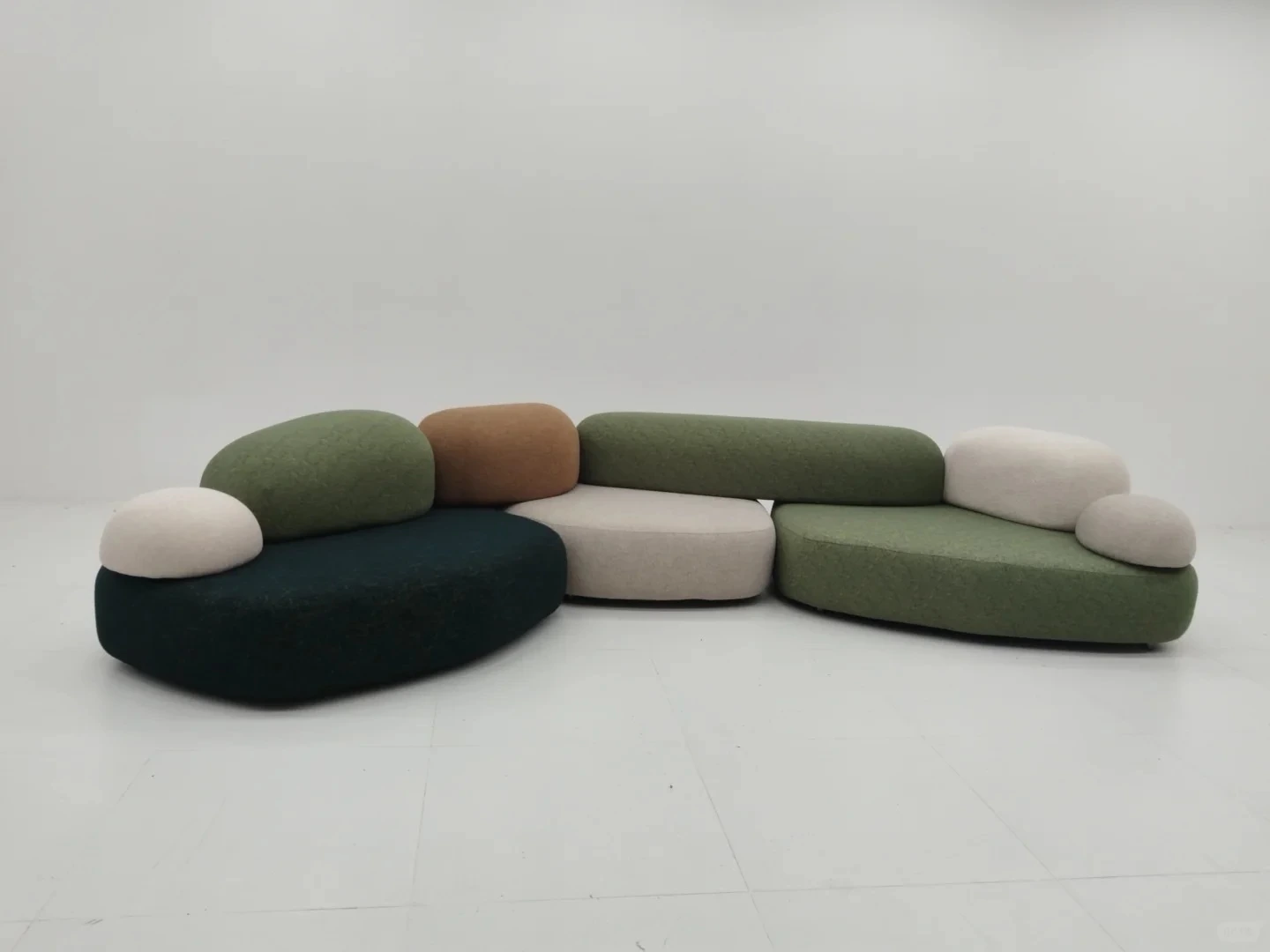
For modular sofas, confirm the relationship between individual units as well as the total assembled size. Uneven floor conditions can distort a visual check, so use a level surface and verify feet or glides before deciding that the frame itself is out of square.
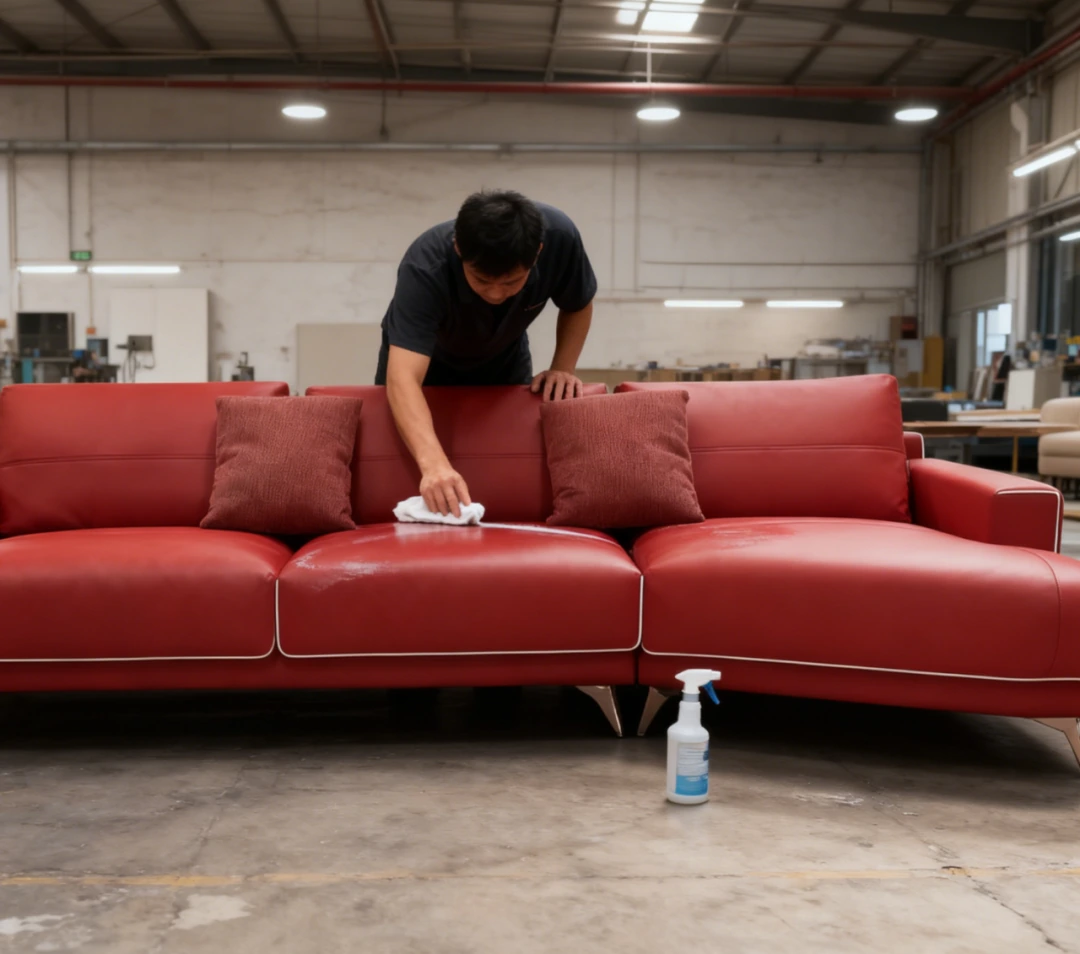
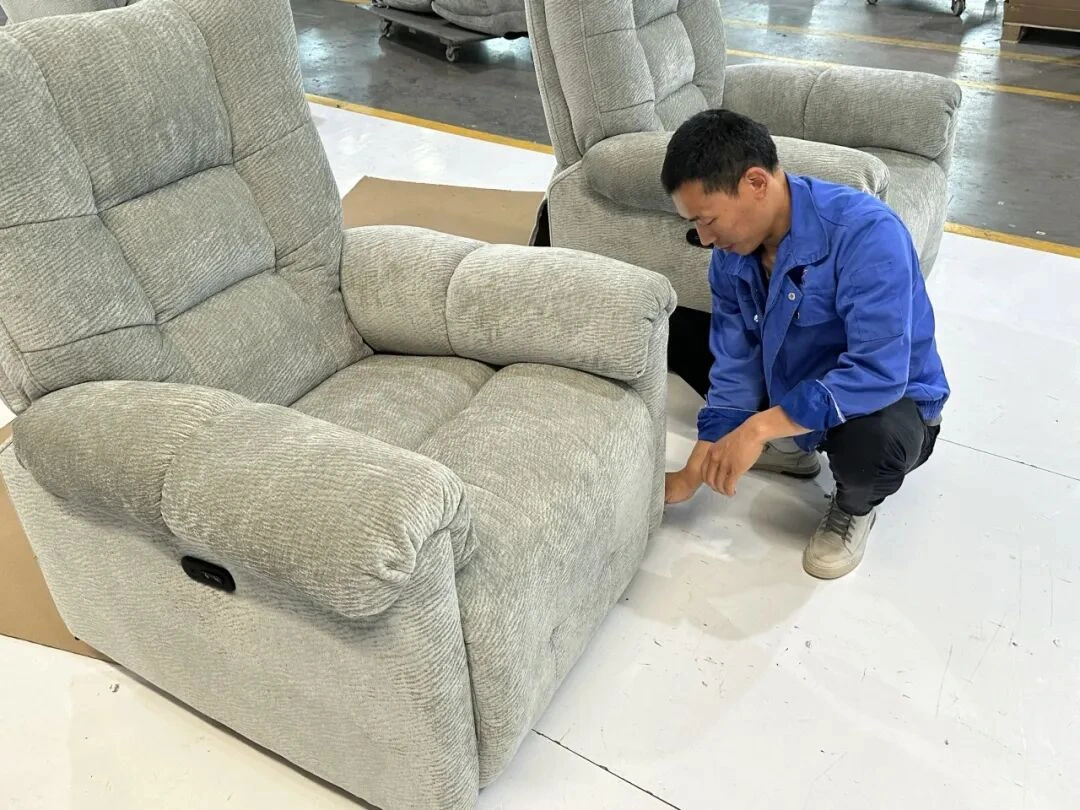
3. Inspect the frame, springs and webbing
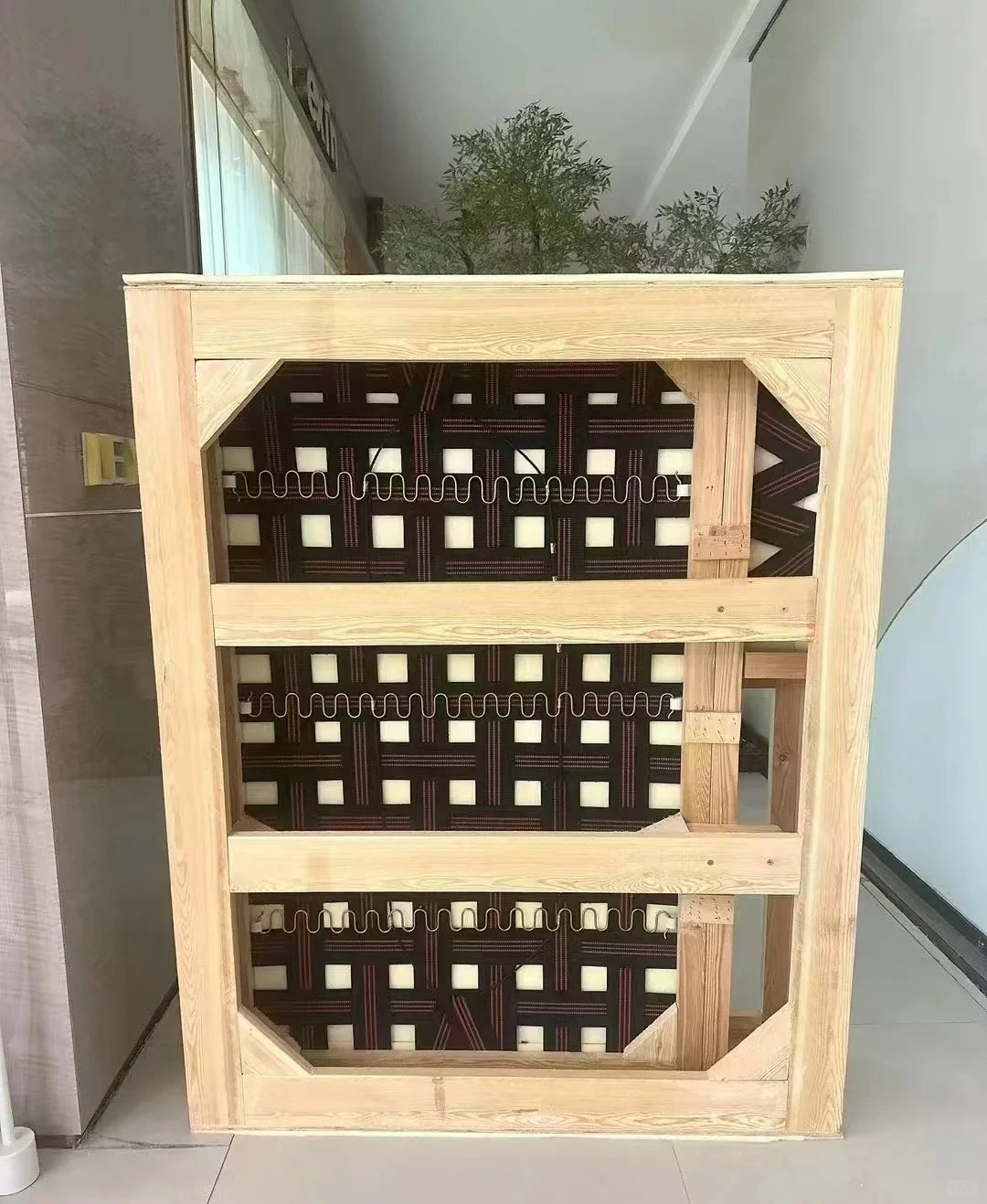
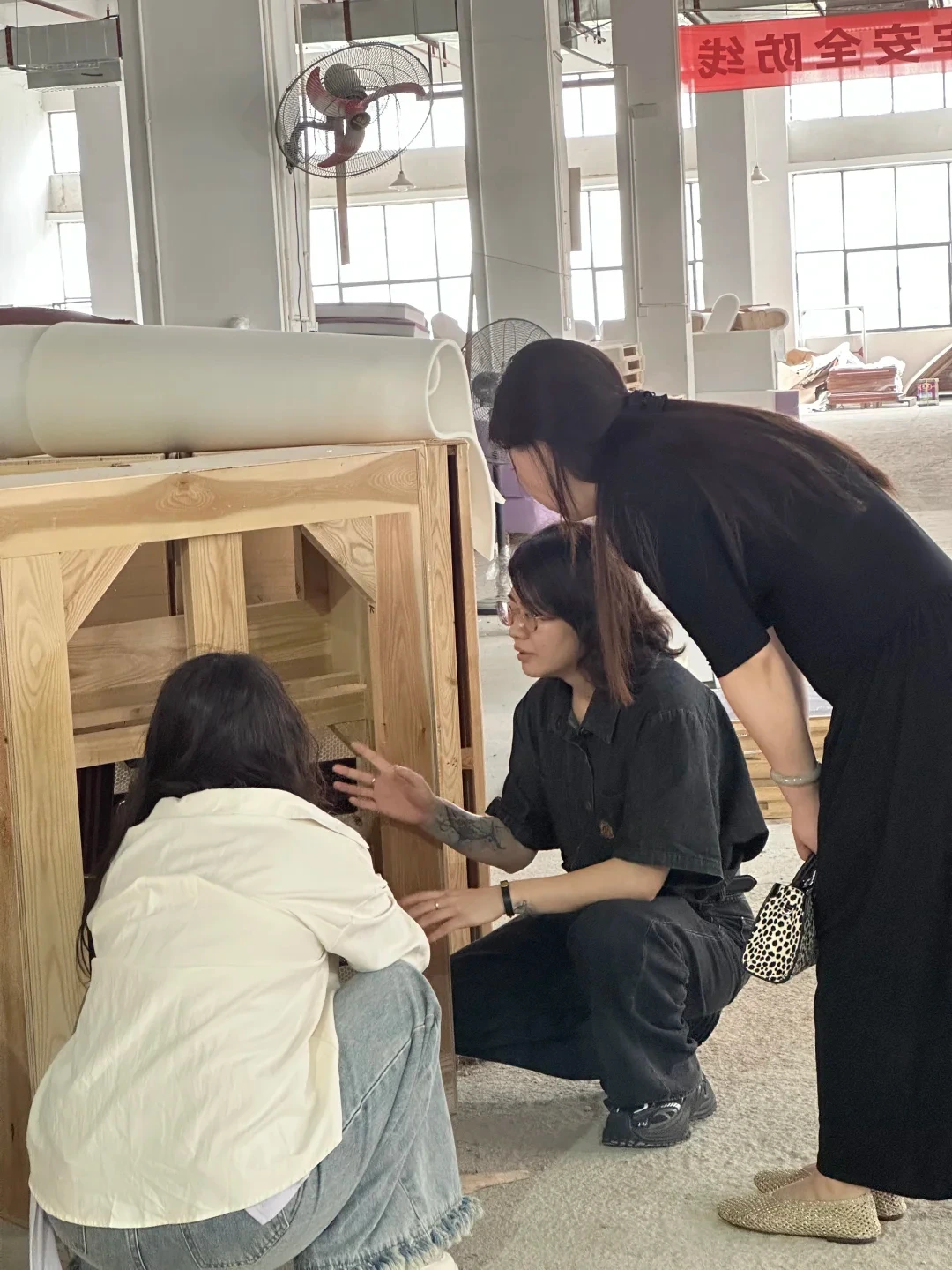
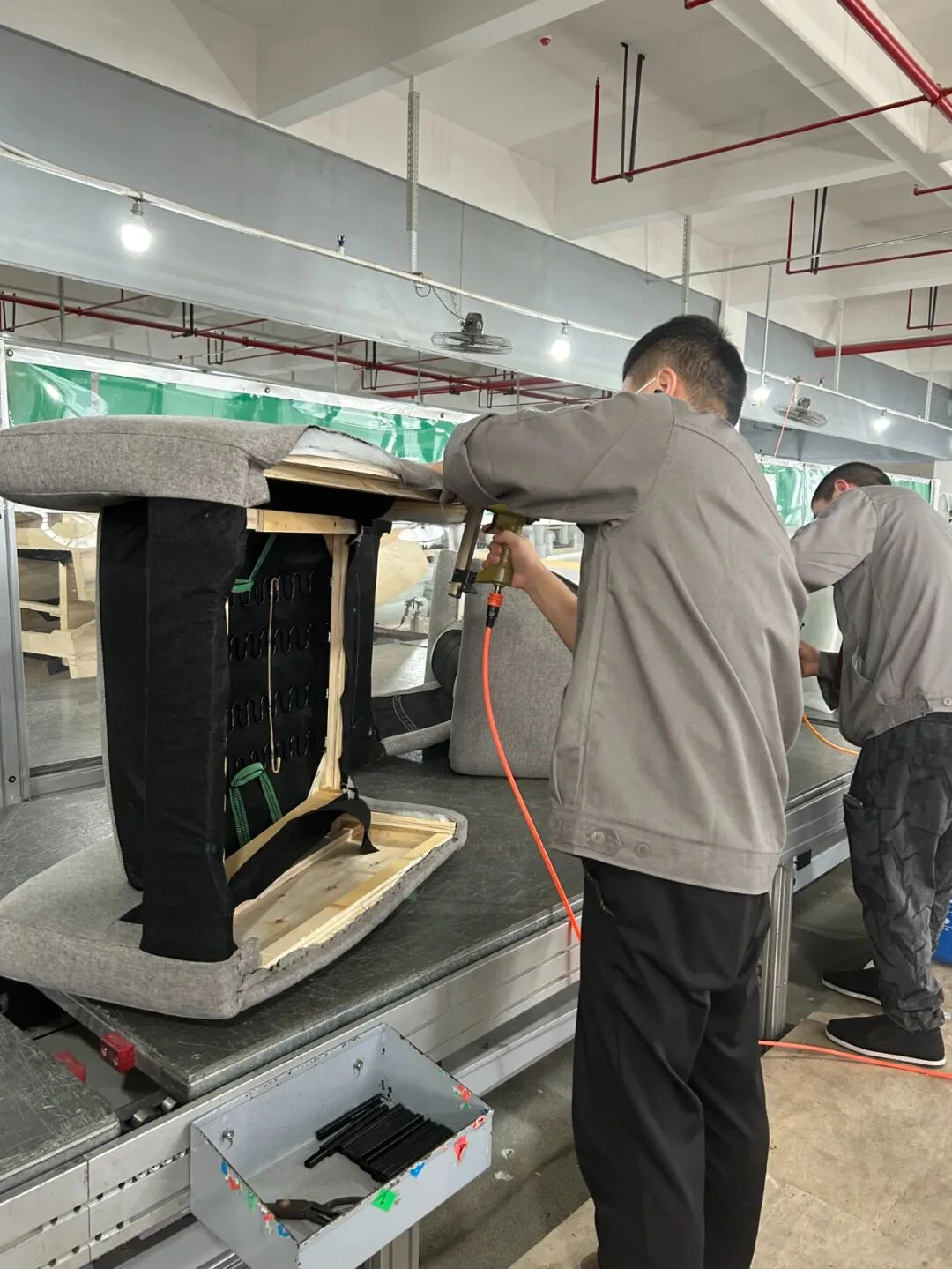
A sofa can look perfect while hiding structural weaknesses. Lift or tilt the piece where practical and inspect accessible frame members, corner blocks, fasteners, spring clips, webbing attachment and support rails. Press and rock the frame gently from different points; abnormal movement, squeaks or twisting can indicate loose connections or uneven support.
The support system should also match the approved construction. Springs should be evenly spaced and securely fixed. Webbing should be evenly tensioned without obvious slack or inconsistent spacing. If you are comparing support systems, review Ratahome’s sofa construction guide for the relationship between frame, support deck and cushions.
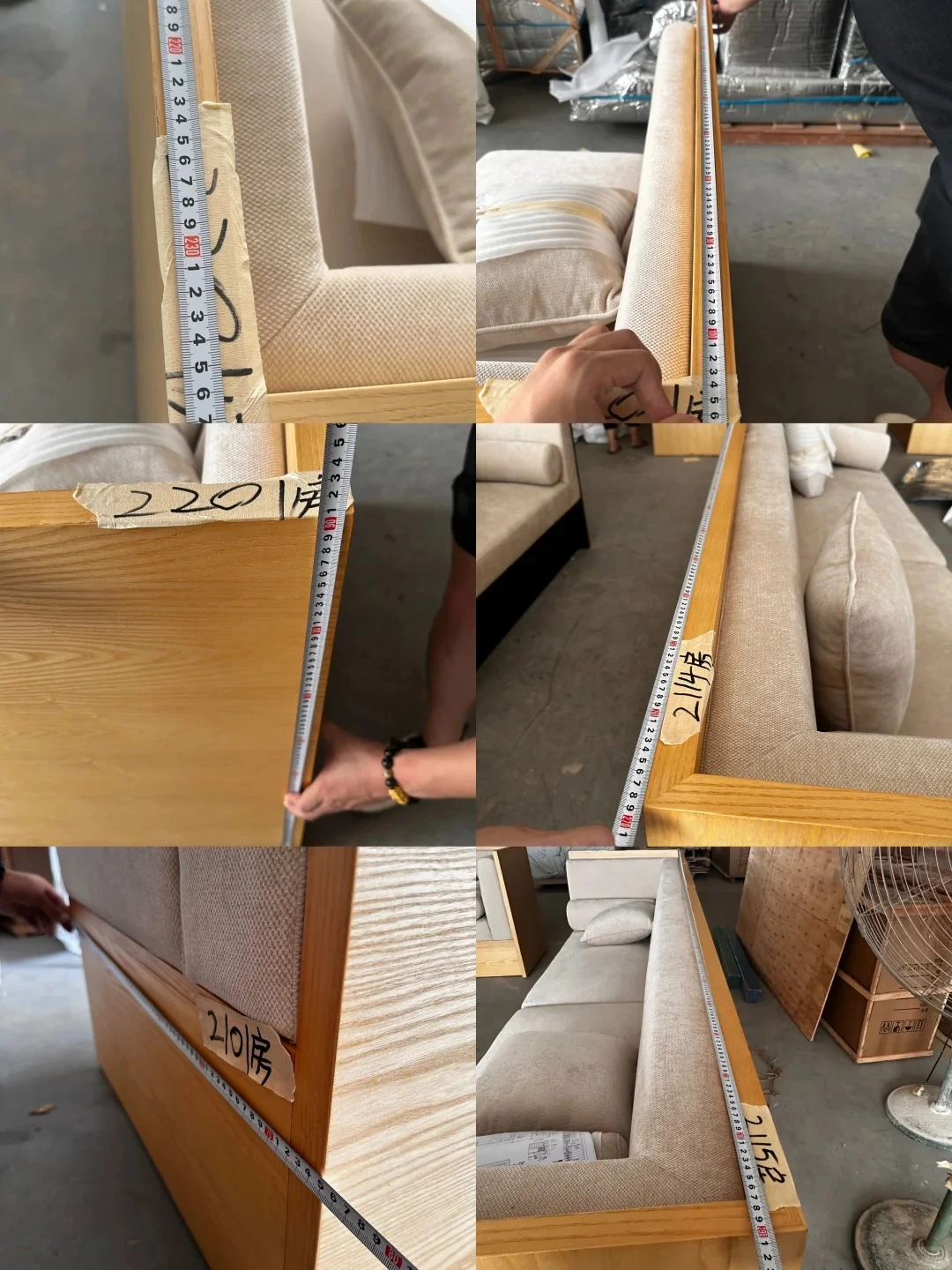
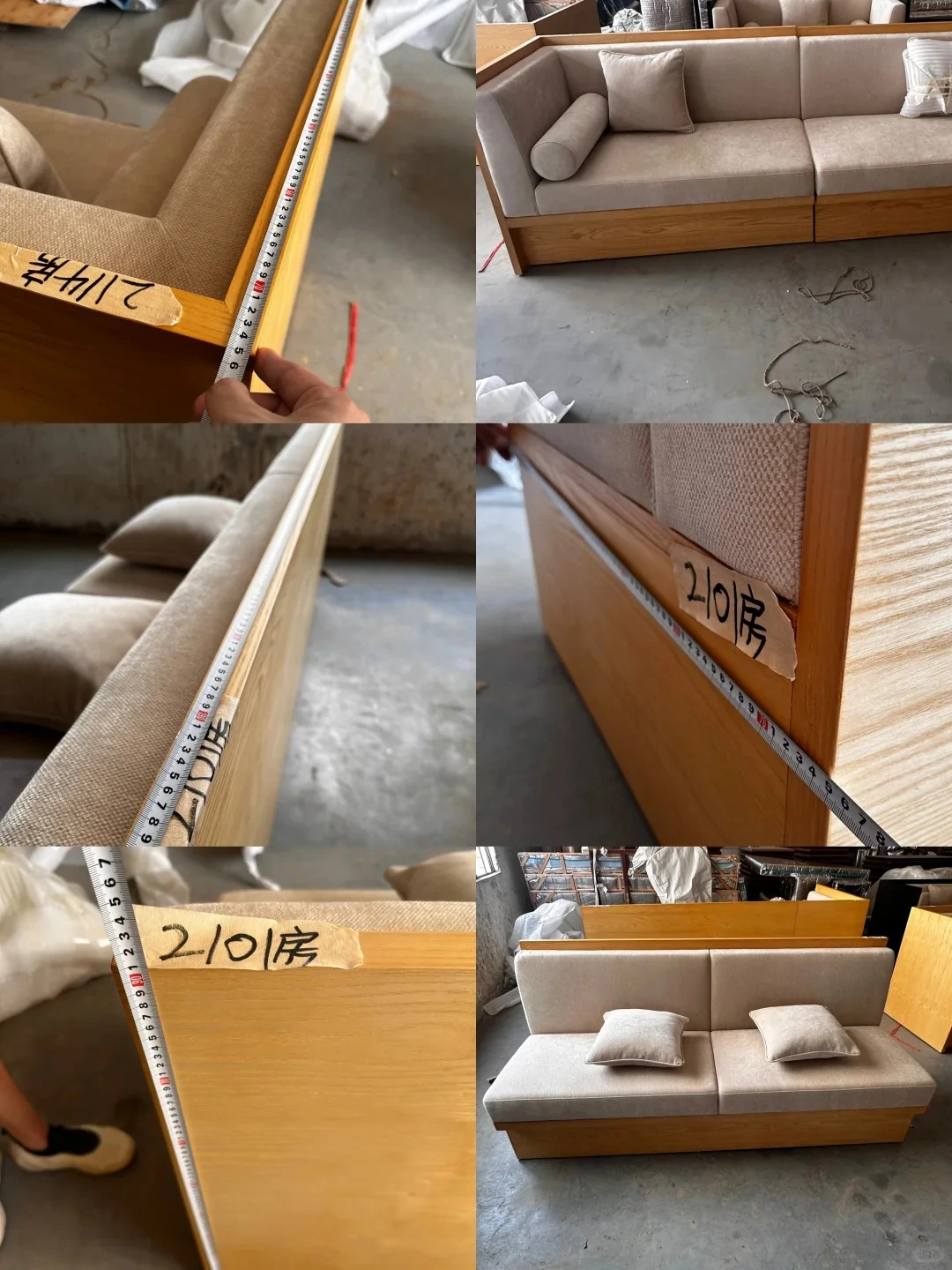
4. Inspect upholstery, seams and surface quality
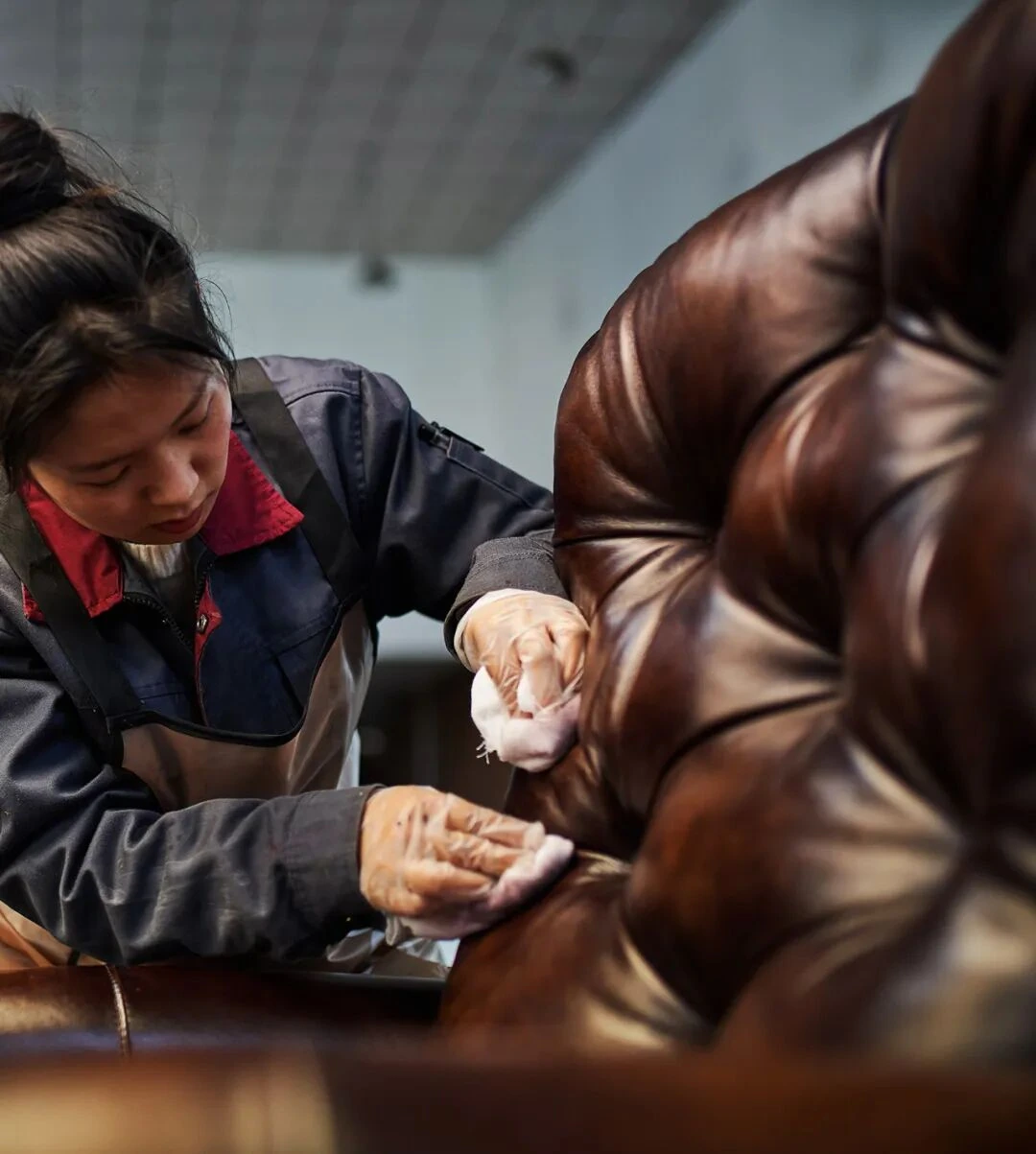
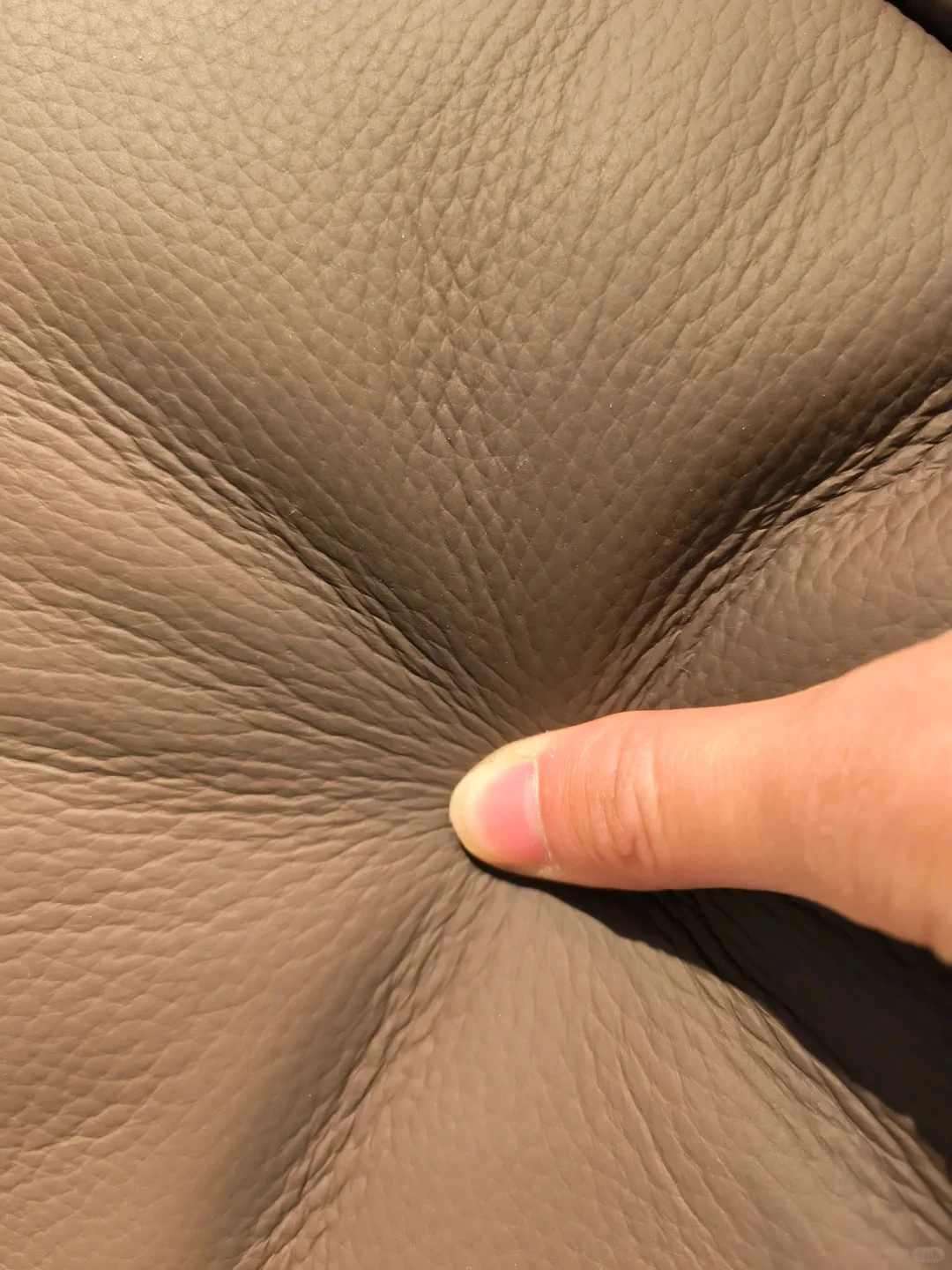
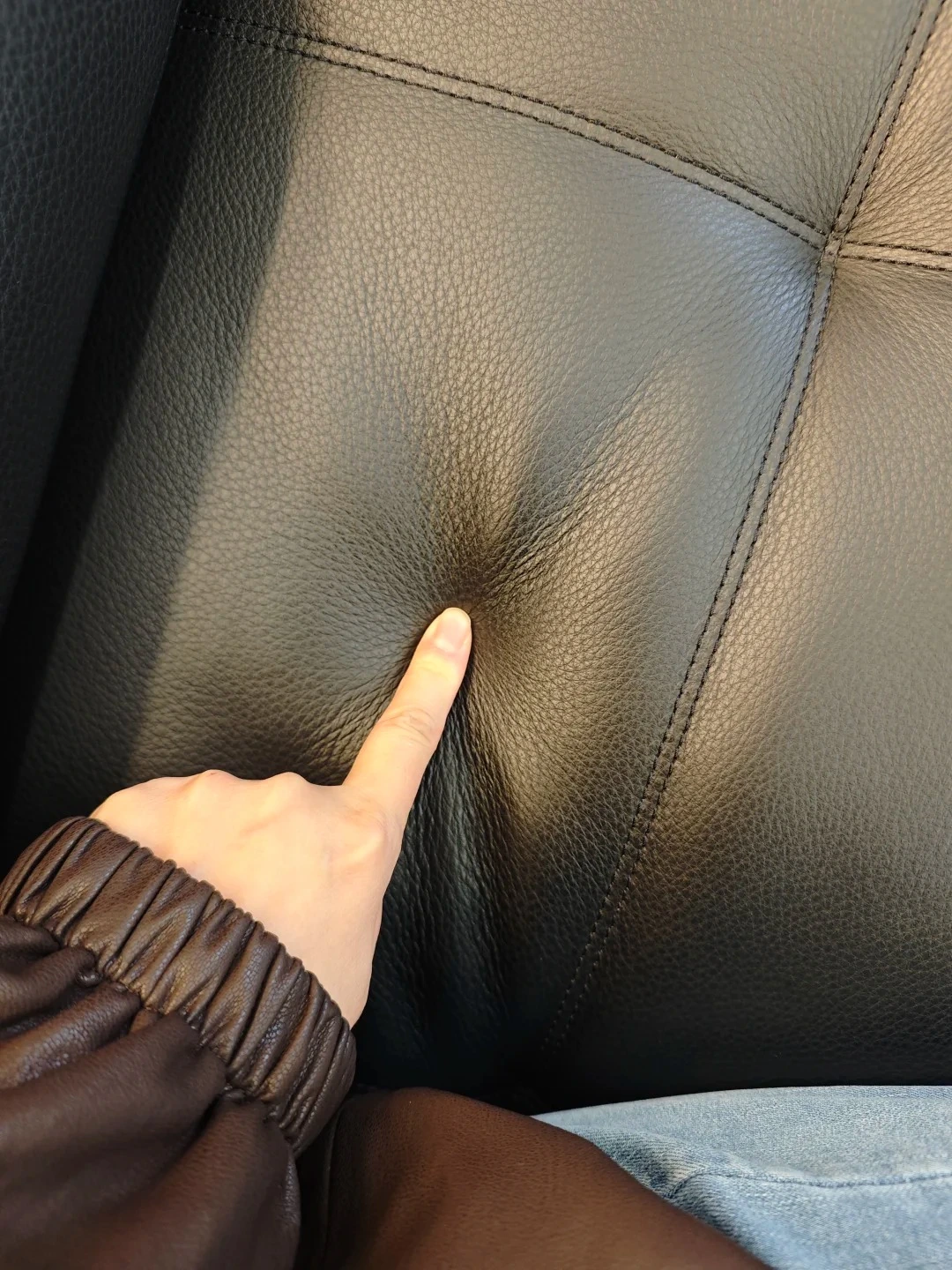
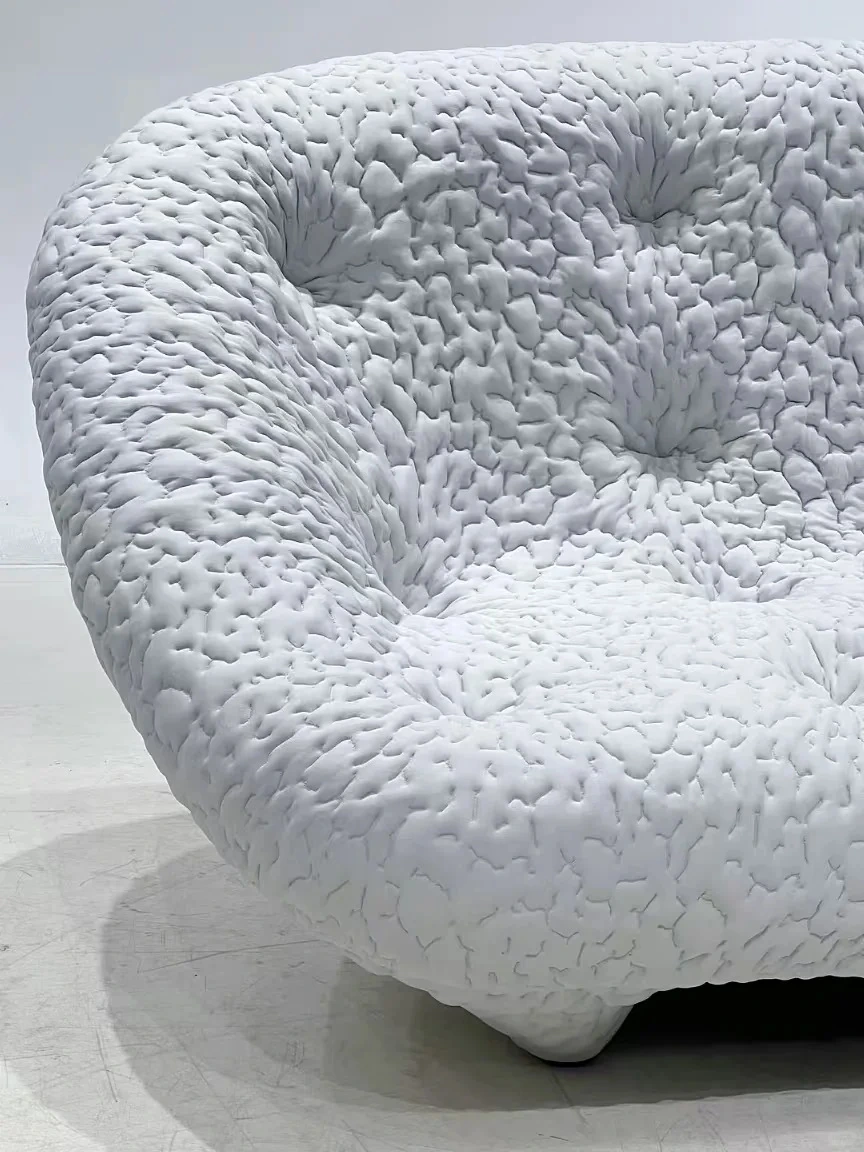
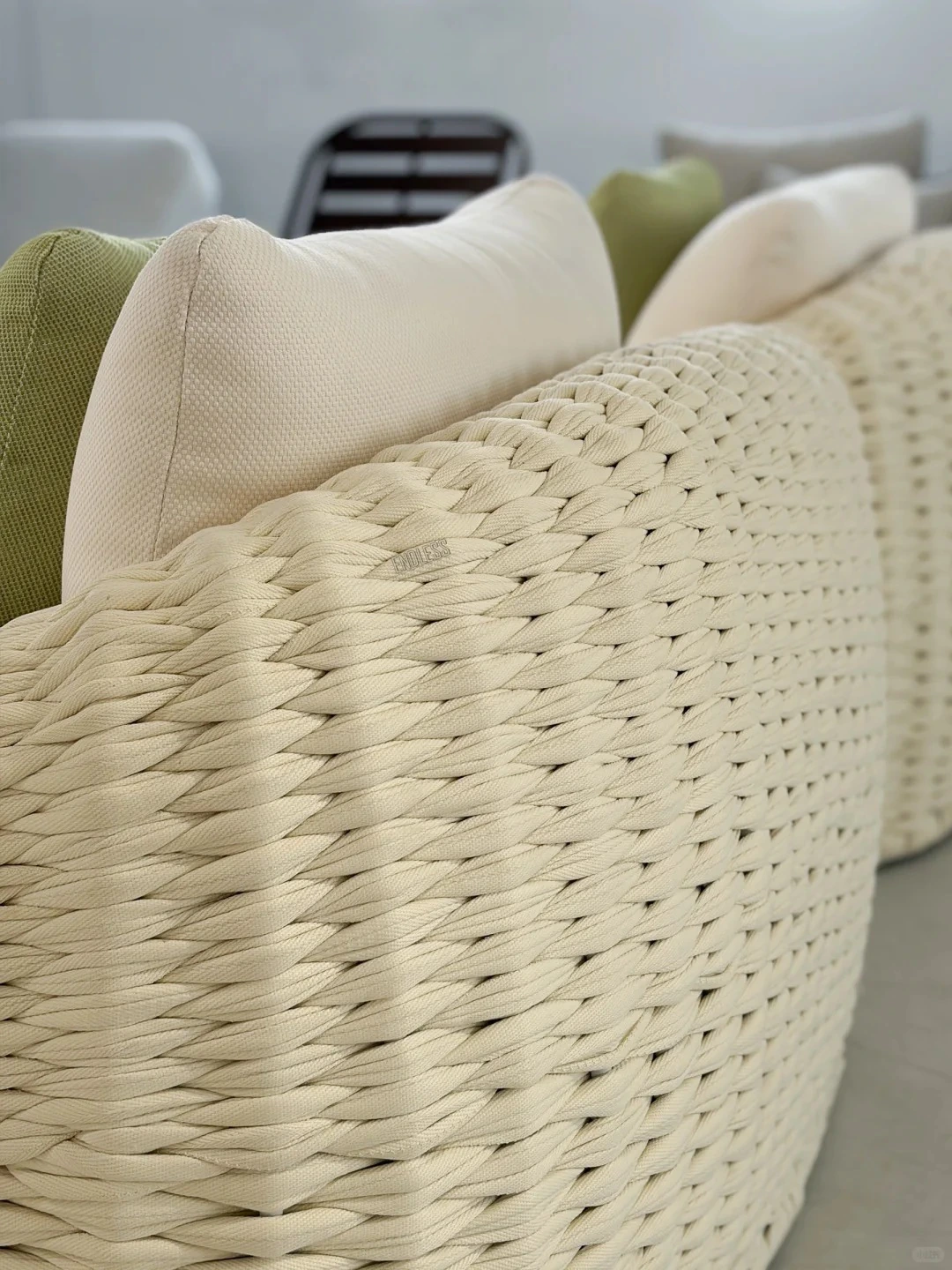
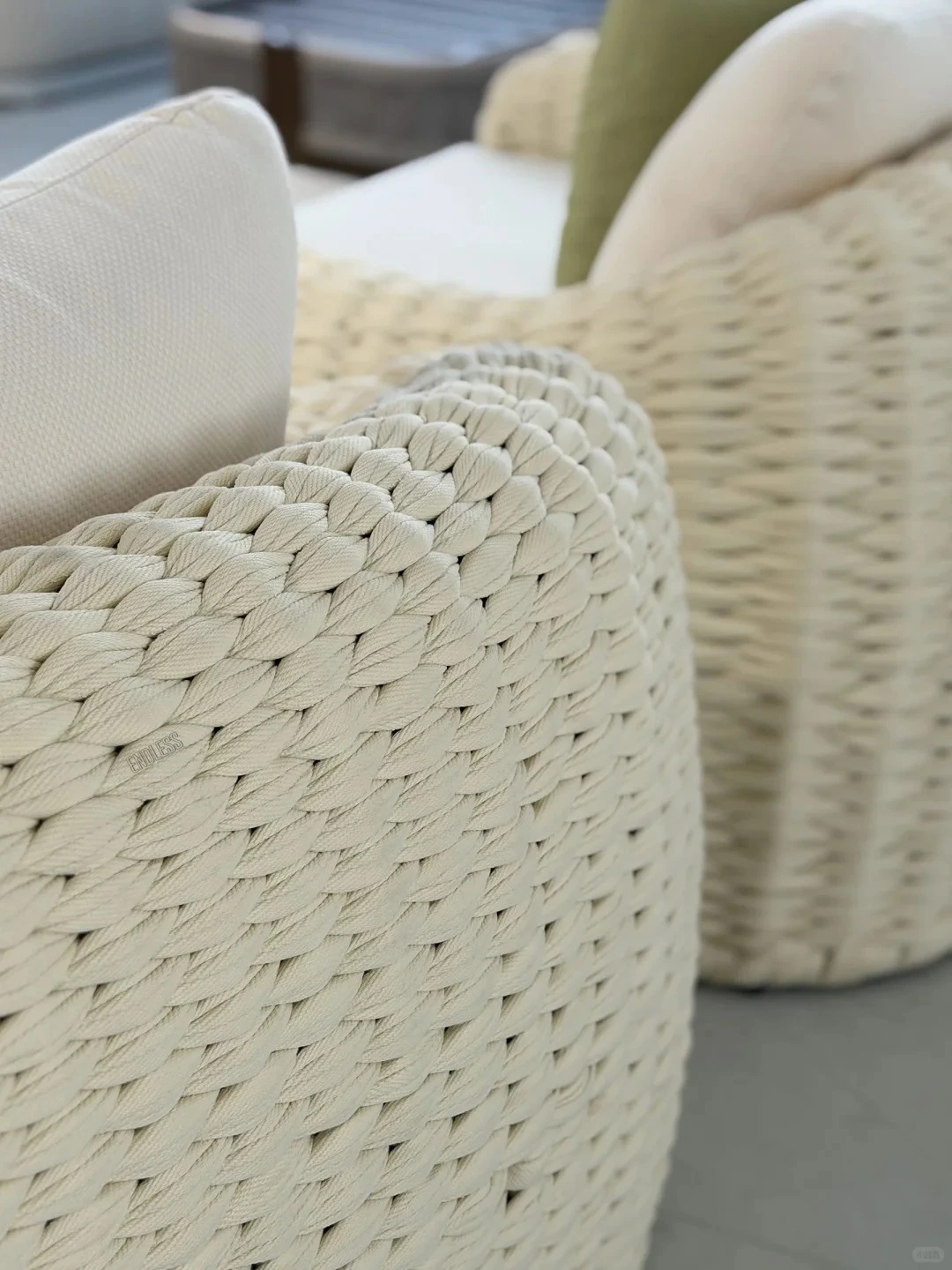
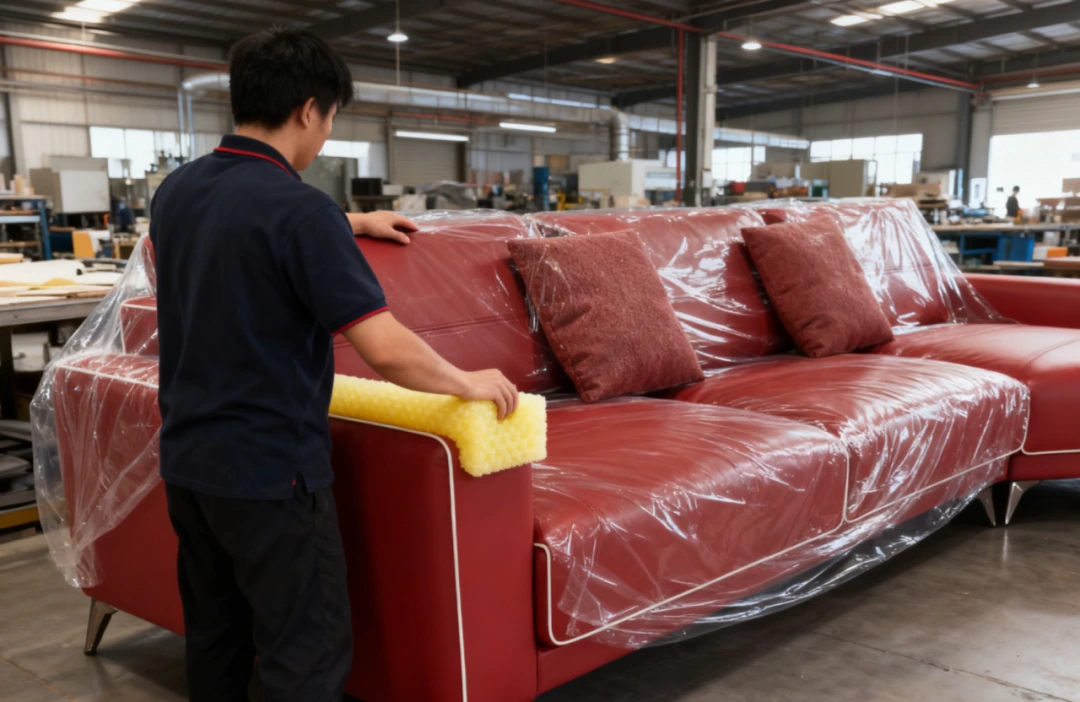
Review the sofa under even, neutral lighting. Check fabric or leather for stains, scratches, pulls, color variation, uneven nap direction, pressure marks and visible adhesive. Then inspect stitching: seams should follow intended lines, piping should be smooth, and repeated panels should align consistently from seat to seat.
On leather, compare grain and panel tone with the approved standard while allowing for the natural variation expected in genuine hides. On textured fabrics, inspect both close-up and from normal viewing distance because pile direction can change how color appears.
5. Test cushions, rebound and comfort consistency
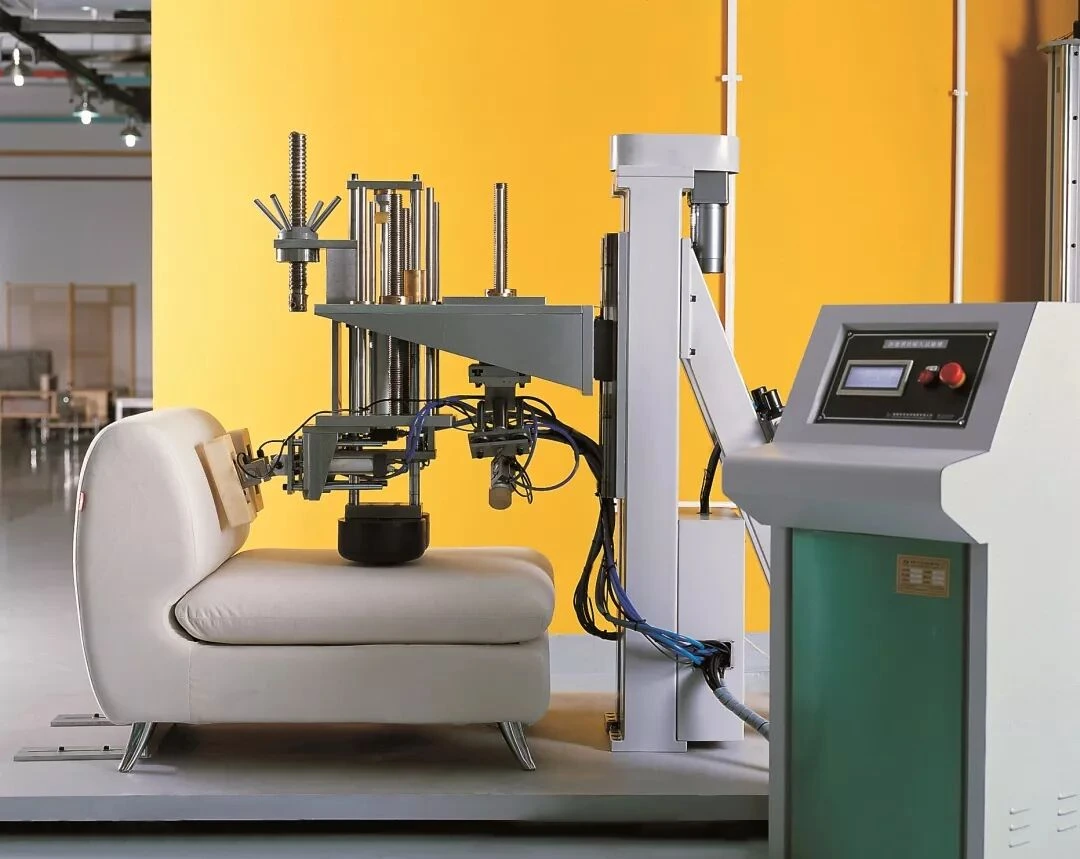
Sit on every seat position where practical and compare resistance, rebound and support. Press seat and back cushions in several areas and watch how quickly they recover. Adjacent cushions should feel intentionally consistent unless the specification calls for different densities or constructions.
Look for excessive wrinkling, uneven crown height, collapsed corners or visible asymmetry after the cushion has recovered. For more detail on how foam density and cushion layering affect feel, see Ratahome’s construction and craftsmanship guide.
6. Check legs, hardware, connectors and moving parts
Verify that legs are the correct style, finish and height, and that every mounting point is secure. Check modular connectors, brackets, zippers, hinges, recliner components, sleeper mechanisms and electrical features if applicable. Hardware should operate smoothly without scraping upholstery or forcing the frame out of alignment.
7. Perform practical functional testing
A sofa should be tested as the customer will use it. Sit, stand, lean against the back, load the arms moderately, connect and separate modules if designed to do so, and operate any recliner, sleeper or movable component. Listen for clicking, rubbing or squeaking that may indicate loose hardware or contact between parts.
Functional testing is especially important on large modular products because an issue may only appear when multiple pieces are connected.
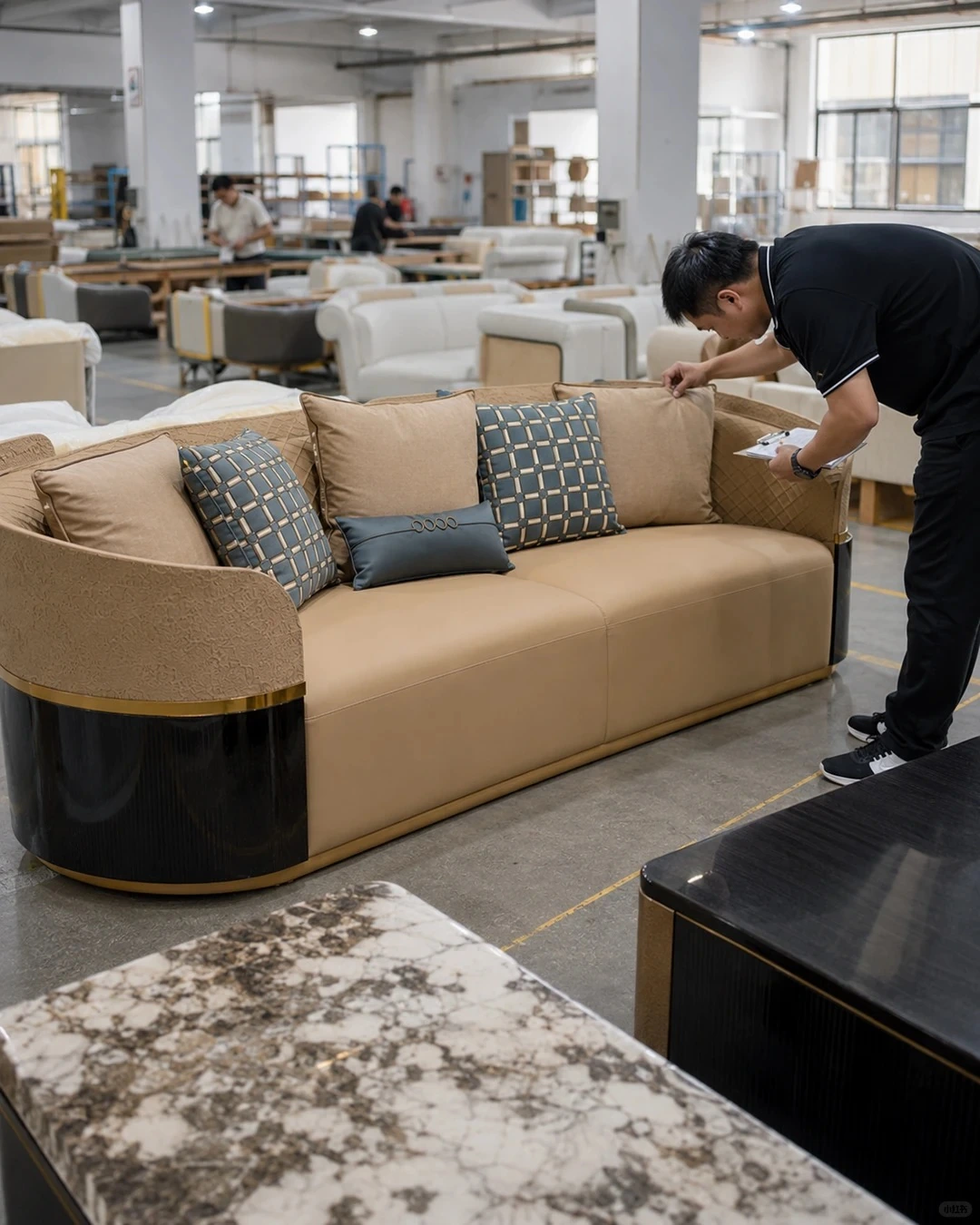
8. Approve final appearance under normal viewing conditions
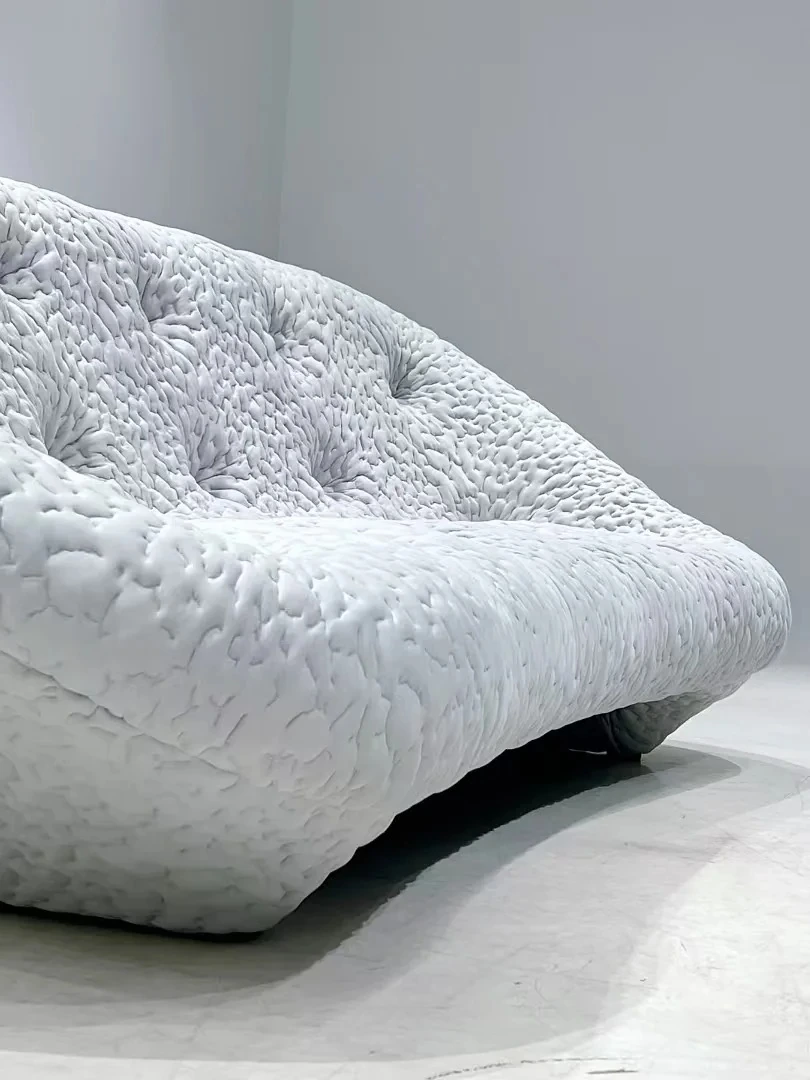
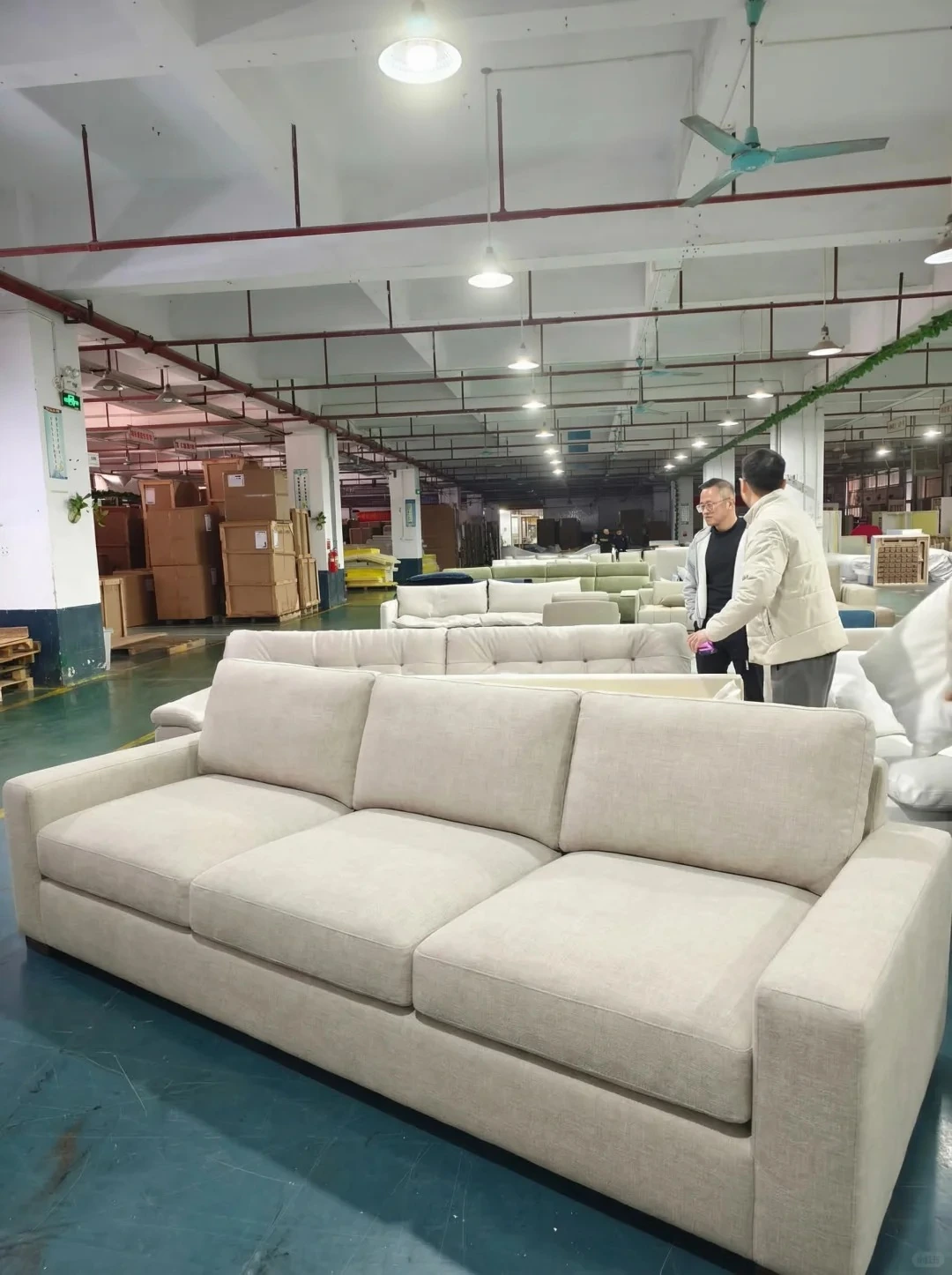
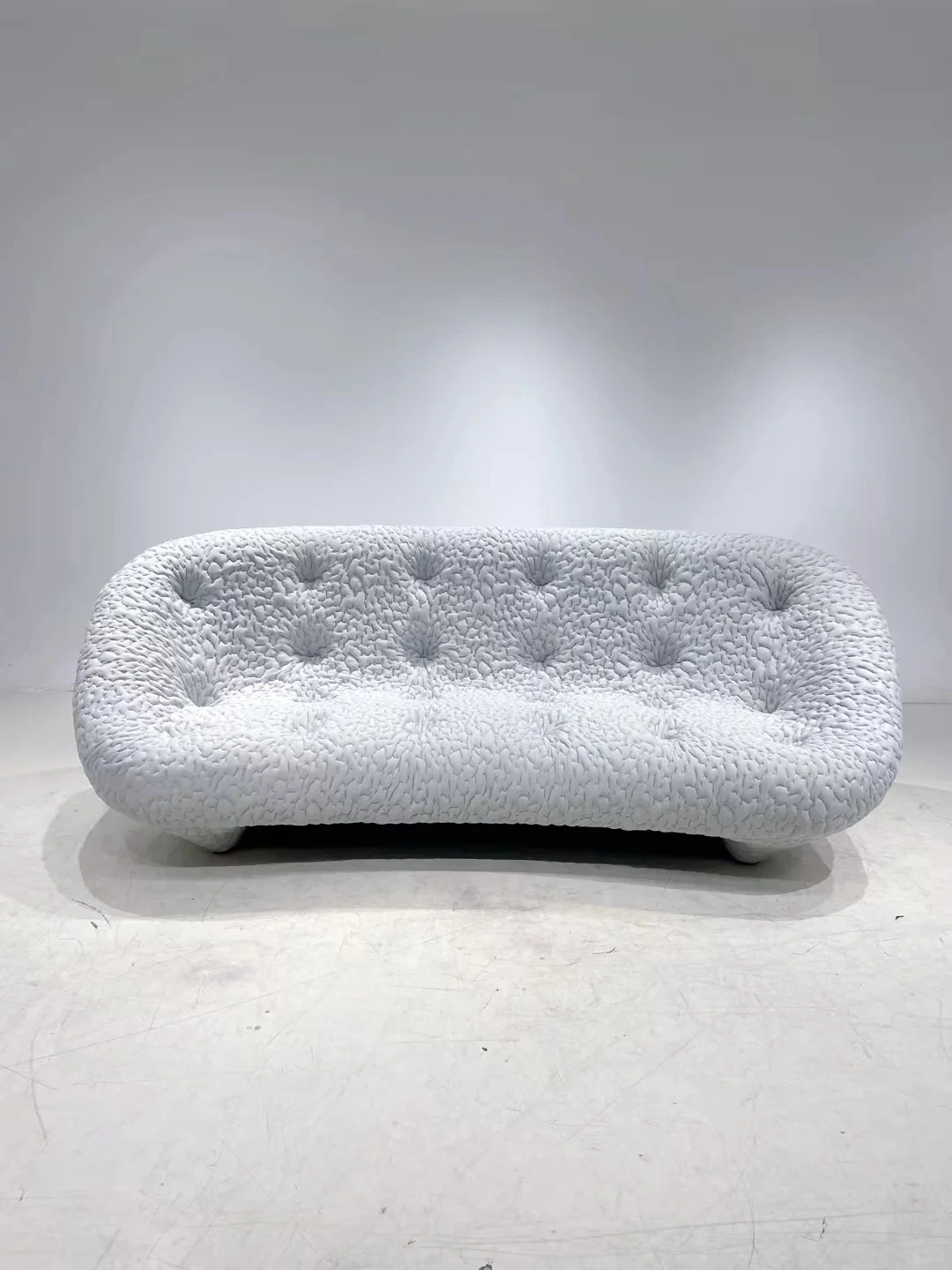
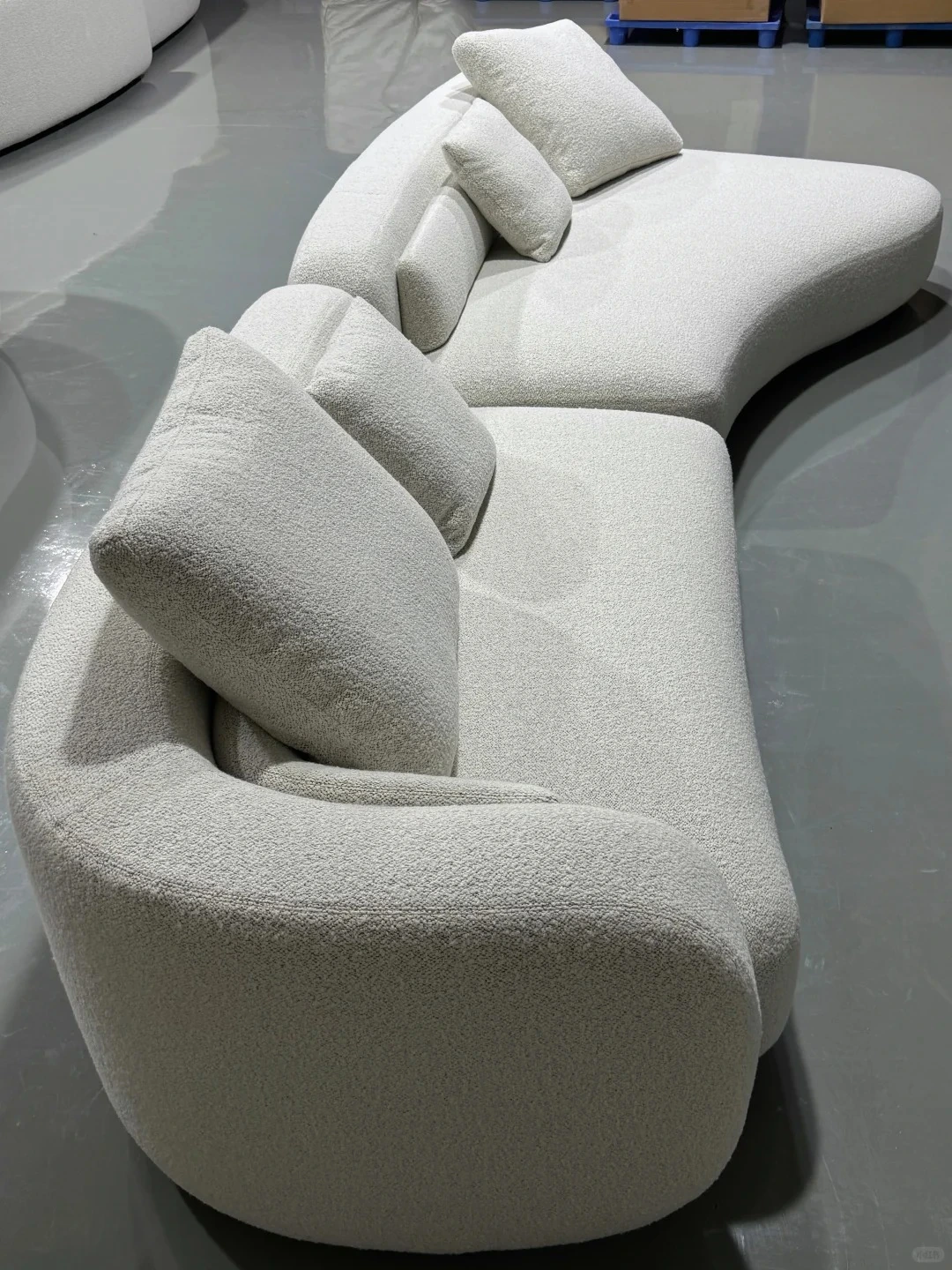
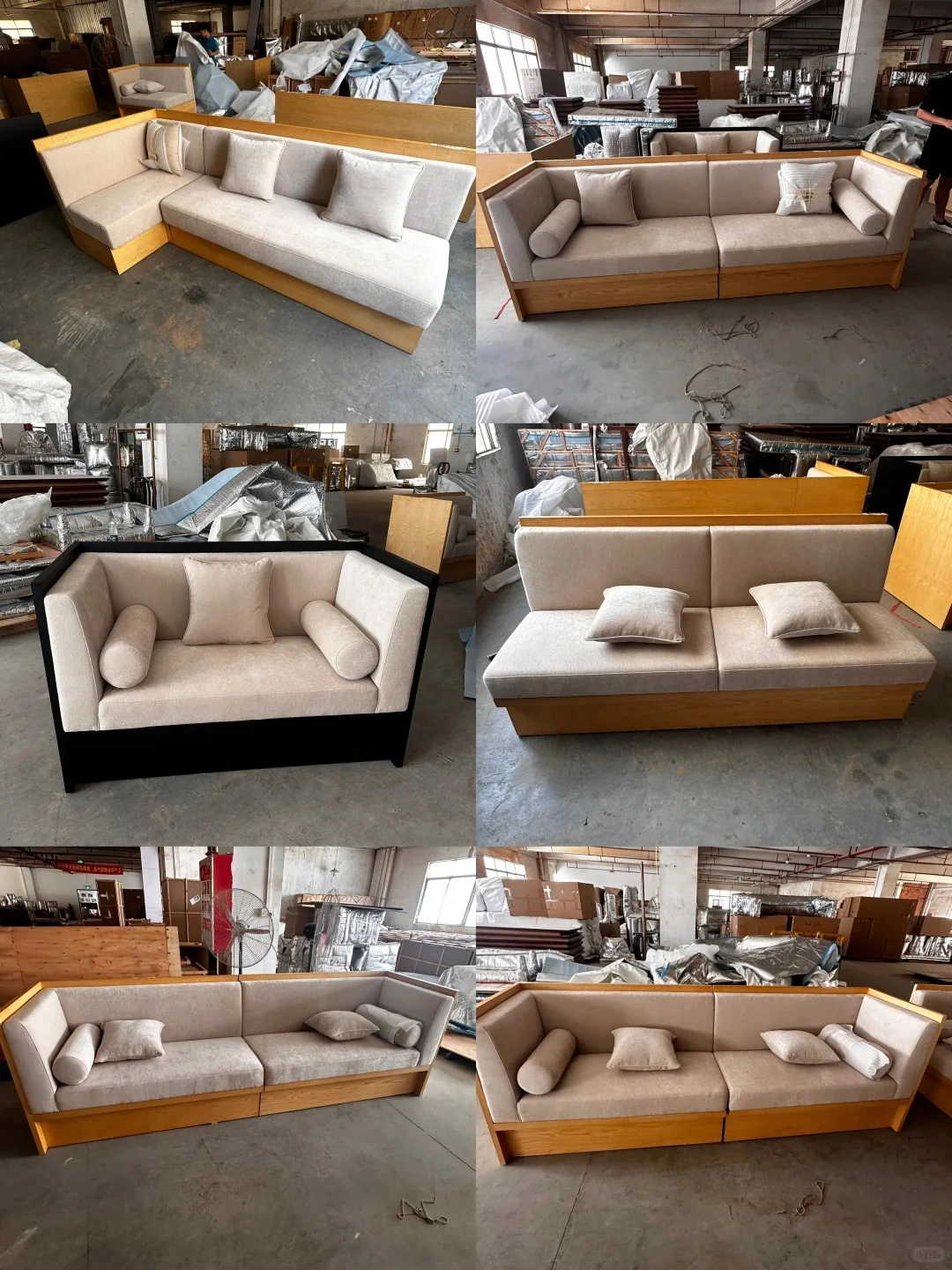
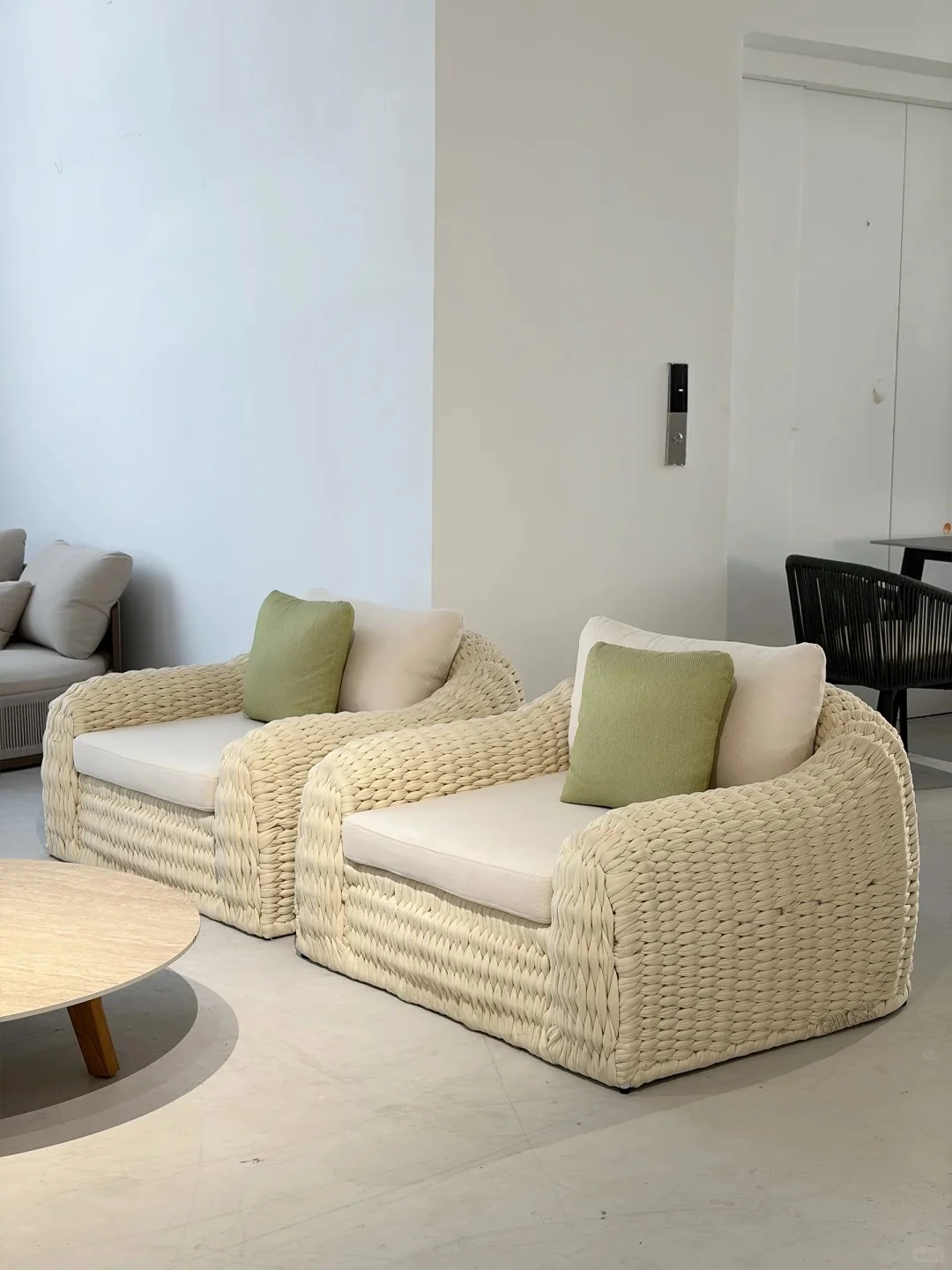
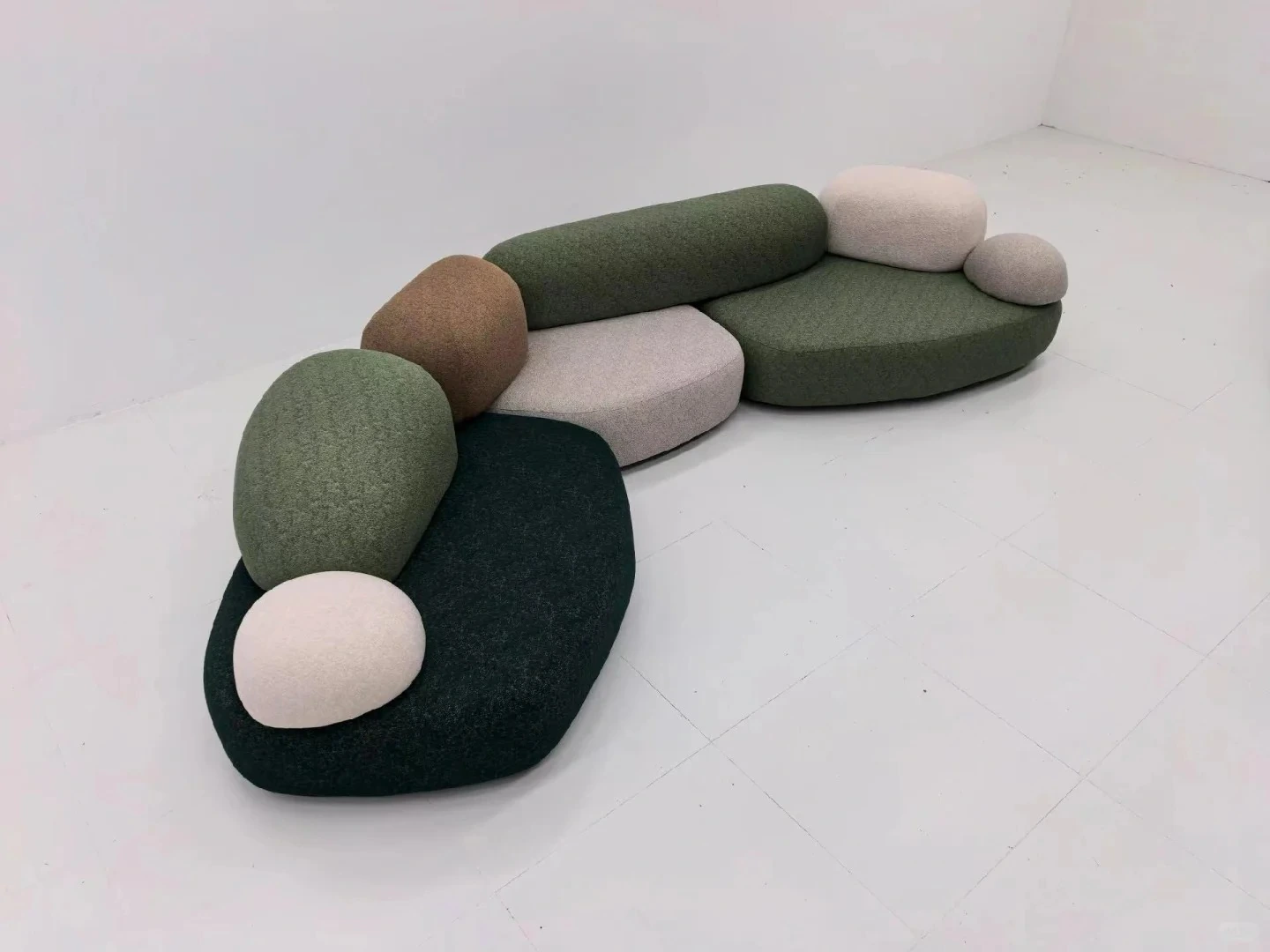
Step back several meters and inspect the sofa from the front, side and rear. Look for a balanced silhouette, matching cushion heights, continuous curves, even skirt or base lines and consistent gaps between modules. Close-up inspection catches workmanship defects; distance viewing catches shape and proportion problems.
Keep visually related photos together during QC so the factory can compare the same product from multiple angles instead of reviewing isolated images.
9. Inspect packing before the sofa leaves the factory
Even a sofa that passes every workmanship check can be damaged in transit. Packing should protect upholstery, arms, corners, legs and exposed hardware from abrasion, compression and moisture. Modules should be clearly labeled, and loose accessories should be fixed so they cannot move inside the carton or crate.
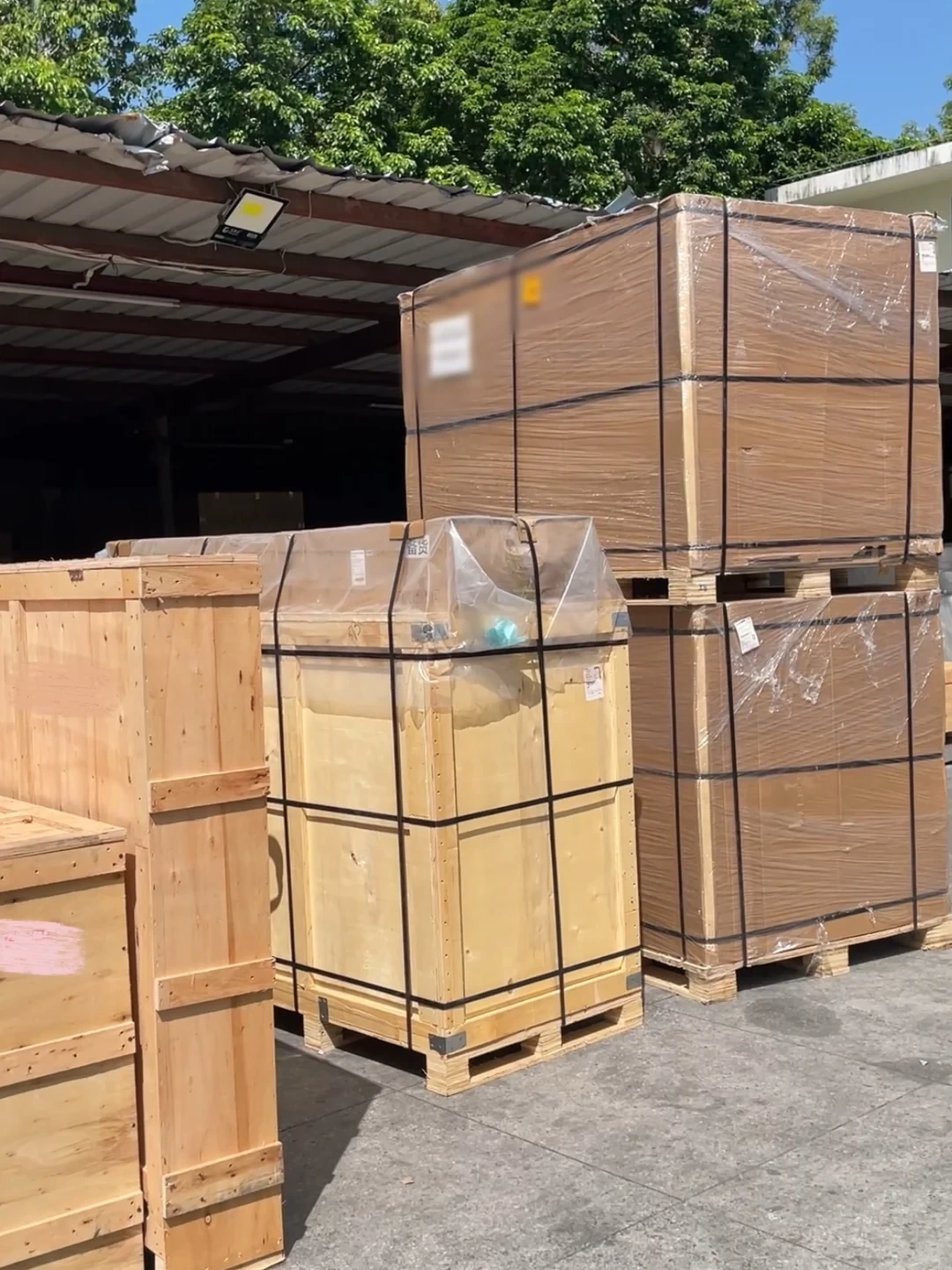
| Area | What to verify | Why it matters |
|---|---|---|
| Surface protection | Clean inner wrap; no dirty cardboard or straps contacting upholstery | Prevents stains and abrasion |
| Corners & arms | Foam, honeycomb board or rigid corner protection where needed | Reduces impact damage |
| Legs & hardware | Protected individually or removed and boxed when appropriate | Prevents scratching and punctures |
| Module labels | SKU, room/module ID, carton sequence and orientation marks | Speeds receiving and installation |
| Outer packing | Suitable carton/crate strength, secure closure and stable pallet base | Protects through handling and stacking |
10. Record defects and make a release decision
A useful QC report identifies the inspected SKU, quantity, sample size, dimensions checked, defects found, supporting photographs, corrective action and final disposition. Separate critical functional issues from minor cosmetic issues so the factory knows what must be repaired before approval.
When defects are corrected, require clear follow-up photos or a second inspection of the repaired piece. This closes the loop between finding a problem and actually preventing it from being shipped.
11. Pre-shipment sofa inspection checklist
The checklist below can be used as a practical factory reference. It combines the key preparation items and final inspection points into one page so the inspector can work in a consistent order.
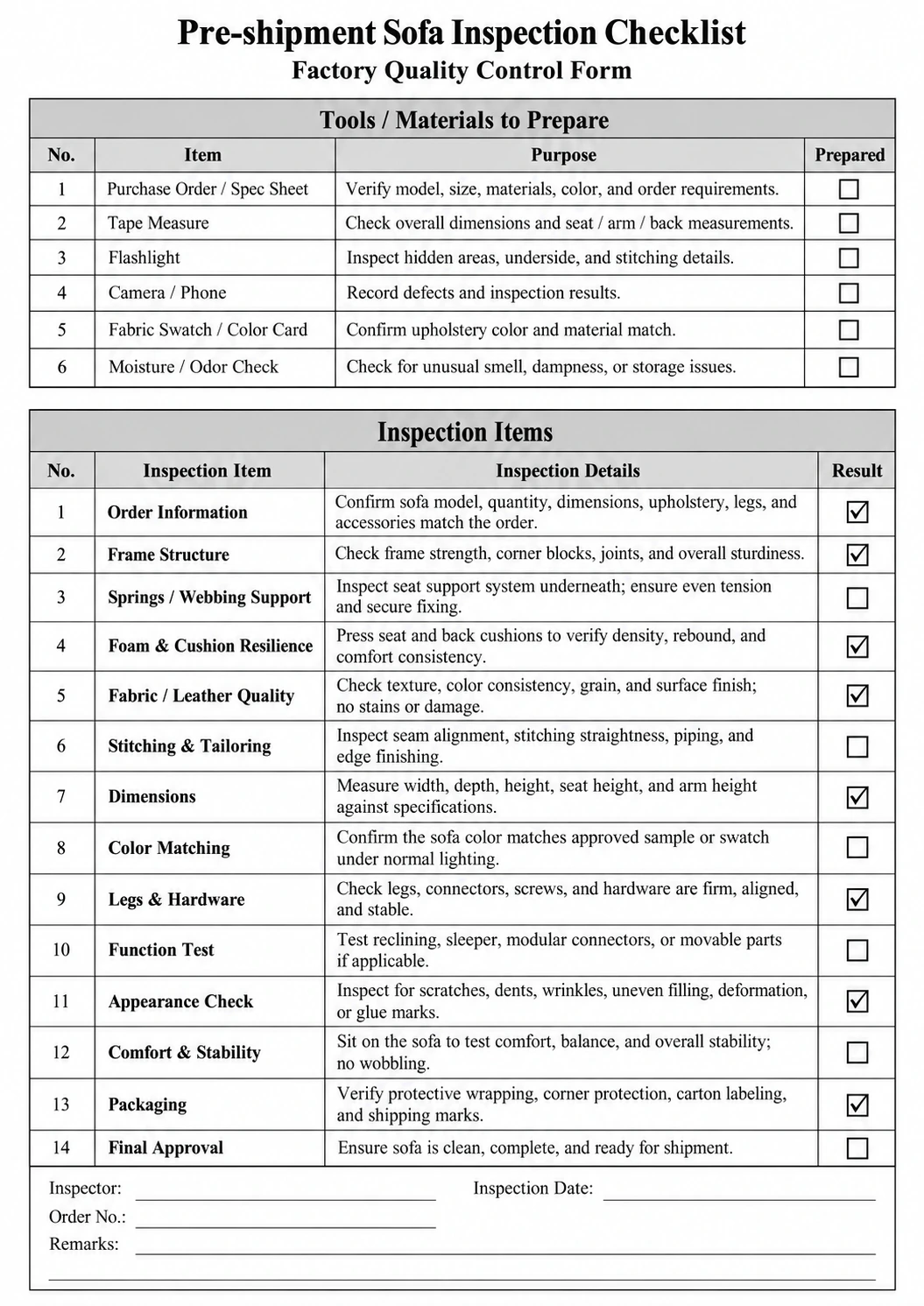
- Approved drawing, upholstery and finish match production.
- Overall and seat dimensions are within the agreed tolerance.
- Frame is stable, square and free of abnormal noise.
- Springs or webbing are evenly installed and securely fixed.
- Cushions recover evenly and match in height, shape and comfort.
- Seams, piping and panel lines are straight and symmetrical.
- Upholstery has no stains, scratches, tears or unacceptable variation.
- Legs, connectors and mechanisms are secure and functional.
- Final appearance is balanced from front, side and rear views.
- Protective packaging is clean, complete and suitable for transit.
Planning a custom sofa or whole-home furniture project?
Share your floor plan, dimensions, style references and project requirements with Ratahome. Our team can coordinate specifications, production, factory quality control and shipping as one project workflow.
Start Your Project