
A sofa is a system: structure first, comfort second
The easiest way to judge a sofa is to stop thinking of it as one object and start reading it as a stack of systems.
A typical upholstered sofa has five jobs happening at once: the frame holds the shape; the suspension carries the seated load; the cushion core provides deeper support; the comfort wrap creates the first soft feel; and the upholstery protects the build and defines the surface experience. Different sofas use different materials, but these roles are broadly consistent.
That is why one premium-sounding material does not guarantee a good sofa. A solid frame with loose suspension can still feel weak; a soft cushion on a poor base can still sag; and an excellent internal build wrapped in a fabric that does not suit your household can still be the wrong purchase. Quality comes from how the layers work together.

Five questions to ask as you look at any sofa
- What keeps the shape? Look for a stable frame and sensible reinforcement.
- What carries the weight? Identify webbing, springs or another suspension system.
- What stops you from bottoming out? That is the cushion core and deeper support layer.
- What creates the softness? This may be softer foam, batting, fiber or feather/down-style fill.
- Can I live with the cover? Consider cleaning, wear, pets, children and how much maintenance you want.
The frame is the sofa’s skeleton—and the first thing to judge
The frame fixes the sofa’s geometry. It keeps seat modules aligned, gives the arms and back something rigid to attach to, and provides the anchor points for webbing, springs and cushion platforms. If the frame moves excessively, every softer layer above it has to compensate.
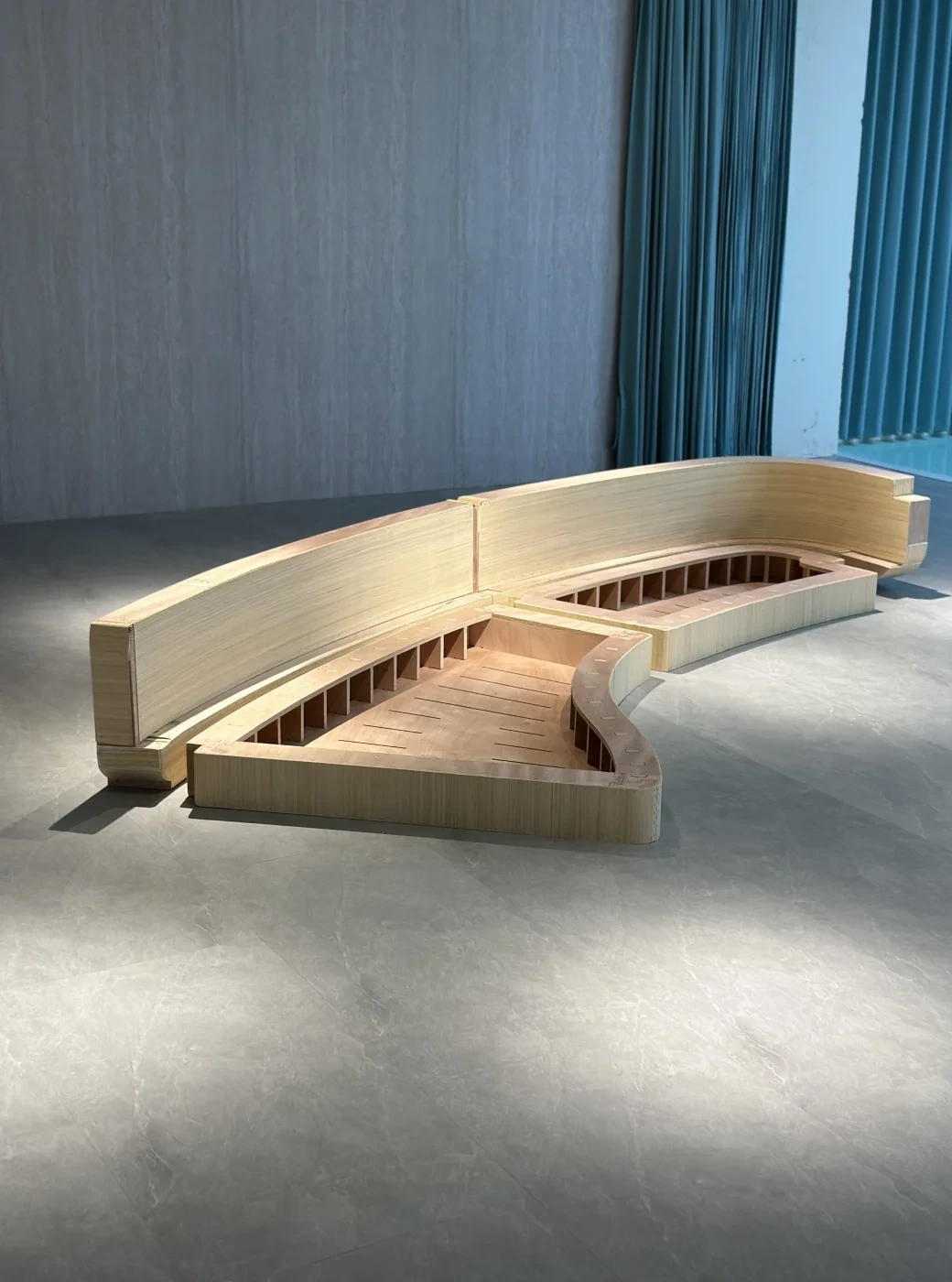
In straight sofas, frame quality is often visible in clean rails, sensible cross-members and reinforced corners. Curved and modular sofas raise the difficulty: the geometry must stay accurate across a long arc, while connection points and seat platforms still line up. The curved-frame photos in this guide make that hidden precision easy to see.
Do not reduce frame quality to one wood label. The practical signs are more useful: straight members, secure joints, reinforcement where loads change direction, consistent module geometry and no obvious twisting or looseness.
What to ask about the frame
- What materials are used for the main load-bearing frame?
- Where are long spans, corners and curved sections reinforced?
- Can you show internal frame photos before upholstery?
- For modular sofas, how are the sections aligned, locked and supported?
You do not need an engineering drawing. You do need an answer that is specific enough to show the supplier understands—and is willing to show—the construction.
Do not forget the back and side frames
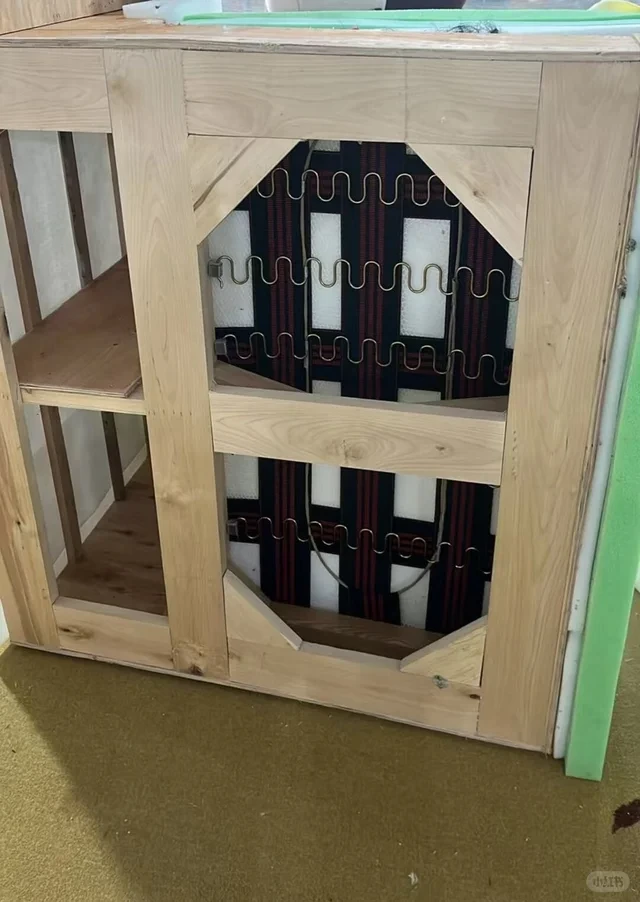
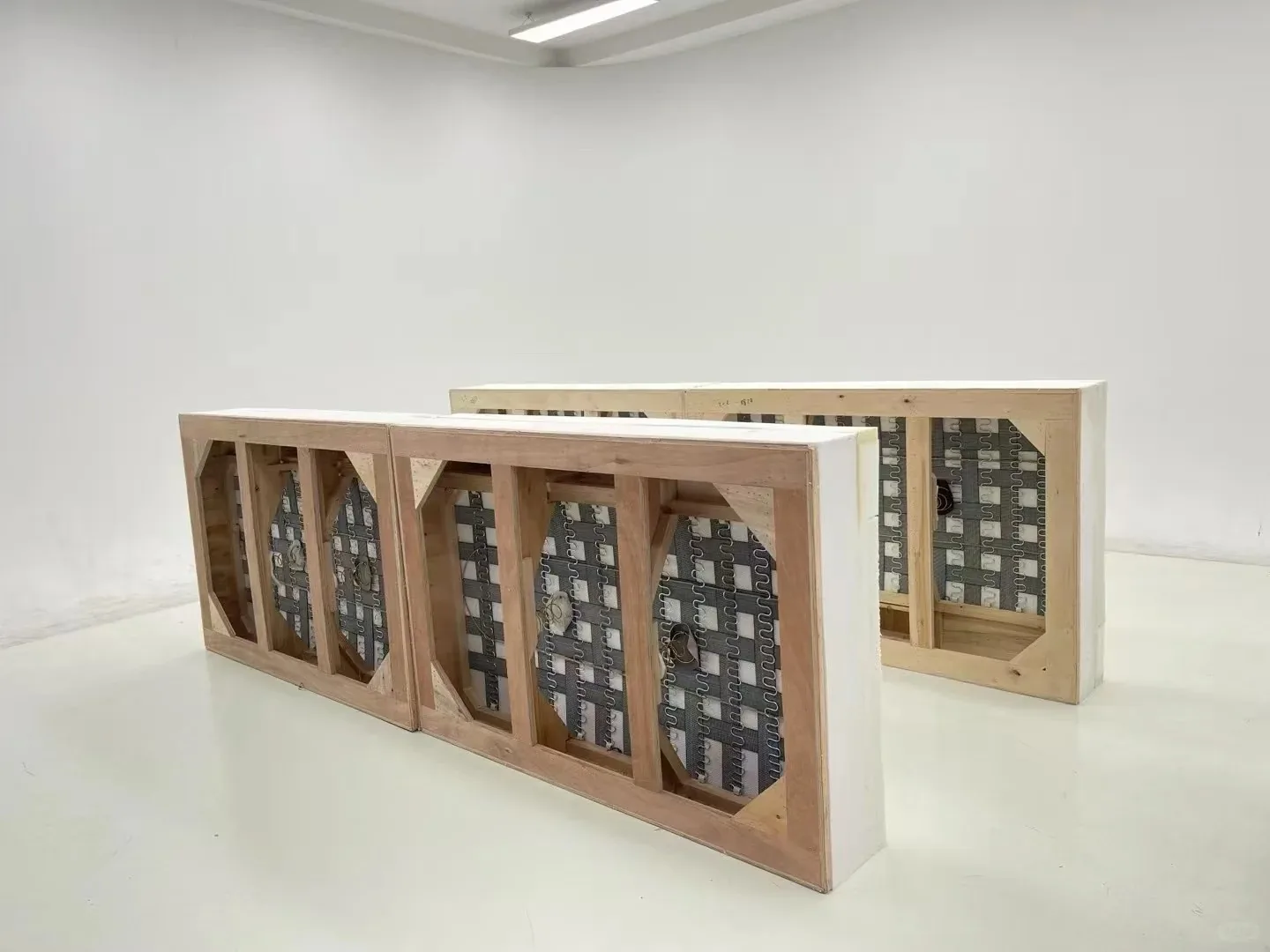
Seat bases get most of the attention, but the back and side modules also need structure. The open frames shown here reveal vertical rails, corner reinforcement and internal support zones that disappear once foam and upholstery are applied.
For a wide back panel, consistent reinforcement matters because the load is spread across a large area every time someone leans, reclines or pushes against the back. Uneven construction can show up later as movement, noise or a back that loses its intended shape.
Suspension and seat support: where comfort actually starts
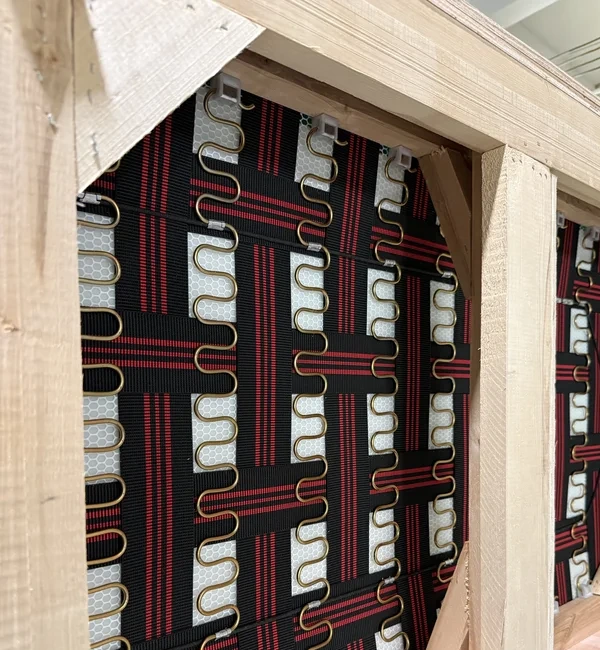
The cushion is only half of the seat. Under it, the suspension system spans the frame, distributes body weight and controls how far the seat can flex before the cushion core takes over. This hidden layer is a major reason two sofas with similar foam and fabric can feel completely different.
Read a seat cutaway from bottom to top
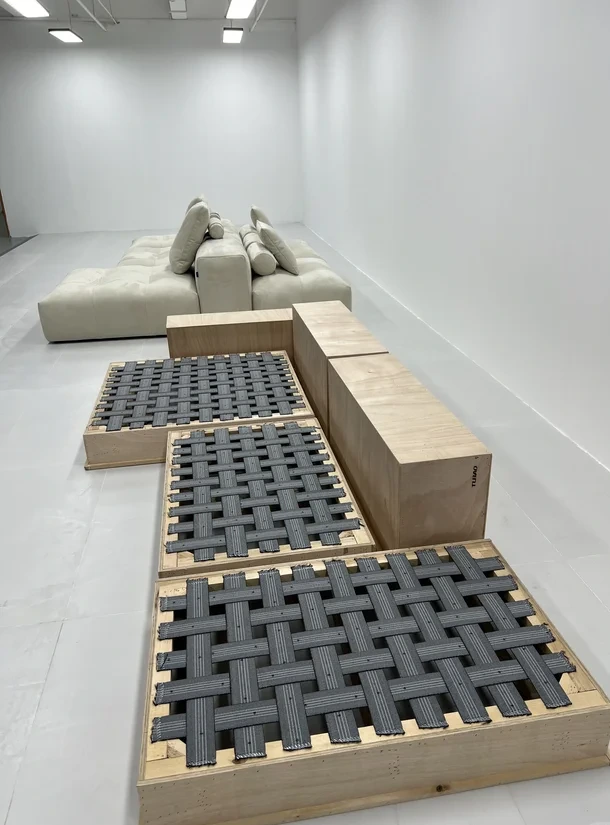
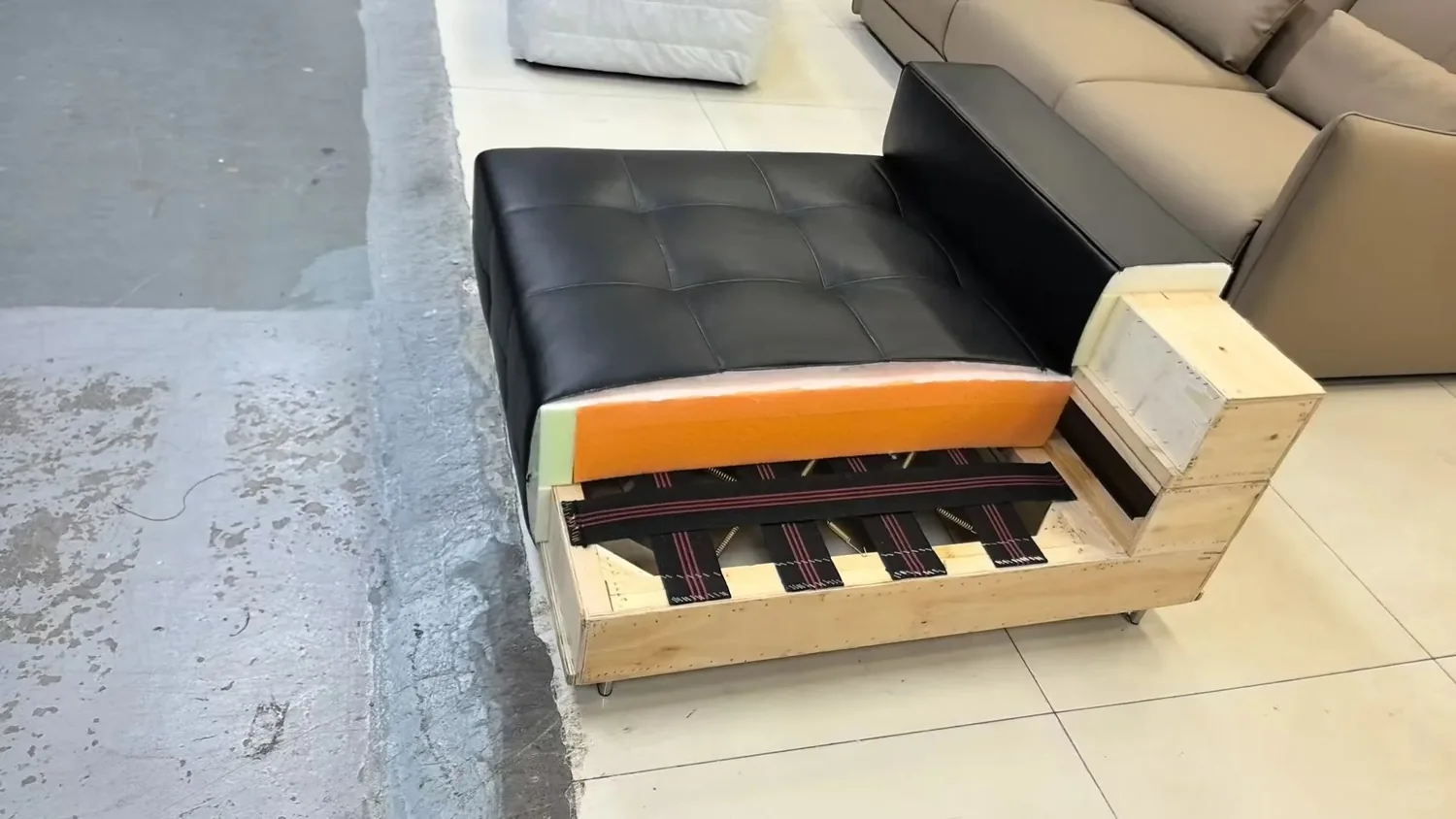
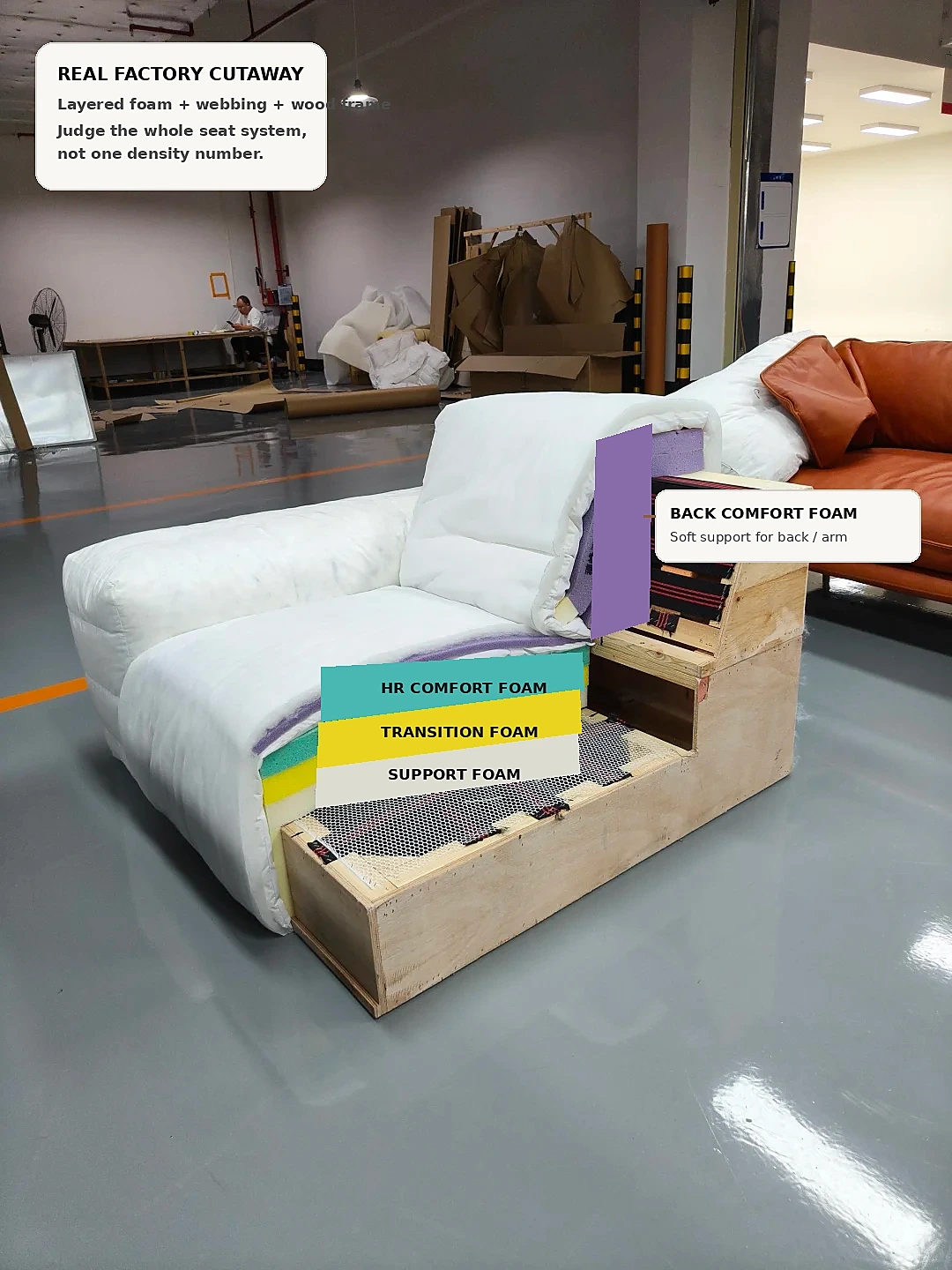
In this open seat, the timber base defines the structure, the crossed webbing carries the load, and the foam layers above it shape pressure relief and surface feel. The important lesson is that “softness” is only the top of the system.
A good seat should flex enough to feel comfortable but not so much that you immediately feel the hard frame below. It should also recover reasonably after you stand up, with similar support across the center and edges.
Common systems include elastic webbing, sinuous / zig-zag springs, or combinations that may also include a spring layer inside the cushion stack. There is no universal winner. Consistent tension, secure attachment, even support and good recovery matter more than the name of the component by itself.
| Support type | What it does | Good sign | Watch-out |
|---|---|---|---|
| Elastic webbing | Creates a flexible tensioned deck across the frame. | Straps look evenly spaced and consistently tensioned; seat feel is even. | Loose, poorly anchored or inconsistent straps can lead to early sagging. |
| Sinuous / zig-zag springs | Adds resilient metal support with a controlled bounce. | Springs are securely mounted, evenly spaced and quiet in use. | Weak clips, wide gaps or inconsistent spring tension can create uneven support or noise. |
| Pocket spring layer | Adds localized response when used inside the seat/cushion stack. | Works as part of a balanced stack with a stable base and appropriate foam layers. | It is not automatically “better” if the base frame, suspension or foam above it is poorly designed. |
Cushion anatomy: separate surface softness from core support
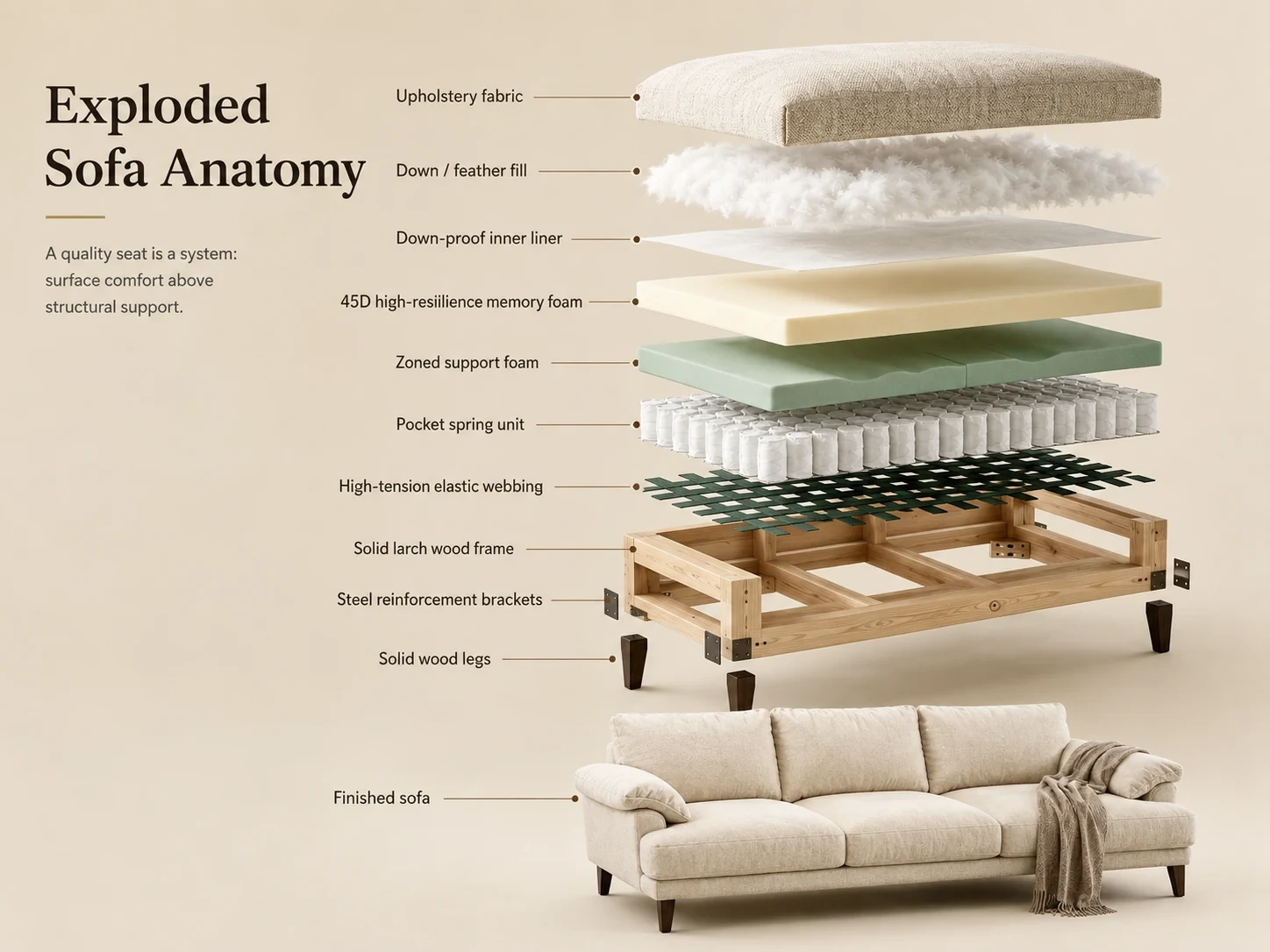
Sofa comfort is often reduced to one phrase—“soft,” “firm,” or “high-density foam.” A more useful way to read the seat is by function. The upper layers create surface comfort; the deeper foam or spring layers provide core support; and the suspension below prevents the cushion from doing all the work alone.
This balance explains why an excellent sofa can feel soft on the first contact without feeling unstable after several minutes. A very plush top can be comfortable, but it still needs a resilient core beneath it so your hips do not sink until they meet the frame.
When comparing cushions, think in three roles rather than one material label:
- Surface feel: the first sensation—fabric, batting, fiber, feather/down-style fill or softer foam.
- Core support: the deeper layer that controls how far you sink and how the cushion recovers.
- Maintenance behavior: how often the cushion needs rotating, fluffing or reshaping to keep an even appearance.
How to read an open-frame or cutaway sofa
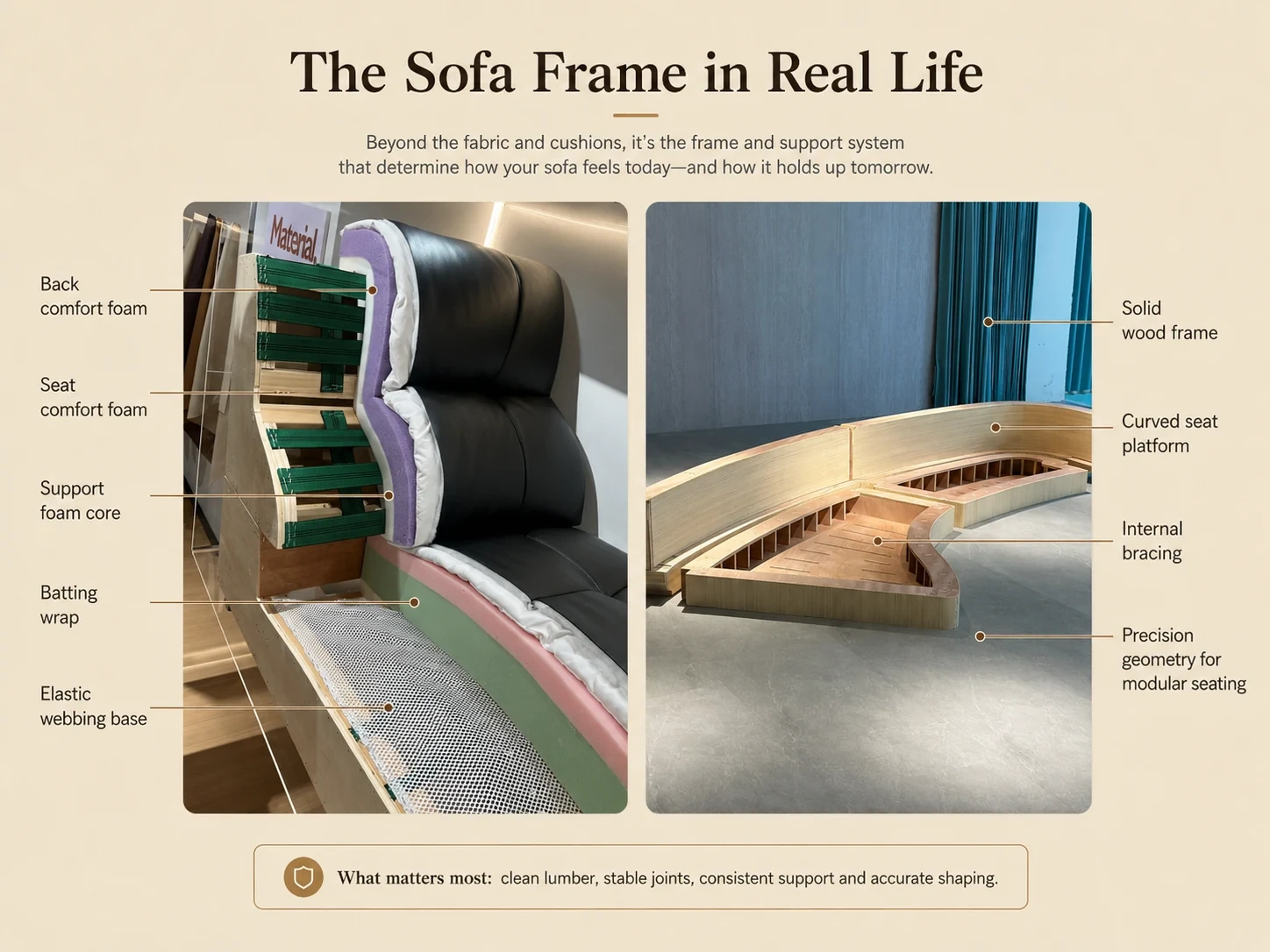
Factory photos and cutaway samples are useful because they turn hidden construction into something you can inspect. Read them in the same order every time: frame, attachment points, suspension, cushion stack, then upholstery. The goal is not to memorize every component—it is to see whether the build looks consistent and whether the seller can explain what each layer is doing.
1. Frame & joints
Look for straight rails, sensible corner reinforcement and clean transitions. Curved or wide sections should still look deliberate and repeatable.
2. Suspension
Check whether webbing or springs are evenly spaced and securely attached. Inconsistent tension often becomes inconsistent seat feel.
3. Cushion & edge zones
Notice what happens where seat, arm and back meet. Good builds avoid abrupt hard edges and use appropriate padding where the body contacts the frame.
How to choose a sofa: a practical 5-minute test
Once you understand the internal layers, shopping becomes much simpler. Use the same sequence every time so a beautiful fabric or an extra-soft first sit does not distract you from the fundamentals.
| What to ask | Why it matters | Helpful answer |
|---|---|---|
| What is the main frame construction? | It affects stability and how well the support system stays aligned. | A clear description of structural materials, joints and reinforcement—not just a vague “wood frame” claim. |
| What supports the seat below the cushion? | This strongly affects flex, recovery and long-term feel. | Specific information about webbing, sinuous springs, another suspension system, or a clear combination. |
| How is the seat cushion layered? | Surface softness and core support come from different layers. | A layer-by-layer explanation or a cutaway / internal photo rather than “high-density foam” alone. |
| Can I see internal construction photos? | Transparency lets you compare what you cannot see in a finished sofa. | Frame, suspension and cushion images that match the model or construction family being discussed. |
| What maintenance does this sofa expect? | The best-looking sofa is a poor fit if its care routine does not suit your life. | Clear guidance on cleaning, removable covers, cushion rotation/fluffing and normal appearance changes. |
| What are the seat and delivery dimensions? | Comfort and access problems are difficult to fix after delivery. | Exact seat height/depth plus overall or modular package dimensions for doors, stairs and lifts. |
Four buying mistakes that make good-looking sofas disappoint
Mistake 1: Buying only with your eyes
Style matters, but upholstery hides the frame, suspension and cushion construction. A beautiful silhouette is the start of the decision, not the end.
Mistake 2: Believing one material claim
“Solid wood,” “high-density foam” or “pocket springs” can all sound convincing. None of them tells you whether the complete system is well balanced or consistently assembled.
Mistake 3: Choosing the softest first sit
Extreme softness can feel luxurious for a minute. Daily comfort is better judged by what happens after you settle in—support, posture and recovery matter too.
Mistake 4: Ignoring fit, access and maintenance
A sofa can be well built and still be wrong for your home. Check body fit, room scale, delivery route, fabric care and how much cushion maintenance you are willing to do.
What matters more: the frame or the cushions?
Start with the frame and suspension because they are the foundation of stability and support. Cushion comfort matters too, but cushions are generally easier to refresh or replace than a weak core structure.
Are pocket springs always better than webbing or zig-zag springs?
No. Each system can work well when it is appropriate for the design and installed consistently. The important test is even support, good recovery and a stable frame underneath.
What should I ask before buying a sofa online?
Ask for internal construction photos, frame materials, seat suspension, cushion layering, seat dimensions, cover-care information, delivery dimensions and after-sales details.
What is a useful showroom test for a sofa?
Sit in the center and near an edge, lean back, shift your weight, then stand up. Check whether the seat feels even, the frame stays quiet and stable, and the cushion recovers without a deep lasting impression.
Use what you’ve learned to compare sofas more confidently
You now have a simple way to compare sofas from the inside out: start with the frame, understand the suspension, separate cushion softness from core support, then check dimensions, upholstery and maintenance against your real life.
When you are ready to compare finished designs, explore the Rata Home sofa collection and use this checklist to judge which style, scale and comfort profile best fits your room.