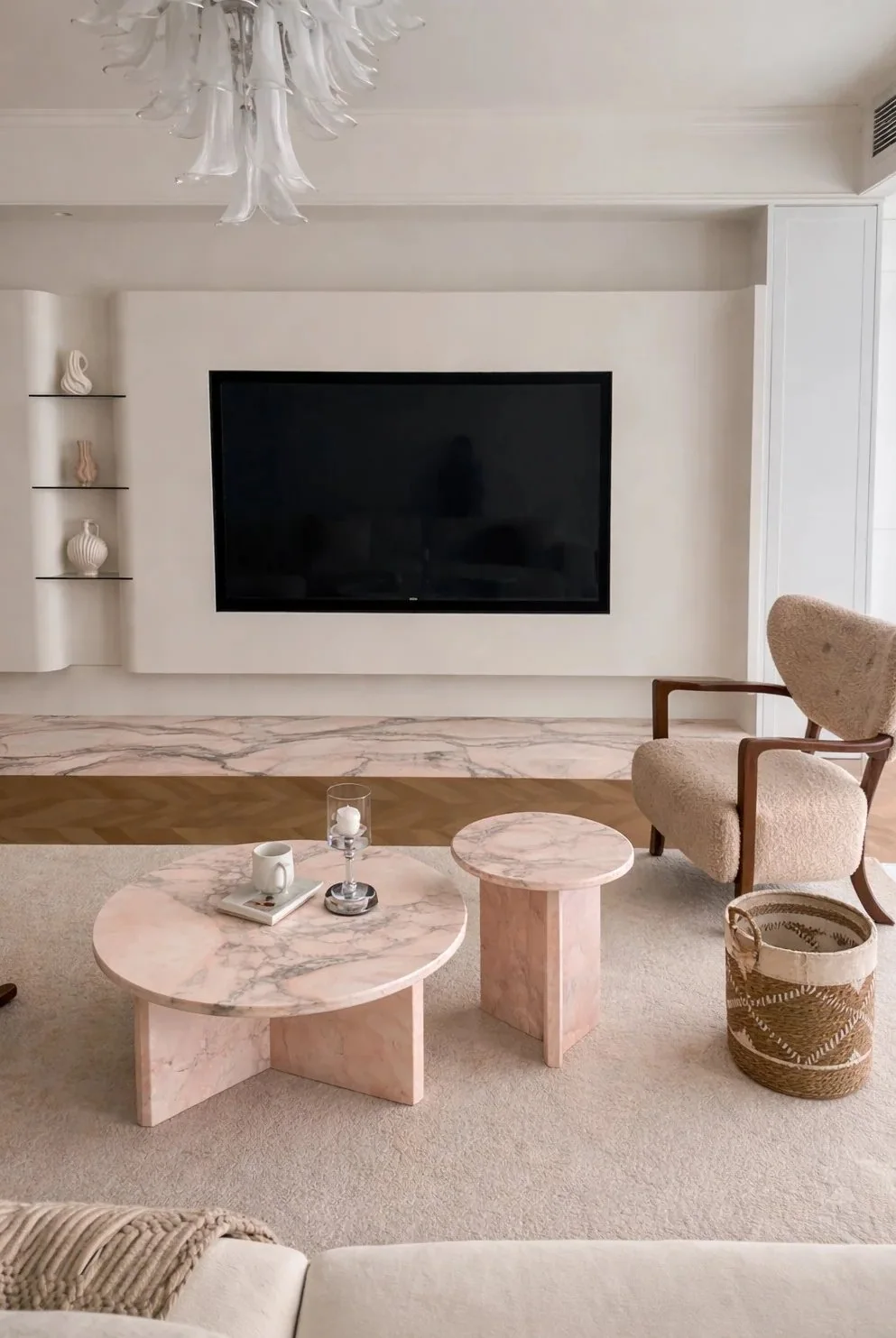
How to Choose Stone for Furniture: Marble, Travertine, Granite, Quartz & Sintered Stone
Learn how marble, travertine, granite, quartz and sintered stone differ in appearance, maintenance, fabrication and real furniture use. This guide connects stone selection with Ratahome’s Materials Guides, table-buying advice, cabinetry planning and quality control so you can choose a material that works in the finished room—not just in a slab photo.
1. Why stone choice matters in furniture
The best stone is not simply the most expensive slab. It is the material whose appearance, porosity, edge strength, heat resistance, maintenance and weight fit the exact furniture or interior application.
A dining table experiences spills, sliding plates and repeated edge contact. A coffee table is touched constantly but sees less heat. A kitchen island must tolerate food preparation, cleaning products, heavy cookware and long spans. The same stone can be excellent in one application and frustrating in another.
Ratahome’s Furniture Guide treats materials as part of a wider system of dimensions, construction and care. For stone, that means looking beyond color and veining to the actual slab type, finish, substrate, support, edge treatment and installation method.
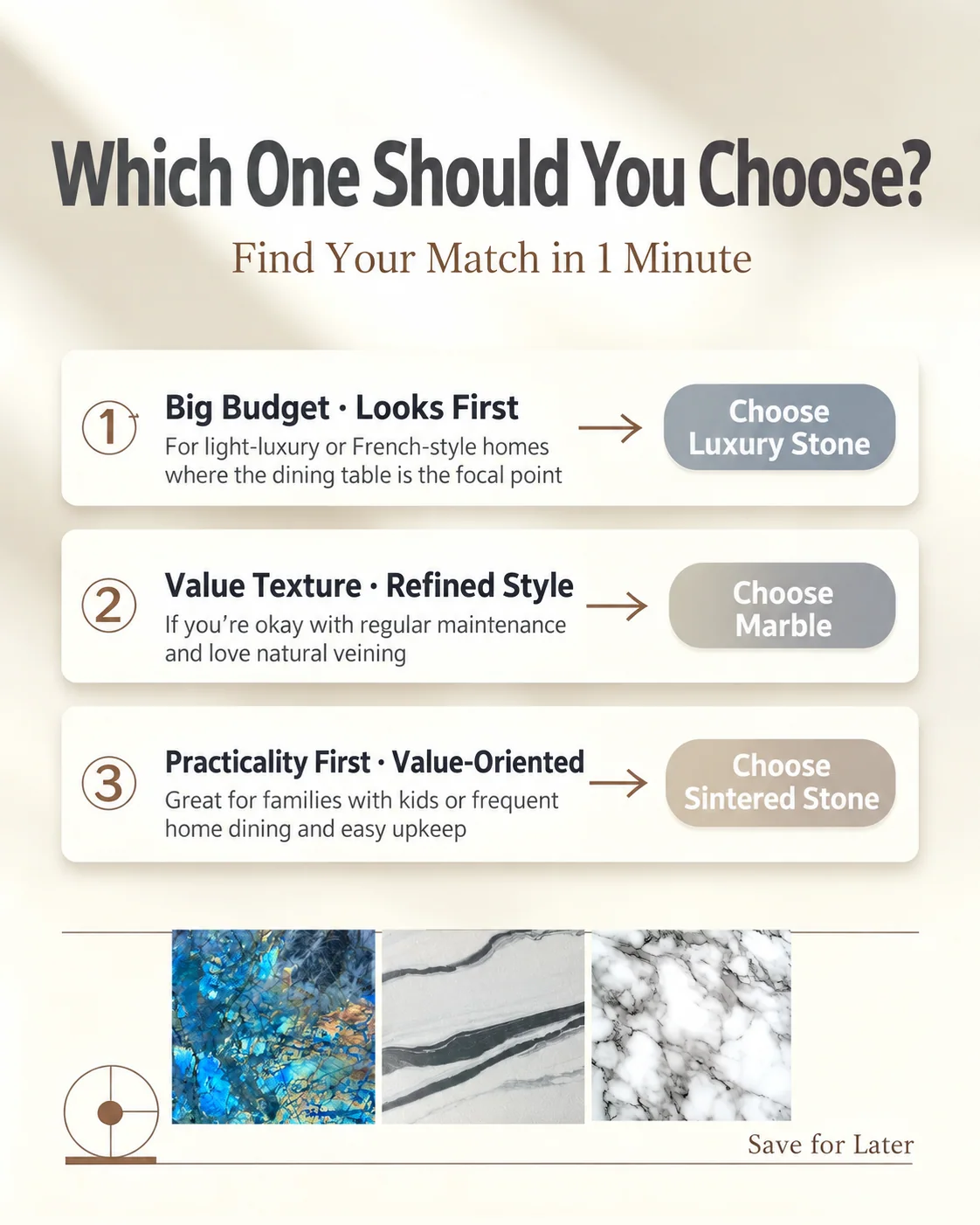
2. Marble, Travertine, Granite, Quartz & Sintered Stone: quick comparison
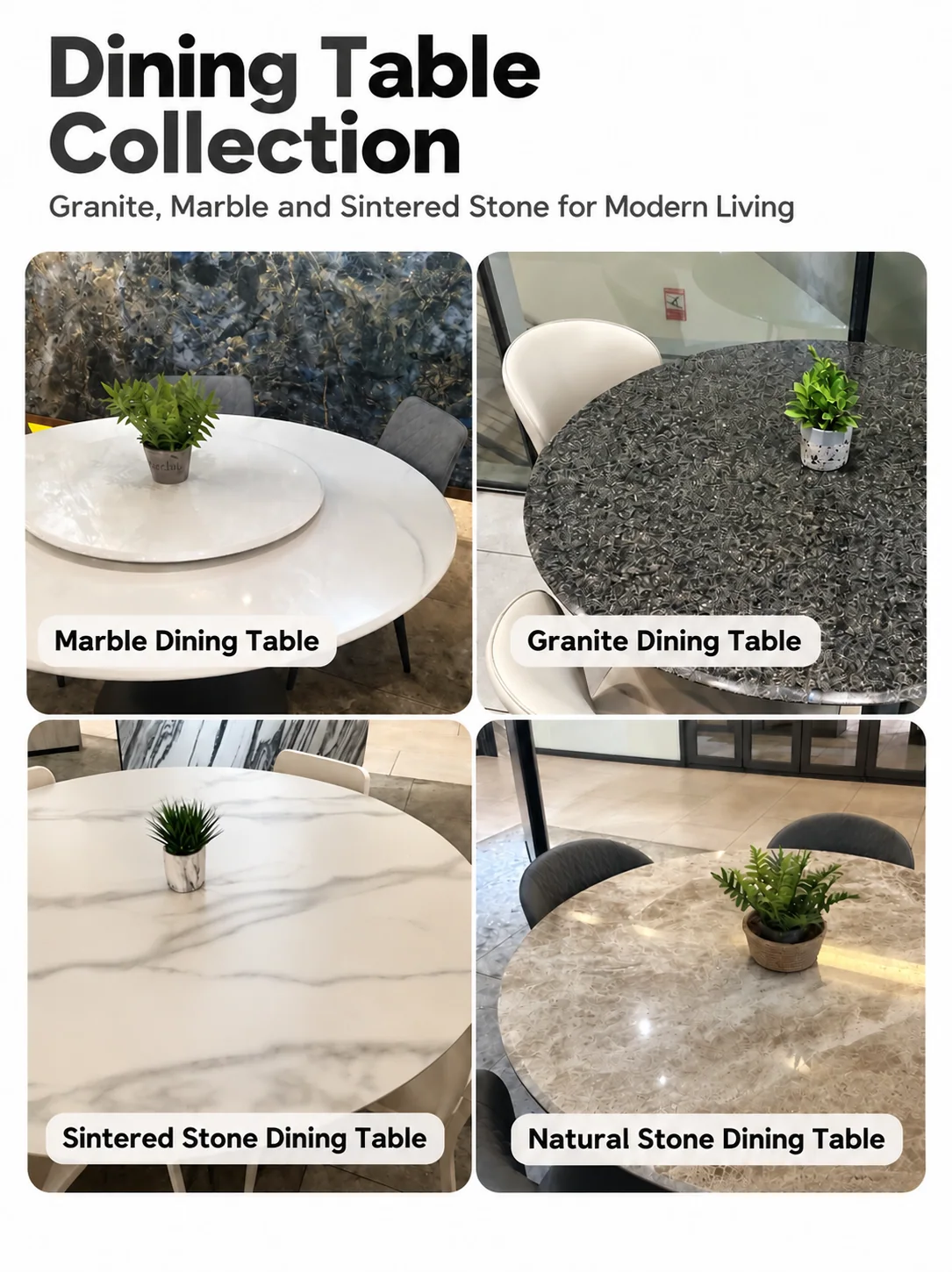
These five materials cover most of the stone decisions clients encounter in residential furniture and built-in surfaces. The table below focuses on practical differences rather than marketing language.
| Material | Type | How it looks | Daily performance | Best furniture uses | Main watch-out |
|---|---|---|---|---|---|
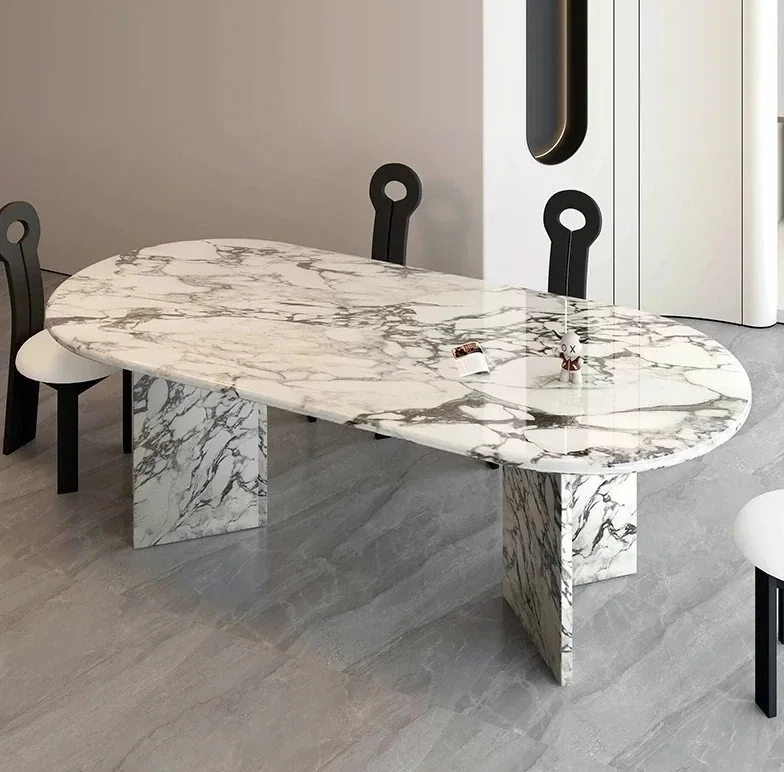
| Marble | Natural stone | Elegant veining, high visual variation | Moderate wear; sensitive to acids and etching | Dining tables, coffee tables, consoles, statement islands | Sealing helps stains, but not acid etching |
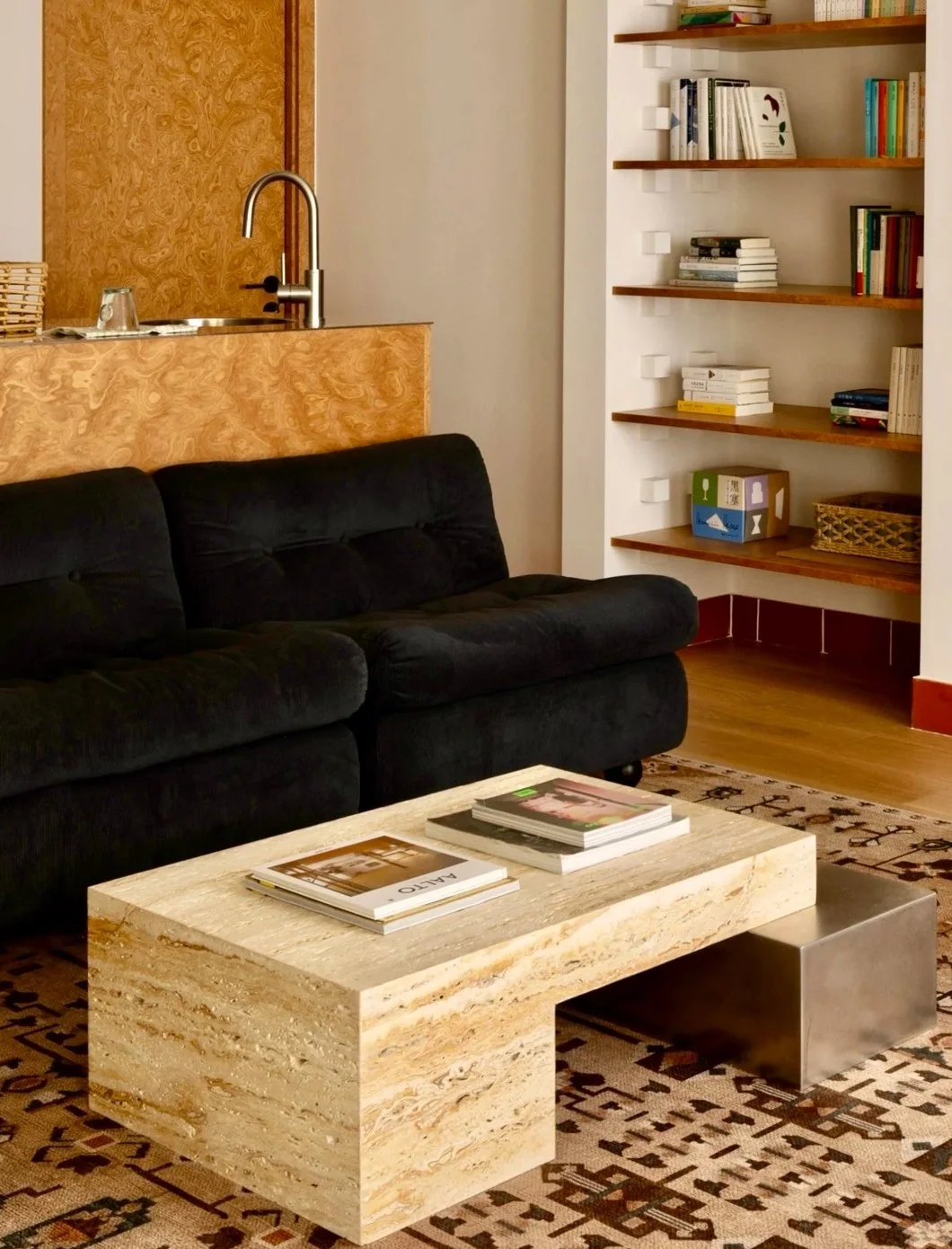
| Travertine | Natural limestone | Warm beige, pores and linear movement | Porous; softer edges; patina-friendly | Coffee tables, side tables, consoles, low-use dining tables | Fill quality, sealing and edge protection |
| Granite | Natural igneous stone | Speckled to dramatic crystalline pattern | Very durable; good scratch and heat tolerance | Kitchen islands, dining tables, high-use counters | Weight and slab-to-slab visual variation |
| Quartz | Engineered stone | Consistent color and controlled pattern | Low porosity and easy daily care | Kitchen counters, islands, dining tables, vanities | Resin binders mean direct extreme heat should be avoided |
| Sintered stone | Engineered mineral surface | Large-format, stone/concrete/solid looks | Low porosity; strong stain, heat and UV resistance | Dining tables, coffee tables, islands, cabinet cladding | Thin edges can chip if fabrication or handling is poor |
3. Marble: the classic statement stone
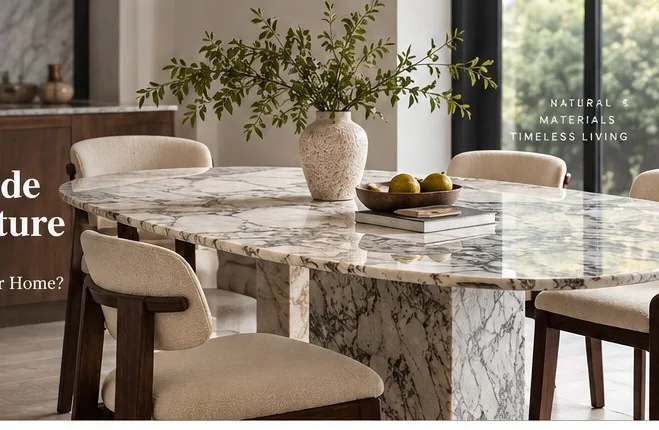
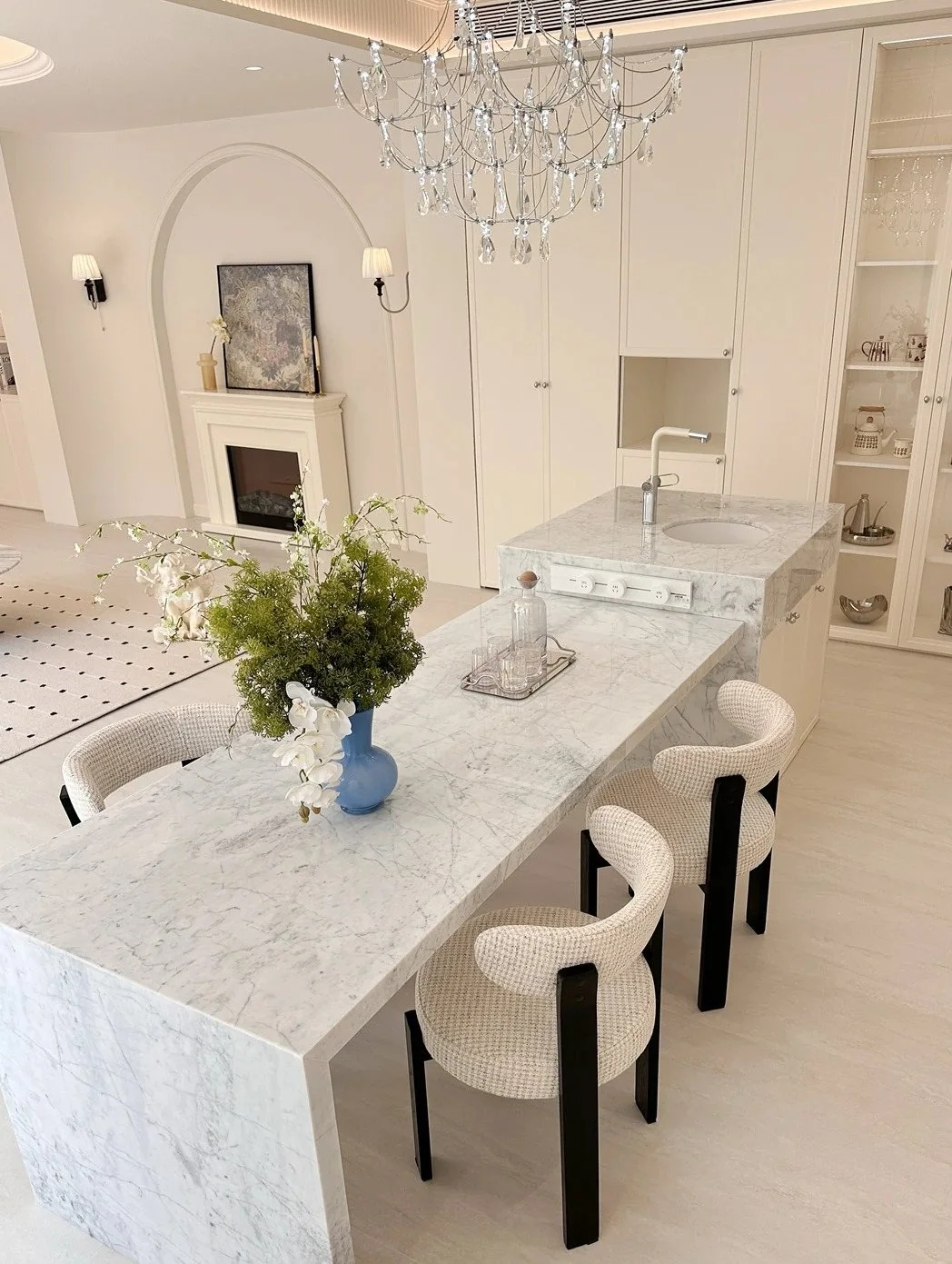
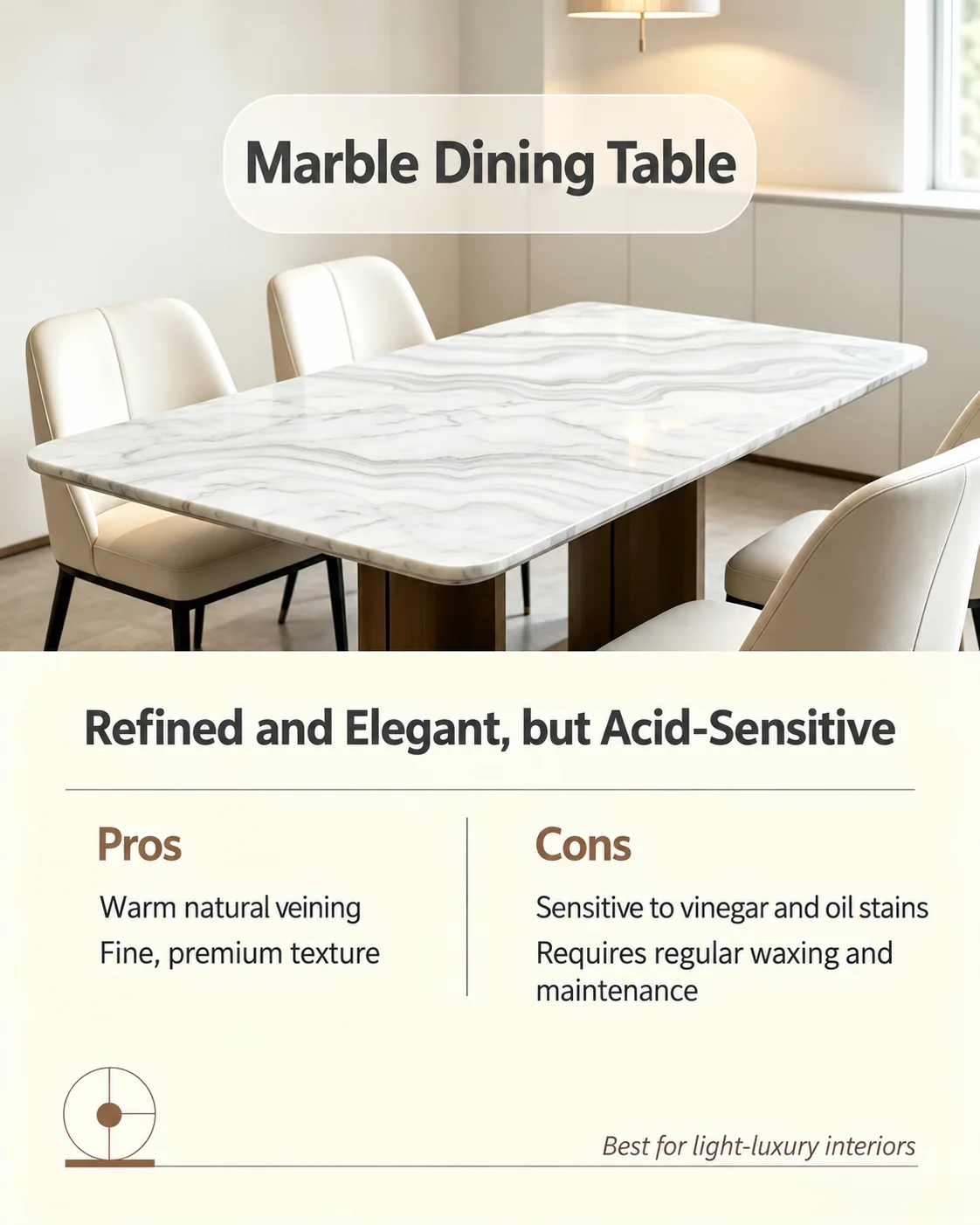
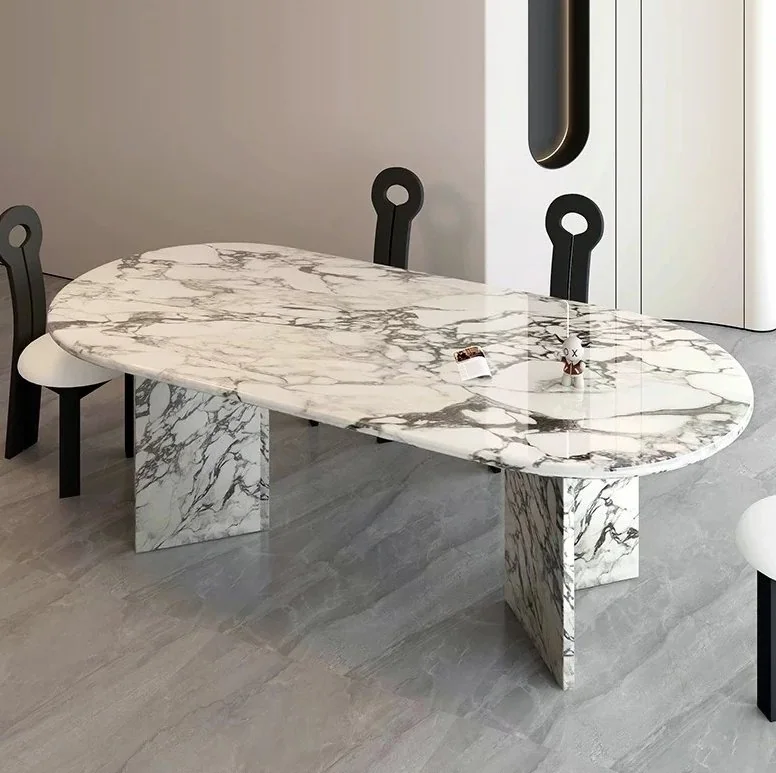
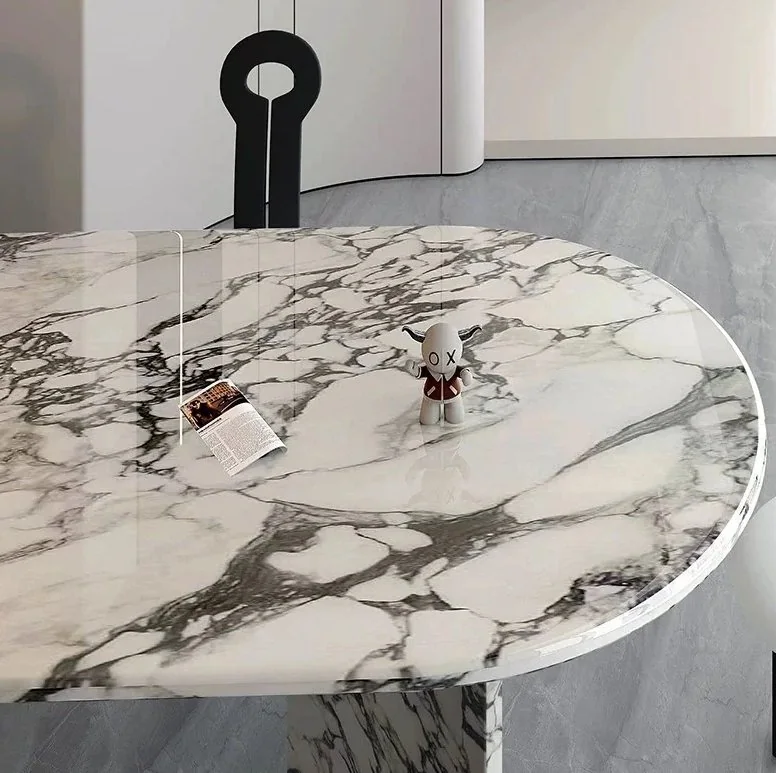
Marble is a natural metamorphic stone valued for veining, translucency and one-of-a-kind slab variation. In furniture, that variation is exactly what makes a marble dining table, console or island feel architectural rather than mass-produced.
The trade-off is maintenance. Most marbles contain calcite, so acidic liquids such as lemon juice, vinegar and wine can etch the finish. Sealing helps slow absorption and staining, but it does not make marble acid-proof. Buyers should choose marble because they appreciate natural patina—not because they expect a maintenance-free surface.
Best furniture: premium dining tables, coffee tables, consoles, occasional tables and statement kitchen islands where the owner accepts natural patina and maintenance.
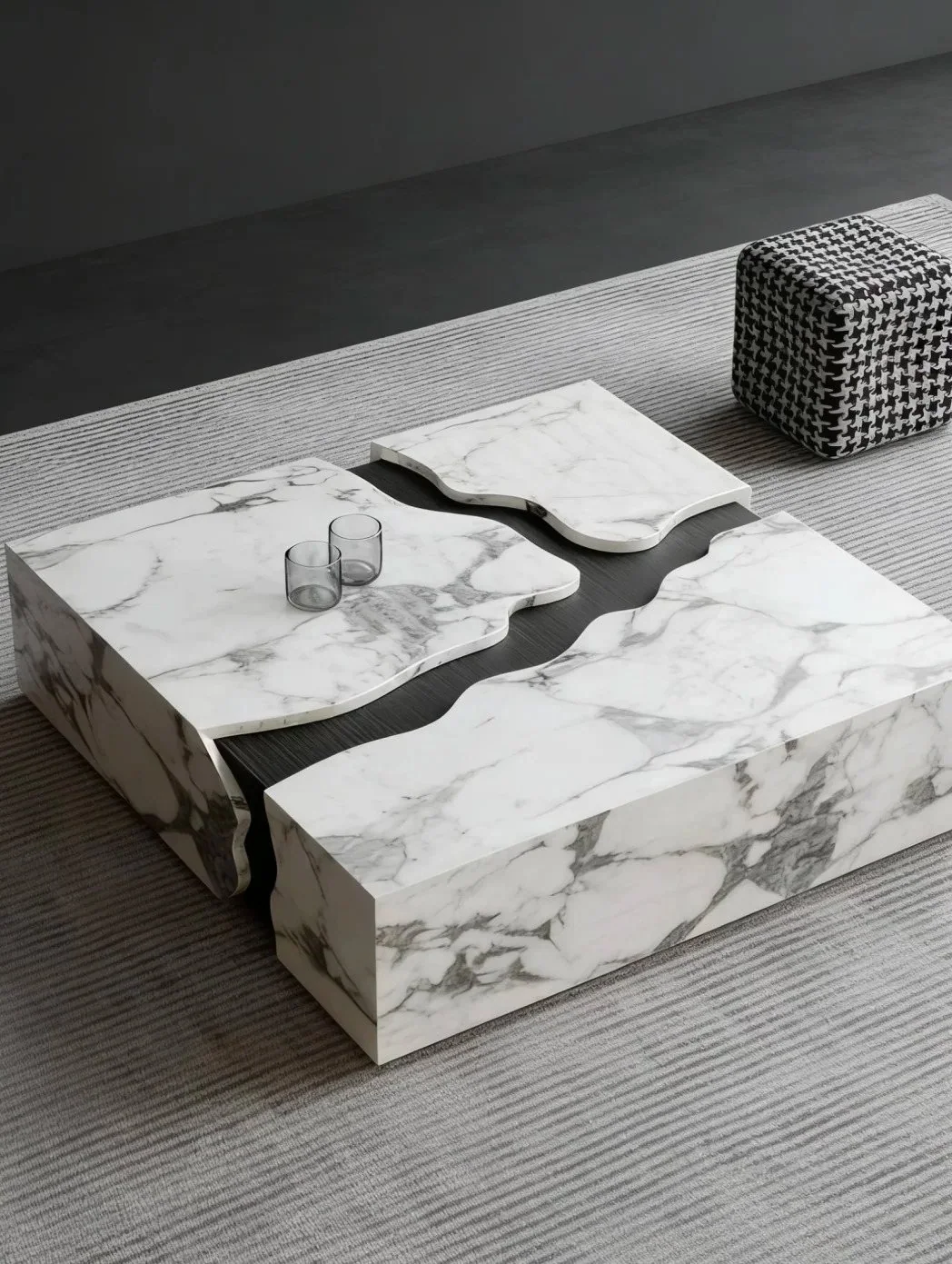
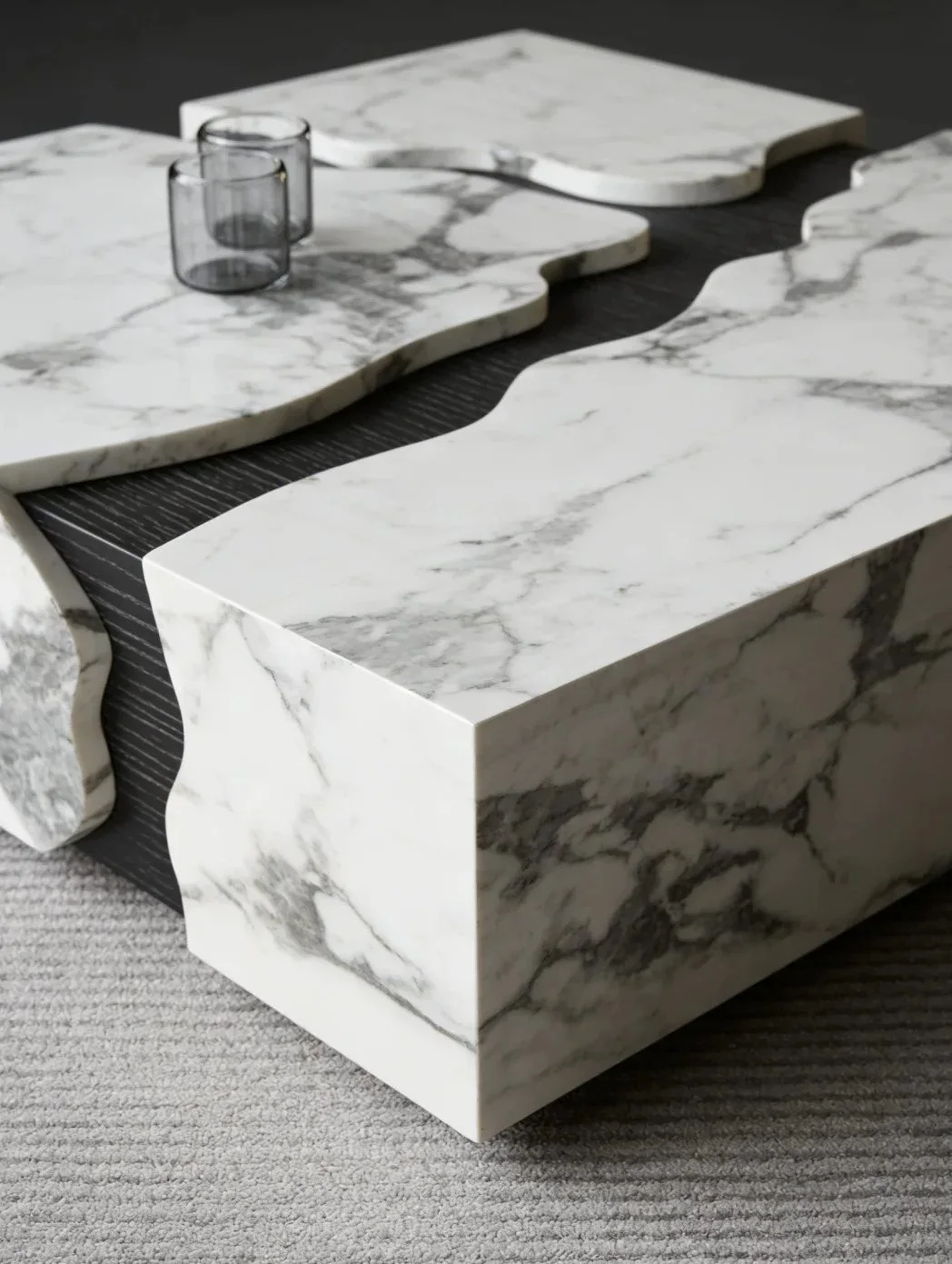
Marble for coffee tables and smaller furniture
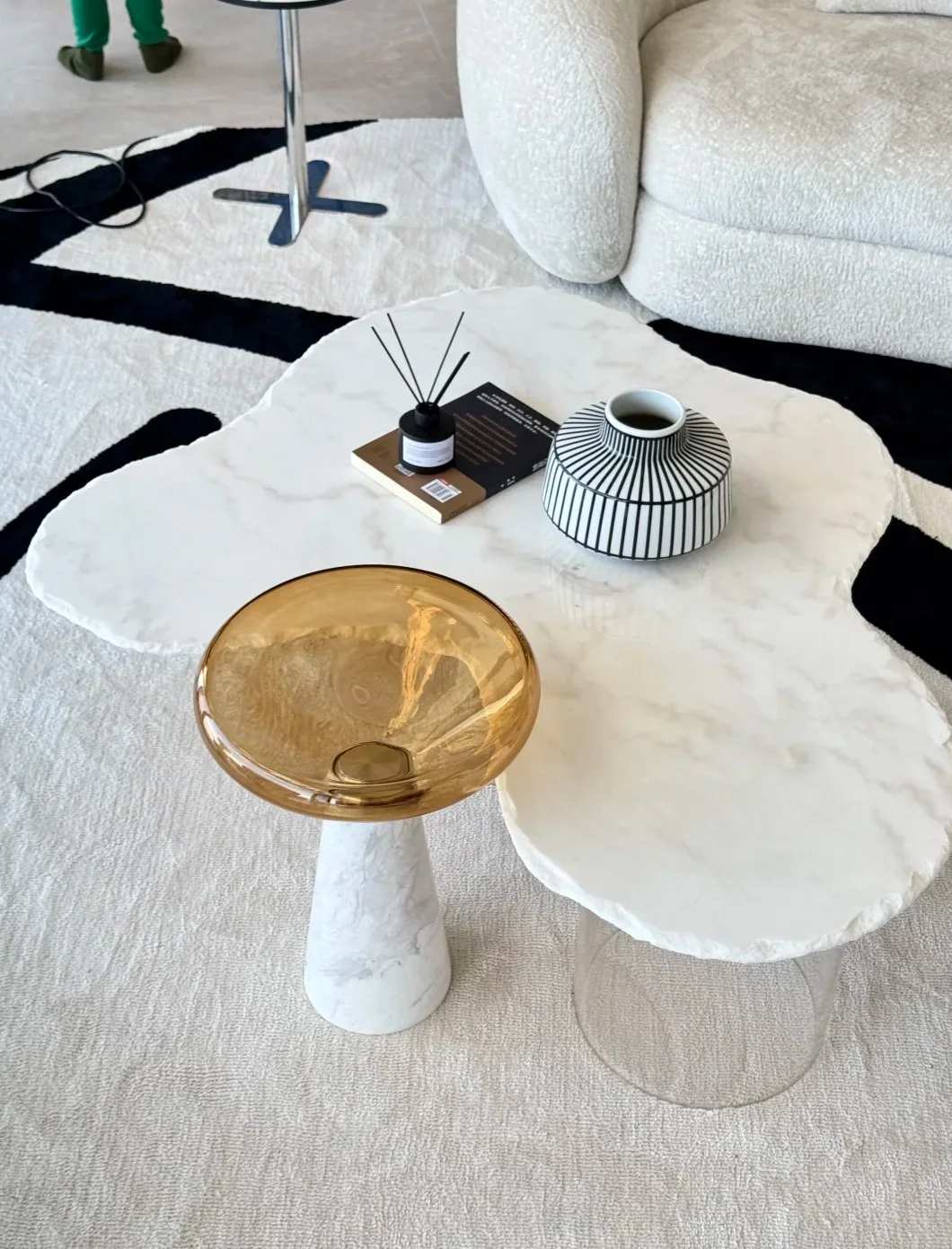
Smaller stone pieces let clients enjoy expressive marble without placing it in the highest-spill zone of the home. On coffee tables, edge proportion and base design matter because the slab remains visually exposed from every angle.
Marble in kitchens and cabinetry
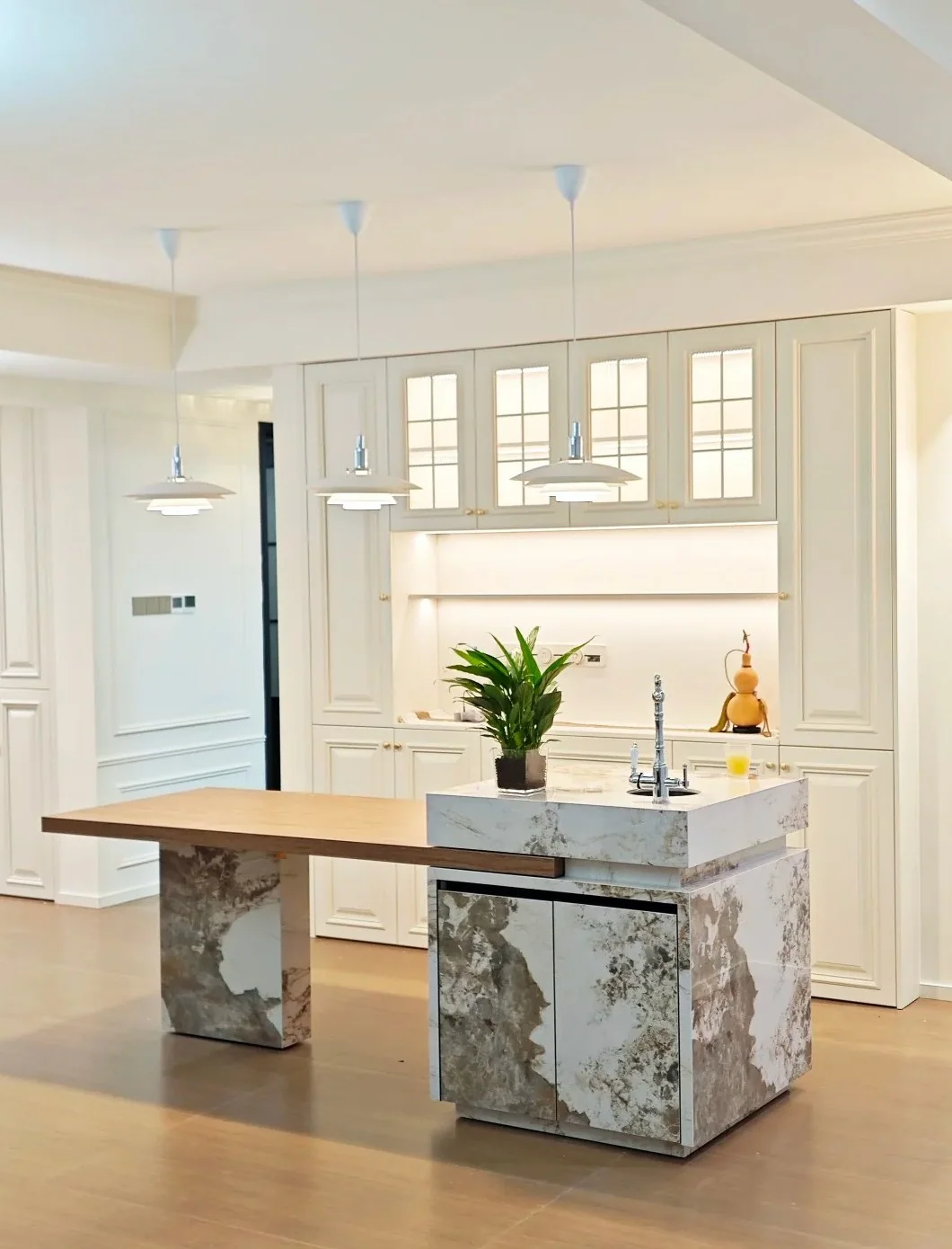
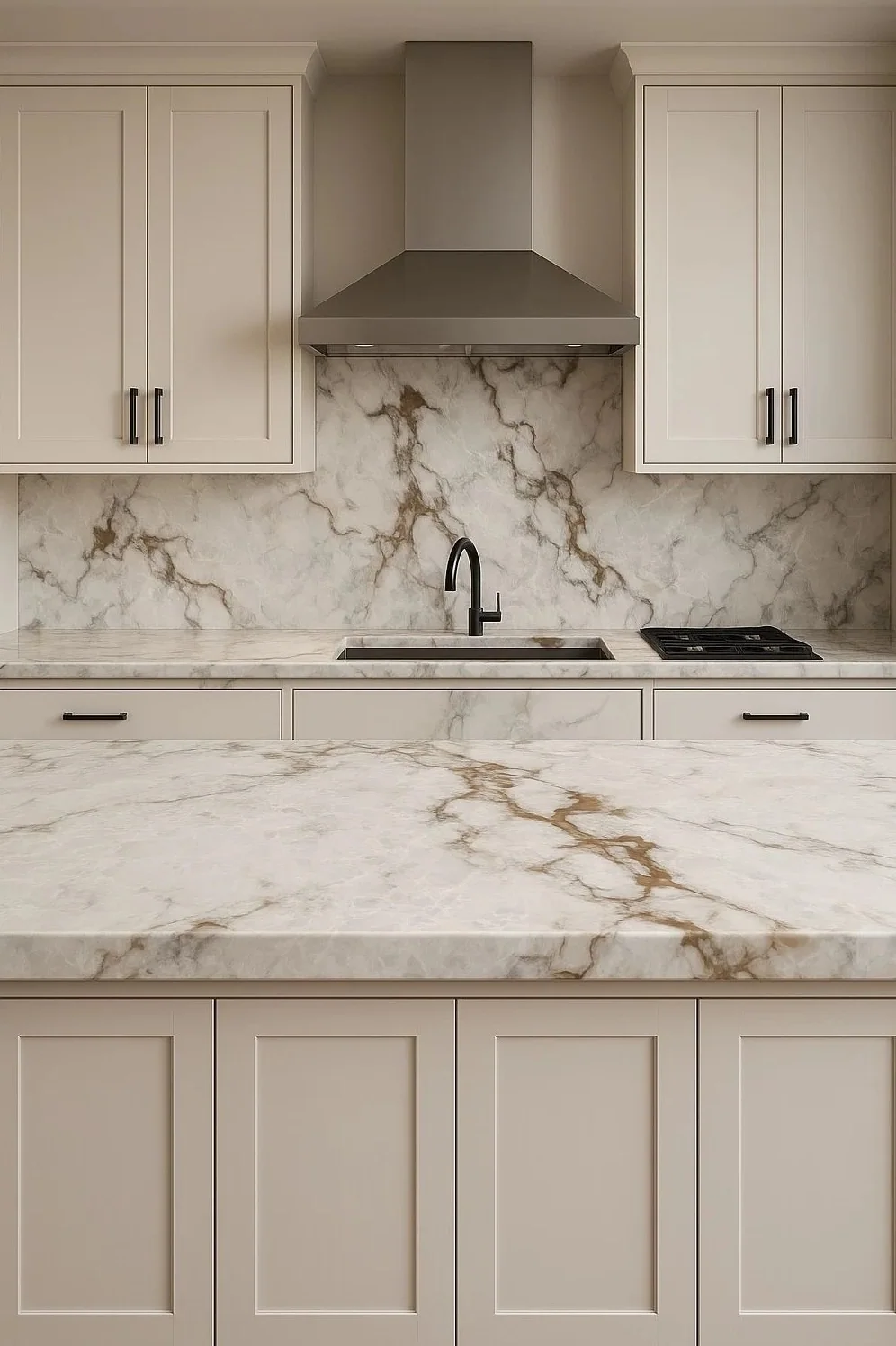
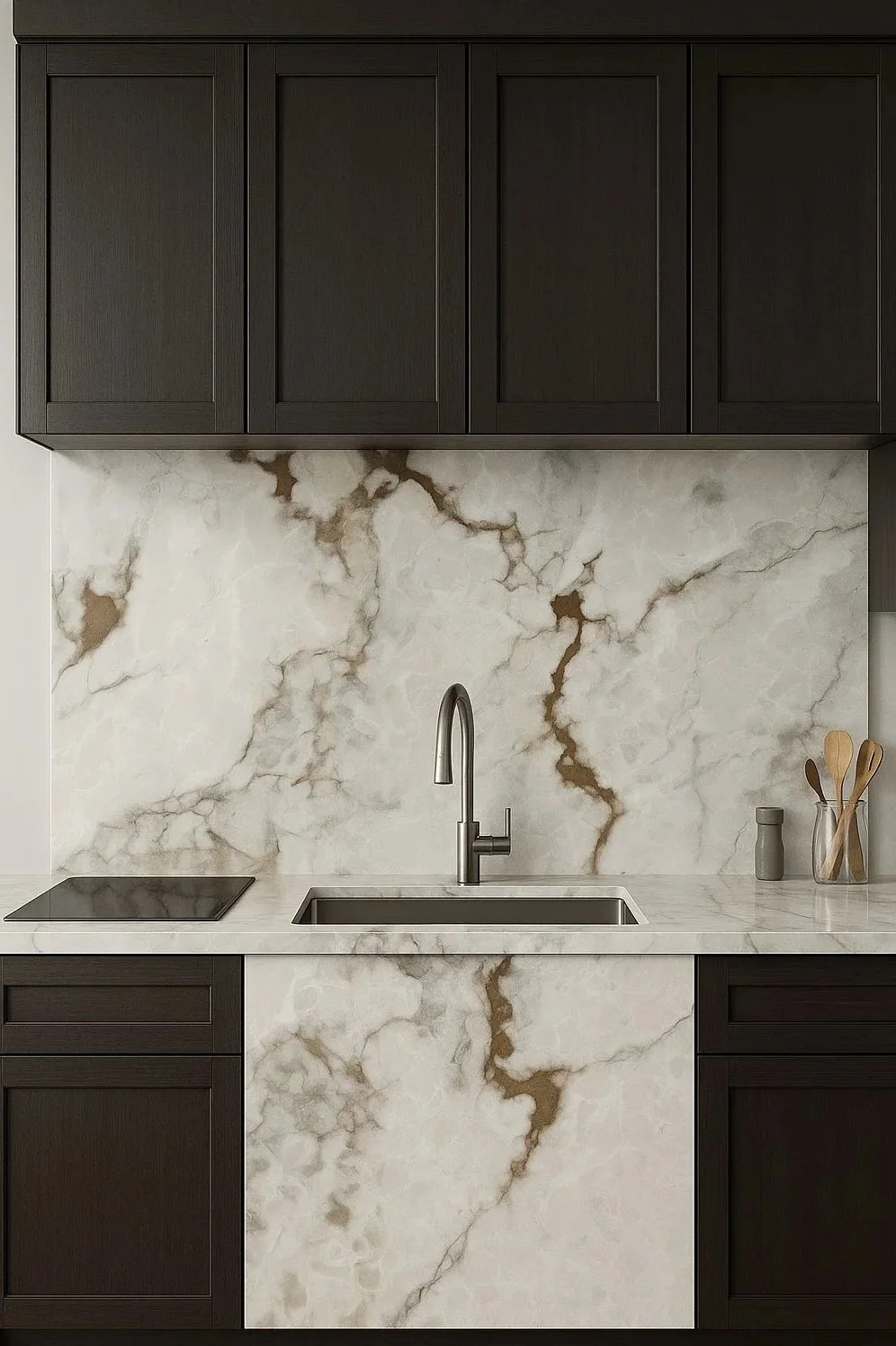
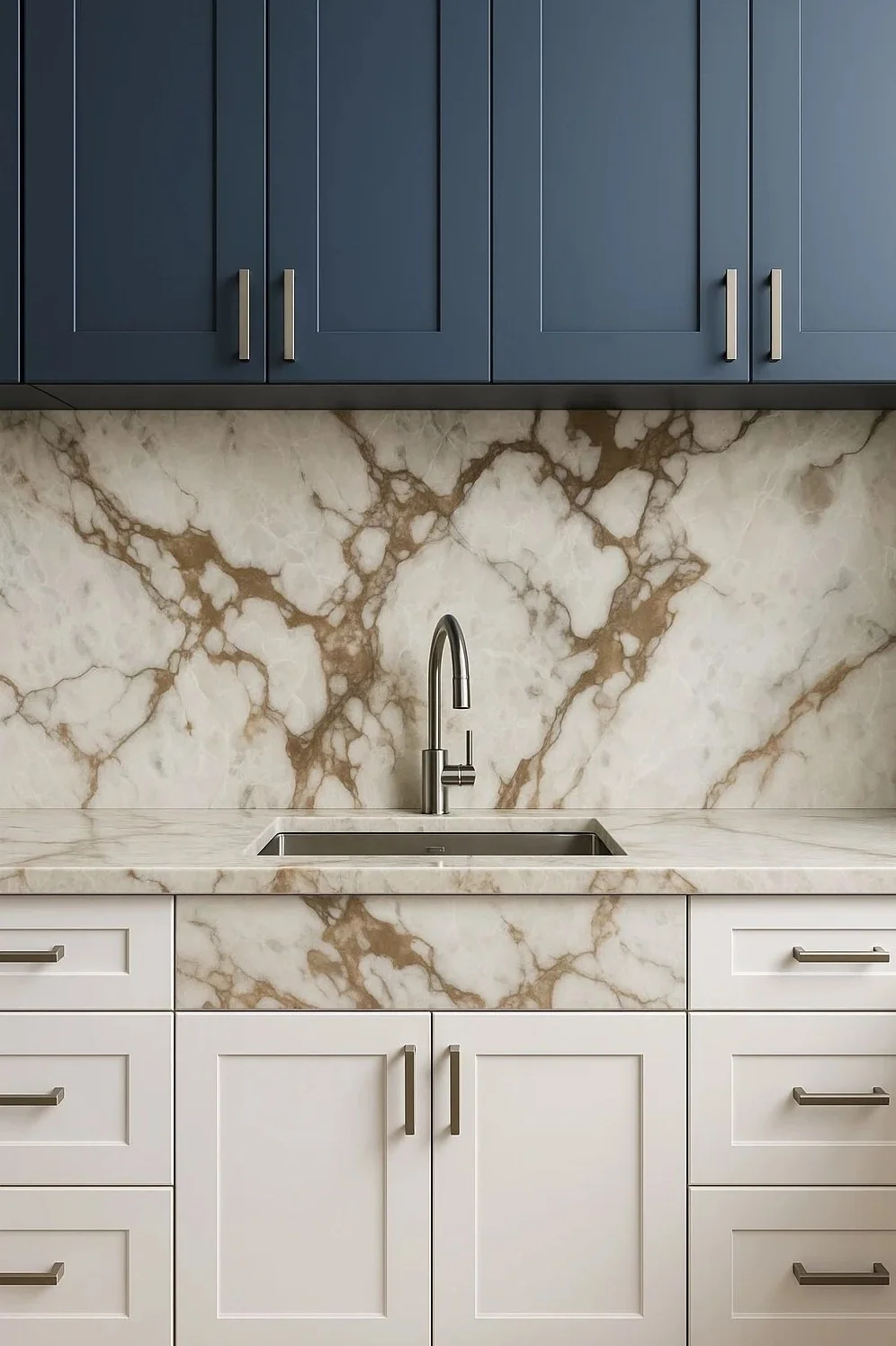
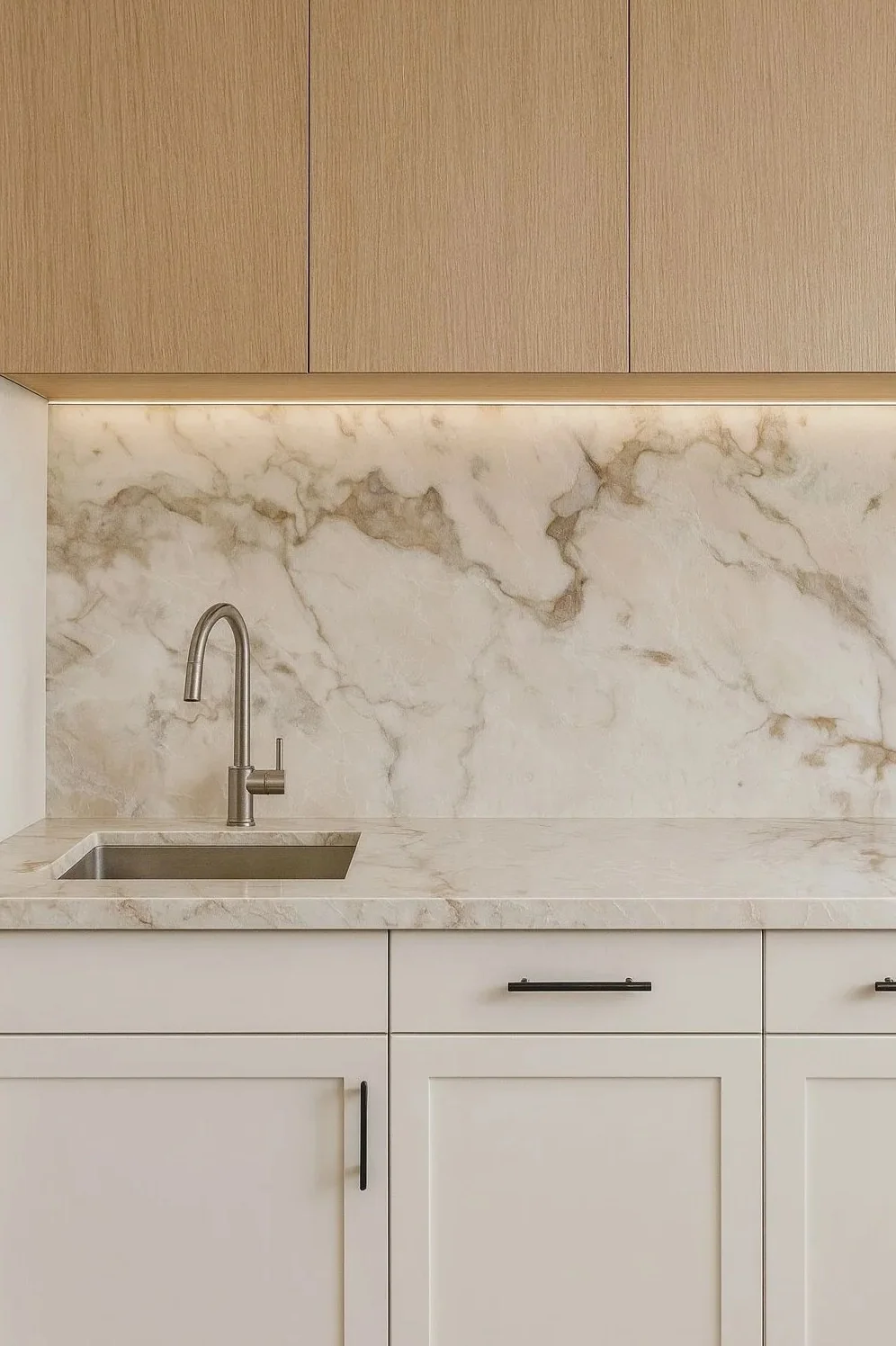
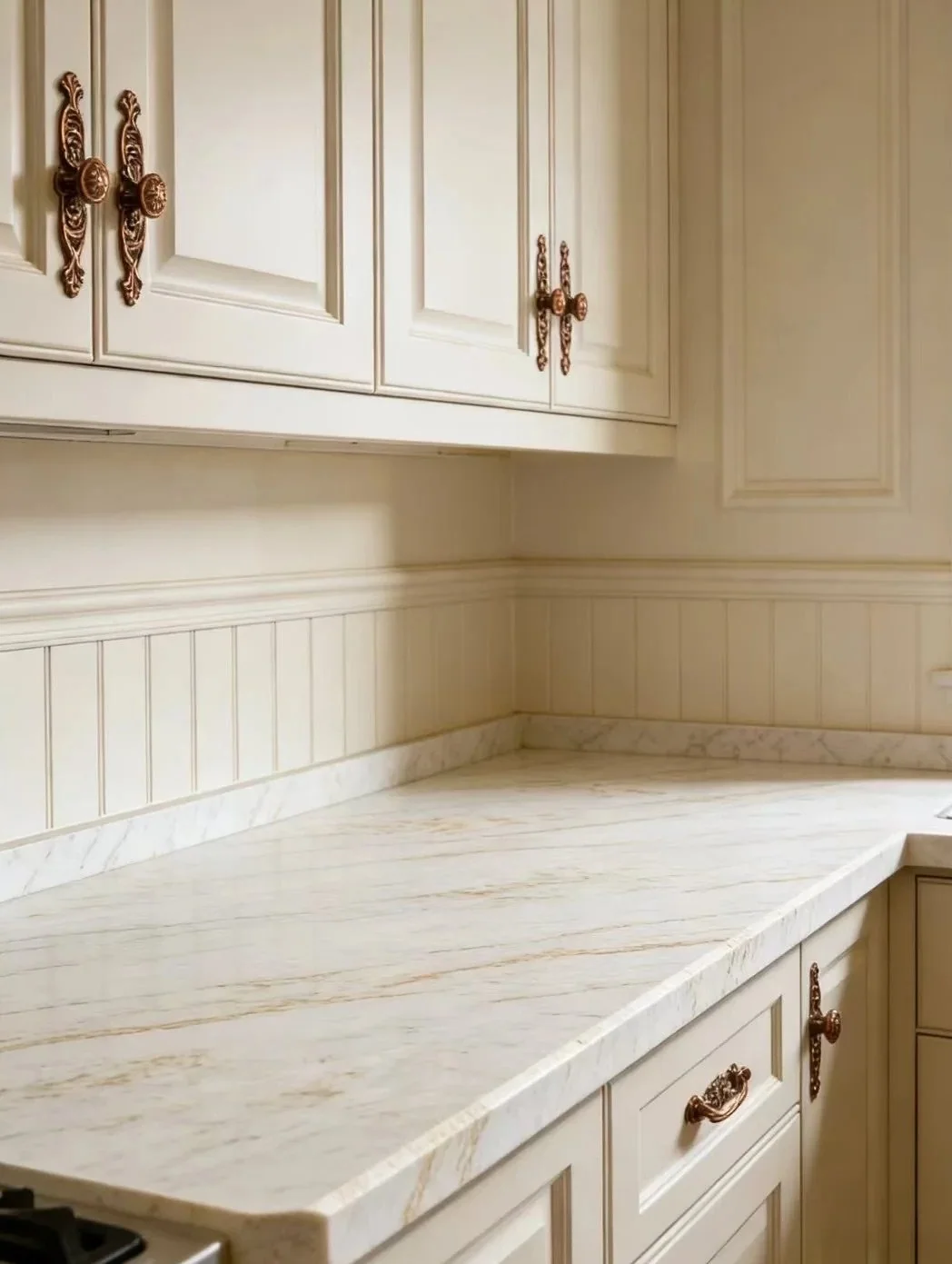
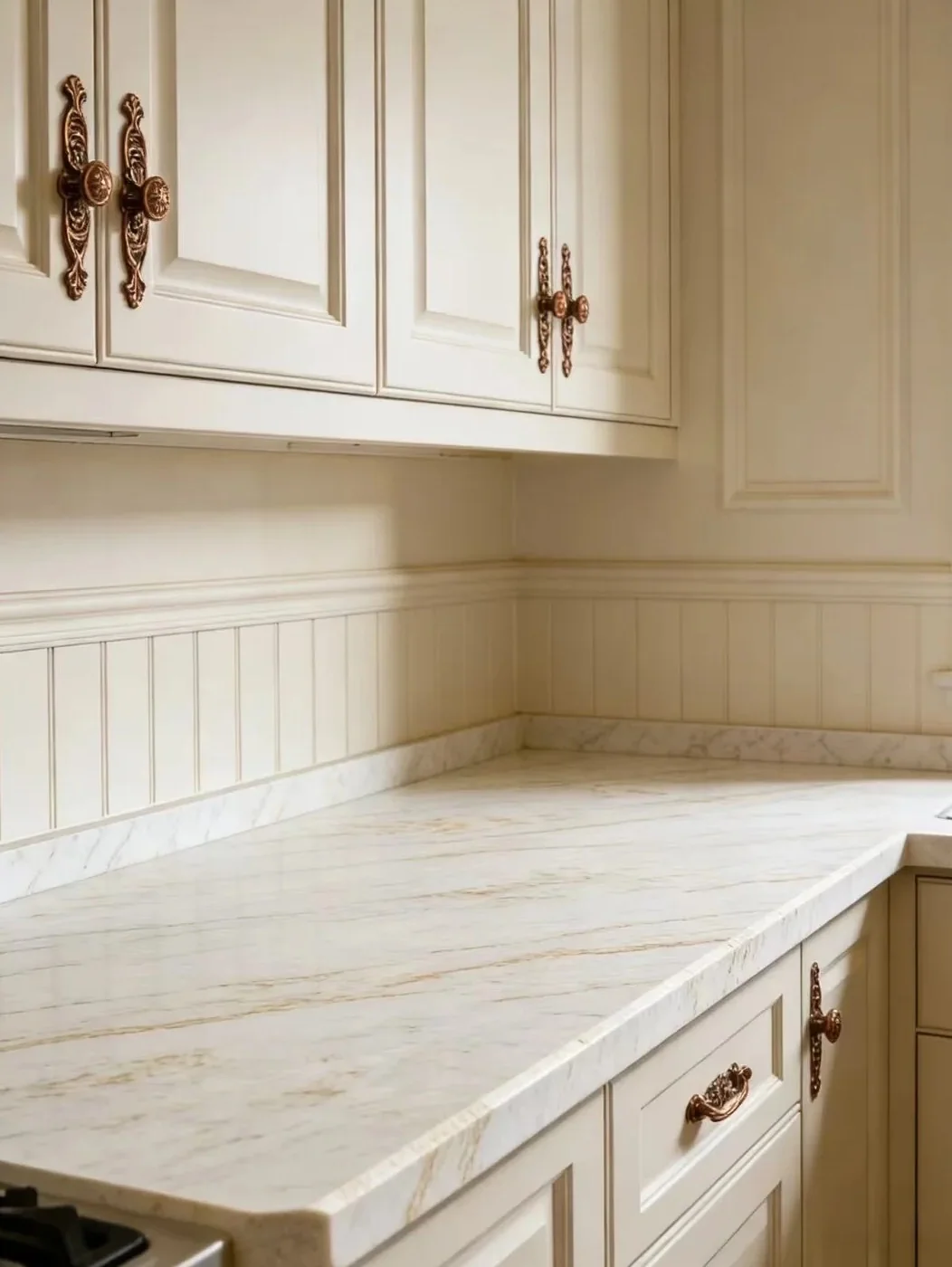
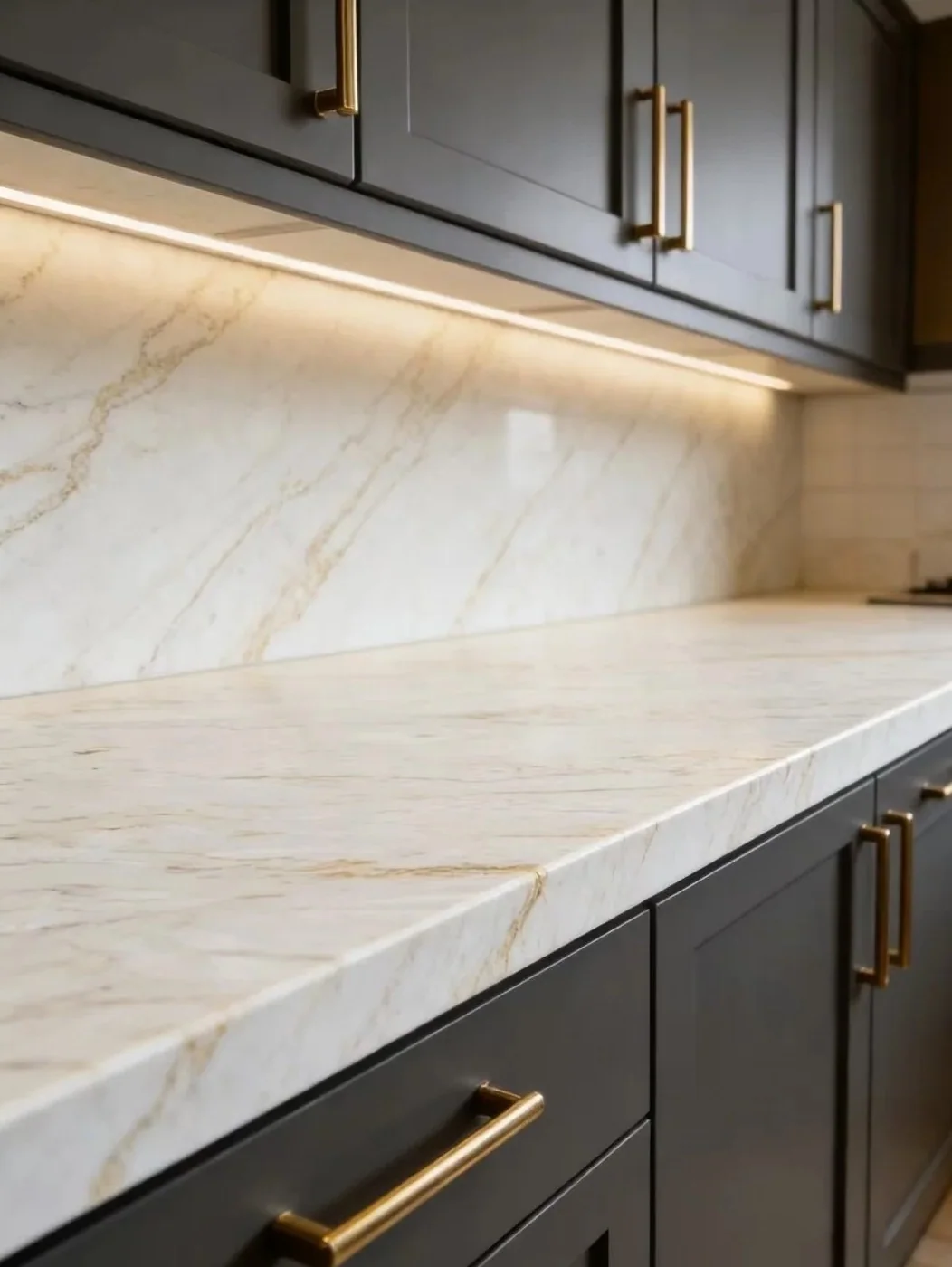
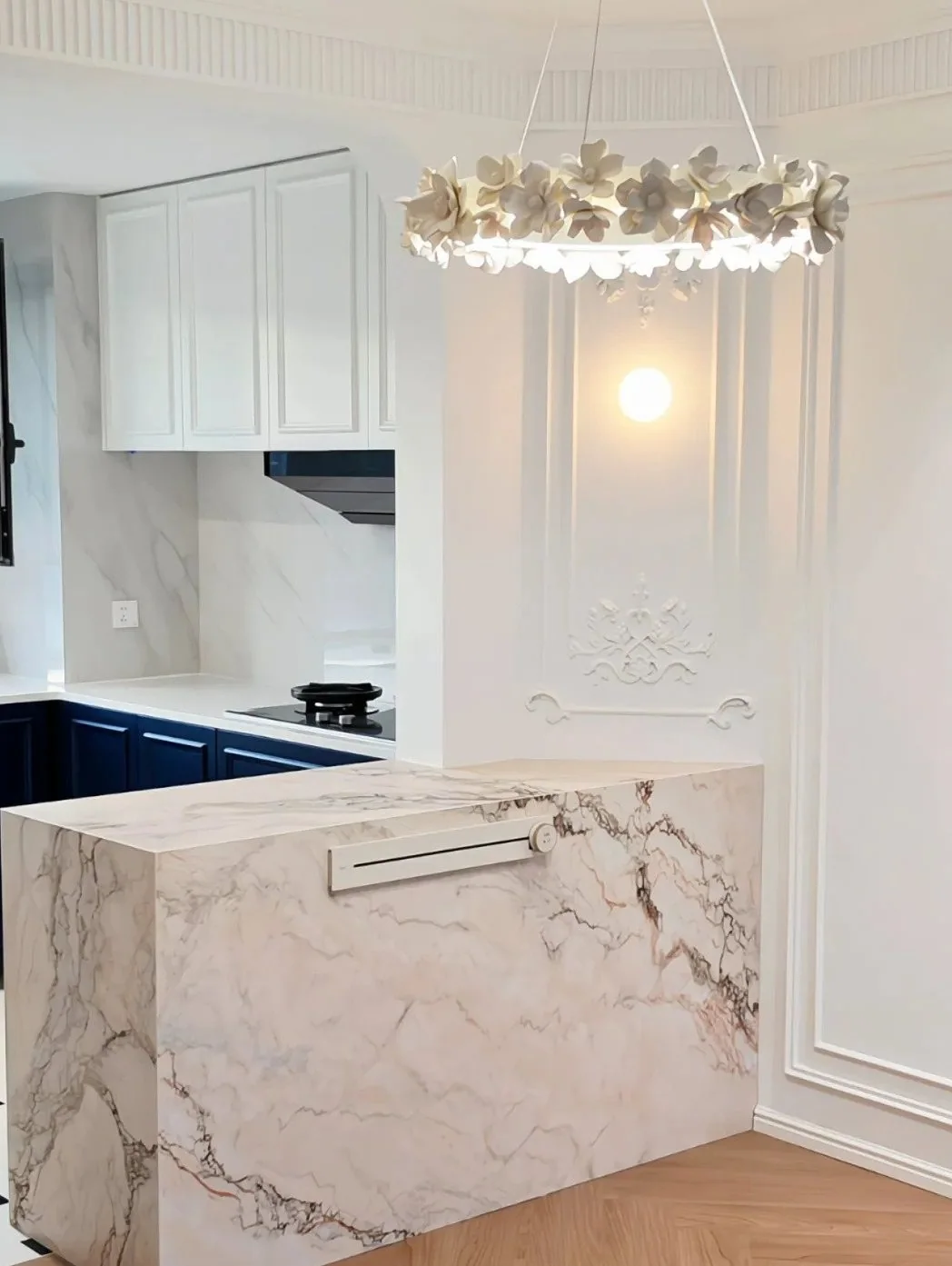
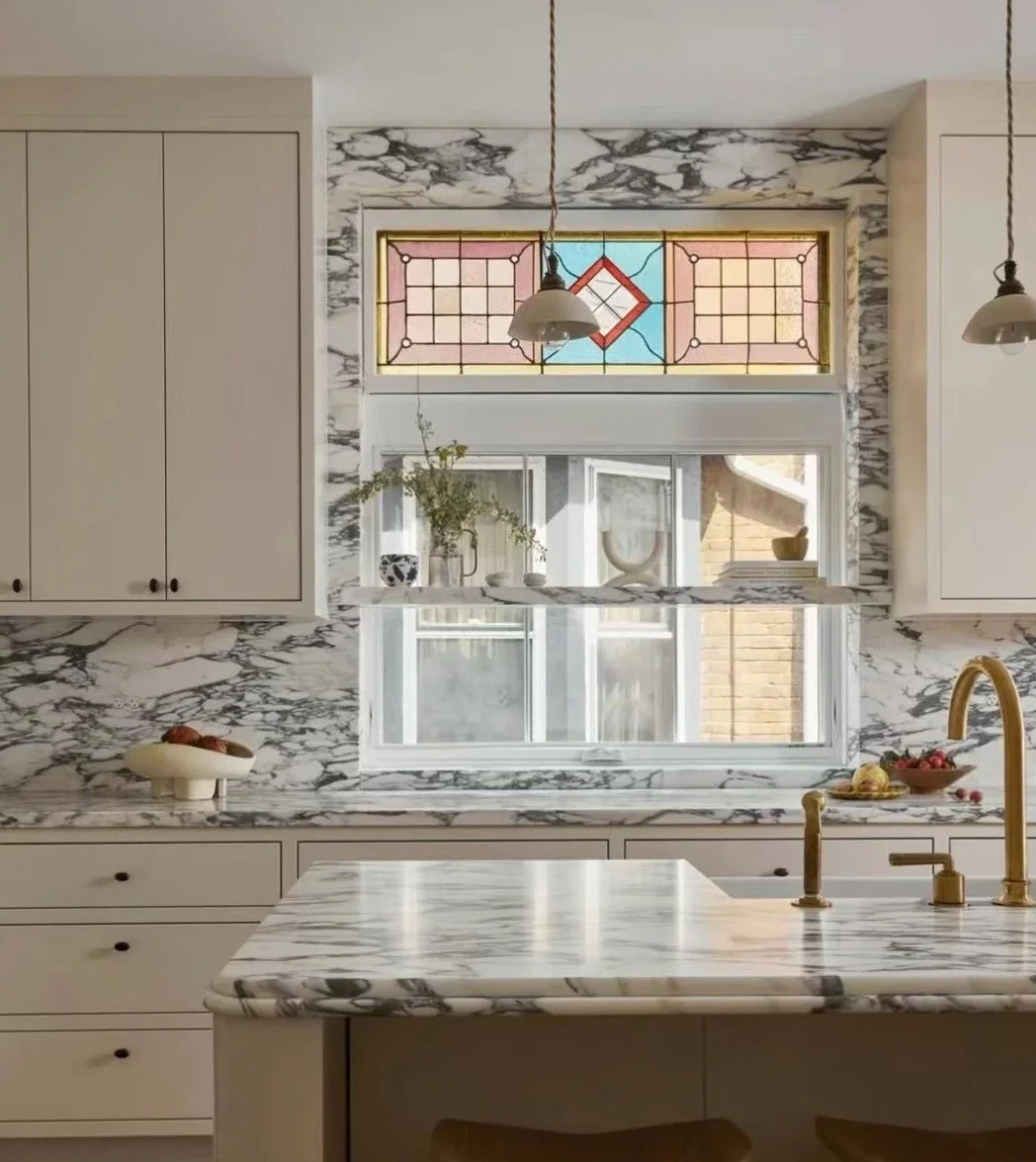
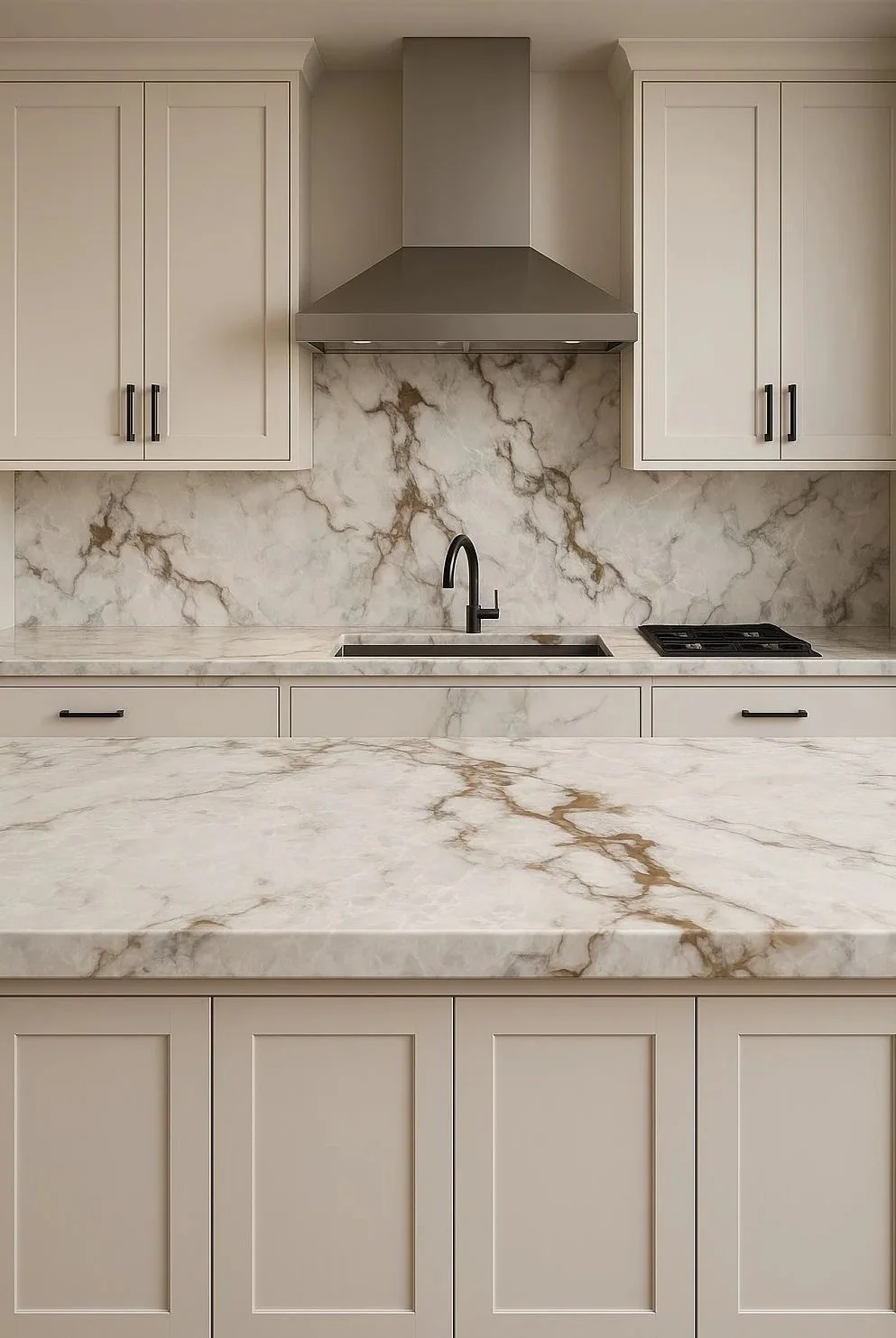
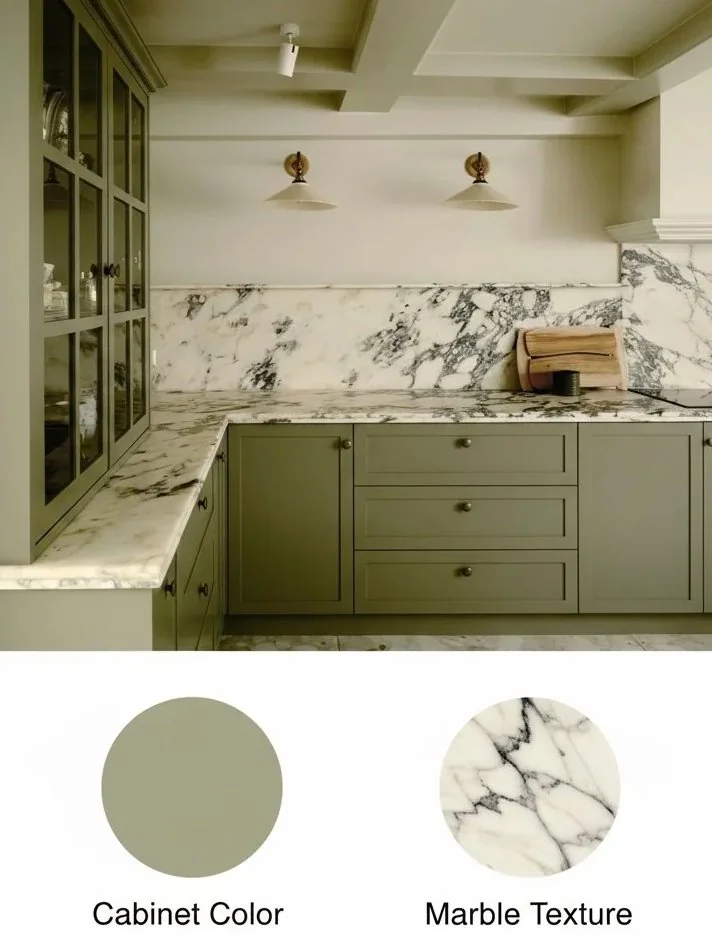
In kitchens, marble should be specified as a complete composition rather than as a generic “white stone.” Approve the exact slab or slab range, finish, backsplash height, seam locations, vein direction and edge detail before fabrication. Large counters and full-height backsplashes make color shifts and vein mismatches much more visible, so cabinet color and lighting should be reviewed together with the stone sample.
For custom cabinetry, the relationship between the countertop, backsplash and cabinet finish is as important as the stone itself. Cream cabinetry softens warm-veined marble, dark cabinetry increases contrast, while blue or natural wood tones can make brown-gold veining feel more deliberate. This is why full-size layout approval is valuable on premium kitchens.
4. Travertine: warm, tactile and ideal for sculptural coffee tables
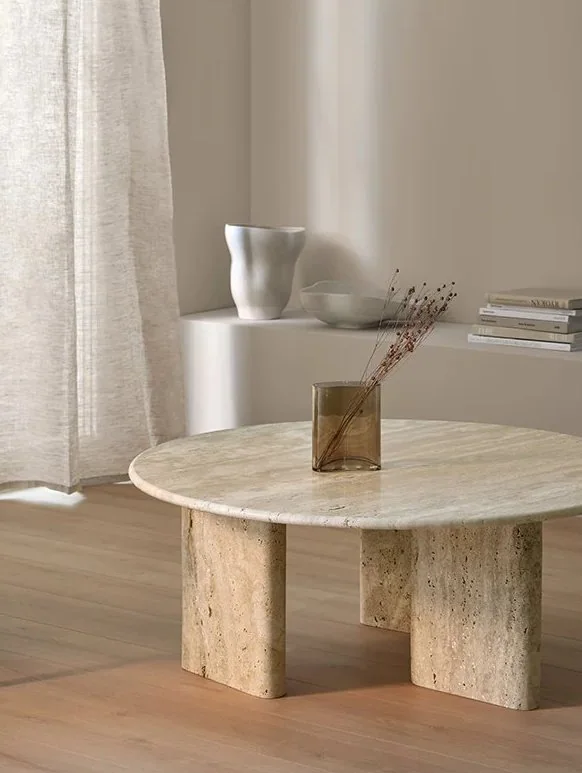
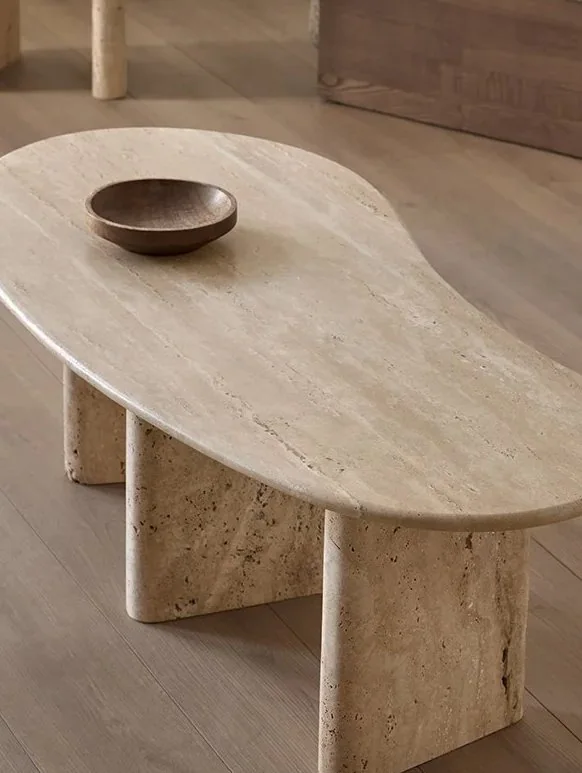
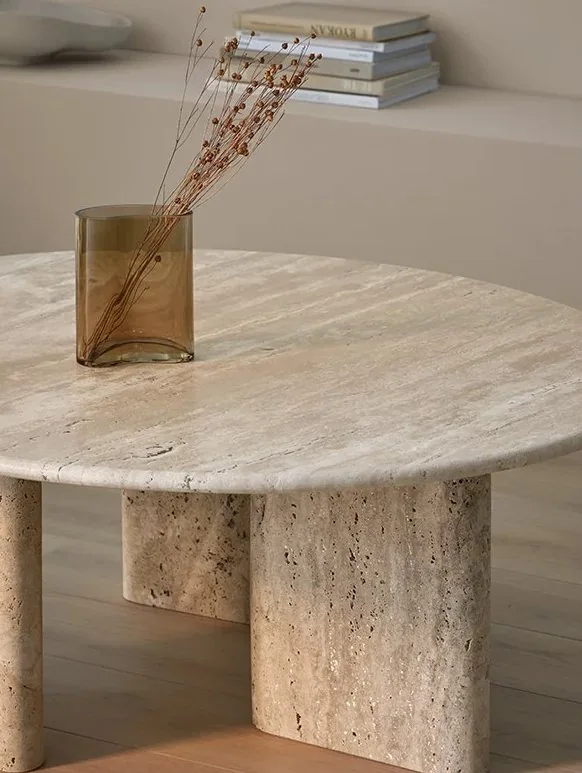
Travertine is a form of limestone formed around mineral springs. Its most recognizable feature is the network of pores, voids and linear bands that gives the stone its soft, architectural character.
For furniture, travertine is especially effective on coffee tables, side tables and consoles because the stone’s texture becomes part of the object. Filled travertine creates a smoother, more practical surface; unfilled travertine keeps more natural voids but requires more care around crumbs, liquids and cleaning.
What to specify: filled vs unfilled, honed vs polished, vein-cut vs cross-cut, edge profile, sealant, and whether visible holes are acceptable.
5. Granite: the durability-first natural stone
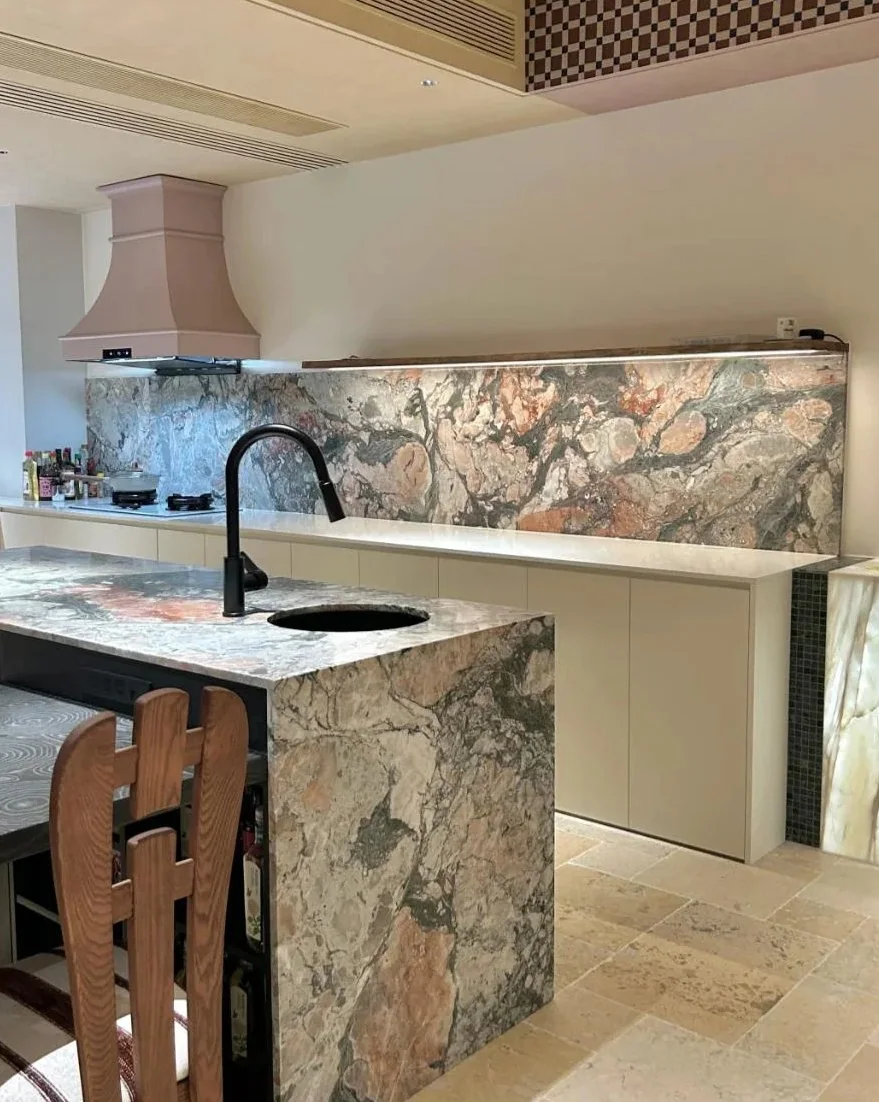
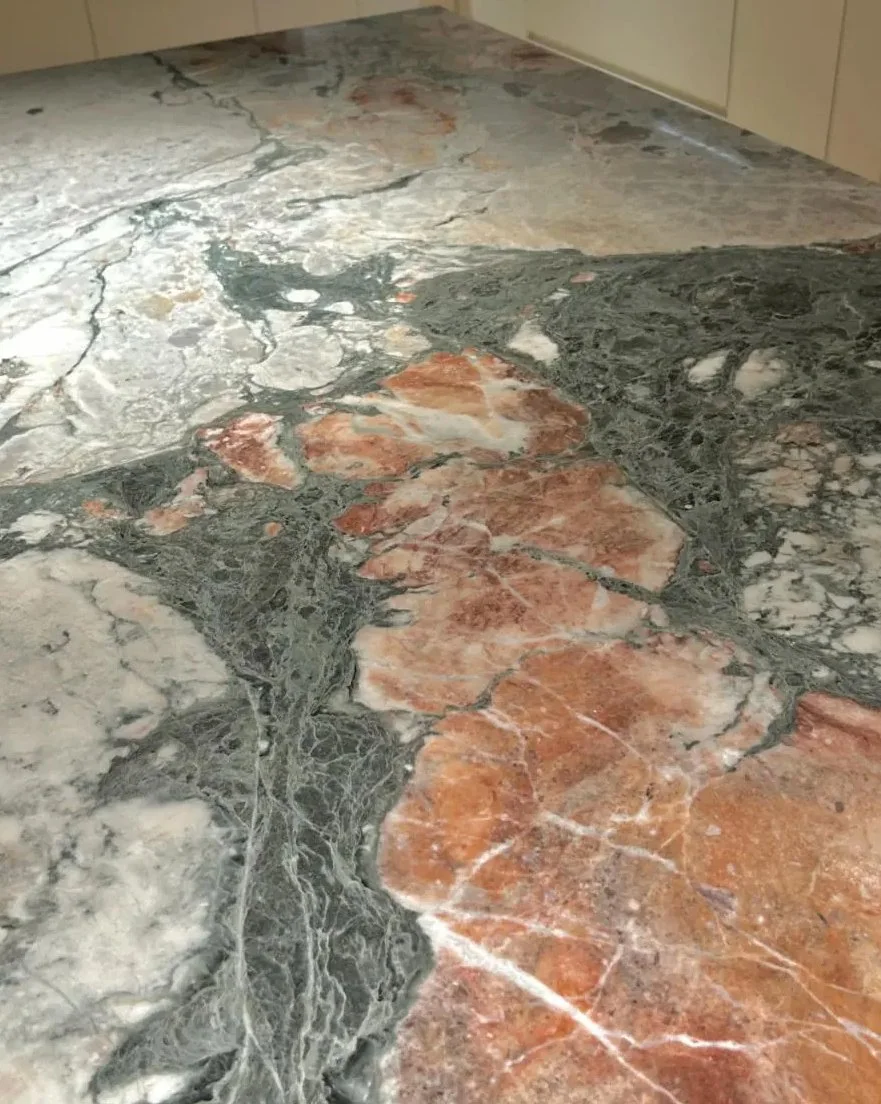
Granite is an igneous stone made from interlocking mineral crystals. In practical terms, it is one of the strongest natural-stone choices for high-use kitchens and furniture surfaces.
Compared with marble and travertine, granite usually tolerates scratching, heat and household use better. Some granites are dense enough to need little sealing; others are more absorbent and benefit from periodic sealing. The exact stone, finish and supplier data matter more than the generic word “granite.”
Best furniture: kitchen islands, dining tables, bar tops, outdoor-capable applications when the chosen granite and finish are suitable, and other surfaces where durability is more important than a soft marble-like look.
6. Quartz: engineered consistency and easy daily care
Residential quartz is an engineered stone made from quartz minerals combined with binders and pigments. The key advantage is control: color, pattern and finish can be repeated much more consistently than natural marble or granite, which makes quartz useful when a project needs multiple counters, a large island or coordinated surfaces across several rooms.
Quartz is low-porosity and generally does not require sealing, so daily care is straightforward. It also resists many common household stains. The main limitation is direct high heat: polymer binders can discolor or be damaged, so hot cookware should be placed on a trivet rather than directly on the surface.
Best uses: kitchen counters, islands, vanities and streamlined dining surfaces where predictable color, low maintenance and easy day-to-day cleaning matter more than one-of-a-kind natural veining.
7. Sintered stone: thin, large-format and practical
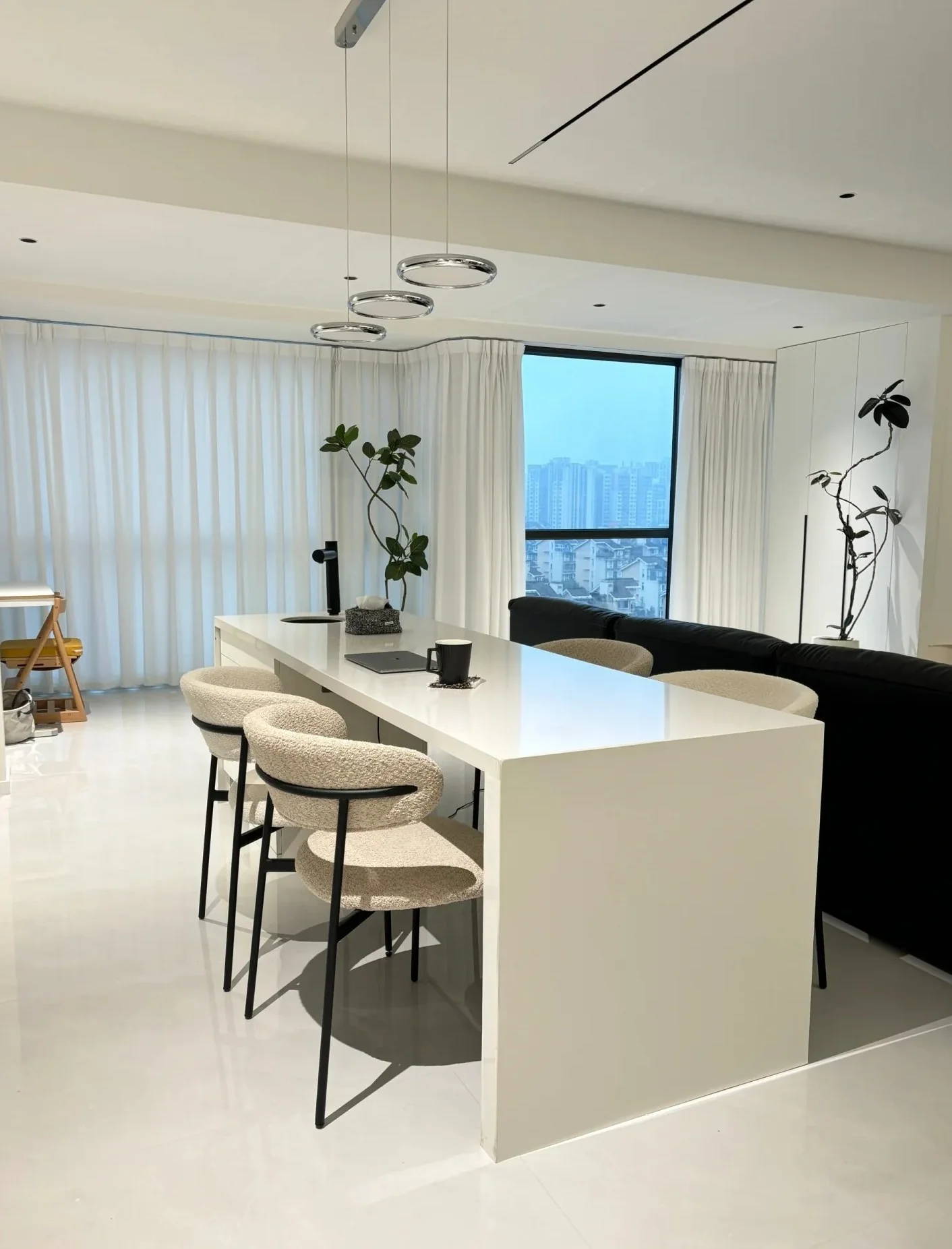
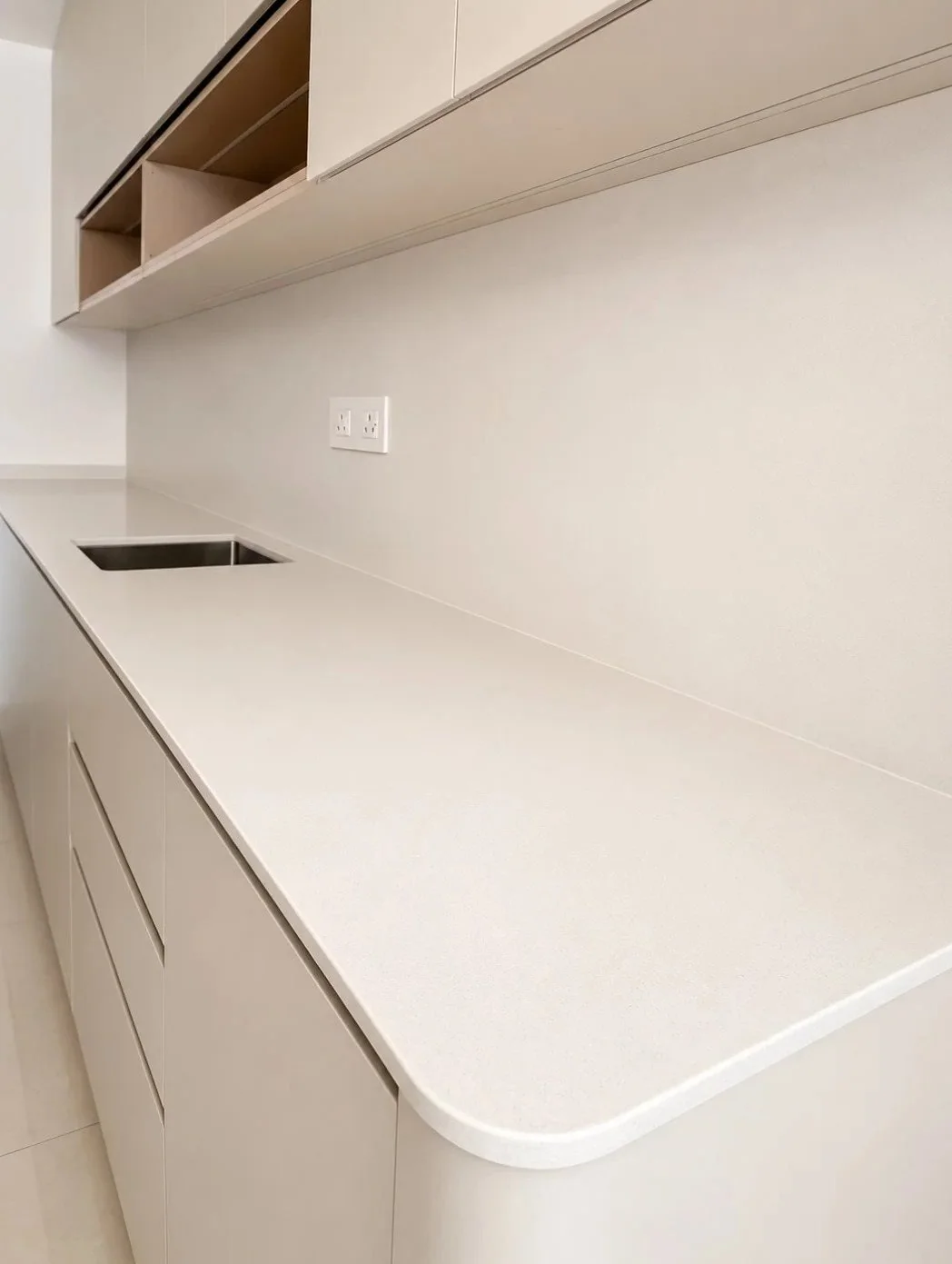
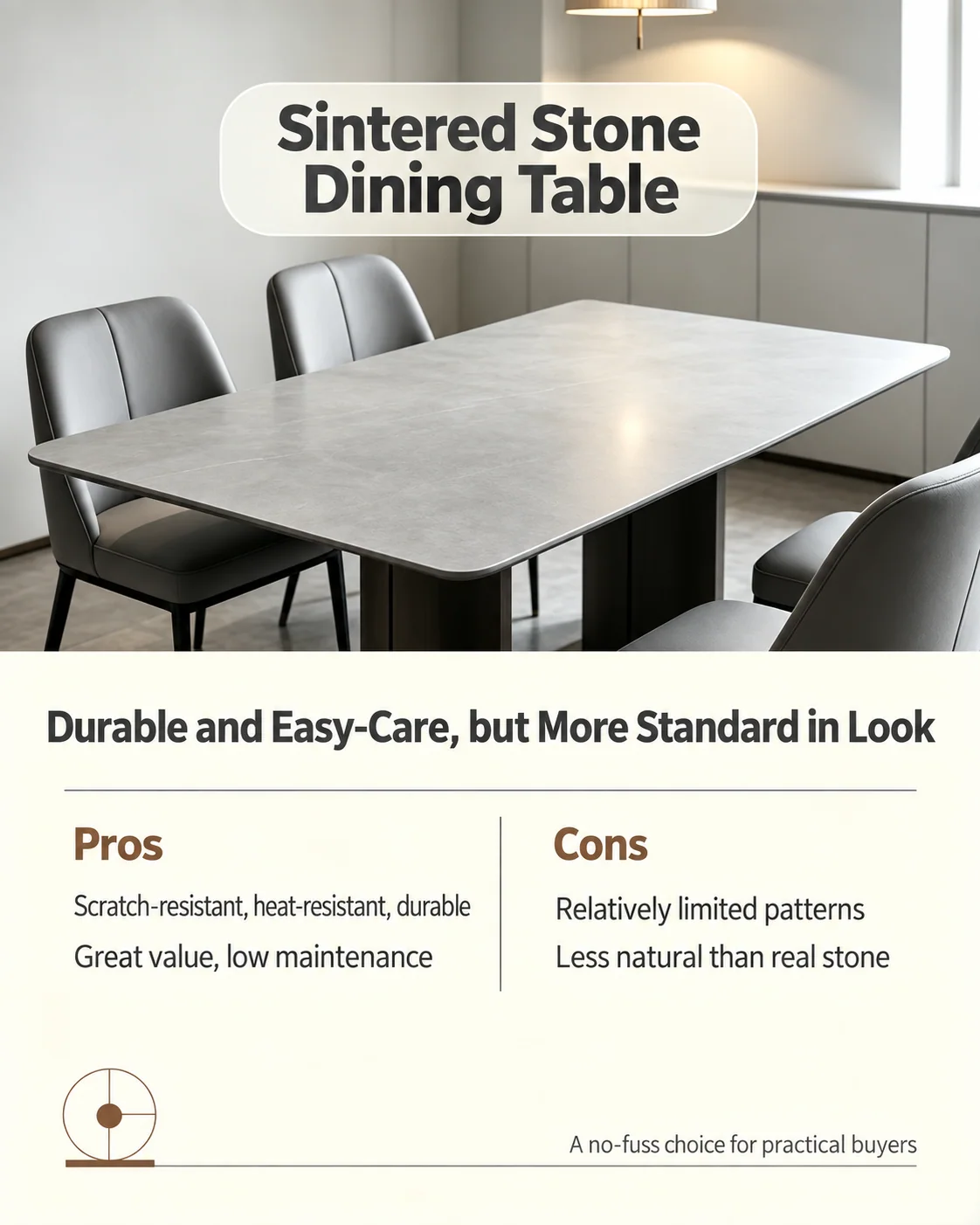
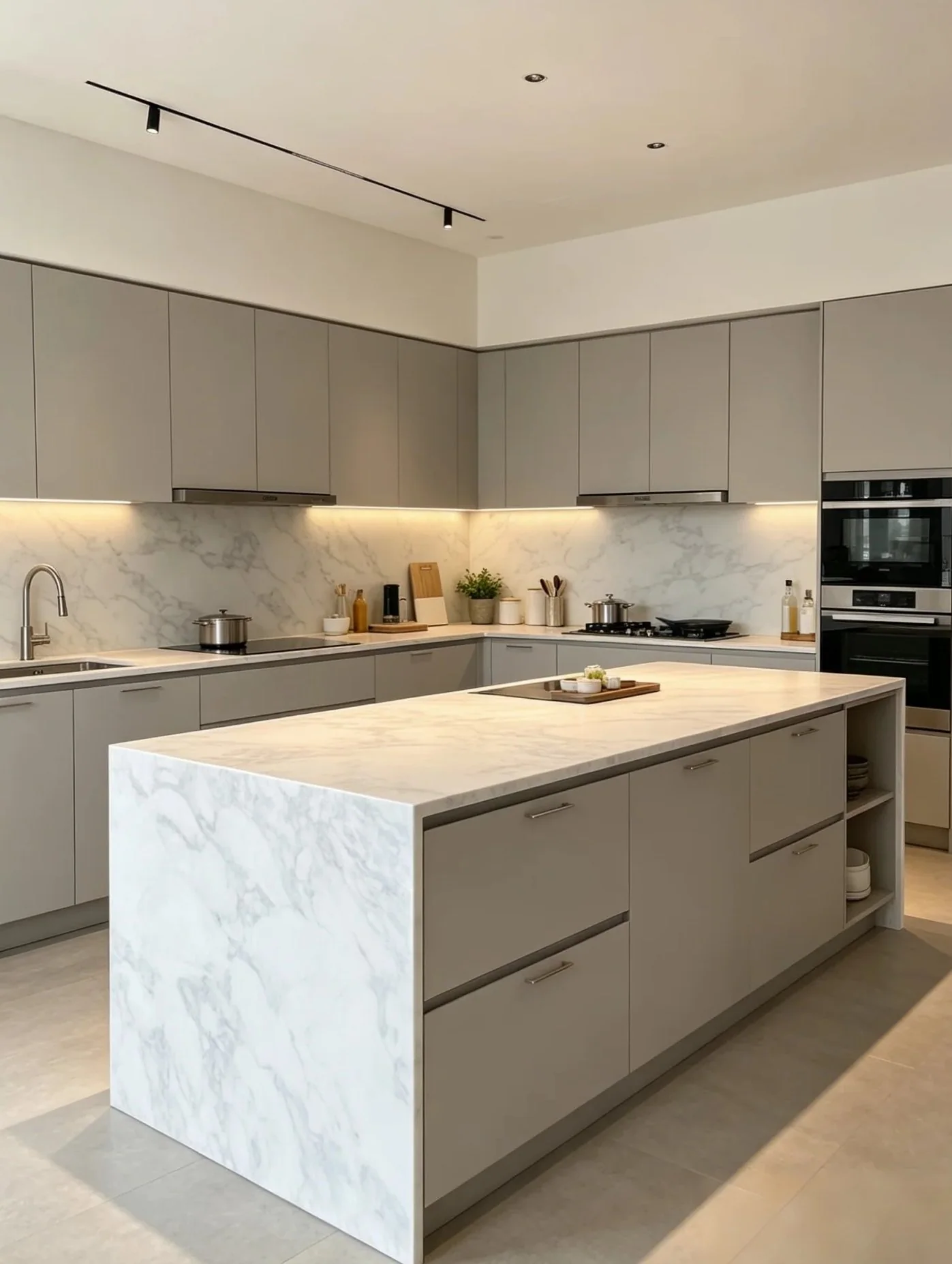
Sintered stone is a dense manufactured mineral surface created by compacting and firing mineral ingredients under high pressure and heat. It is commonly available in large-format, relatively thin slabs, which allows designers to create slim dining tops, waterfall islands, cabinet cladding and wall panels with fewer visual breaks.
Its strengths are practical: very low water absorption, strong stain resistance, heat resistance and good color stability. The important detail is structural. Because many sintered slabs are thin, the substrate, metal frame, adhesive system and edge fabrication must be designed together. Surface durability does not eliminate the risk of edge chipping when support is poor.
Best uses: dining tables, coffee tables, kitchen islands, cabinet fronts and modern custom furniture where slim profiles, large-format continuity and easy care are priorities.
8. Natural stone vs engineered stone: what changes in real life?
The biggest difference is not simply “natural versus man-made.” Natural stones such as marble, travertine and granite offer geological variation that cannot be perfectly repeated. Engineered quartz and sintered stone offer greater consistency and easier specification across large projects. The right choice depends on whether you value uniqueness, maintenance simplicity, heat performance, thin profiles or visual predictability most.
Engineered surfaces — quartz and sintered stone — are manufactured to control color, pattern and performance. They are easier to repeat across a project, which can be valuable for developers, hospitality projects and whole-home packages.
Choose natural stone when…
- You want unique veining or mineral movement.
- Natural aging and patina are acceptable.
- You can approve slabs individually.
- The stone itself is part of the design story.
Choose engineered stone when…
- You want consistent color across multiple pieces.
- Easy maintenance is a priority.
- You need thinner or larger-format applications.
- You are specifying repeatable packages or multi-unit projects.
9. Choose stone by furniture type
Start with how the furniture will be used, then choose the stone. A formal dining table can tolerate a different maintenance profile from a family kitchen island, while a coffee table can prioritize sculptural texture over food-stain resistance. This application-first approach usually produces a better result than choosing a slab solely because the pattern looks attractive.
Dining tables
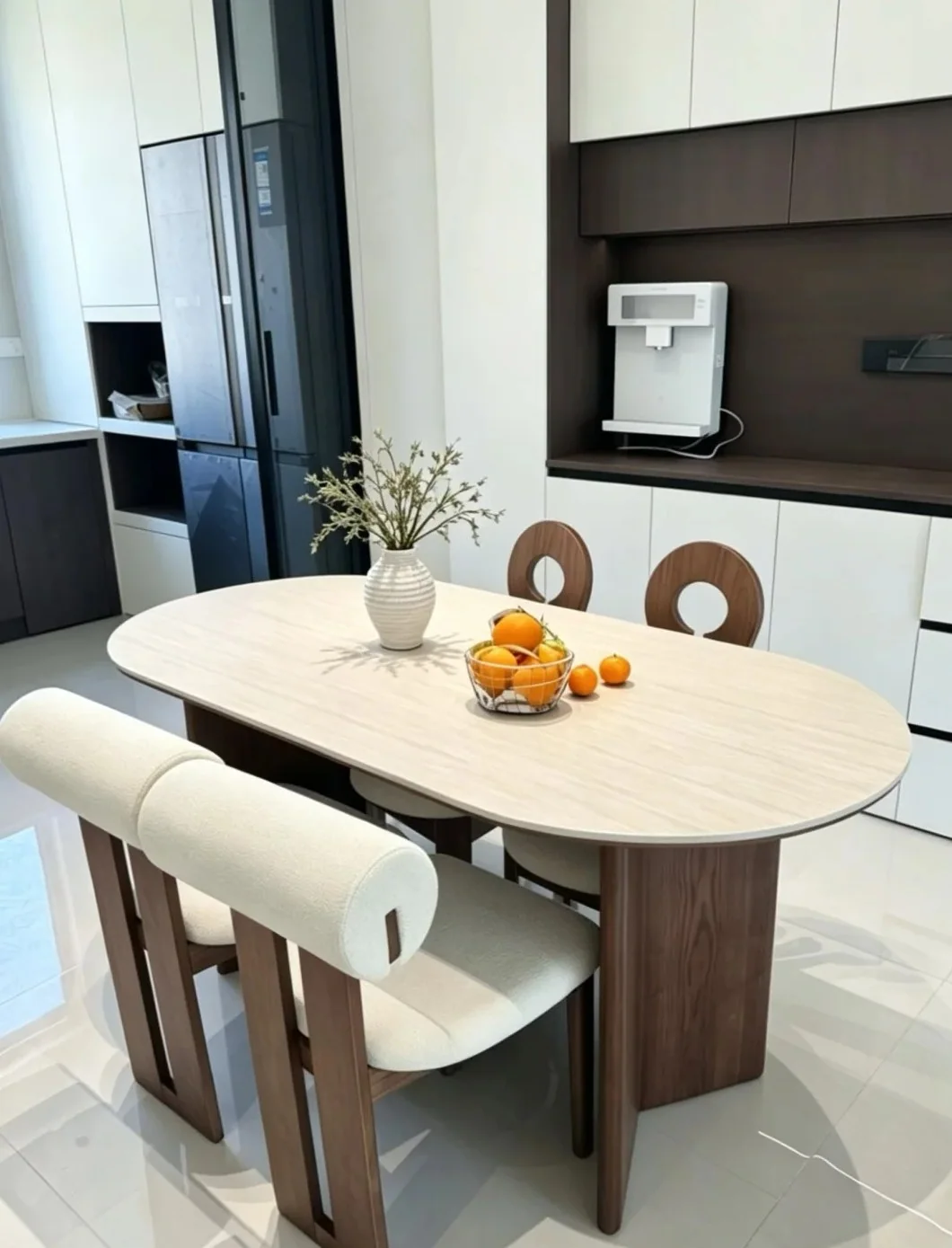
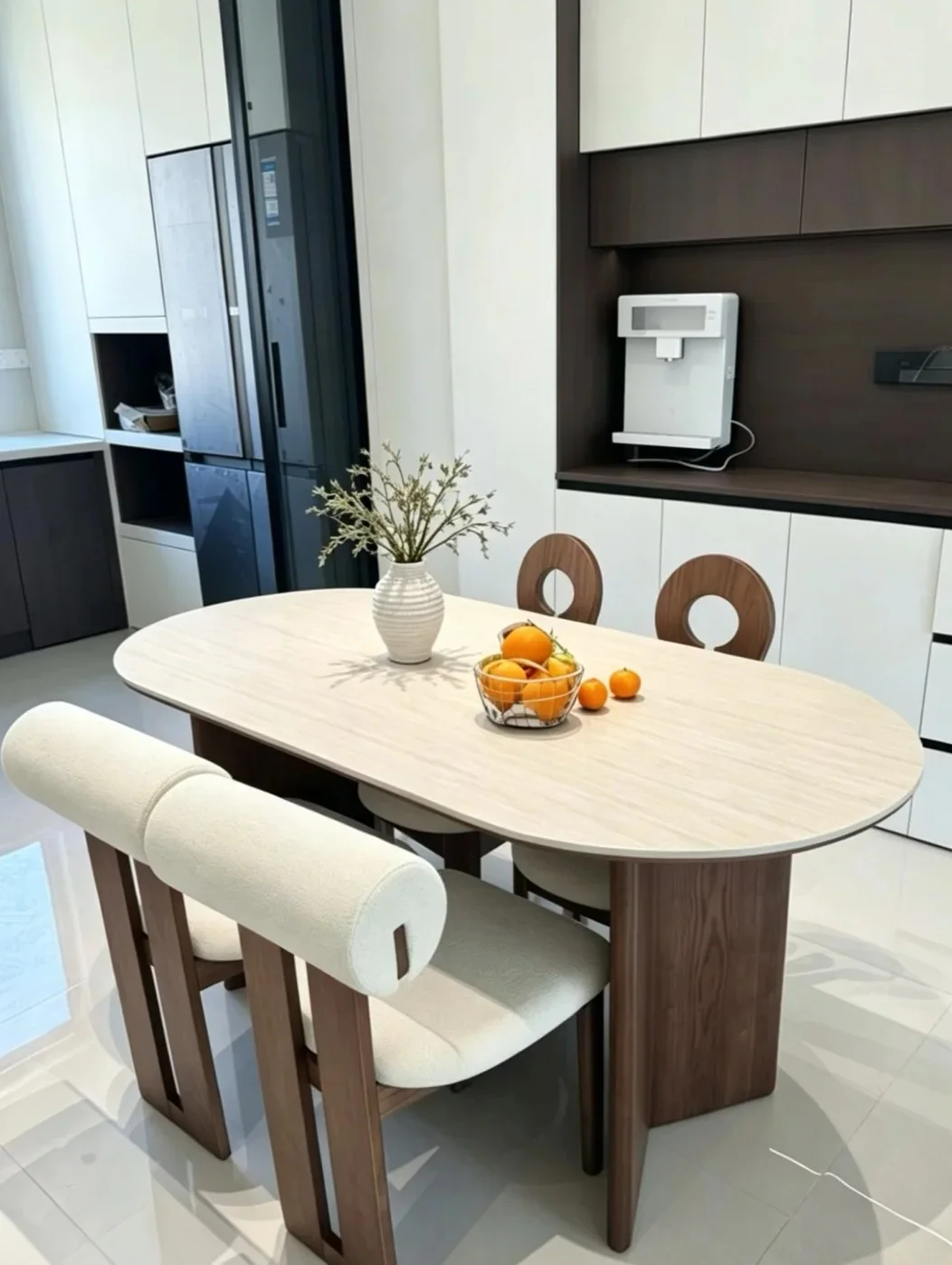
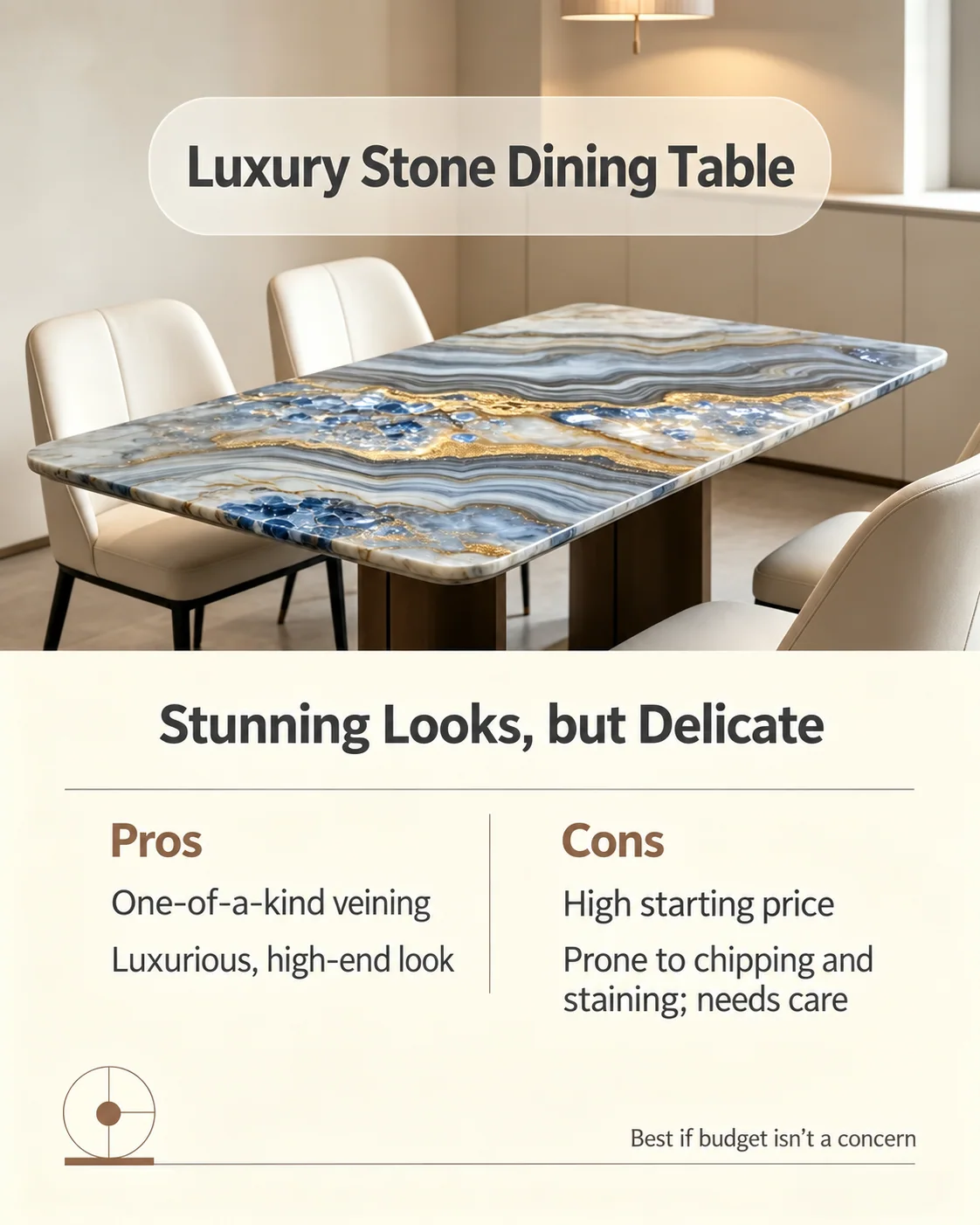
For a showpiece, marble delivers the strongest natural visual impact. Granite offers higher durability. Quartz and sintered stone are easier for families who want low-maintenance dining. Explore Ratahome’s Dining Tables.
Coffee tables
Travertine and marble are especially effective because lower-use surfaces let texture and veining take priority. For very thin profiles, sintered stone can be practical. See Coffee Tables.
Kitchen islands
Granite, quartz and sintered stone are practical for heavy use. Marble works when the client accepts etching and maintenance as part of the material character. See Kitchen Islands.
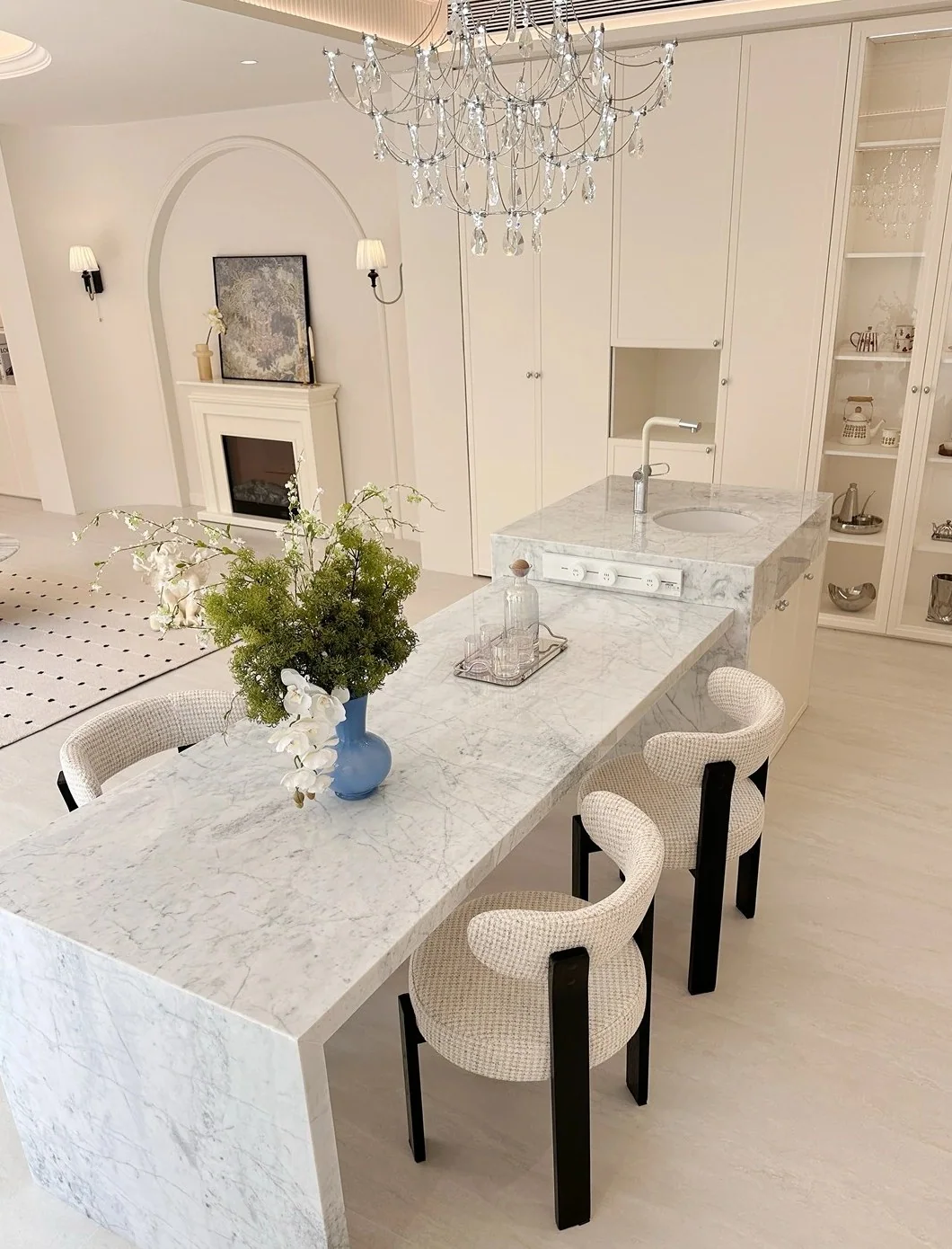
For a coordinated whole-home palette, stone should also be compared with cabinetry finishes, metal tones, wood species and floor materials. Ratahome’s Materials & Finishes page shows how these decisions fit together.
10. Thickness, edge profiles & support matter as much as the stone
A beautiful slab can still fail if the furniture is not engineered around its weight and brittleness. Natural stone is strong in compression but vulnerable to impact at corners, cutouts and long unsupported spans. Engineered slabs also depend on correct fabrication, especially when the design uses thin profiles.
Four details to specify
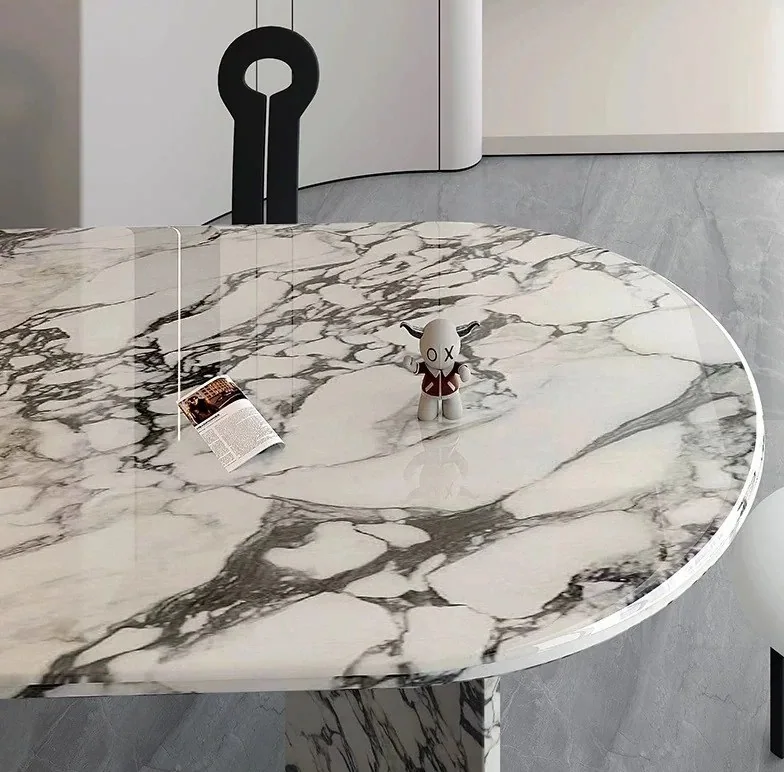
- Visible thickness: confirm whether the edge is true slab thickness or a mitred build-up.
- Edge profile: eased, rounded, bullnose and mitred edges create different visual weight and different chip resistance.
- Support: long dining-table spans may need steel reinforcement or a correctly positioned base.
- Transport: slab furniture should be packed to protect corners and prevent flex during international shipping.
11. Care, sealing & stain control
Stone care depends on mineral composition and finish. Natural stones are not equally porous, and “sealed” does not mean stain-proof or acid-proof.
- Marble: wipe spills quickly; avoid acidic cleaners; reseal when water absorption indicates the protection has weakened.
- Travertine: use pH-neutral cleaners; protect filled pores and edges; maintain the sealer appropriate to the finish.
- Granite: clean with mild products; sealing frequency depends on the specific stone and finish.
- Quartz: routine cleaning is simple, but avoid placing extremely hot cookware directly on the surface.
- Sintered stone: generally low-maintenance; still avoid impact on thin exposed edges and follow the manufacturer’s cleaning guidance.
On dining tables, coasters and placemats are useful not because every stone is delicate, but because they reduce concentrated impact, heat and staining around the most-used zones.
12. Factory specification & quality control
For custom furniture, “marble table” or “stone island” is not a complete specification. A production-ready stone schedule should document the exact material, slab selection, finish, visible thickness, edge profile, vein direction, base structure, reinforcement, cutouts, tolerance and packing method.
For natural stone, ask for slab photos before cutting so the final tabletop or waterfall edge can be planned around the vein pattern. For quartz and sintered stone, confirm the brand or technical sheet, batch color, finish, thickness and fabrication method.
Ratahome’s Quality Control process is relevant here because surface inspection alone is not enough: dimensions, edge chips, polish consistency, joints, support and packaging should all be checked before shipment.
13. Quick FAQ
Which stone is best for a dining table?
For natural beauty, marble is hard to beat. For higher durability, granite is stronger. For low-maintenance family use, quartz or sintered stone is usually easier. Travertine works best when texture and warm architectural character matter more than stain resistance.
Is quartz a natural stone?
Most quartz surfaces used in furniture and kitchens are engineered materials made from quartz minerals, pigments and binders. They are designed for consistency and low porosity.
Is marble too delicate for furniture?
No, but buyers need realistic expectations. Marble has been used in furniture for centuries. It simply requires faster spill cleanup, suitable cleaners and acceptance that acid etching or patina can develop over time.
Is sintered stone better than marble?
It is more practical in several ways, especially low porosity and maintenance, but it does not reproduce the exact depth and uniqueness of a natural marble slab. “Better” depends on whether the project prioritizes natural character or controlled performance.