
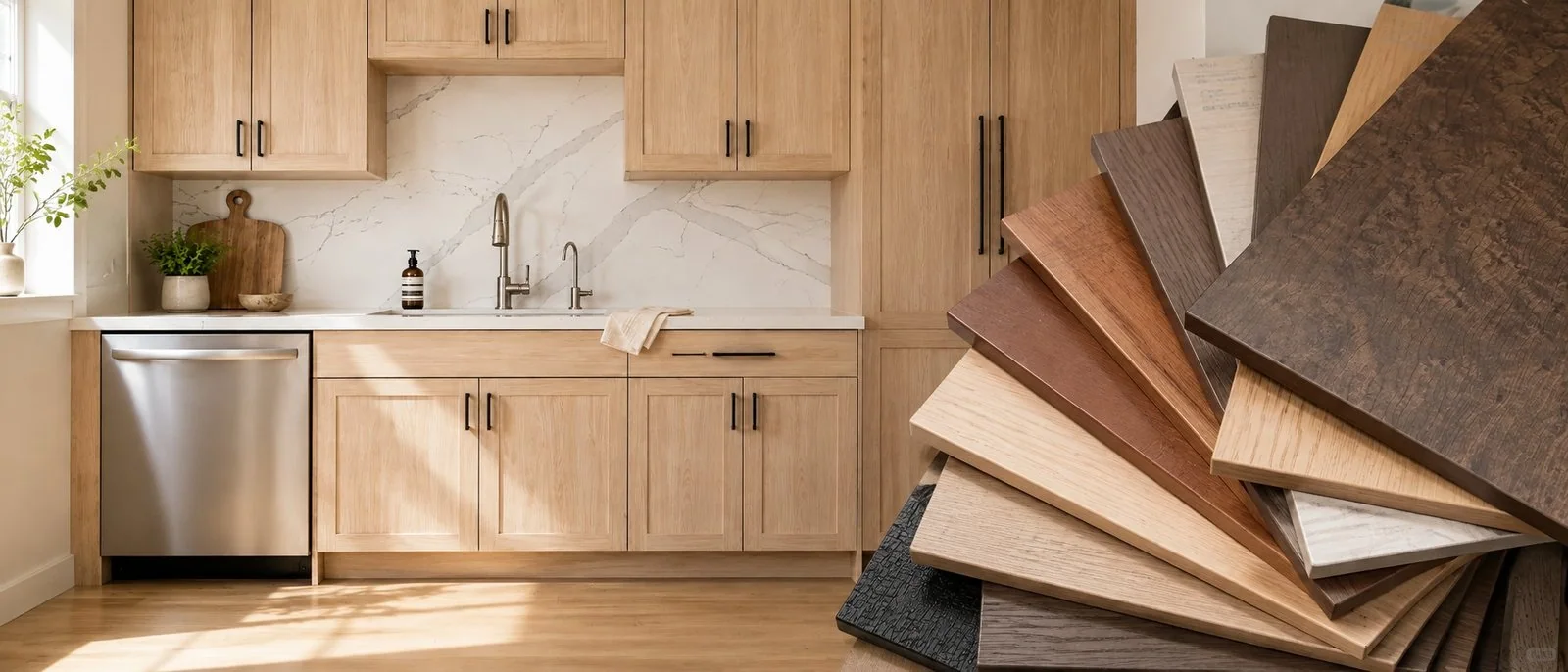
The best wood is not the darkest, hardest or most expensive species. The best wood is the one whose grain, strength, movement, finishing behavior and cost fit the exact furniture part you are building.
That distinction matters even more in a whole-home project. A dining table top, chair back, cabinet door, bed frame and exterior lounge set experience different loads and different humidity. Ratahome's Furniture Guide places wood selection inside a wider system of dimensions, construction, quality and care; this article goes deeper into the six woods that recur most often in custom furniture specifications.
1. Why wood choice matters in custom furniture
Wood species changes more than color. It influences how easily a surface dents, how a wide panel responds to seasonal humidity, how cleanly a curved arm can be machined, whether a chair rail can tolerate repeated flexing, how visible the grain will remain under stain, and how much variation a production batch may show.
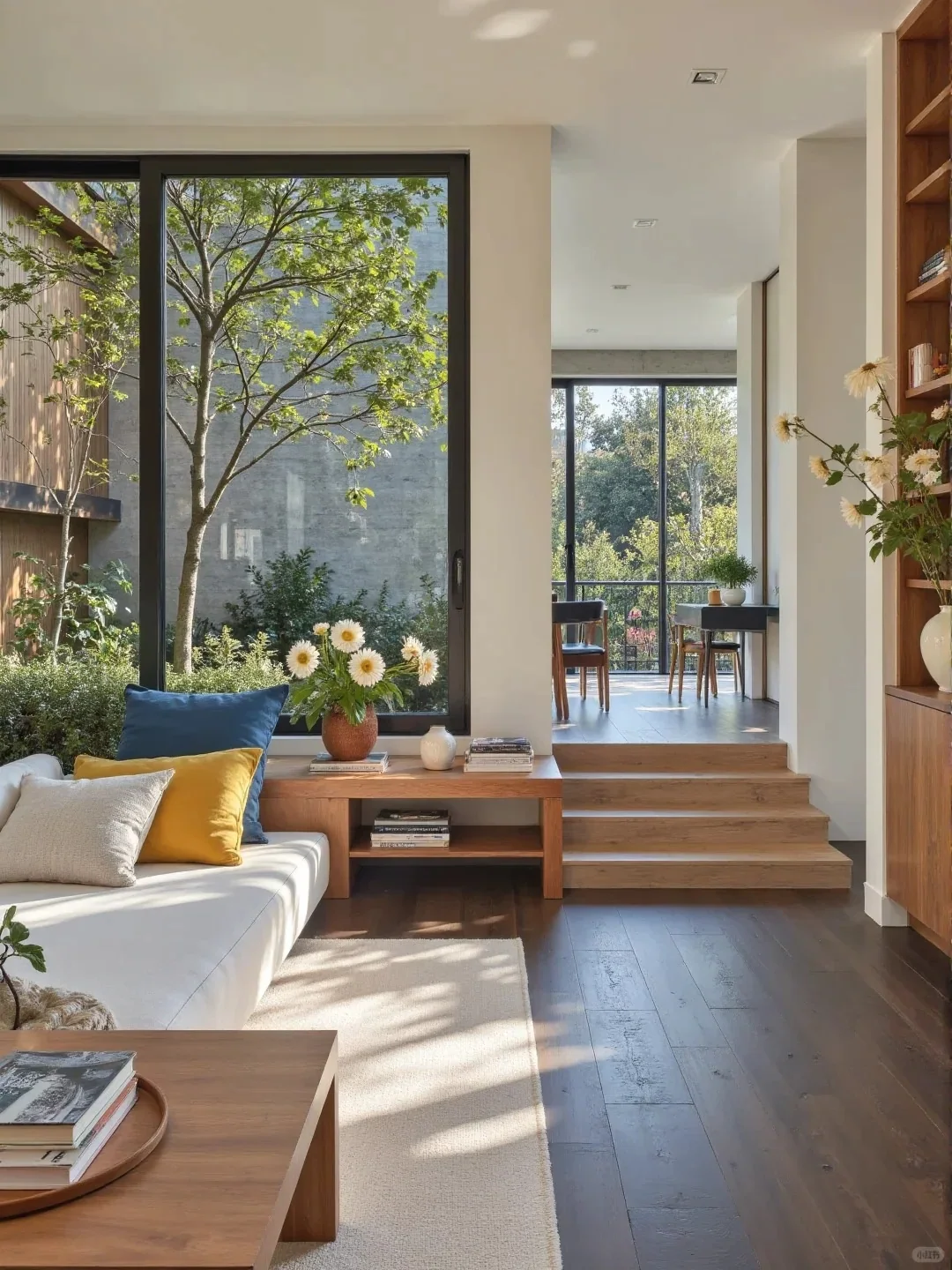
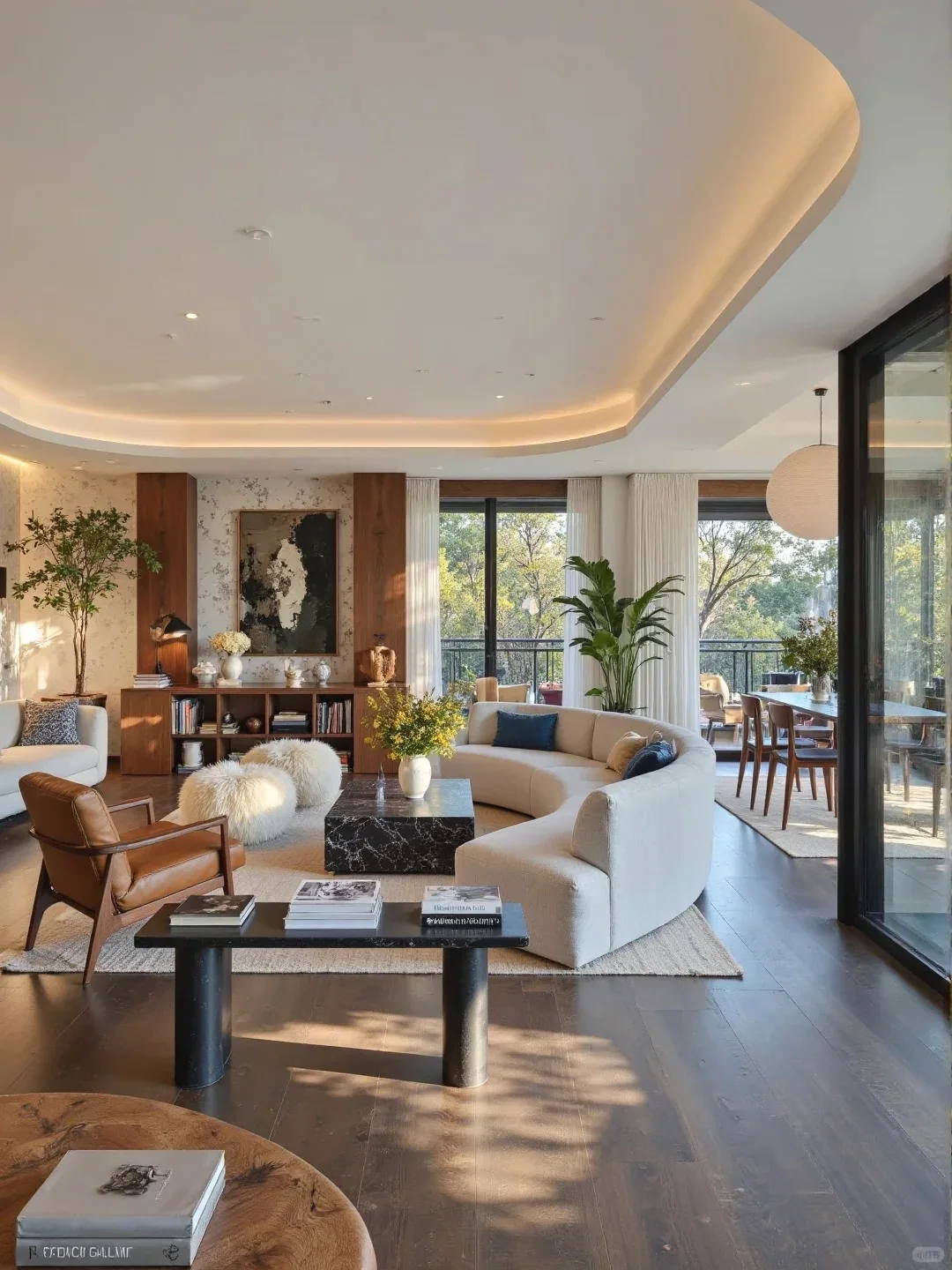
Read grain before you read color
Color alone is unreliable. Stain, clear coat, lighting and photography can make two different species look similar. Start by looking at the grain architecture: oak and ash typically show strong open grain; beech is finer and quieter; walnut often has darker flowing figure; rubberwood tends to be more restrained; teak commonly reads warm and oily with relatively calm grain.
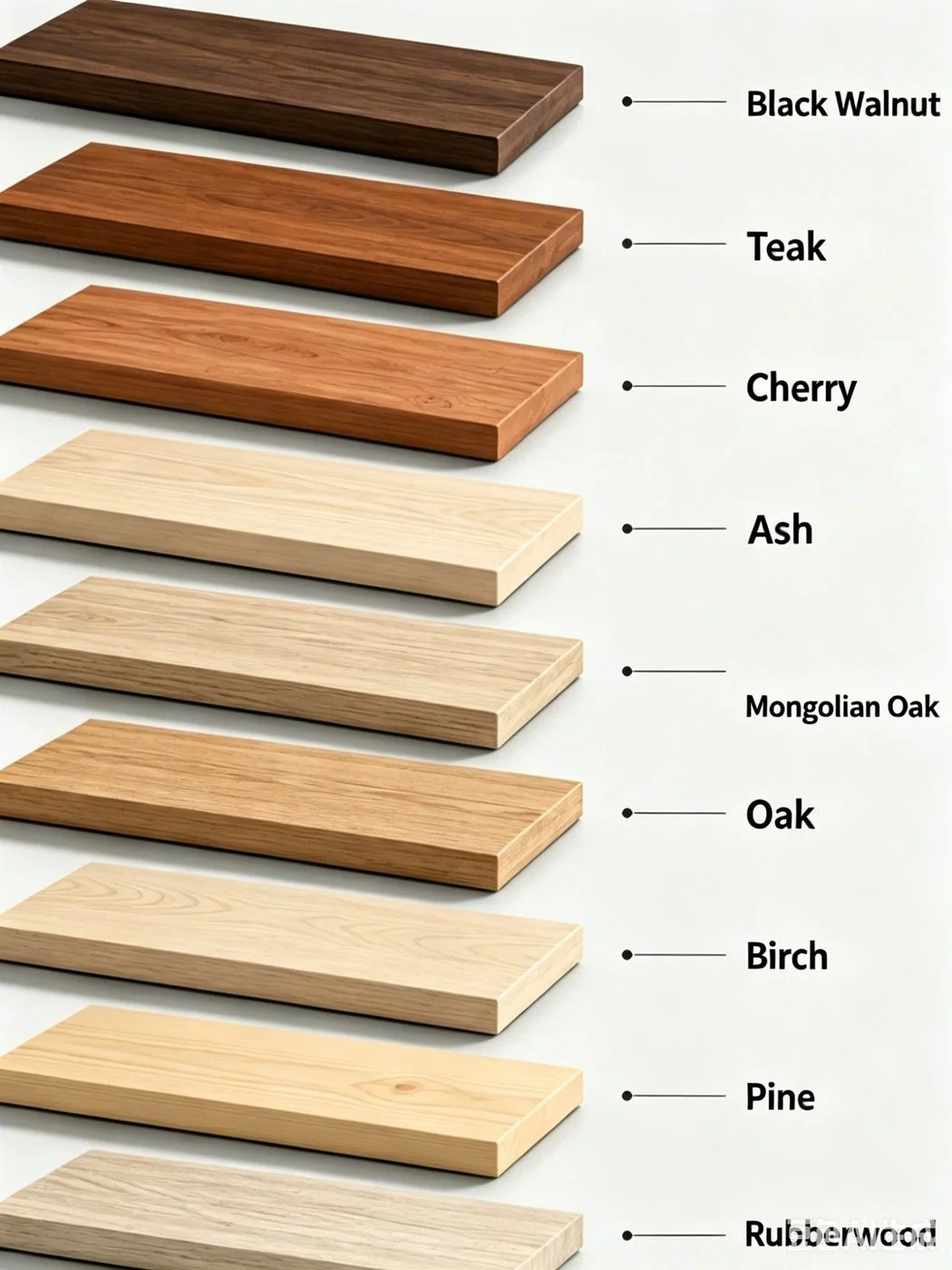
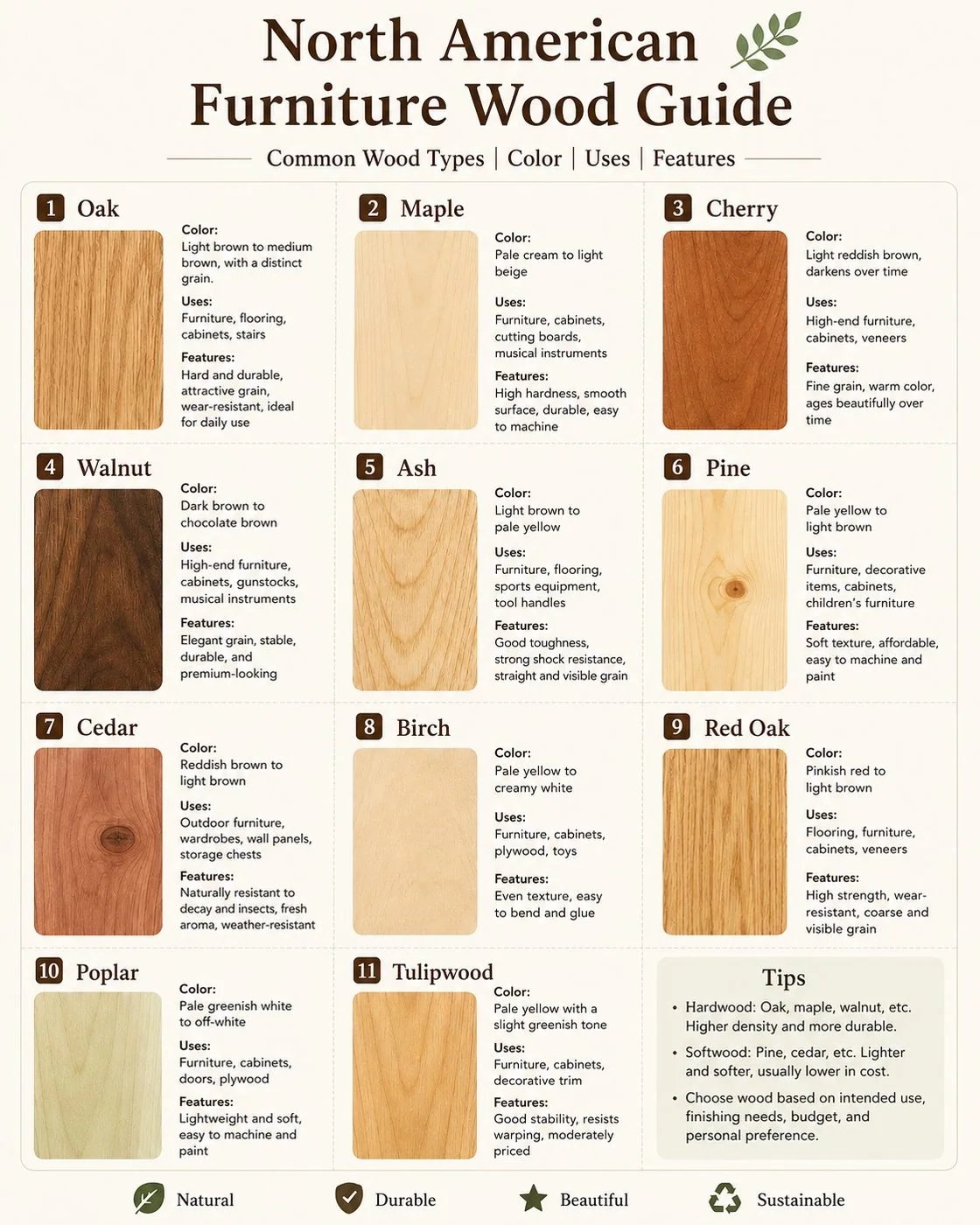
2. Oak, Ash, Walnut, Beech, Rubberwood & Teak: quick comparison
| Wood | How to recognize it | Performance | Best custom uses | Main watch-out |
|---|---|---|---|---|
| Oak | Visible open pores; straight or cathedral grain; light tan to medium brown | Hard, wear-resistant, dependable for high-use furniture | Dining tables, cabinets, sideboards, stairs, doors | Specify red vs white oak and allow movement in wide solid panels |
| Ash | Pale cream color; long straight or cathedral grain; visually lively | Tough, resilient, good shock resistance and machinability | Chairs, tables, beds, shelving, sculptural frames | Color can vary; stain can emphasize grain strongly |
| Walnut | Medium to deep brown; refined flowing figure; creamy sapwood possible | Stable, machines cleanly, premium visual value | Statement tables, desks, cabinets, lounge-chair frames | Control sapwood, veneer/solid construction and batch color |
| Beech | Pale blond to pinkish; fine, even texture; subtle fleck | Hard, strong, good for load-bearing and bent parts | Chair parts, bed frames, sofa frames, benches, children’s furniture | Needs disciplined drying and humidity control |
| Rubberwood | Light cream to tan; modest grain; often laminated or finger-jointed | Practical, machinable, good value for indoor use | Dressers, shelving, cabinets, beds, value-focused packages | Keep to dry indoor use; inspect panel quality and joint consistency |
| Teak | Golden to medium brown; oily feel; relatively calm grain | Naturally durable with strong moisture and decay resistance | Outdoor sofas, dining sets, benches, decks, wet-area accents | Verify grade, sapwood content, drying, hardware and drainage |
Performance varies with grade, board selection, drying, construction and finish. Species is one variable in the final furniture system, not a substitute for good engineering.
3. Oak: the durable all-rounder
Oak is one of the safest starting points when a project needs a strong visible hardwood with a familiar North American look. Its open pores and clear growth-ring pattern make the species easy to read even under medium stains, while its hardness helps it perform well on surfaces that see daily contact.
How to tell it apart: look for pronounced open grain and repeating rays or cathedral patterns. White oak generally reads slightly calmer and more brown/olive; red oak can look warmer and more pinkish. The exact appearance still changes with cut and finish.
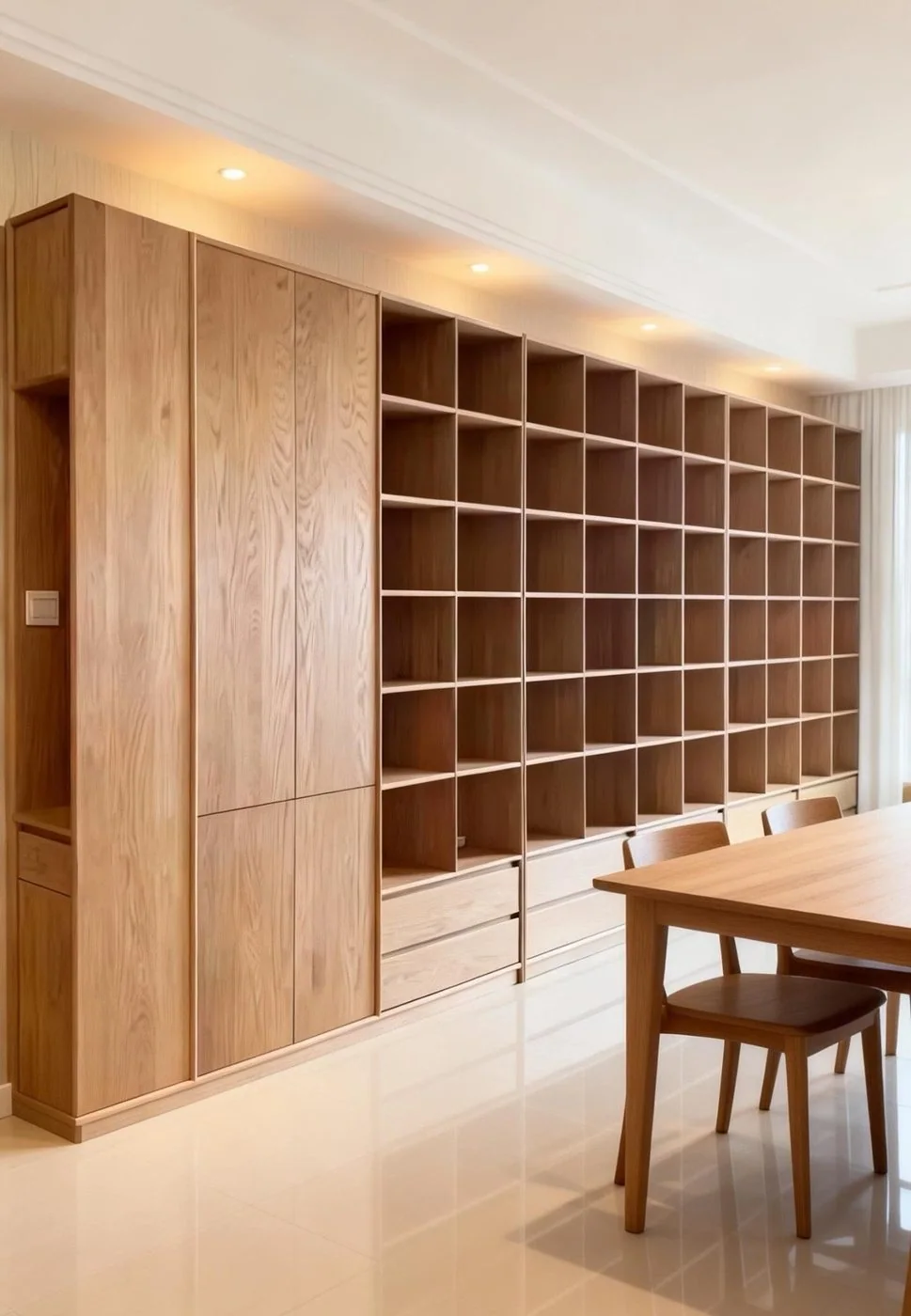
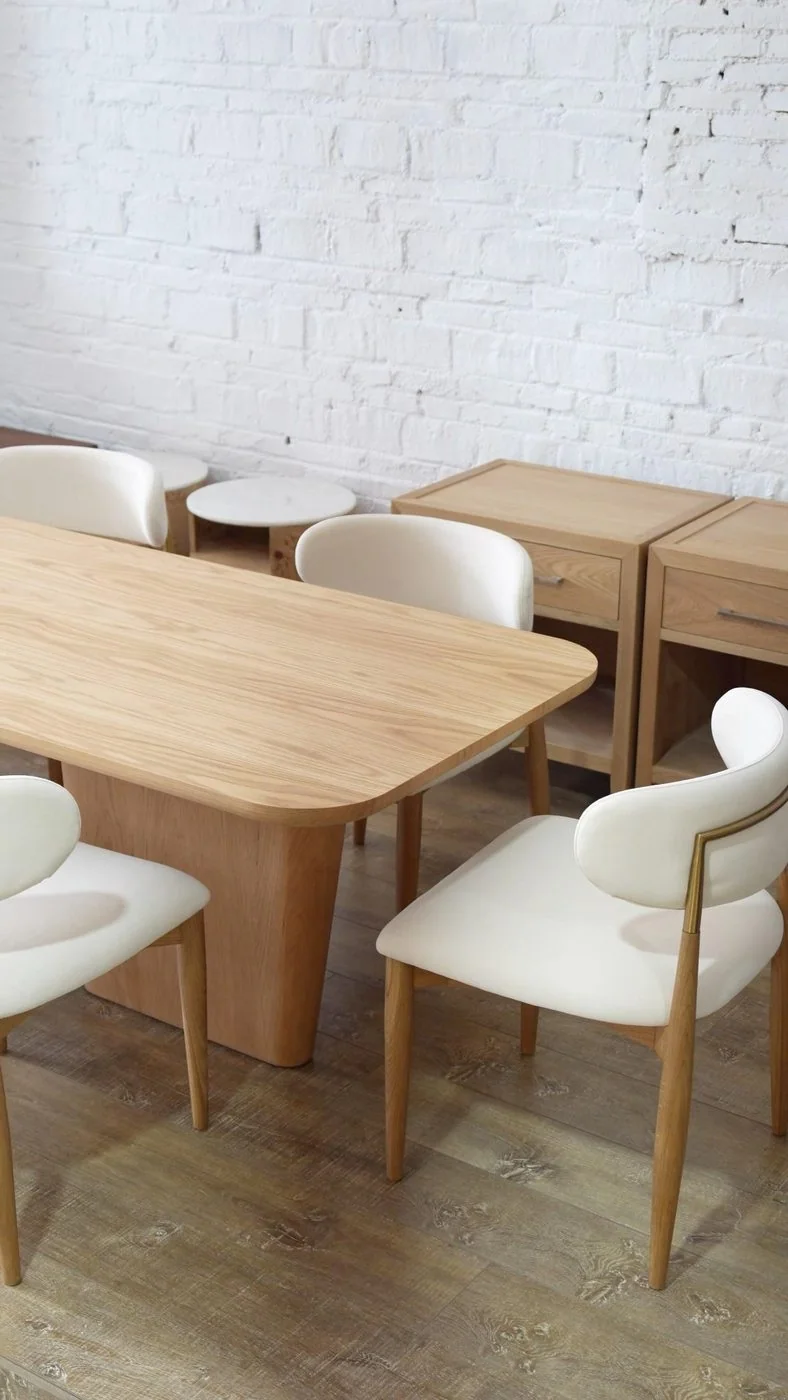
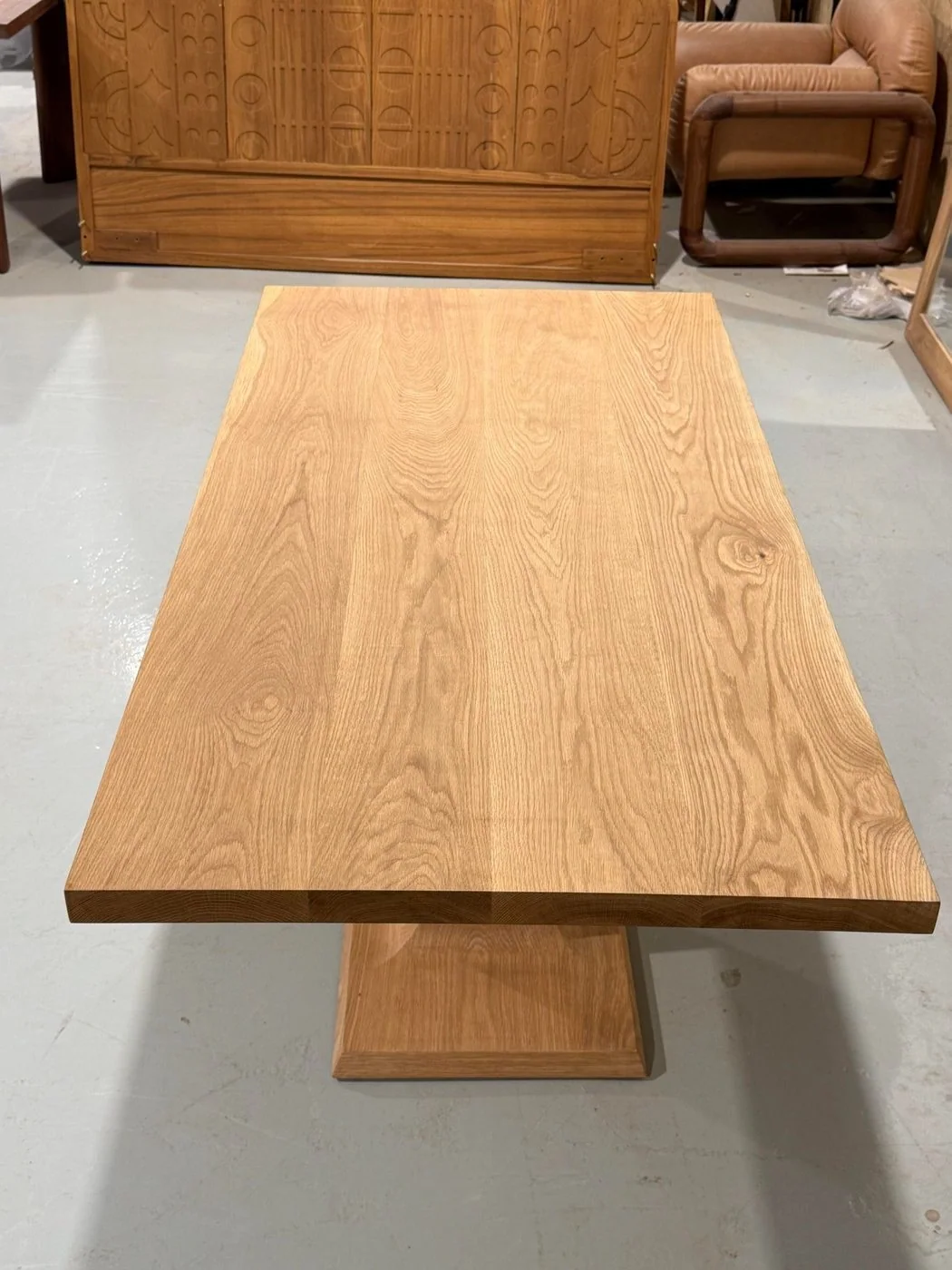
For frequently used dining tables, oak is often the best balance of durability, repairability and visual familiarity. On large cabinet doors or wall panels, however, veneered construction over a stable core may outperform a single wide solid panel because it reduces movement risk.
4. Ash: pale, resilient and excellent for shaped furniture
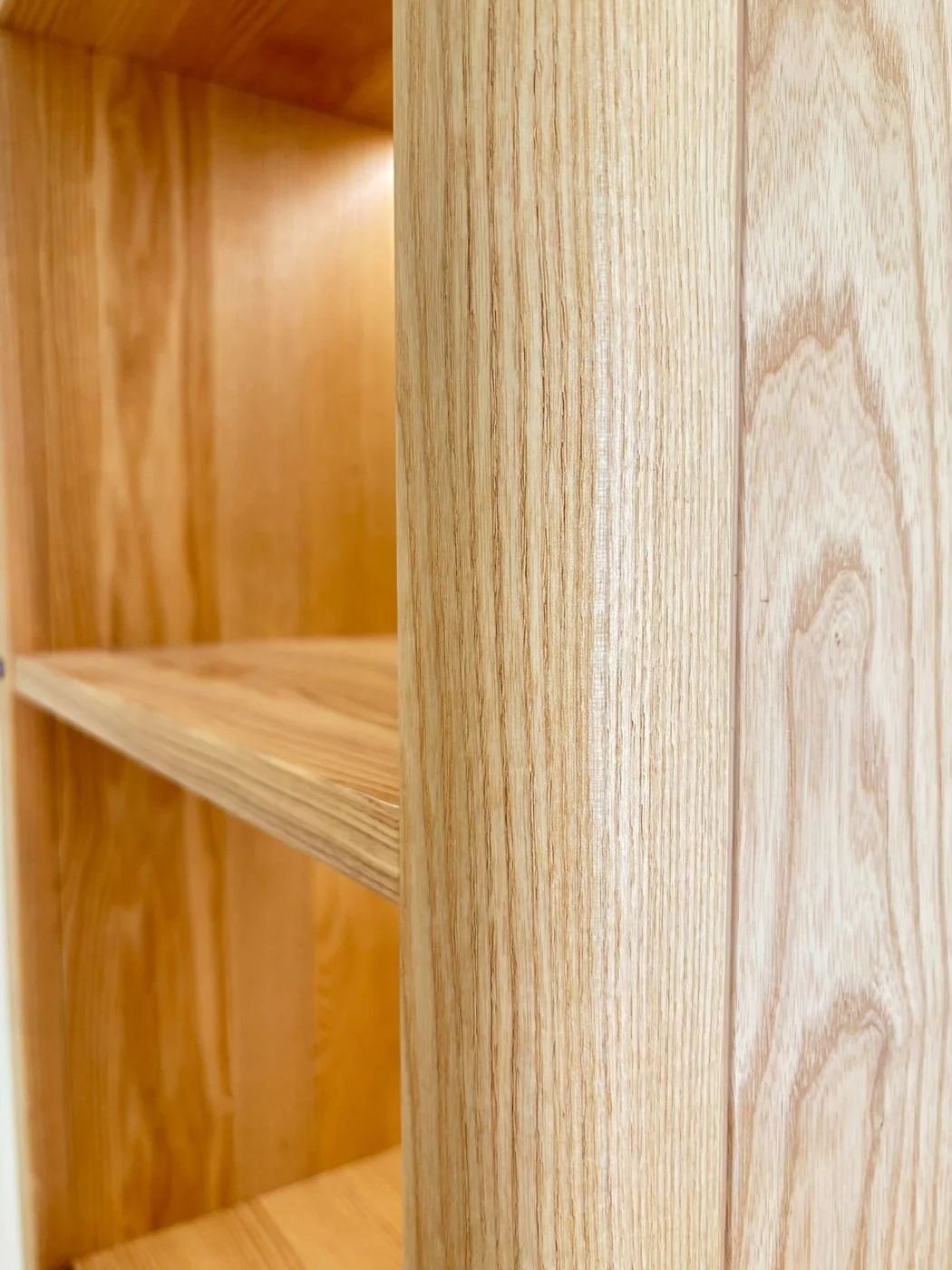
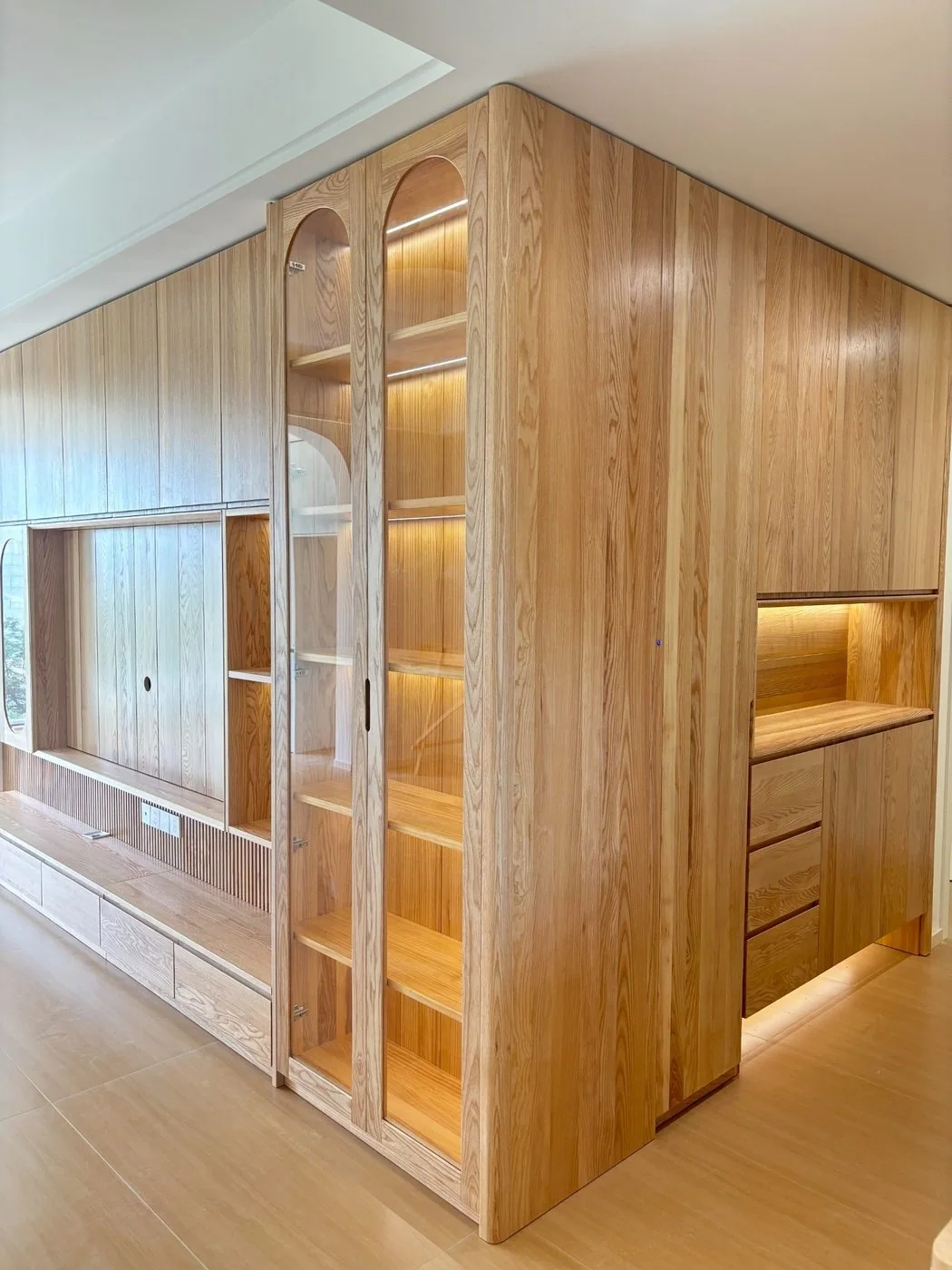
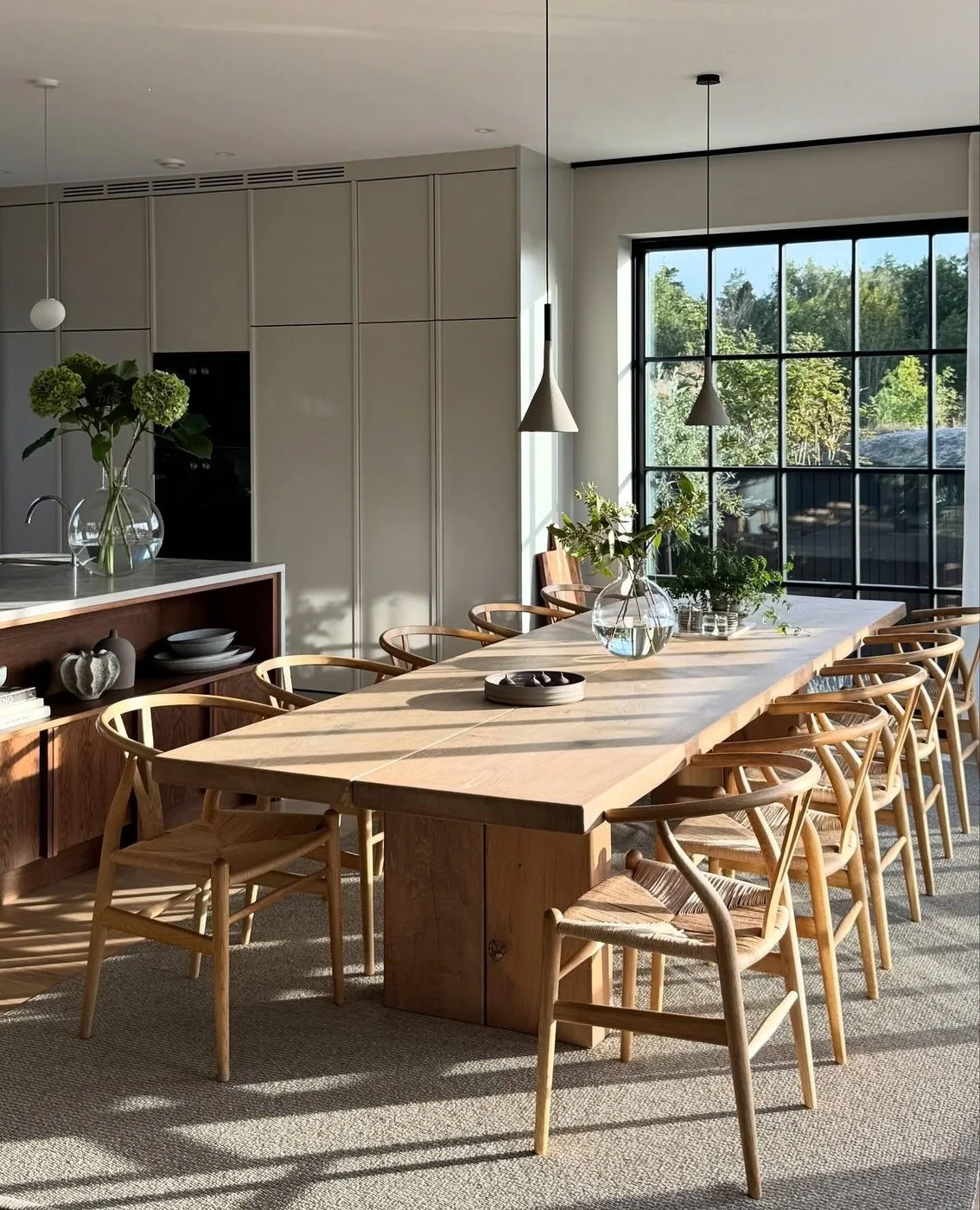
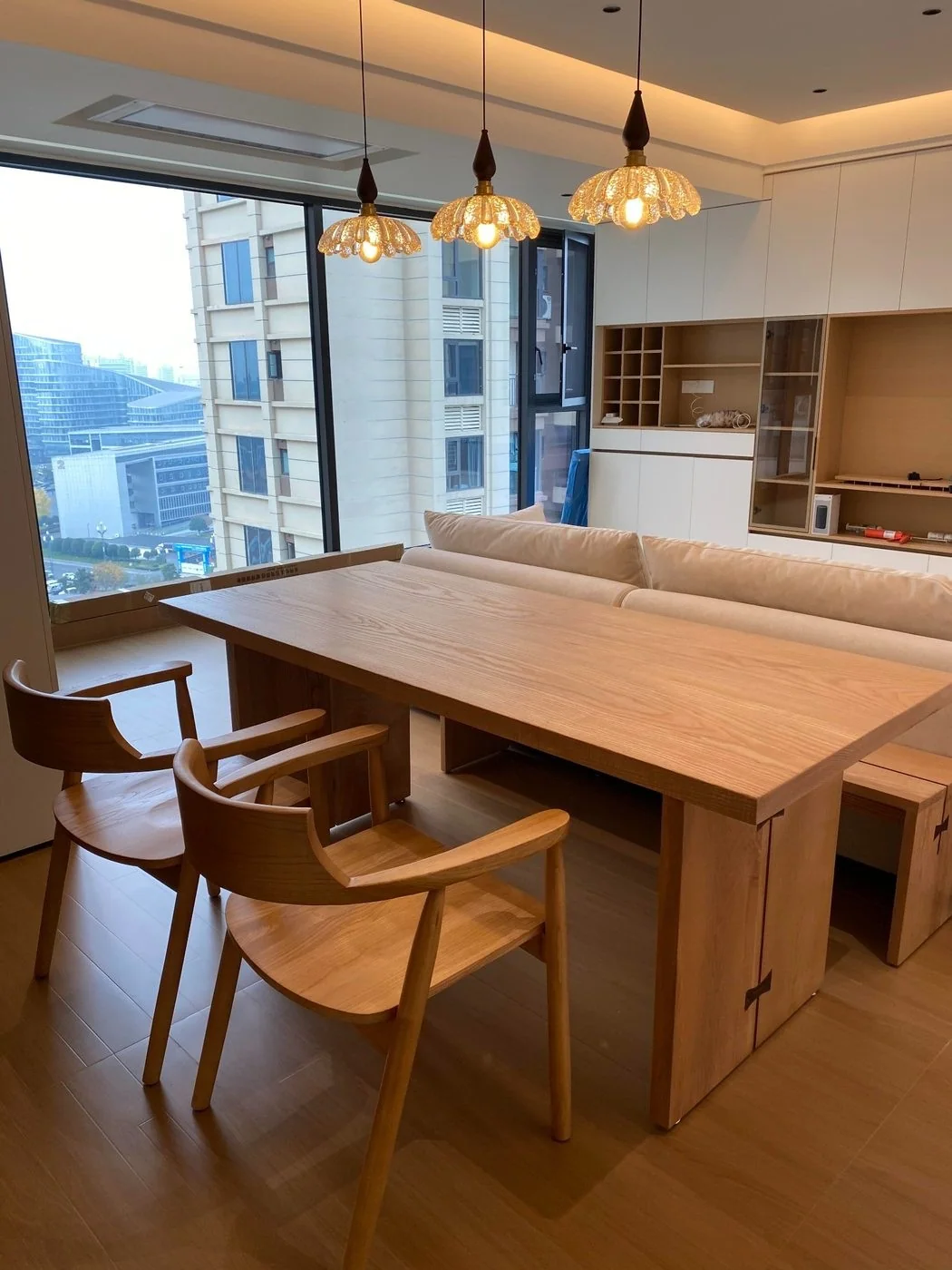
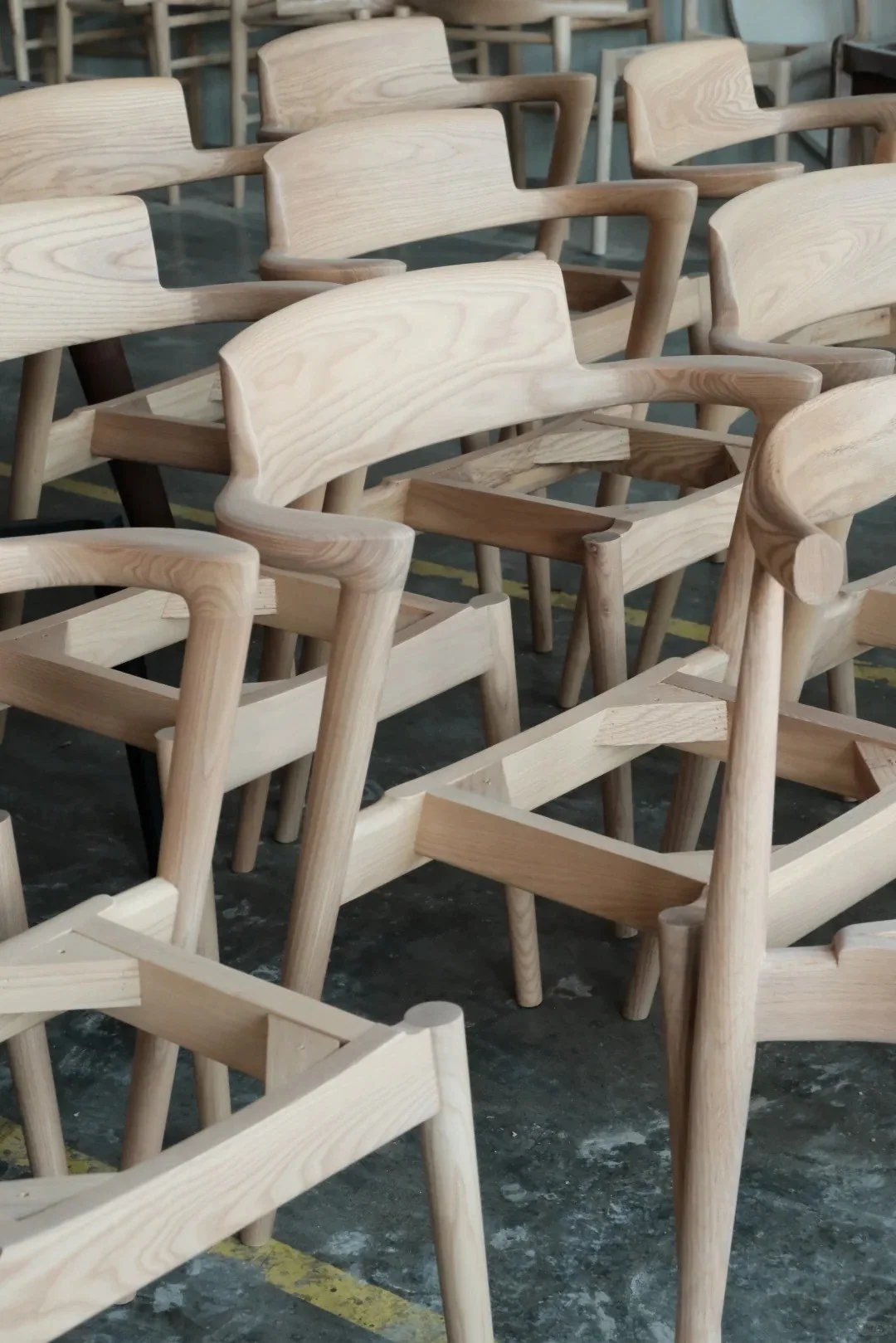
Ash can look close to light oak at first glance, but it usually reads cleaner and more linear. The wood combines visible grain with toughness and elasticity, which is why it works well for chair frames, curved elements and furniture that needs strength without visual heaviness.
How to tell it apart: ash is usually pale cream to light tan, with strong long grain and open pores. Compared with oak, the rays are less dominant and the grain often feels more flowing. Clear finishing can produce a Scandinavian or organic-modern look; darker stains can make the grain surprisingly dramatic.
5. Walnut: the premium statement wood
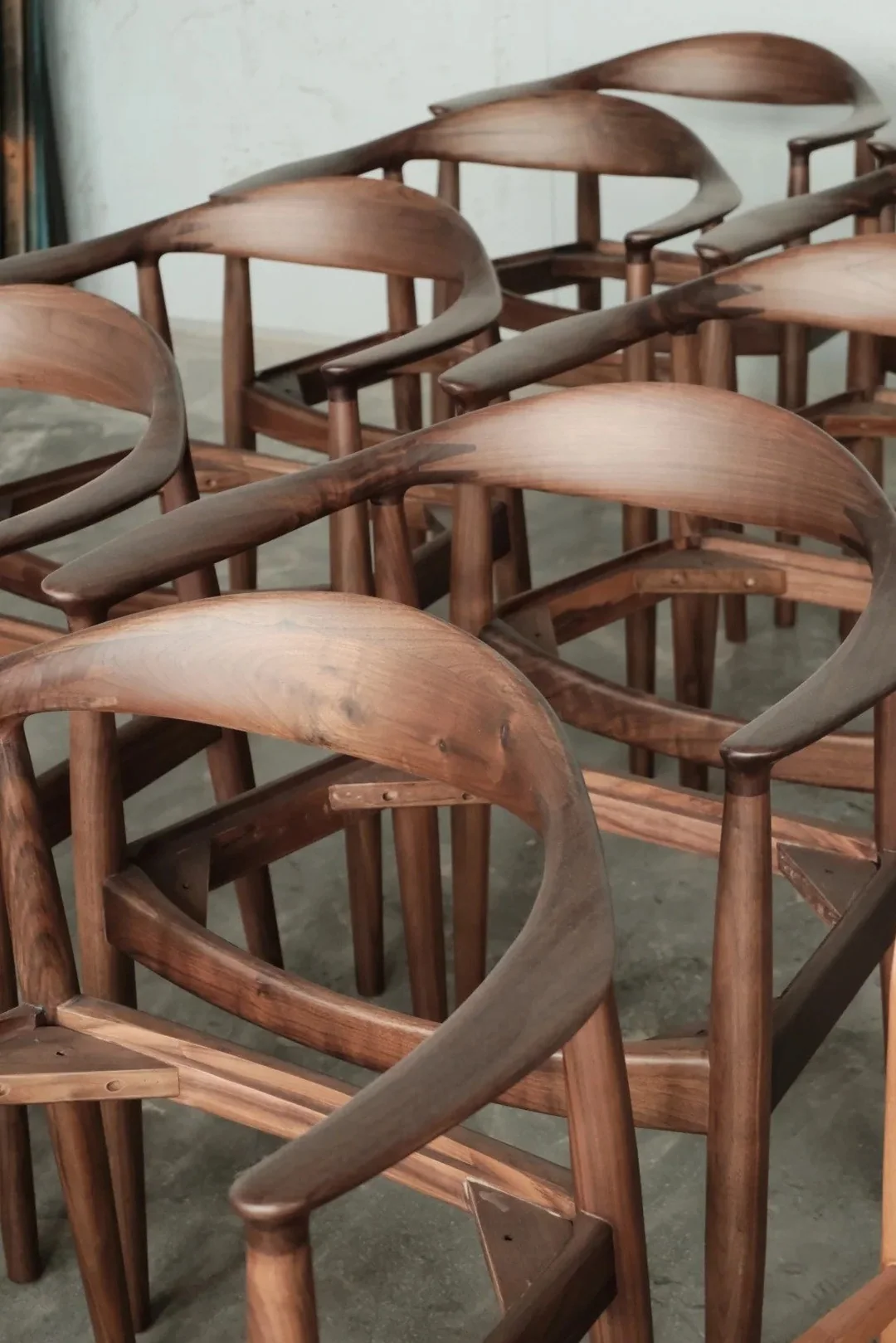
Walnut is chosen primarily for visual value rather than maximum hardness. Its naturally deep brown heartwood, flowing figure and warm contrast make it ideal when a piece needs to anchor a room without relying on heavy ornament.
How to tell it apart: walnut is typically darker than the other indoor woods in this guide and often shows softer, more fluid figure. Pale sapwood can occur naturally. Premium specifications should state whether sapwood is allowed, minimized or color-balanced during finishing.
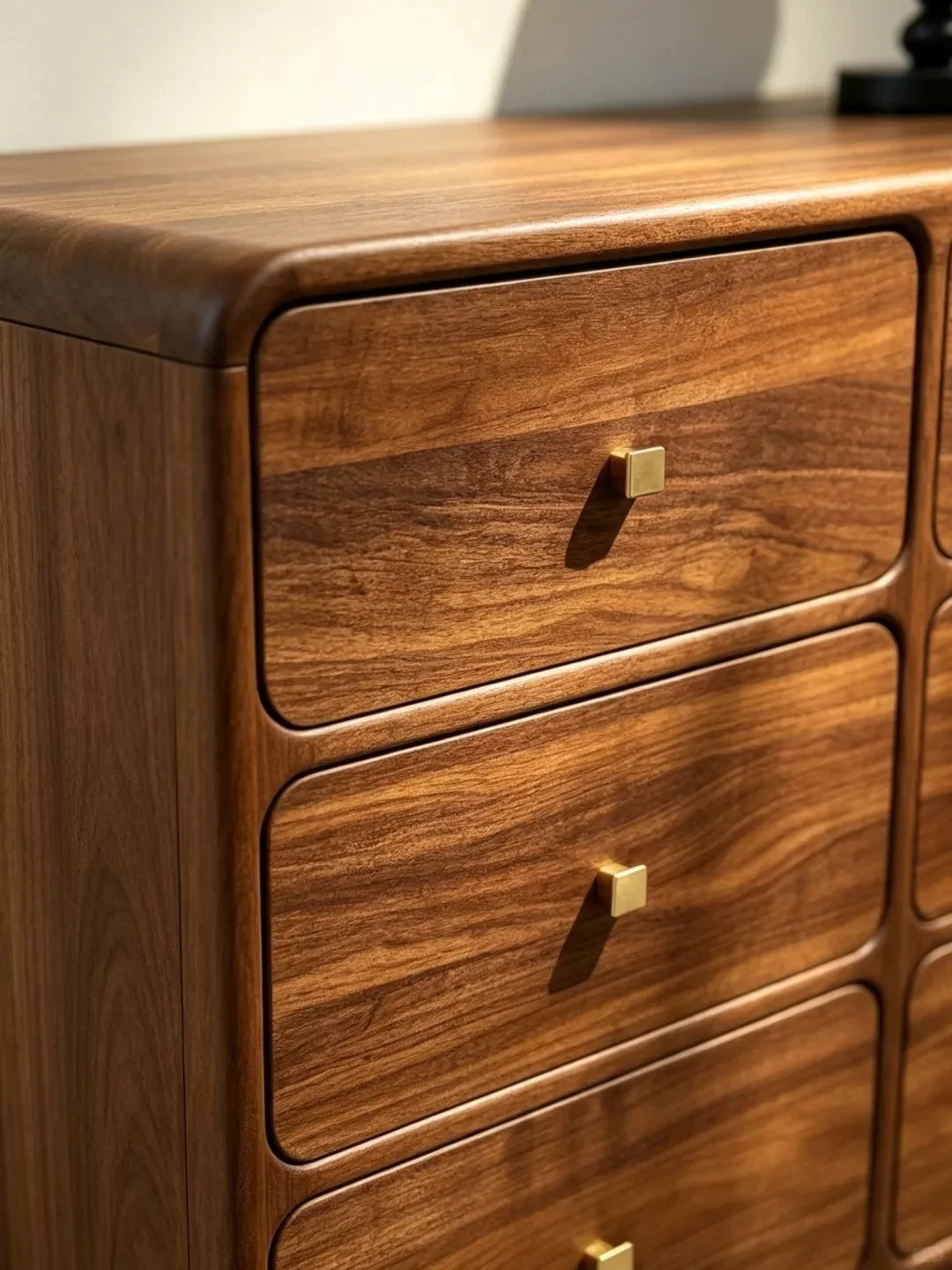
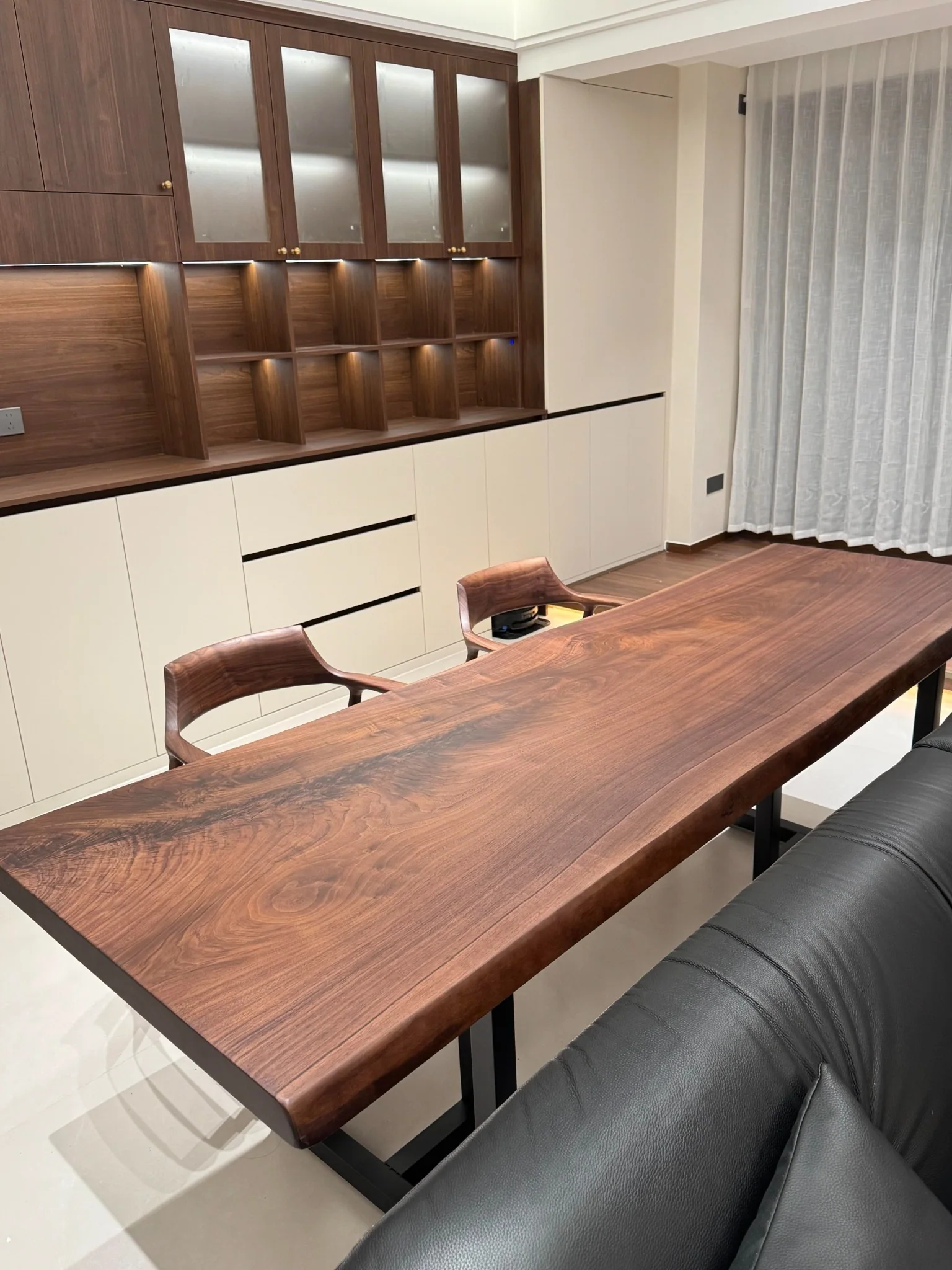
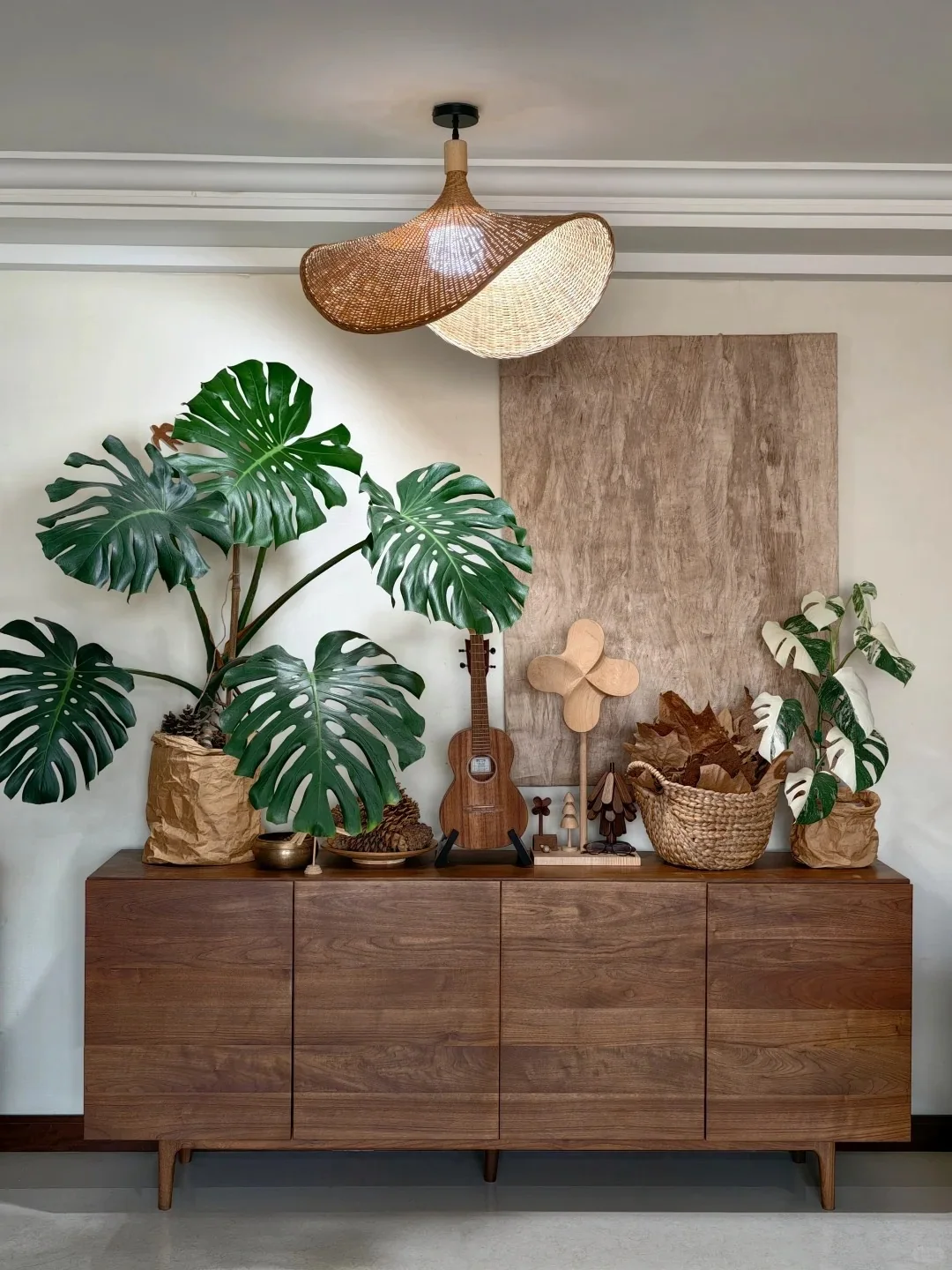
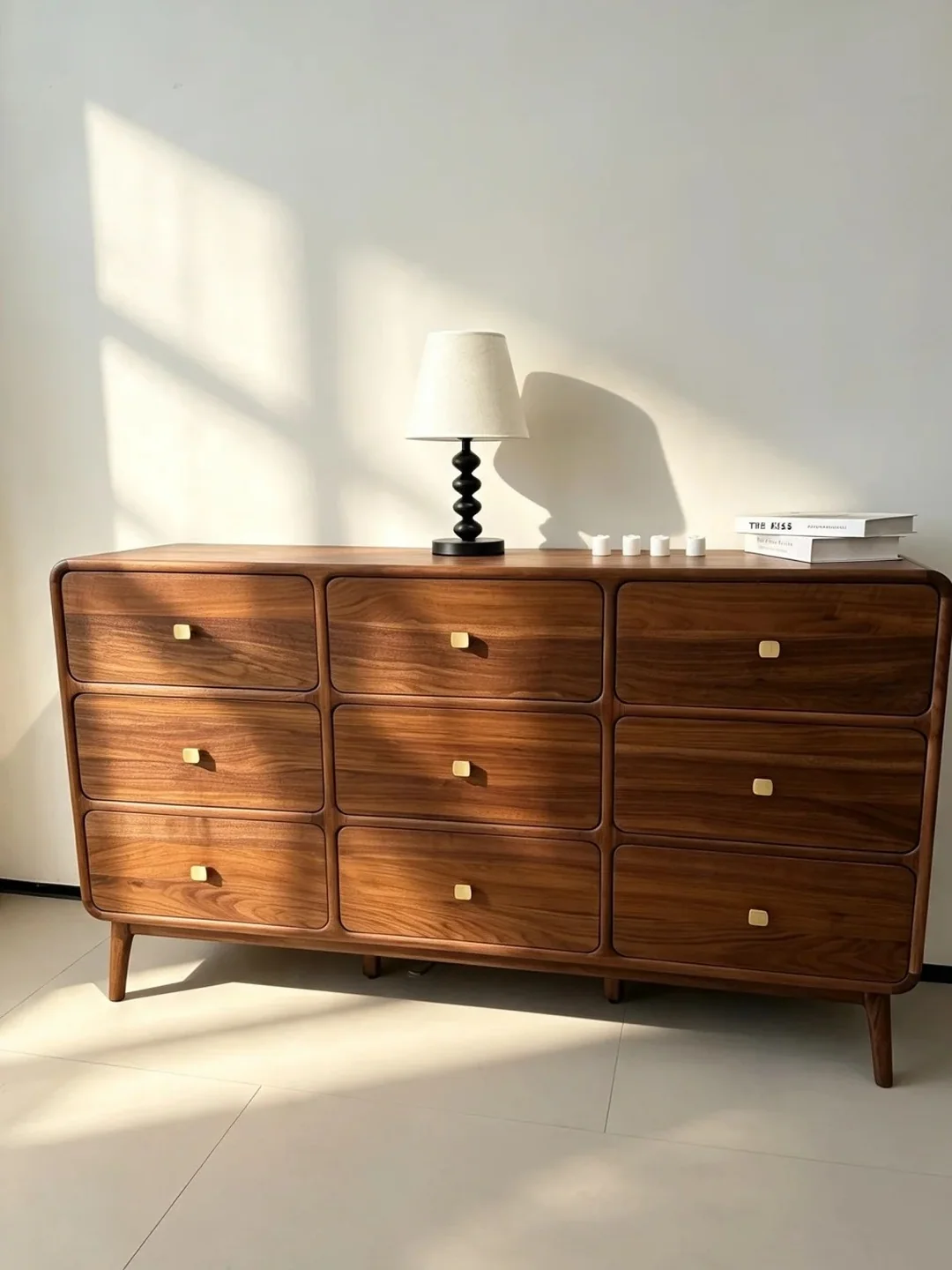
Walnut is particularly effective for a focal sideboard, executive desk or dining table. On very large panels, walnut veneer can deliver a more consistent premium face while using solid walnut on edges, pulls, legs and high-touch details.
6. Beech: strong, fine-grained and structurally useful
Beech is less dramatic visually than oak or walnut, but it earns its place through strength, consistency and machining performance. It is commonly used in chairs, bed frames, sofa frames and other components where structural reliability matters more than highly expressive grain. For seating proportions and frame considerations, see Ratahome’s Lounge Chair Guide.
How to tell it apart: beech is pale blond to lightly pinkish with a fine, even texture. The surface feels visually quieter than oak or ash. Small flecks or ray marks may appear depending on the cut.
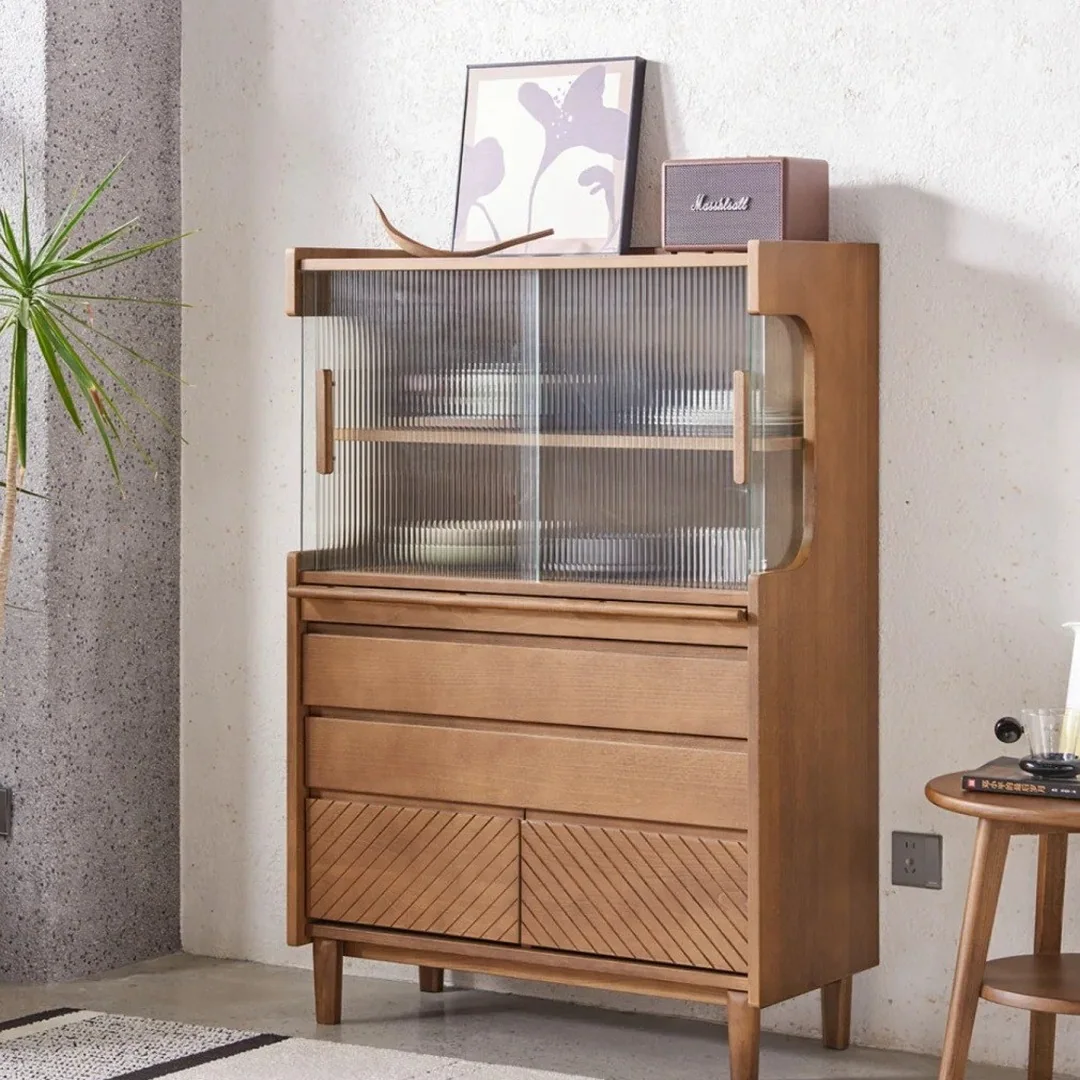
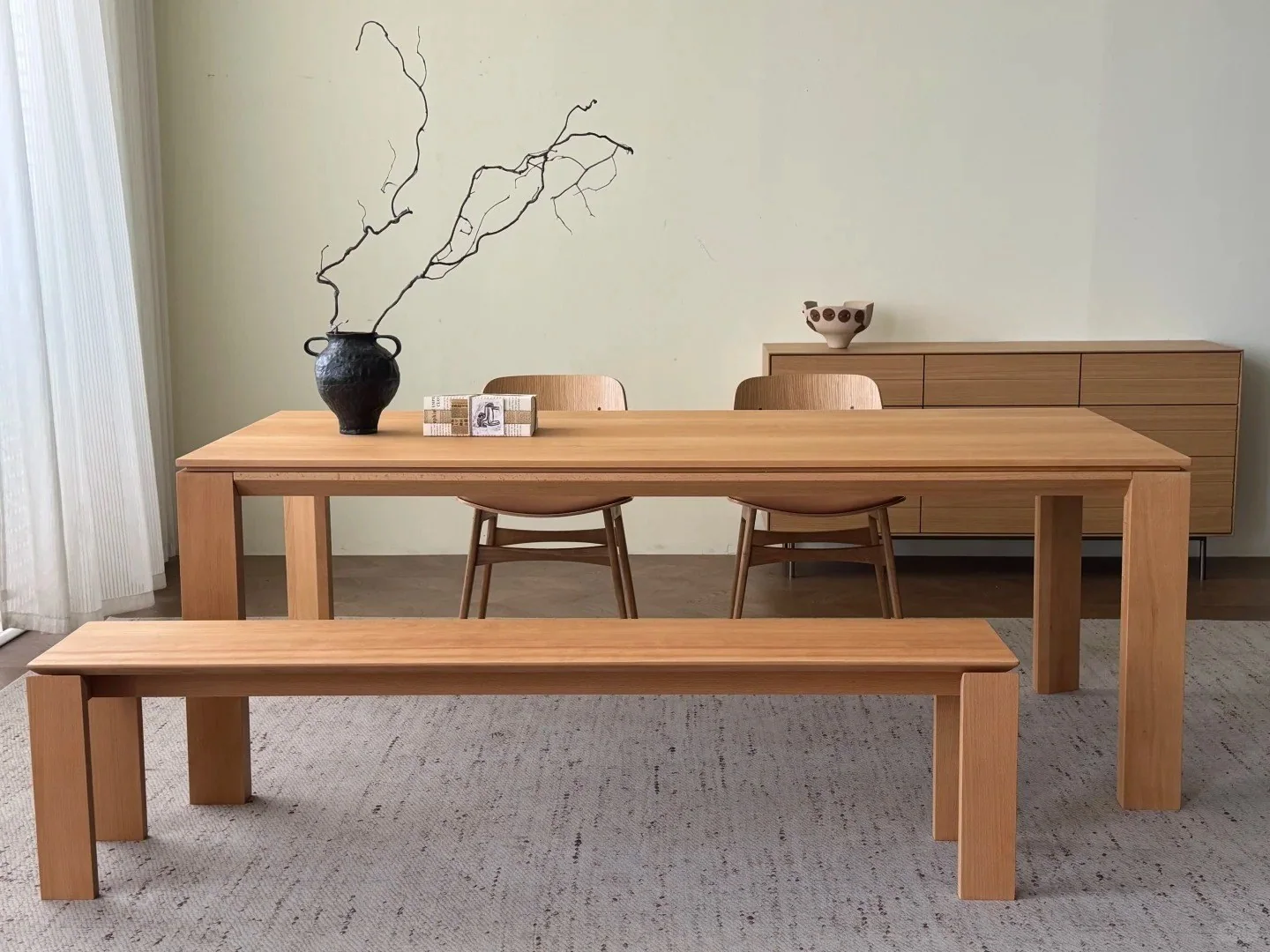
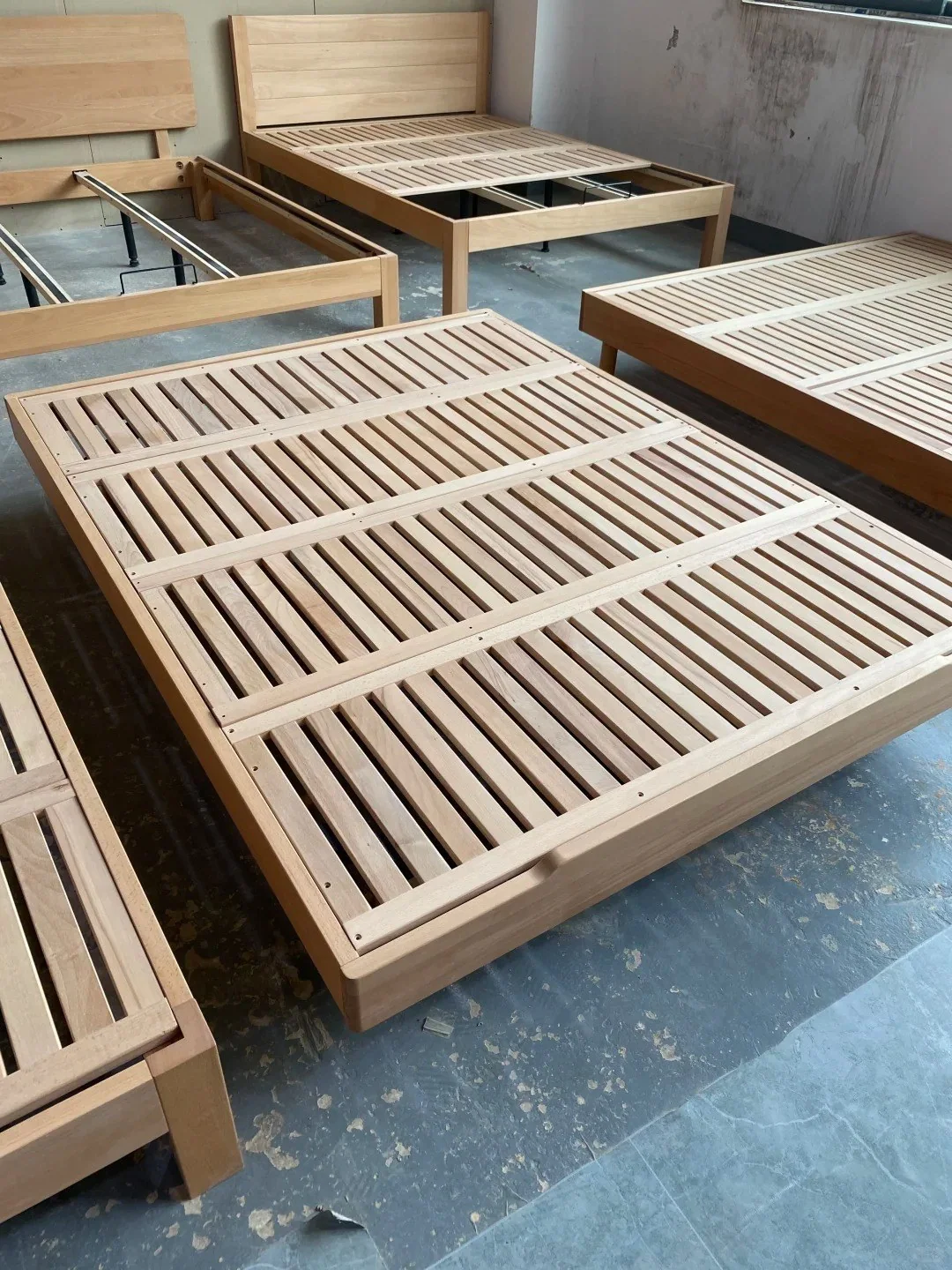
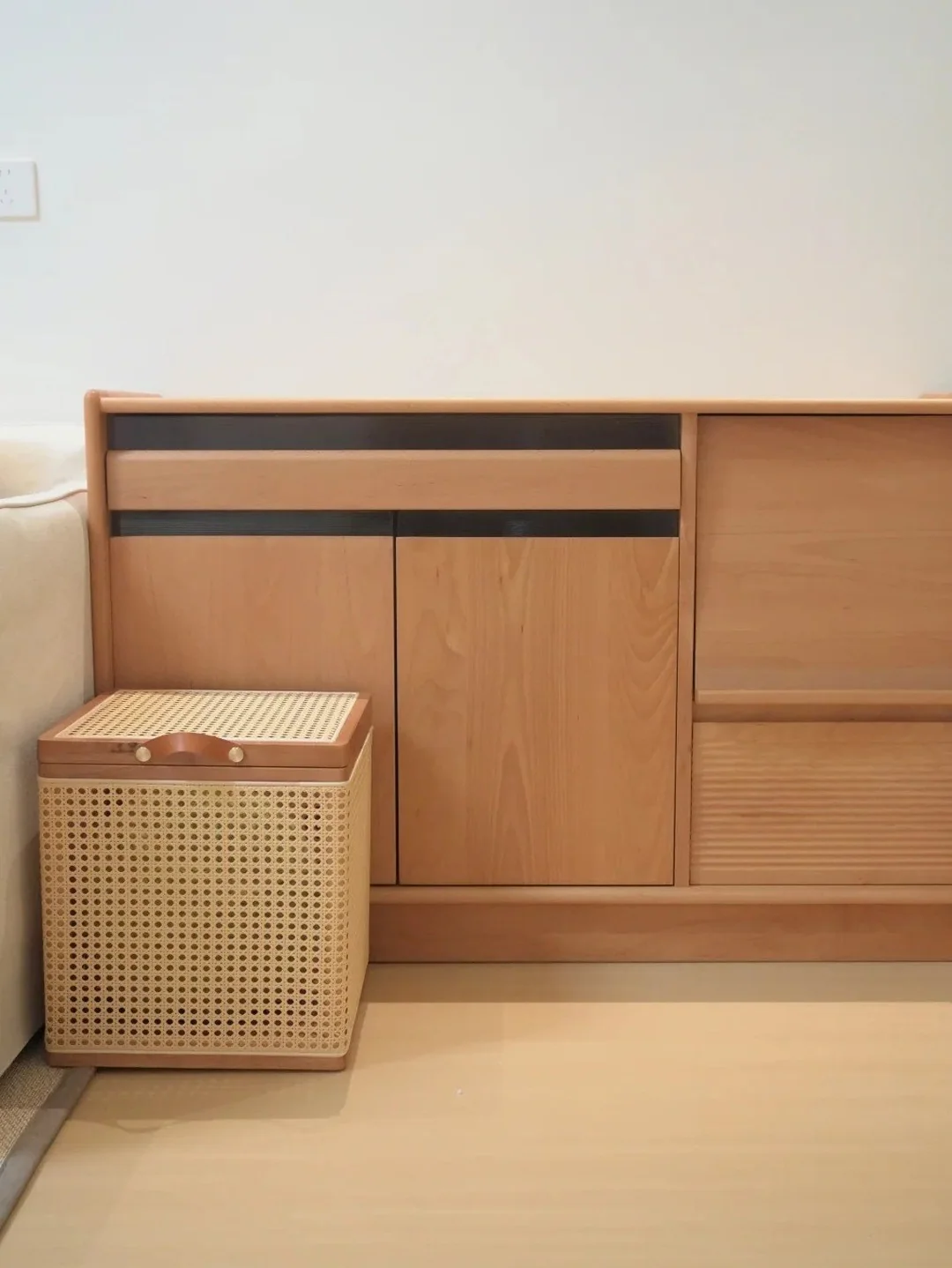
Beech is more sensitive to moisture change than many buyers expect. For that reason, kiln drying, storage conditions and final moisture checks matter. A strong species can still crack, warp or loosen joints if it enters production too wet.
7. Rubberwood: practical value for dry indoor furniture
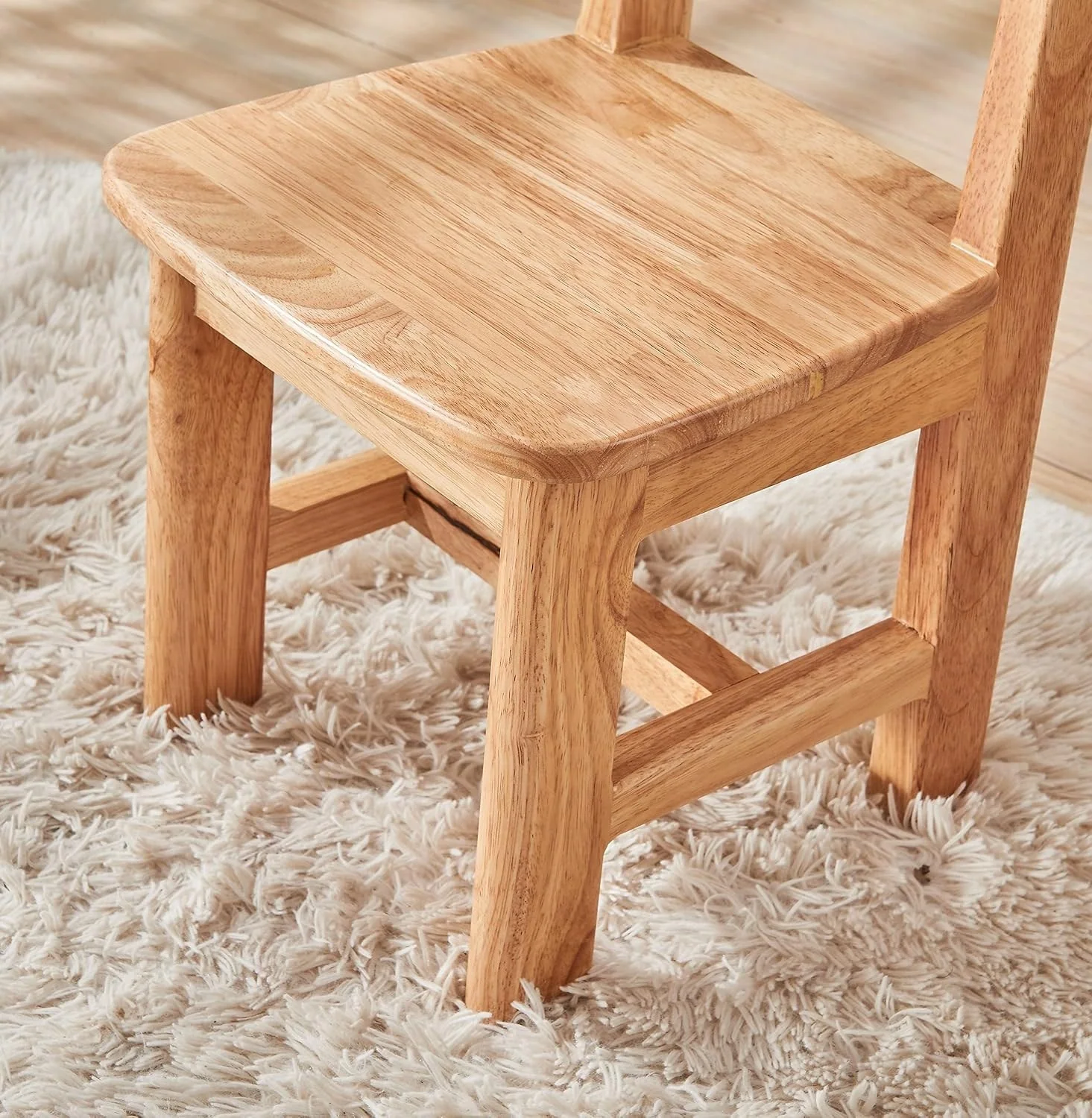
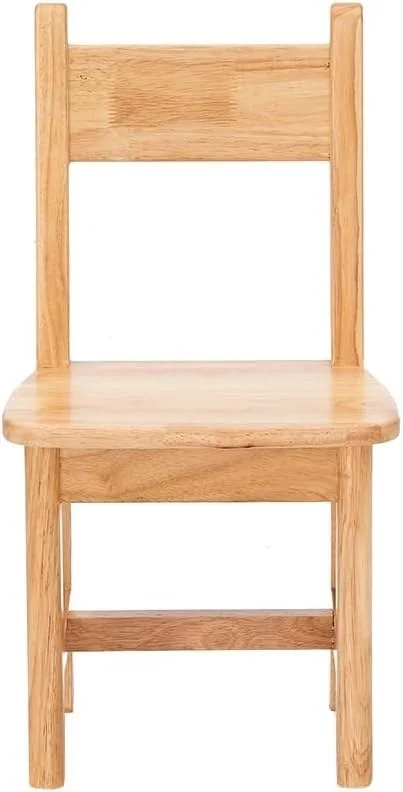
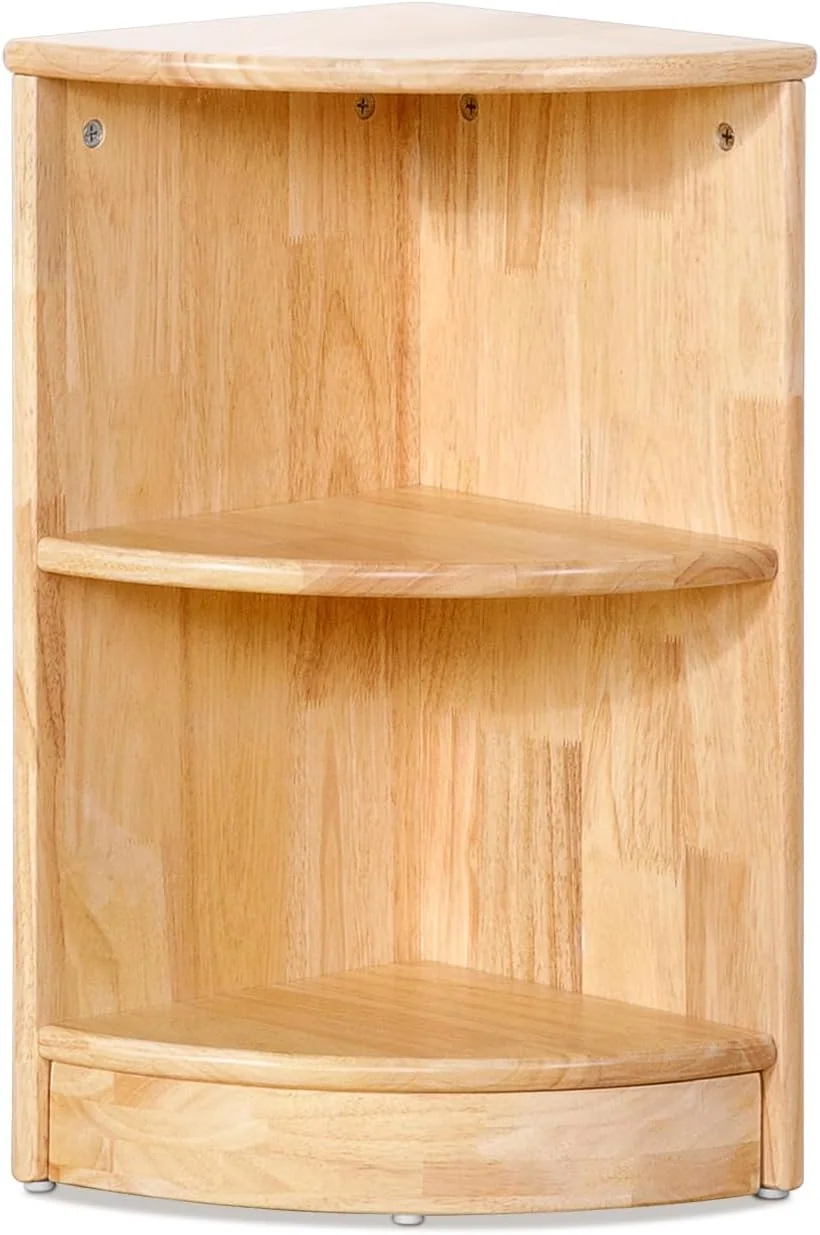
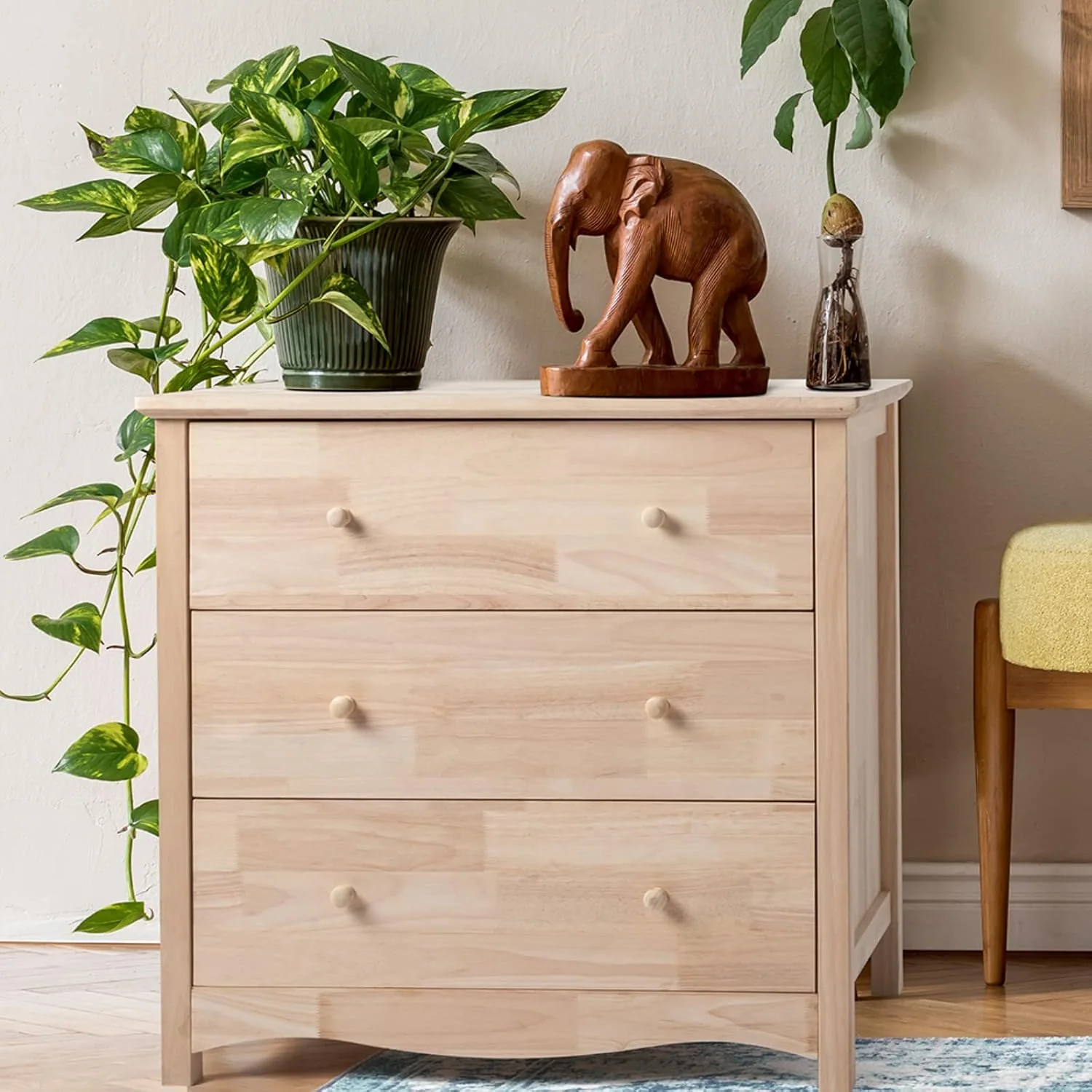
Rubberwood is a plantation hardwood widely used in value-focused indoor furniture. Its relatively light color, workable texture and availability make it practical for dressers and bedroom storage, shelves, beds and dry-room casegoods where budget matters. For larger storage pieces, compare construction and finish decisions in the Sideboards & Consoles Buying Guide.
How to tell it apart: rubberwood is usually light cream to tan with less dramatic grain than oak or ash. It is frequently seen in laminated or finger-jointed panels, so panel construction itself becomes part of the visual and quality assessment.
8. Teak: the specialist for outdoor and moisture-prone use
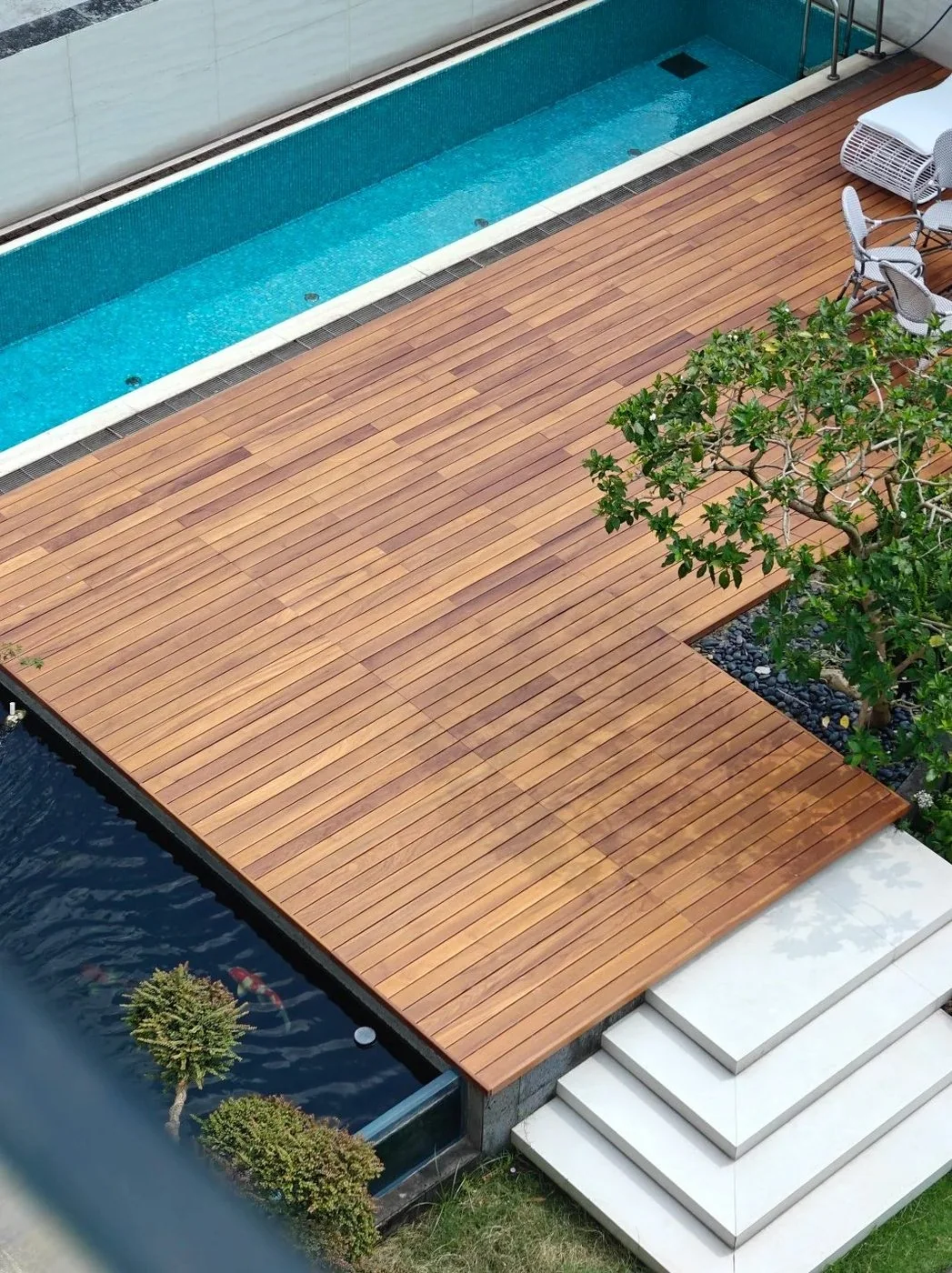
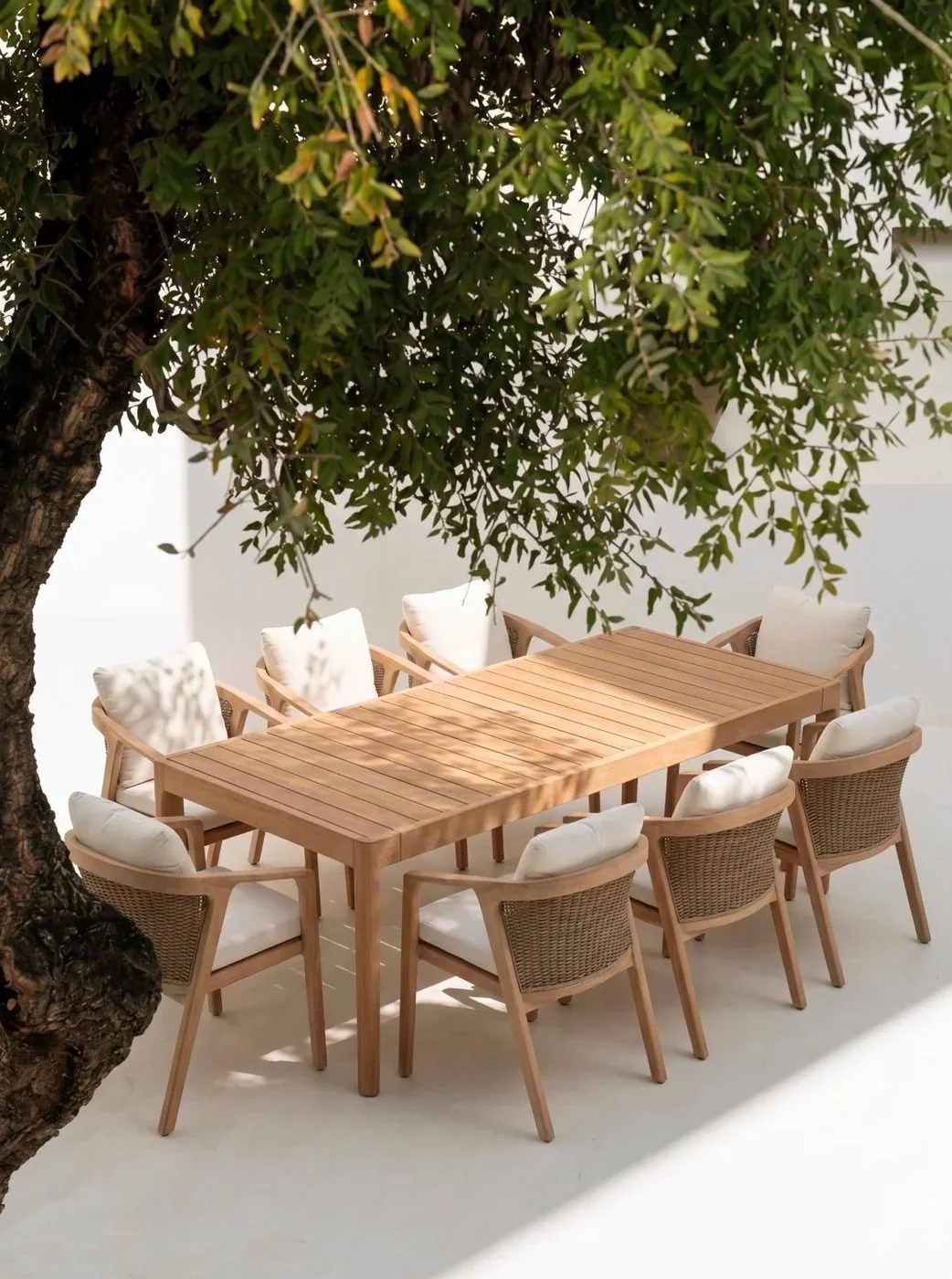
Teak is the outlier in this group because weather exposure is a major reason to specify it. Its natural oils and extractives improve resistance to moisture, decay and insects, which is why good teak remains a benchmark for premium exterior furniture. For frame materials, exposure, cushion systems and maintenance, continue with Ratahome’s Outdoor Furniture Buying Guide.
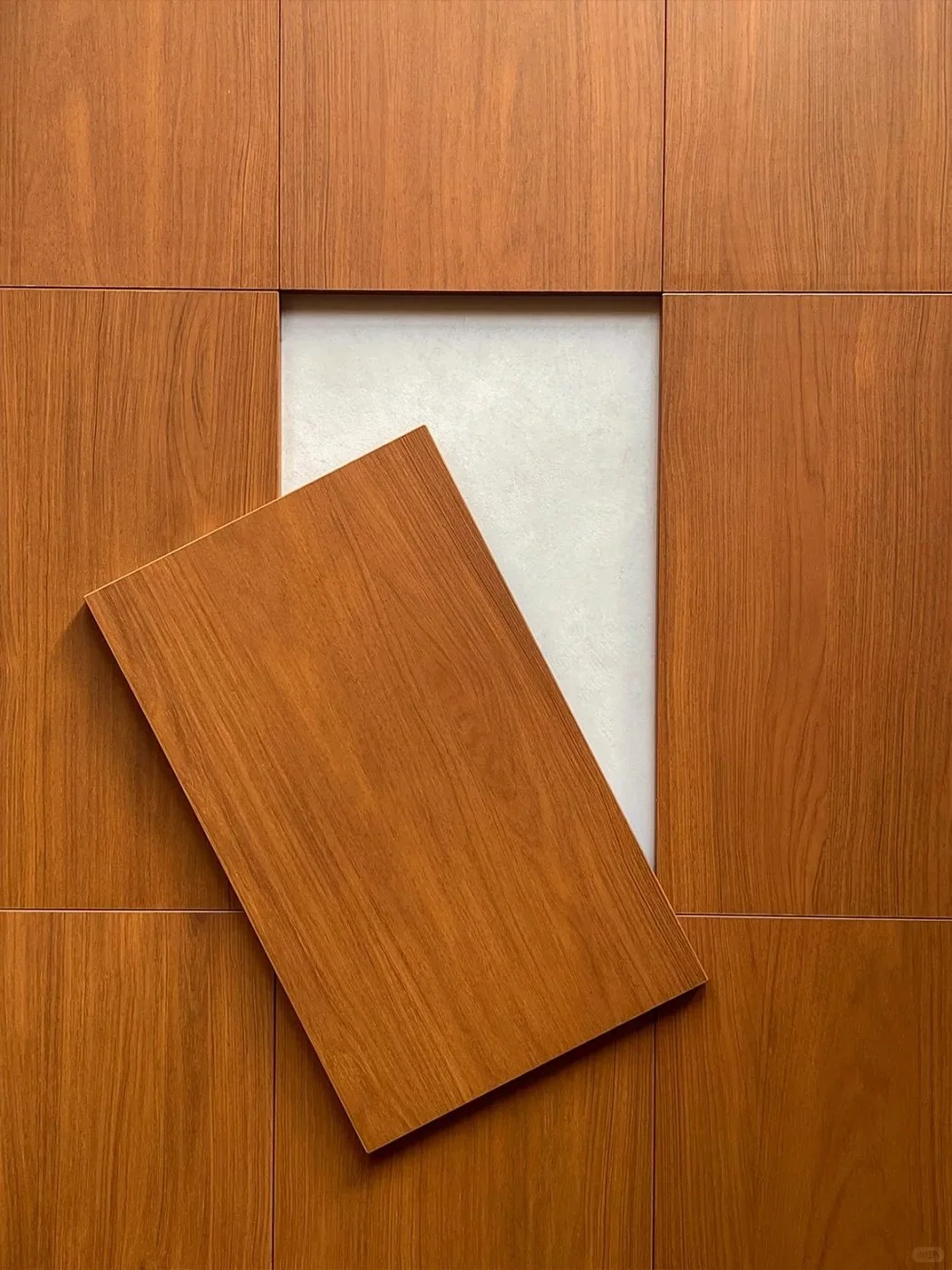
How to tell it apart: teak ranges from golden honey to medium brown and often feels slightly oily. Grain is generally less open and dramatic than oak. Over time, untreated exterior teak can weather toward silver gray.
9. Which wood should you choose for each furniture type?
Instead of asking for one “best” wood across the project, match species to the stress pattern of the furniture.
| Furniture | Strong starting choices | Why | Specification note |
|---|---|---|---|
| Dining table | Oak / Ash / Walnut | Durable surfaces, attractive grain, repairable solid edges | Control top construction, board matching, moisture and movement |
| Dining chair | Ash / Beech / Oak | Toughness and strength in slim rails, legs and backs | Joint geometry matters as much as species |
| Kitchen cabinetry | Oak / Ash / Walnut veneer | Large visual surfaces with strong grain options | Use stable panel construction on wide doors |
| Sideboard / dresser | Oak / Walnut / Rubberwood | Balance of visible finish, storage structure and cost | Separate visible face specification from internal structure |
| Bed / sofa frame | Beech / Ash / Oak | Reliable structural members and joinery | Hidden structural wood can differ from visible decorative wood |
| Outdoor furniture | Teak | Natural weather resistance and outdoor track record | Grade, drainage, hardware and finish remain critical |
10. Solid wood, veneer and engineered panels: what should actually be solid?
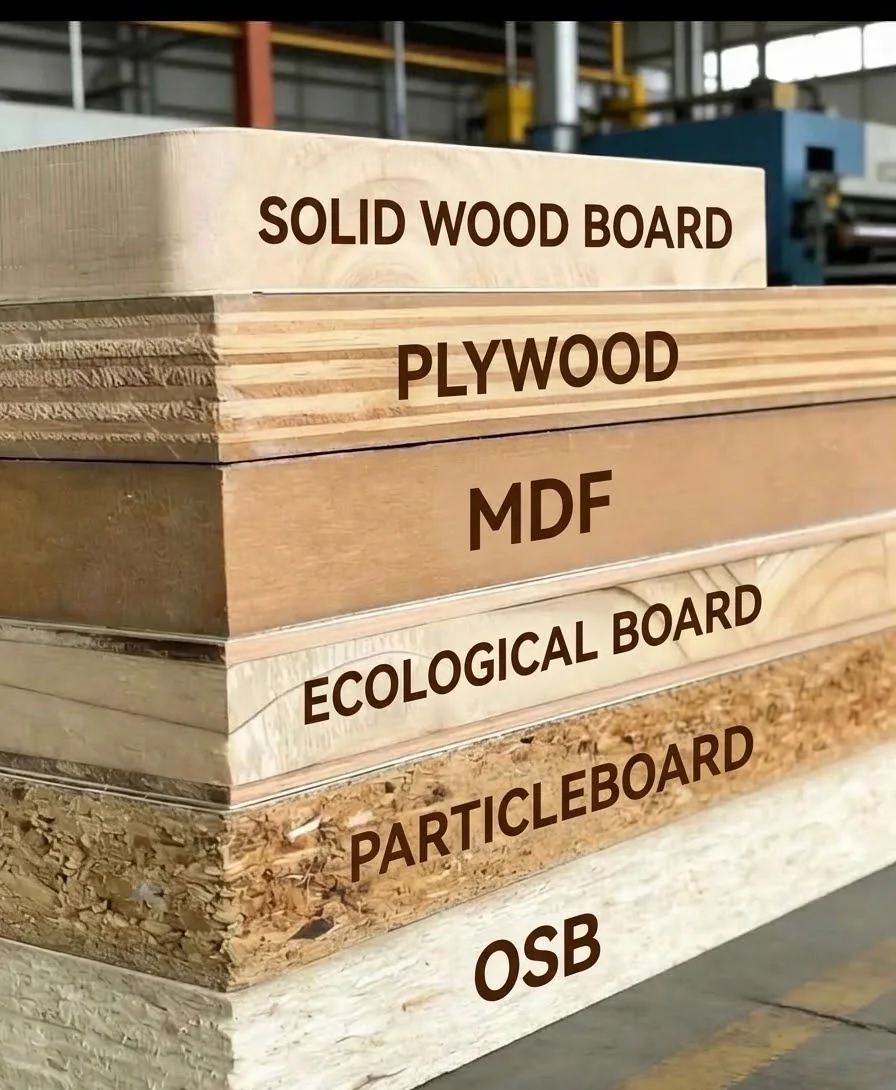
“Solid wood” is not automatically the highest-quality answer for every component. Furniture works best when material form matches geometry.
- Solid wood: ideal for legs, rails, shaped edges, chair frames, exposed joinery and surfaces that may be refinished later.
- Veneer over a stable core: often better for wide flat cabinet doors, wall panels and large casegood faces where dimensional stability and grain matching matter.
- Laminated solid panels: common for tabletops and structural boards; quality depends on board selection, adhesive control and how movement is accommodated.
- Finger-jointed panels: can be structurally appropriate in species such as rubberwood; evaluate the joint layout and visible grade rather than rejecting the method by name.
The Ratahome Manufacturing Capability page shows why factory process matters: material selection, machining, assembly and finishing need to be controlled as one production system.
11. Moisture content and wood movement: the invisible specification
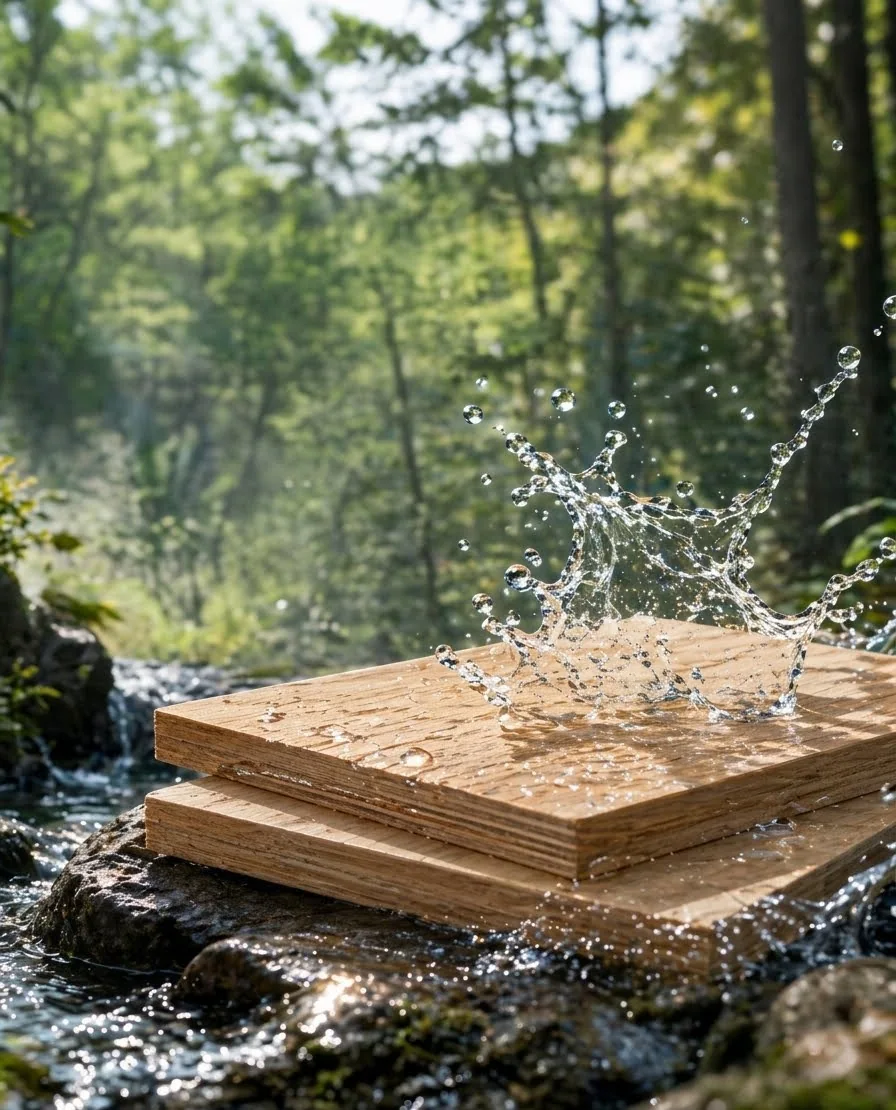
Solid wood expands and contracts across the grain as environmental humidity changes. That movement never disappears; good furniture simply allows for it. Problems usually appear when material is too wet at production, when a wide panel is rigidly restrained, or when furniture moves from a humid factory environment into a much drier heated home. For a broader view of material selection, machining, assembly and packing, see Ratahome Manufacturing Capability.
What to ask the factory
- What moisture-content range is targeted before machining and assembly?
- How are boards stored after kiln drying?
- How are wide solid panels joined and allowed to move?
- Are moisture readings documented before finishing or packing?
- For export projects, is the destination climate considered during specification?
12. Finish and color control: separate species approval from stain approval
One of the most common custom-furniture mistakes is approving a stain board without clarifying the wood underneath. A color sample answers “Do we like this tone?” It does not answer “Is this the specified species?”
A better sample approval sequence
- Confirm species and grade in the bill of materials.
- Review an unfinished sample so grain and raw color are visible.
- Approve stain or clear-coat color on that exact species.
- Approve sheen level and pore-filling strategy.
- Set an acceptable color-variation range for batch production.
Oak and ash can look dramatically different under the same stain because their pore structures are different. Walnut often needs less color correction because its natural heartwood is already the design feature. Rubberwood may be chosen specifically because it can take paint or even stain consistently. Teak finishes need to account for its natural oils and intended weathering behavior.
Compare raw wood and finished batches separately: species approval controls the material, while finish approval controls the final visual result.
13. Turn “wood preference” into a factory-ready specification
A professional wood specification should be precise enough that purchasing, production and QC teams are checking the same thing. “Natural oak” is not enough.
| Specification item | What to write down | Why it matters |
|---|---|---|
| Species | Exact wood species / commercial name; red vs white oak where relevant | Prevents substitution by appearance alone |
| Material form | Solid, veneer, laminated panel, finger-jointed panel, engineered core | Defines structure and stability |
| Visible grade | Knots, sapwood, mineral streaks, color variation allowed | Controls what the final surface may show |
| Grain direction | Vertical, horizontal, book-matched or sequence-matched where needed | Important for doors, panels and premium casegoods |
| Finish | Approved sample code, color, sheen, pore-fill level | Separates wood choice from color choice |
| Moisture | Target range and test stage | Reduces cracking, warping and joint movement |
| QC evidence | Material photos, measurements, moisture readings, assembly and finish checks | Creates a documented approval trail |
For project orders, the Ratahome Quality Control process documents material, assembly, finished-product, packing and shipment checks. After QC, Global Capabilities covers export packing and delivery coordination.
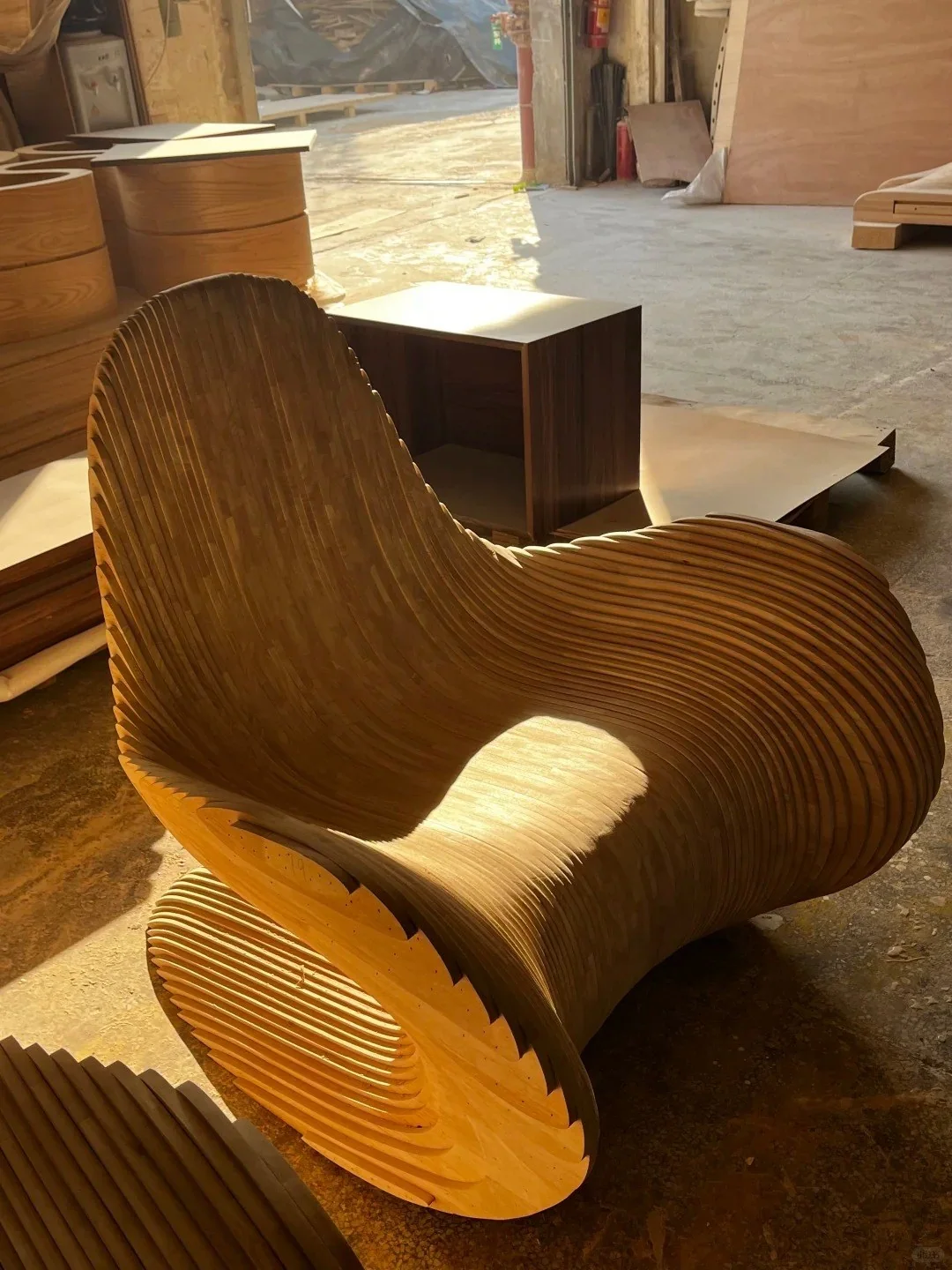
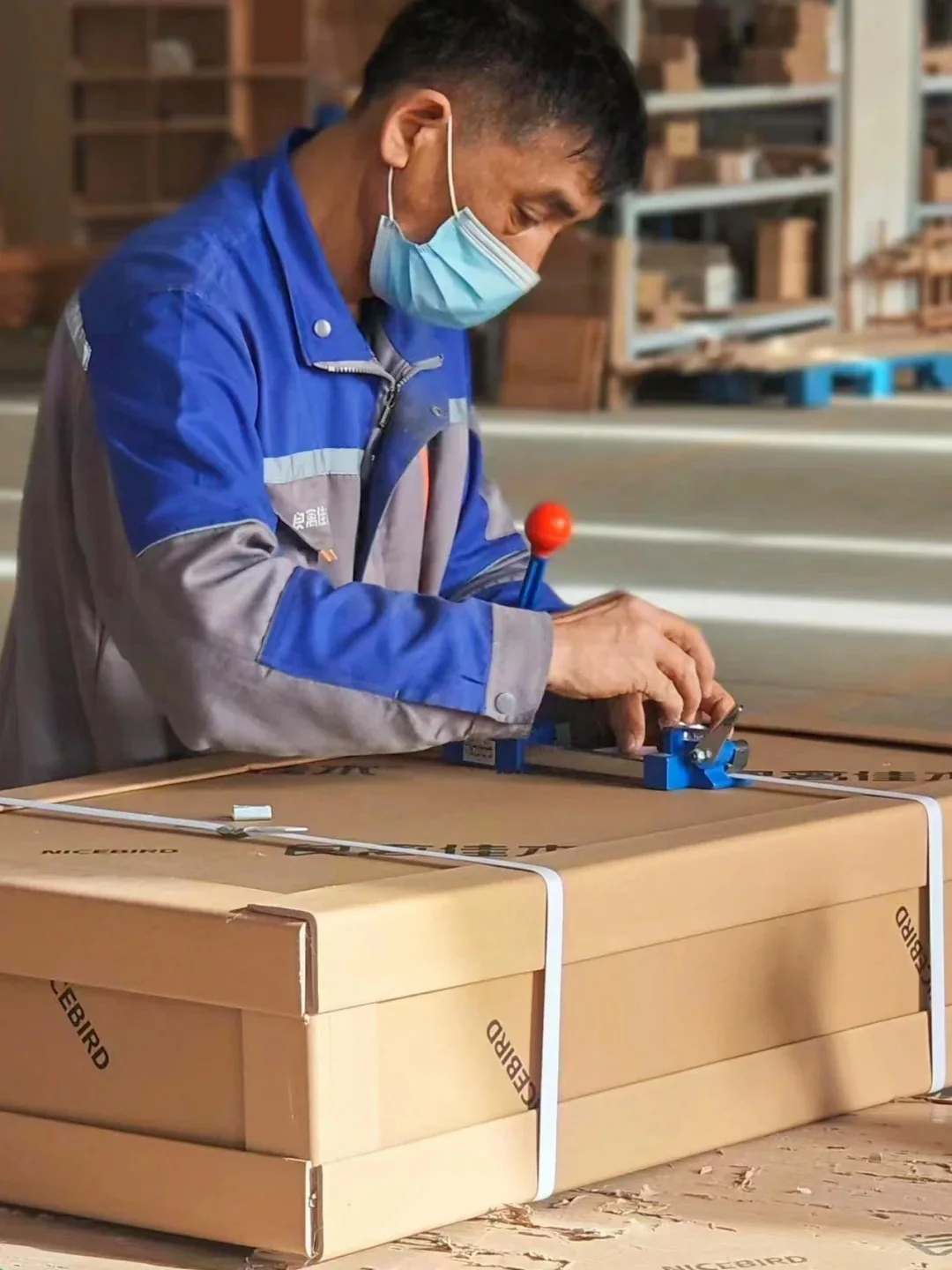
Factory QC: final-form review and packing checks
QC should confirm the completed form, surface condition and protection method before the order is released for shipment.
14. Quick FAQ
What is the best wood for custom furniture?
There is no universal best species. Oak is a durable all-rounder, ash is resilient and visually light, walnut is premium and expressive, beech is strong for structural parts, rubberwood is practical for dry indoor furniture, and teak is the specialist for outdoor exposure.
Which wood is best for a dining table?
Oak is the safest high-use choice for many projects. Ash is excellent for light contemporary tables, while walnut is ideal when the table is intended to be a premium focal point. With any of them, wide top construction and moisture control matter.
Is solid wood always better than veneer?
No. Solid wood is excellent for edges, legs, frames and shaped parts. High-quality veneer over a stable core can be better for wide cabinet doors and large panels because it improves dimensional stability and grain control.
Which of these six woods is best outdoors?
Teak. It has natural properties that make it much more suitable for exterior exposure. Still verify grade, sapwood content, drainage, stainless hardware, drying and finish.
Can different woods be mixed in one whole-home project?
Yes. A cohesive home can use different species by furniture category as long as color temperature, sheen, edge details and design language are coordinated. This is often more technically sensible than forcing one species into every application.