Nightstand vs. dresser: start with the role of each piece
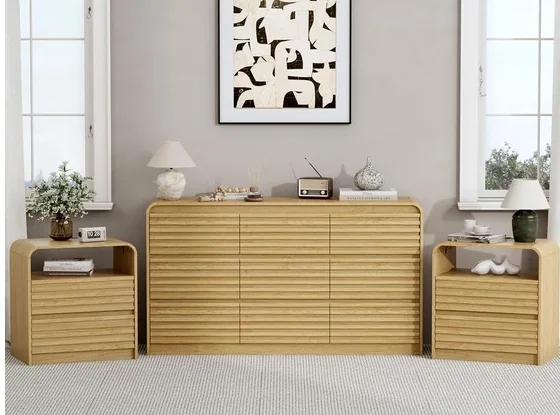
A nightstand supports daily bedside use. It holds lighting, books, chargers, and small personal items within reach. A dresser handles larger storage, usually clothing or bedroom accessories, while also acting as a broader visual anchor in the room. In many bedroom projects, the two work best as a coordinated system rather than unrelated standalone pieces.
- Nightstands are usually selected by bedside proportion, top surface usability, and drawer or shelf access.
- Dressers are usually selected by storage volume, room scale, drawer layout, and finish compatibility with the rest of the bedroom.
- Sets matter when the goal is a more cohesive look across the bed wall and the surrounding storage pieces.
Style and silhouette overview
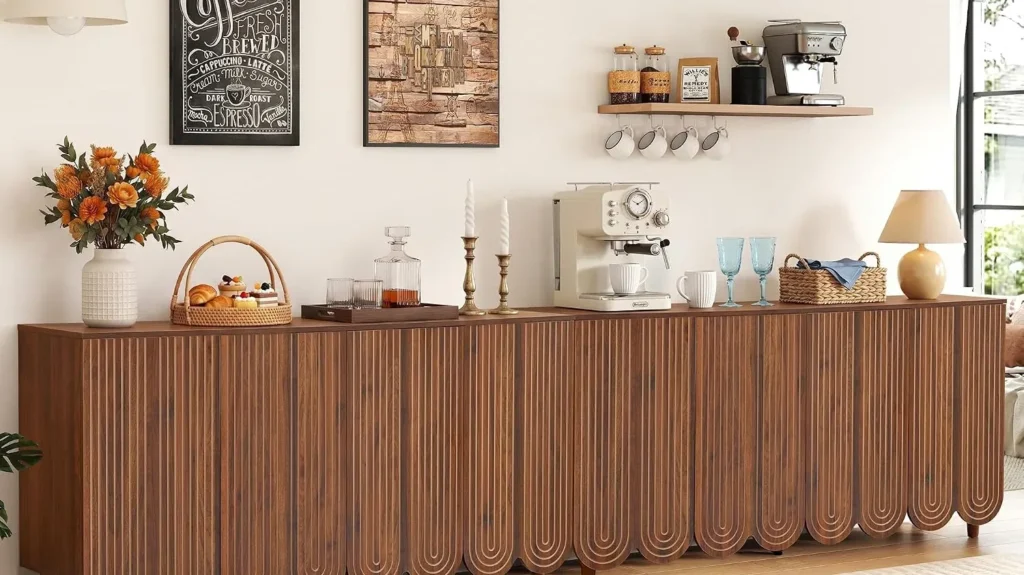
Nightstands can range from light open-frame pieces to rounded pedestal forms, fluted wood cabinets, lacquered modern boxes, cane-front storage, or mixed-material accent pieces. Dressers follow the same logic but shift toward larger scale, stronger horizontal presence, and more visible finish repetition.
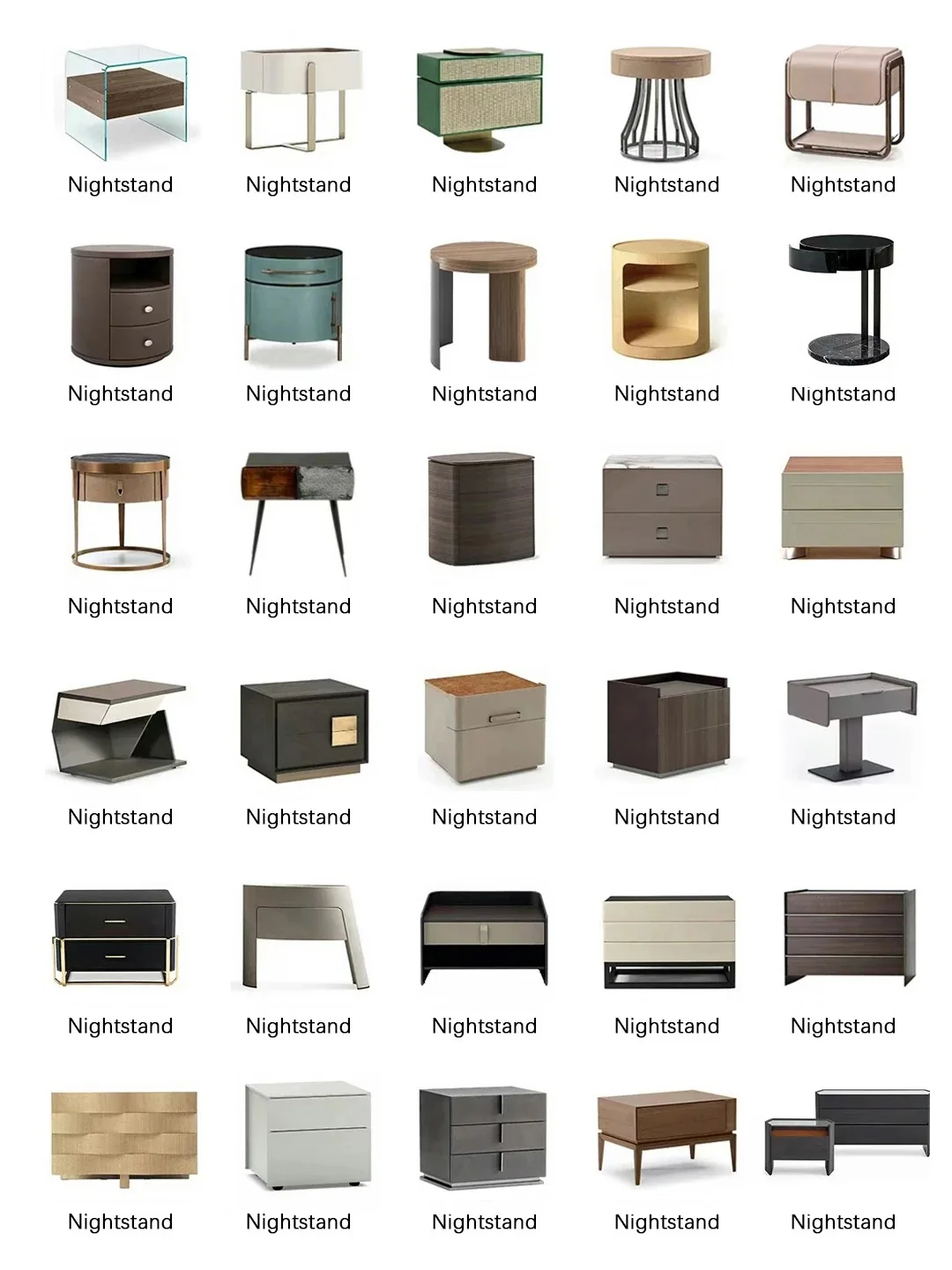
Catalog snapshot showing a range of side table and nightstand silhouettes, from open-frame designs to rounded and pedestal-based forms.
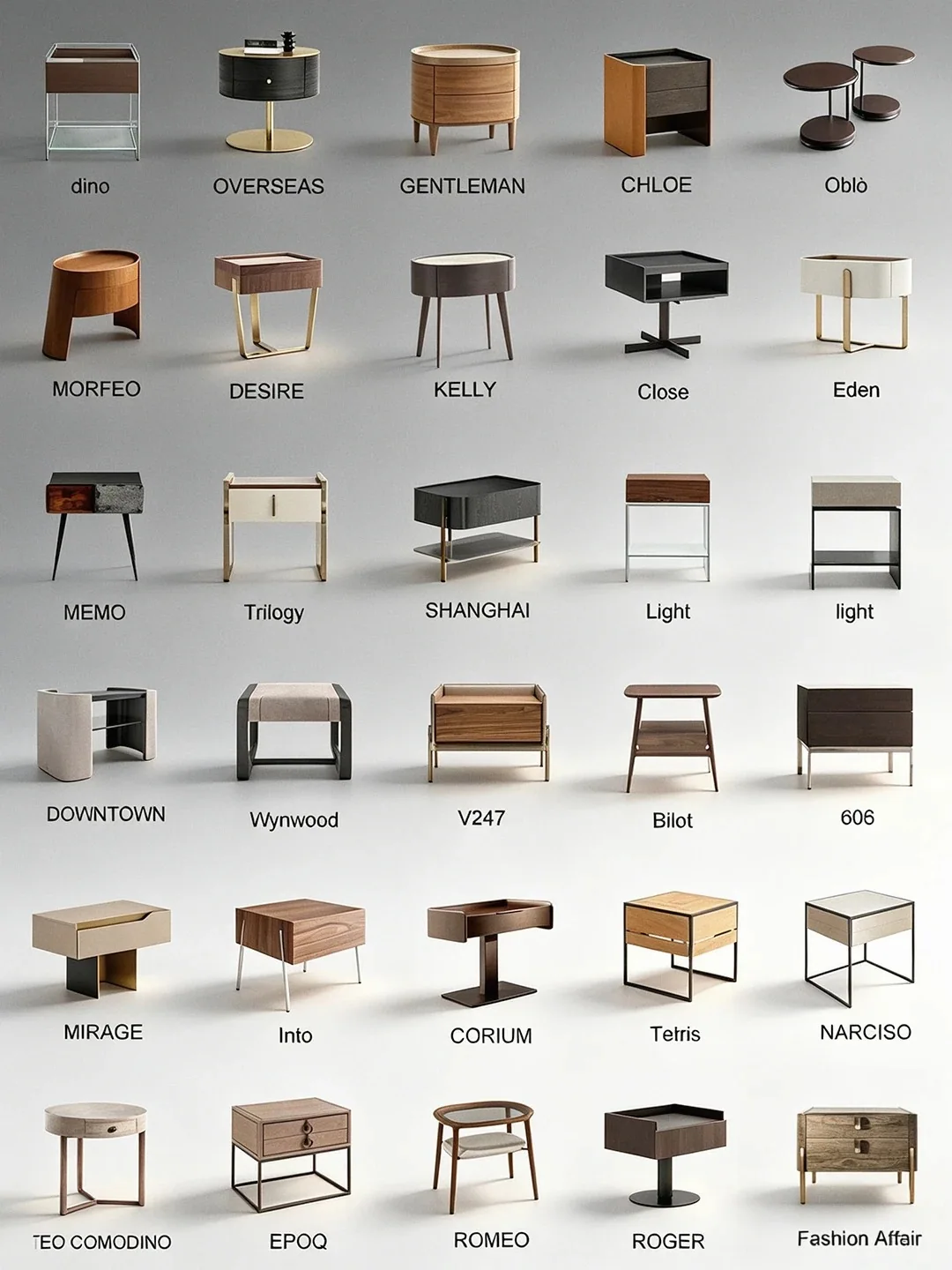
A broader visual reference showing how materials, shapes, and drawer layouts can vary across bedroom storage collections.
Materials and finish direction
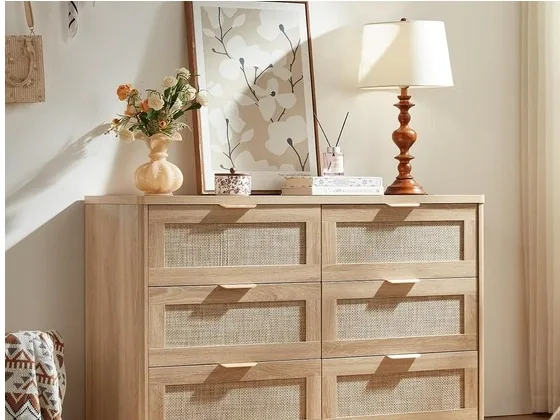
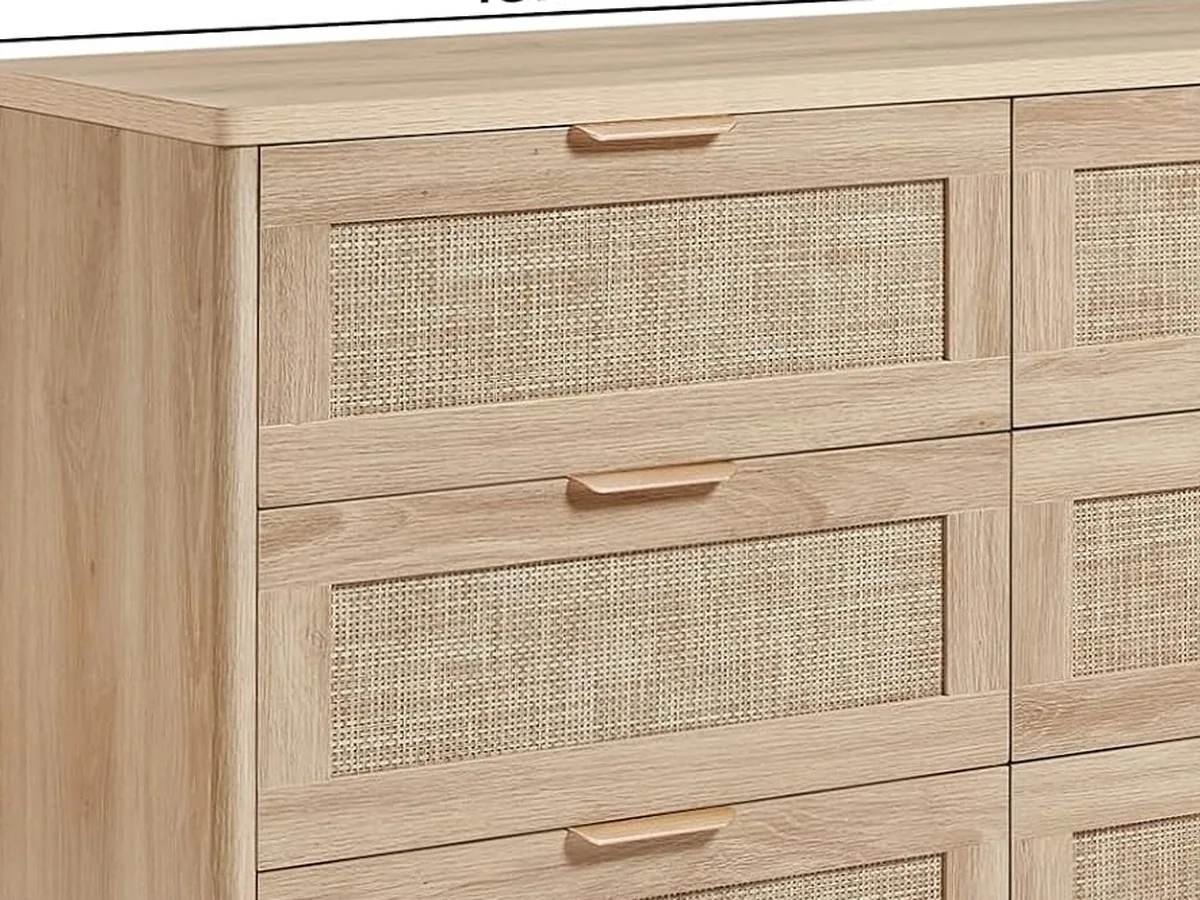
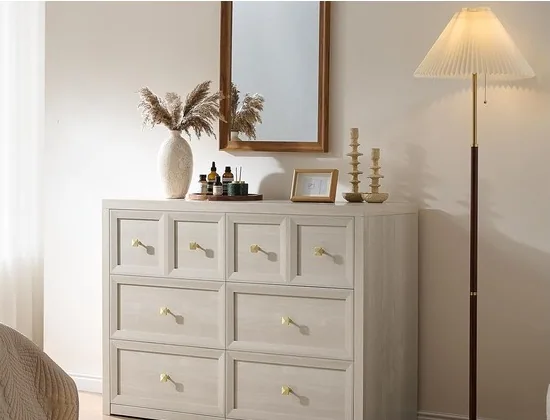
Material choice changes both the look and the reading of quality. Oak-grain surfaces and cane inserts create a lighter, more natural appearance. Painted finishes feel cleaner and can suit classic or transitional rooms. Fluted fronts introduce texture and depth. Hardware and edge treatment often decide whether a piece feels basic, elevated, or more custom.
Dimensions and bedside proportion
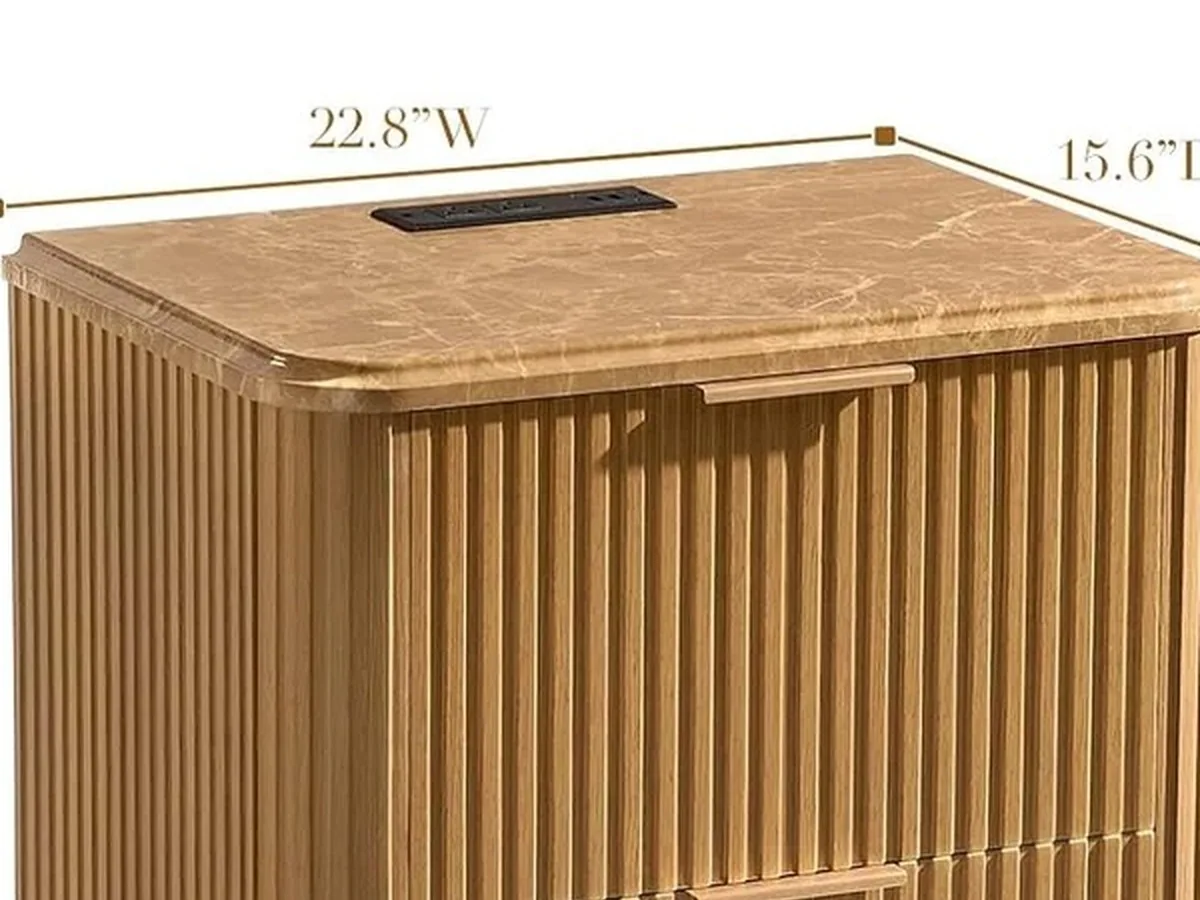
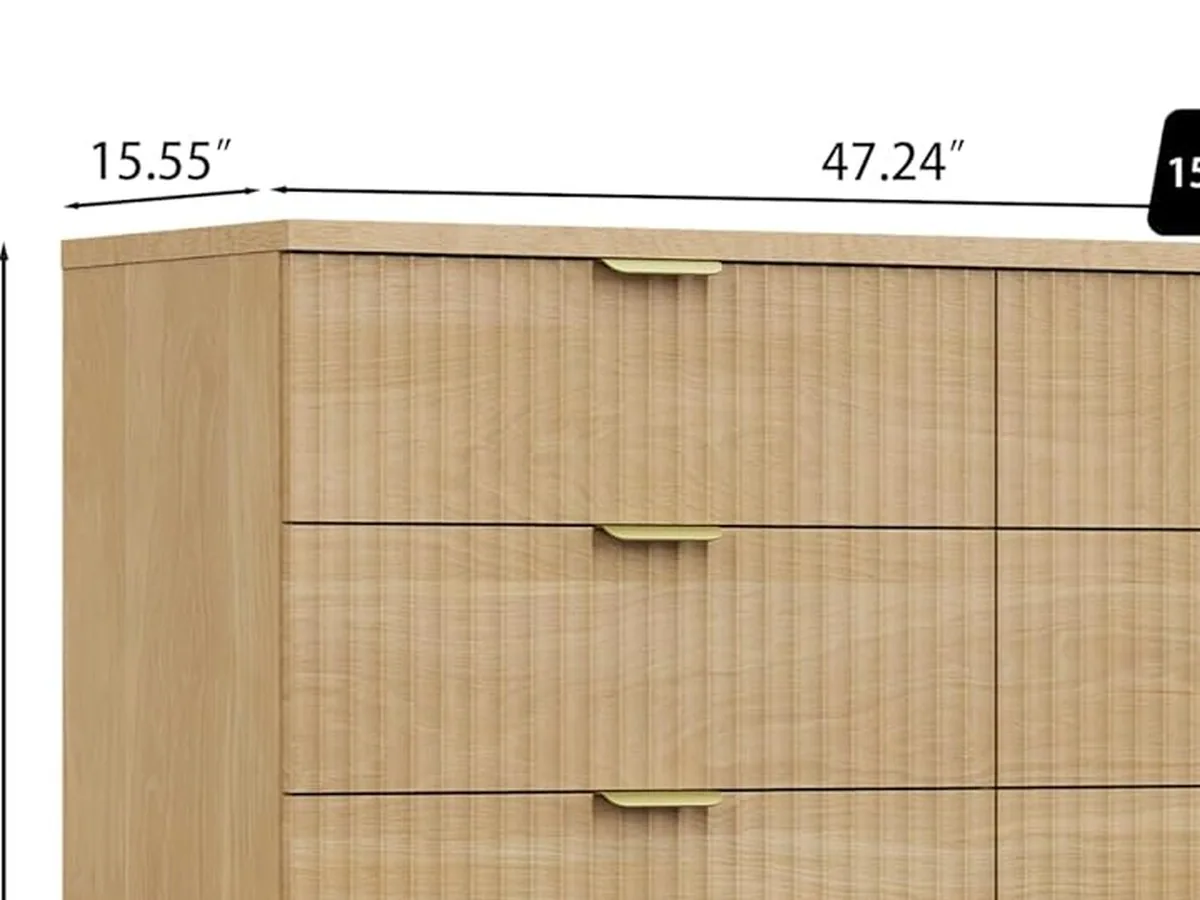
Proportion is one of the first practical filters. For nightstands, the top height usually needs to feel comfortable beside the mattress. Depth matters too: enough usable surface without making the bedside feel crowded. For dressers, width and drawer configuration should respond to wall length, circulation, and the amount of storage actually needed.
Construction details worth checking
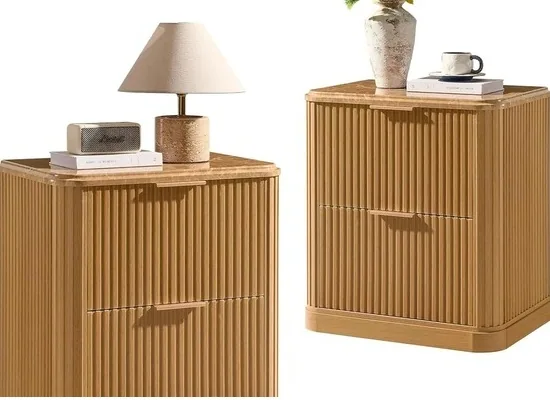
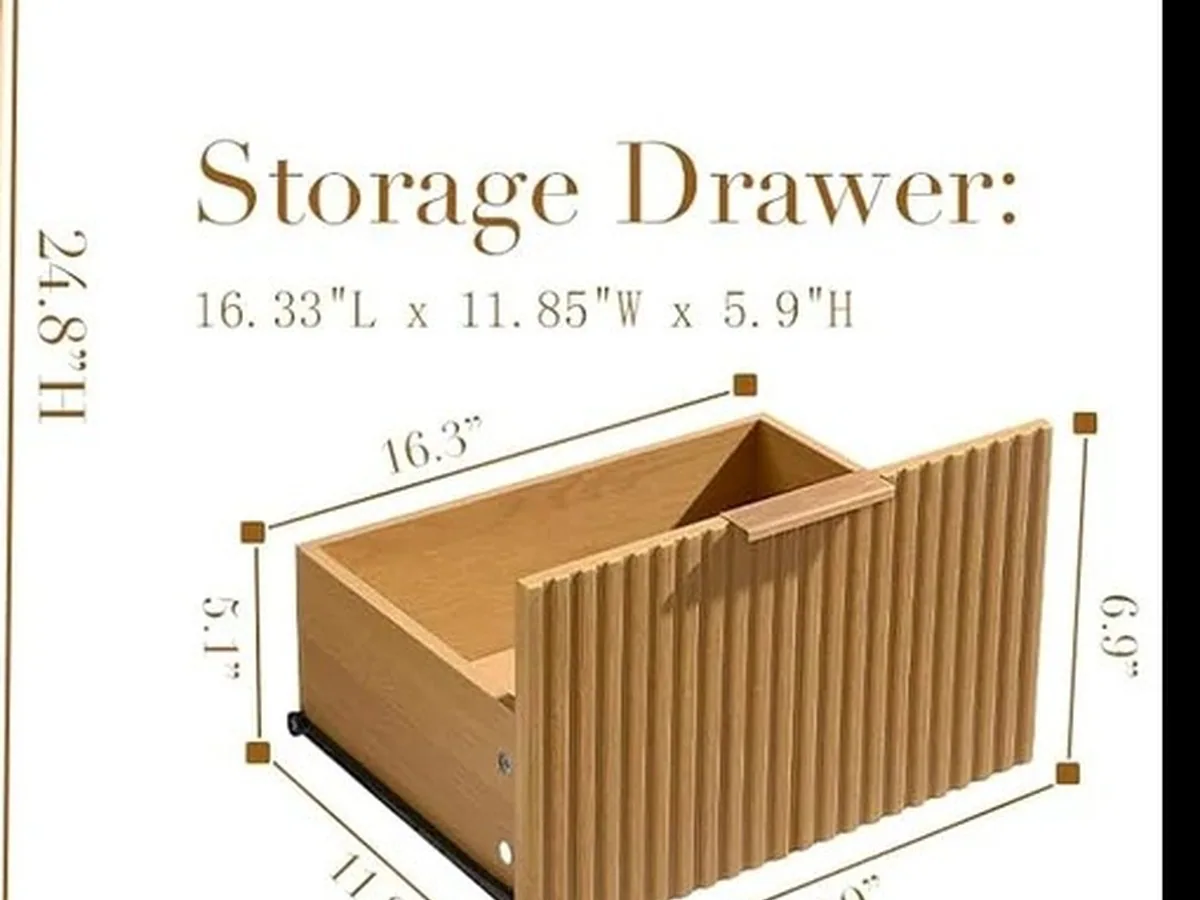
Good casegoods are not only about the finish. Buyers usually inspect drawer depth, glide feel, internal storage use, edge transitions, and how consistently the front material is applied. Even a visually simple nightstand becomes more convincing when the drawer proportion and detail treatment are resolved well.
Factory production snapshots
This section groups together the factory-display nightstands and related production snapshots. Looking at a factory floor helps reveal variety, repeatability, finish range, and whether a supplier is producing only a few showroom samples or working across multiple bedside formats.

Mirror-mosaic style nightstands displayed in batch form on the factory floor.

Rounded white-and-black nightstands shown as a grouped production batch.

Round wood-veneer nightstands with stone-look tops in a batch display.

Compact bedside pieces in production, showing repeated form and finish.
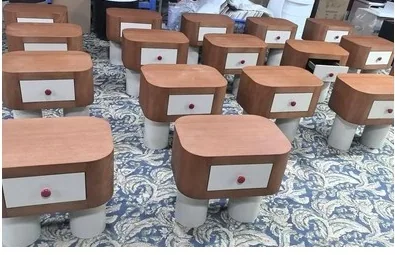
Mixed brown-and-white bedside units showing another production style direction.

Simple gray nightstands with open lower storage, displayed in a ready-stage batch.
All factory-display nightstand photos have been grouped here so the production content is kept in one dedicated factory section.
Packing and shipping readiness
After selection and production, packing matters as much as the product itself. Bedroom storage pieces often ship with corner protection, internal drawer securing, export cartons, or wooden crates depending on project scale and destination requirements. Careful packing reduces damage risk and helps keep the installation sequence smoother on arrival.