In brief: To create an American classic home, use warm neutral walls, substantial wood furniture, comfortable upholstery, measured symmetry and layered lamplight. Let materials gain character over time and build rooms around conversation, reading, dining and everyday life—not a showroom-perfect arrangement.
American classic interiors are loved for a particular balance: dignified architecture without stiffness, well-made furniture without formality, and an atmosphere that seems to improve with use. Imagine a leather sofa that softens with time, a walnut table with a story to tell, lamps glowing against dark millwork, and rooms generous enough for people to linger.
The aim is not to reproduce a historic period exactly. It is to create a believable home in which different pieces belong together because of their proportions, quality and lived-in appeal. Begin with a floor plan and the elements already fixed in your space, then make each furniture and finish decision contribute to the same quiet narrative.
What Makes American Classic Interior Design Timeless?
The spirit of American classic design rests on two qualities: patina and ease. Patina is the visual depth that develops as wood, leather and metal age; ease is the freedom to sit comfortably, place a book within reach and gather without treating every object as precious. Neither requires a house to be old. Both require thoughtful material and furniture choices.
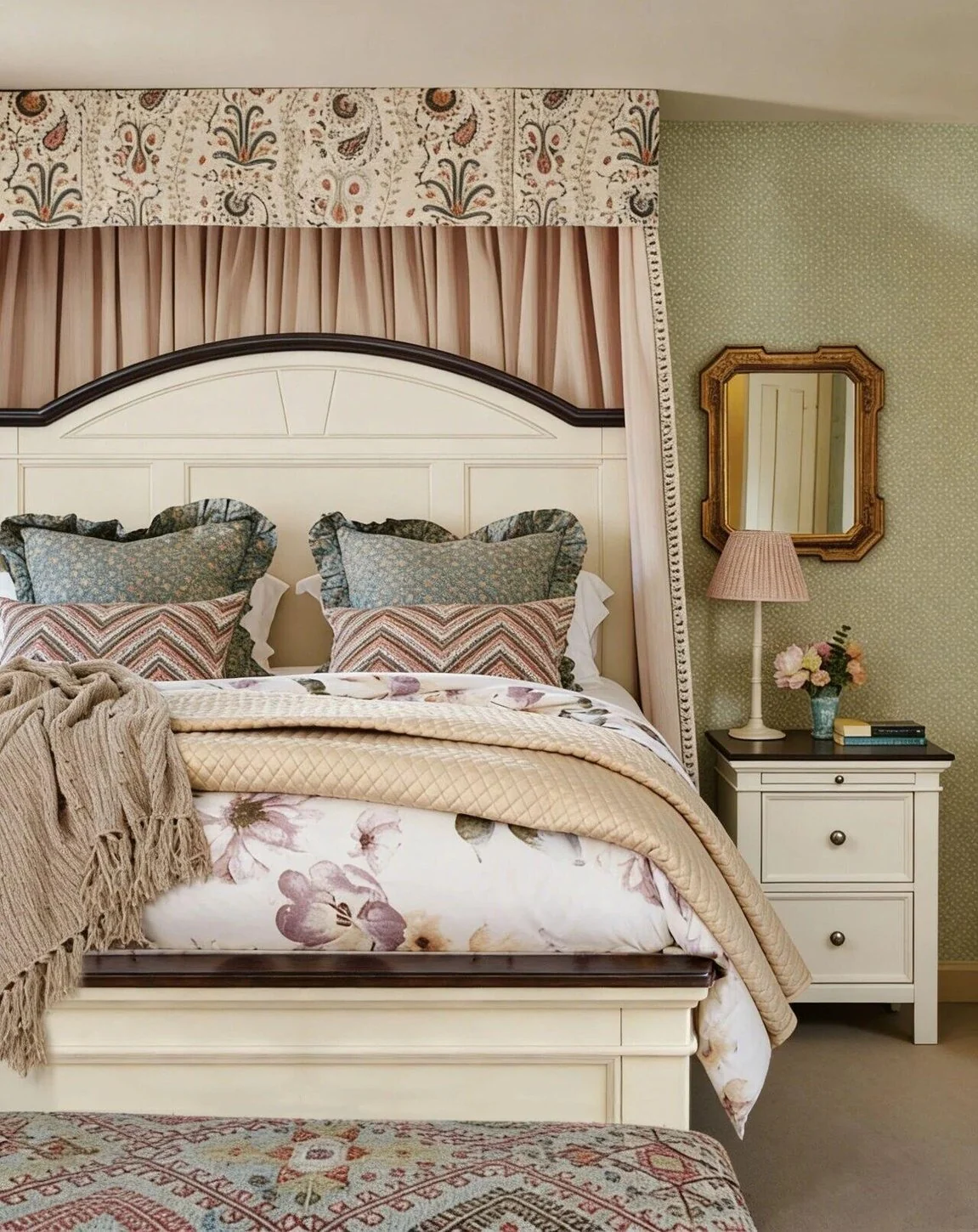
This style values layered history over immaculate uniformity. Traditional paneling, upholstered seating, a worn-in rug and a few personal objects can coexist beautifully when their colors and scales relate. Symmetry gives a room calm; small departures from symmetry give it personality. Classic American style also varies by region and era, so consider the principles below a flexible framework rather than a rigid historical definition.
1. Build a Warm, Heritage-Inspired Color Palette
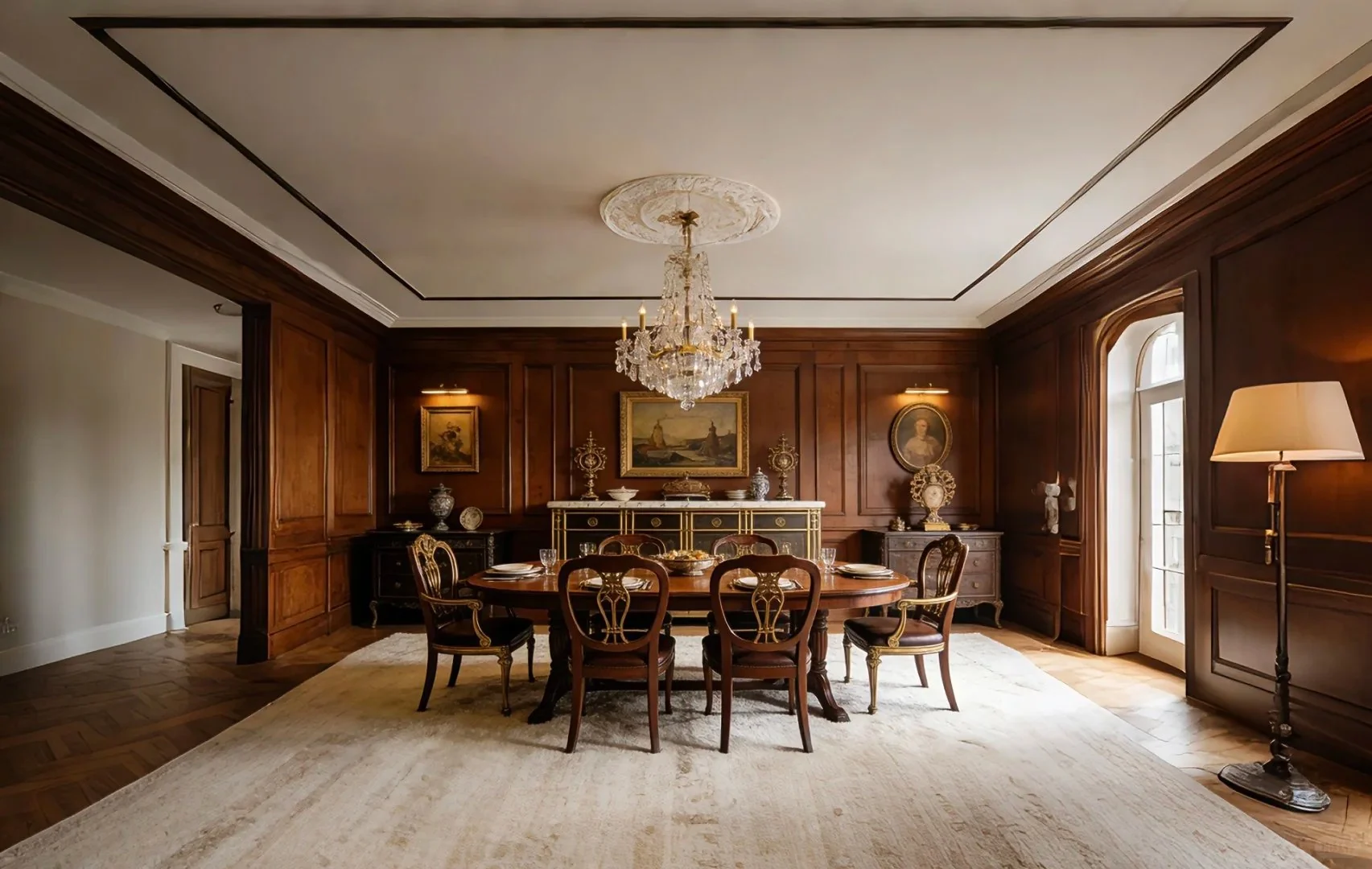
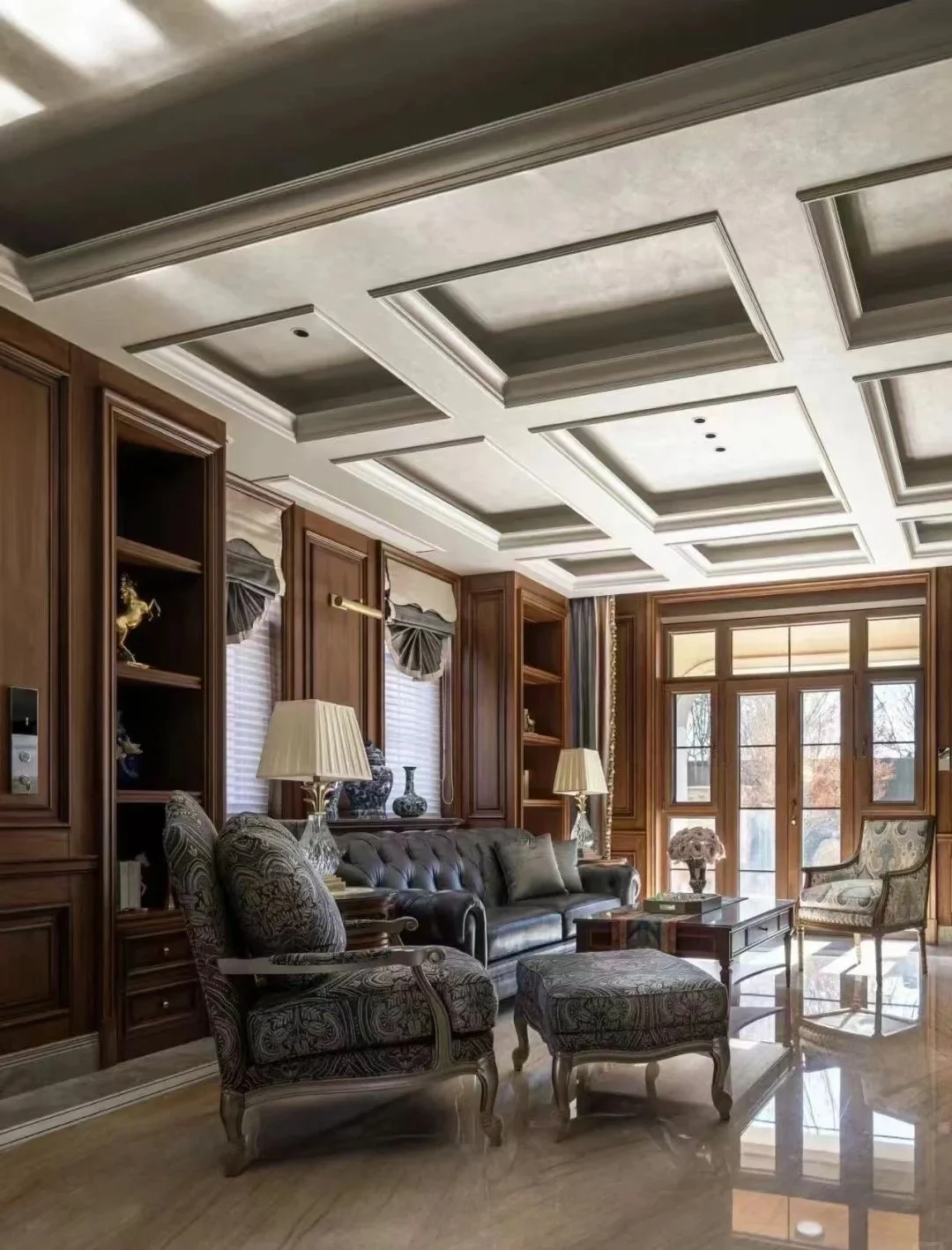
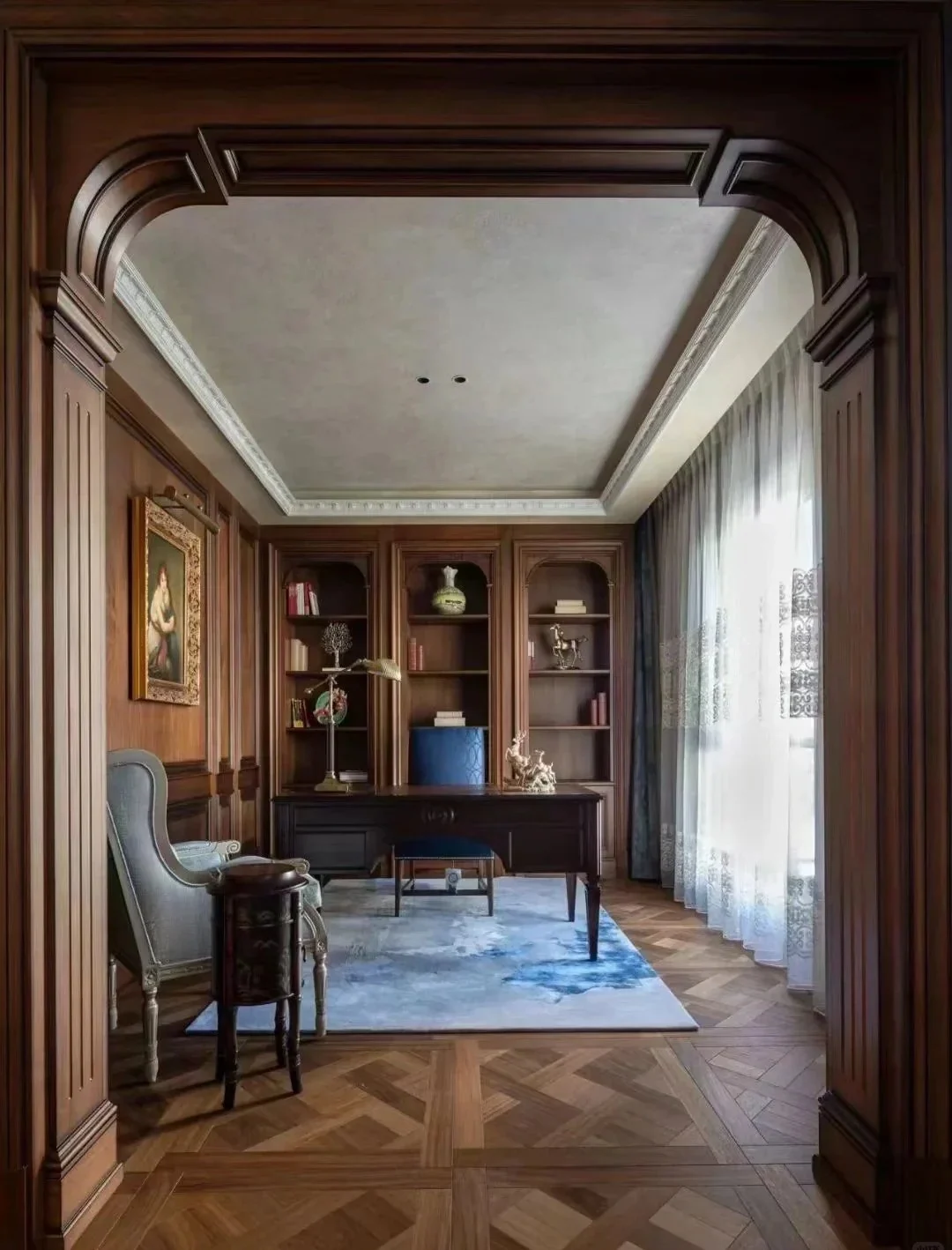
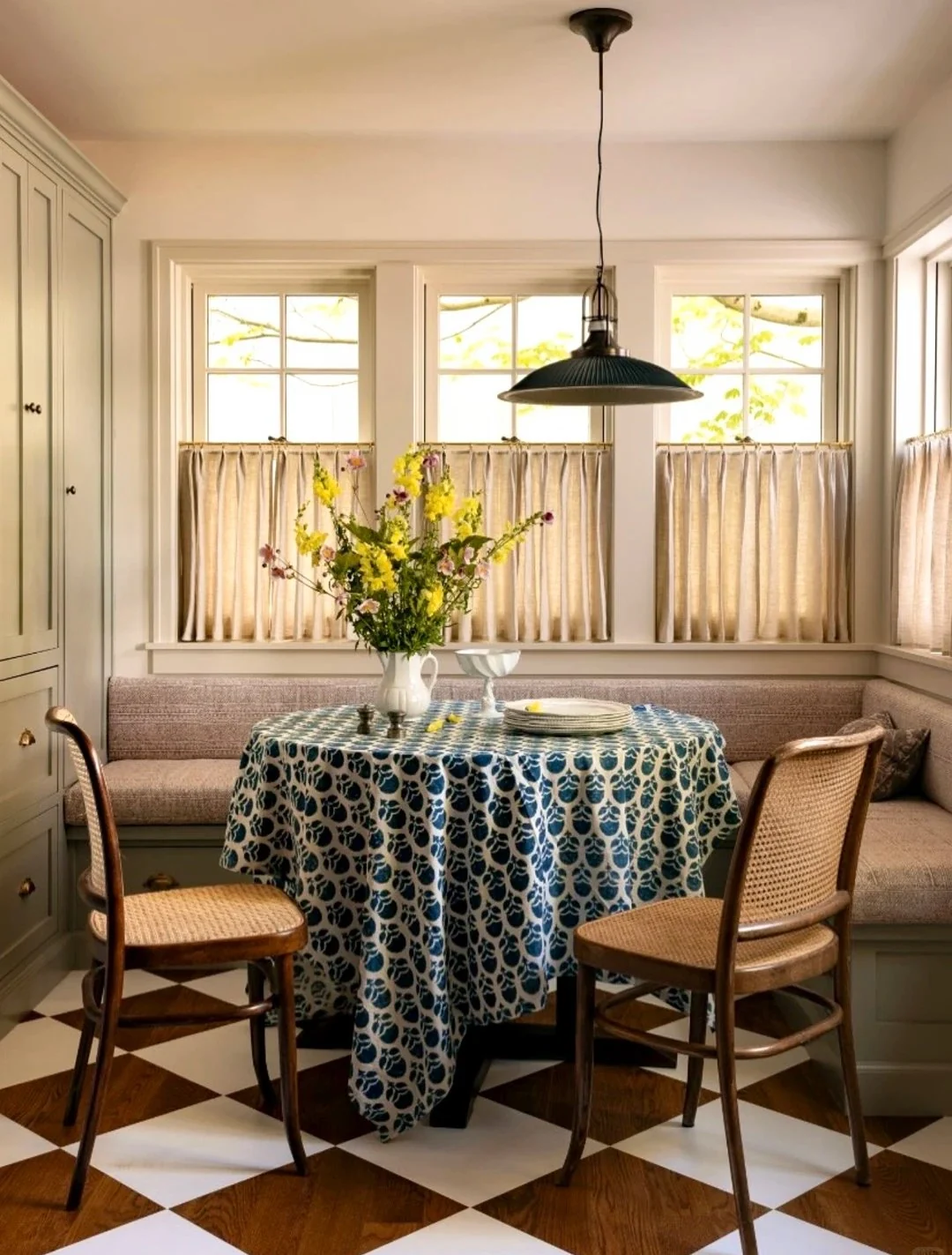
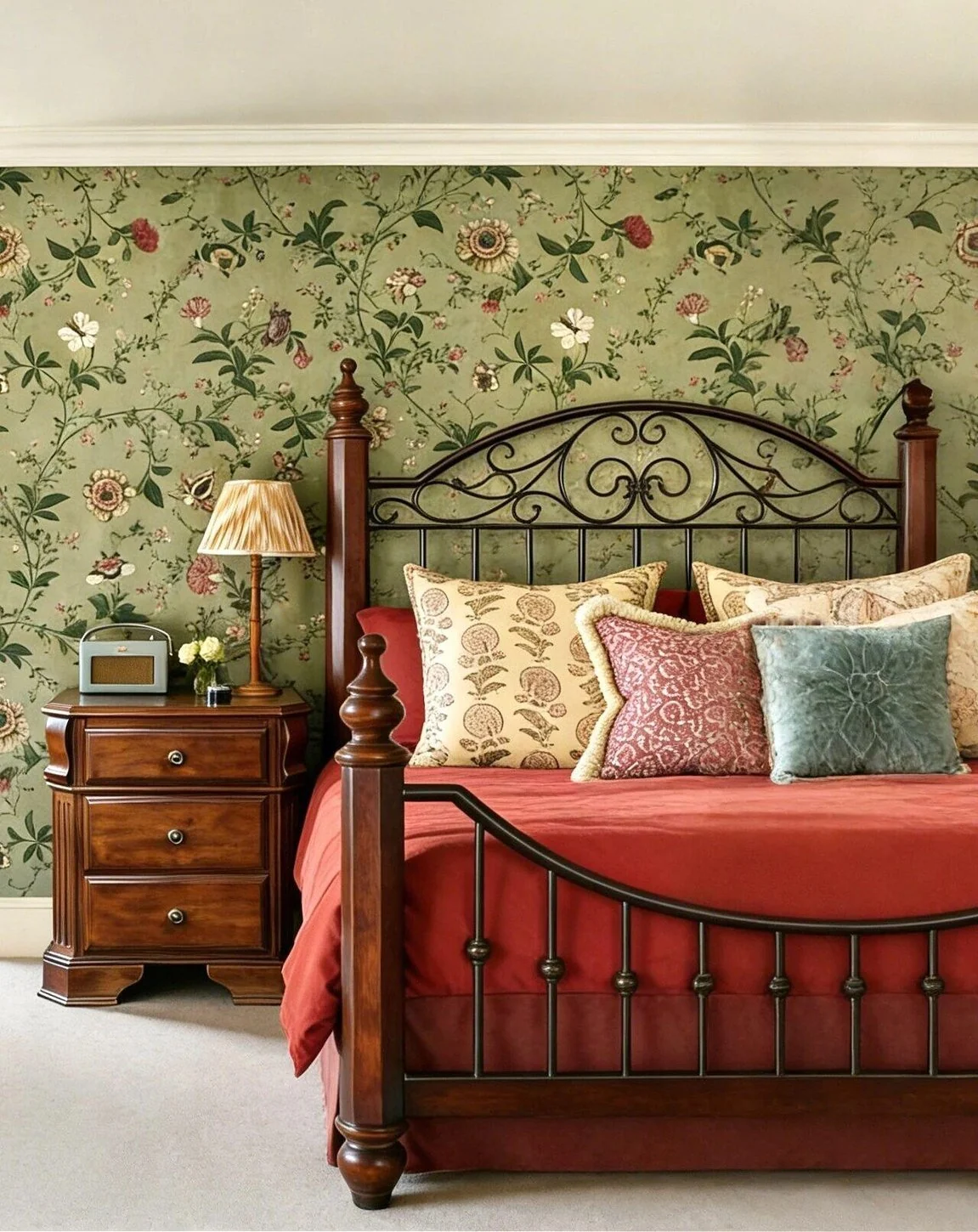
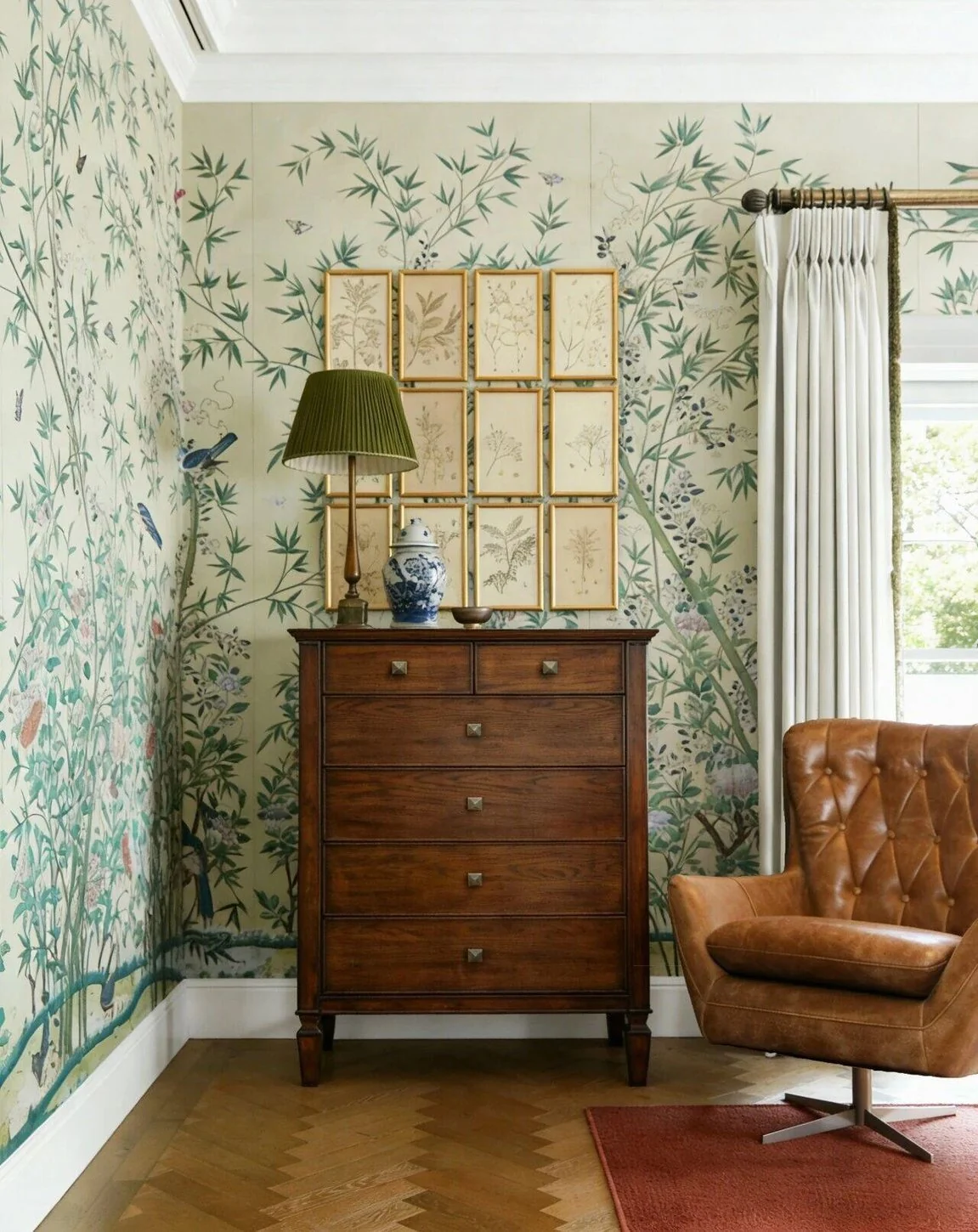
Start with muted, earthy foundations: creamy white, warm almond, light mushroom or soft greige. These tones let darker furniture feel intentional rather than oppressive. Walnut, cherry-toned wood, caramel leather and tobacco-brown accents form the secondary layer. Forest green, oxblood, navy or antiqued brass can appear in smaller doses as visual punctuation.
A useful starting framework is 60% quiet architectural color, 30% wood and upholstery tones, and 10% deep accents. Do not treat this as a mathematical requirement: wood-paneled libraries naturally use more dark color than a sunlit breakfast room. Test paint, fabric and timber together in daytime and under lamps; warm and cool undertones can clash even when each sample looks attractive alone.
2. Layer Wood, Leather, Linen and Aged Metal
Classic rooms become convincing through contrast: the structure of timber, the touch of leather, the softness of woven upholstery and the restrained shine of aged metal. Oak, walnut and cherry-inspired finishes offer different grain and warmth; they do not all need to be solid wood. For wide panels and built-ins, stable engineered cores with wood veneer can be appropriate when carefully specified.
| Material | Visual role | What to check before buying |
|---|---|---|
| Walnut / oak / cherry-toned wood | Grounds rooms with warmth and enduring character | Grain direction, joinery, finish consistency and dimensional stability |
| Full-grain or top-grain leather | Adds softness, depth and developing patina | Leather grade, color variation, cleaning needs and expected wear |
| Cotton, linen and durable woven blends | Balances heavy furniture and adds tactile comfort | Fabric performance, stain care, seam quality and cushion construction |
| Aged brass and iron | Provides a gentle metallic highlight | Solid versus plated finish, protective coating and care |
| Marble or marble-look stone | Introduces cool contrast to warm timber | Porosity, surface treatment, support and edge detail |
Ask how an attractive surface is built—not just what it looks like. Learn more in Ratahome’s wood selection guide and sofa construction guide. The right specification keeps everyday wear charming rather than becoming premature failure.
3. Create Order with Classic Architectural Details
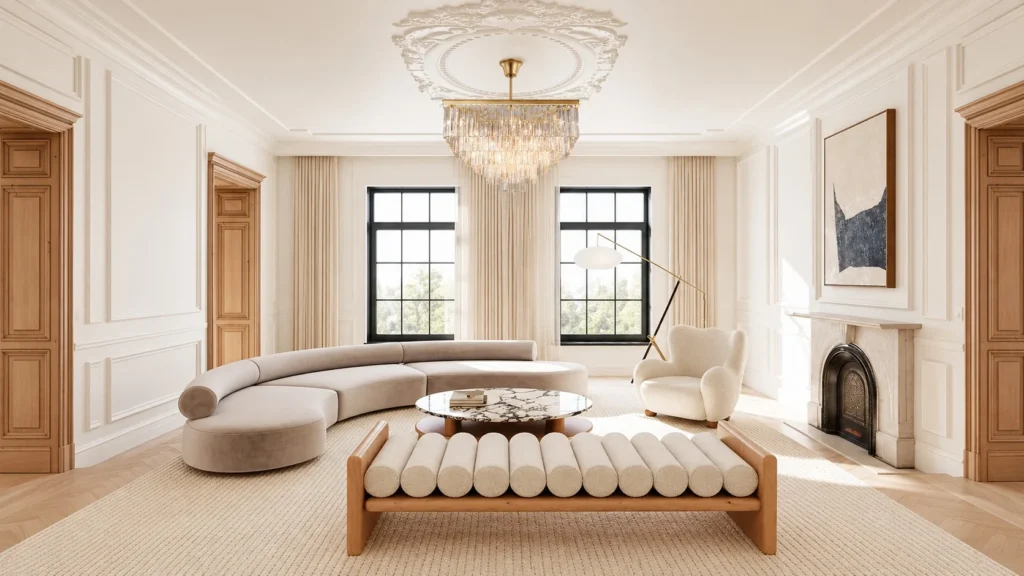
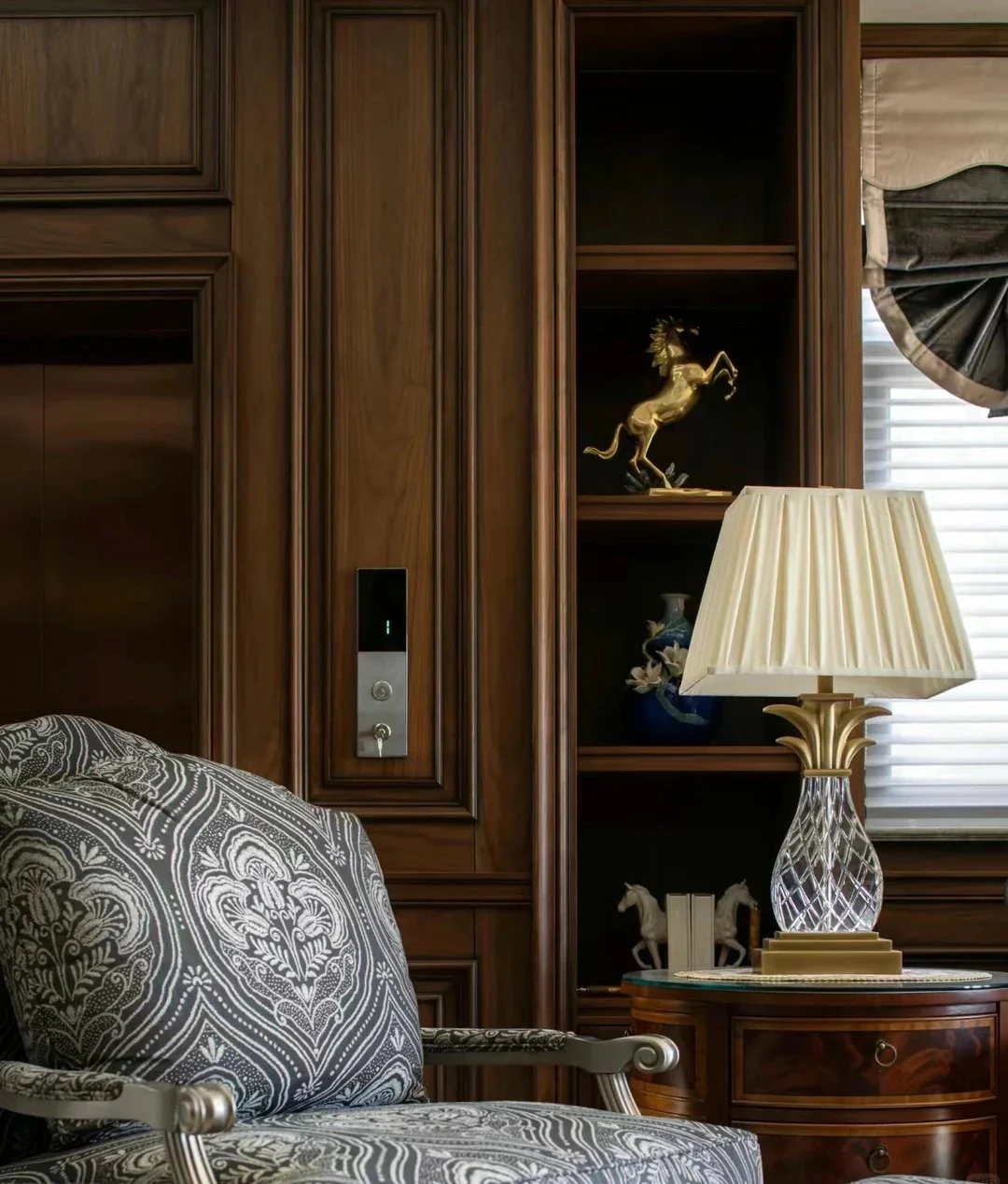
The most effective American classic rooms use measured architectural rhythm rather than ornate decoration everywhere. Flat or lightly profiled wall panels, picture-frame molding, ceiling cornices, substantial door casings and occasional arched openings lend a clear sense of proportion. Coffered ceilings can work especially well in taller rooms; in lower spaces, simpler trim is usually more graceful.
Symmetry is a useful organizing tool. Pair bookcases around a fireplace, position matching lamps on a sideboard, or center a dining table beneath a pendant. But resist forcing every object into a mirrored arrangement. One favorite armchair or unusual piece of art often makes a formal room feel lived in.
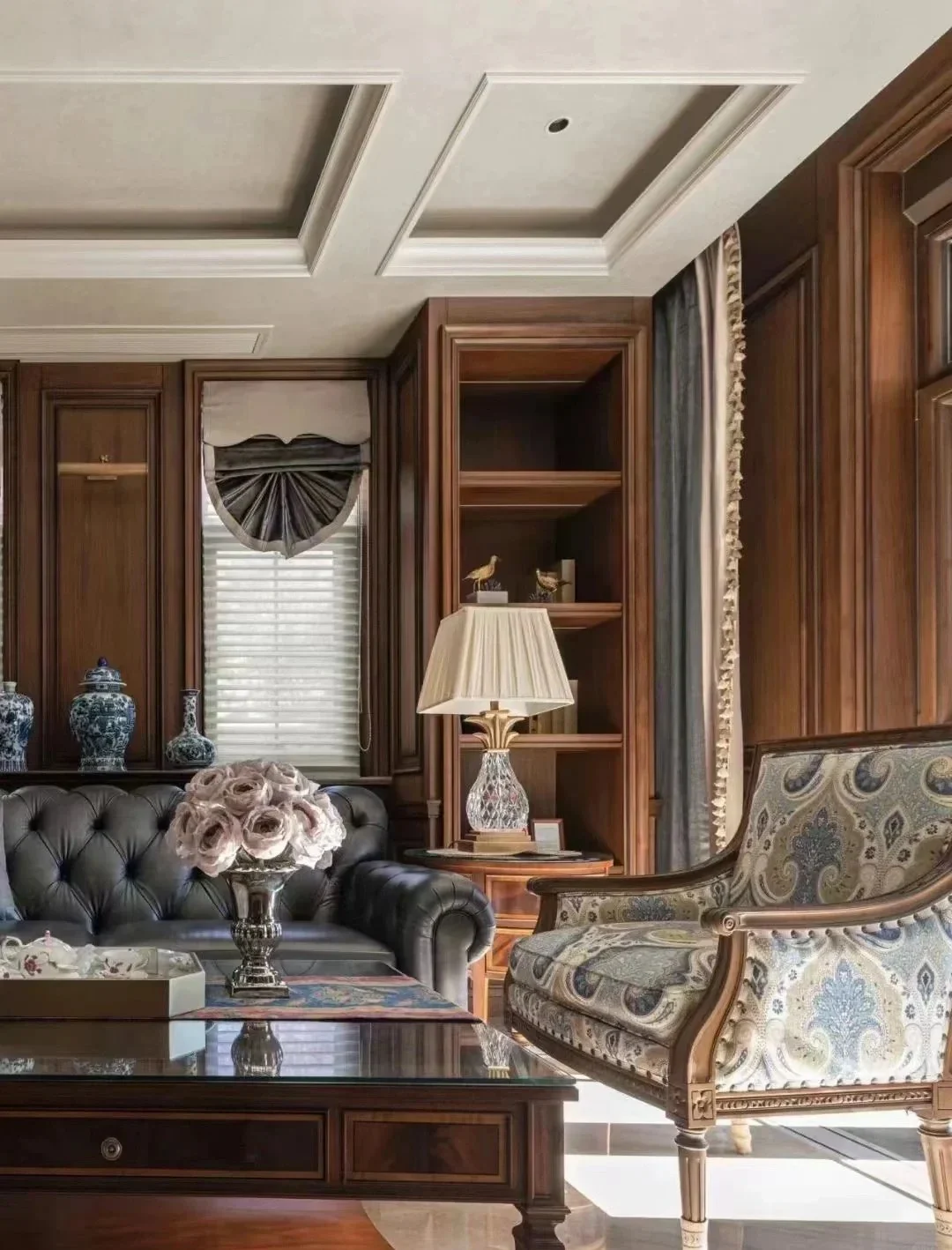
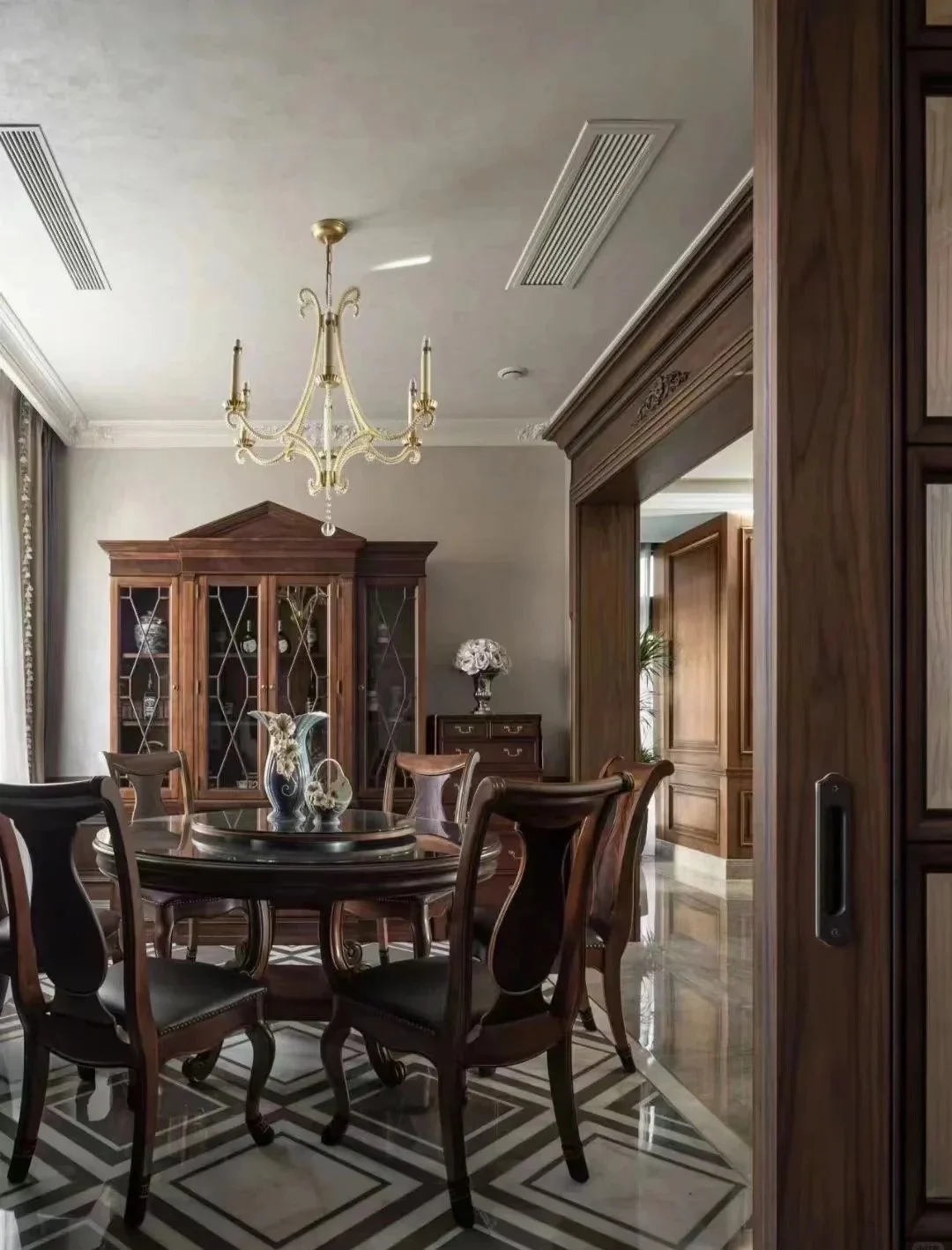
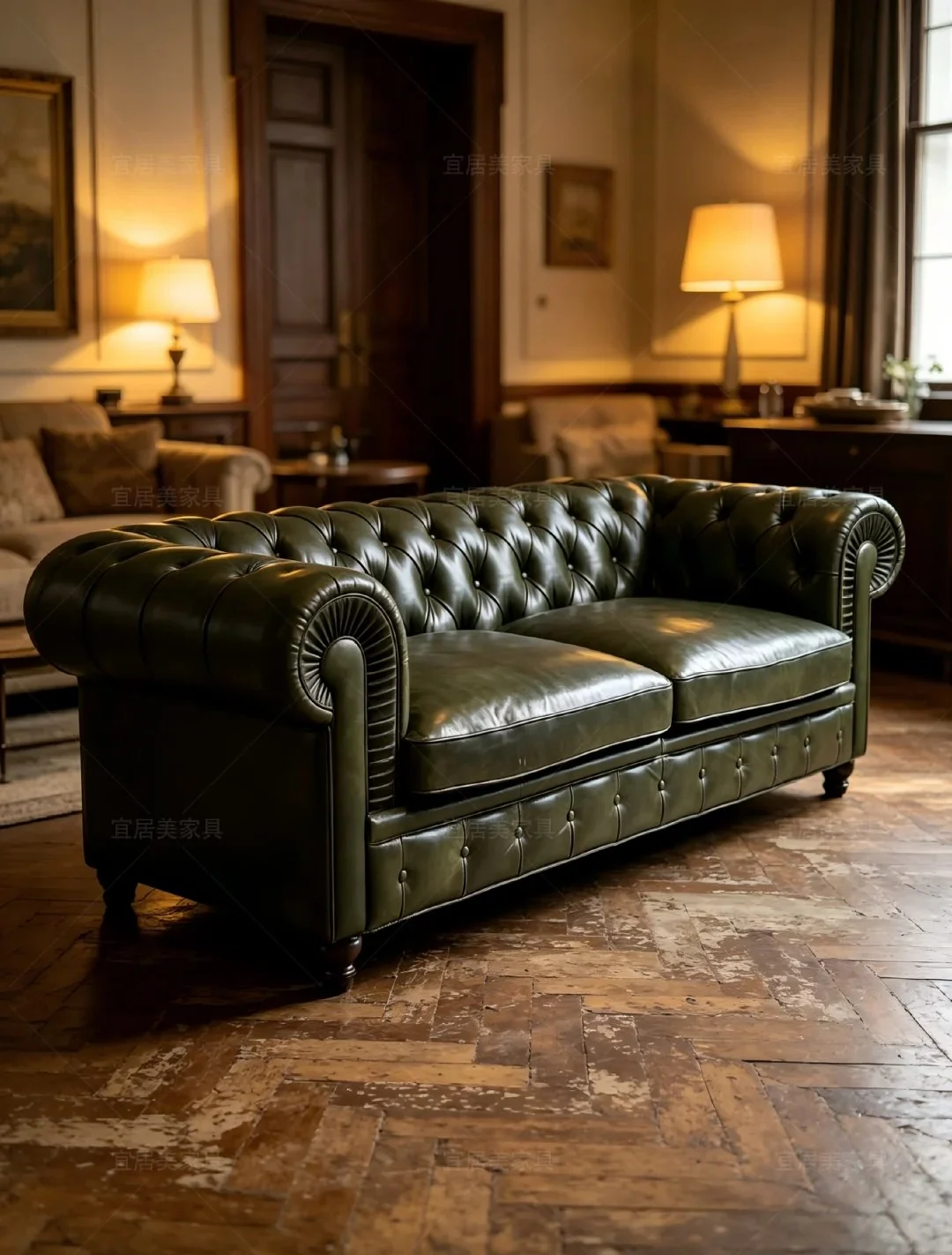
Dark herringbone or chevron wood floors can add pattern underfoot, while a traditional rug softens sound and delineates the seating zone. Verify subfloor conditions, installation method and maintenance before specifying a patterned wood floor. An expensive detail is not automatically the right detail for your architecture.
4. Choose Comfortable Furniture with Character
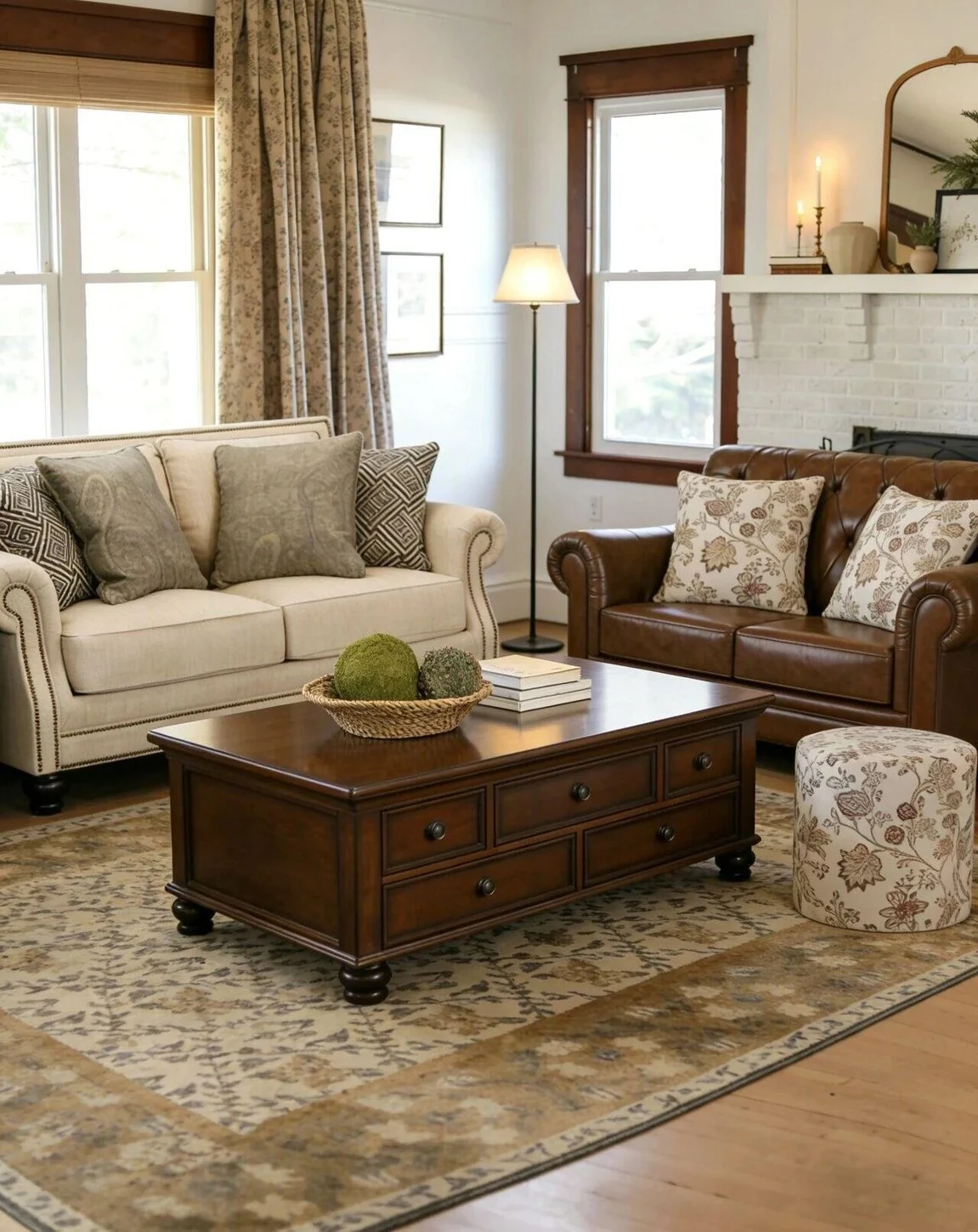
Furniture should feel substantial, but not so oversized that it blocks circulation. A Chesterfield sofa, rolled-arm upholstered couch, Windsor chair, solid-feeling dining table or traditionally proportioned sideboard can establish the style. Button tufting, nailhead trim and carved legs are optional details—not a checklist to apply to every piece.
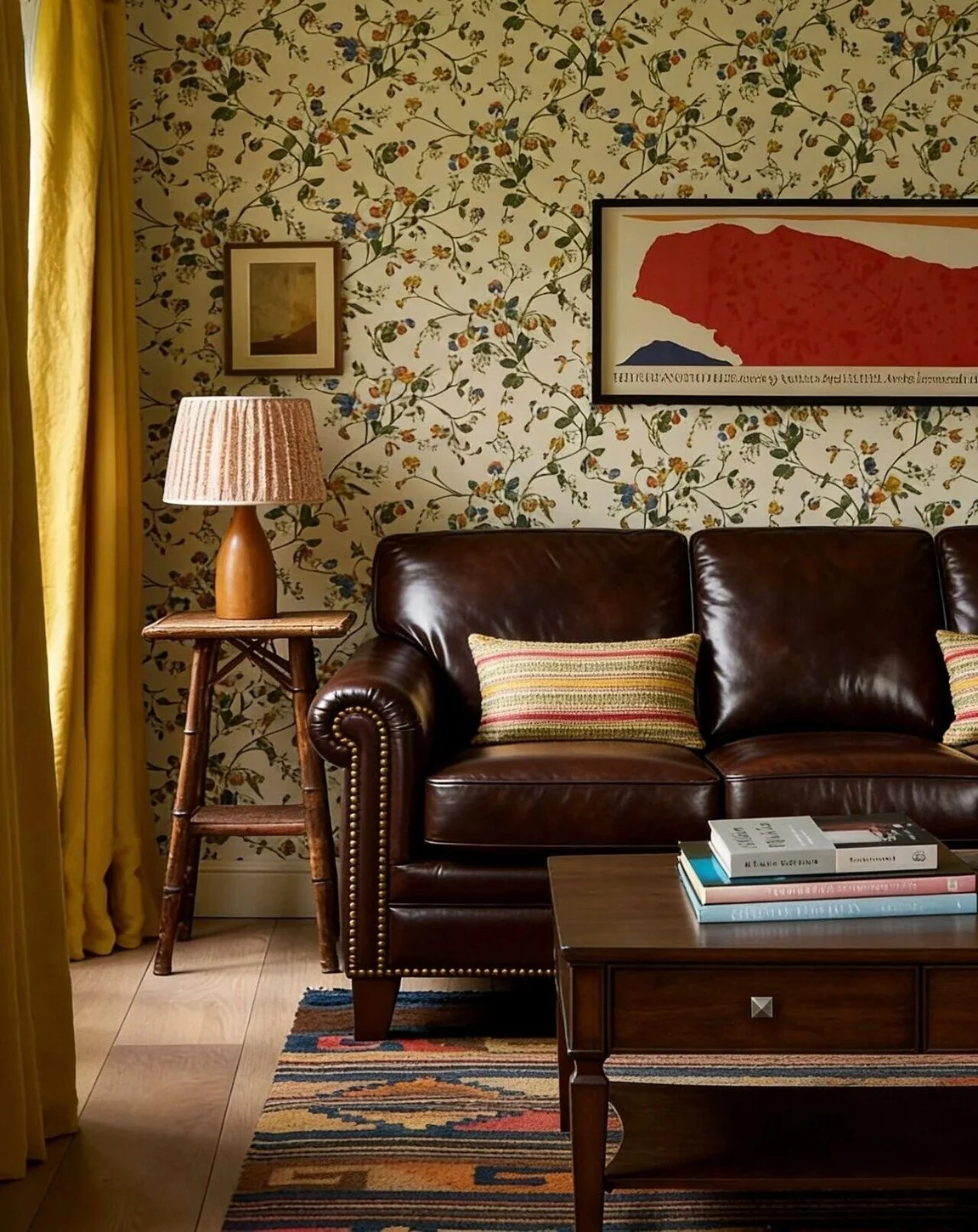
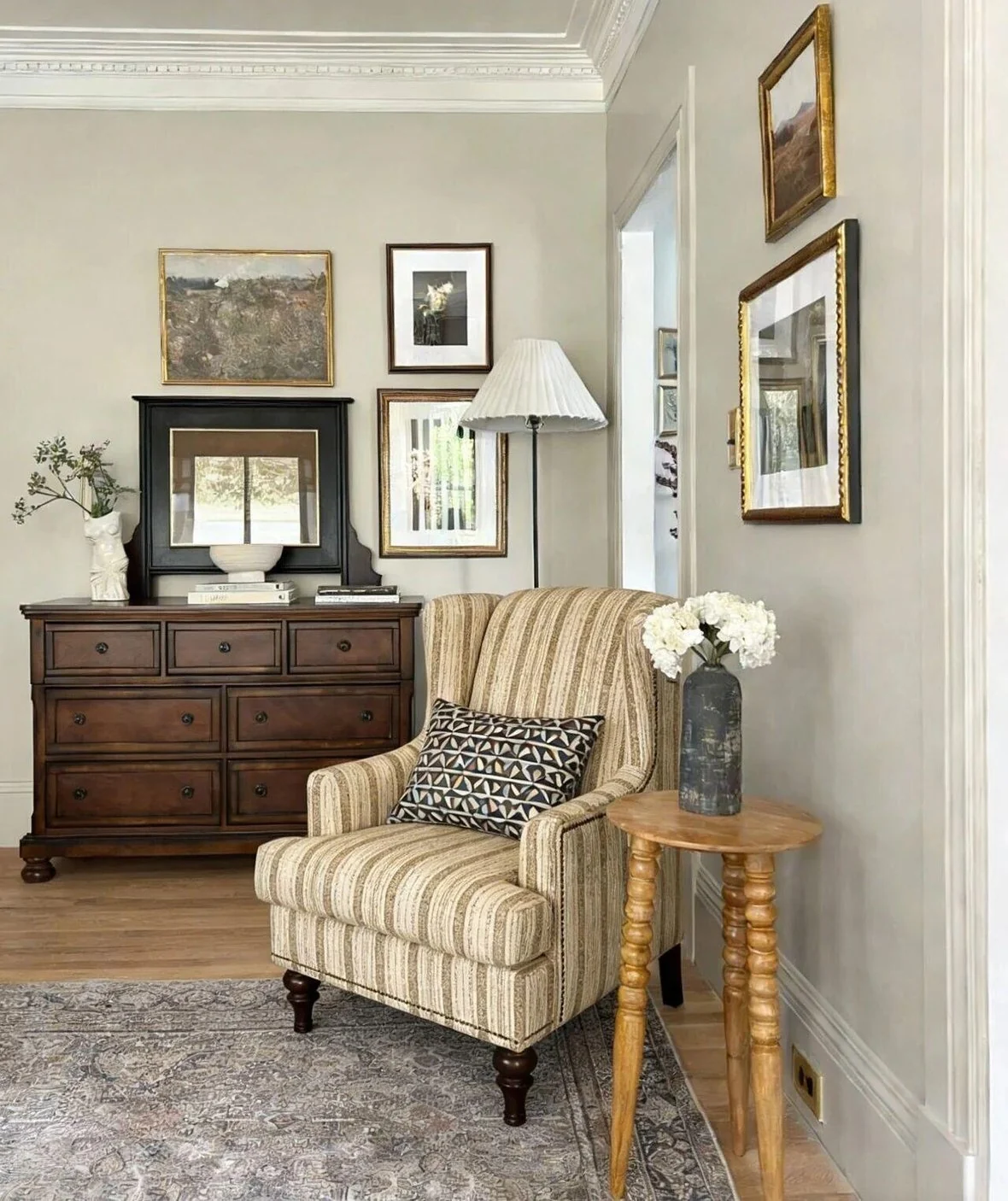
Mixing periods and finishes is part of the appeal. A leather sofa can sit beside a patterned fabric armchair; a simple coffee table can balance detailed millwork; a family dining table may look better with subtly different end chairs than with a rigid matching set. The unifying elements are scale, color temperature and quality.
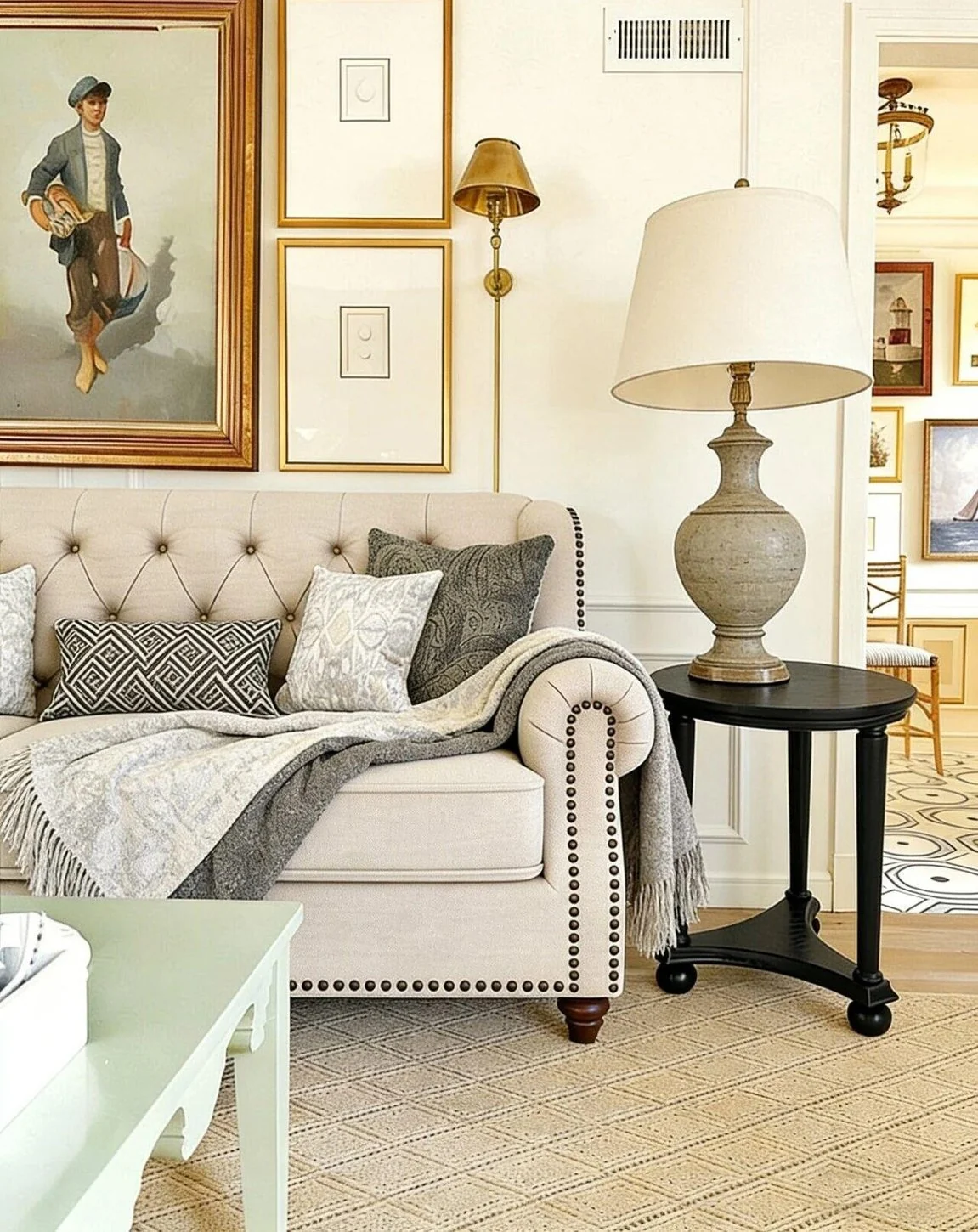
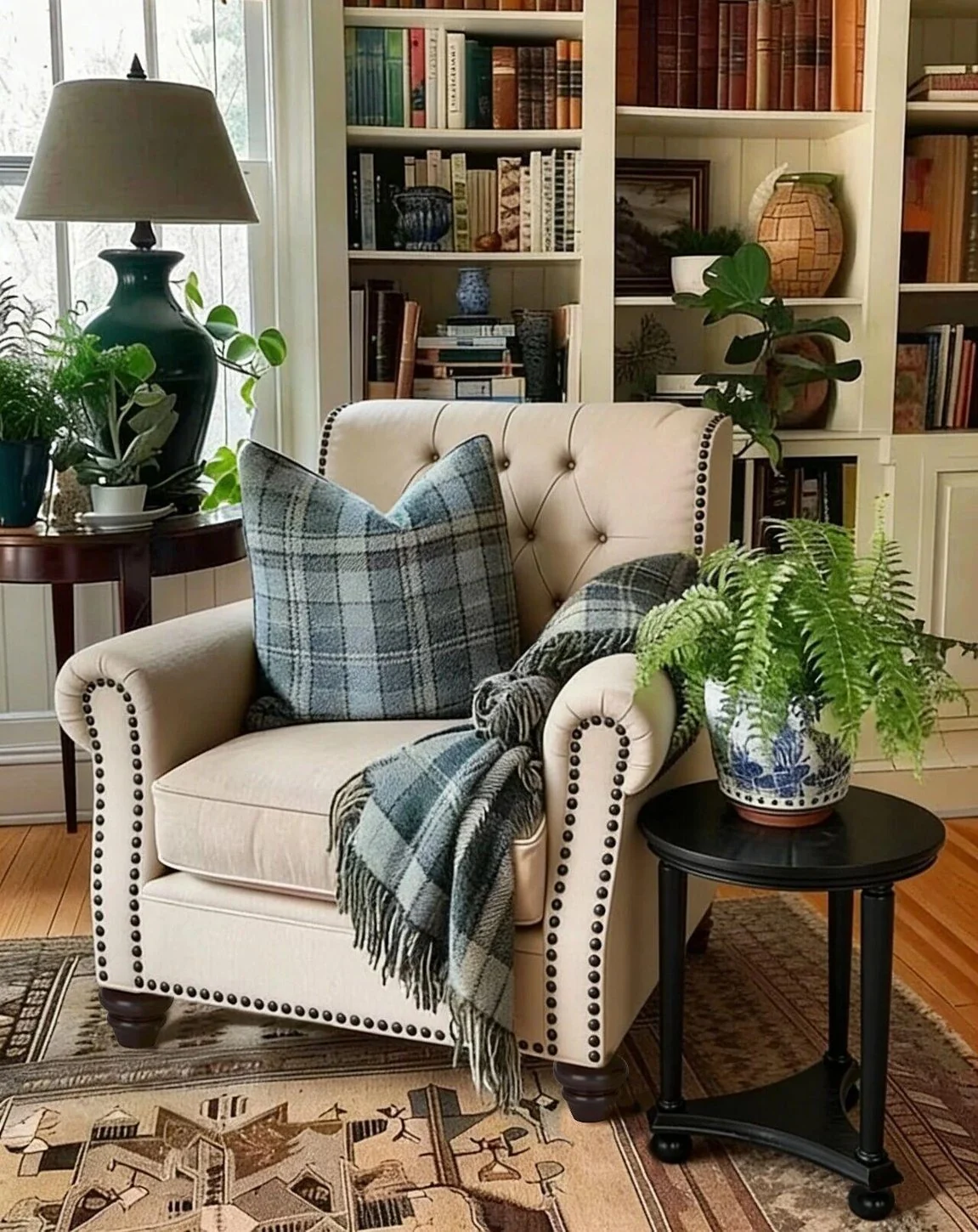
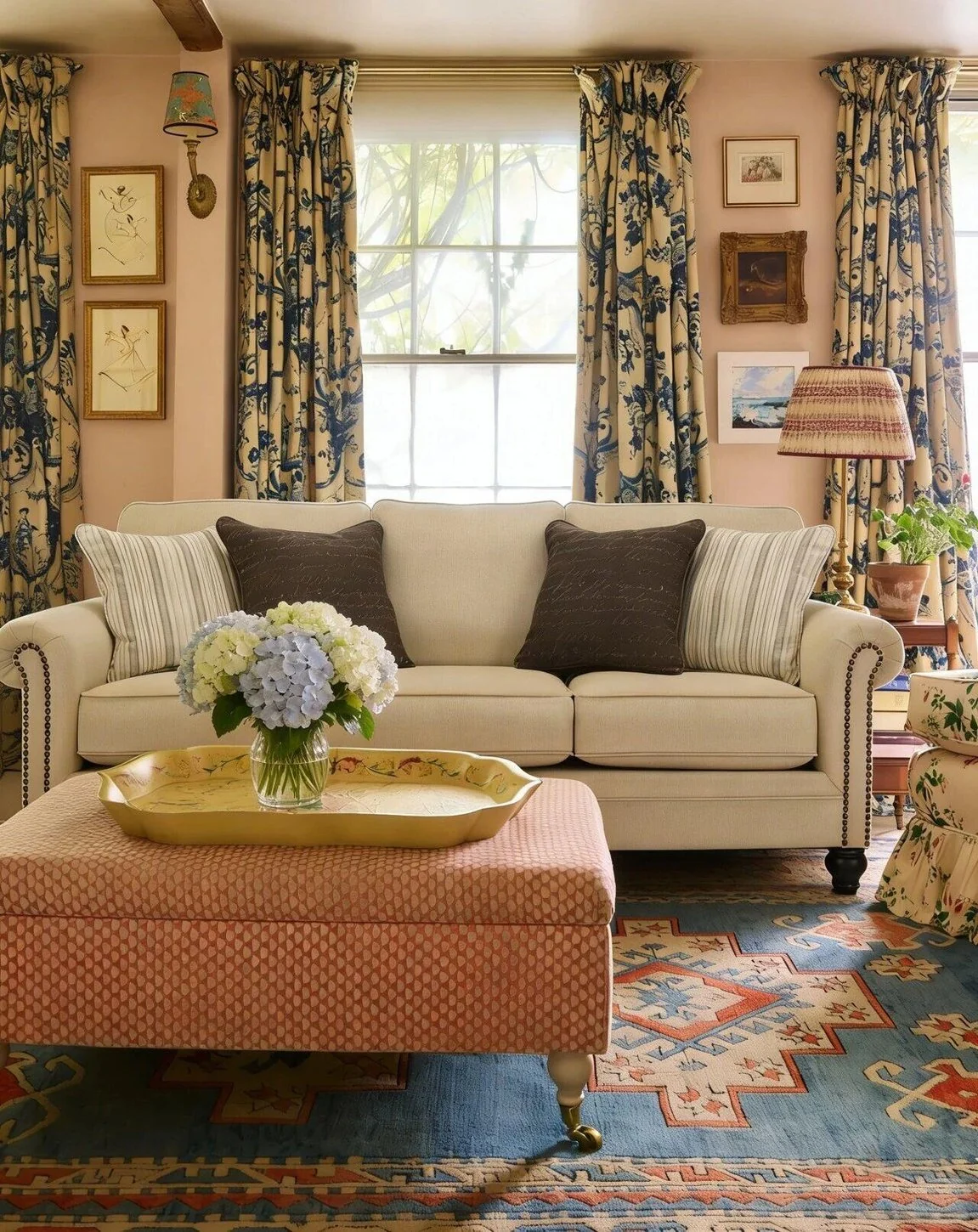
For a living room, allow a practical reach between sofas and tables, then verify actual traffic routes using your floor plan. Evaluate frame integrity and seat comfort before choosing upholstery. See Ratahome’s furniture collections for the types of pieces that can be specified as part of a coordinated project.
5. Layer Warm Light for an Inviting Evening Mood
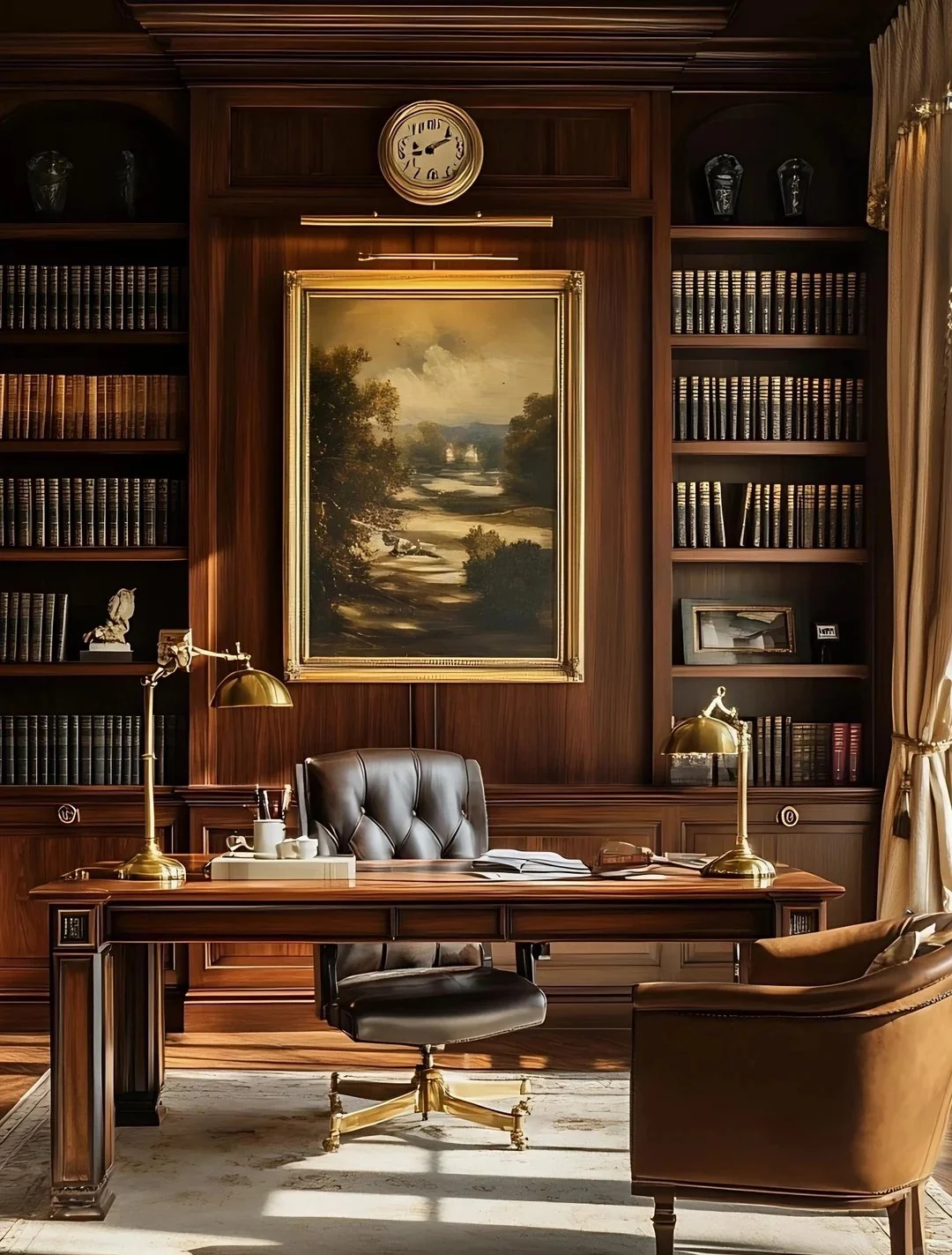
Classic American interiors rely on a warm, nuanced lighting scheme, not a single bright ceiling fixture. Begin with enough ambient light for safe movement. Add local light where people read or work—table lamps, floor lamps and desk lamps—then use sconces or discreet accent lighting to reveal artwork, wood grain and panel details.
Fabric shades, frosted glass and antique-brass finishes can reduce glare and soften contrast. Warm-white lamps, often around 2700K in residential lounges, are a useful starting point, though the best color temperature depends on the task, finish palette and personal preference. Where possible, specify dimmers and test them with the actual lamps.
6. Design for Family Life, Room by Room
The living room: conversation before display
Arrange seating so people can speak without shouting across the room. Provide side tables, reading light and accessible storage. A generous rug can connect mixed furniture pieces while allowing wood floors to remain visible at the perimeter. Keep a few personal books and objects on display; hide routine clutter in cabinets.
The dining room: a table that invites lingering
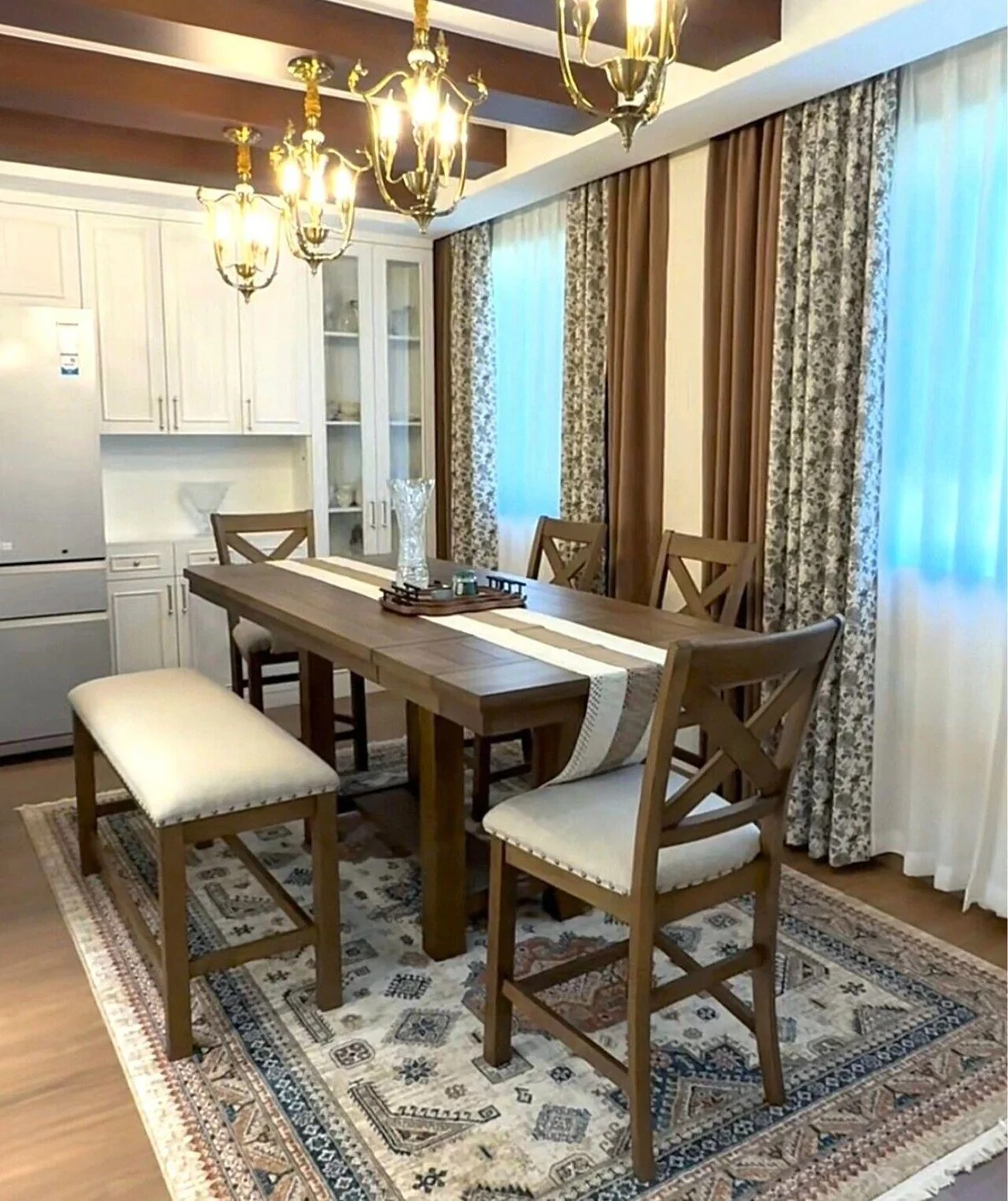
Let the table set the scale. Choose dining chairs that can be used comfortably for a long meal and lighting that illuminates faces as well as the tabletop. Dark wood can feel uplifting when paired with warm wall colors and daylight. Before ordering, measure clearance behind chairs and confirm the table apron and seat dimensions.
The study: where utility meets memory
Bookcases, a sturdy desk, layered lamps and a comfortable chair make a traditional study feel purposeful. Avoid turning every shelf into a decorative composition; a library should still hold books, files and meaningful objects. Built-ins should include wiring routes, ventilation where necessary and practical storage depths.
7. Mix Old and New with an Intentional Plan
Classic American style does not require an antique in every corner. A contemporary sofa with restrained proportions may sit beautifully next to an inherited side table. What matters is allowing certain surfaces to look established without allowing the entire space to become heavy or cluttered.
- Map the rooms: record dimensions, ceiling height, circulation and window positions.
- Inventory what you own: keep furniture with the right scale, comfort and personal meaning.
- Set the material palette: choose a principal wood finish, a wall neutral and one or two accent tones.
- Confirm construction: request joinery, upholstery, finish and hardware specifications before ordering.
- Coordinate delivery: check access dimensions, packaging and pre-shipment quality inspection plans.
Share a floor plan or room measurements, mood images, approximate budget, furniture list and delivery location. That lets the team compare proportions, materials and specifications before manufacturing and shipping.
Planning several rooms at once? Explore whole-home furnishing or how Ratahome works to understand the project workflow.
Mistakes to Avoid
- Matching every item: identical finishes and silhouettes can feel like a furniture display rather than a home.
- Using dark wood on every plane: pair it with lighter walls, lampshades and fabric to preserve visual relief.
- Confusing patina with poor quality: beautiful aging still requires stable construction and suitable finishes.
- Buying furniture before measuring: bulky silhouettes can overwhelm doorways or circulation paths.
- Lighting only from above: multiple low-level light sources create a more comfortable evening environment.
Frequently Asked Questions
What defines American classic interior design?
Warm neutrals, substantial wood furniture, traditional millwork, comfortable seating and collected accessories are common characteristics. Above all, the style balances ordered rooms with a lived-in atmosphere.
Which colors work best?
Cream, warm almond and muted greige work as calm foundations. Walnut and caramel add warmth; forest green, oxblood, navy and aged brass can be used sparingly for contrast.
Does every room need a leather Chesterfield?
No. A Chesterfield is one recognizable option, but relaxed upholstered sofas, Windsor chairs, wood tables and well-proportioned storage can express the style just as effectively.
Can American classic style work in a small home?
Yes. Choose fewer, correctly scaled statement pieces; use warm light walls, compact traditional silhouettes and built-in storage to preserve breathing space.
How can I avoid making the result look outdated?
Limit ornate details, retain a coherent color scheme, mix traditional pieces with simpler forms and select durable, comfortable furniture that suits contemporary routines.
Build a Timeless Home That Feels Like Yours
Have a floor plan or a room-by-room furniture list? Share your dimensions, inspiration photos and preferred finishes. Ratahome can help coordinate cabinetry, furniture specifications and pre-shipment quality checks for your project.
Send Your Floor Plan →Photography in this guide illustrates design principles and material choices; images are references, not presented as completed Ratahome client projects.