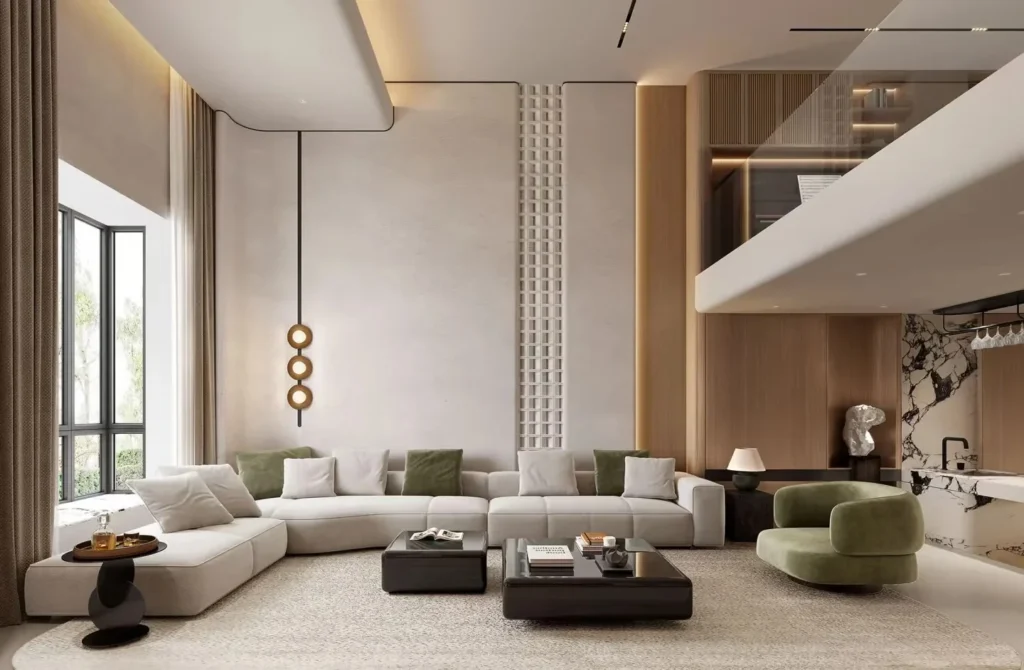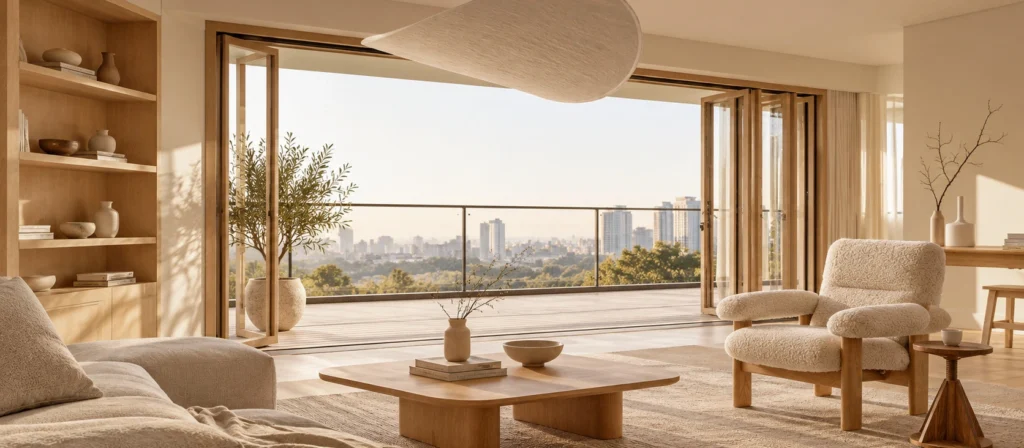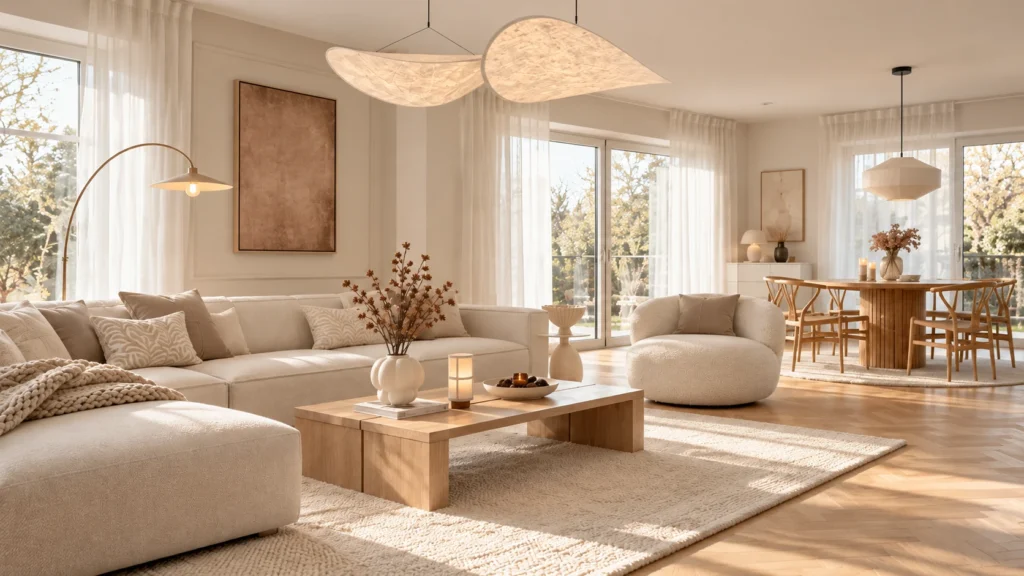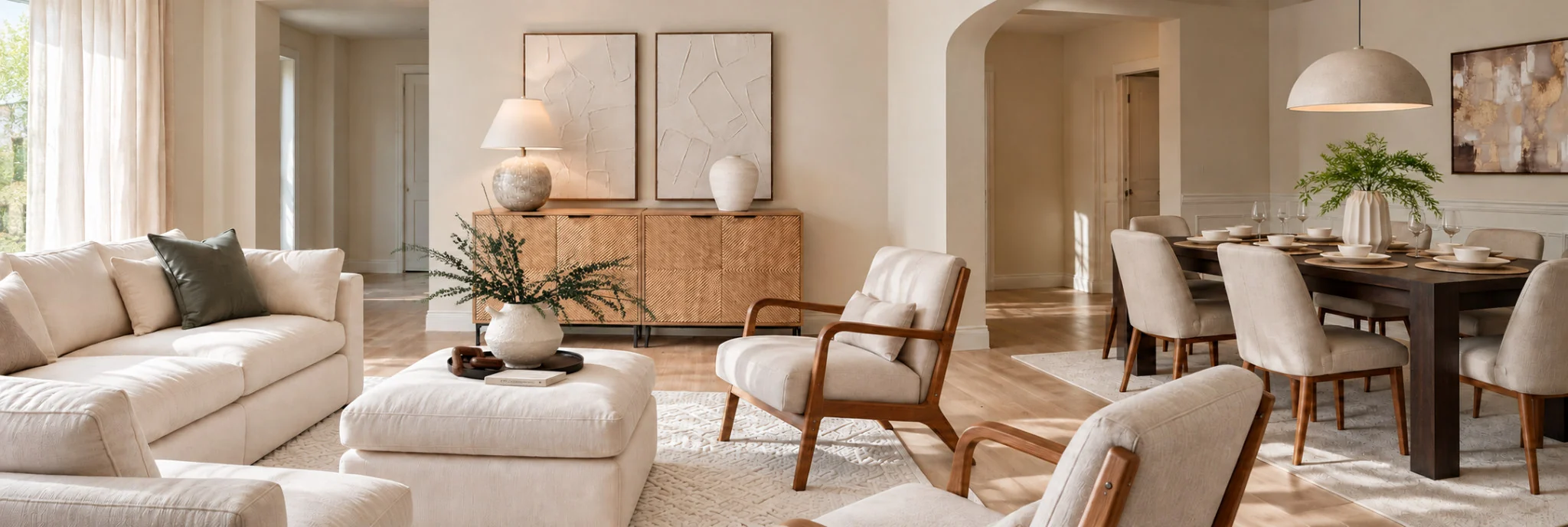
In brief: To create an organic modern home, combine simple contemporary furniture with warm neutrals, visible wood grain, layered natural textiles and a few sculptural accents. Plan for comfort, storage and circulation first; decorate only after the main pieces are right.
1. What Is Organic Modern Interior Design?
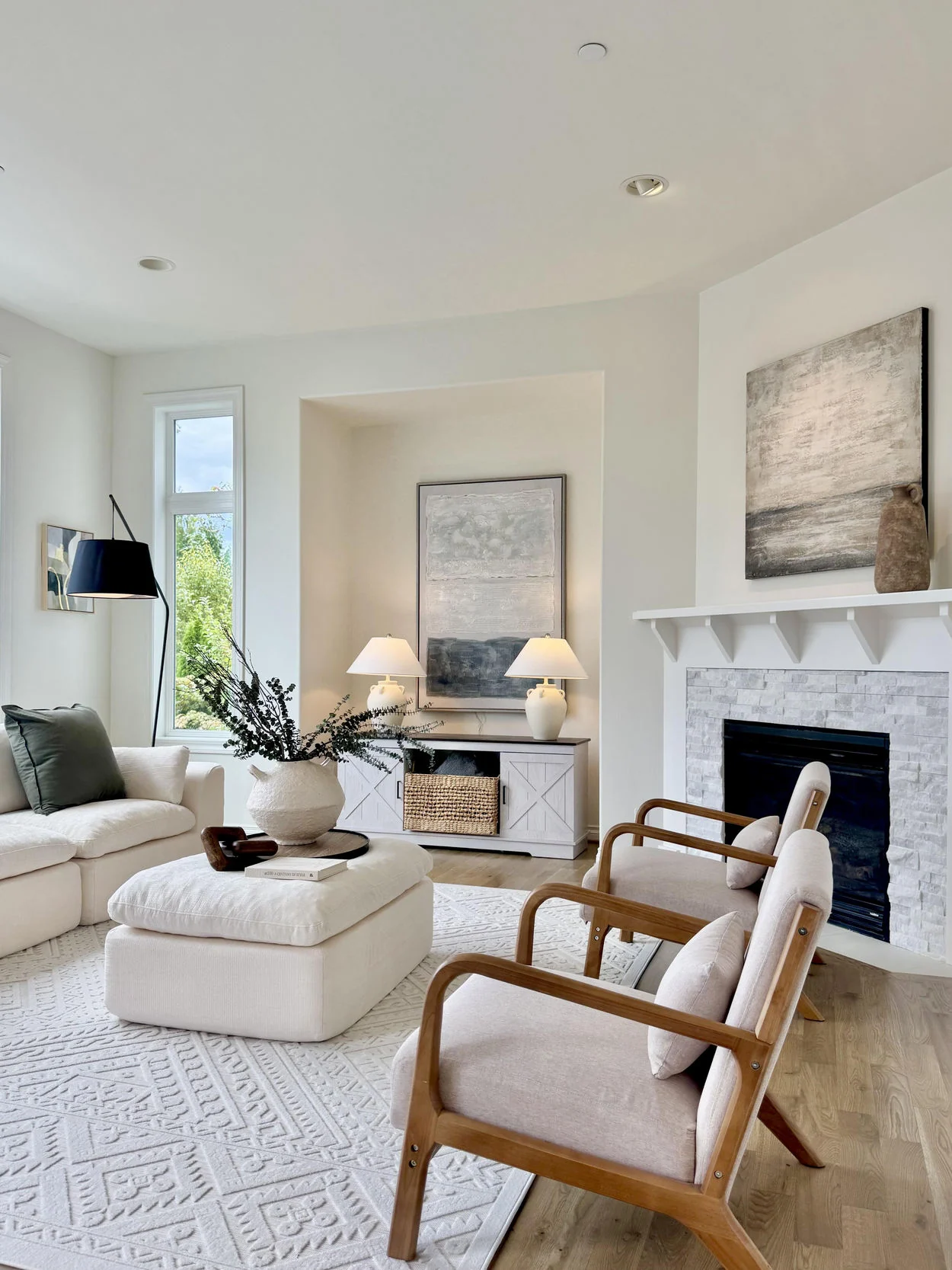
Organic modern is an interior design approach that pairs the clean, functional shapes of modern furniture with the warmth, texture and irregularity of natural materials. Think simple silhouettes, tactile fabrics, quiet colors, timber grain, daylight and enough negative space for individual pieces to breathe.
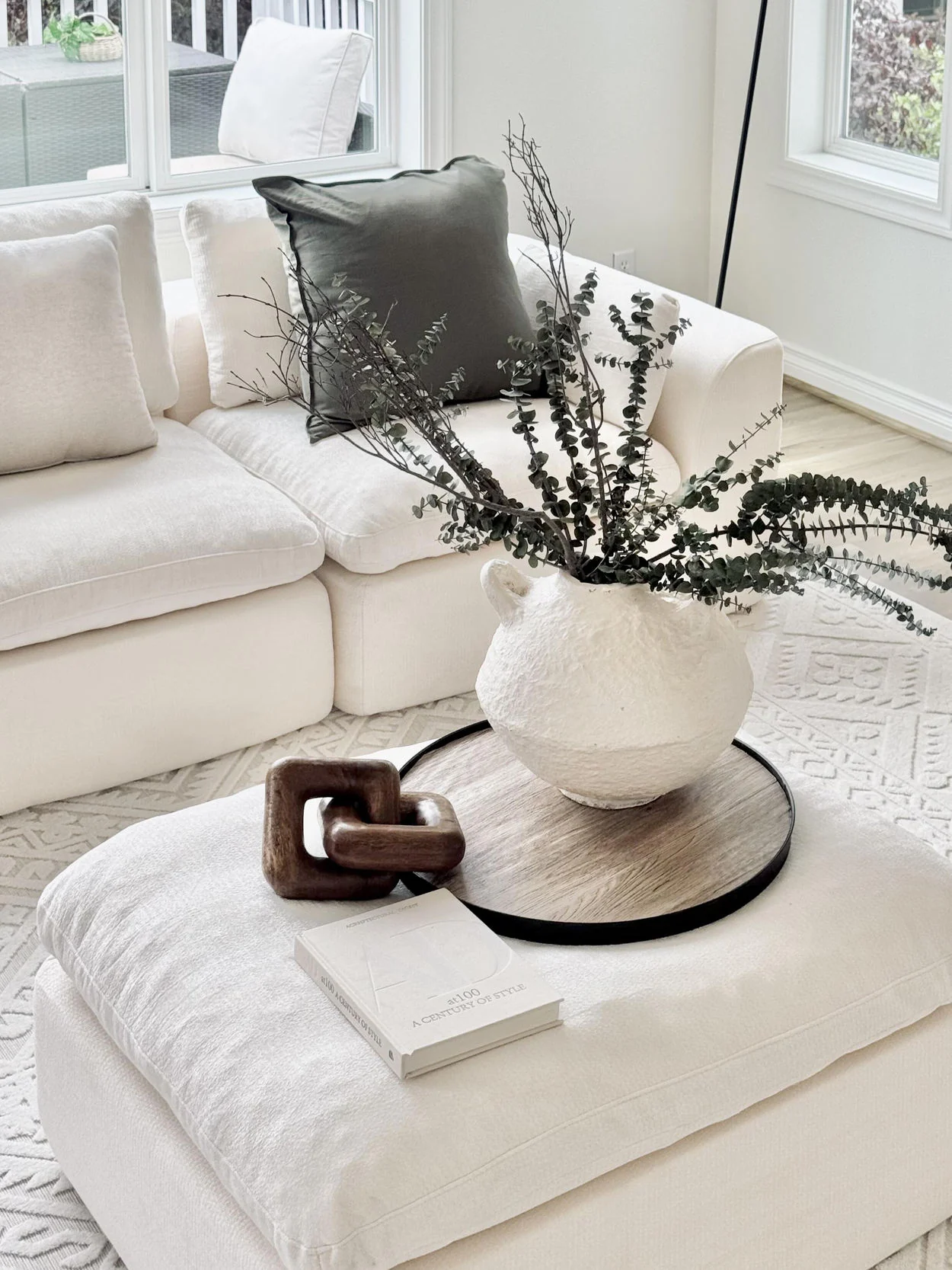
Unlike a strictly minimalist room, an organic modern home is not trying to remove every trace of personality. It edits visual noise while keeping softness: a rounded lounge chair against a straight-lined cabinet, a woven rug below a restrained sofa, or a handmade ceramic vessel on a well-proportioned coffee table. The result feels composed rather than decorated to excess.
The style can work in a city apartment, a suburban family home or a new-build residence. The essential decisions are the same: prioritize the floor plan, establish a consistent material palette, choose furniture for comfort and scale, and use accessories sparingly.
2. The Six Principles of Organic Modern Style
Use clear furniture profiles and simple cabinetry, then soften them with rounded corners and upholstered volumes.
Choose real or convincingly tactile surfaces: wood, linen, wool, stone, rattan, ceramic and textured plaster.
Build contrast with warm white, oat, sand, mushroom, clay, walnut and olive instead of relying on stark black-and-white.
Let one curved chair, low table or generous ottoman become a focal point without crowding the space.
Keep windows visually open, avoid bulky window treatments and add warm, diffused light after dark.
Storage, washable upholstery, sensible circulation and durable finishes matter as much as appearance.
The best test is not whether every item looks “organic.” It is whether the room feels relaxed, useful and visually connected. For example, an angular floor lamp can coexist with a soft sofa if the overall palette and proportions remain calm.
3. How to Choose an Organic Modern Color Palette
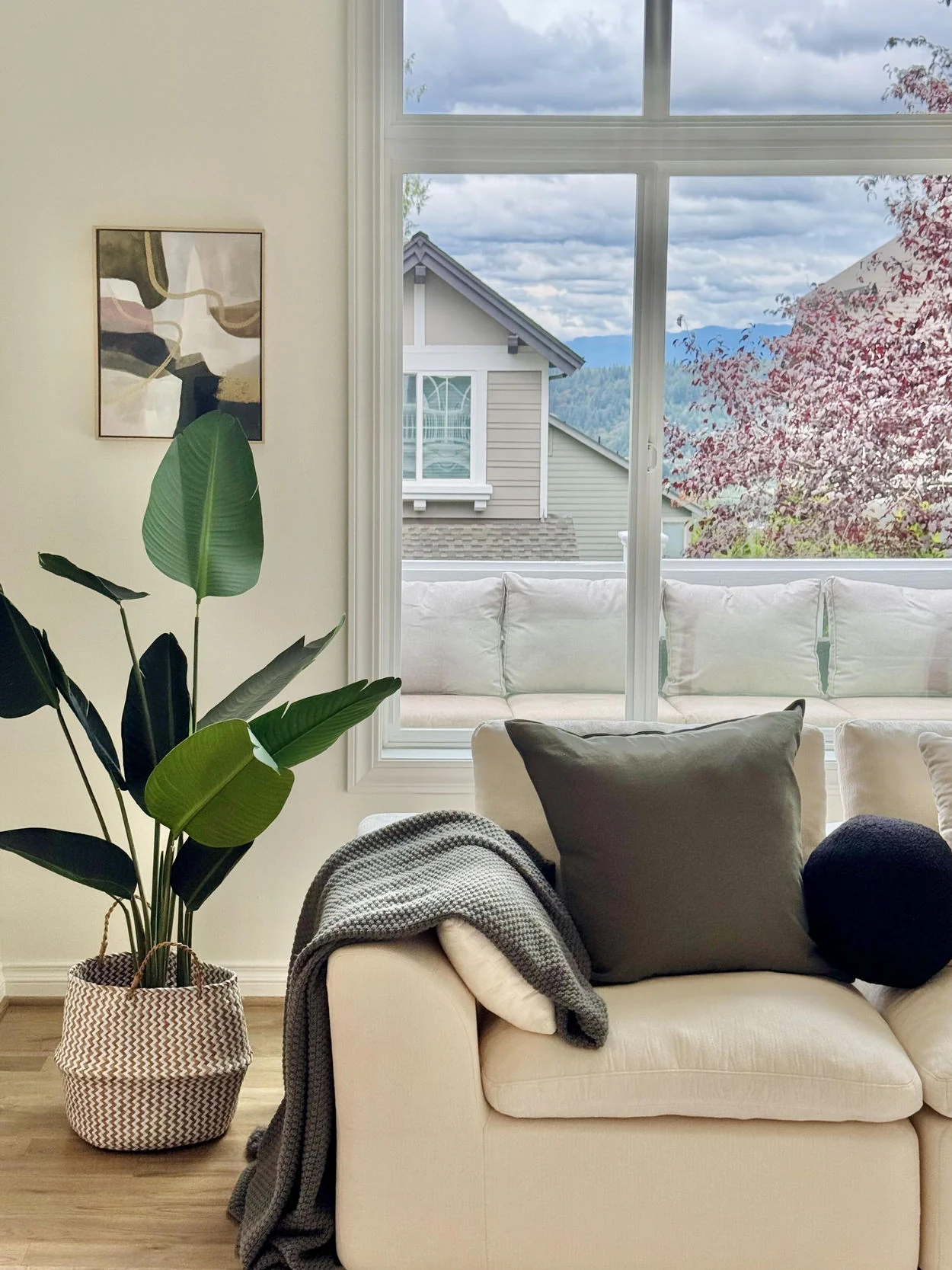
Start with the room’s fixed finishes: flooring, countertops, cabinetry and wall color. Rather than selecting a trendy paint shade first, identify the undertones already present. Warm oak flooring, for instance, usually works more naturally with ivory, stone, taupe and muted green than with icy gray.
A practical 60–30–10 starting point
Use roughly 60% quiet base color on walls and large upholstery, 30% natural material tones through wood, rugs and cabinetry, and 10% contrast through greenery, art or a deeper accent. This is a planning tool, not a rule: a home with dramatic stone or timber architecture may need even fewer decorative accents.
Colors should also respond to light. Test fabric and finish samples in morning and evening conditions. A cream fabric that looks warm in a showroom may read gray in a north-facing room, while a pale oak veneer can turn unexpectedly yellow under warm bulbs.
4. Natural Materials and Textures That Make the Look Work
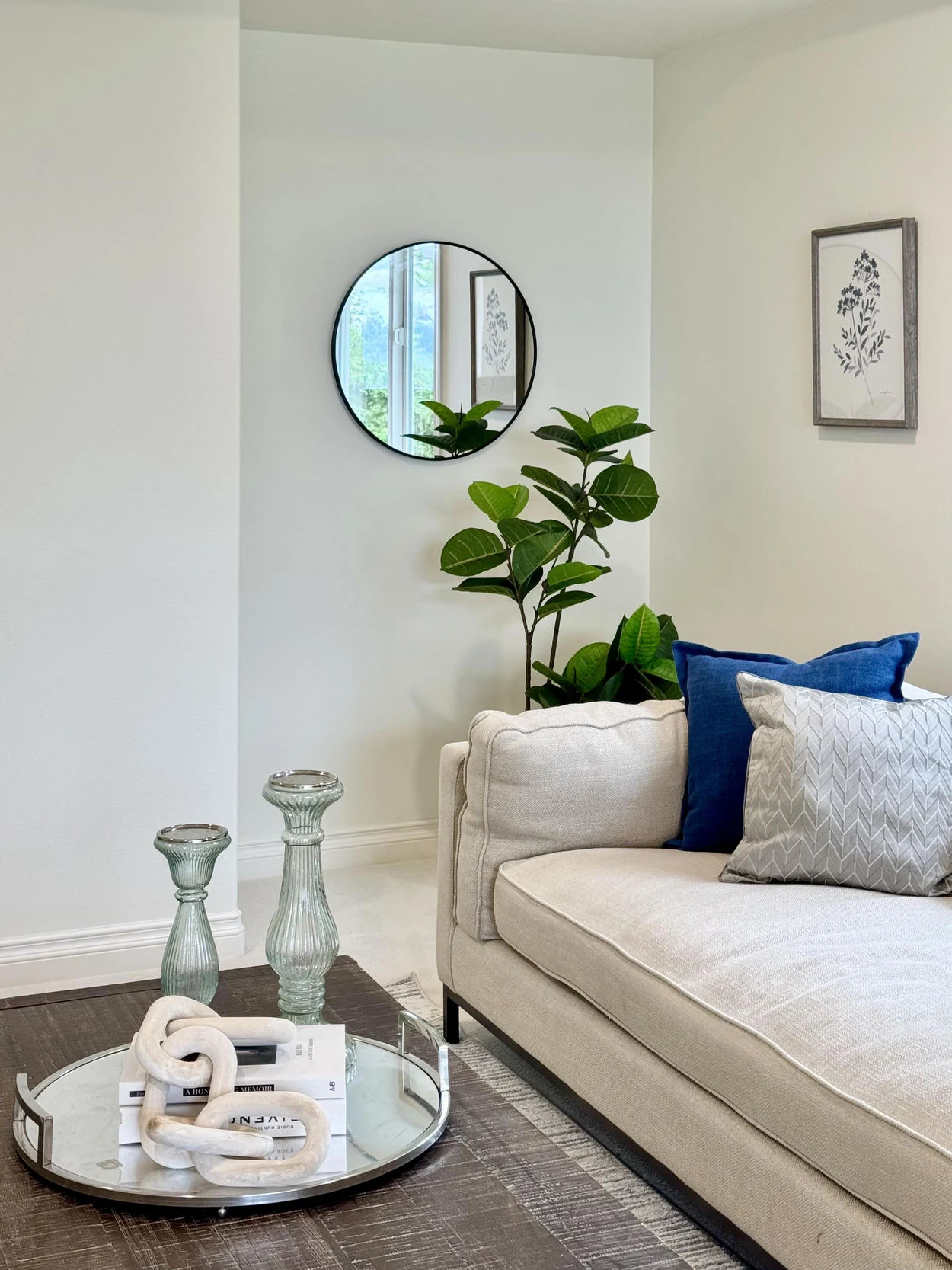
Organic modern interiors depend on how surfaces feel and age. Smooth painted walls look richer beside open-grain timber; a structured sofa becomes inviting when paired with a soft wool rug; a stone tabletop feels less severe near woven upholstery.
| Material | Best applications | What to check |
|---|---|---|
| Oak, ash and walnut | Dining tables, sideboards, chair frames and cabinet fronts | Grain consistency, stable construction, finish durability |
| Linen and linen blends | Curtains, cushions and relaxed upholstery | Wrinkling, cleaning instructions and abrasion performance |
| Wool and textured weaves | Rugs, throws and upholstery accents | Shedding, stain care, texture and pile height |
| Travertine, limestone and ceramic | Side tables, accessories, counters and decorative objects | Porosity, sealing requirements and edge finishing |
| Rattan and cane | Cabinet inserts, chairs and accent details | Weave tension, frame support and humidity exposure |
“Natural” does not automatically mean “better” for every application. For a large cabinet carcass, engineered panels may provide useful dimensional stability; solid wood or wood veneer can then deliver the desired visible finish. The correct specification depends on span, moisture exposure, budget and construction details. See Ratahome’s guide to choosing wood for custom furniture for a deeper material comparison.
5. How to Select Organic Modern Furniture
Buy furniture by proportion and purpose, not by style label alone. A well-designed organic modern piece usually has a clear silhouette, a comfortable relationship to the human body and enough material character to feel distinctive without ornament.
Sofas and lounge chairs
Look for generous but controlled shapes: gently curved backs, low-profile arms, substantial seat cushions or exposed timber details. Upholstery can be nubby, woven or smooth, but check cleaning requirements before choosing a delicate pale fabric for a busy household. Construction matters: compare frame joinery, suspension, foam density and cushion support in Ratahome’s sofa construction guide.
Coffee tables and storage
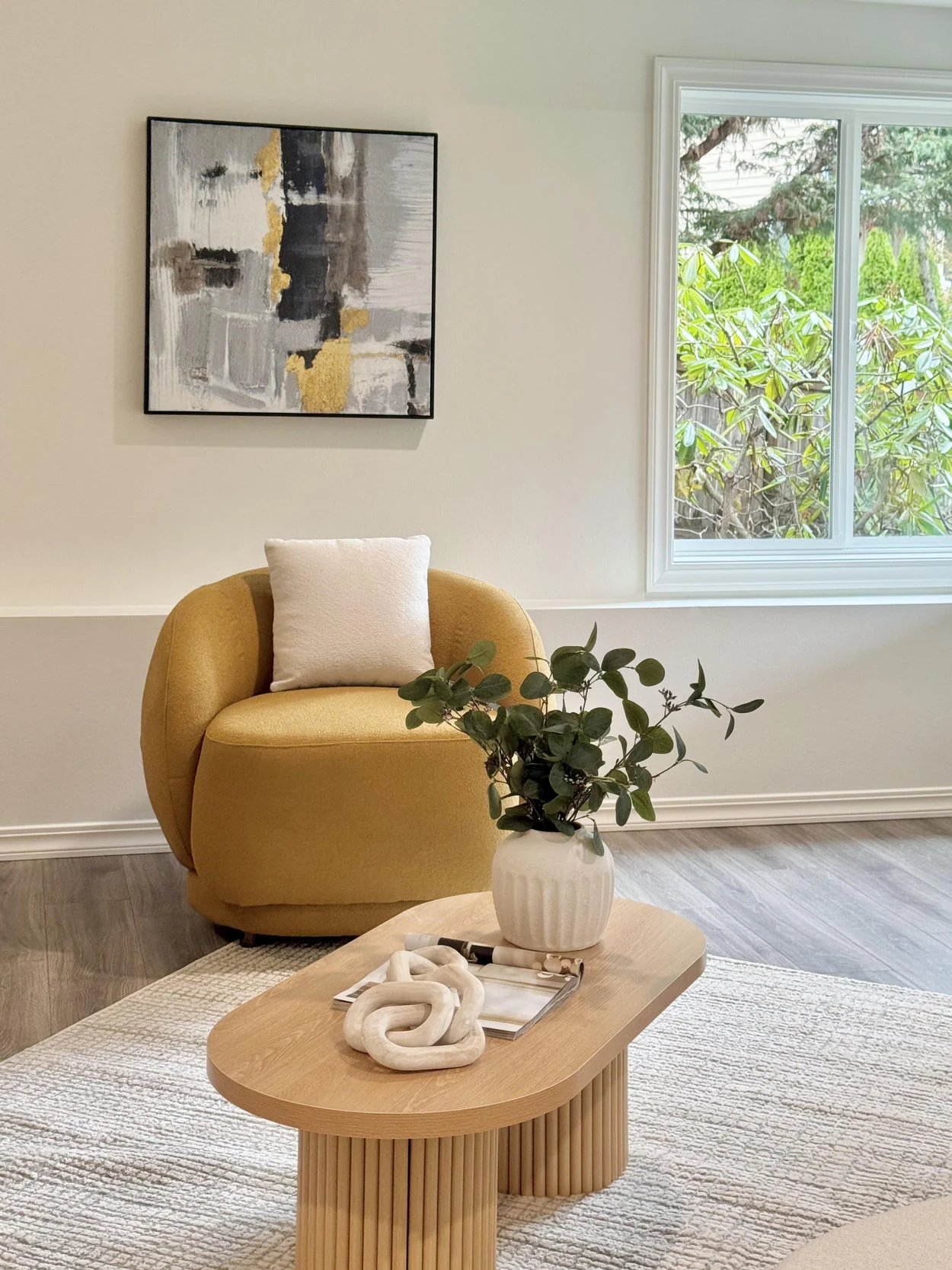
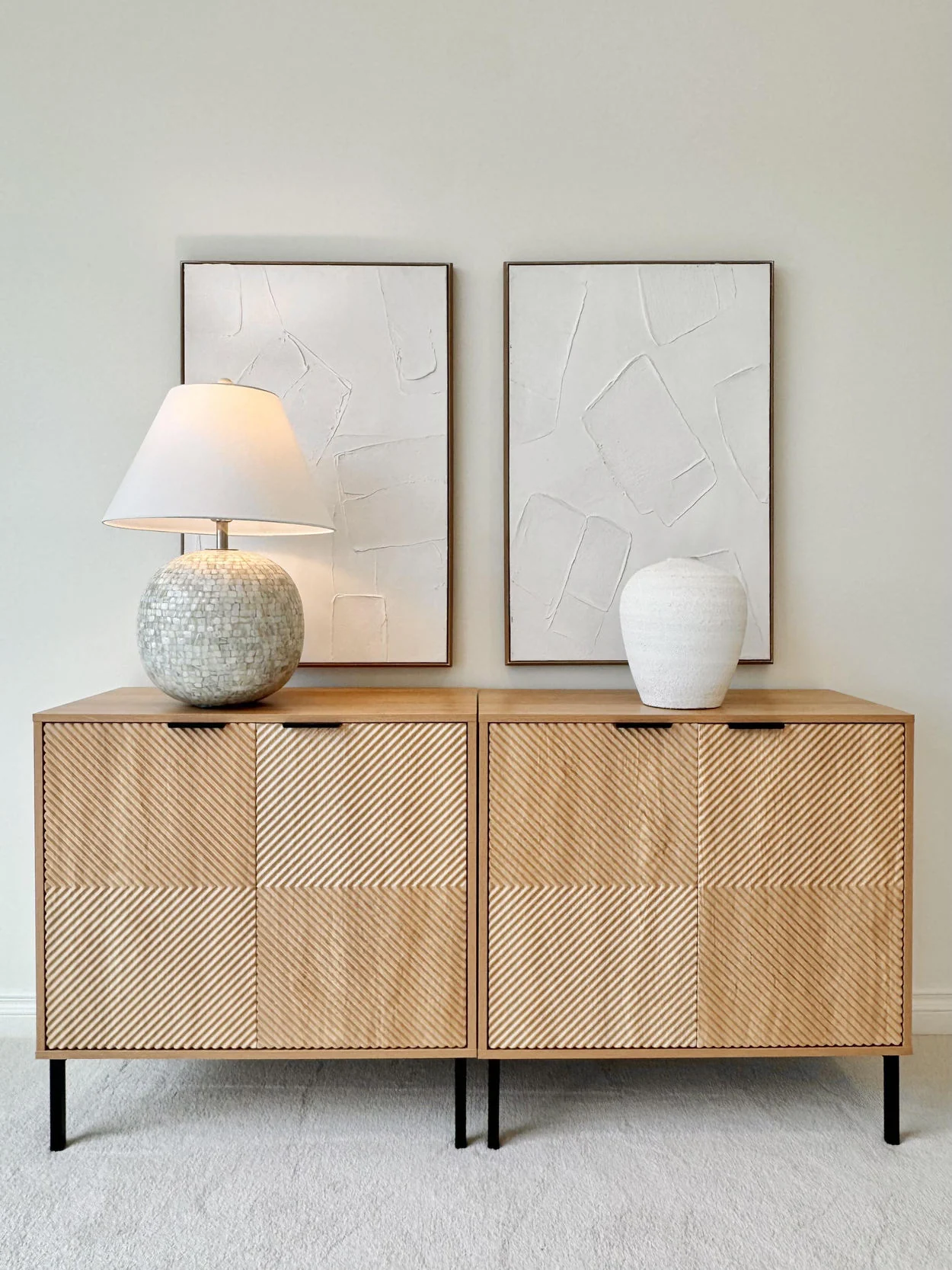
A round or softly rectangular table can interrupt the hard geometry of a room. In smaller spaces, a low table with a narrow footprint preserves movement. For storage, choose a sideboard with simple door rhythms and intentional grain direction rather than ornate hardware or excessive fluting.
Dining furniture
Solid-feeling timber tables and comfortably curved dining chairs create the strongest everyday expression of the style. Before ordering, confirm the chair’s seat height, table apron clearance and the space needed to pull each chair out without blocking circulation.
6. How to Style an Organic Modern Living Room
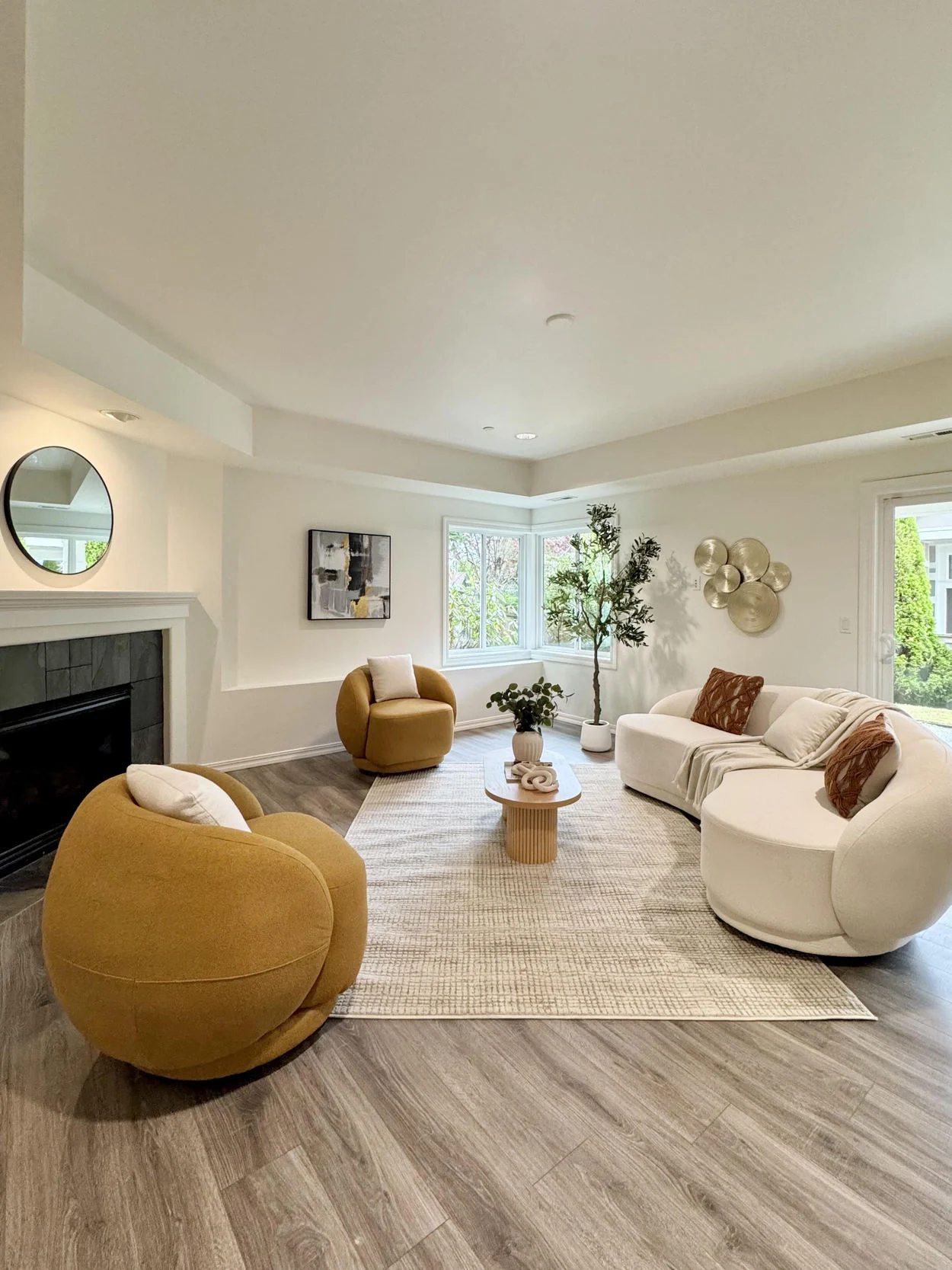
Begin with a clear furniture plan. The main seating group should support conversation and movement rather than simply face a television. In many rooms, a large rug that sits under the front legs of the seating helps establish a unified zone; an undersized rug can make the furniture feel disconnected.
- Anchor the space. Choose one comfortable sofa in a warm neutral fabric.
- Add shape contrast. Pair it with a timber-frame chair, rounded accent chair or sculptural coffee table.
- Introduce a texture hierarchy. Use one dominant textile, one secondary weave and a few ceramic or wood details.
- Keep useful surfaces. Provide a place for a drink, a reading lamp and discreet storage.
- Edit the styling. Group objects with varied height and leave visible tabletop space.
Leave practical walkways where people naturally cross the room. Around a coffee table, approximately 16–18 inches (41–46 cm) between the table and seating is a useful starting range, but adjust for reach, mobility and the specific furniture depth.
7. How to Bring Organic Modern Style into Kitchens and Dining Rooms
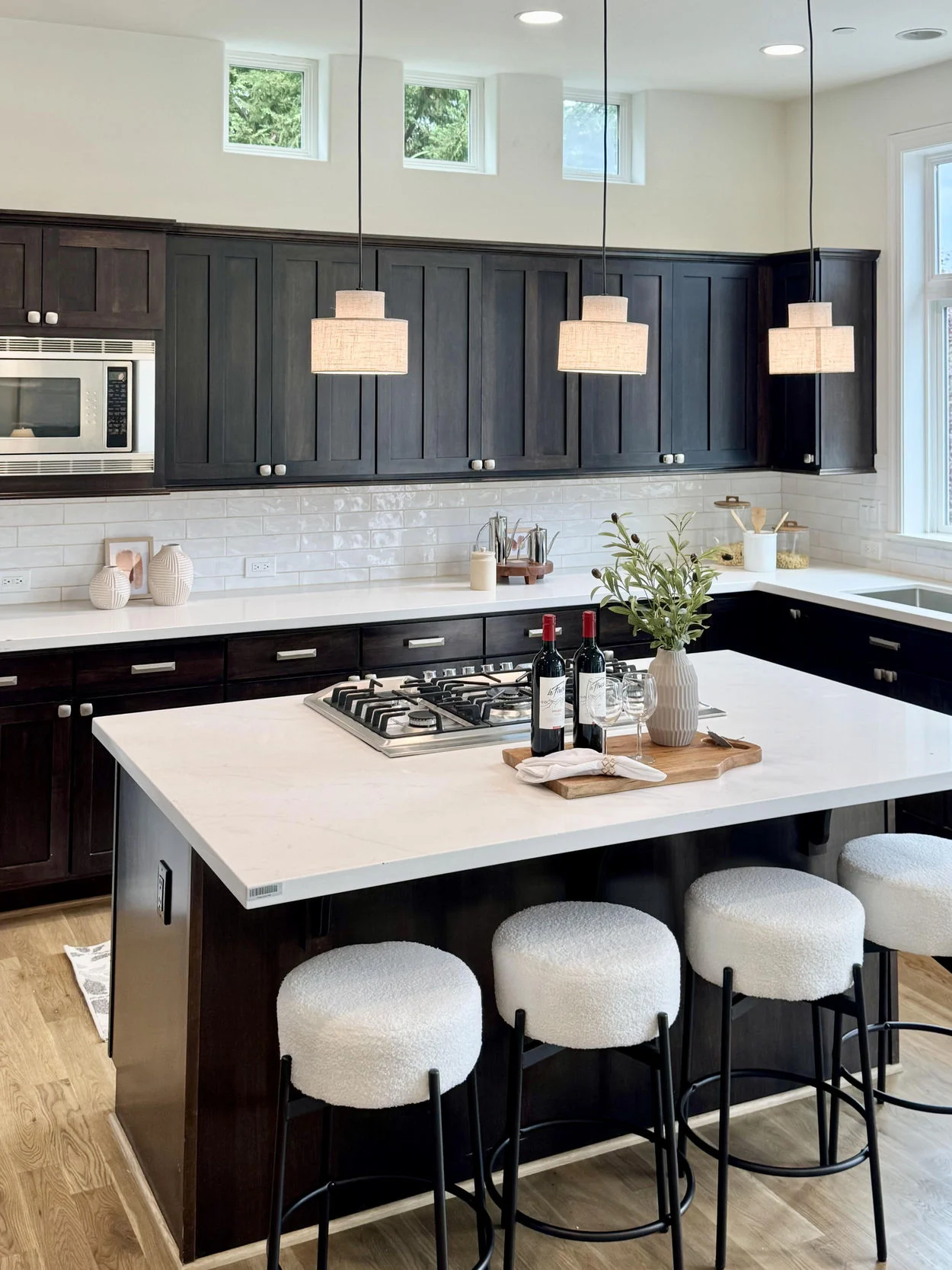
A kitchen does not need to be completely remodeled to feel more organic. Natural timber accents, softer pendant lighting, a warm runner and a restrained selection of ceramic objects can change the character of a high-contrast room. Keep countertops functional: a single tray or vase is usually more effective than several unrelated displays.
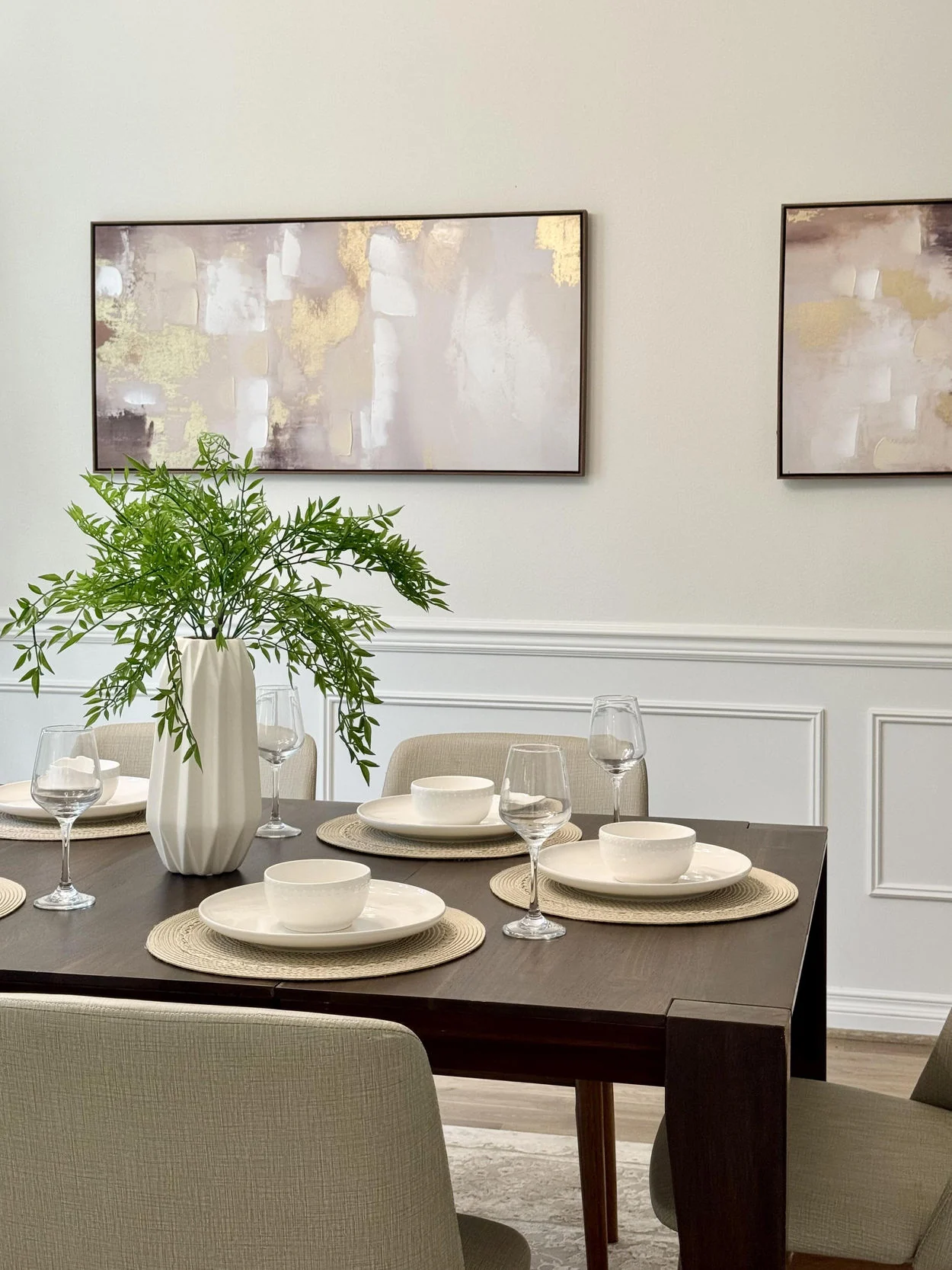
For dining areas, combine a table with visible wood grain, upholstered or timber-framed chairs, and lighting that falls gently over the tabletop. A low-profile sideboard can store tableware while visually linking the dining zone to the living room.
As a planning reference, allow roughly 36 inches (91 cm) behind occupied dining chairs for basic circulation where space permits; more may be needed for a busy route or accessibility. Always check the actual room dimensions and chair pull-out distance before ordering.
8. How to Design an Organic Modern Bedroom
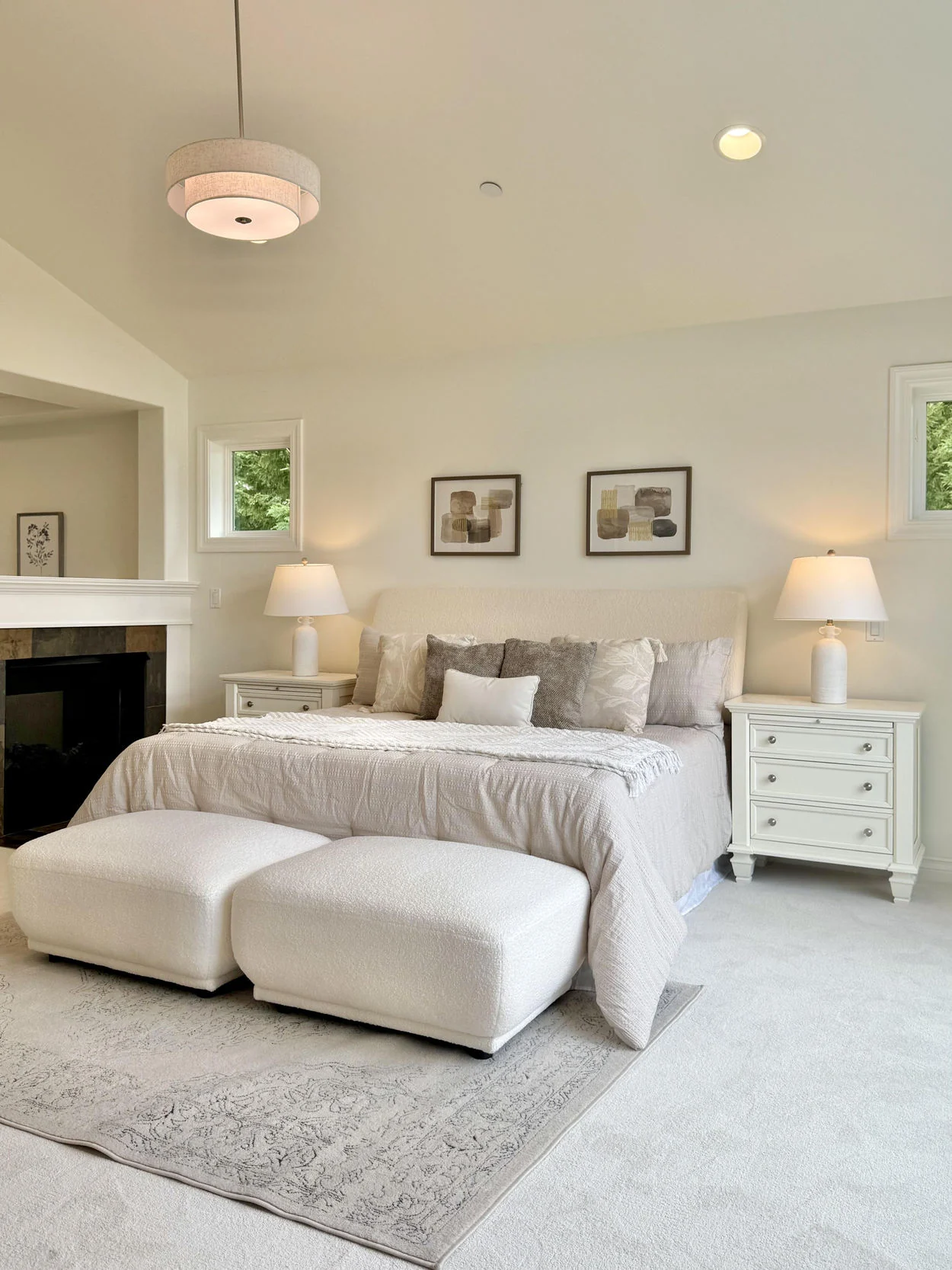
Bedrooms benefit from fewer competing shapes. Select a bed with a soft headboard or a calm timber frame, then keep bedside storage proportional to the mattress height. Matching nightstands are optional; visual balance matters more than identical products.
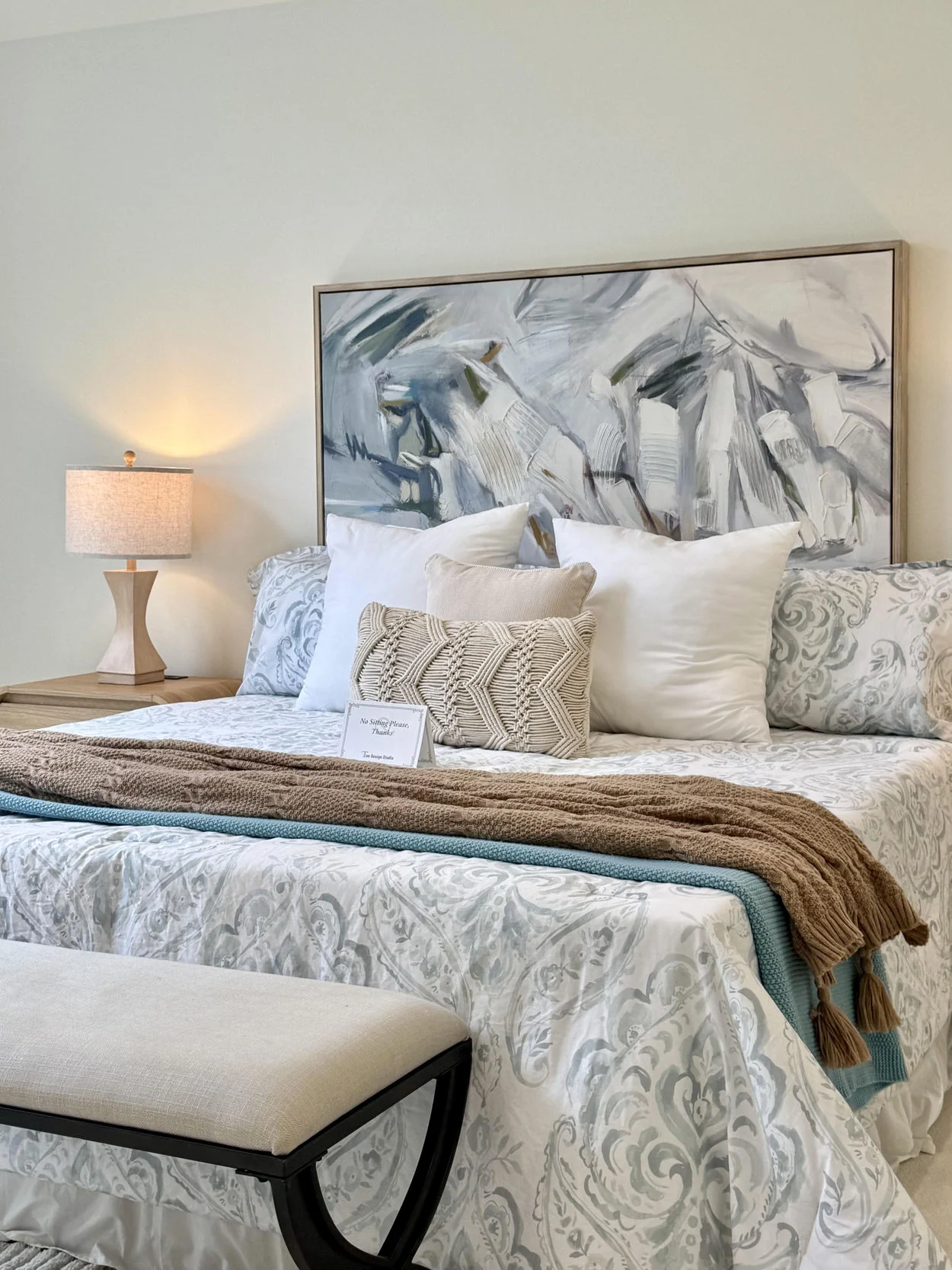
Use bedding as a layered material palette: a smooth cotton base, a linen duvet, a textured throw and one or two accent cushions. If the bedspread or artwork already has a pronounced pattern, reduce the number of other visual elements. Warm bedside lamps create a gentler evening atmosphere than relying on ceiling lights alone.
For upholstered beds, inspect the headboard’s padding, stitching and rear construction. For timber frames, ask how the rails connect and how the mattress is supported. Ratahome’s furniture joinery guide explains why hidden connections matter to long-term durability.
9. Organic Modern Home Office: Calm Without Losing Function
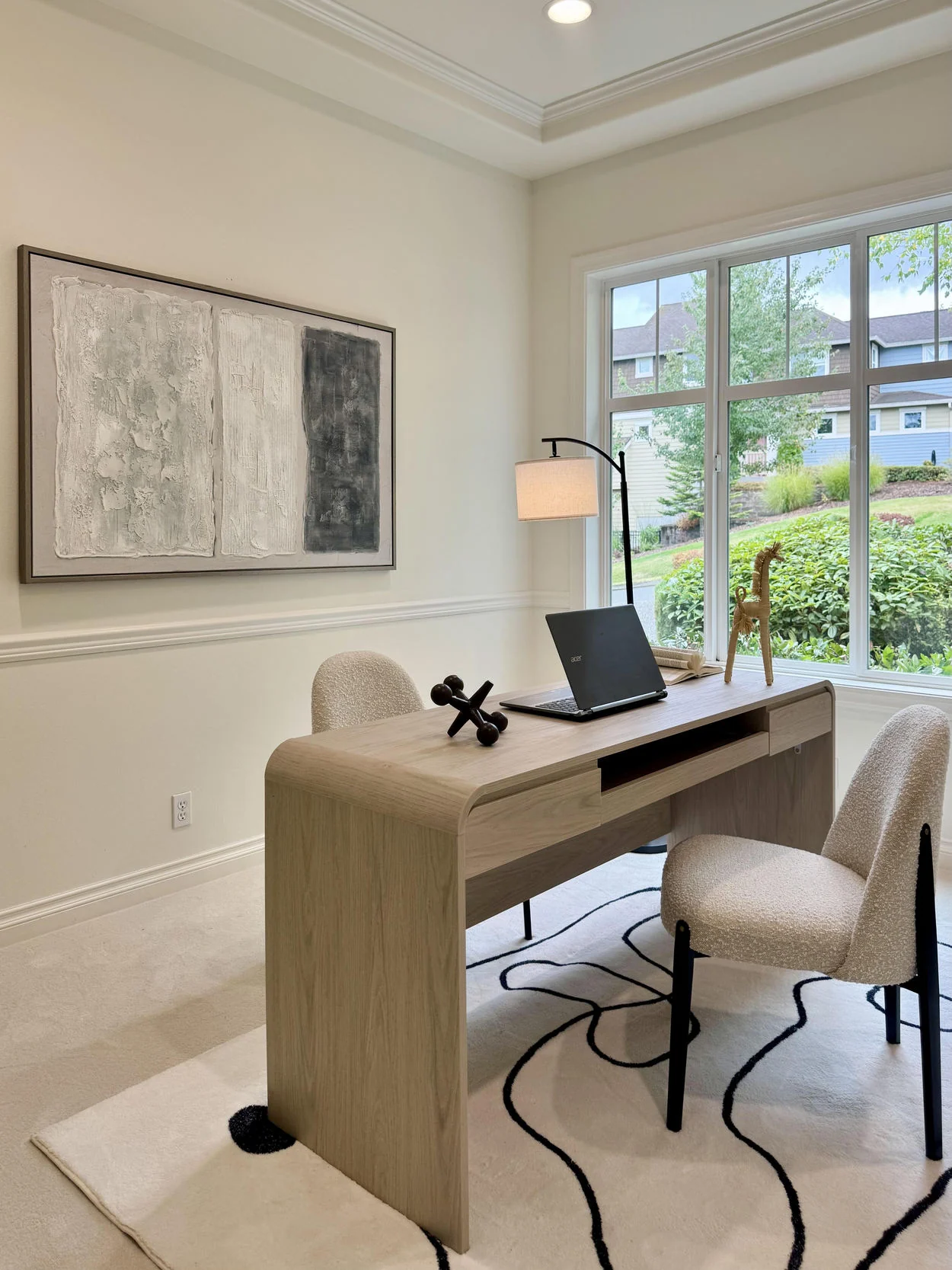
An organic modern workspace should feel welcoming without compromising ergonomics. A timber desk, a supportive task chair and a clear storage system are more valuable than a carefully styled but impractical desktop.
Place the screen to minimize window glare, leave enough room to move the chair comfortably, and add task lighting that can be adjusted independently of the room’s ambient lighting. Use closed storage for cables, chargers and paperwork. A plant or a single artwork is often enough to make the workspace feel connected to the rest of the home.
10. Organic Modern Bathrooms: Texture, Storage and Light
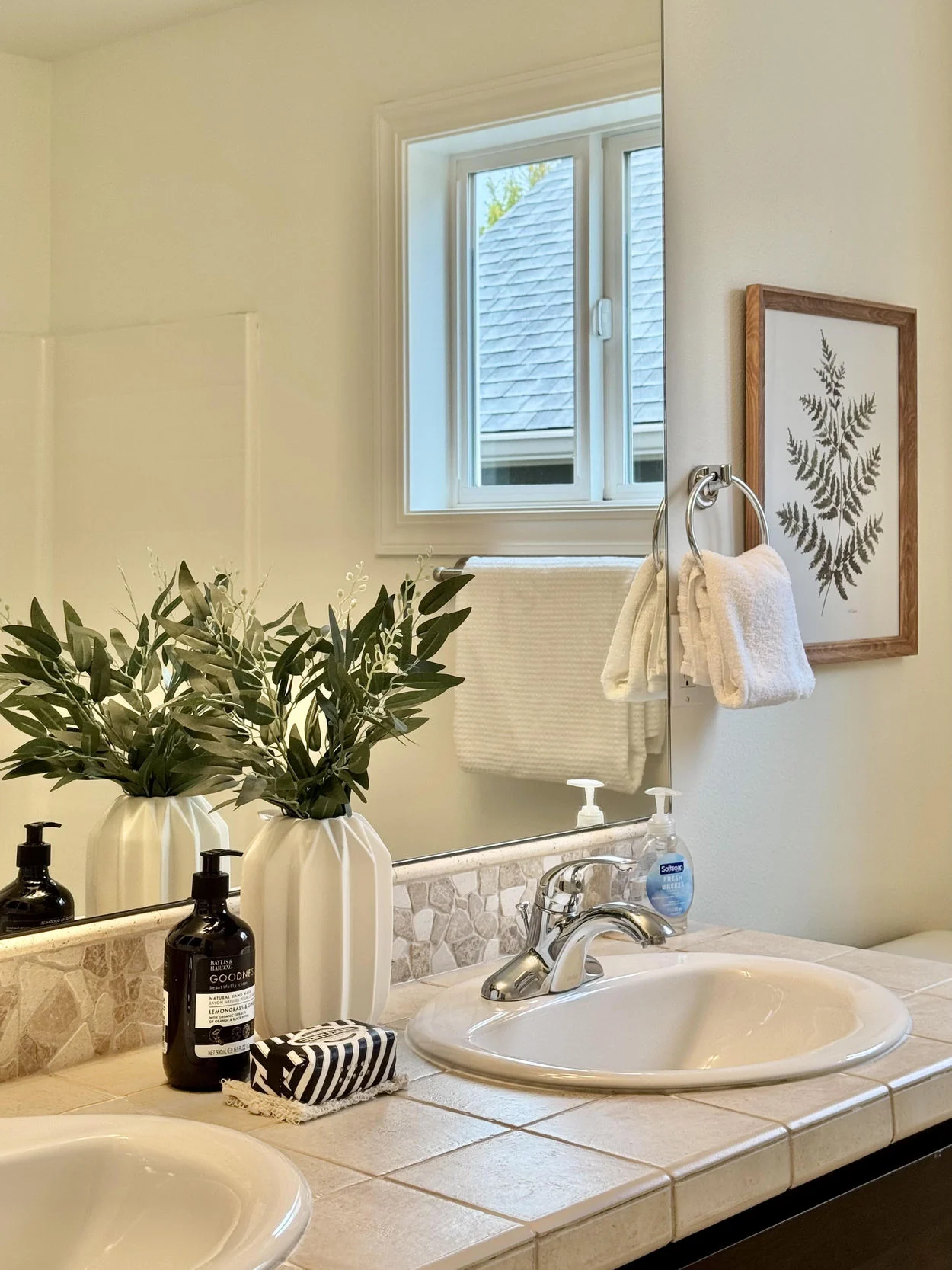
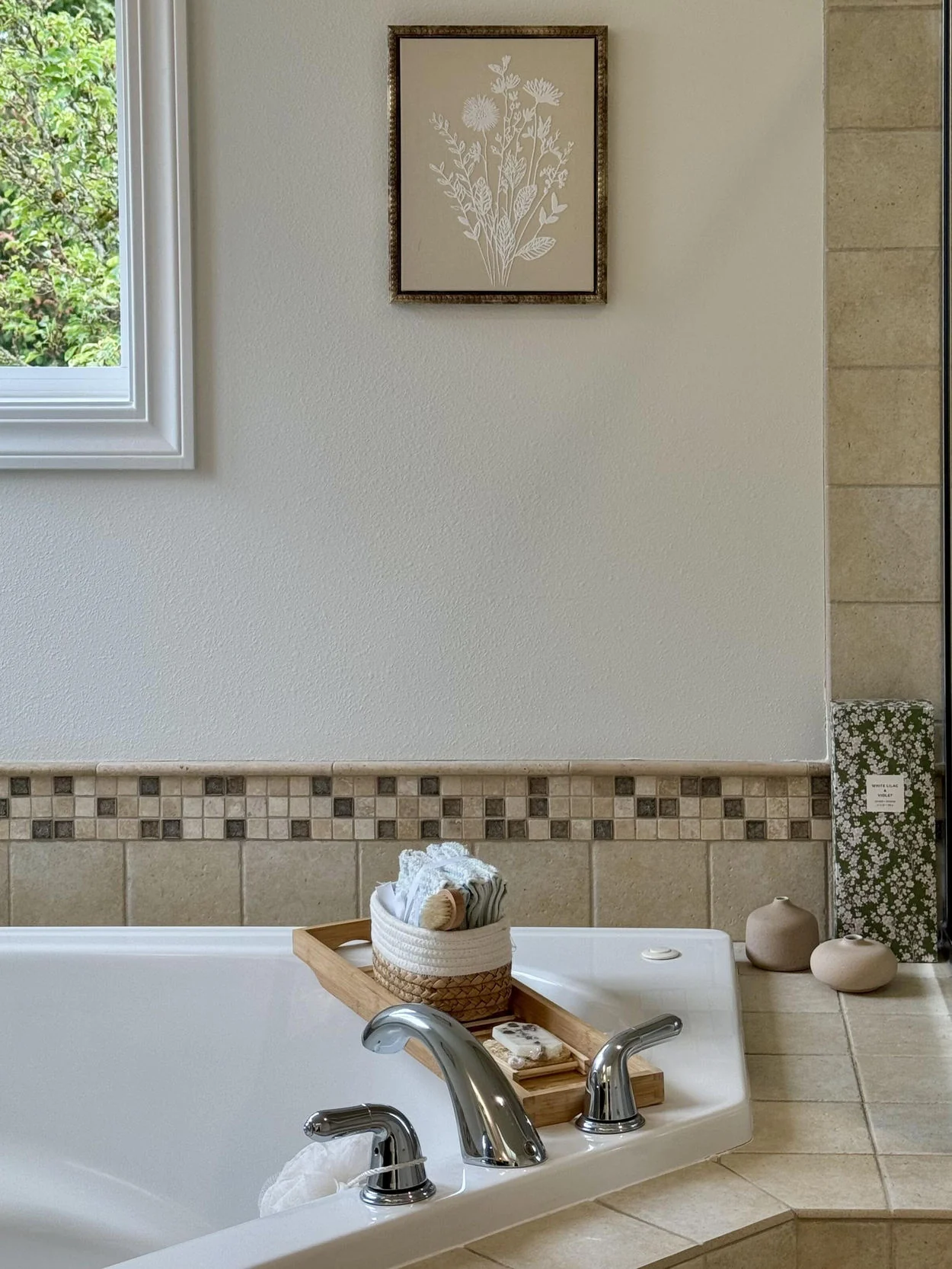
In bathrooms, the look comes from soft contrast rather than decorative excess. Think warm-toned tile, simple vanity doors, natural-looking stone, a framed mirror and a few moisture-appropriate accessories. If the room has little daylight, layer mirror lighting with general illumination so the space feels comfortable and remains useful for grooming.
Because bathrooms experience humidity and splashes, material selection must be more technical than in a living room. Ask about moisture-resistant cabinet construction, sealed edges, suitable hardware and countertop maintenance. Avoid untreated timber or absorbent stone where standing water is likely.
11. How to Keep the Style Practical for Families
Organic modern is compatible with family life when the room is designed around real habits. Choose stain-tolerant upholstery, rounded table corners where useful, storage that children can reach, and rugs that can be cleaned according to the manufacturer’s instructions. A room should not require constant rearranging to look acceptable.
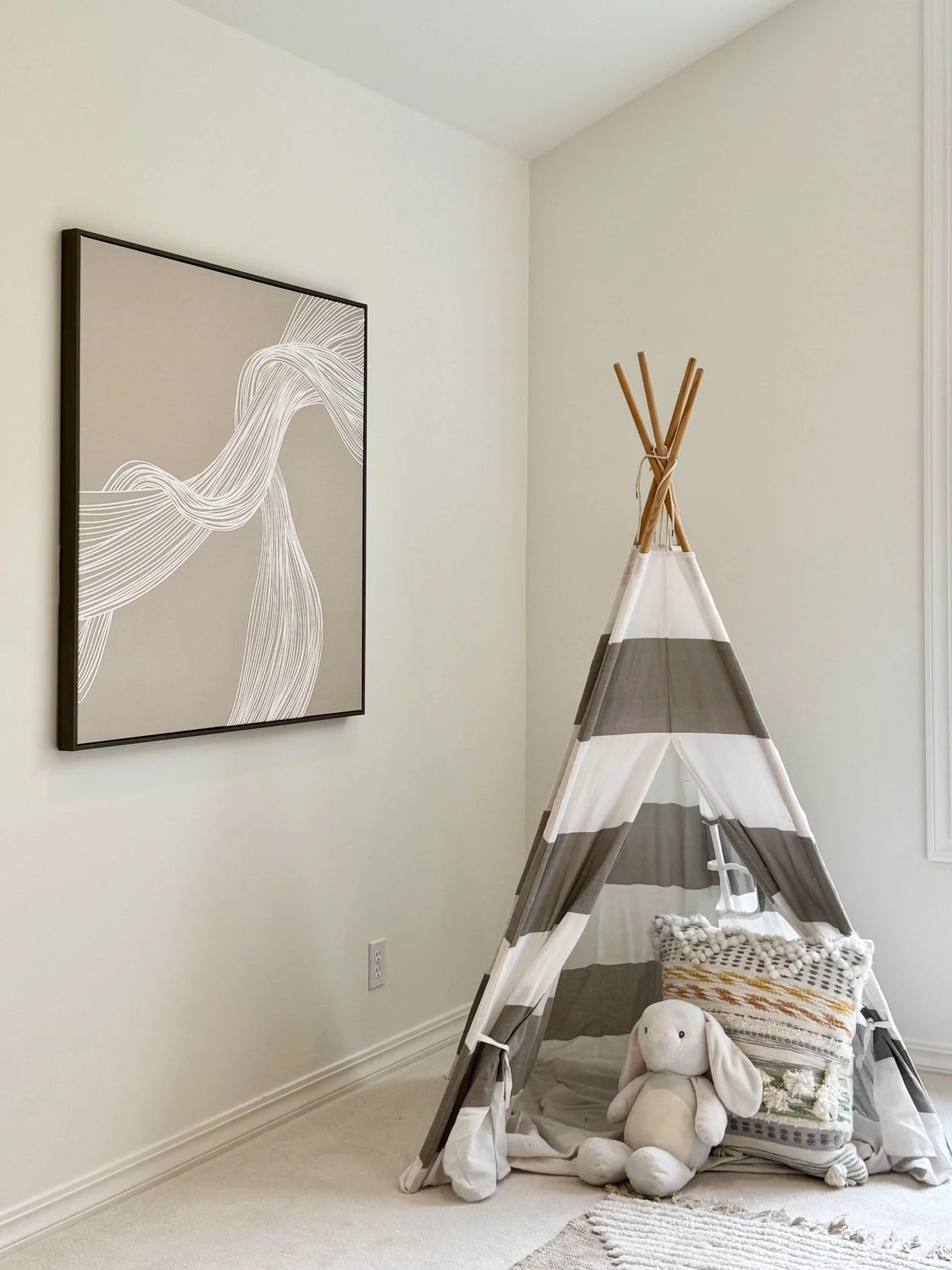
For children’s spaces, natural colors and tactile materials can be paired with playful objects. Keep the decorative palette restrained, but do not sacrifice safe furniture anchoring, appropriate materials or room for activity. The most successful family interiors look composed after ordinary use—not only in photographs.
12. What to Check Before Buying or Customizing Furniture
Organic modern furniture often appears simple, which means flaws in proportion and workmanship are more noticeable. Before approving a purchase or custom order, focus on measurable details rather than mood-board resemblance.
Dimensions: Confirm the room plan, door widths, stair or elevator access, seat depth, table height and required clearances.
Material specification: Ask for the wood species or veneer, panel substrate, fabric composition, foam or cushion construction and hardware grade.
Finish samples: Review physical samples under the lighting conditions of the actual room; photographs can distort tone and grain.
Construction: Request information about frame joints, reinforcement, drawer slides, door hinges and how large surfaces are supported.
Quality control: Check color consistency, edge finishing, level surfaces, alignment and packing protection before dispatch.
For a custom piece, a clear drawing is more useful than a reference image alone. Include dimensions, desired materials, finish references and how the furniture will be used. Ratahome’s wood selection guide and joinery overview are useful starting points for discussing specifications.
13. A Step-by-Step Plan for Creating an Organic Modern Home
Audit the space. Record measurements, window locations, flooring, existing furniture and everyday circulation routes.
Choose three anchor materials. For example: warm oak, ivory woven upholstery and a pale stone or ceramic accent.
Set a color hierarchy. Pick a base neutral, a secondary wood tone and one controlled accent.
Plan the largest pieces first. Select sofa, bed, dining table and major storage by actual room dimensions.
Check comfort and quality. Review samples, seating support, joinery and cleaning requirements.
Layer light and texture. Add rugs, window treatments, task lamps and a small number of tactile accessories.
Edit after installation. Remove objects that obstruct movement or compete with the room’s main focal point.
Where to spend first: Prioritize the furniture you use every day, the quality of its construction and the pieces that determine the room’s proportions. Accessories are easier to change later. A cohesive room does not require replacing everything at once.
14. Organic Modern Design: Frequently Asked Questions
What is the difference between organic modern and modern minimalist design?
Modern minimalism prioritizes reduction and clean forms. Organic modern retains those forms but adds more tactile textiles, warmer wood tones, irregular shapes and nature-inspired materials.
What colors are best for an organic modern home?
Warm white, cream, sand, taupe, mushroom, muted olive and natural wood tones form a versatile foundation. Deeper walnut or charcoal can be used in smaller amounts for contrast.
Can organic modern furniture work in a small apartment?
Yes. Choose fewer, better-proportioned pieces, use visually light storage, maintain clear walkways and introduce texture through upholstery and rugs rather than bulky decoration.
Is organic modern the same as Japandi?
No. Both value natural materials and calm interiors, but Japandi explicitly combines Japanese and Scandinavian design influences. Organic modern is a broader approach that mixes modern silhouettes with natural texture and softness.
How do I make a white living room feel warm instead of sterile?
Introduce at least two tactile materials, such as a woven rug and timber table; choose warm rather than blue-toned whites; and layer ambient, task and accent lighting.
What should I ask a custom furniture supplier?
Share dimensions and reference images, then confirm materials, finish samples, construction details, tolerances, quality-control checks, packing and delivery requirements before production.
Design · Source · Furnish
Bring Your Organic Modern Home Together
Have a floor plan, furniture dimensions or inspiration images? Start with the pieces that shape your home, then explore materials, finishes and furniture options that work together as a complete space.
Explore Ratahome & Get Started →For a more precise discussion, prepare your floor plan, room measurements, preferred materials and approximate budget.