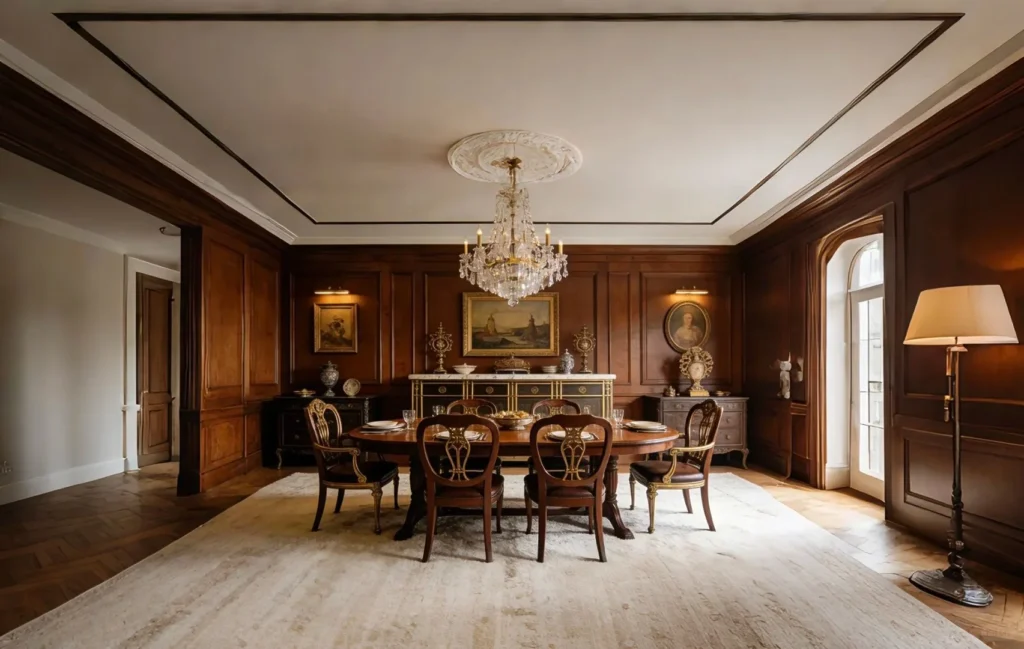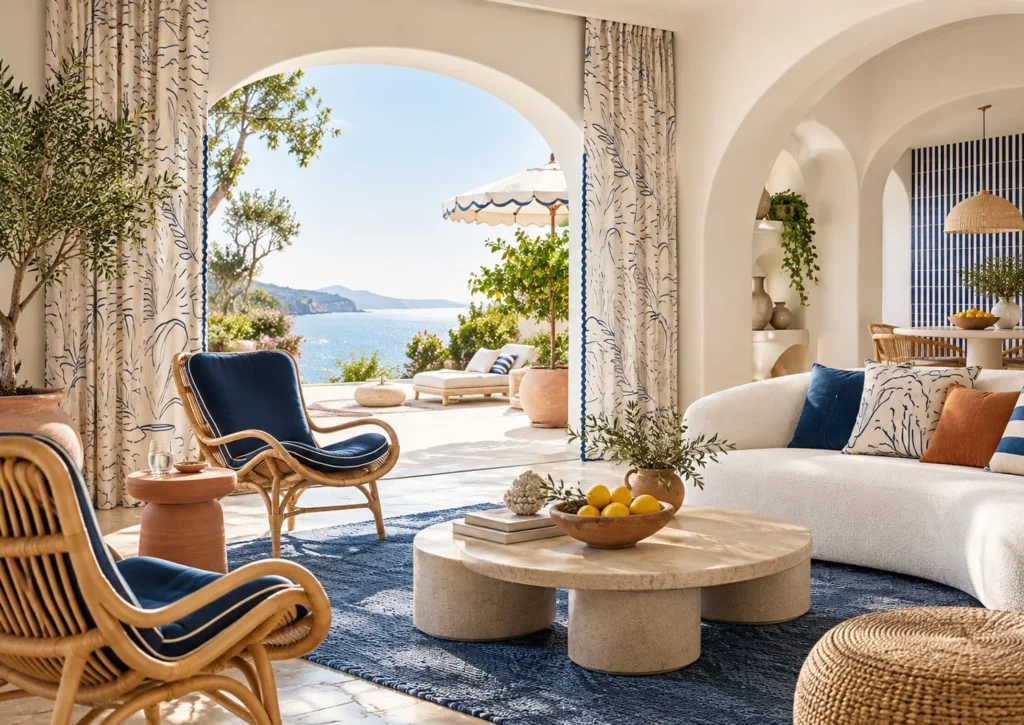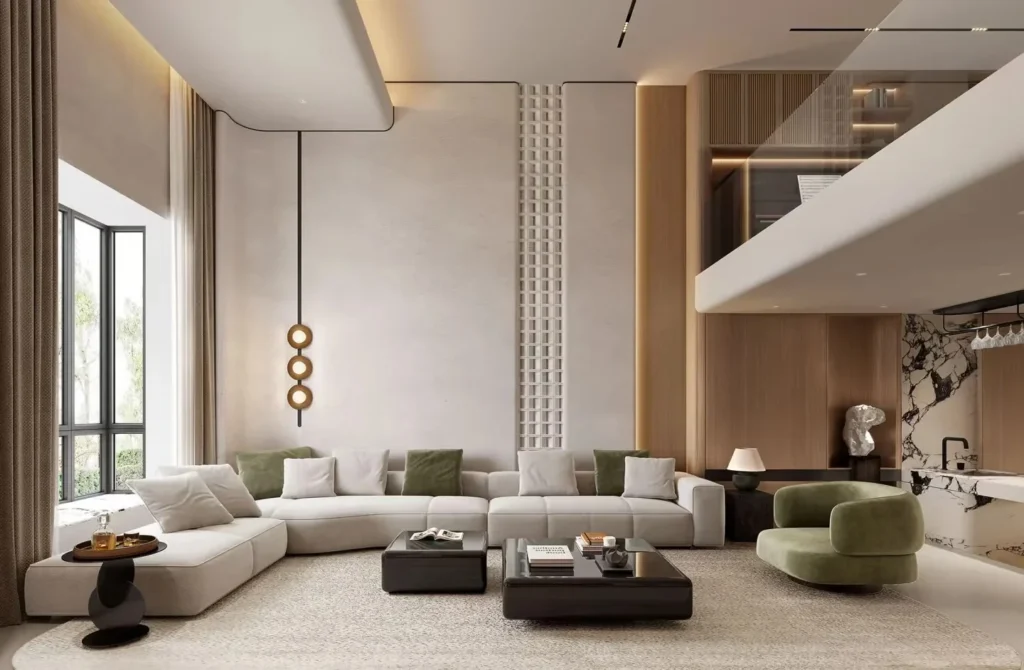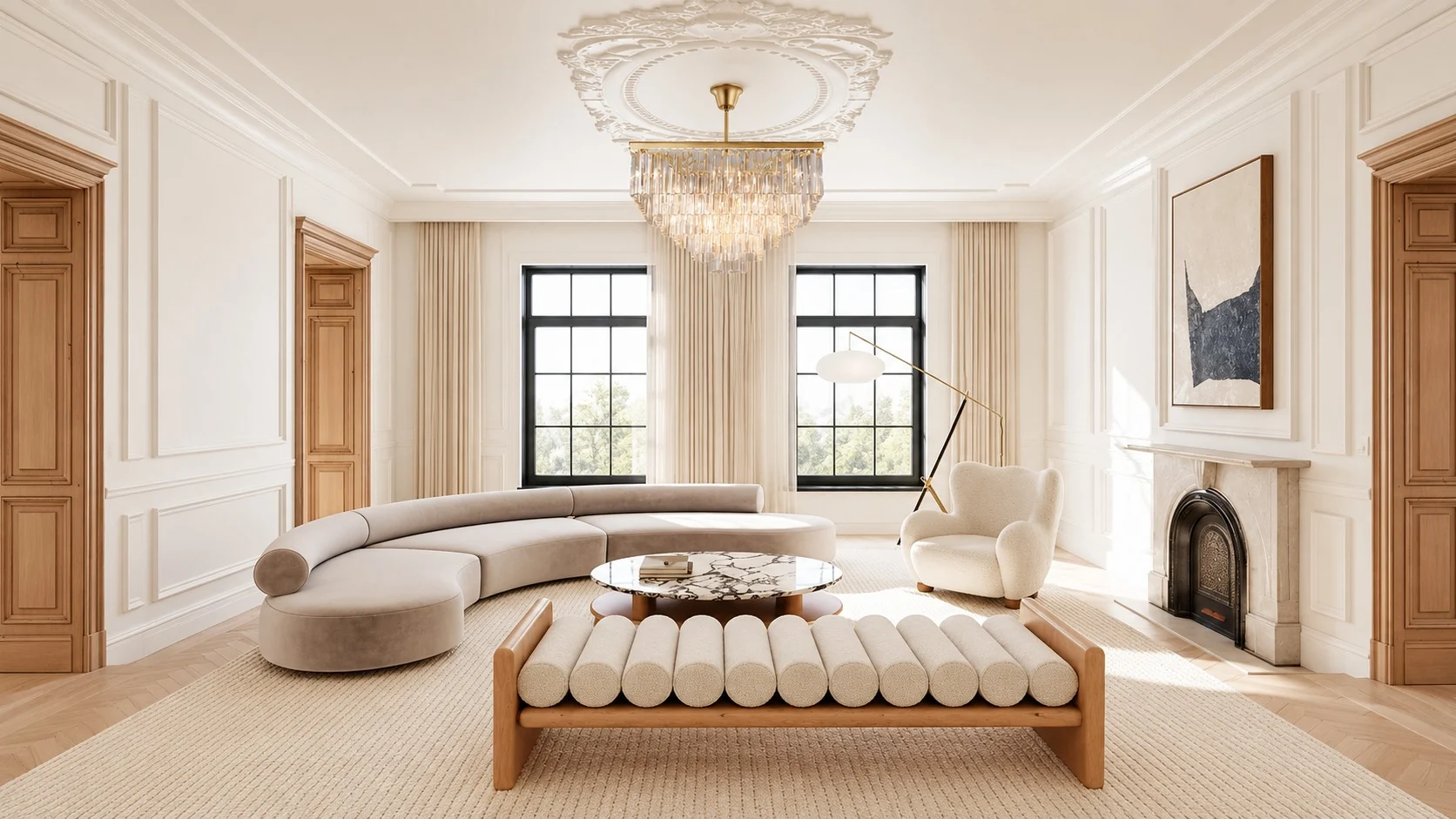
In brief: To create a French contemporary home, combine restrained French architectural details with warm neutrals, comfortable curved furniture, natural materials and soft layered light. Keep the main circulation routes clear, choose fewer higher-impact pieces and use heritage details as a backdrop—not as competing decoration.
01 · The French Contemporary mindset
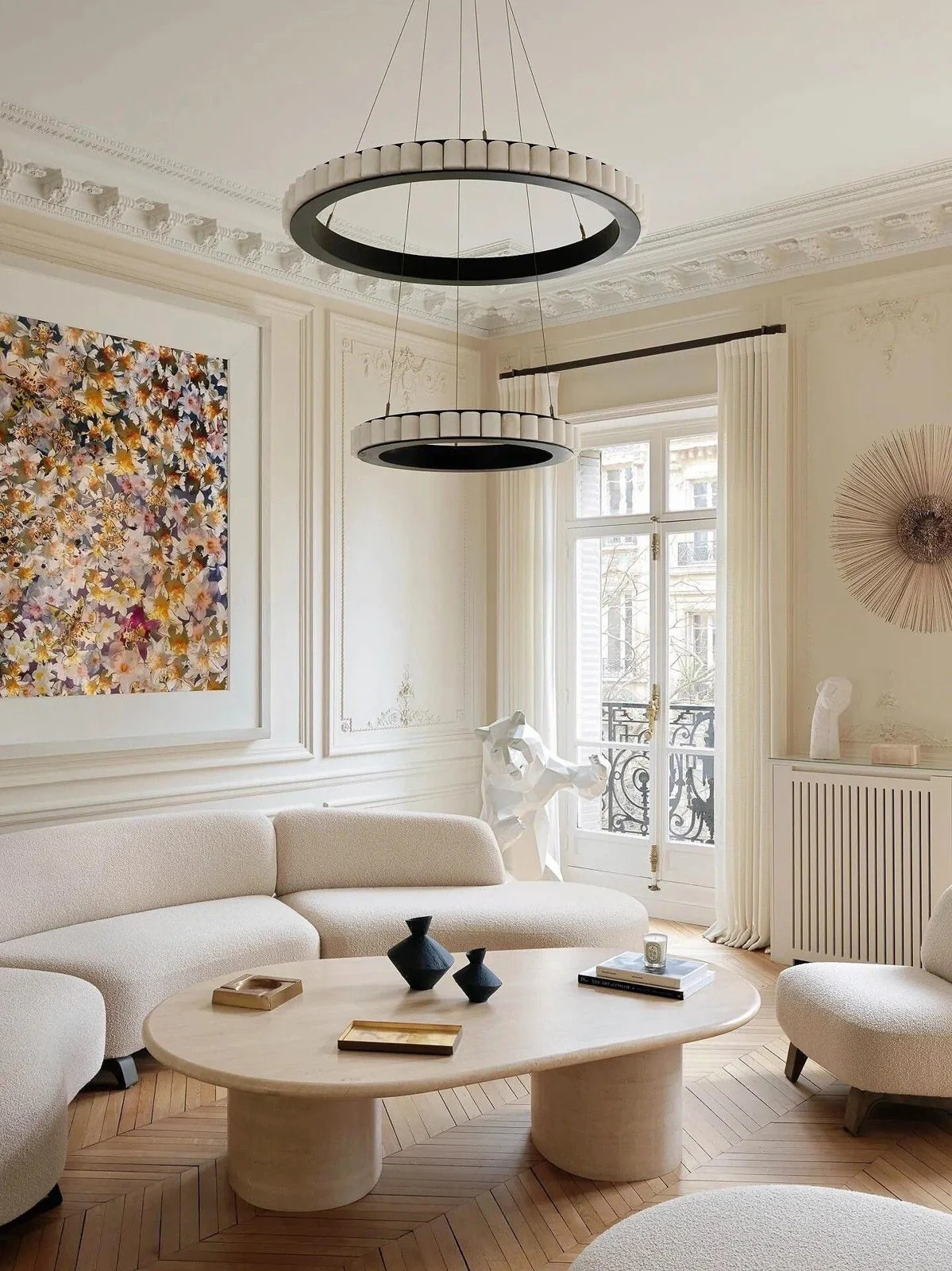
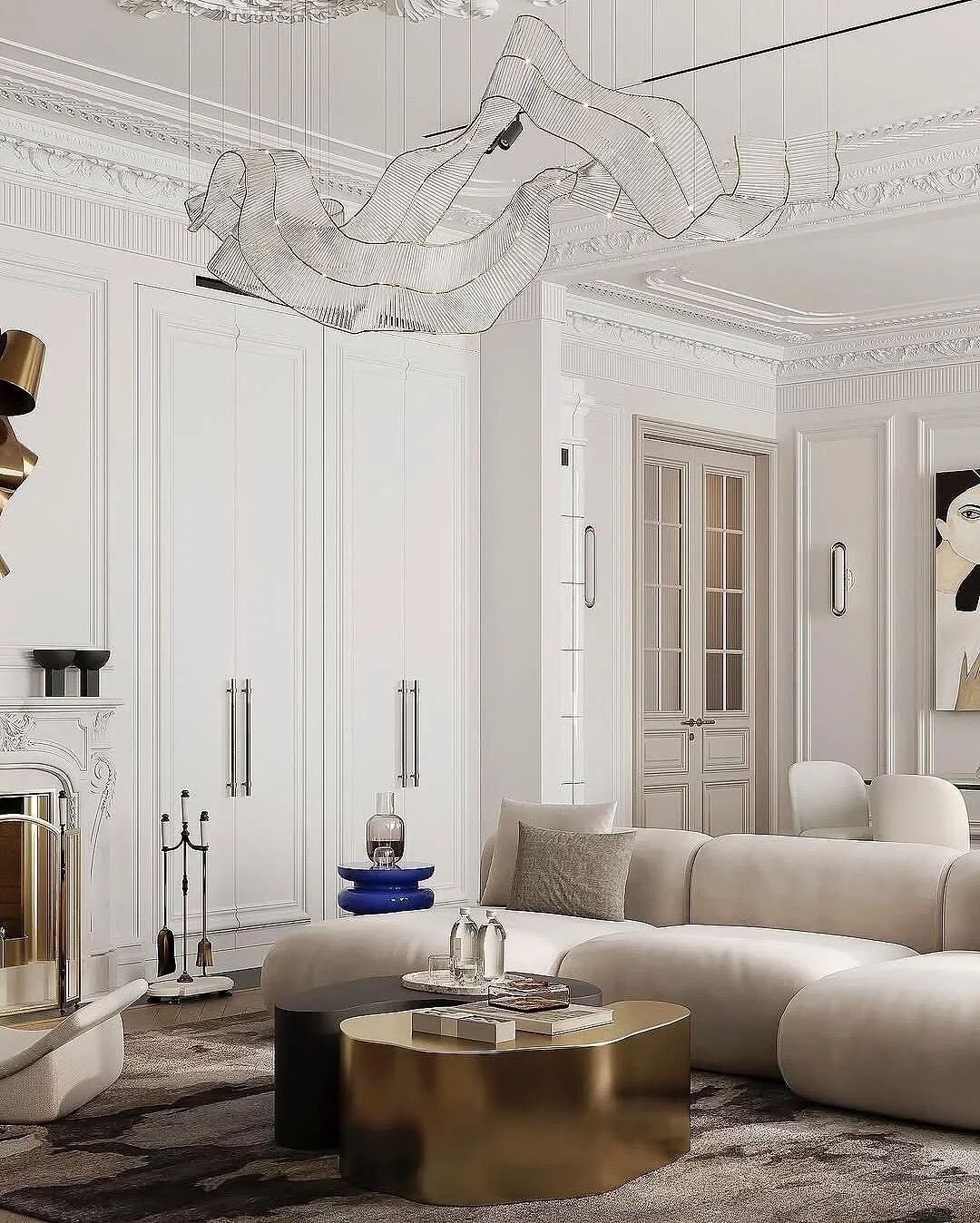
French contemporary interior design is the meeting point between architectural heritage and modern ease. It borrows beautiful proportions, framed wall panels, tall openings and considered decorative details from classic French apartments, but simplifies furniture shapes and leaves more room for everyday life. The result should feel cultivated without appearing staged.
Rather than matching every object, choose a few relationships that make the space coherent: a straight wall panel against a curved sofa; an antique-looking mirror above a modern console; a finely detailed ceiling beside a low, contemporary coffee table. This tension between old and new gives the style its character.
02 · Build a quietly layered color palette
Begin with the finishes already in the space. A pale parquet floor, warm daylight and creamy walls will respond differently to upholstery than cool stone and north-facing windows. Choose one underlying temperature—usually warm ivory or light greige—and repeat it consistently rather than placing unrelated off-whites next to one another.
A practical starting balance is approximately 65% warm base (cream, oatmeal, soft beige), 25% natural midtones (pale oak, taupe, warm gray) and 10% contrast (charcoal, ink blue, olive, bronze or dark stone). This is a composition guideline, not a technical rule. Accent colors should have a purpose: grounding a sofa, highlighting a picture frame or adding depth to a lamp.
Test samples beside your windows in both daytime and evening light. A fabric that looks beige on a screen can appear pink or gray once placed next to the floor.
03 · Let simple architecture provide the structure
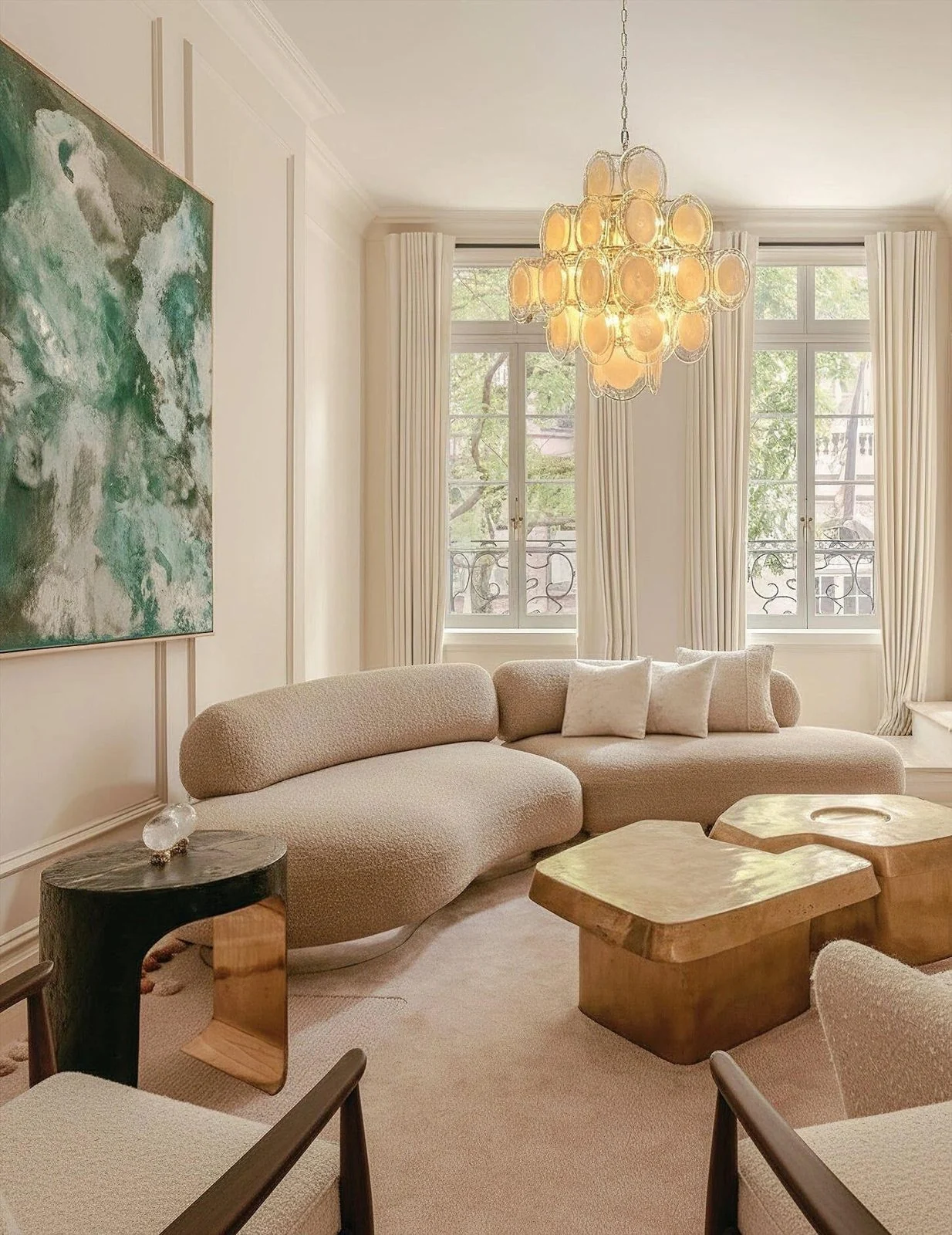
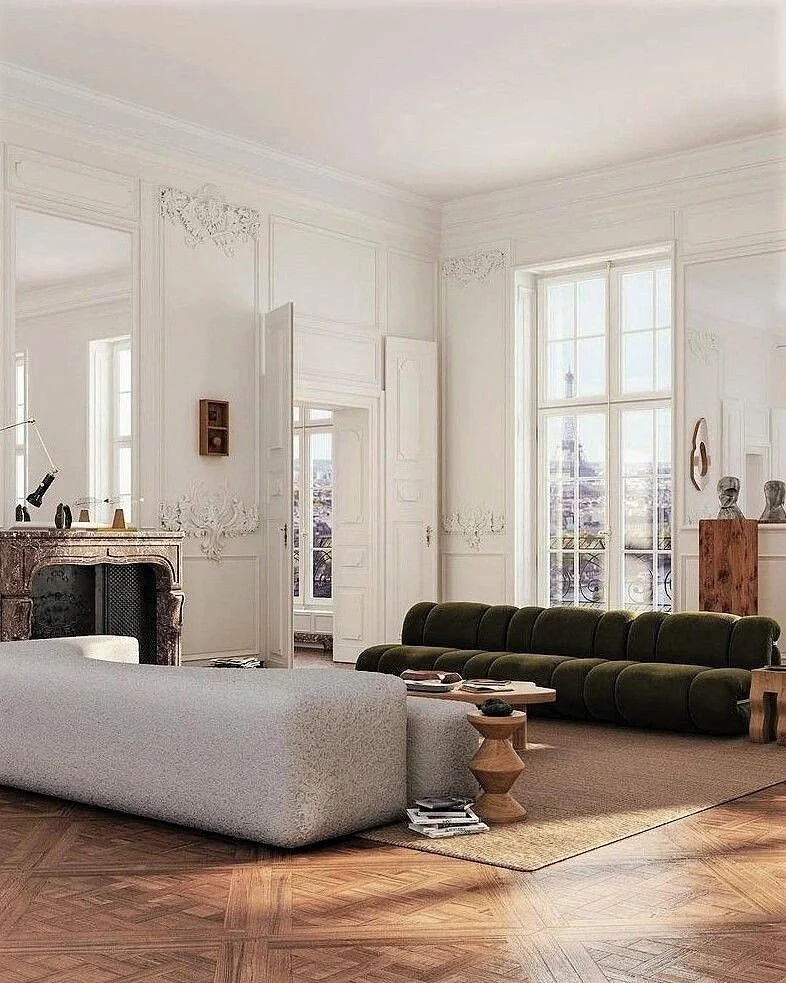
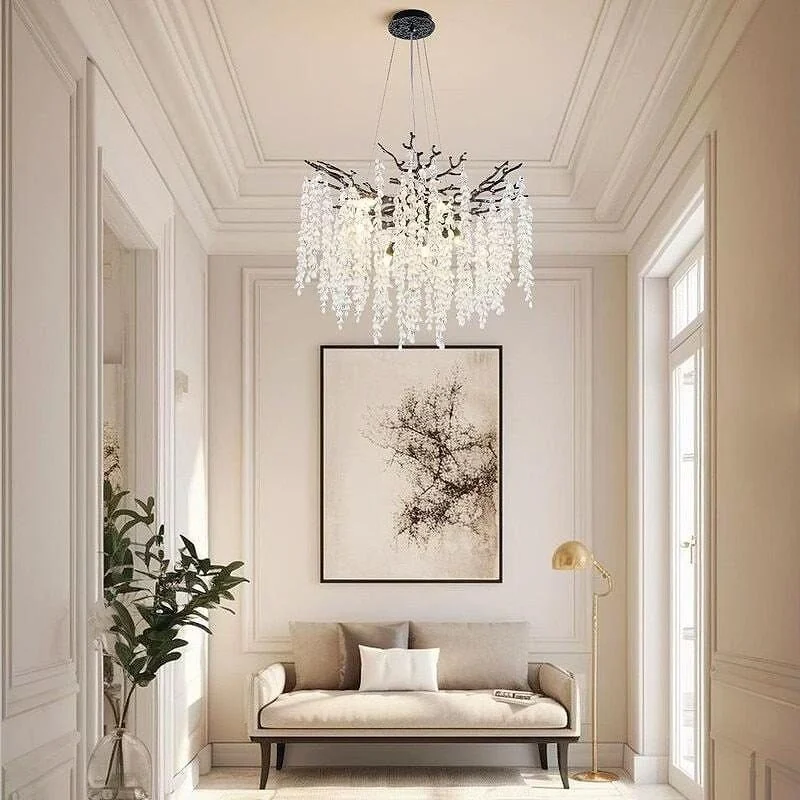
French influence is most legible in its architectural rhythm. Rectangular wall frames, ceiling cornices and tall door proportions provide order. Yet a contemporary home does not need elaborate carved plaster everywhere: limit molding to the main walls or principal room, repeat panel widths consistently and avoid crowding switches, artwork or built-in storage.
Where the architecture supports it, a graceful arch or softly curved passage can break up long corridors. Herringbone or chevron timber floors add movement underfoot; if you prefer wide boards, use a subtle grain and let the furniture bring the curves. Preserve circulation and comfortable ceiling clearances before adding decorative trim.
Built-ins should match the visual language without hiding function. Flush cabinet doors, integrated storage and carefully aligned reveals keep detailed walls from becoming busy. If your project includes custom millwork, explore Ratahome's cabinetry solutions and wood selection guide.
04 · Pair tactile natural materials with refined accents
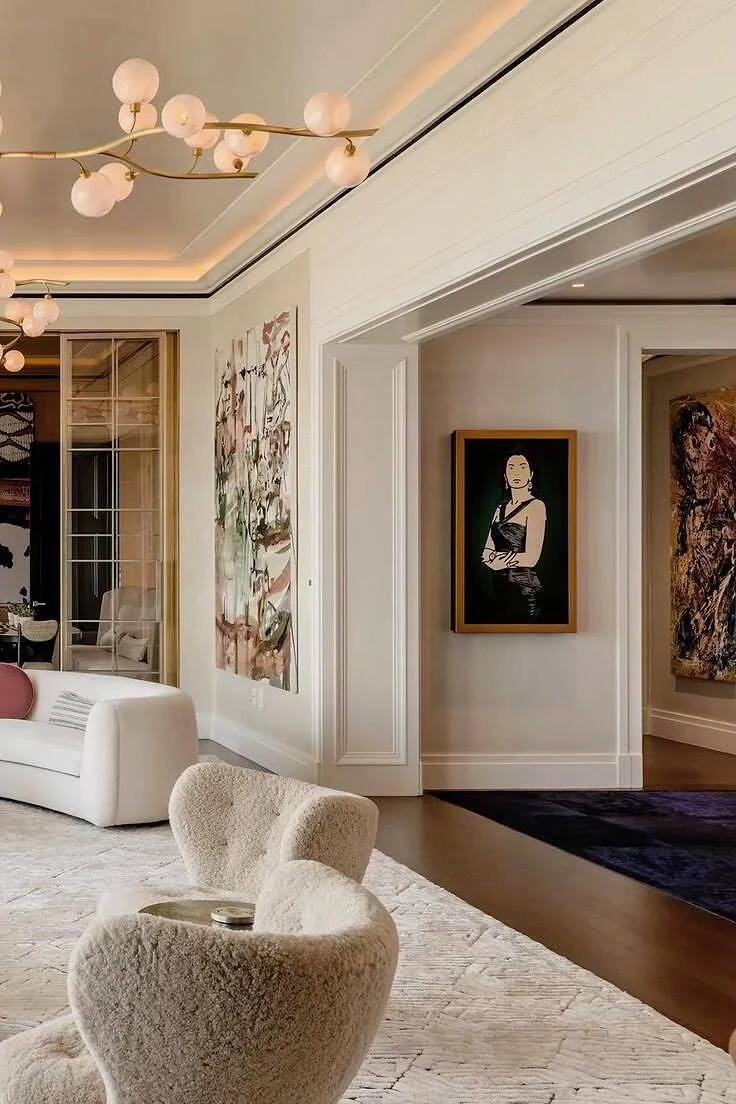
The luxury of a French contemporary home is often tactile rather than shiny. Pair a linen or textured-weave sofa with a smooth marble or travertine table; add open-grain oak, walnut or woven cane for warmth; complete the composition with brushed brass, dark metal or hand-finished ceramic. Each material should contribute a different quality rather than compete for attention.
| Material | Where it works | Practical check |
|---|---|---|
| Linen and textured cotton | Sofas, curtains and accent chairs | Cleaning requirements, shrinkage and abrasion |
| Bouclé or velvet | Statement seating and occasional upholstery | Pilling, pile direction, durability |
| Oak and walnut | Consoles, dining tables, storage and chair frames | Grain matching, veneer or solid construction, finish samples |
| Marble and travertine | Coffee tables, side tables and shelves | Porosity, sealing, thickness and edge profiles |
| Brushed brass / dark metal | Lighting, hardware and slim furniture legs | Finish consistency and maintenance |
Do not assume that the most expensive surface is automatically the best. For a family room, a stain-resistant performance textile may look more composed over time than delicate fabric. Our sofa construction guide explains what to inspect beneath upholstery before purchase.
05 · Choose curved furniture with a light visual footprint
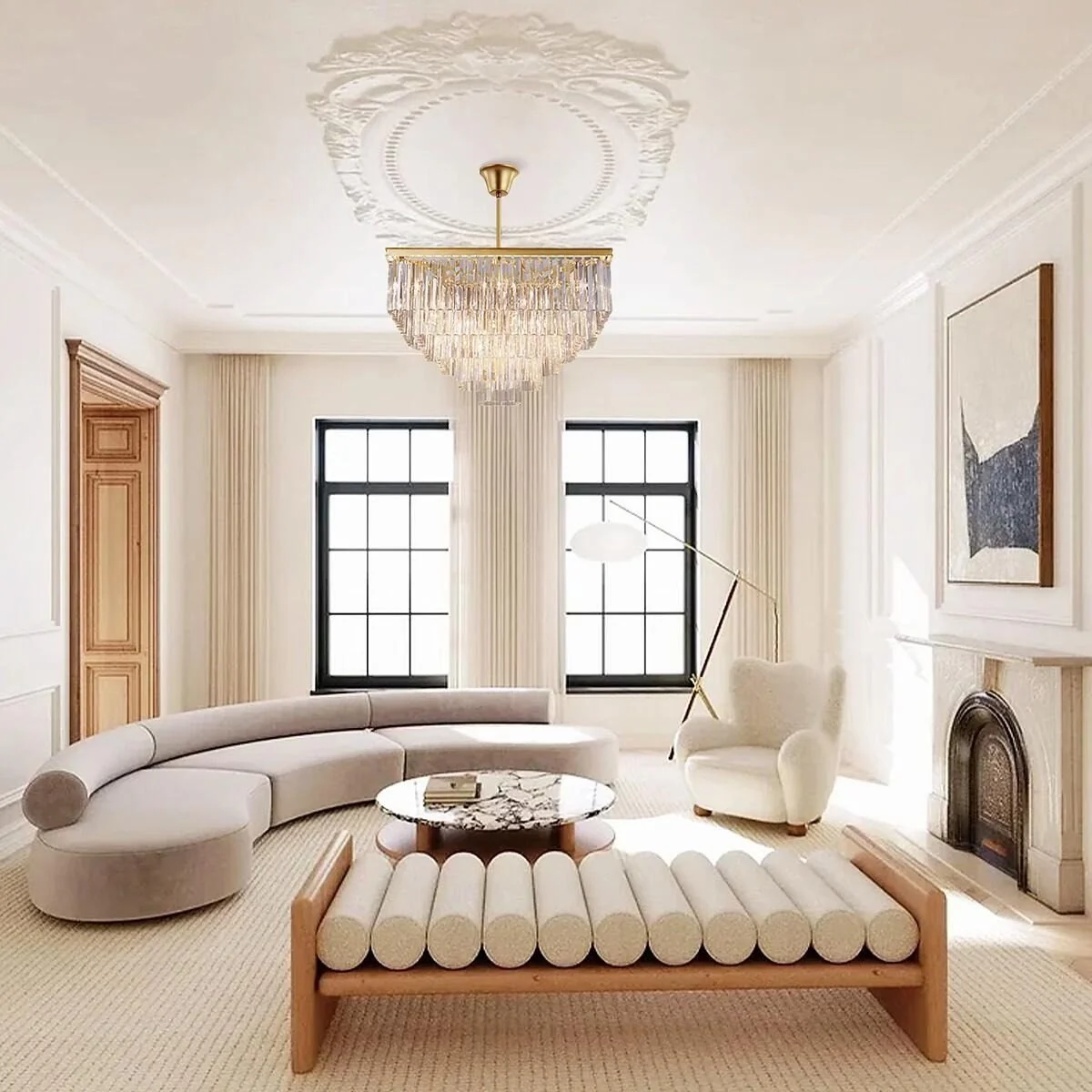
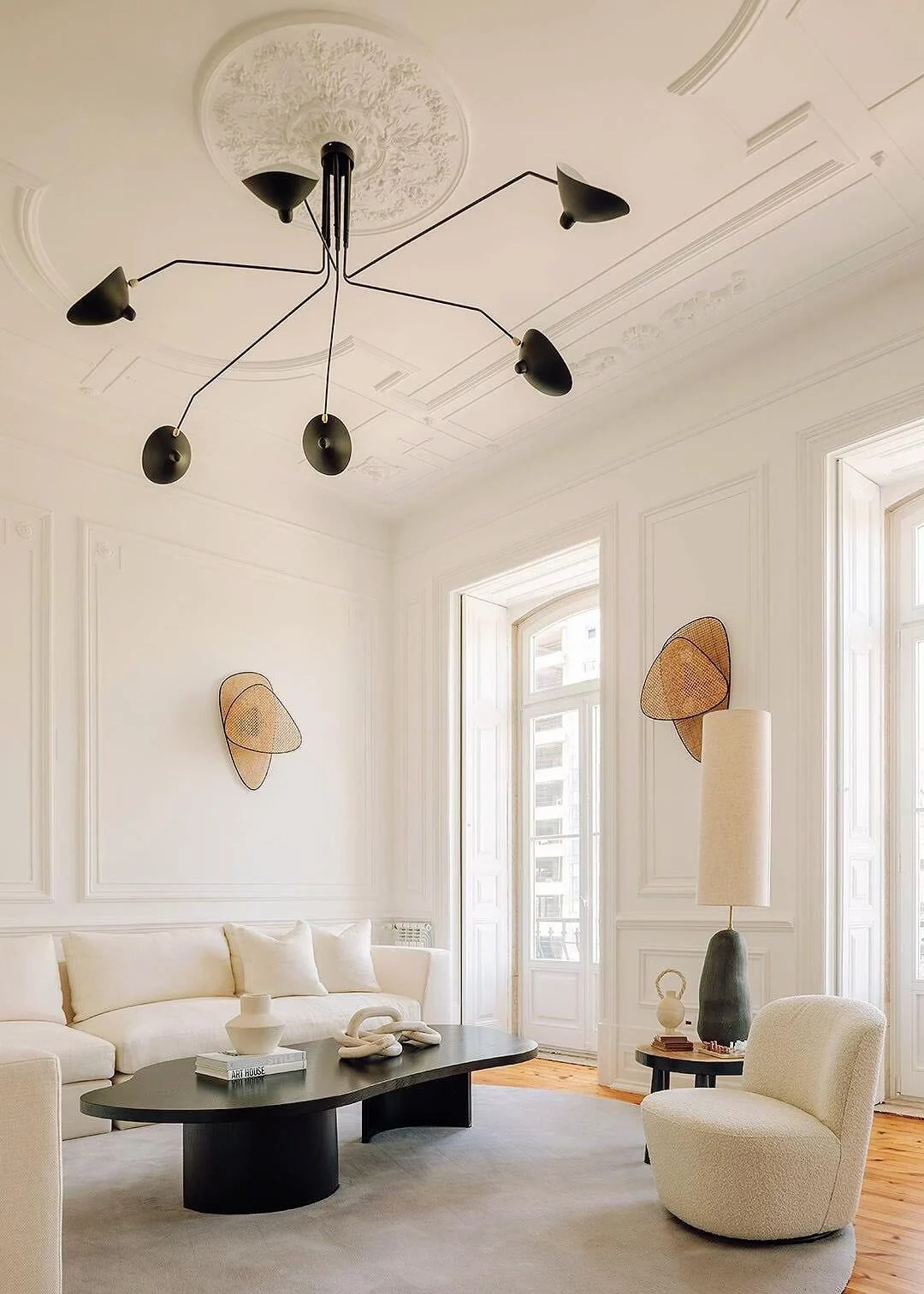
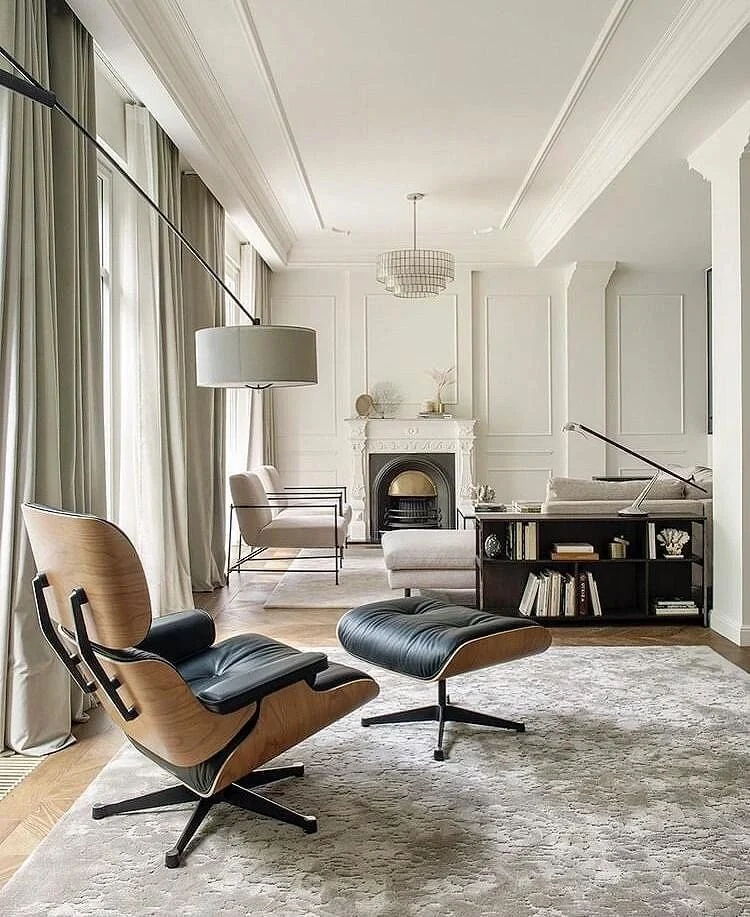
Start with one anchoring piece—usually a curved sofa or elegant low-profile sectional—rather than several sculptural objects. A rounded back or generous arm brings softness to a rectilinear room. Balance it with an oval or gently irregular coffee table; then use a light-legged lounge chair, side table or small console to preserve sightlines across the floor.
Work with scale, not labels
Measure furniture before choosing finishes. As a starting point, leave around 16–18 inches (41–46 cm) between a sofa and coffee table where practical, and maintain clear routes through entrances. Check seat depth, cushion support and the ease of getting in and out of low furniture. In a compact apartment, a single sculptural chair is often more successful than a full matching set.
Browse lounge chairs or review proportions for your own project with Ratahome's furniture categories. A good French contemporary room looks coordinated even when pieces are not from the same collection.
06 · Design for daylight first, then layer warm lighting
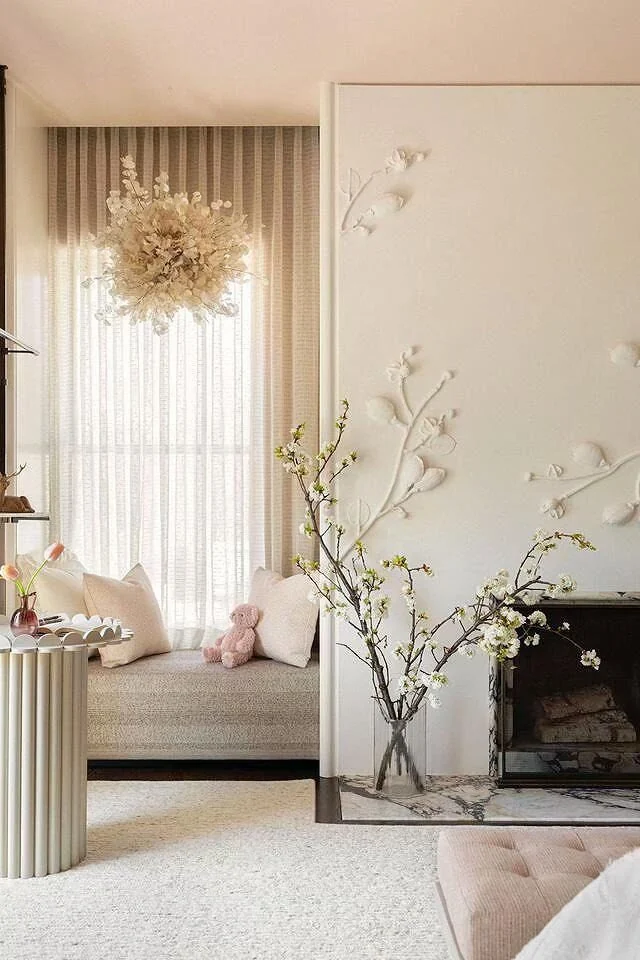
French contemporary interiors depend on softness: light should travel across pale plaster, textured fabric and timber without harsh glare. Preserve window height and use sheer or semi-sheer curtains that can be drawn back. Place the main seating so people can enjoy daylight without sitting directly in intense glare.
At night, combine ambient lighting, a wall or floor lamp near seating, and focused light for reading or art. A contemporary pendant can remain a statement, but it should not be the only source. Avoid mixing very cold and very warm light across adjacent fixtures; a consistent warm-white scheme typically makes cream upholstery and wood feel more inviting.
07 · Furnish the living room as a real place to gather
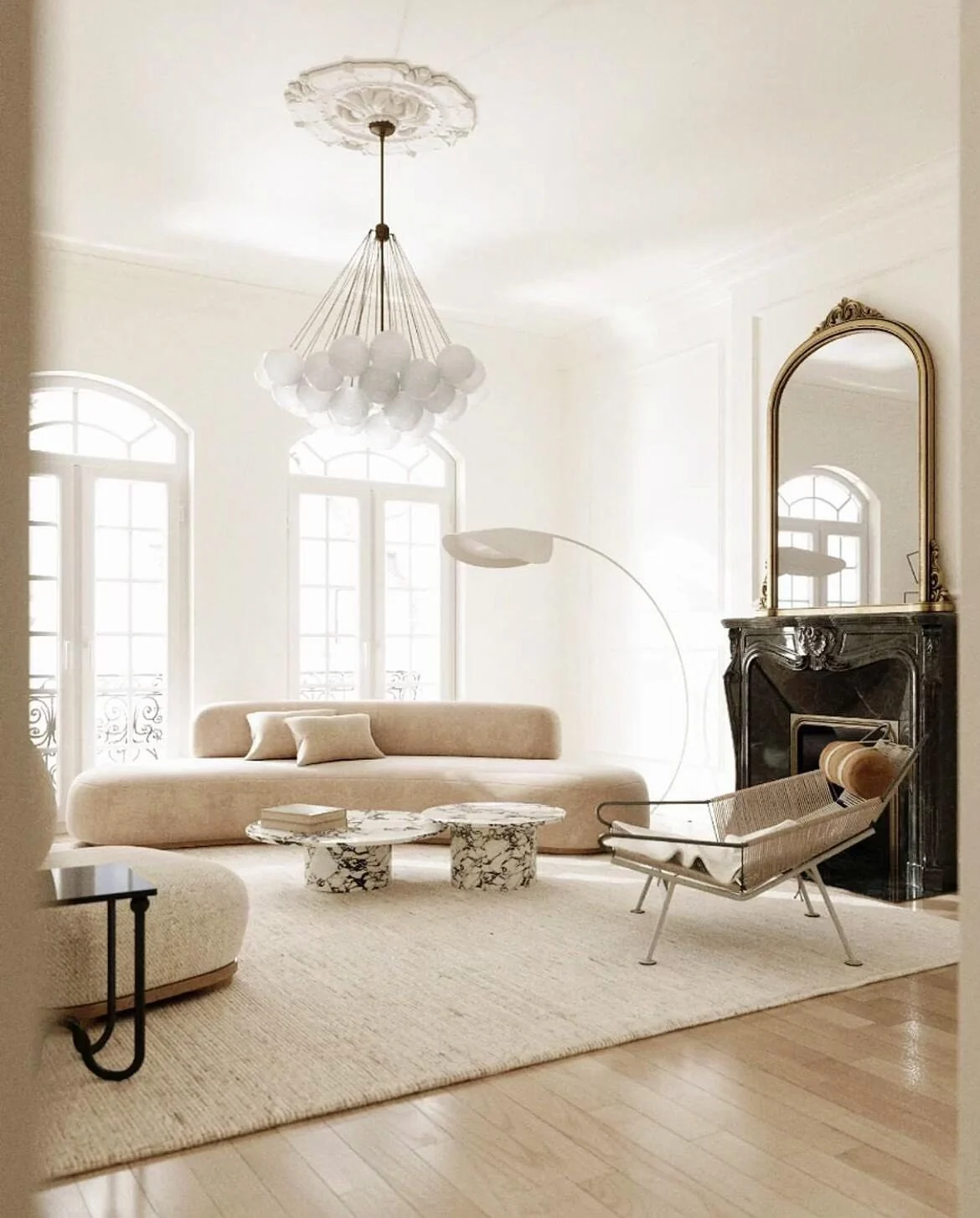
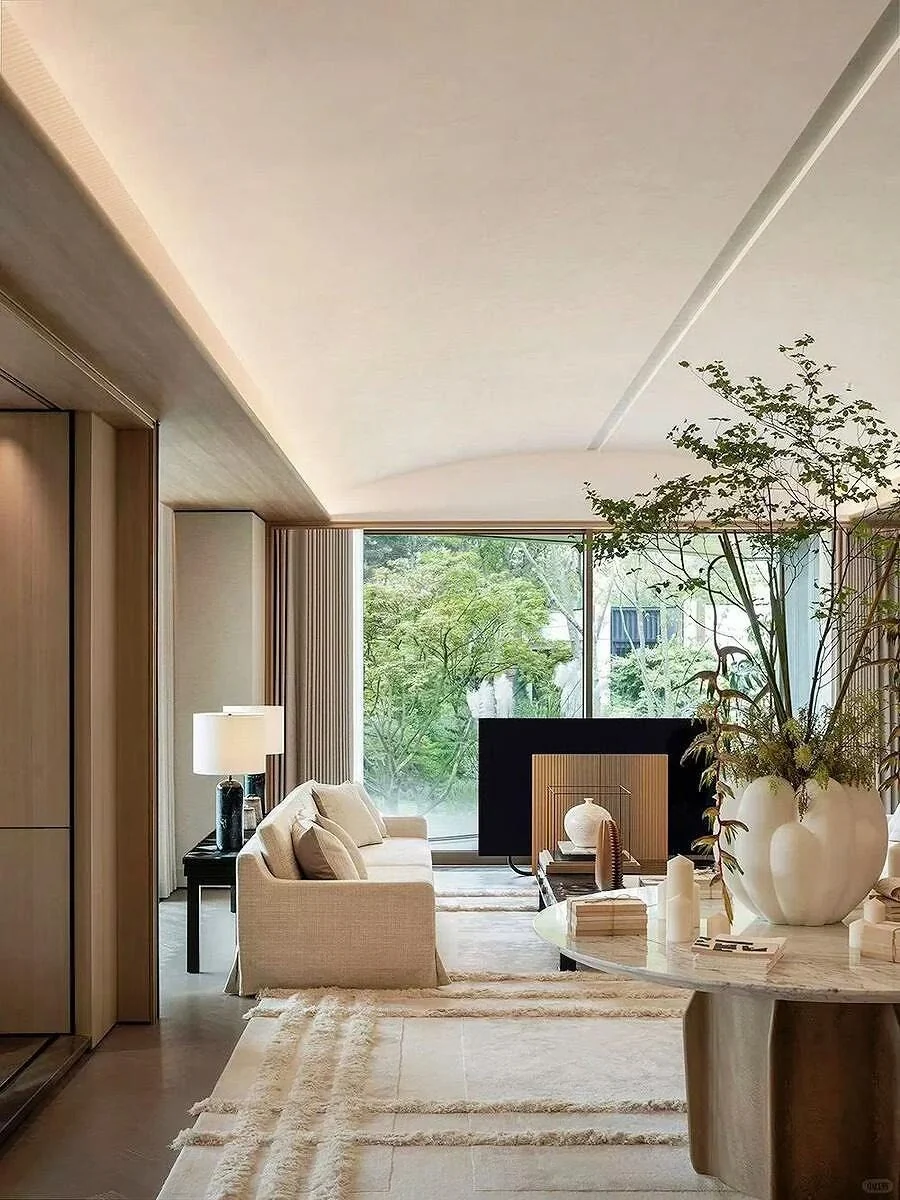
Begin with how people will actually use the room. Arrange the main sofa and accent chairs so guests can talk across a low coffee table without twisting toward a television. A generously sized rug should visually connect the seating, while a clear route around the group keeps the room open and welcoming.
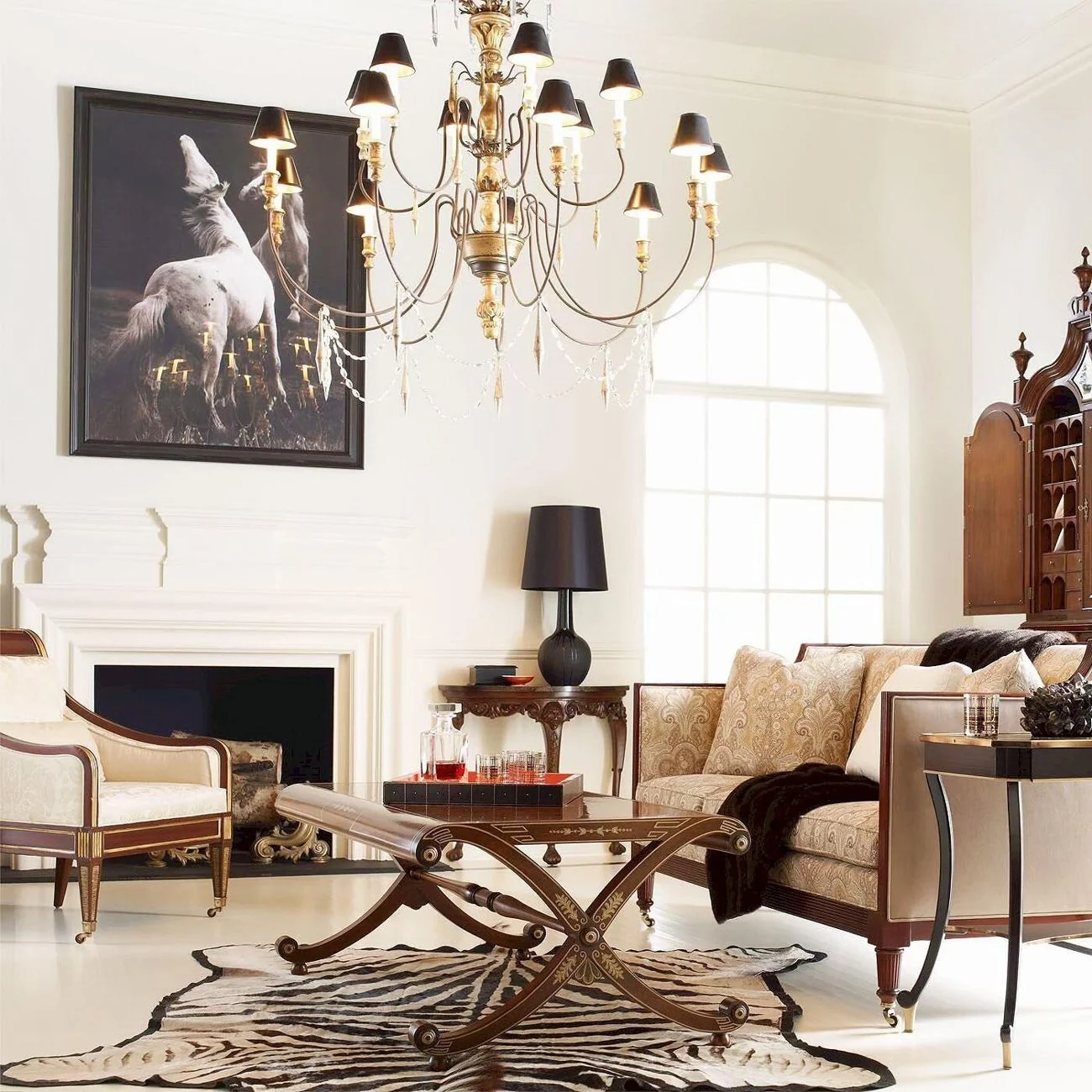
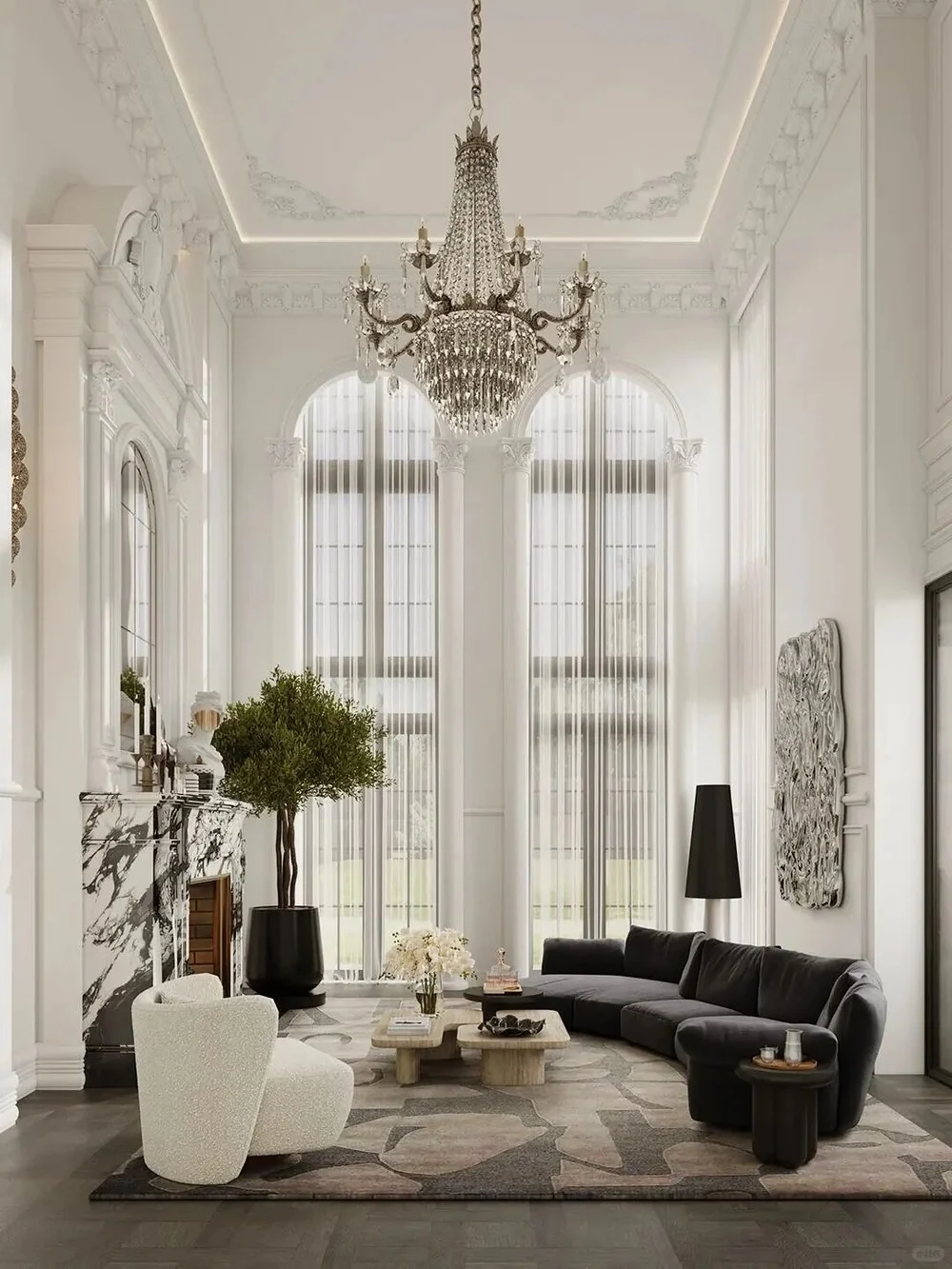
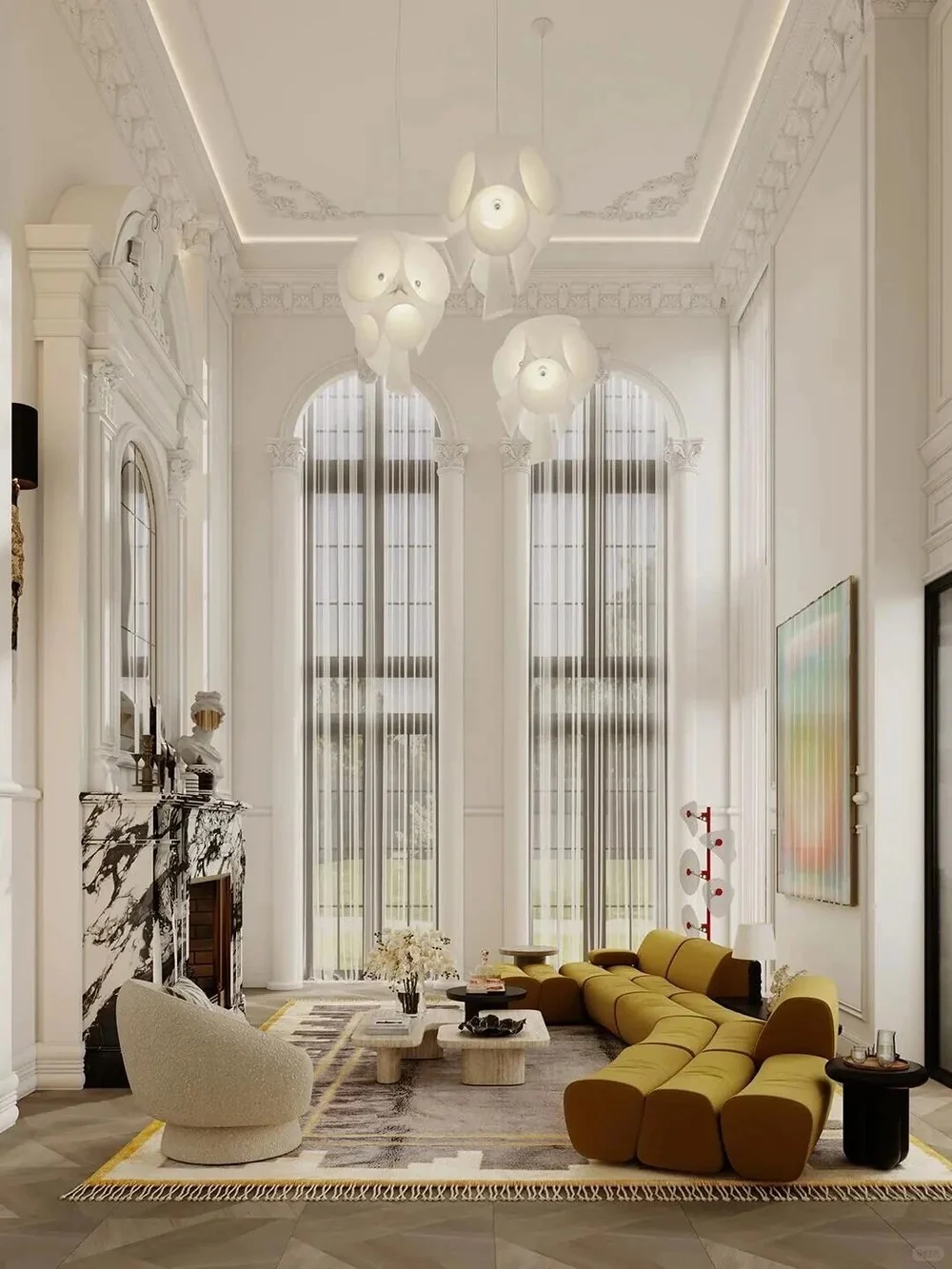
These two schemes show how French contemporary design can change character without changing the architectural envelope. The tall arched windows, detailed moldings and marble fireplace stay the same; the difference comes from the furniture palette, silhouettes, lighting and art.
What to copy from these two layouts
- Use the room’s architectural symmetry as a backdrop, but soften it with one curved sofa or sculptural lounge chair.
- Keep a practical central table arrangement: nested stone coffee tables provide surfaces without introducing a bulky rectangular block.
- Let the seating define the accent color. Charcoal creates quiet contrast; mustard is a bolder focal point. Repeat the chosen color only in small, controlled details.
- Match the lighting to the mood. A traditional chandelier reinforces elegance; contemporary sculptural pendants make the same setting feel more experimental.
- Choose one large rug to connect the sofa, chair and tables, and leave clear circulation around the seating group.
For a cohesive open-plan home, carry one finish—such as oak, antique brass or warm stone—from the living room into the dining area without ordering matching furniture sets. A considered material repeat is enough to connect the spaces.
Avoid 5 common French contemporary decorating mistakes
- Overusing ornate molding: too many frames compete with furniture and reduce the value of negative space.
- Buying every curved piece: curves need straight edges nearby to remain intentional.
- Using only white: add tactile fabrics, wood grain and one deeper anchor color.
- Choosing delicate materials without a maintenance plan: verify stone porosity and upholstery performance.
- Decorating before measuring: a beautiful sofa that blocks circulation will never feel effortless.
French contemporary furnishing checklist
Before requesting quotes or ordering custom furniture, prepare a dimensioned floor plan, window and door locations, ceiling heights, two or three reference photographs, target wood and fabric finishes, a room-by-room product list and a realistic budget. Ask for material samples and final product dimensions rather than approving solely from styled renderings.
For multi-room projects, Ratahome can help coordinate the choice of furniture, custom cabinetry, materials and the ordering process. The goal is to turn a consistent design direction into pieces that actually fit.
Frequently asked questions
What defines French contemporary interior design?
It combines restrained French architectural details with contemporary furniture, balanced proportions, tactile materials, graceful curves and soft light.
Can French contemporary style work without wall molding?
Yes. A warm neutral palette, sculptural but comfortable furniture, light wood, a simple stone table and thoughtful lighting can convey the style even in a plain apartment.
Which sofa works best in a French contemporary living room?
Try a softly curved or rounded sofa in a matte woven textile, sized for the room and paired with a more linear or slim-legged chair. Prioritize suspension and cushion comfort over silhouette alone.
Does French contemporary mean expensive furniture?
No. Proportion, consistency of finish, useful circulation and durable materials contribute more than price or ornate branding.
What should I send when requesting a furniture quote?
A floor plan with measurements, design references, destination, preferred materials, furniture list, budget range and project timeline are useful starting points.
Bring your French contemporary home to life
Share a dimensioned floor plan, a room-by-room furniture list and your style references. Ratahome can help you coordinate furniture proportions, materials and custom cabinetry for a consistent result.
Send Your Floor Plan →