Walnut and Travertine Furniture Ideas: Room-by-Room Inspiration for a Warm Modern Home
Discover how rich wood and pale stone can shape a home that feels warm, refined and easy to live in—from statement coffee tables and kitchens to bedrooms and dining spaces.
By Forest, Founder, Ratahome · Published
Natural-material inspiration: wood, pale stone, tactile upholstery and gentle daylight.
How do you style walnut with travertine? Balance walnut's deep, warm grain with the softer tone and texture of pale travertine, then give both materials space to stand out. Use a few anchor pieces rather than repeating the combination on every surface.
These photographs are presented as visual directions. Stone species, wood species and finishes should always be confirmed with supplier samples before production; a photo alone cannot establish whether an individual stone is genuine travertine.
01 / MATERIAL DIRECTION
Start with the contrast: rich walnut and pale stone
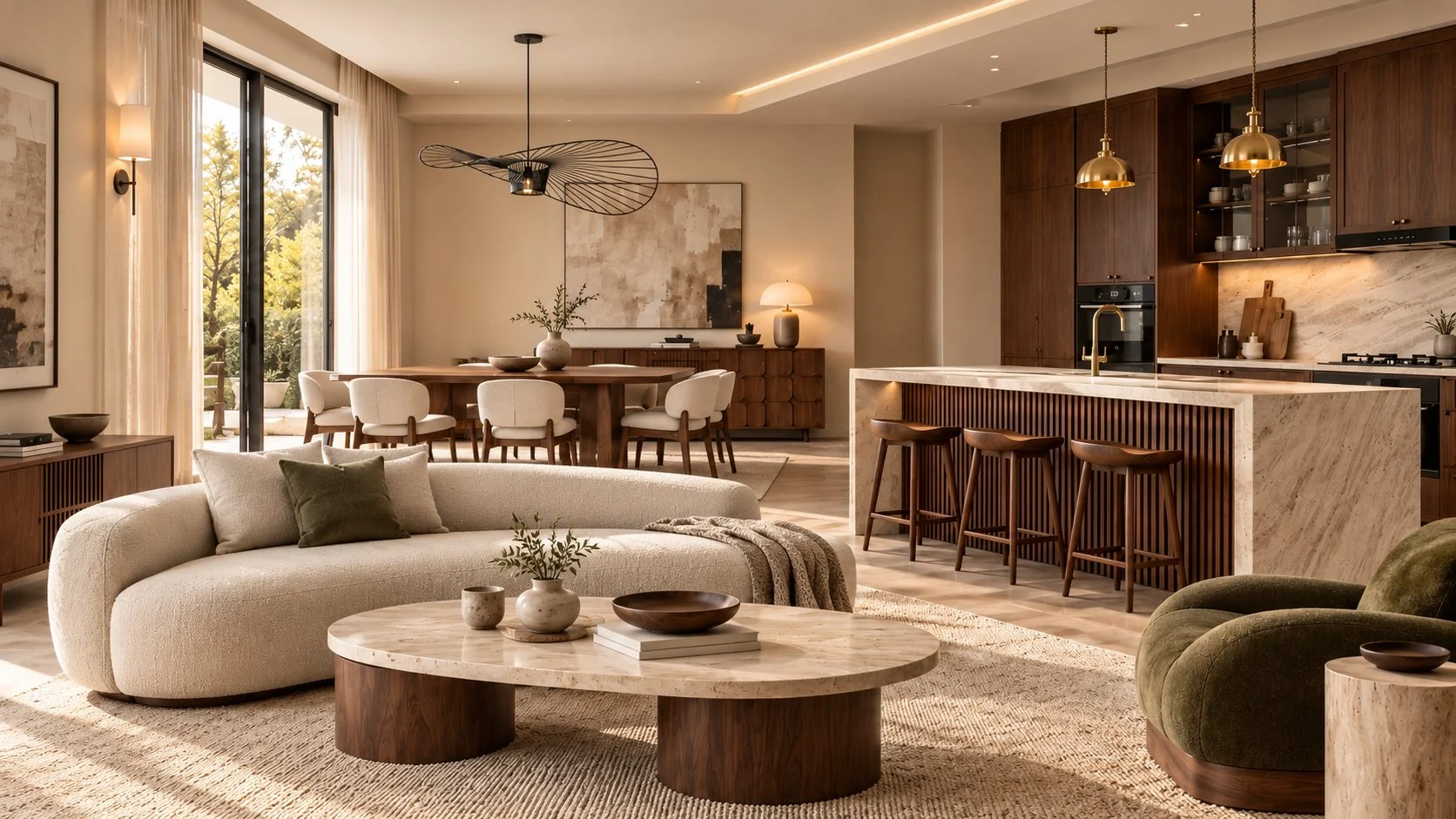
Walnut and travertine furniture ideas work best when one material brings depth and the other brings light. Walnut reads warm, graphic and architectural; pale travertine brings subtle pores, cloudy movement and a calmer visual weight. Together they offer a tactile route to modern, lived-in rooms.
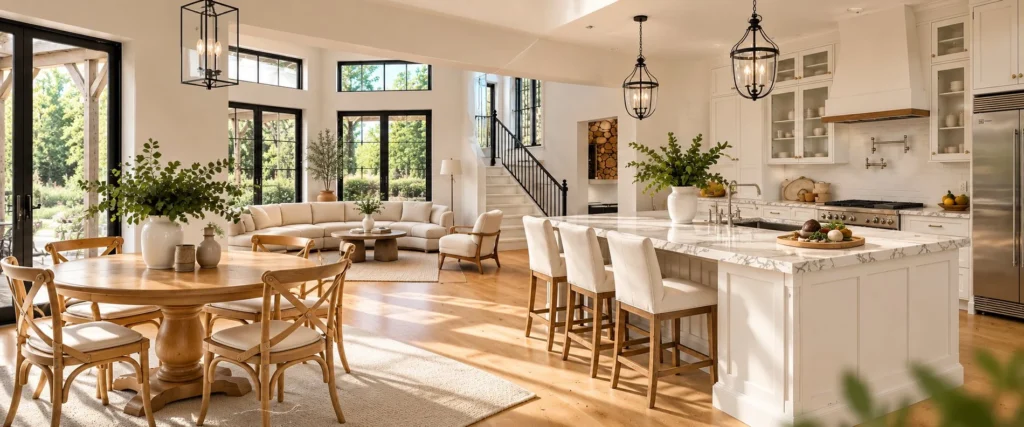
A sunlit open-plan home showing dark wood furniture against a pale stone island
Choose a lead material first. In a large open-plan home, walnut cabinetry or a wood dining table may be the anchor; in a smaller living room, one pale stone coffee table can be enough. These photographs offer palette inspiration rather than verified material specifications.
02 / LIVING ROOM INSPIRATION
Create a calm living room with a sculptural stone focal point
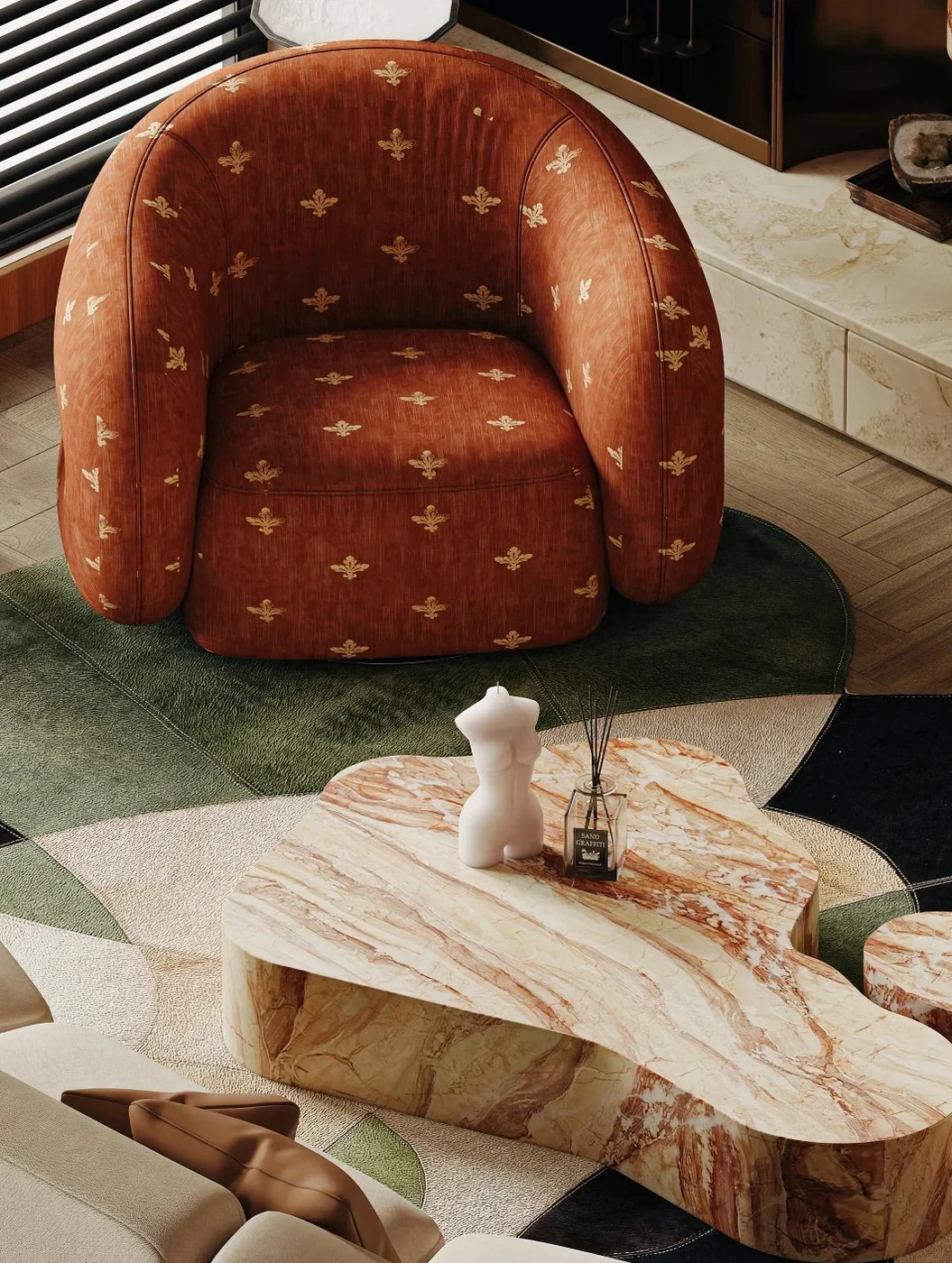
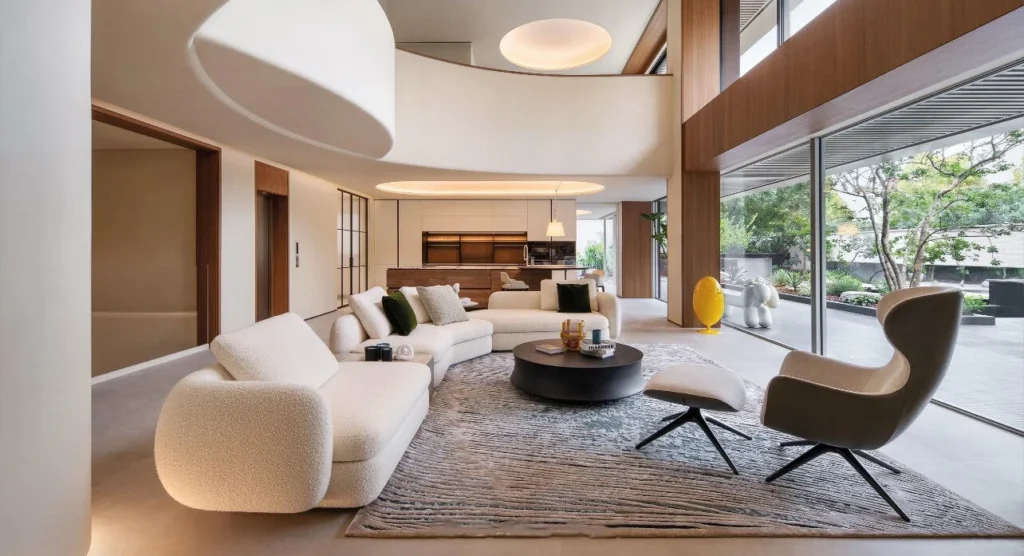
Picture a low cream sofa, a softly shaped stone coffee table and a few walnut accents. Keep the upholstery tactile and the rug quiet, then let the stone table define the conversation zone. Dark green or chestnut upholstery can provide contrast without making the setting feel overly formal.
Organic light-colored stone coffee table and rust-colored accent chair creating a sculptural living room focal point
Look for a table with the height and reach suited to your sofa. A natural stone finish should be confirmed by sample: several of the images here show warm, veined stone but are not sufficient to identify the exact geological material.
03 / KITCHEN INSPIRATION
Make walnut kitchen cabinets feel lighter with a pale island
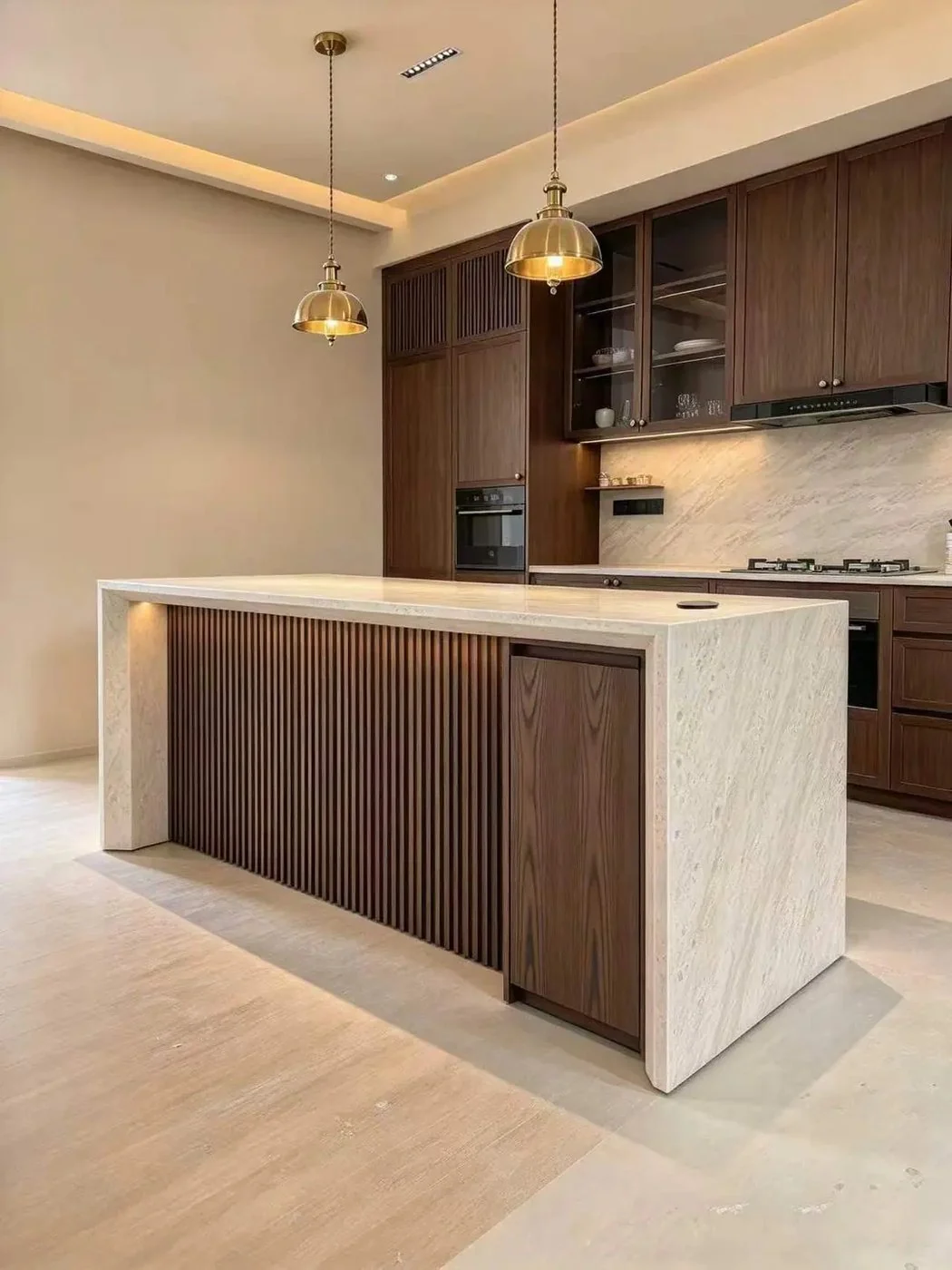
A dark wood kitchen can be rich without feeling heavy. The easiest visual balance is tall walnut-look cabinetry, a pale stone island and understated warm metal pendants. This gives the cabinetry presence while keeping the central prep zone bright and welcoming.
Walnut-toned kitchen with pale stone waterfall island and brass pendant lights
For a real renovation, select the countertop according to stain resistance and maintenance needs. Travertine is porous and often better suited to lower-contact applications unless its finish, sealing and ongoing care are specifically agreed.
04 / DINING ROOM INSPIRATION
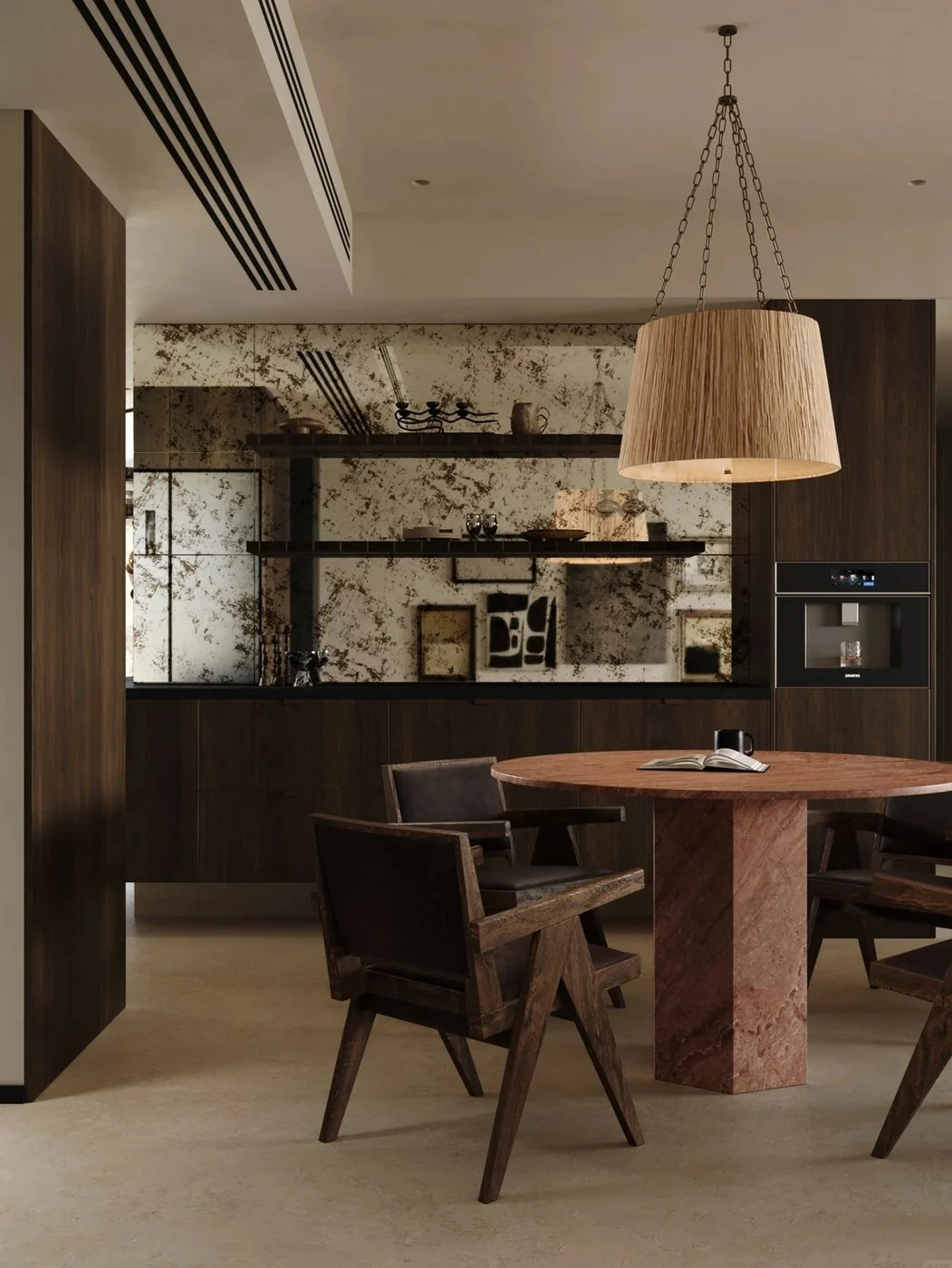
Warm the dining room with a walnut table and textured stone
A dining space becomes more memorable when the tabletop, chairs and architecture share a material story. Rich wood dining chairs can soften a stone floor, while a deep-toned wood table looks elegant against cream walls and a restrained backdrop of patterned stone.
Moody walnut-toned dining table and chairs in a naturally textured interior
Use this mood when you prefer a more intimate dining experience: an oversized pendant, clear table edges and comfortable upholstered chairs make the material palette feel usable, not staged.
05 / OPEN-PLAN INSPIRATION
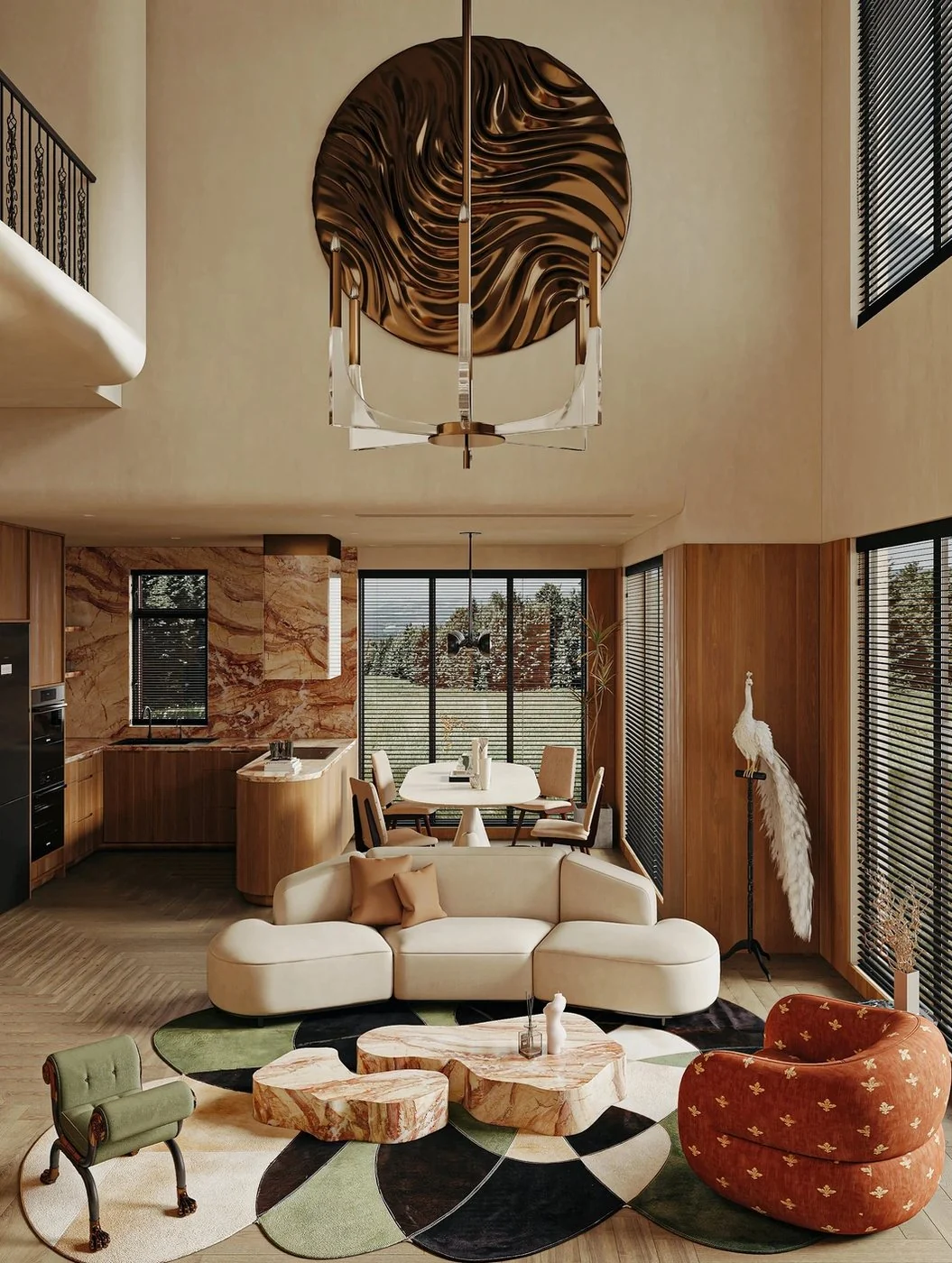
Connect the kitchen, dining and living room with one material rhythm
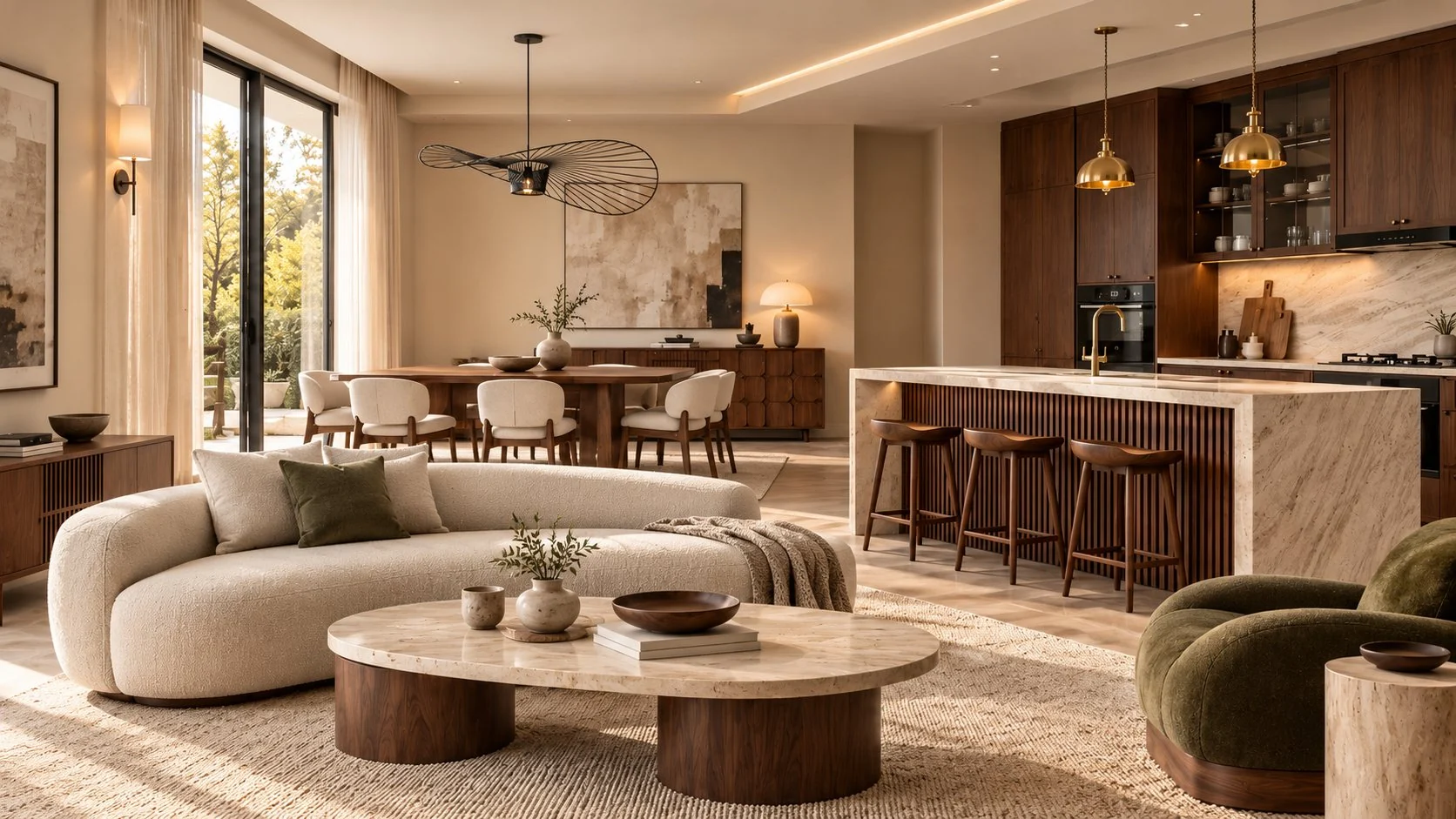
In an open-plan home, repeat the same warm wood tone across selected cabinets and furniture while varying the scale of stone surfaces. The combination is calmer when the material appears in a few intentional places rather than on every wall and table.
Open-plan living room with stone accents, timber kitchen cabinetry and varied seating
Keep the sofa and curtains light so the wood does not dominate. In a large home, this is often a more effective source of continuity than buying furniture from a matching collection.
06 / BEDROOM INSPIRATION
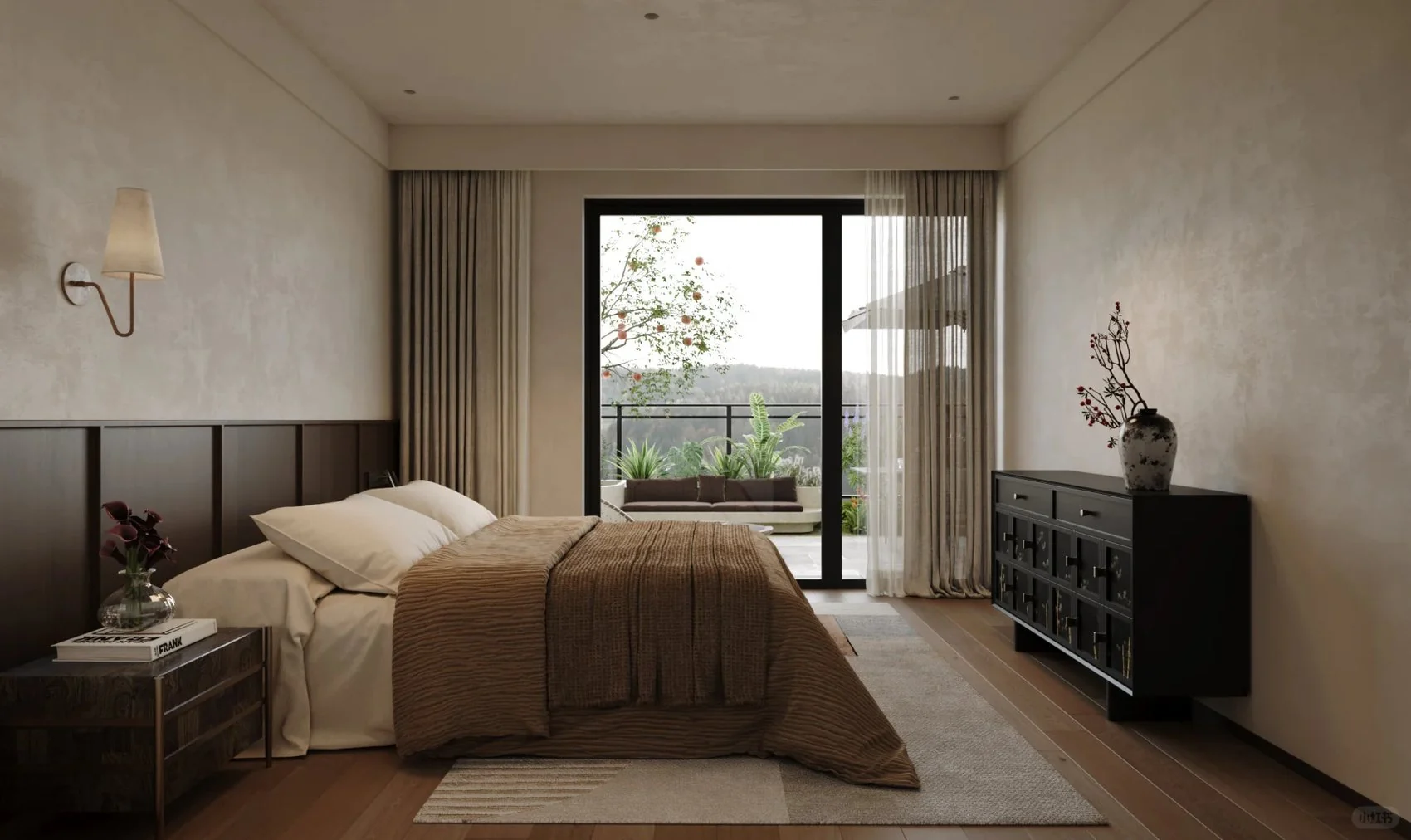
Carry walnut into the bedroom through a quieter headboard wall
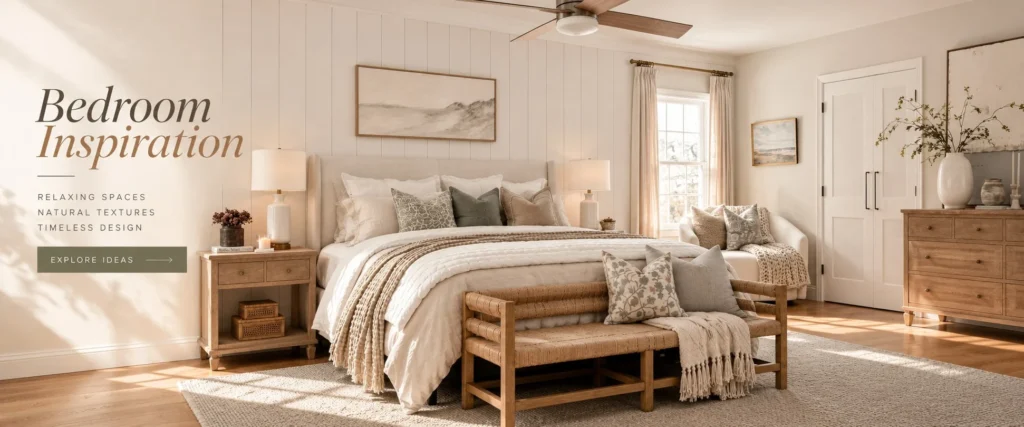
For a restful bedroom, let walnut appear as a headboard, bedside cabinet or one low chest. Pair it with oatmeal bedding, tactile throws, soft lighting and uncluttered surfaces. If you want to echo stone, use a small bedside accent rather than another monumental feature.
Relaxed bedroom with dark timber headboard, neutral linen bedding and gentle daylight
The bedroom reference is a visual guide to dark timber, linen texture and warm layering; it is not presented as proof of a travertine installation.
07 / SMALL FURNITURE INSPIRATION
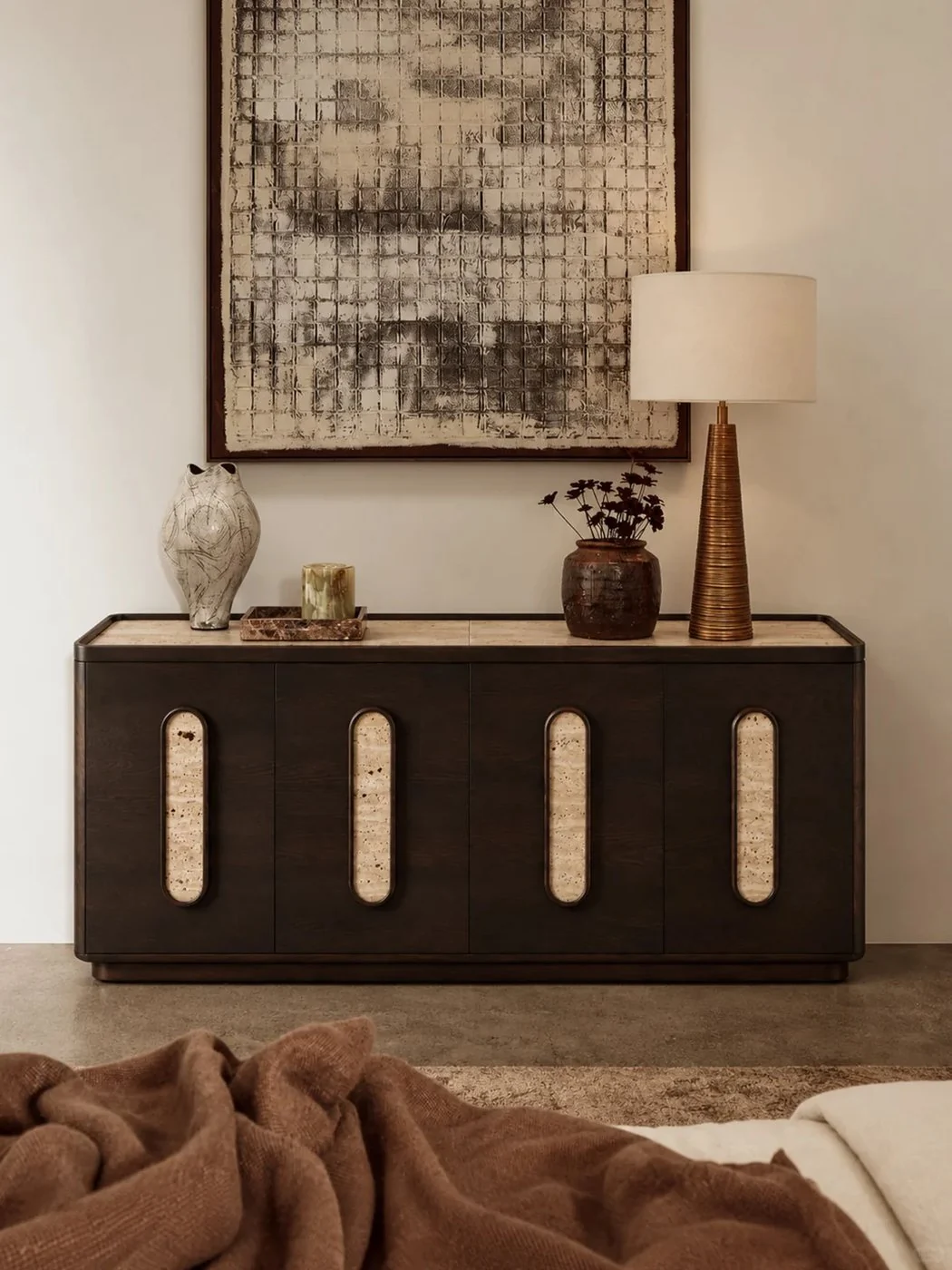
Use walnut and stone on a console or sideboard
A sideboard is an easy place to test this pairing before committing to a full interior. Dark wood doors can sit beside pale stone inlays, a decorative stone tray or a softly veined surface. The contrast makes a functional storage piece feel architectural.
Dark wood sideboard with pale stone inset accents, artwork and a warm lamp
Keep the styling spare: one lamp, one artwork and a few objects with contrasting heights. Choose furniture dimensions and door clearances before deciding on special inlays or custom stone details.
08 / FURNITURE DETAIL
Take the idea from inspiration to a furniture specification
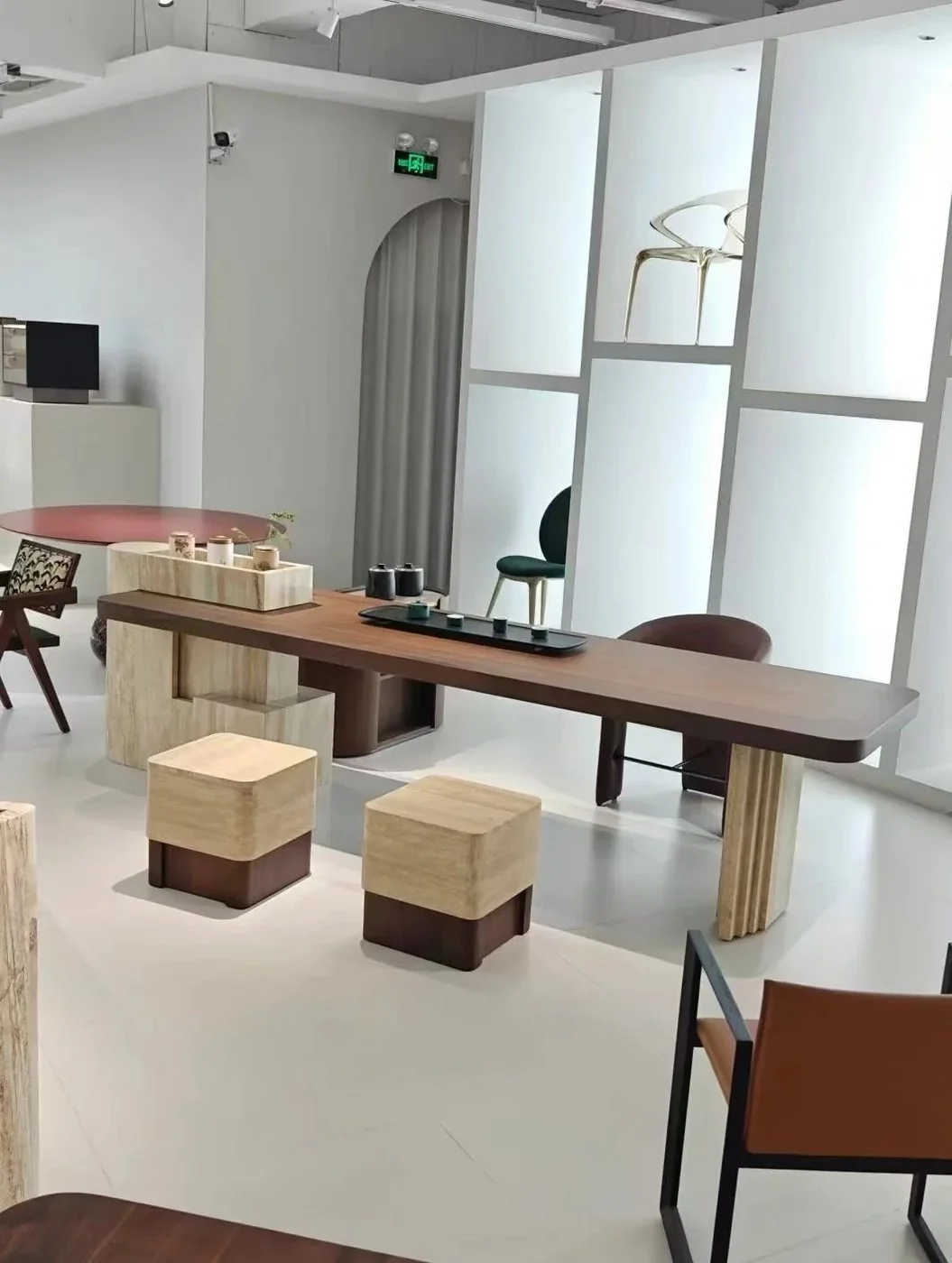
A design reference becomes practical when you can point to exact features: the walnut tone, the curve of the table edge, the stone thickness, the chair upholstery and the amount of open space around the furniture. Save a few images with a note about which details matter to you.
Walnut-tone display table paired with pale block-like stone bases in a furniture showroom
For any custom order, confirm whether the wood is solid walnut or veneer, identify the stone through a physical sample, and request drawings showing dimensions, edge finishing, packaging and installation considerations.
Make the inspiration yours: Save two or three reference pictures. Note the room where each idea belongs, the exact furniture you want, preferred finish, and your target dimensions. Review wood veneer options and actual stone samples together under your room's lighting.
Turn the look into a real furniture plan
Share your floor plan, furniture list, preferred walnut tone, stone references and approximate budget. Ratahome can help you build a coordinated sourcing brief for your home.
Yes. Walnut offers warmth and visual depth, while pale travertine can add lighter, tactile contrast. The pairing is especially effective when upholstery and wall colors stay restrained.
Where should I use travertine furniture?
Travertine works beautifully as an accent in coffee tables, side tables, consoles and decorative pieces. For kitchen and bathroom worktops, confirm the maintenance implications, surface finish and sealing requirements first.
How can I keep a walnut kitchen from feeling dark?
Use a light countertop, warm-white walls, good daylight and limited darker accents. Let the island and backsplash brighten the room while walnut cabinetry supplies depth.
What should I send to a furniture supplier?
Send a dimensioned floor plan, reference images, a list of furniture and rooms, preferred materials, finish expectations, budget and any delivery or installation constraints.
Forest leads Ratahome from Foshan, coordinating custom cabinetry, made-to-order furniture and whole-home projects for homeowners, designers and hospitality clients worldwide. Every guide on this site comes from that day-to-day work with factories, samples, QC and shipping.
Discover modern dining room ideas with natural materials: warm wood, stone, sculptural tables, comfortable chairs and lighting inspiration for timeless…