
Materials & Craft
How Cabinets Are Made: Materials, Joinery & Finishing
Learn how quality cabinets are made, from plywood and solid wood selection to door design, joinery, finishing, assembly, hardware installation…
Read article →
A practical guide to foam density, firmness, high-resilience foam, layered cushion builds, fiber and down wraps, sagging, seat-vs-back construction, and what to specify before a custom sofa goes into production.
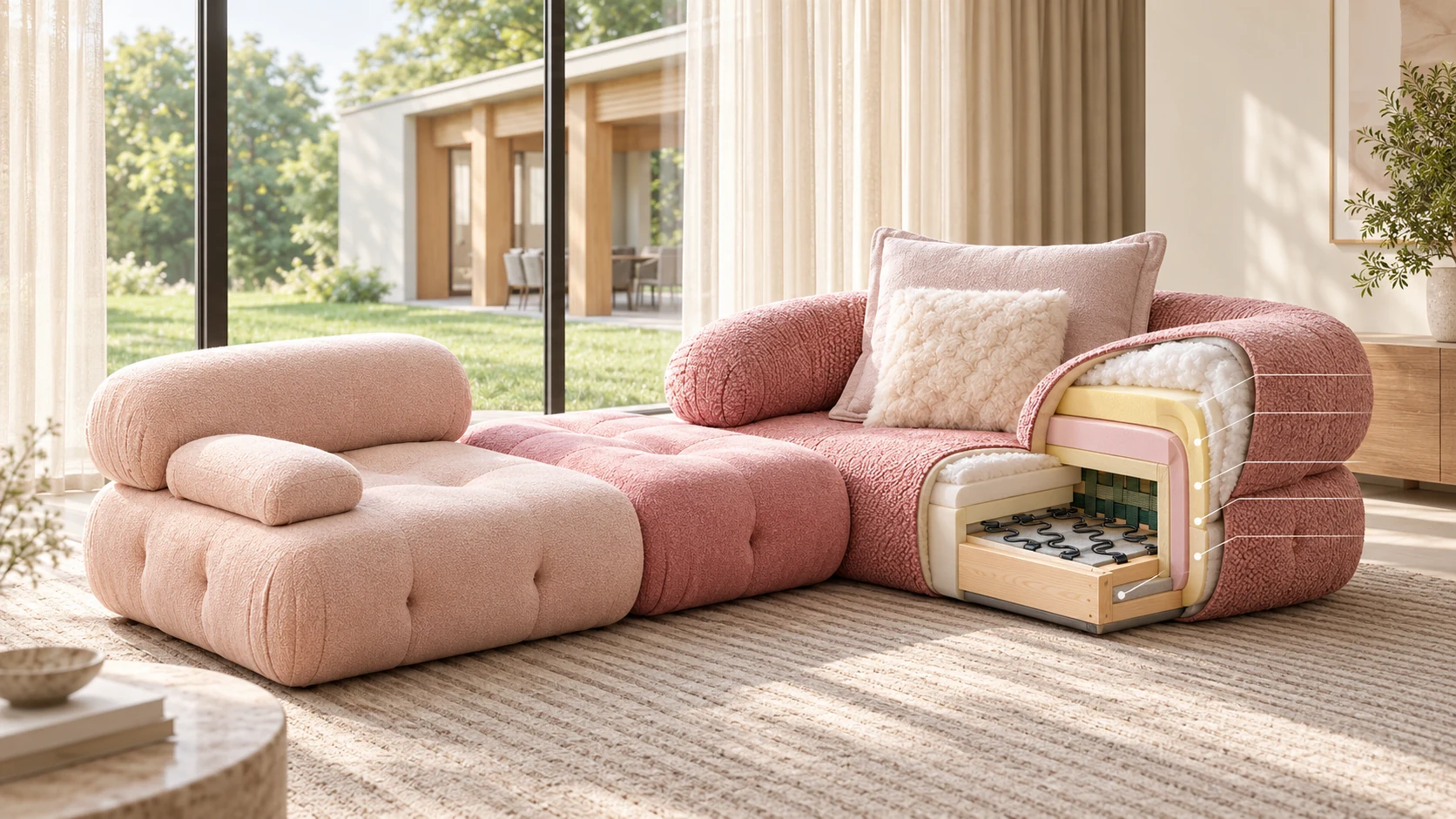
Two sofa cushions can look equally full on delivery and feel completely different after months of use. The reason is that foam density is only one part of cushion engineering. Thickness, firmness, resilience, layer sequence, edge shaping, fiber or down wrap, the inner liner, upholstery tension and the suspension below the cushion all influence comfort and durability.
A useful buying question is therefore not “What density is the foam?” but “What is the complete cushion build?” A durable specification connects the foam to the sofa frame and suspension described in Ratahome’s sofa construction guide. This matters even more on custom sofas, where seat depth, cushion thickness and suspension can be changed together.
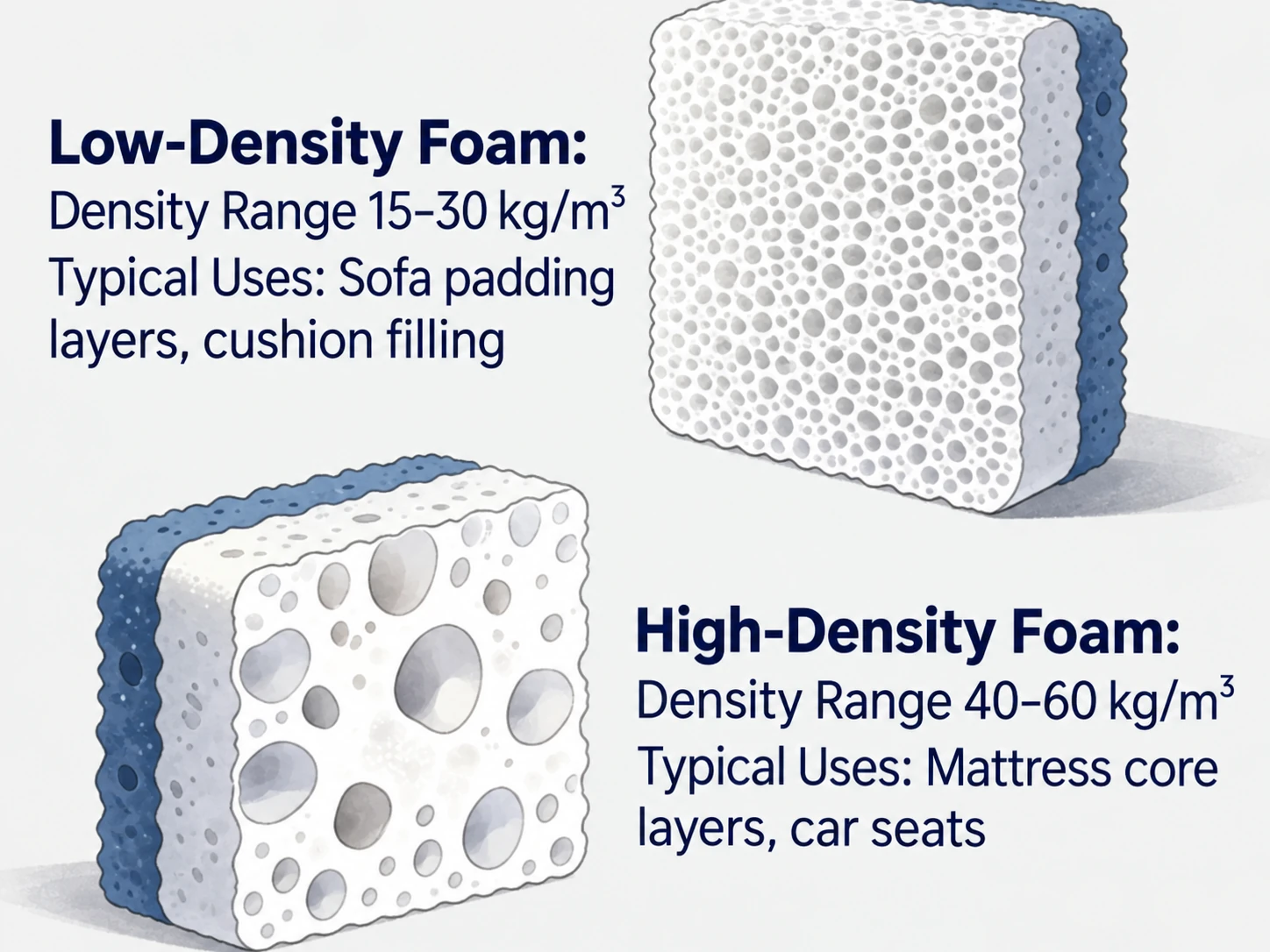
Density describes how much foam material exists in a given volume. It is commonly expressed in kilograms per cubic meter (kg/m³) or pounds per cubic foot (lb/ft³). Higher density generally gives the manufacturer more polymer structure to work with and can support better long-term durability, but density alone does not tell you whether a cushion will feel soft or firm.
Firmness describes how much force is required to compress the foam. Factories may report IFD or ILD values, but test methods and sample thickness must be stated for the number to be useful. Resilience describes how quickly and energetically the foam recovers after compression. A high-resilience foam can feel supportive without feeling hard.
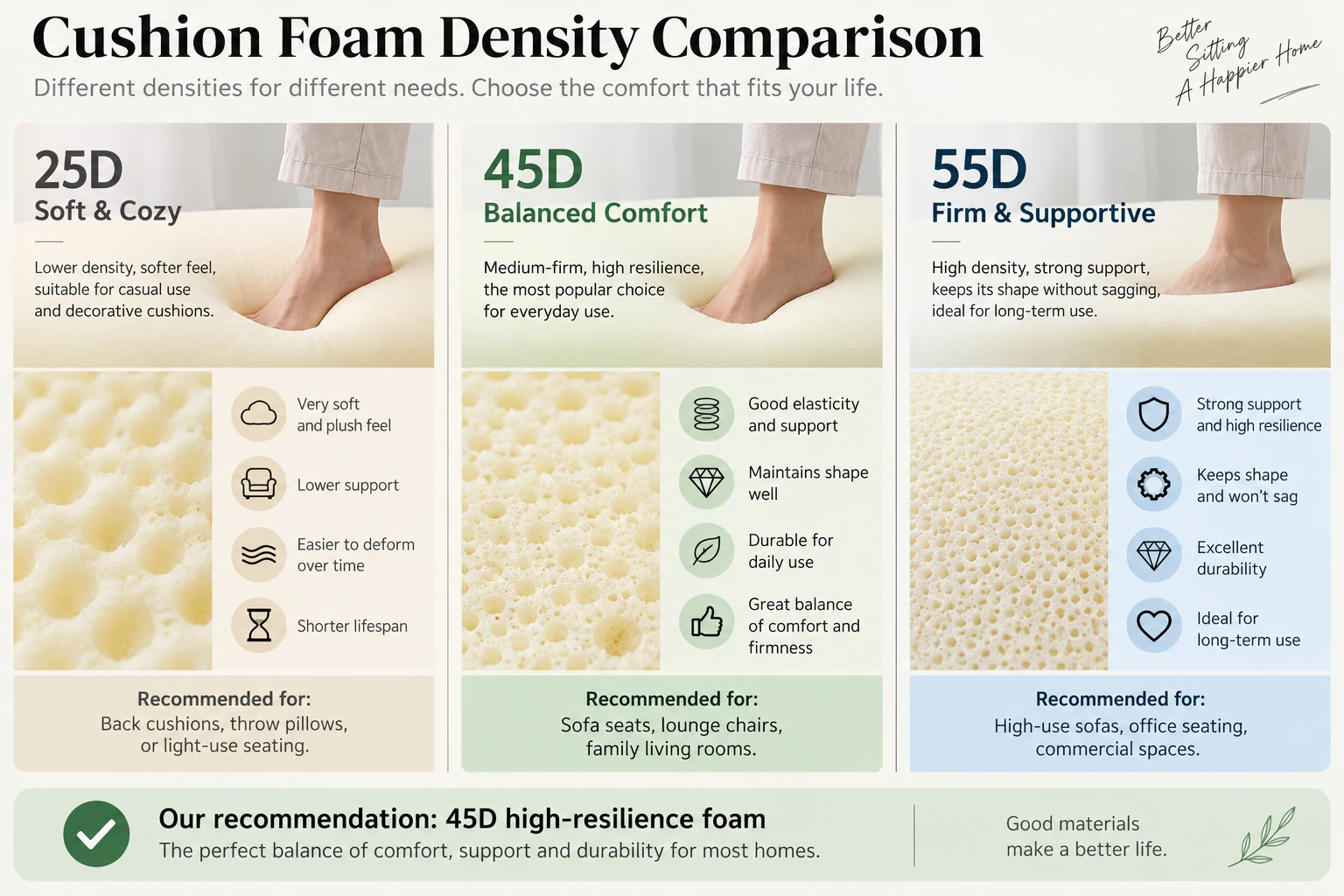
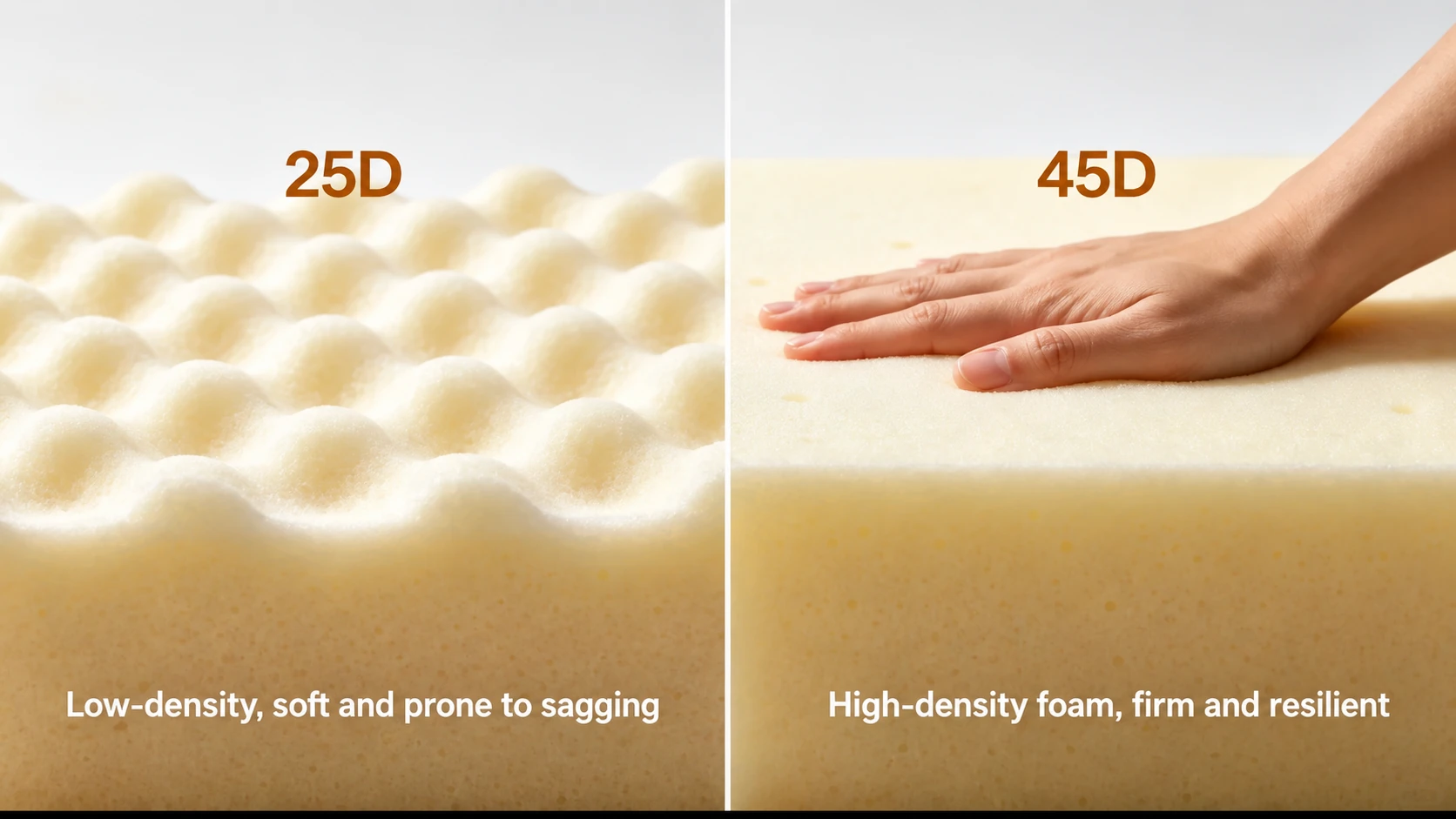
In many Asian furniture supply chains, the letter “D” is used as shorthand for nominal foam density. A “45D” foam is commonly intended to mean roughly 45 kg/m³, but suppliers do not always use the same test standard or tolerance. For project work, convert the shorthand into a written specification: foam type, nominal density, tolerance, firmness target, thickness and intended location.
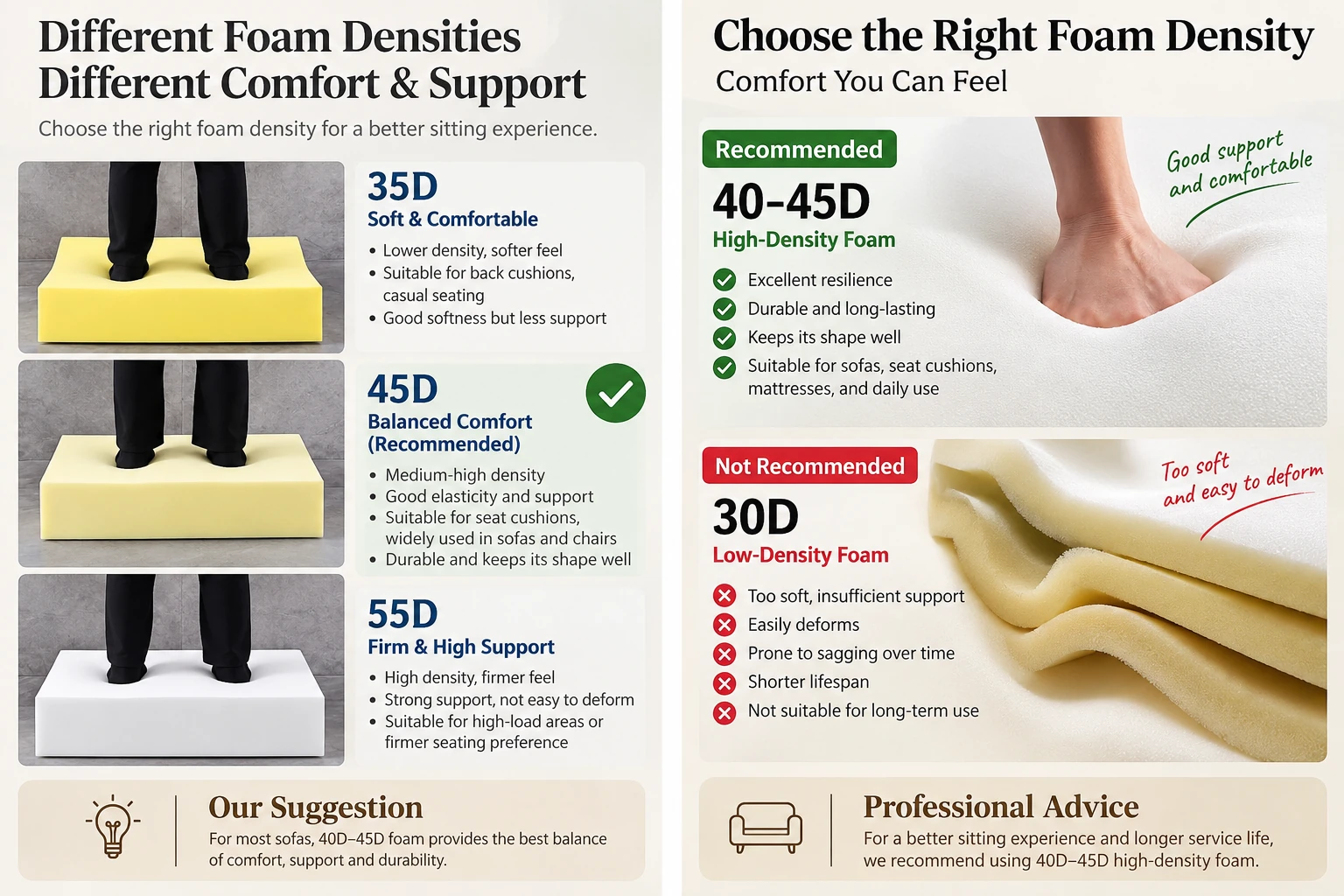
Lower-density foams can be useful for back padding, decorative layers and low-load areas. Medium-to-higher-density foams are more common in seat cores that must resist repeated compression. Very high density is not automatically better: a cushion can become unnecessarily heavy or firm if the chemistry and layer design are wrong for the intended sit.
| Supplier shorthand | Common role | What to confirm |
|---|---|---|
| 25D–30D | Back padding, comfort layers, economy applications | Compression set, thickness, whether it is carrying body weight |
| 35D–40D | General residential use depending on firmness and foam type | IFD/ILD, resilience and support below the cushion |
| 40D–55D+ | Higher-density seat cores, high-use seating or layered systems | Actual kg/m³, firmness, HR grade, sample approval |
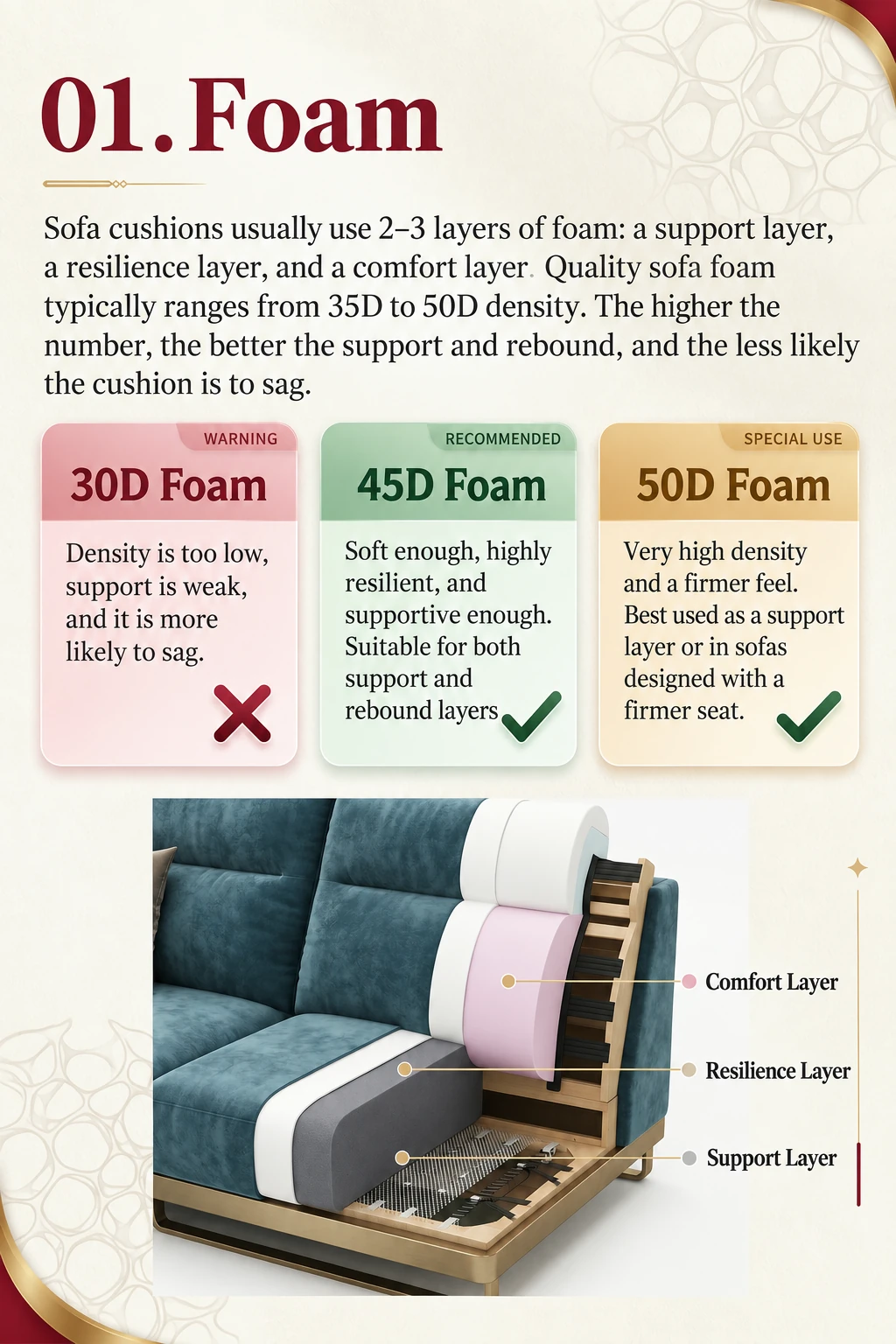
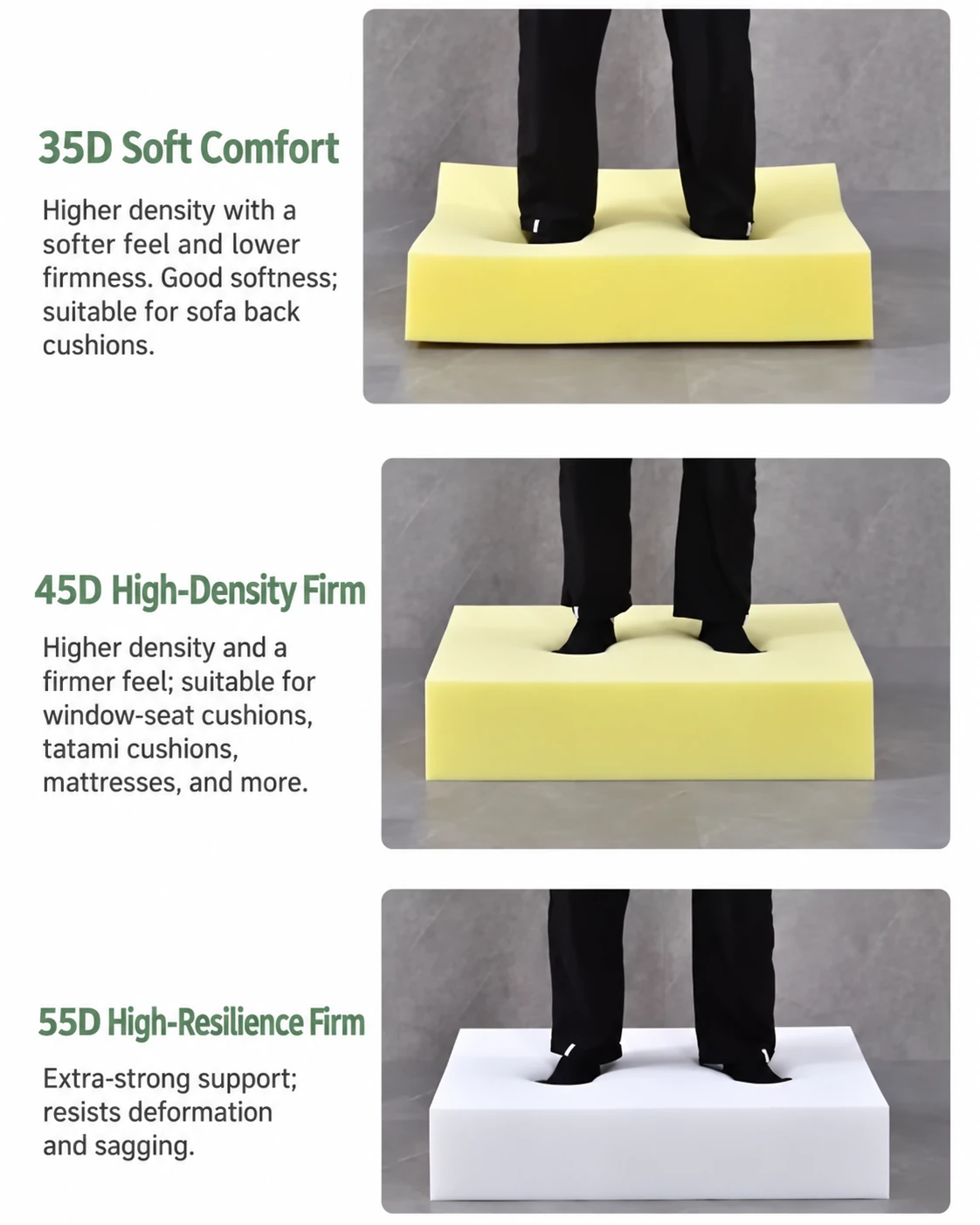
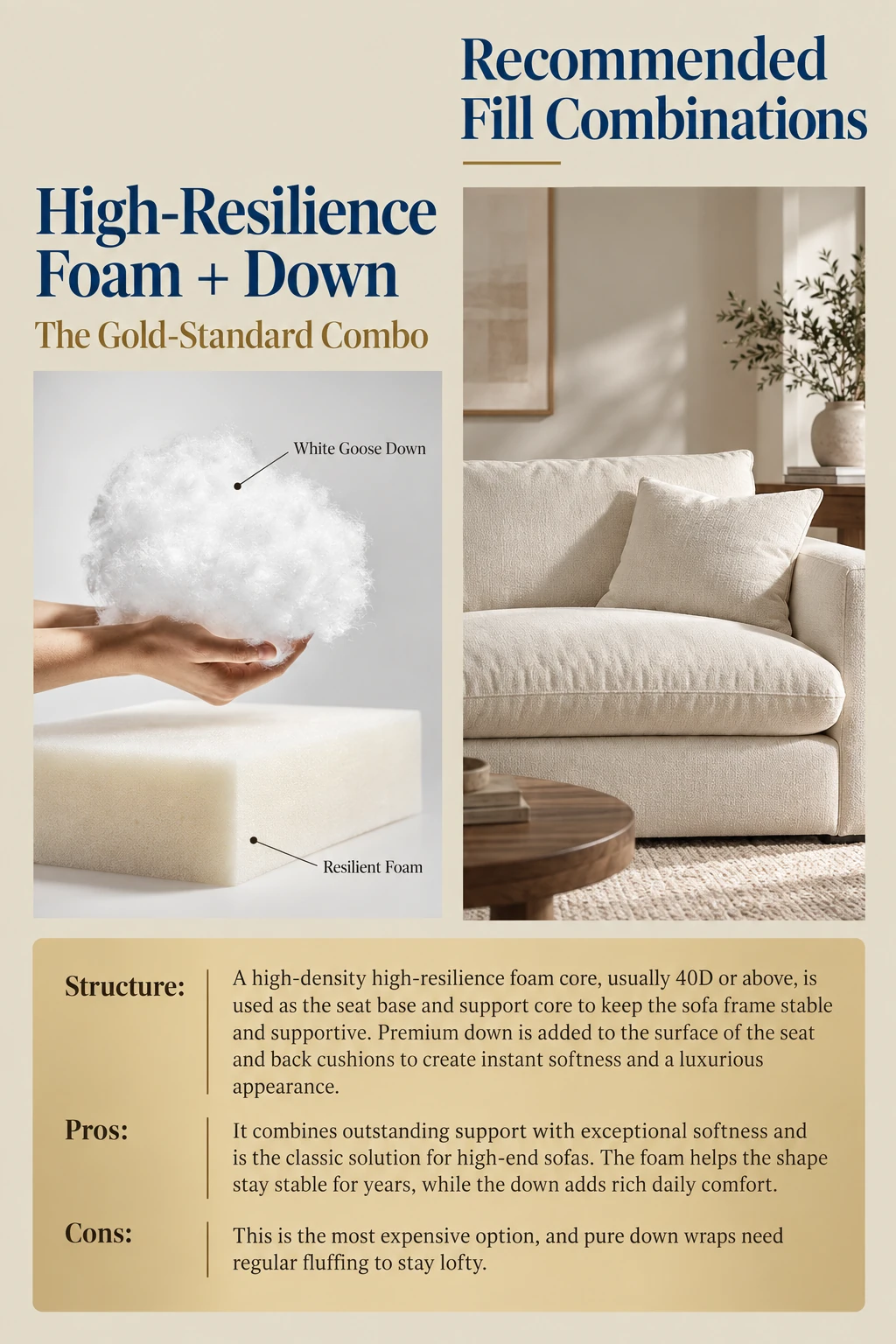
For a seat cushion, long-term comfort depends on how the foam behaves through thousands of compression cycles. High-resilience (HR) polyurethane foam is formulated to recover quickly and distribute load more dynamically than many conventional foams. It is often used as the structural core of better seat cushions.
Recovery should be evaluated with the actual cushion thickness and cover. A dense core that is too thin can still bottom out; a thick but low-resilience core can slowly develop body impressions. Edge zones also matter because the front of a cushion receives concentrated pressure every time a user sits down or stands up.
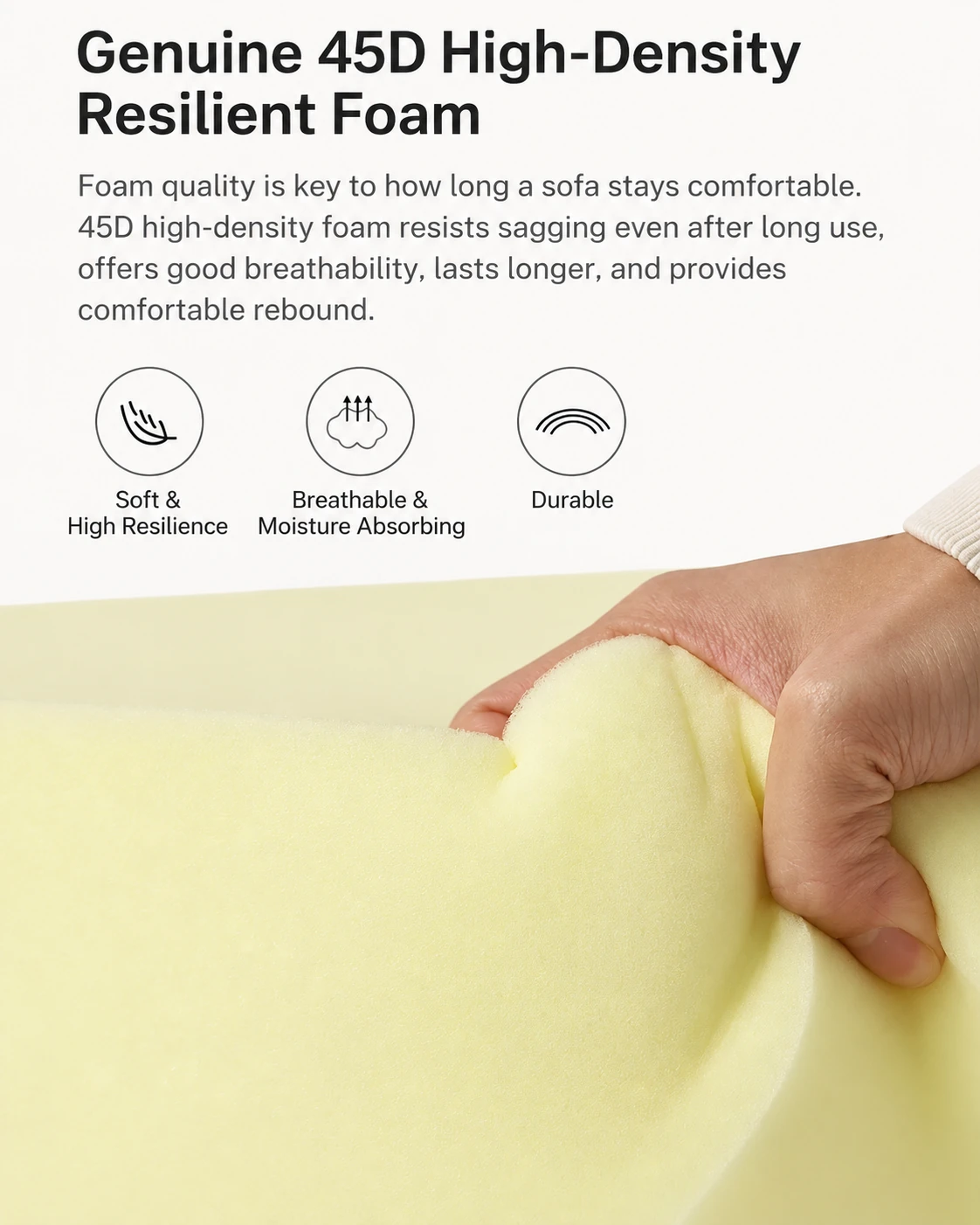
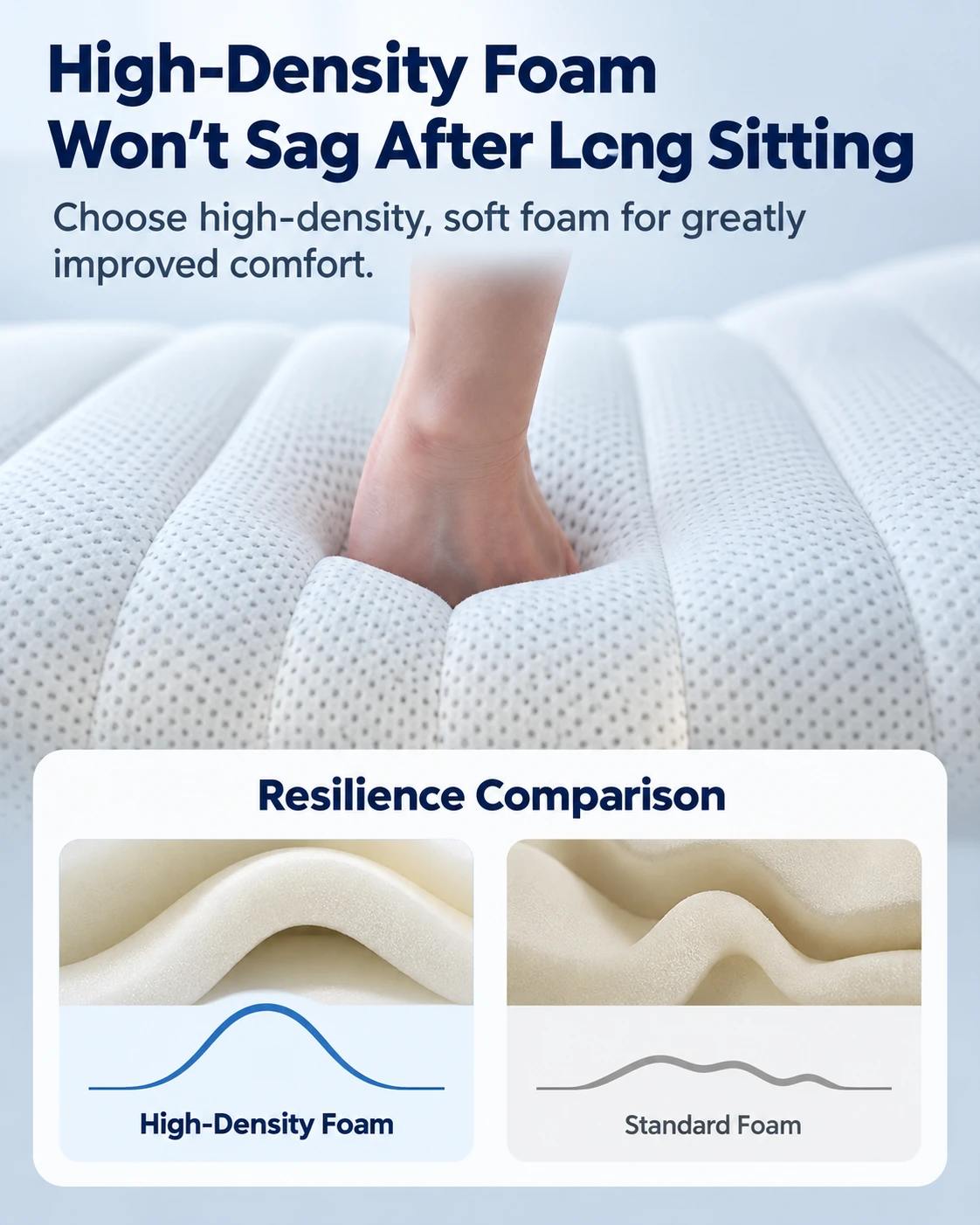
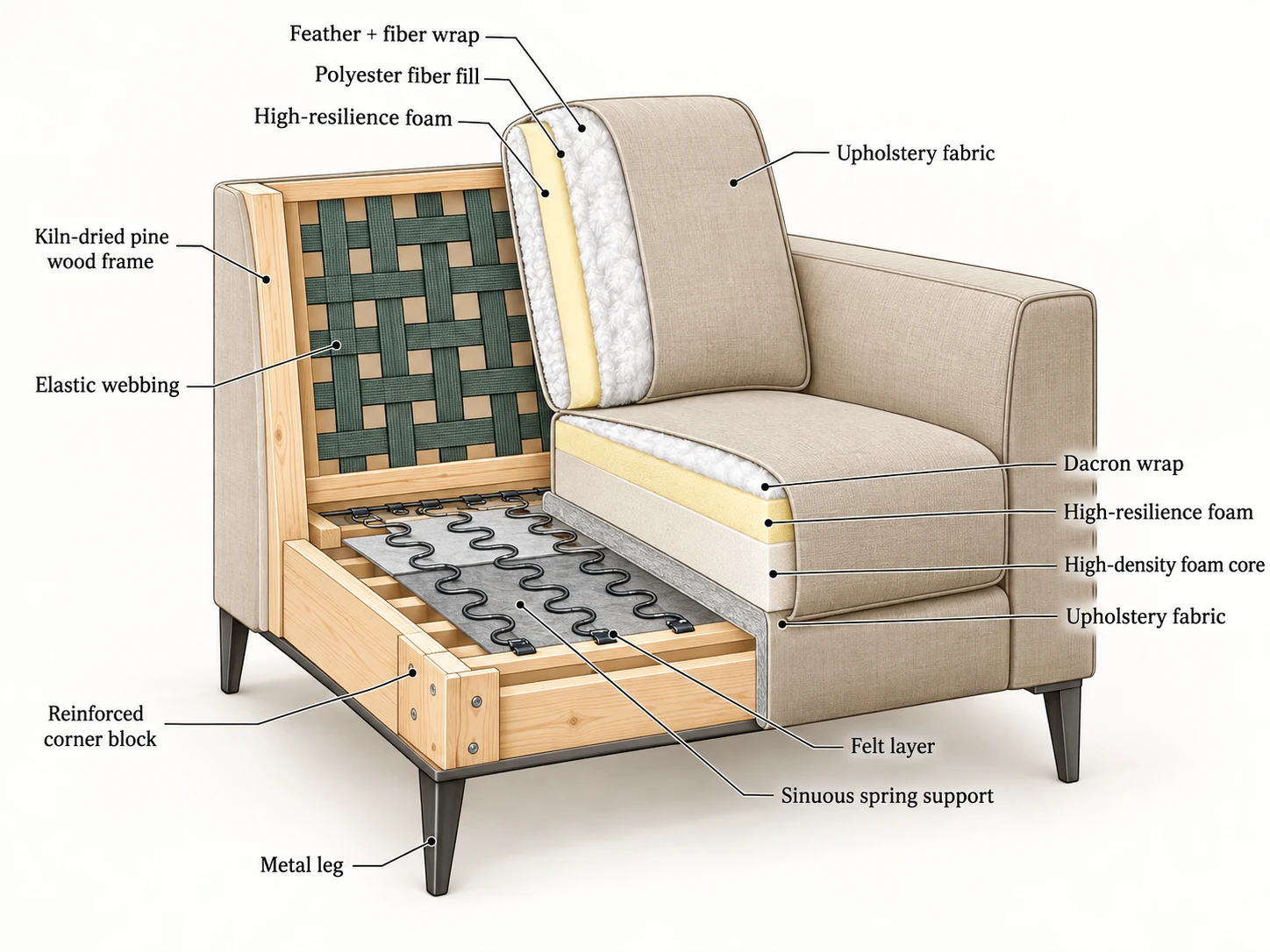
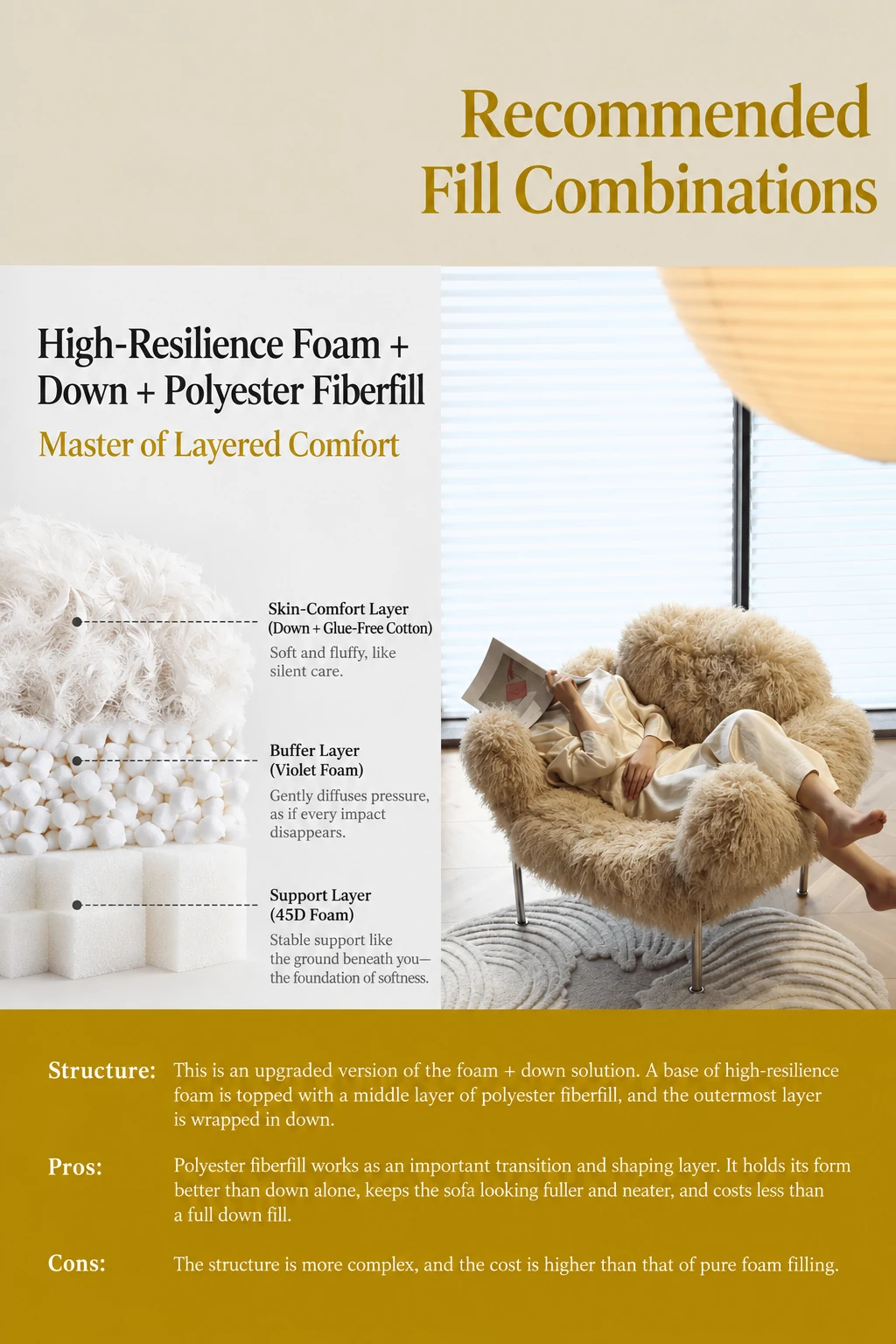
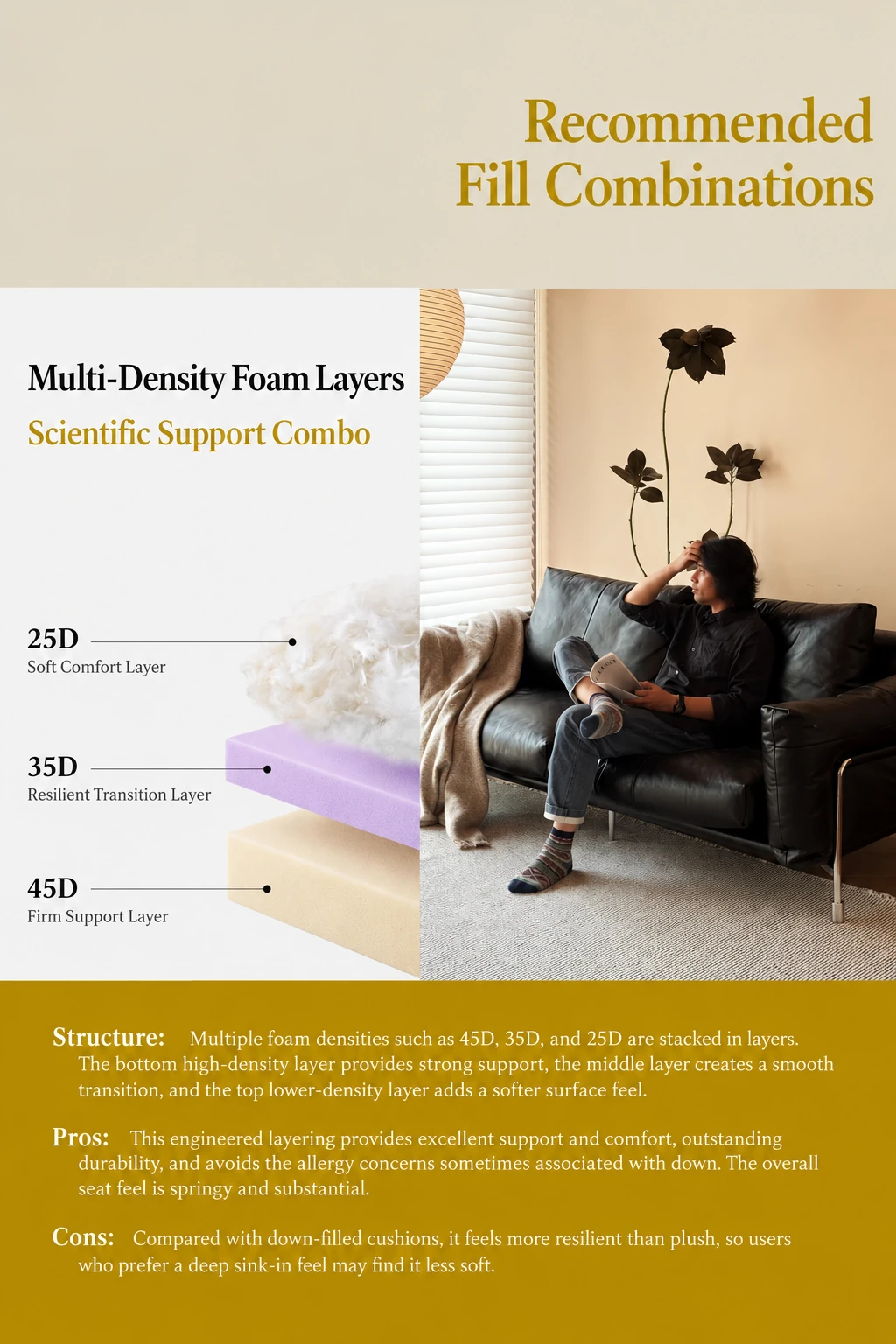
A well-designed cushion is usually built in layers because one material rarely provides structure, pressure relief, surface softness and tailoring at the same time. A typical premium seat cushion may include a dense support core, a softer transition layer, shaped edges, a fiber or feather wrap, a down-proof or nonwoven liner, and the final upholstery cover.
The core carries most of the load and controls how far the sitter sinks. Its thickness must match the seat depth, suspension and target seat height.
Softer foam can be laminated above or around the core to soften pressure points. Side and front edges may be sculpted so the finished cushion keeps a rounded profile without requiring the upholstery to create the shape by tension alone.
Fiber, feather/down or a hybrid wrap creates the first-touch softness. A liner contains the fill, reduces friction and makes the upholstered cover easier to remove and reinstall.
A single foam block is simple, predictable and easy to replace. It works well when the foam formulation and thickness already deliver the desired comfort. A layered cushion gives the designer more control: a firmer core can carry the load while softer layers tune the surface feel.
The risk with layered cushions is poor bonding or a random stack of materials with no functional logic. Layers should transition gradually in firmness, use compatible adhesives, and be symmetrical where the cushion is intended to be reversible. For removable cushions, the finished core should fit the sewn cover without forcing the seams outward.
Comfort layers change the surface feel more dramatically than many buyers expect. The same foam core can feel tailored, cloud-soft or springy depending on what surrounds it. The key is to match the fill to maintenance expectations.
Lightweight, soft and economical. It smooths the foam surface and creates a fuller profile, but it can compress over time and may need periodic refluffing.
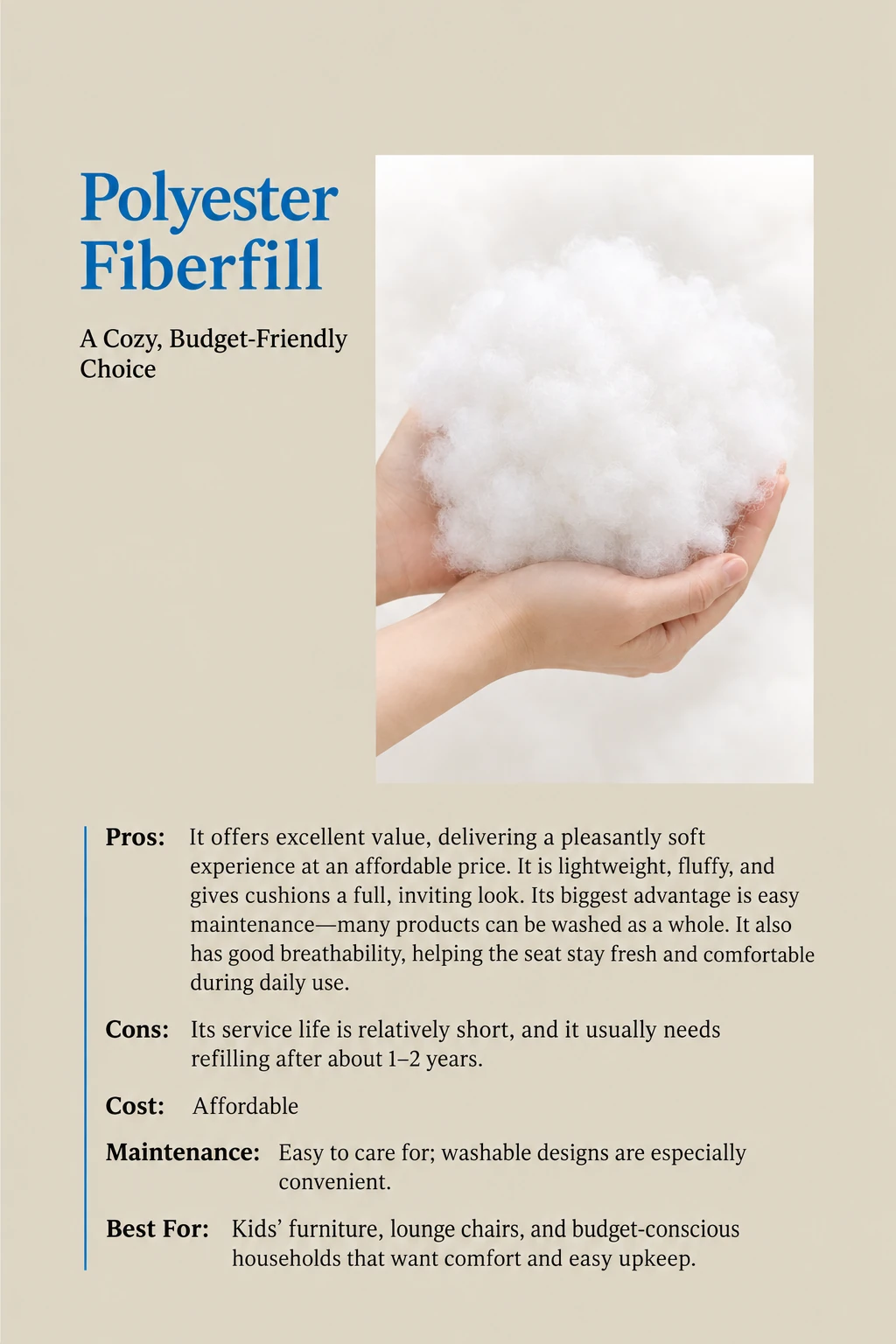
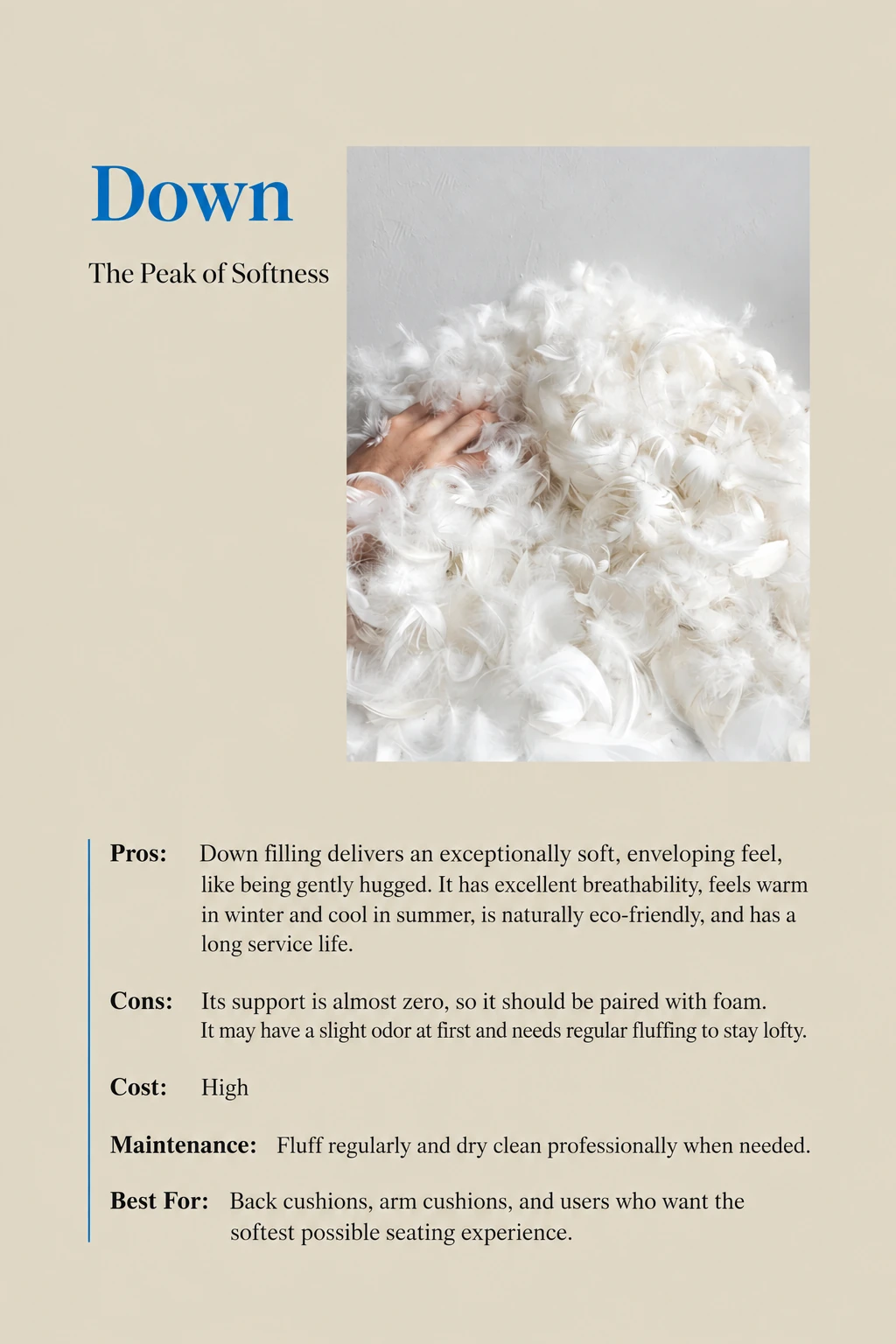
Creates a relaxed, luxurious surface and molds easily to the body. It needs a down-proof liner and regular fluffing; feather migration and unevenness are normal maintenance considerations.
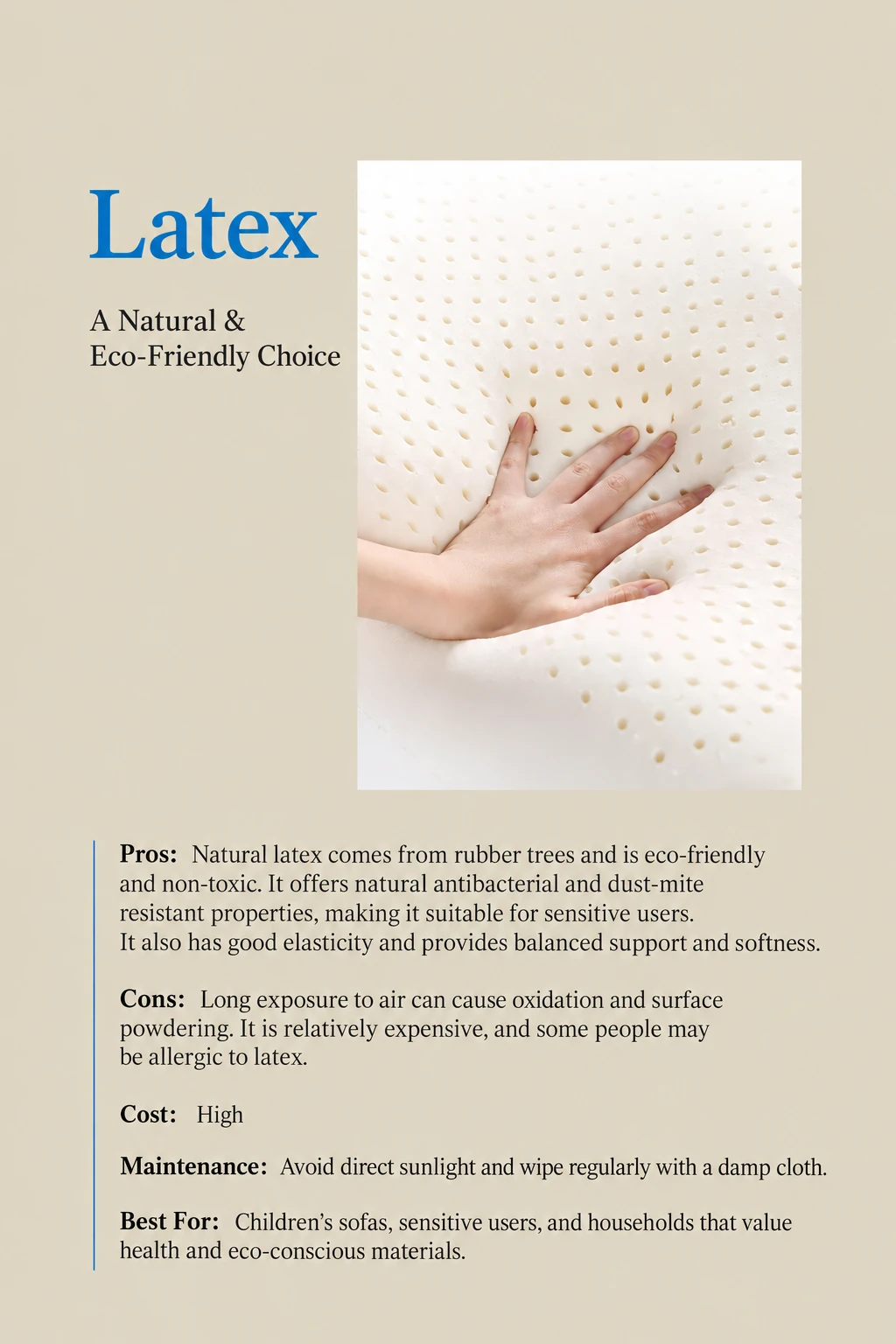
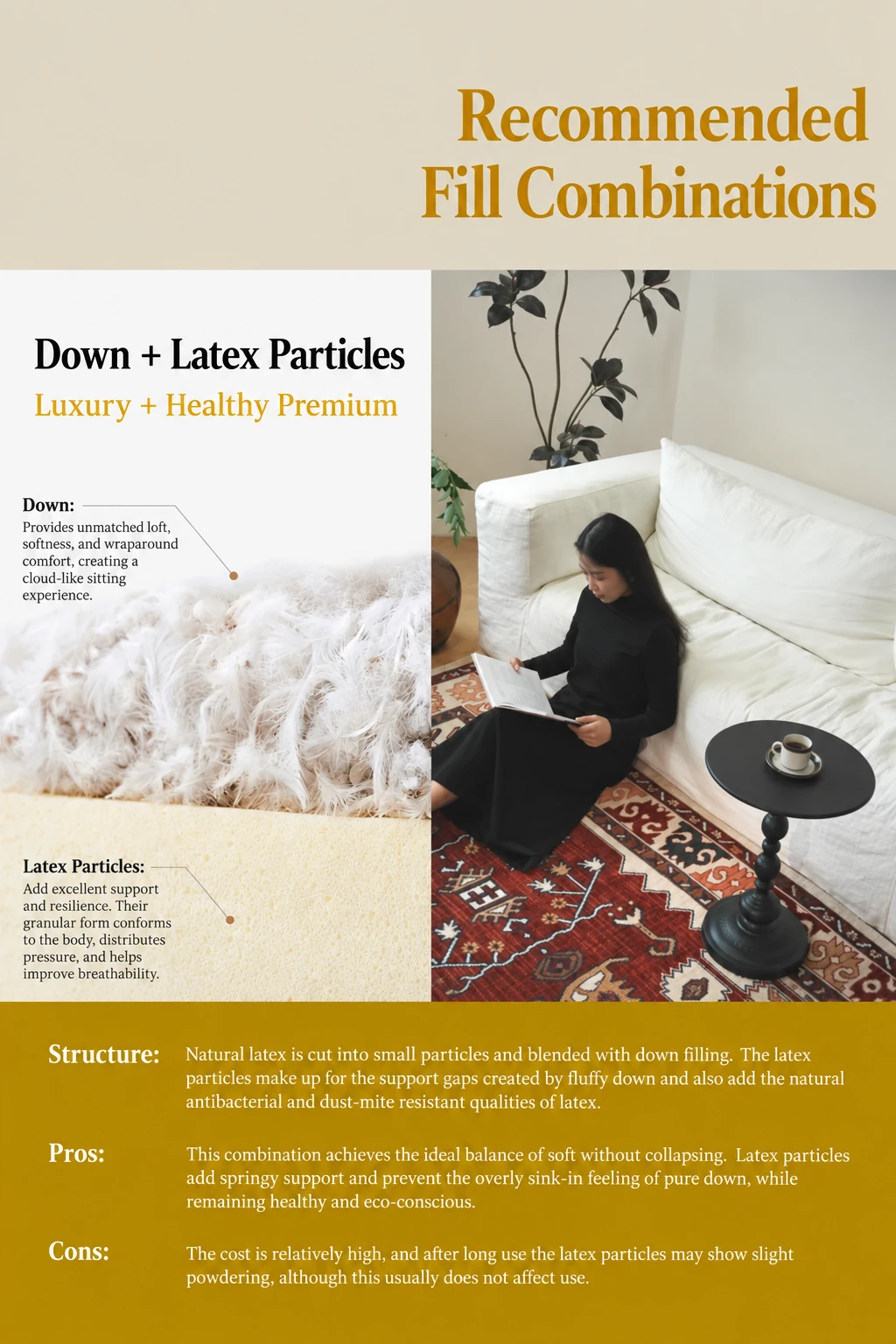
Latex can add buoyancy and fast recovery. Natural and blended latex behave differently, so buyers should confirm composition, firmness and perforation rather than relying on the word “latex” alone.
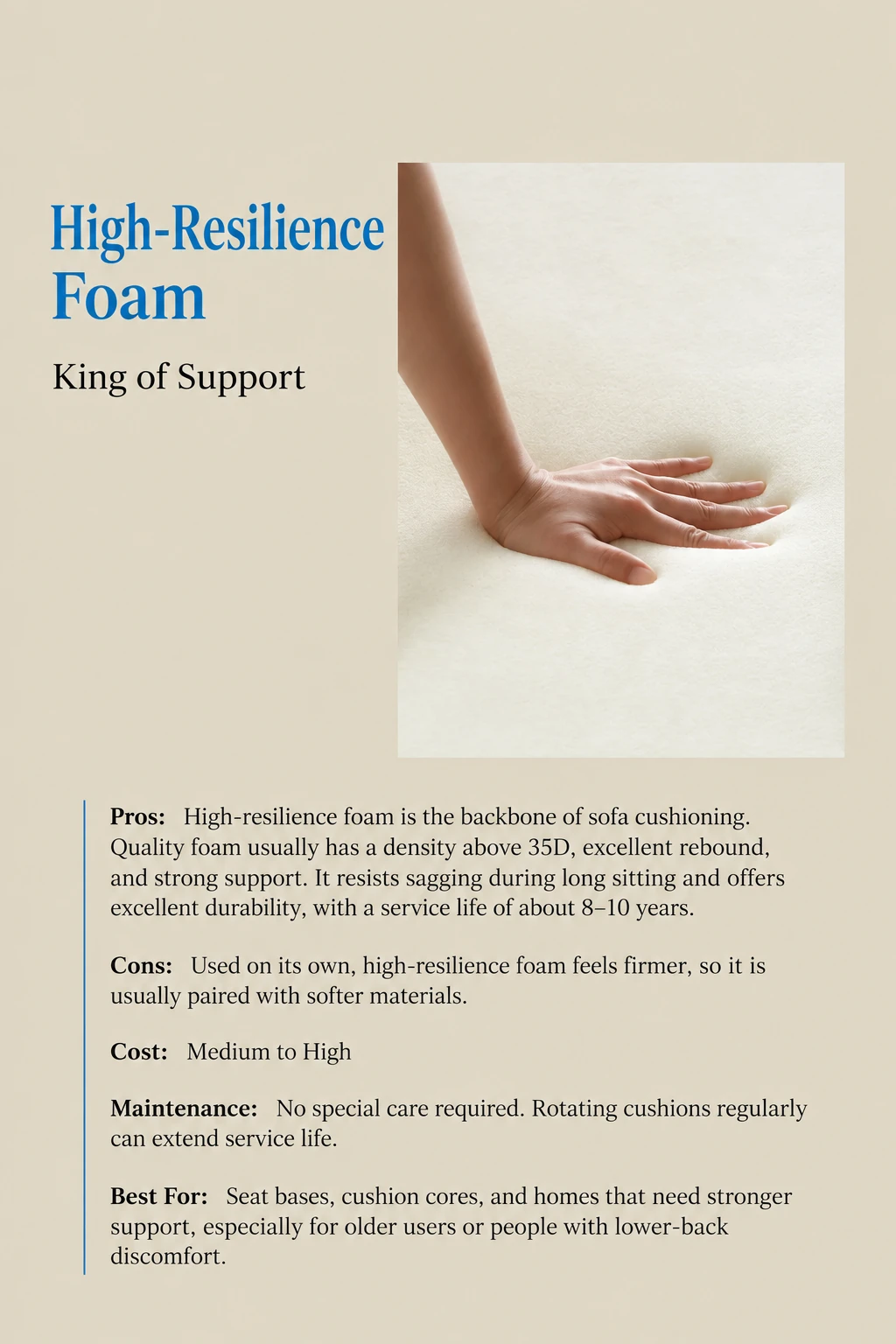
HR foam is the workhorse for structural seat cores because it combines support, recovery and repeatability. It can be used alone or wrapped with softer materials.
Hybrid construction lets one layer solve a structural problem while another layer solves a tactile one. A common example is an HR foam core wrapped in feather/down or fiber. Another uses multiple foam densities so the center remains supportive while the surface feels softer.
The most successful hybrid cushions are designed as a package. If a soft wrap is too thick, the cushion can look collapsed even when the core is healthy. If the core is too firm, the wrap may not be thick enough to prevent pressure points. The correct balance should be approved on a physical sample before a custom order enters production.
Seat cushions carry concentrated body weight and need stronger resistance to compression. Back cushions carry less load but must conform to the user and maintain a balanced silhouette. Using one density everywhere may simplify purchasing, but it often produces a sofa that is either too hard in the back or too weak in the seat.
For loose-back designs, fiber or down blends can create a softer feel and make styling easier. For fixed backs, shaped foam may be more consistent and easier to upholster cleanly. On deep sofas, lumbar support may come from an additional loose cushion rather than making the entire back cushion firm.
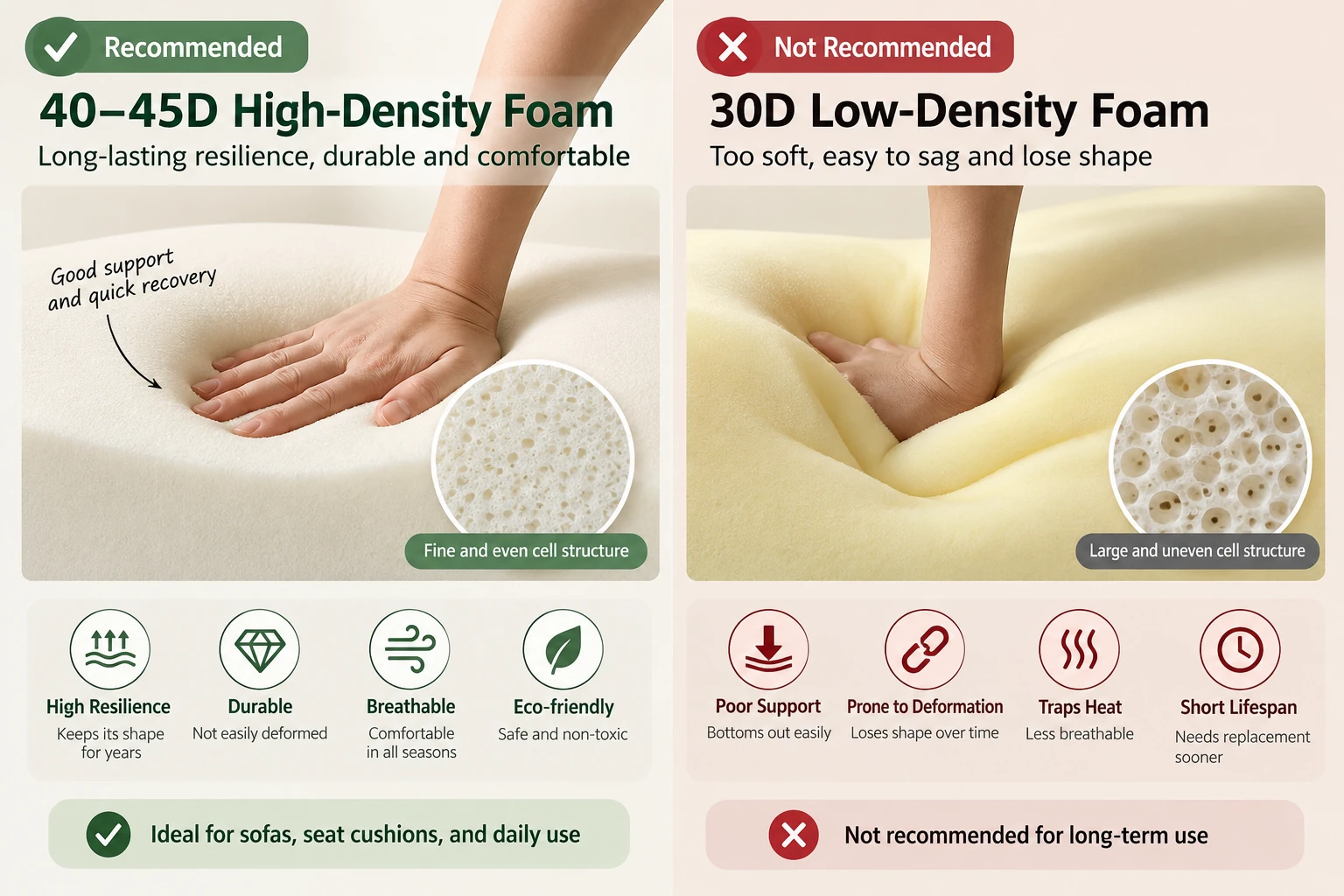
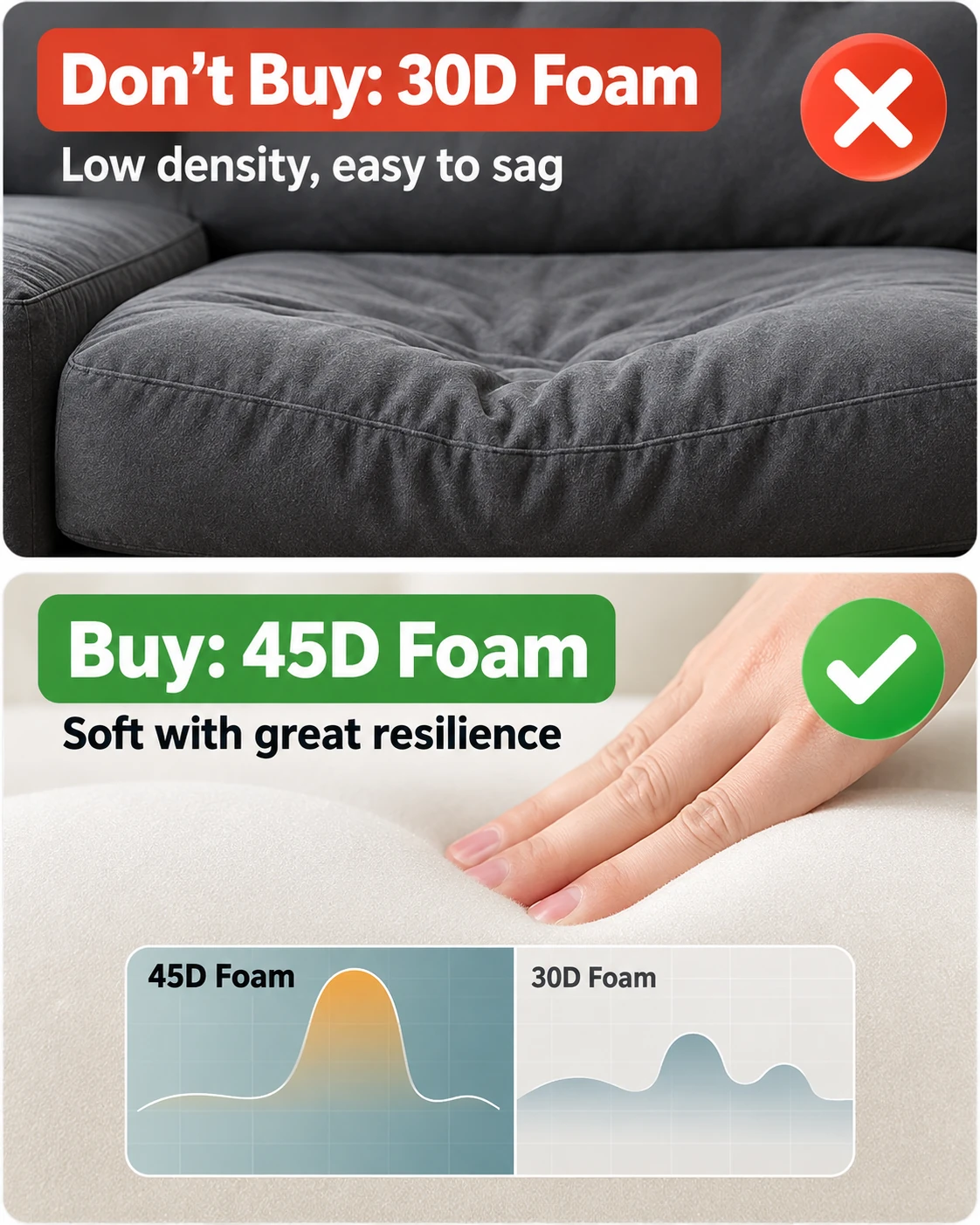
Visible sagging is not always caused by “bad foam.” A cushion can lose shape because the foam density is too low for the load, the firmness is wrong, the core is too thin, the wrap has compacted, the cover has stretched, or the suspension below the cushion is deflecting too much. Uneven use can also create different wear patterns from one seat to another.
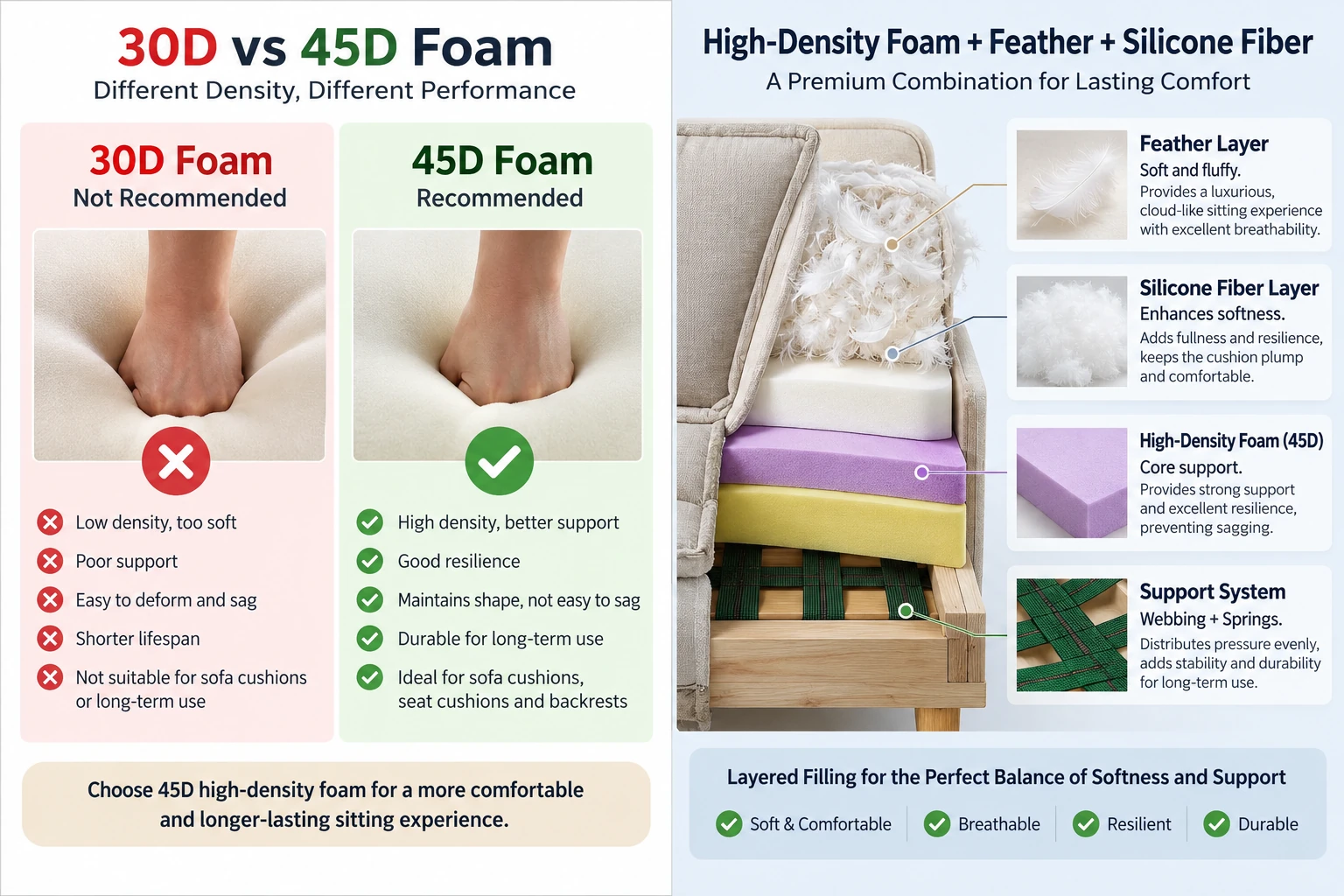
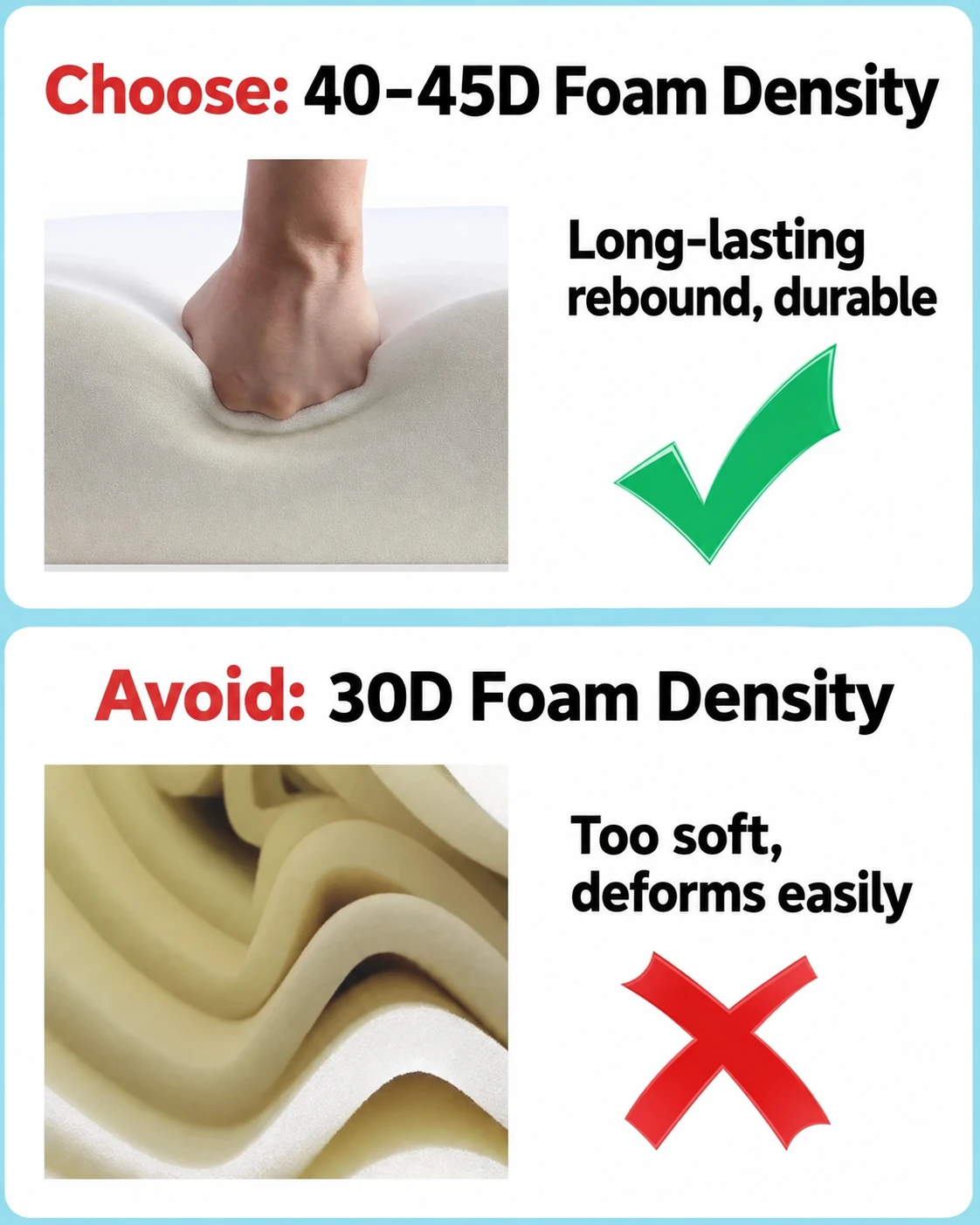
Marketing graphics often reduce this to “30D bad, 45D good.” That is too simple. A well-designed 35D HR foam can outperform a poorly formulated higher-density foam in a specific application. The factory should specify the material system and approve the real seat feel rather than relying on a single label.
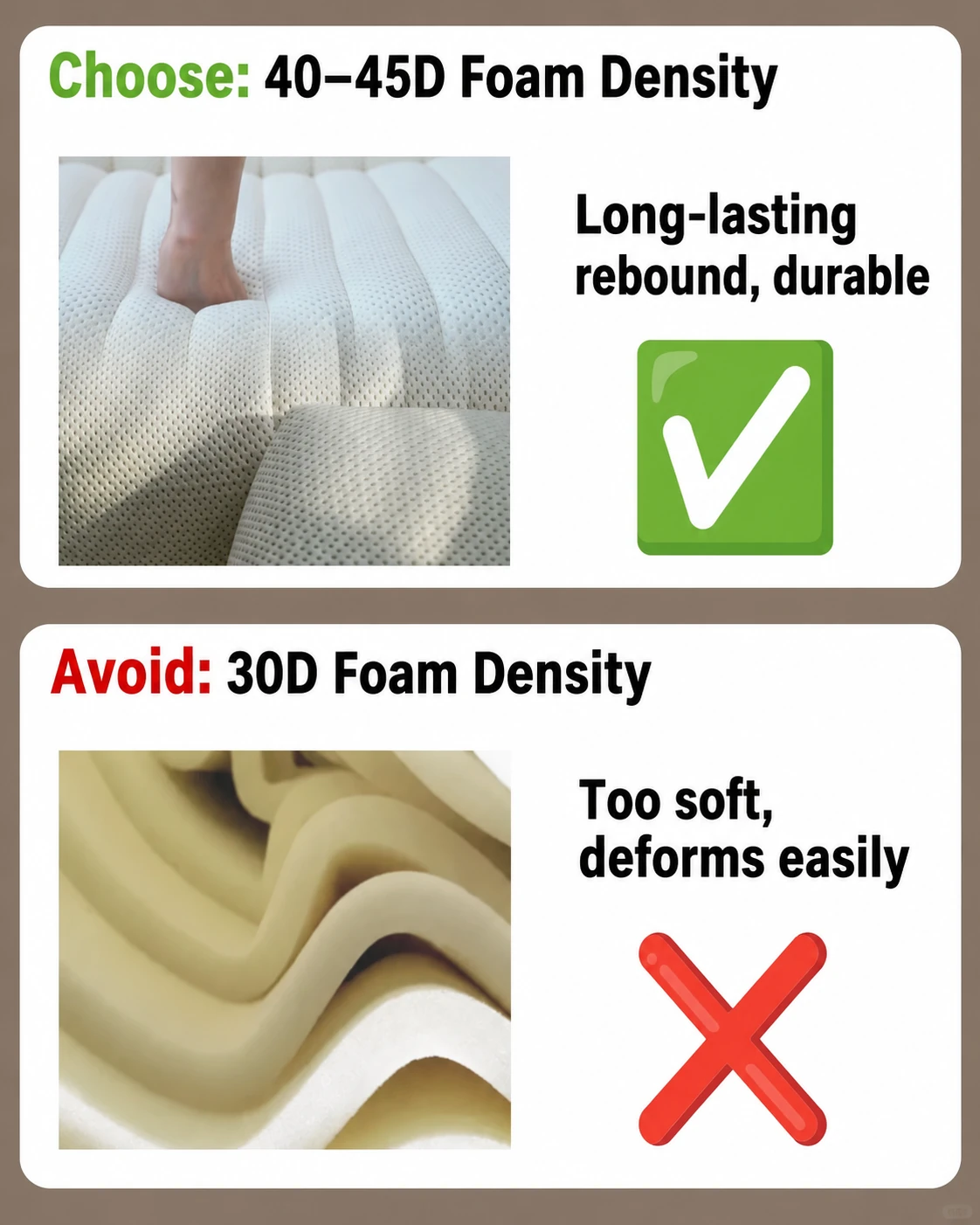
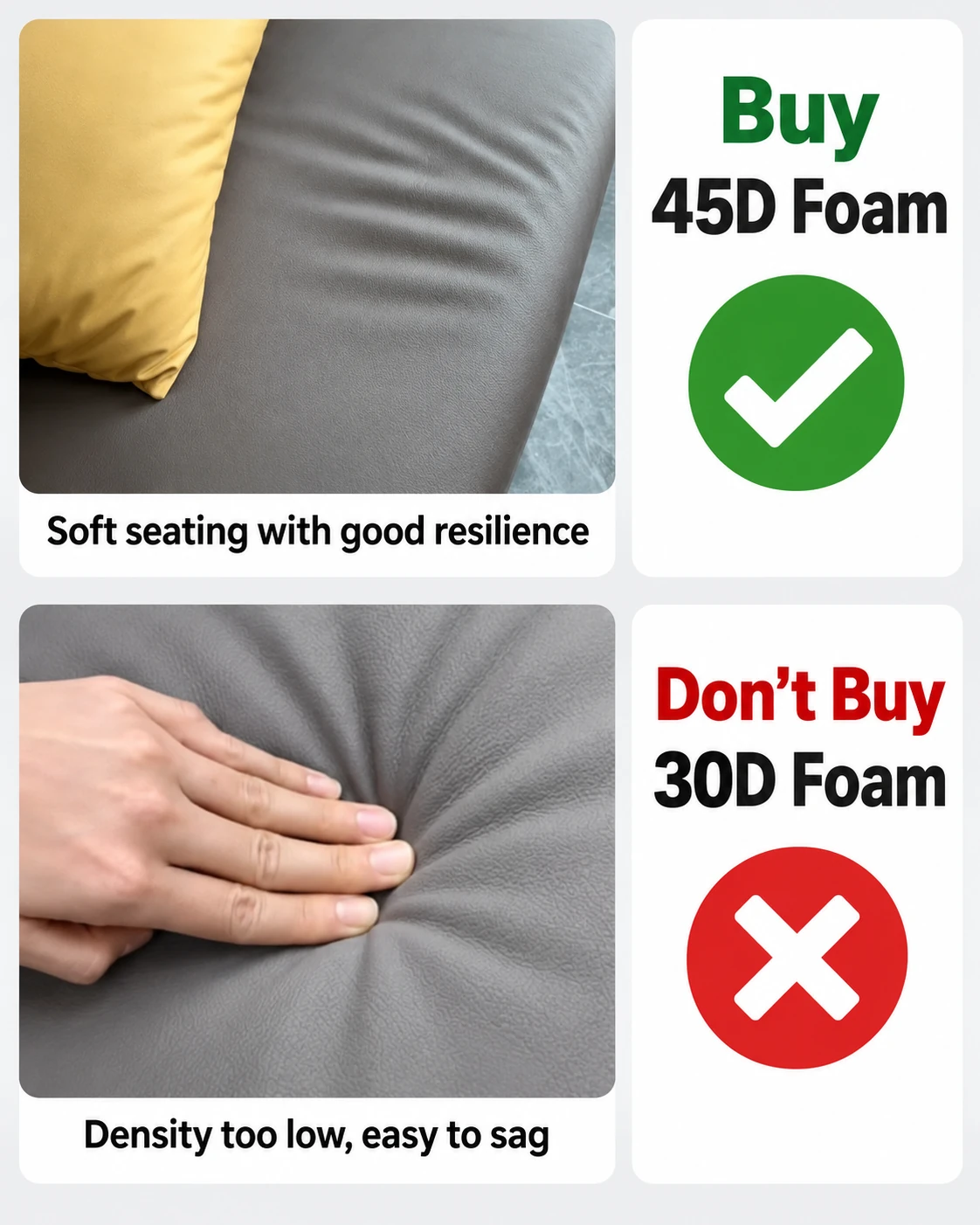
A cushion does not perform in isolation. The suspension beneath it controls how far the seat platform moves before the foam begins to compress. A firm platform makes the cushion feel firmer; elastic webbing or sinuous springs add travel and can make the same foam feel softer and more responsive.
This is why two sofas using the same “45D foam” can feel very different. Frame span, spring spacing, webbing tension, cushion thickness and seat angle all change the load path. Ratahome’s construction guide explains how frame, suspension and upholstery work as one system, while the quality-control process shows why these details should be checked during production rather than only after upholstery is complete.
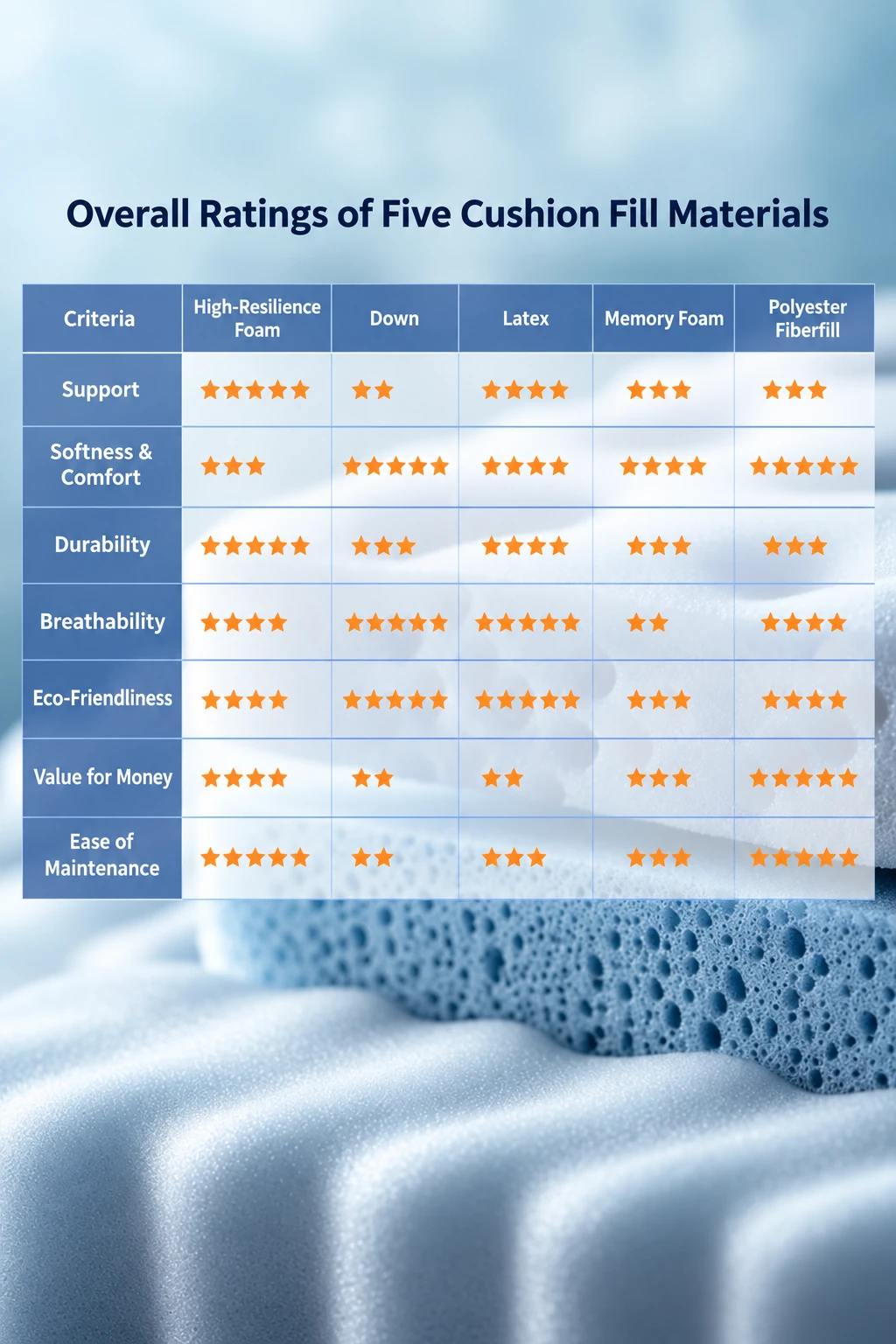
For a custom order, the best protection is a written cushion specification tied to an approved sample. Ask the supplier to document the build before production begins and to keep the same materials across the batch.
There is no universal “best” cushion. The best build depends on how often the sofa is used, how tailored or relaxed the appearance should be, and how much maintenance the owner accepts.
| Use case | Useful construction direction | Why |
|---|---|---|
| Everyday family sofa | HR foam core + fiber wrap | Good recovery, easy maintenance and a neat profile |
| Relaxed luxury sofa | HR foam core + feather/down or premium fiber envelope | Soft first touch with structural support underneath |
| Tailored modern sofa | Shaped high-resilience foam with controlled wrap | Sharper edges and more consistent geometry |
| High-use hospitality | Higher-density HR foam with durable upholstery and documented QC | Repeatable performance and easier replacement planning |
| Outdoor/covered patio | Purpose-built outdoor foam system | Drainage and moisture behavior matter as much as density |
For exterior seating, do not reuse an indoor foam specification. Ratahome’s outdoor furniture guide explains how quick-dry foam, drainage and fabric work together in wet environments. For finished indoor seating references, browse the sofa collection.
No. Density and firmness are different properties. A high-density foam can be formulated soft, while a lower-density foam can be made firm. Specify both density and firmness.
Many suppliers use “45D” as shorthand for a nominal density of about 45 kg/m³. Confirm the actual unit, tolerance and test method because shorthand conventions can vary.
No. A single high-quality foam block can be excellent when the formulation and thickness match the application. Layering simply gives designers more control over support, surface softness and shape.
Feather and down move as they are compressed. Regular fluffing redistributes the fill and restores the crown. That movement is part of the relaxed look.
Ask for the cushion cross-section, foam type, density, firmness, layer thicknesses, wrap material, suspension type and a physical sample or approved prototype. For a broader factory checklist, see Ratahome’s Furniture Guide.
CUSTOM SOFA SPECIFICATION
Share your floor plan, sofa references, preferred seat feel and expected use. Ratahome can coordinate sofa dimensions, frame, suspension, foam, upholstery, production checks and delivery as one project.
Learn how quality cabinets are made, from plywood and solid wood selection to door design, joinery, finishing, assembly, hardware installation…
Read article →Learn how furniture joinery works, from mortise-and-tenon and dovetails to mitered corners, curved chair joints, casework connections, glue, CNC machining…
Read article →Learn why wood moisture content matters in furniture, how kiln drying works, how factories test moisture, and how to prevent…
Read article →