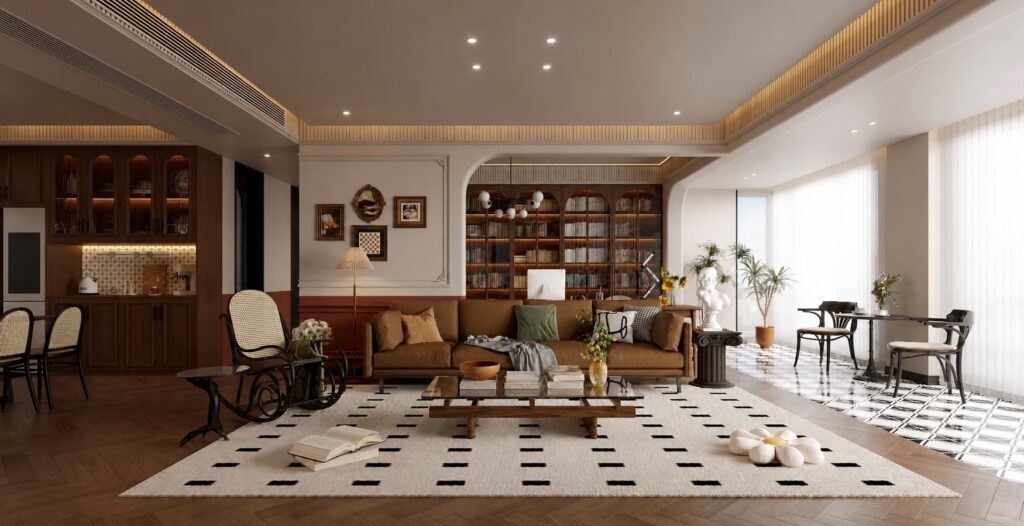
Curved Furniture Ideas: 8 Beautiful Ways to Soften Modern Interiors
Looking for curved furniture ideas that make a modern home feel softer without sacrificing function? Explore eight distinct directions—from inviting sofas and sculptural accent chairs to flowing architecture and colorful statement pieces—then choose the look that fits your everyday life.
By Forest, Founder, Ratahome · Published · Interior Inspiration · Curved Sofas, Rounded Furniture & Modern Living
The best curved furniture is both sculptural and livable. Start with one focal silhouette, plan the space around movement and conversation, then layer color, lighting and materials to create a relaxed and cohesive modern interior.
IDEA 01 / CURVED SOFAS
1. Choose a curved sofa that softens the room
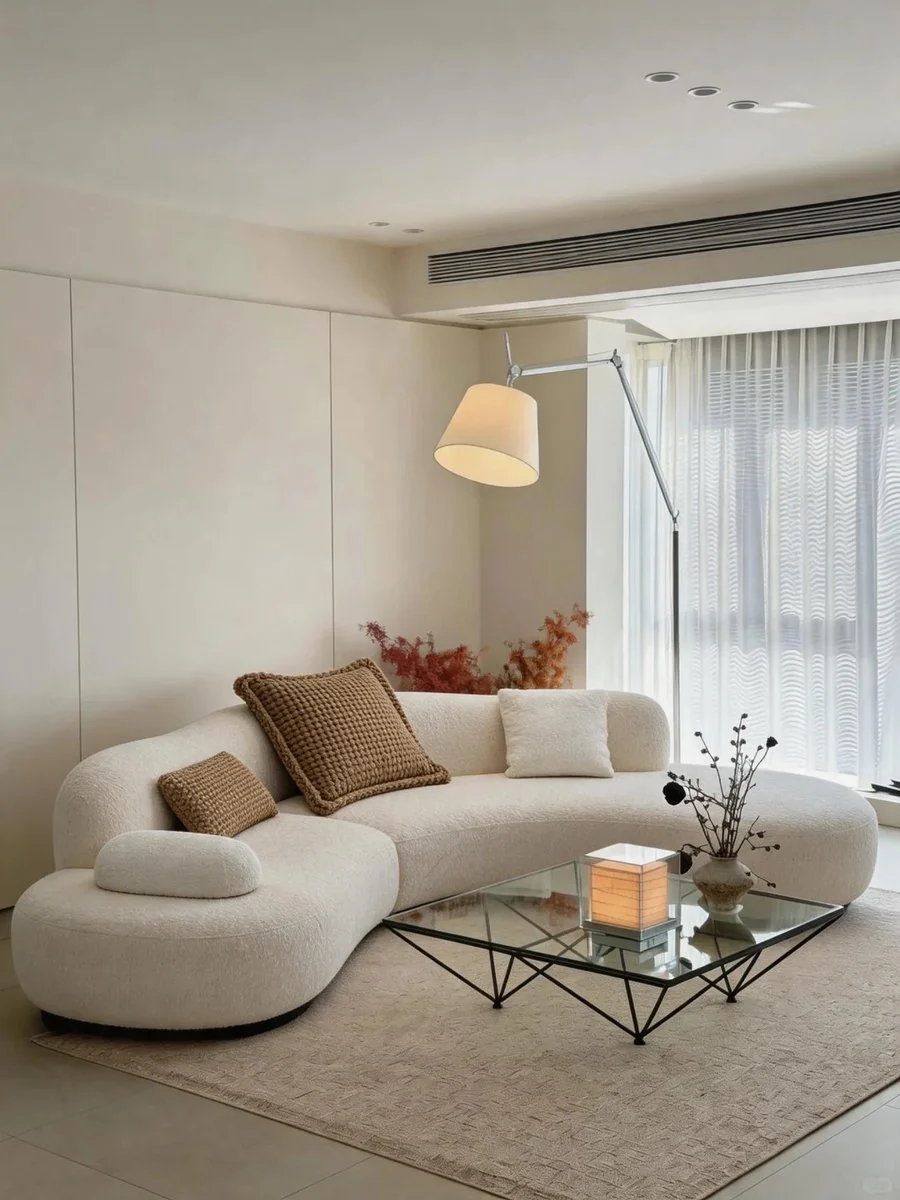
The most convincing curved living room does not need a complicated floor plan. A softly arced sofa can interrupt the straight lines of a contemporary home and create a more generous, welcoming mood. Ivory bouclé feels architectural and airy; textured linen reads more relaxed; warm tan leather introduces a tailored, mid-century note. In each case, the rounded back becomes a visual feature rather than an obstacle.
Soft curved ivory sofa in a minimalist living roomCurved cream seating with a circular coffee table
Look for the relationship between the sofa’s arc and the space around it. Leave a clear route behind the backrest, especially if the sofa floats in an open-plan room. Pair it with a low, oval coffee table and a quieter rug so the curve remains the main gesture. A beautiful photo is a starting point—not a substitute for checking overall length, seat depth, and how many people will sit there.
IDEA 02 / CONVERSATION LAYOUTS
2. Create a natural conversation circle
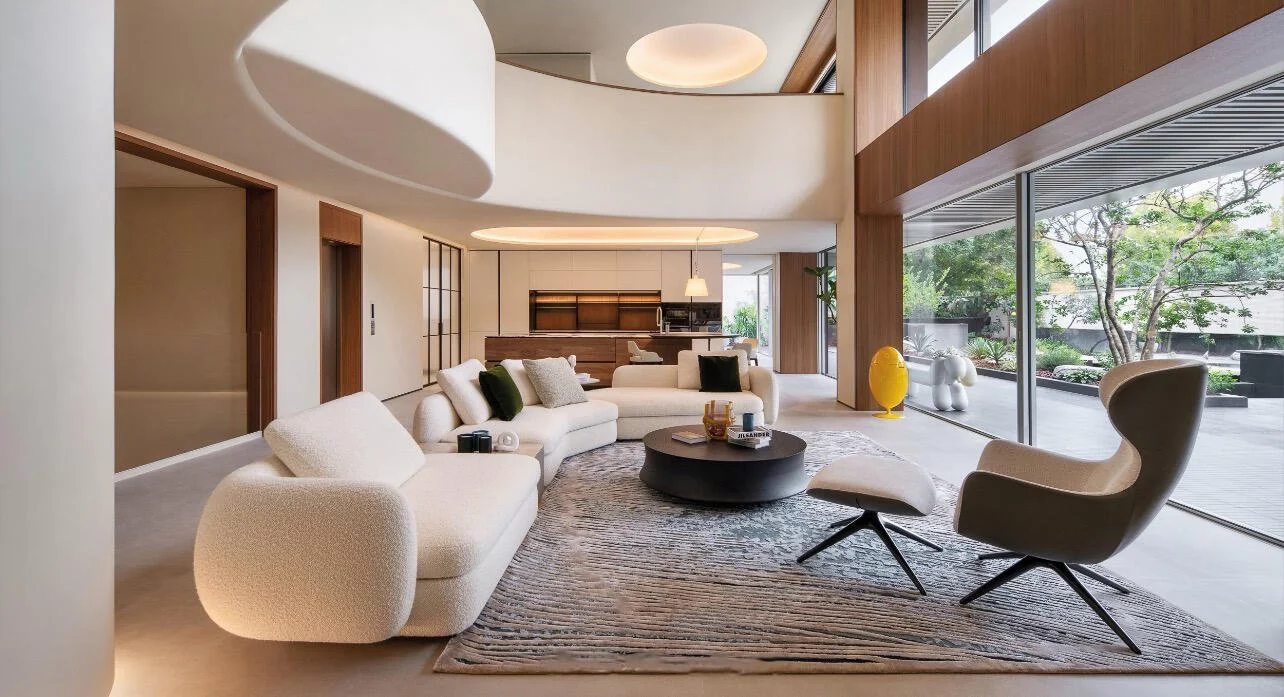
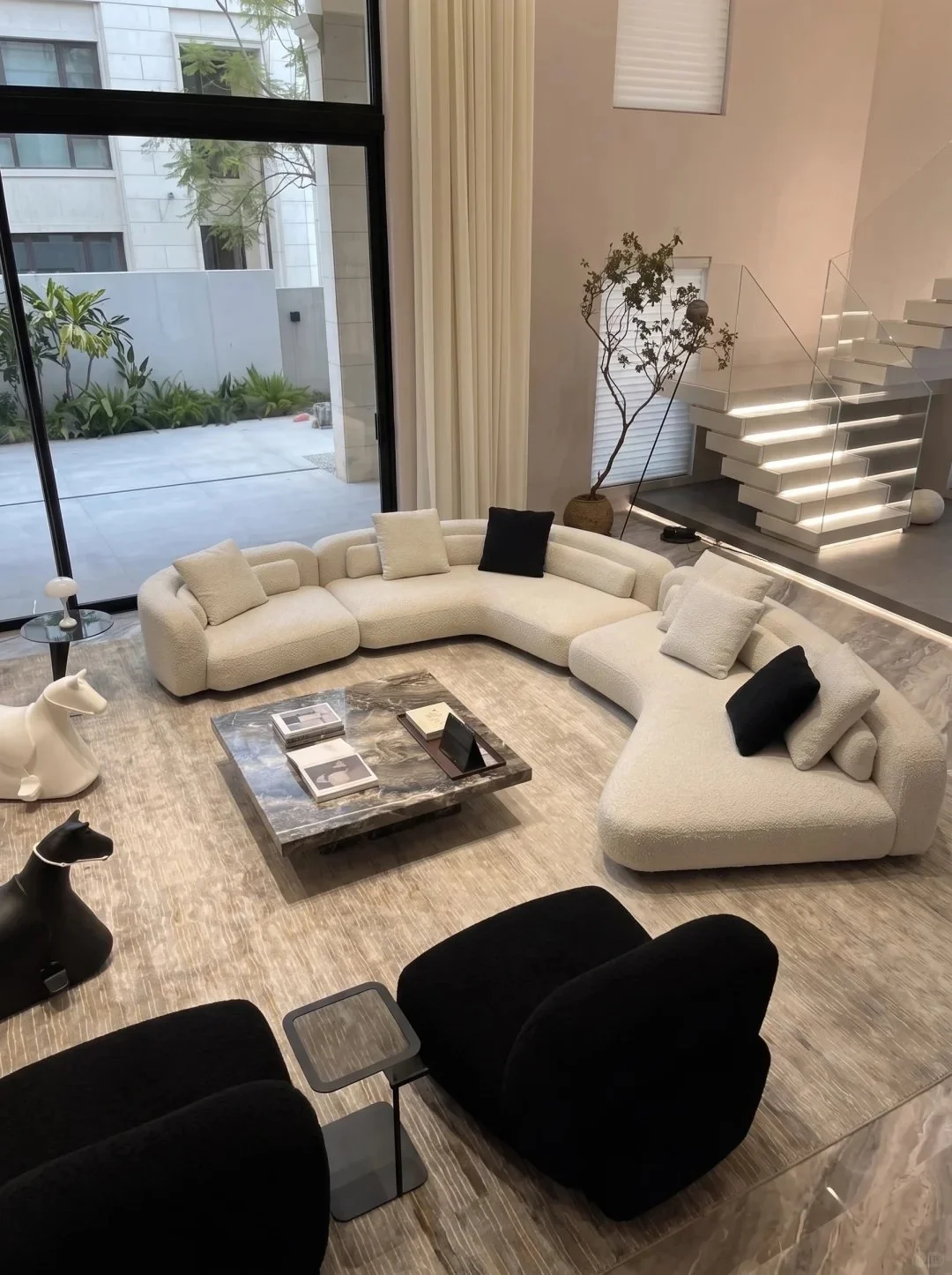
Instead of pushing every seat against a wall, let the furniture face toward a shared center. A curved sectional, one or two easy chairs, and an oval or round coffee table can establish an inviting conversation area without looking formal. This arrangement is particularly appealing in open-plan homes, where a floating sofa also helps define the living zone without building another partition.
Open-plan curved seating arranged around a shared round coffee tableCurved sectional lounge centered on a circular table and rug
Study the images for their practical geometry: the coffee table is reachable, the rug connects the main pieces, and walking routes remain visible. When adapting the idea, measure the available clearance before choosing an extra-deep sofa. You want enough room for guests to move around the seating, and you should still be able to see the room’s architectural features rather than walling them off with furniture.
IDEA 03 / SCULPTURAL ACCENTS
3. Introduce curves through chairs, tables, and smaller pieces
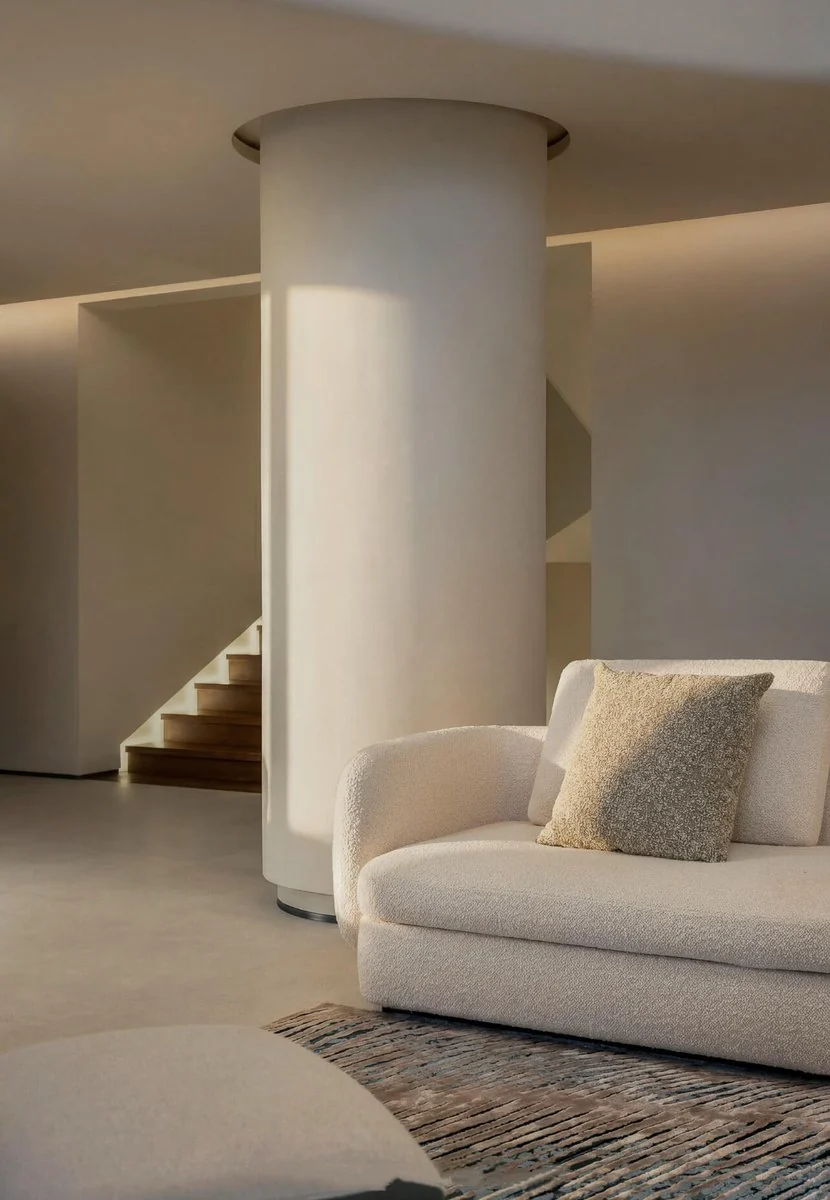
If a new sofa is not on your list, a single sculptural lounge chair or a softened-edge table can change the entire visual rhythm. Rounded furniture works best when it has a specific role: a comfortable reading chair, an occasional table beside a sofa, or a statement piece that adds warmth to a restrained interior. The key is to choose a silhouette you enjoy looking at and using.
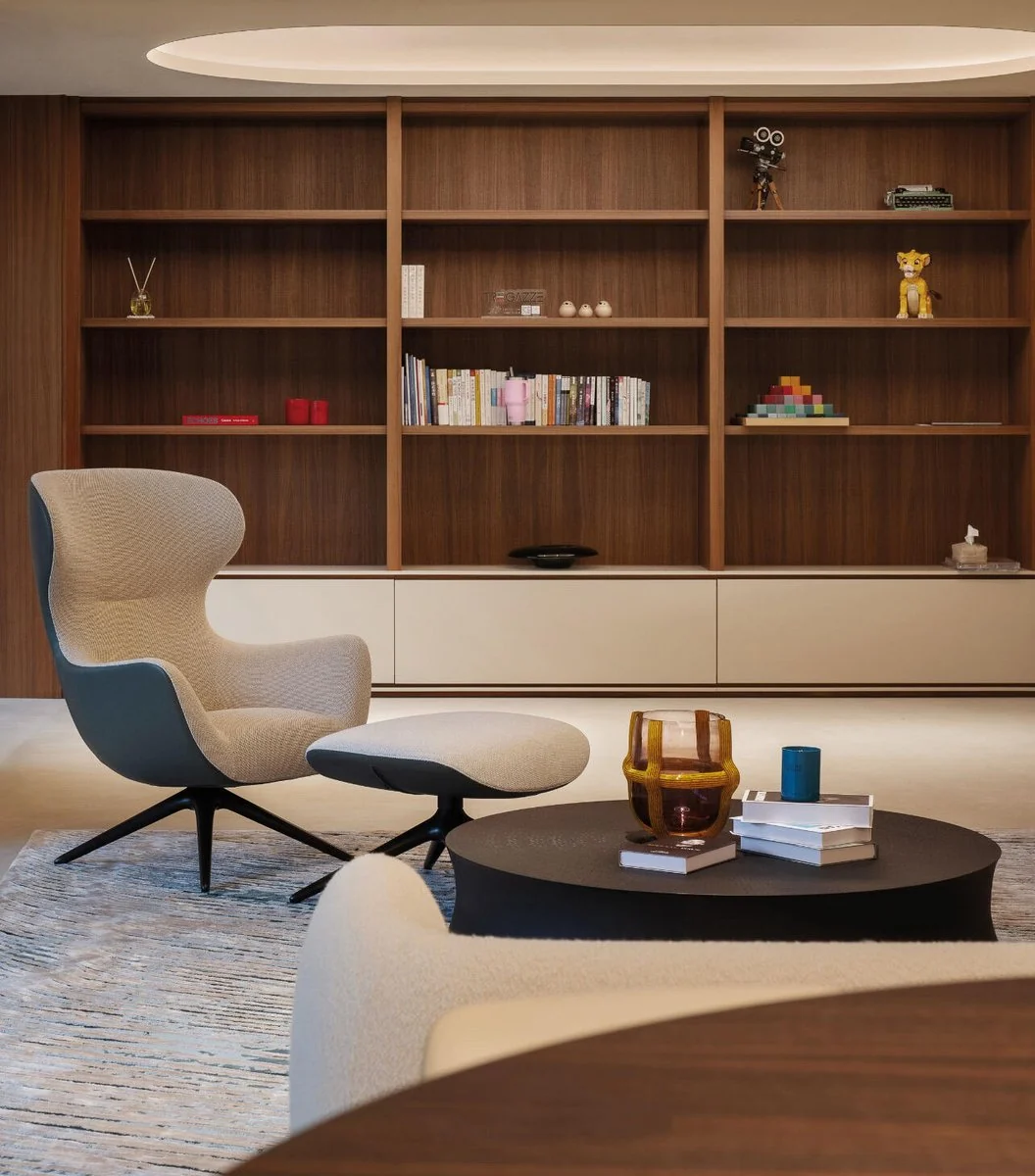
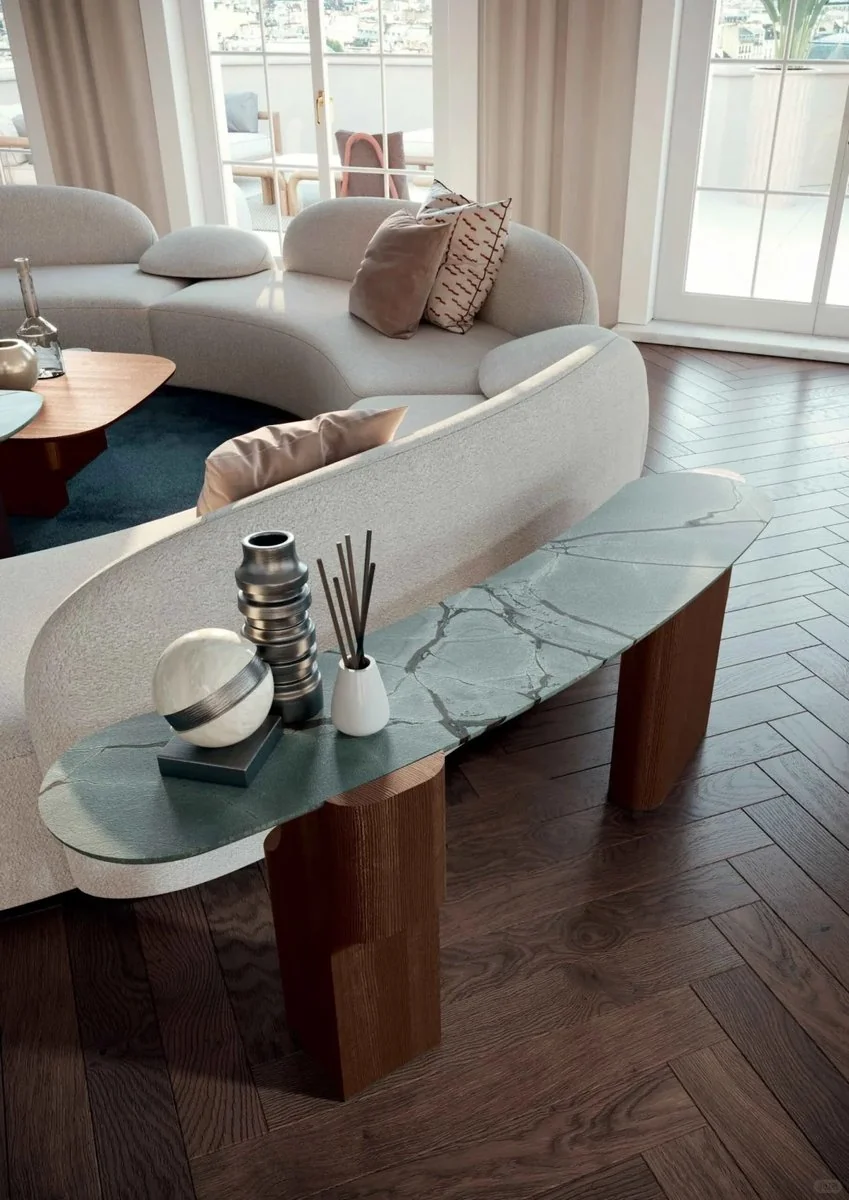
Rounded cream lounge chair beside a sculptural columnOrganic accent chair in a contemporary sitting areaOval sculptural table within a modern interiorSoft-edged table in a contemporary home
Mix one expressive curve with calmer rectangular pieces for contrast. A small room might need just a curved accent chair and an oval side table, while a spacious living area can support an organic coffee table as well. Solid wood, upholstered finishes, and matte surfaces each give the curve a different personality. Choose the material based on the mood you want rather than repeating the same finish everywhere.
IDEA 04 / CLASSIC MEETS CONTEMPORARY
4. Balance modern curves with timeless interiors
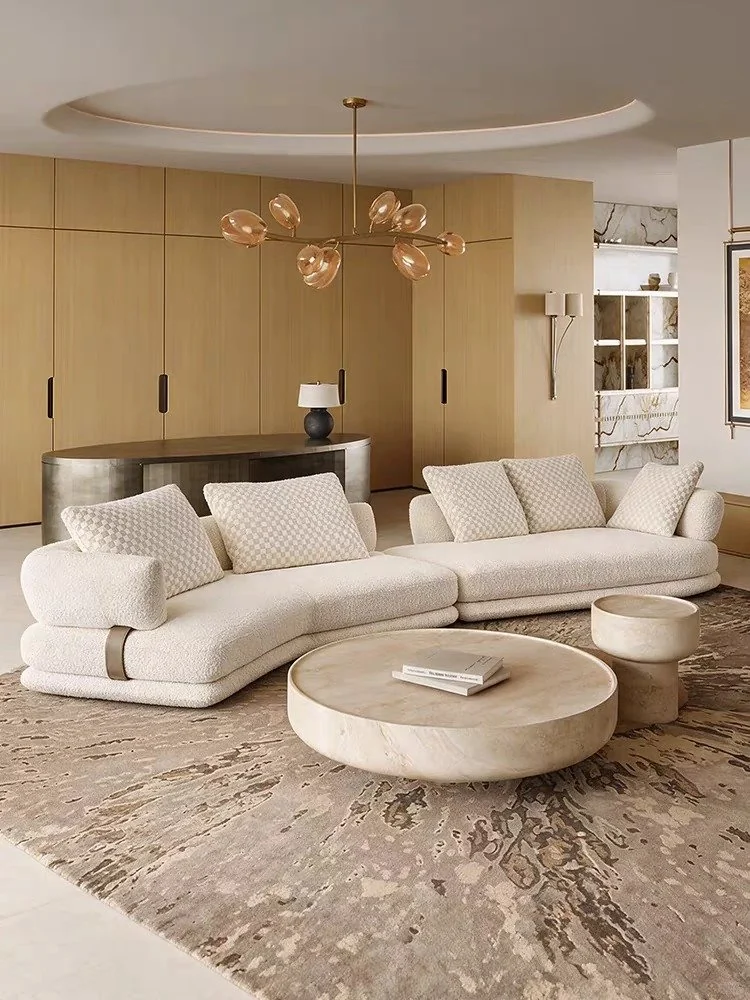
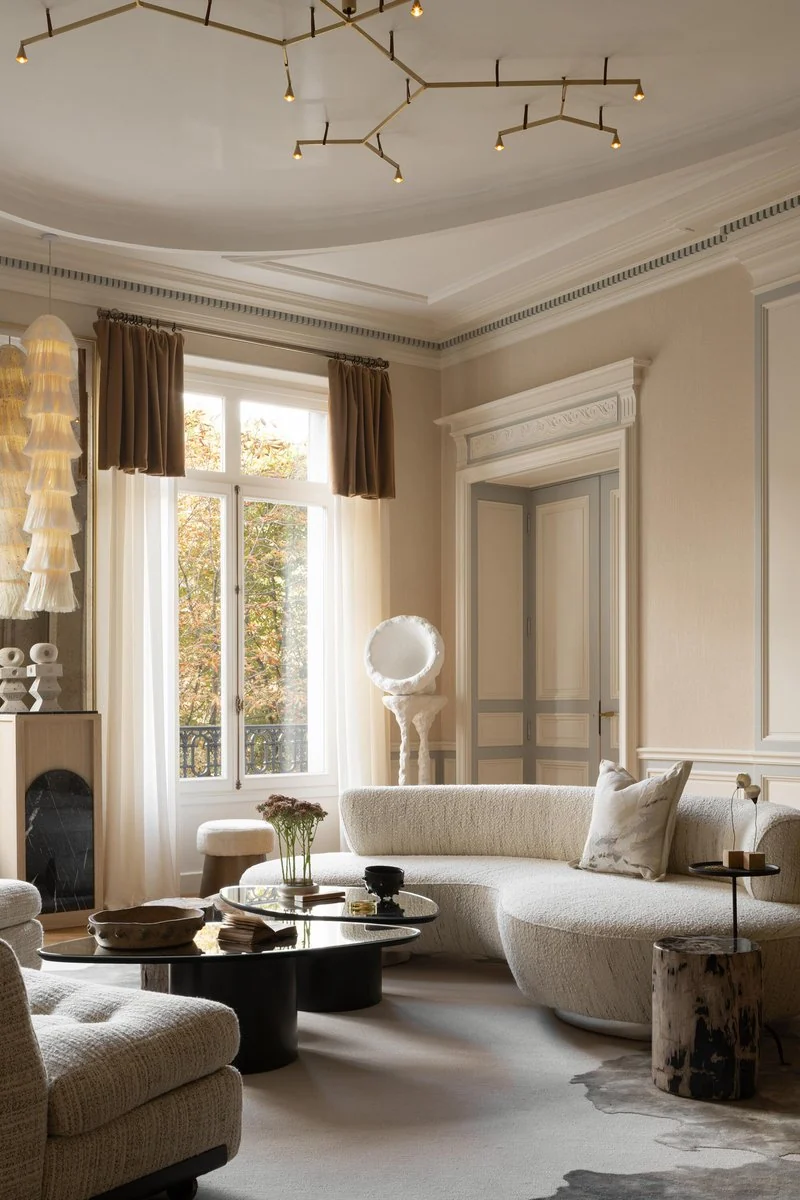
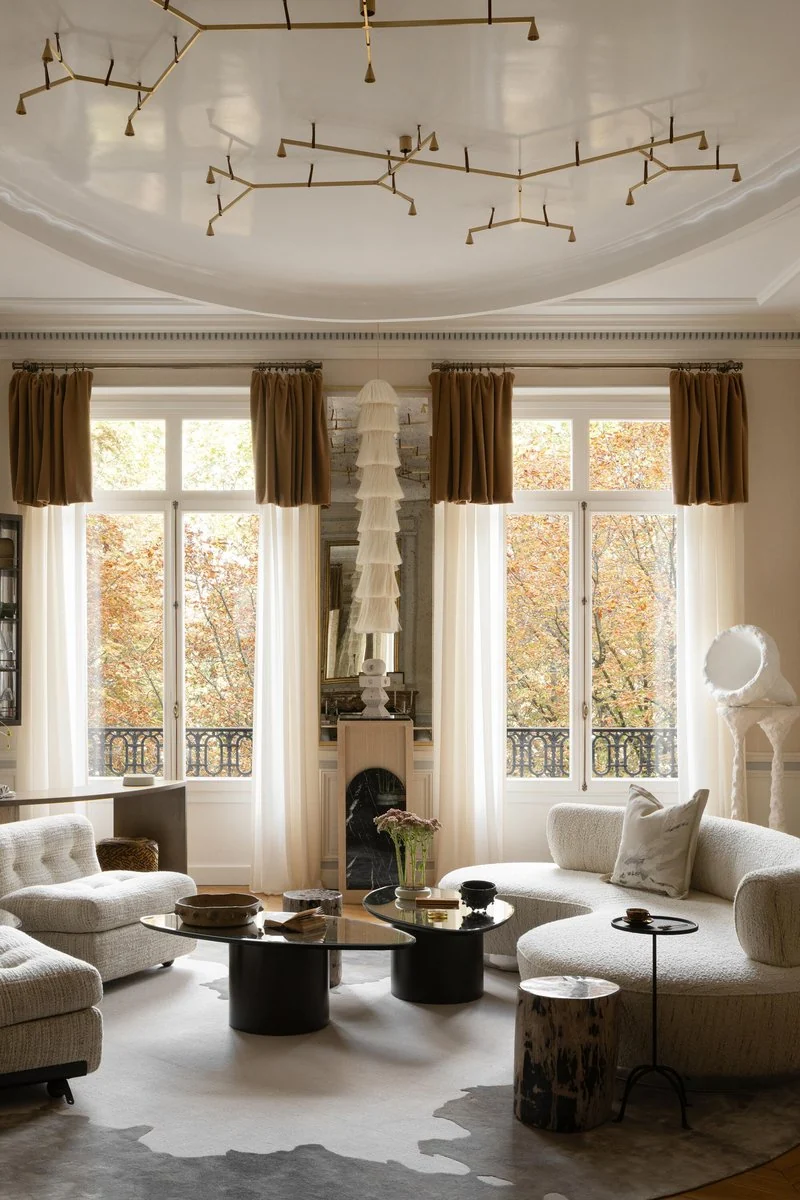
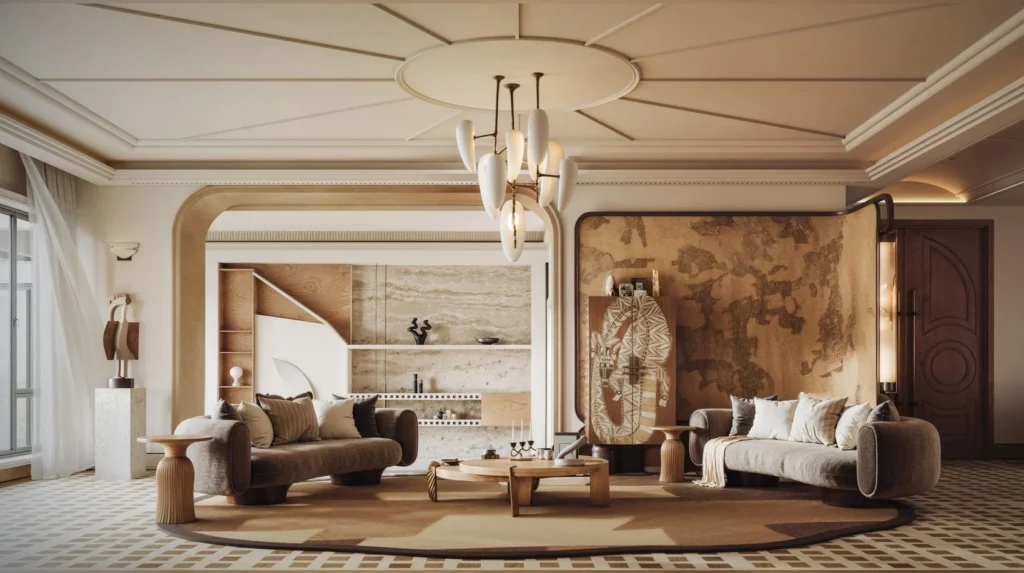
Curved furniture does not belong only in minimal, futuristic spaces. A softly rounded sofa can also work with paneled walls, tall windows, warm brass lighting, and traditional millwork. The contrast gives a familiar room a more contemporary energy without removing the details that make it feel established. This is a strong direction for homeowners who want a collected look rather than an all-new furniture set.
Traditional sitting room with a softened sofa profileTimeless living room with curved furniture silhouettes
Build the connection through color and proportion. Let the upholstery respond to the wall tones, then use wood, stone, or aged metal to create depth. Avoid placing several oversized statement pieces together. One curved focal point surrounded by simpler furniture will feel more intentional, especially in a room with decorative ceilings or an ornate fireplace.
IDEA 05 / CURVED ARCHITECTURE
5. Echo the lines already present in the architecture
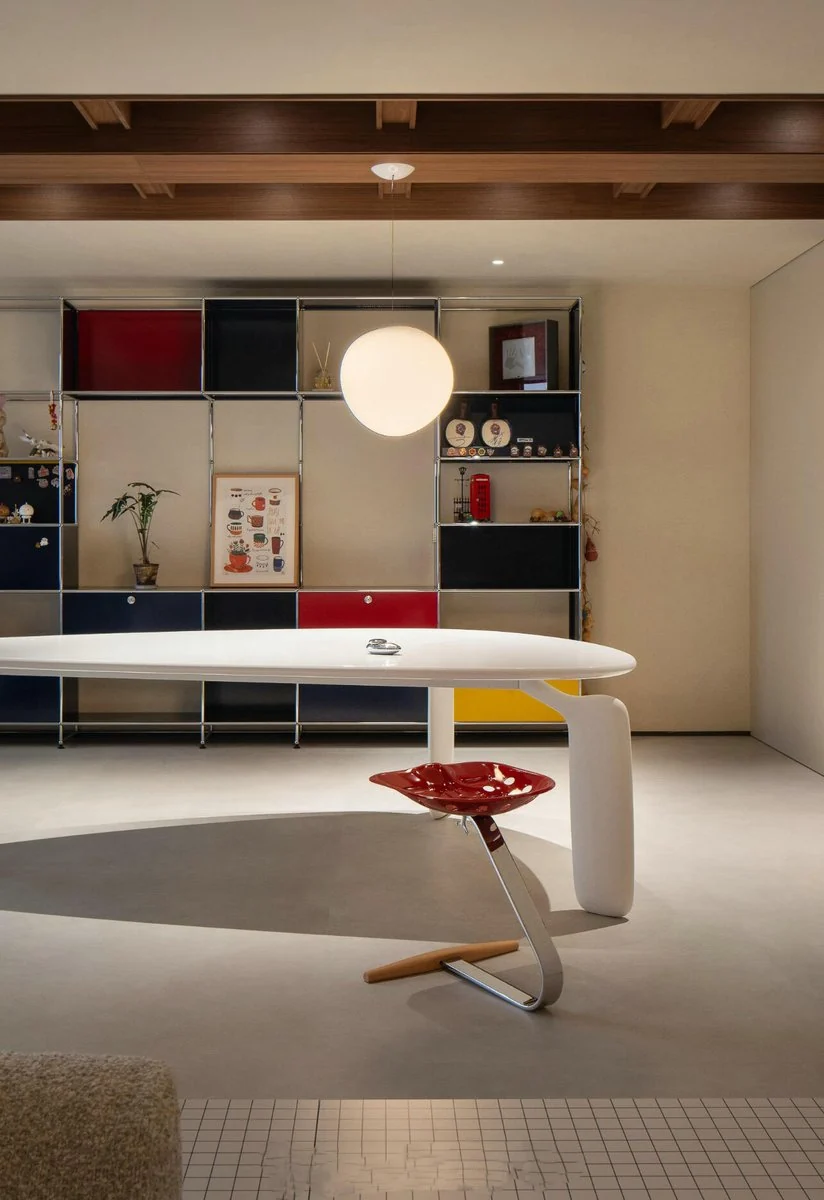
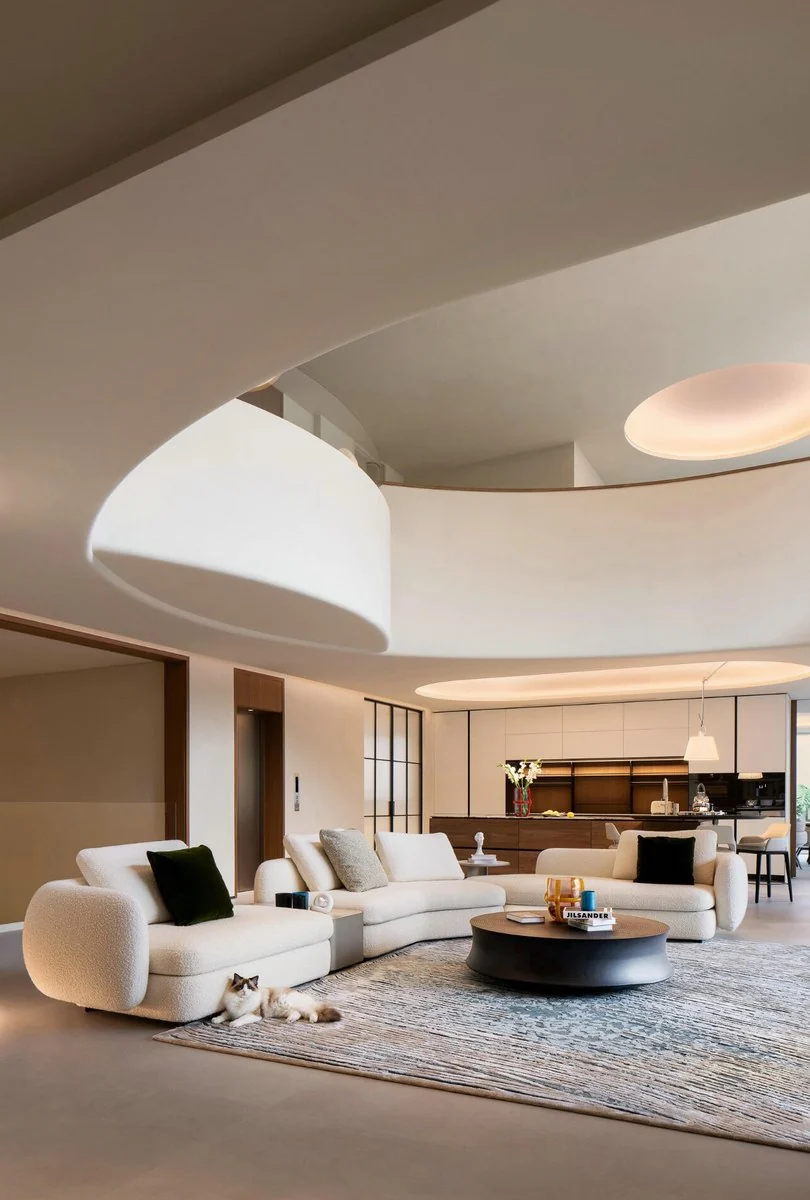
A rounded ceiling, soft arch, circular niche, or curved wall can make furniture feel as though it belongs to the building. In these interiors, the most effective design choice is often subtle: the sofa arc follows a ceiling line, the shape of a table mirrors an architectural opening, or a rounded chair makes a corridor transition feel softer.
Organic ceiling line connecting the open living spaceCurved architectural ceiling and built-in forms
You do not have to remodel to borrow this idea. First identify an existing curve, such as a window, a stair landing, or a rounded column, and use one piece of furniture to echo it. Keep the rest of the composition relatively clean so the relationship reads clearly. For custom work, compare the shape with actual room measurements before finalizing a product specification.
IDEA 06 / EXPRESSIVE COLOR
6. Use color to turn a curve into a statement
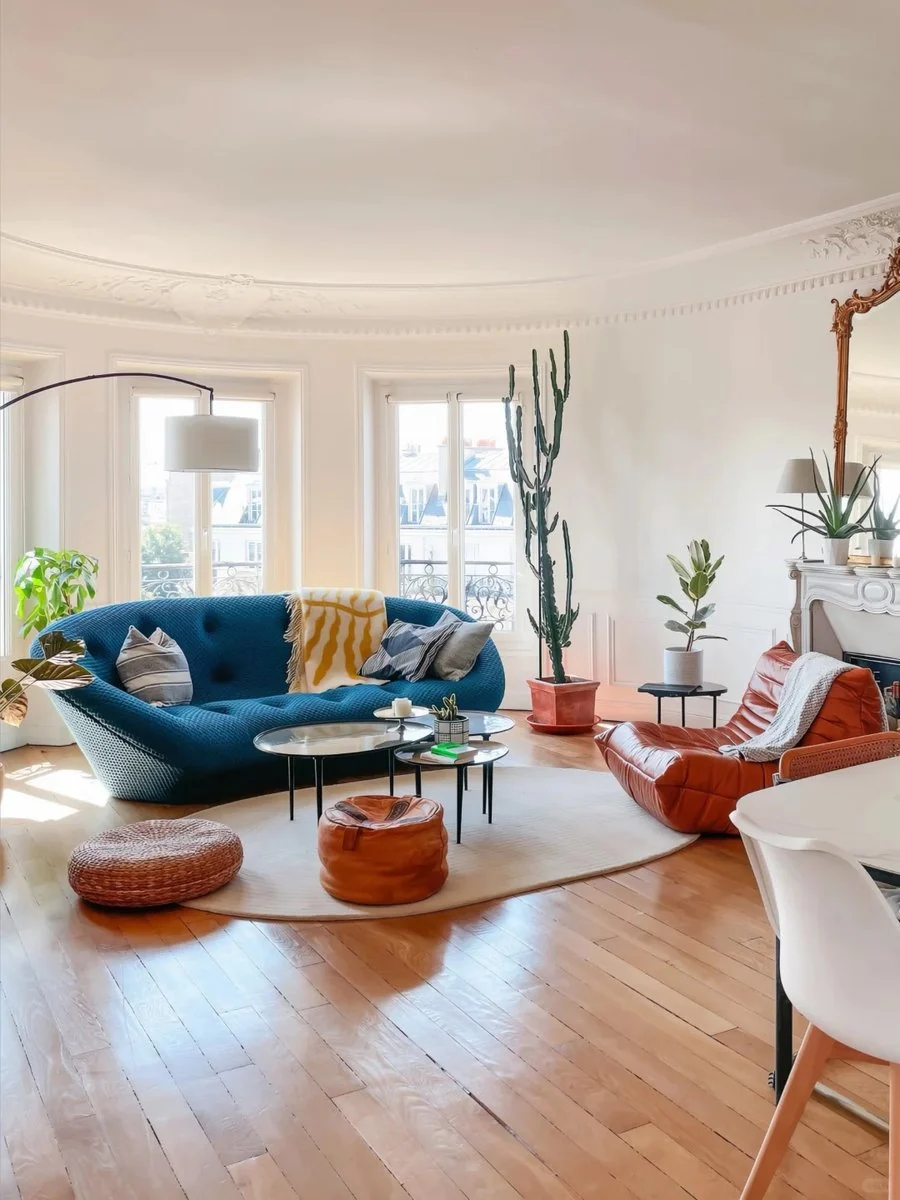
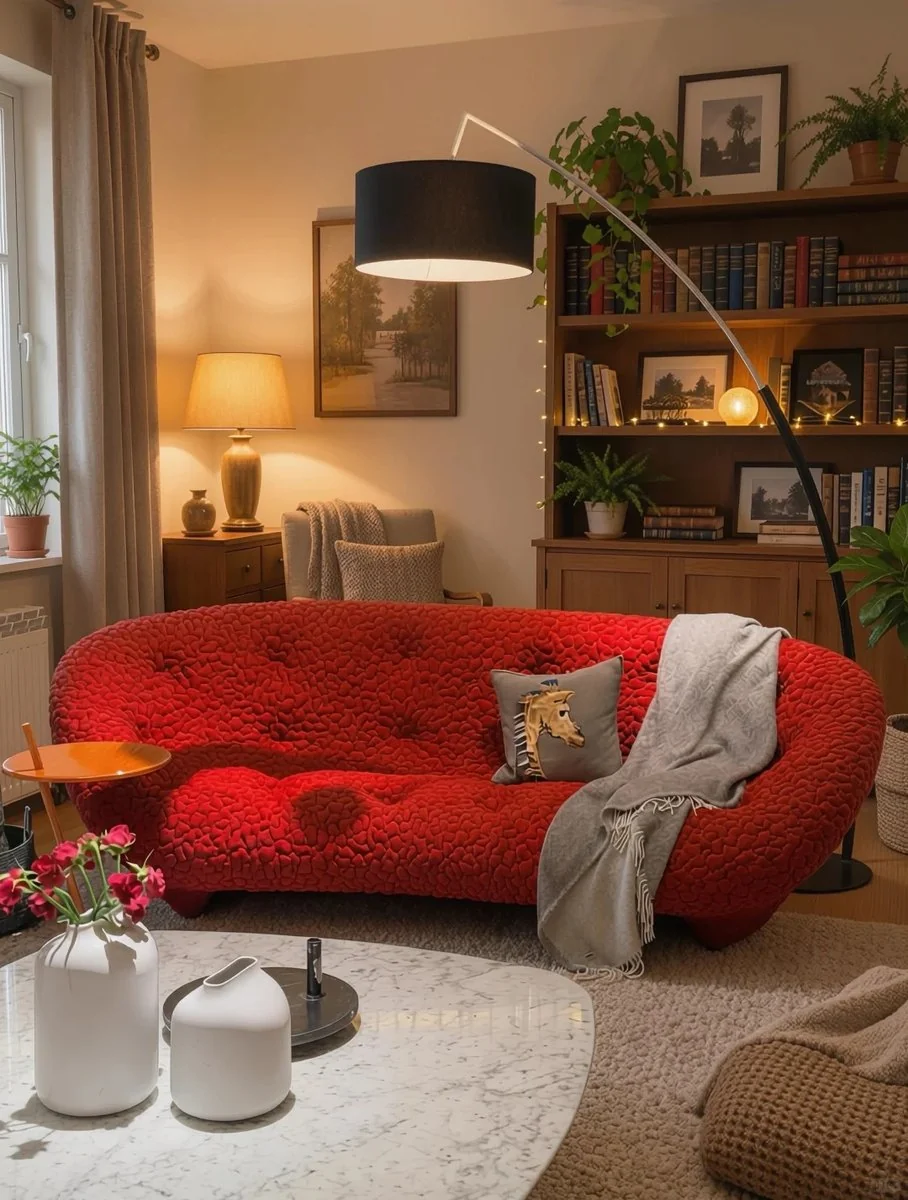
Color changes the personality of curved furniture immediately. A deep blue sofa can look playful and artistic against pale walls; a russet or wine-colored curve feels warmer and more dramatic. The same shape in ivory would feel quiet and sculptural. This is why choosing the color after choosing the form is often easier than trying to make every design decision at once.
Blue sculptural sofa in a sunny roomRed curved sofa as a statement piece
If you want an expressive accent, give it breathing room. Repeat its color only lightly through a book, art piece, or textile. Natural wood, off-white walls, and a restrained rug help keep the atmosphere balanced. A saturated sofa can be a memorable signature piece without forcing the whole home into a loud palette.
IDEA 07 / WHOLE-HOME CONTINUITY
7. Carry the curved language beyond the living room
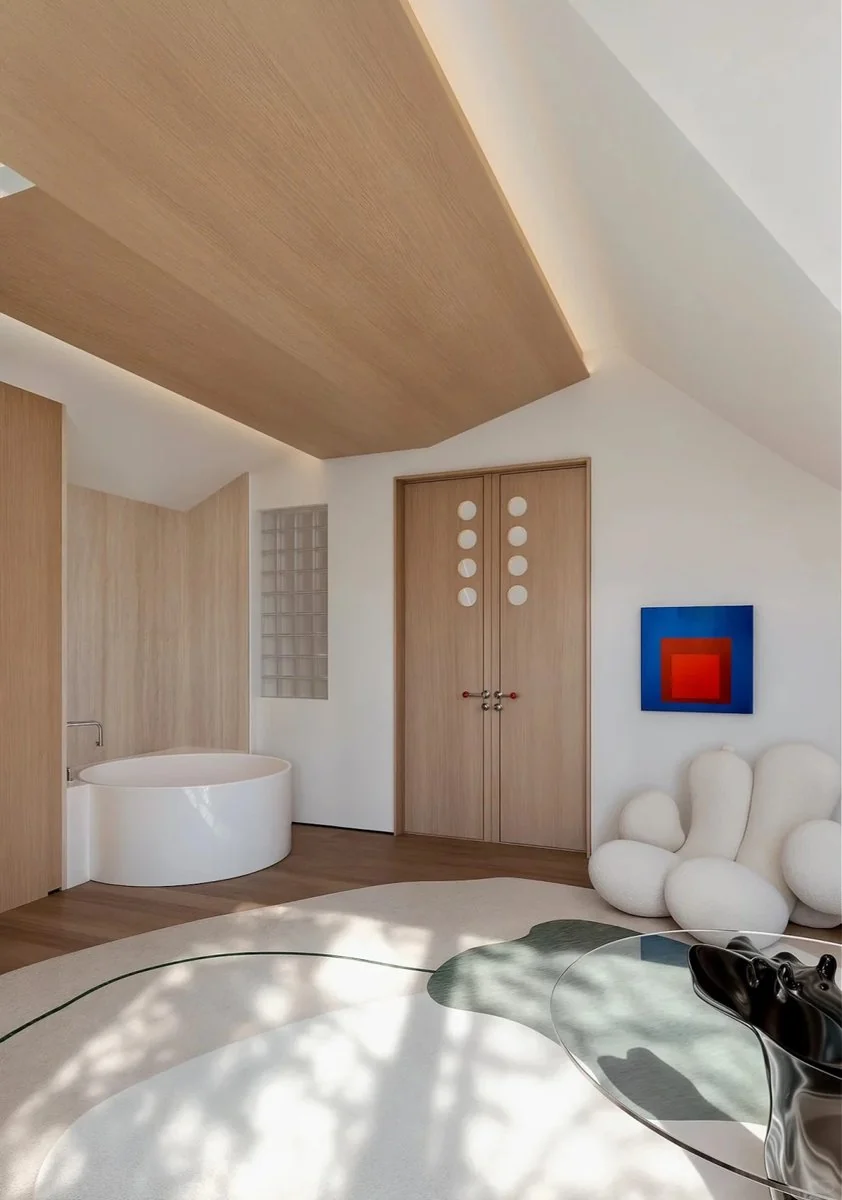
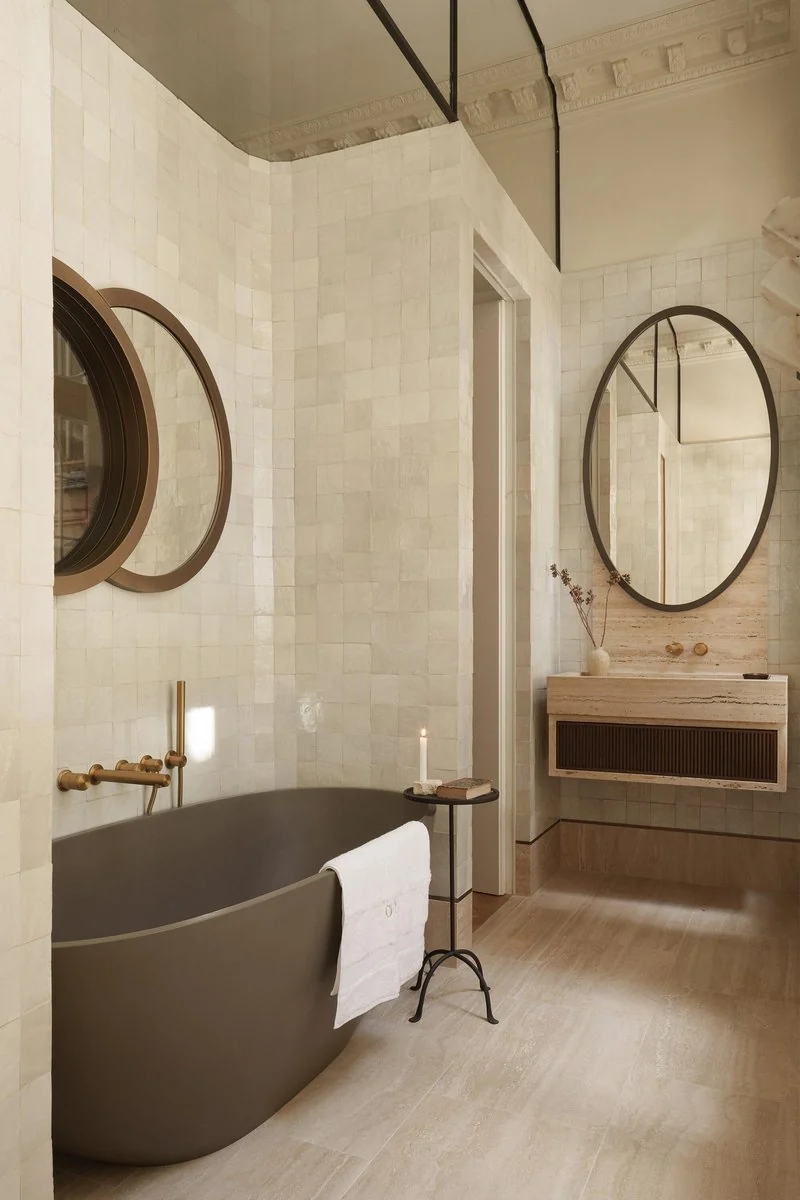
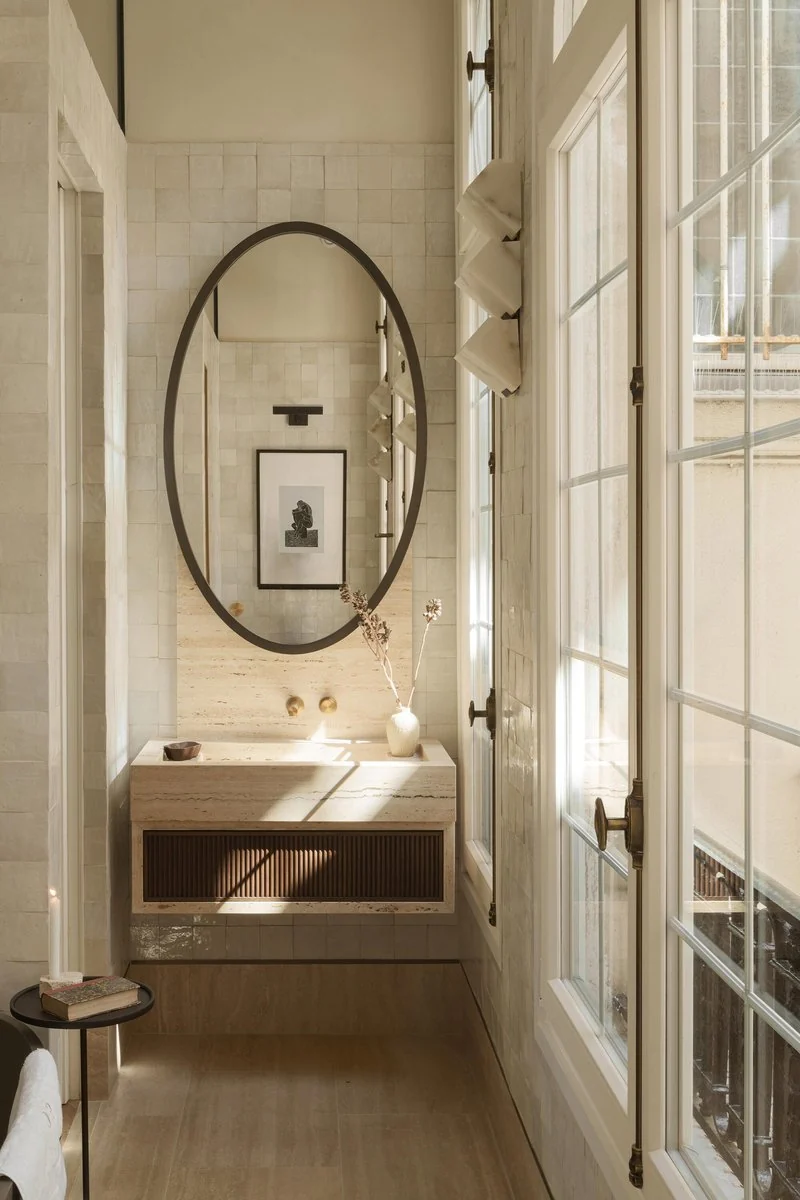
The most harmonious interiors treat curves as a vocabulary, not a one-room trend. A rounded vanity, an arched mirror, an oval dining table, or a softened cabinet corner can pick up the same visual language without looking identical. These subtle references help rooms connect as you move through the home.
Rounded bathroom tub and arch mirrorArched bathroom vanity in a bright room
Rather than putting a large sculptural feature in every room, vary the scale. Let a living room sofa make the strongest statement, then use gentler curved details elsewhere. Natural finishes, compatible colors, and well-resolved construction details are what make the transitions feel effortless. For practical material decisions, use Ratahome’s wood and upholstery guides as a companion to your inspiration board.
IDEA 08 / SIGNATURE PIECE
8. Choose one signature curve—then make it work for real life
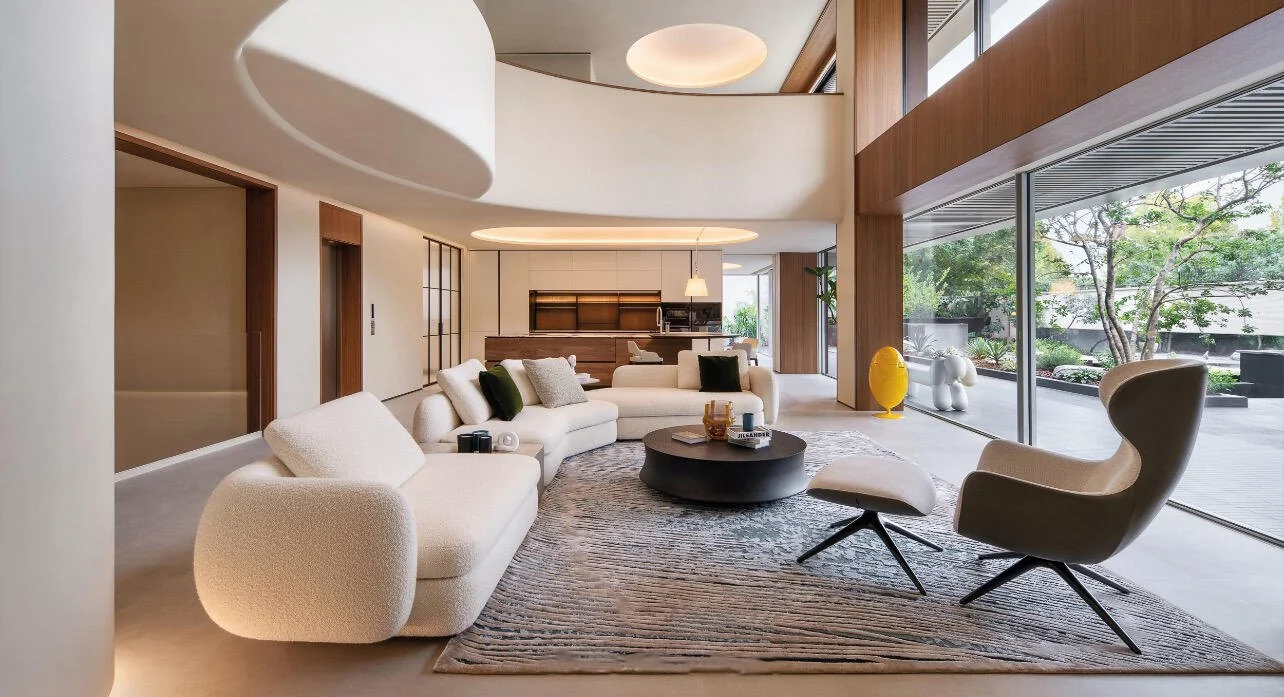
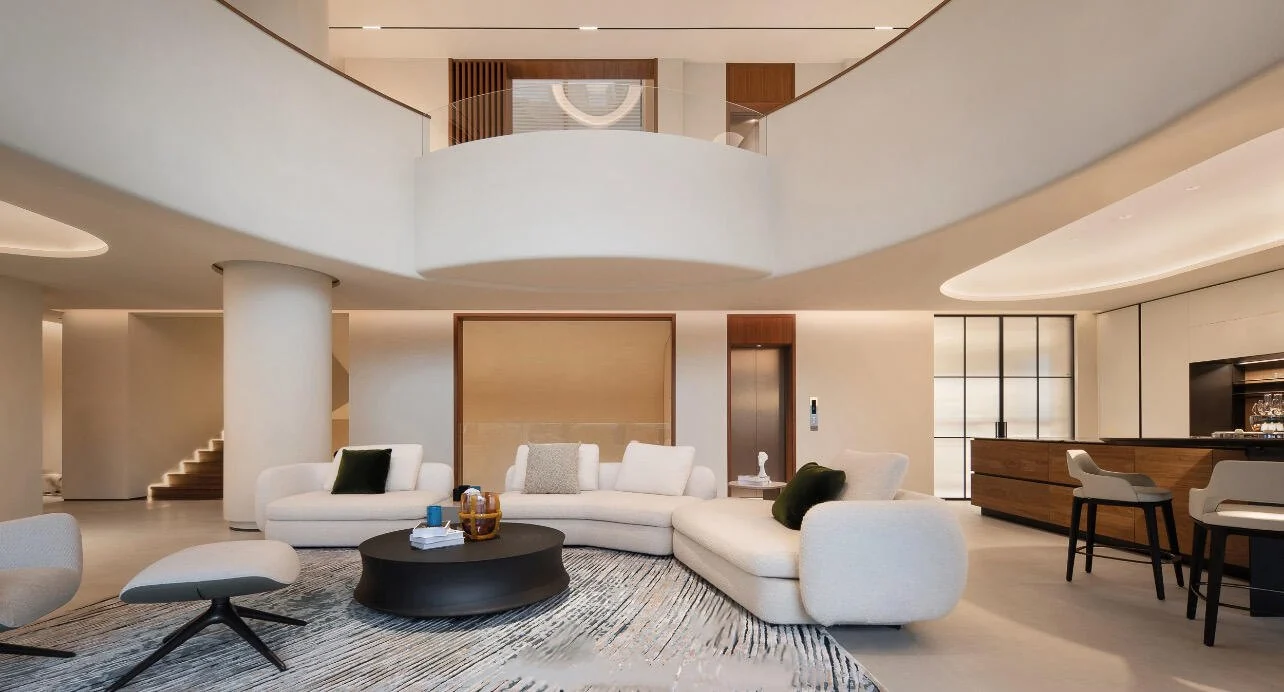
The best image to save is the one whose layout fits your daily routine. A large cream curved sectional beside an open staircase can look spectacular, but its real strength is how many people it seats, how it defines the room, and whether it lets everyone move comfortably around the coffee table. Style should serve those everyday needs.
Signature cream curved sectional beside a floating staircase
Before ordering, write down the room measurements, desired seating capacity, preferred upholstery, and any circulation constraints. Decide whether you need a continuous sectional or separate curved modules. Save two or three favorite references to show the amount of curve you like. Those details will turn visual inspiration into a clear furniture brief that a design or sourcing team can actually act on.
Turn your favorite curved furniture ideas into a real room plan
Share your floor plan, dimensions, favorite inspiration images, seating requirements, and approximate budget. Ratahome can help you develop a coordinated furniture direction, from sofa silhouettes and finishes to whole-room sourcing.
Is curved furniture suitable for small living rooms?
Yes. Instead of a large sectional, use one compact curved lounge chair or an oval coffee table. Choose pieces that preserve clear walking routes and do not obstruct doors or windows.
What pairs well with a curved sofa?
Oval or round coffee tables, restrained rugs, sculptural lighting, and simple side chairs work well. Mixing curves with some straight-lined furniture helps the room stay visually balanced.
Are curved sofas comfortable for everyday use?
They can be, but comfort depends on seat depth, cushion support, back angle, and the shape of the seating arc—not on appearance alone. Check measurements and upholstery options before purchasing.
Which materials suit curved furniture in modern interiors?
Bouclé, linen blends, velvet, leather, natural wood, and stone can all work. Select a material according to how the furniture will be used and the wider color palette of the room.
Forest leads Ratahome from Foshan, coordinating custom cabinetry, made-to-order furniture and whole-home projects for homeowners, designers and hospitality clients worldwide. Every guide on this site comes from that day-to-day work with factories, samples, QC and shipping.
Discover modern dining room ideas with natural materials: warm wood, stone, sculptural tables, comfortable chairs and lighting inspiration for timeless…