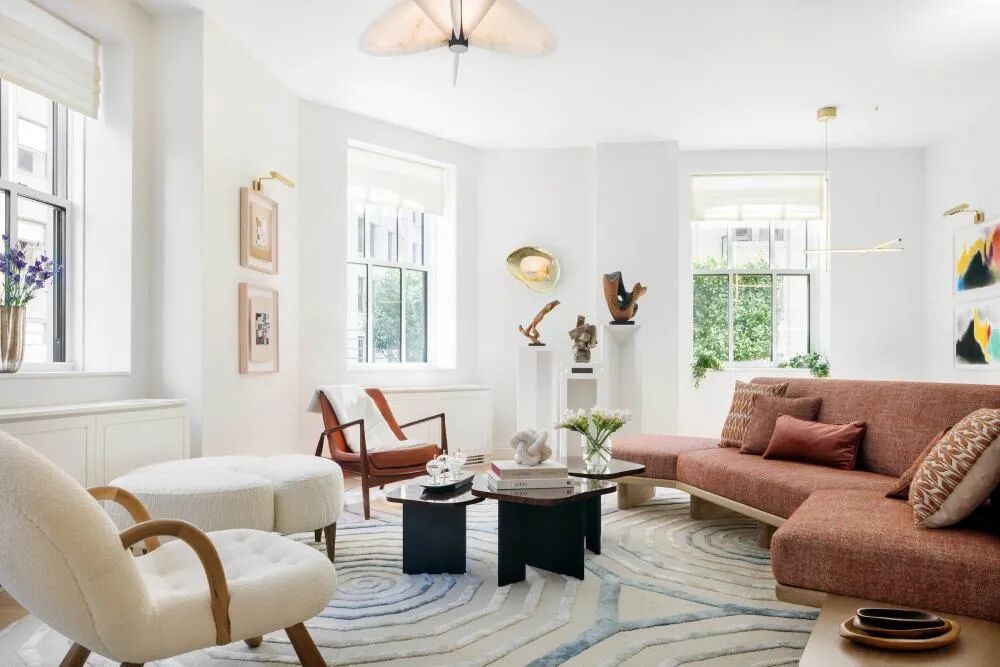
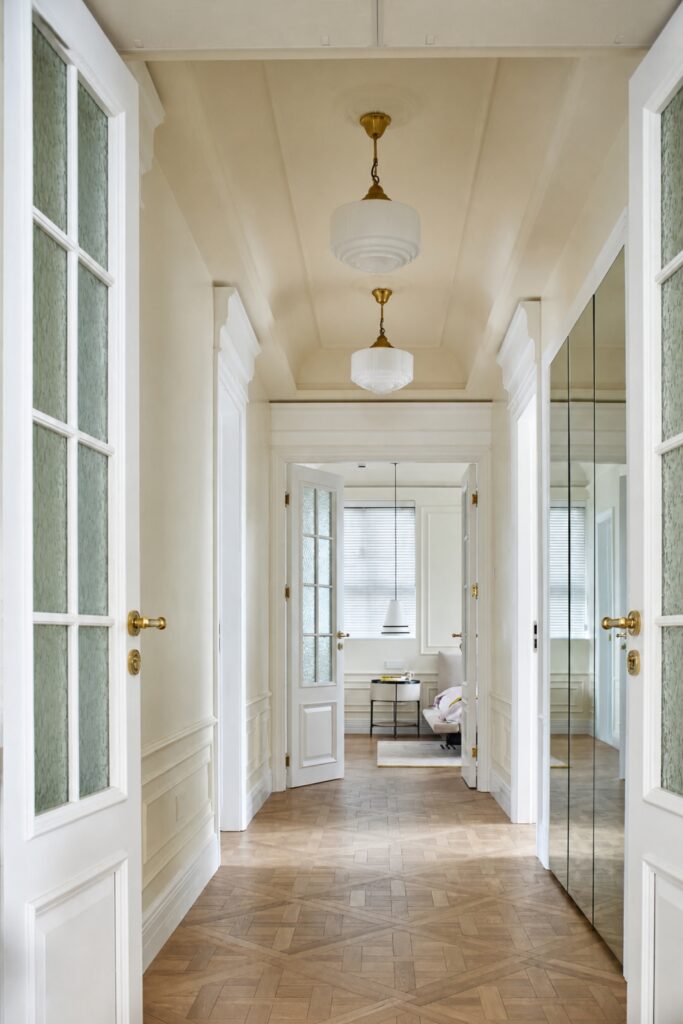
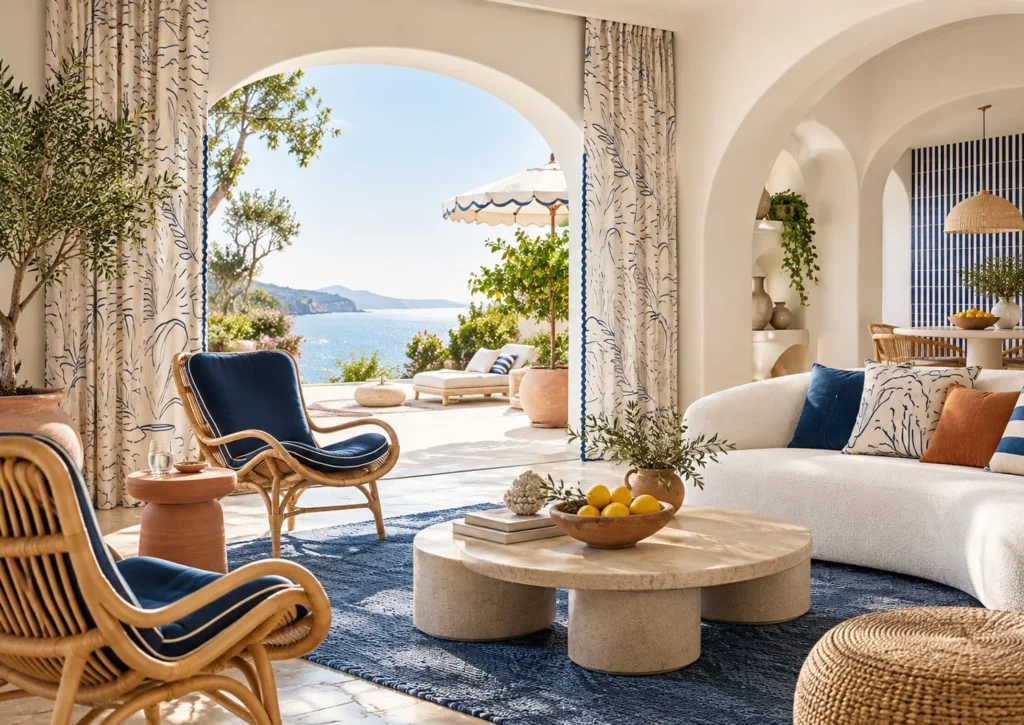
Warm American vintage interior design is returning in a quieter, more livable form. Instead of recreating a period room, the look combines deep wood, familiar silhouettes, woven texture and carefully controlled color with the openness expected from a contemporary home. The result feels collected rather than decorated—and comfortable from the first day.
1. Let warm wood establish the visual rhythm
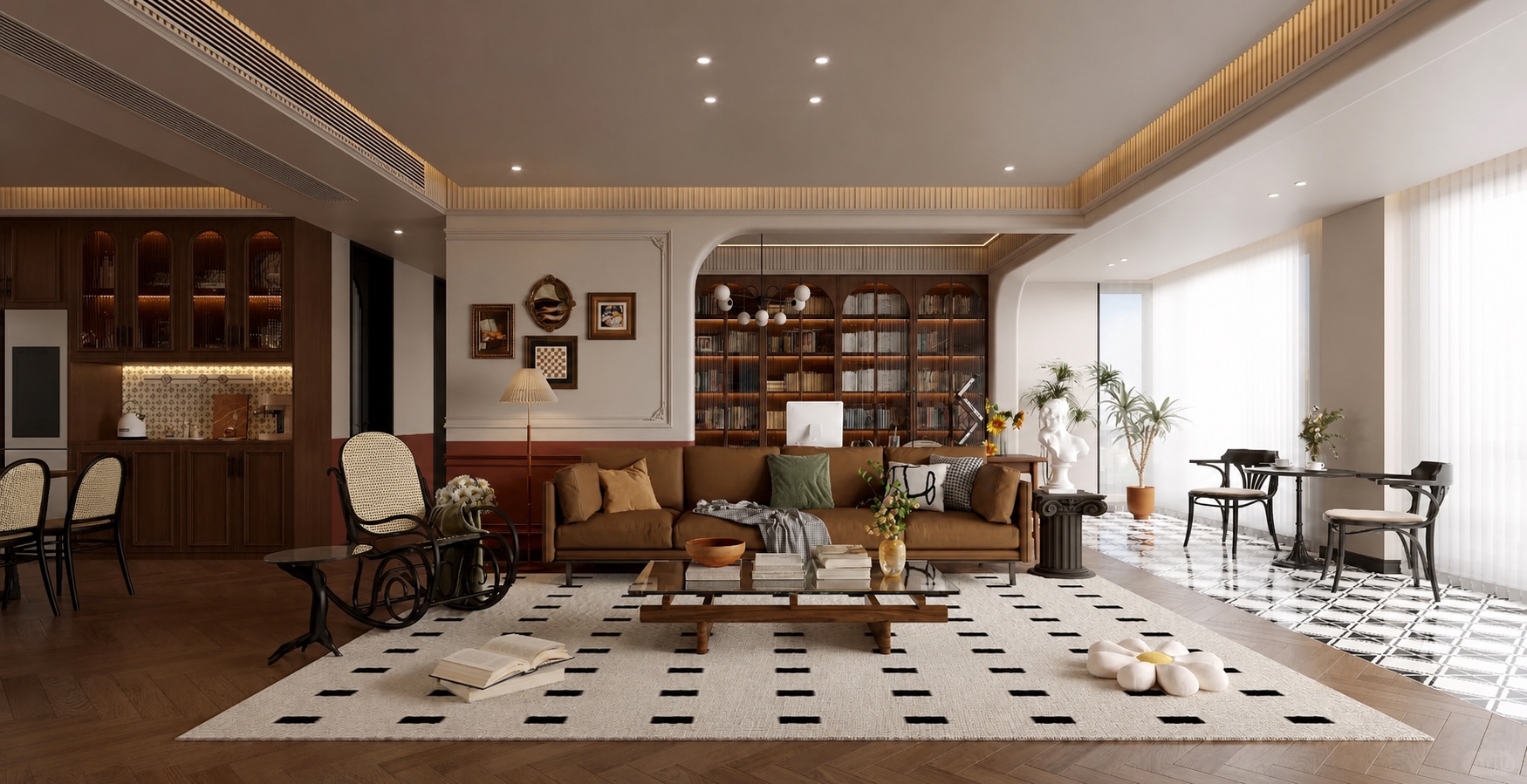
Begin with one consistent wood family across the largest elements: built-in storage, a dining table, shelving or flooring. Walnut and medium-to-dark oak create the depth associated with vintage interiors, while visible grain keeps the room natural. You do not need every item to match. A slightly lighter coffee table or chair frame adds the variation that makes a home feel developed over time.
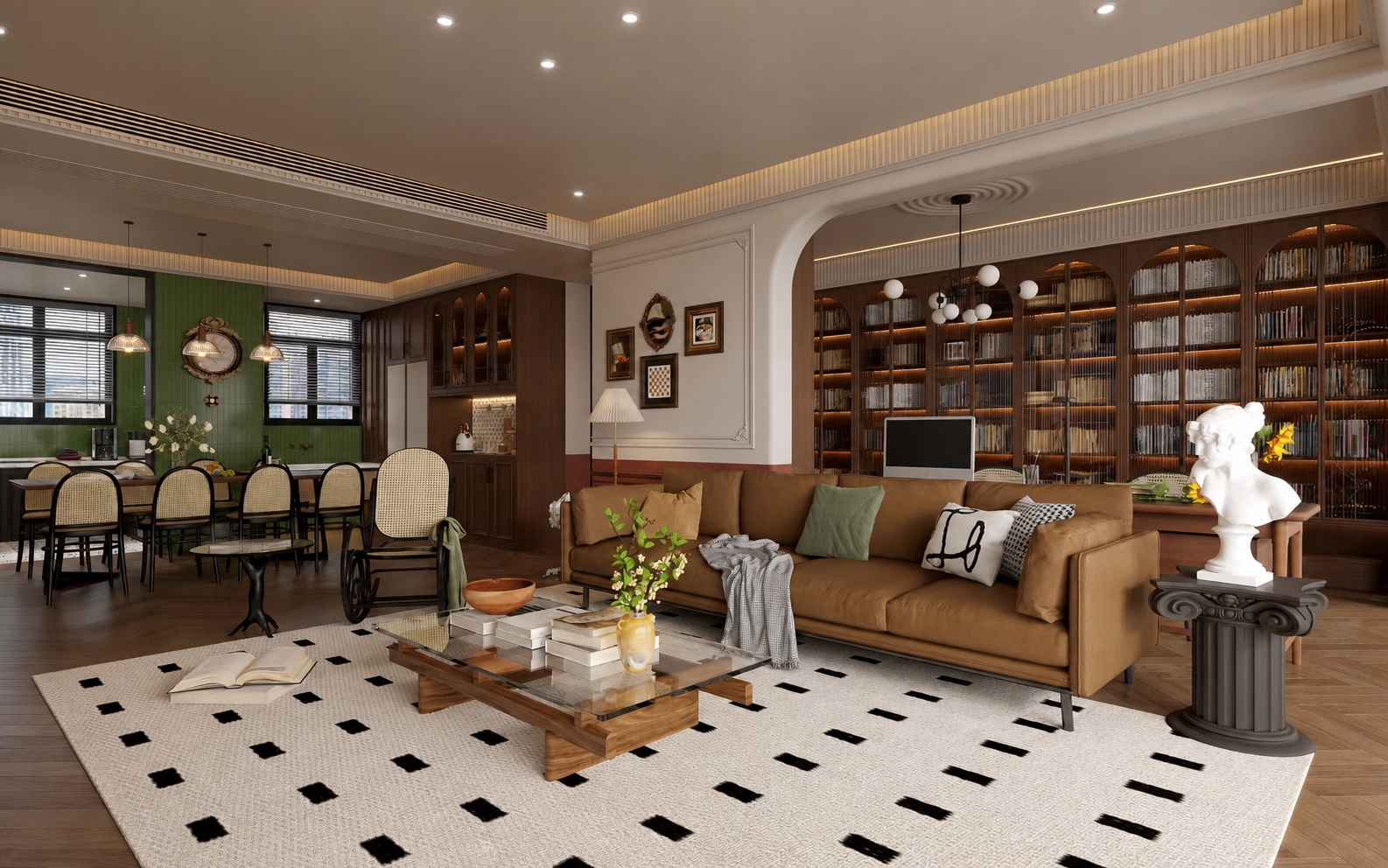
2. Balance vintage shapes with clean contemporary lines
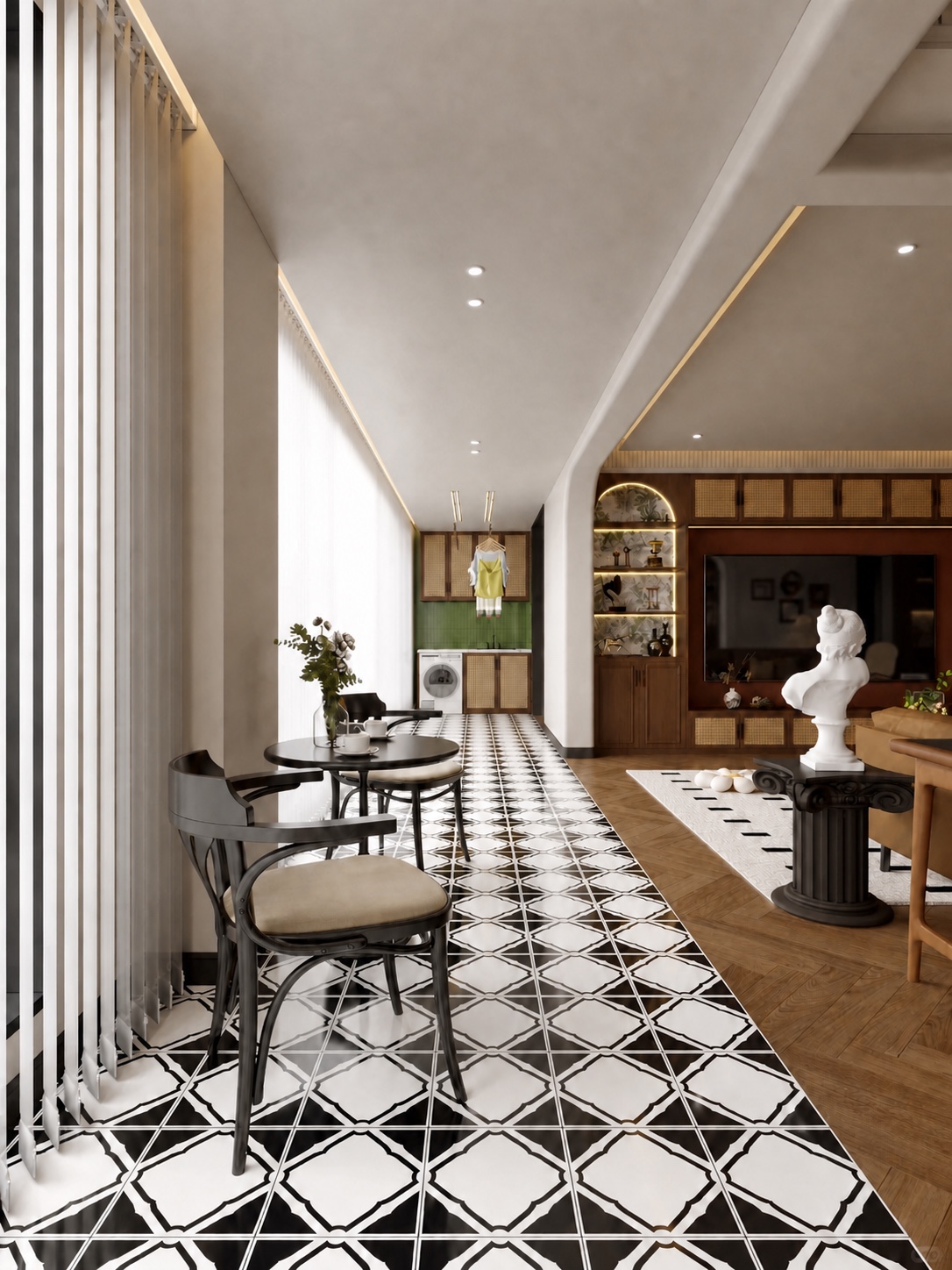
Arches, framed cabinet doors, turned details and classical art bring character, but they work best against simple architectural planes. Keep walls calm, allow generous negative space and choose a few strong silhouettes. In this interior, a sculptural rocking chair and pedestal side table add history, while a low sofa and streamlined glass table prevent the room from becoming formal.
3. Use cane, leather and glass to vary the texture
A convincing warm interior depends on texture more than decoration. Cane-backed dining chairs lighten the dark cabinetry, leather supplies softness and glass preserves visual space. These materials also age gracefully. When specifying furniture, compare finish samples in the room’s actual daylight so the undertones feel related rather than perfectly matched.
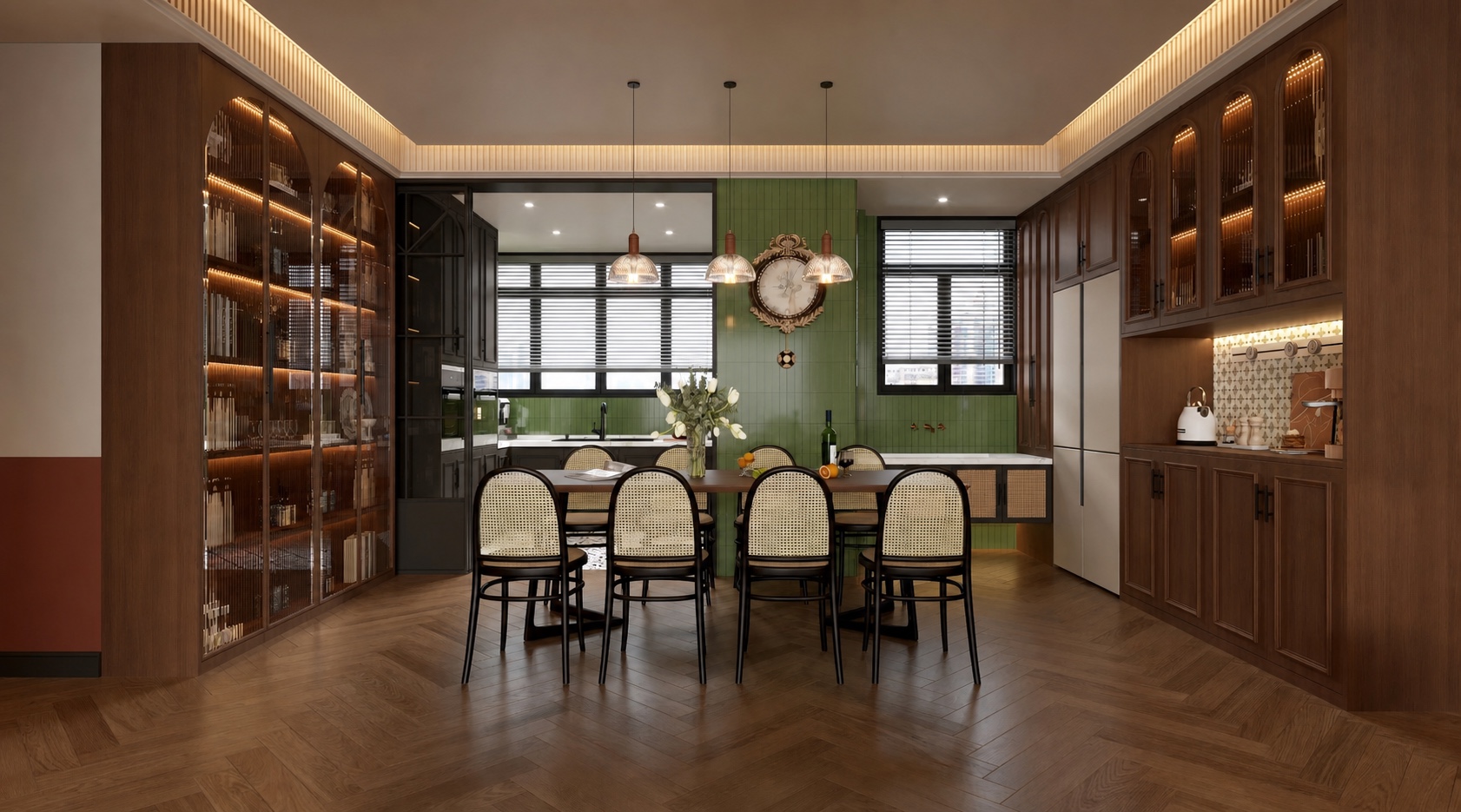
4. Layer lighting instead of relying on ceiling spots
Recessed lighting should support the room, not define it. Combine concealed perimeter light, warm cabinet illumination, pendant lights over the table and one or two shaded lamps at eye level. This creates depth after sunset and makes wood finishes richer. Aim for a consistent warm color temperature so the kitchen, dining area and living room furniture read as one composition.
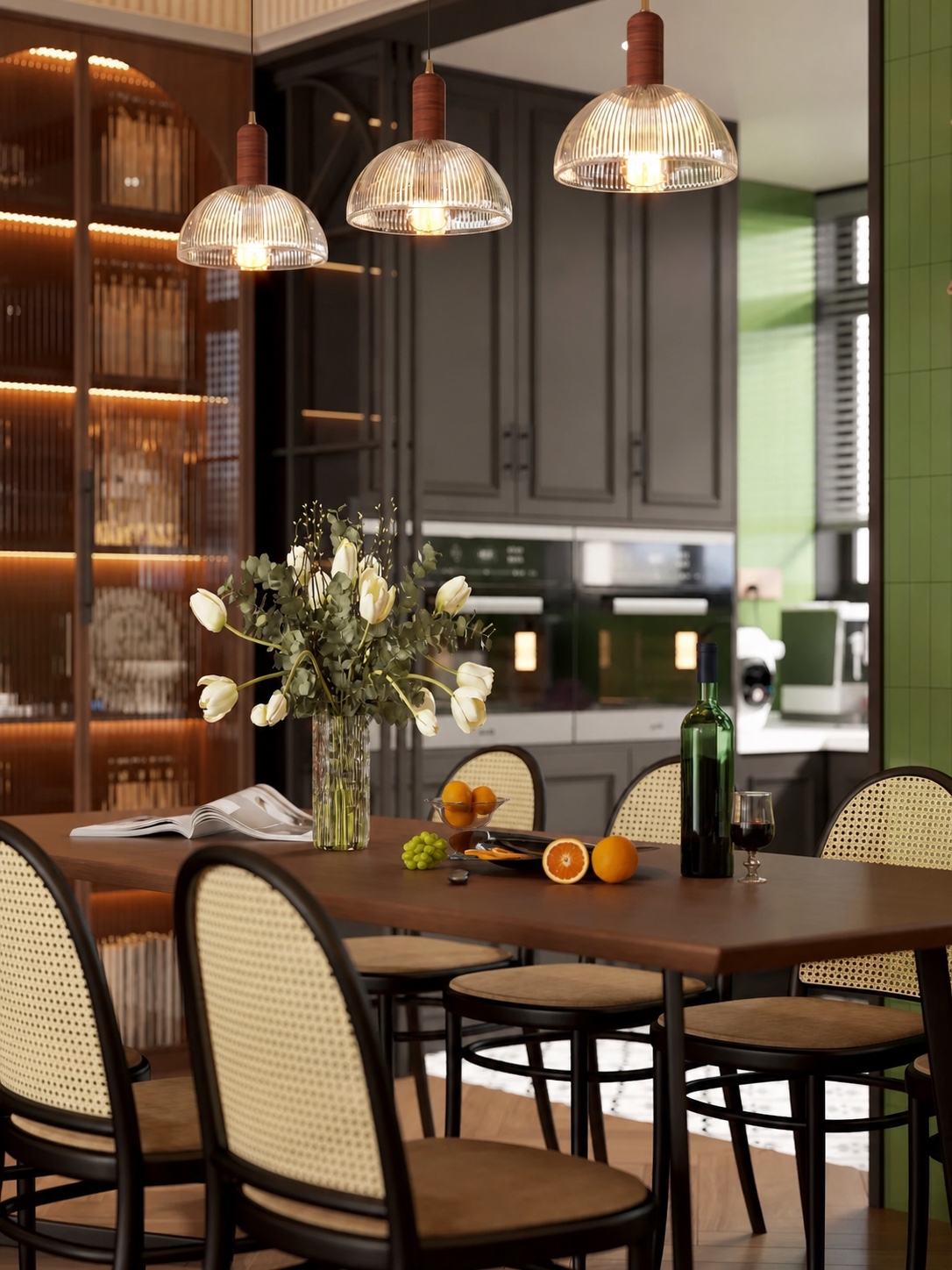
5. Treat green as a grounding neutral
Muted olive and moss green sit naturally beside walnut, tan leather, black metal and cream textiles. Use the color on one architectural surface—such as tiled kitchen walls—then repeat it in a cushion, plant or small object. This disciplined repetition gives an open-plan home identity without making every zone look the same.
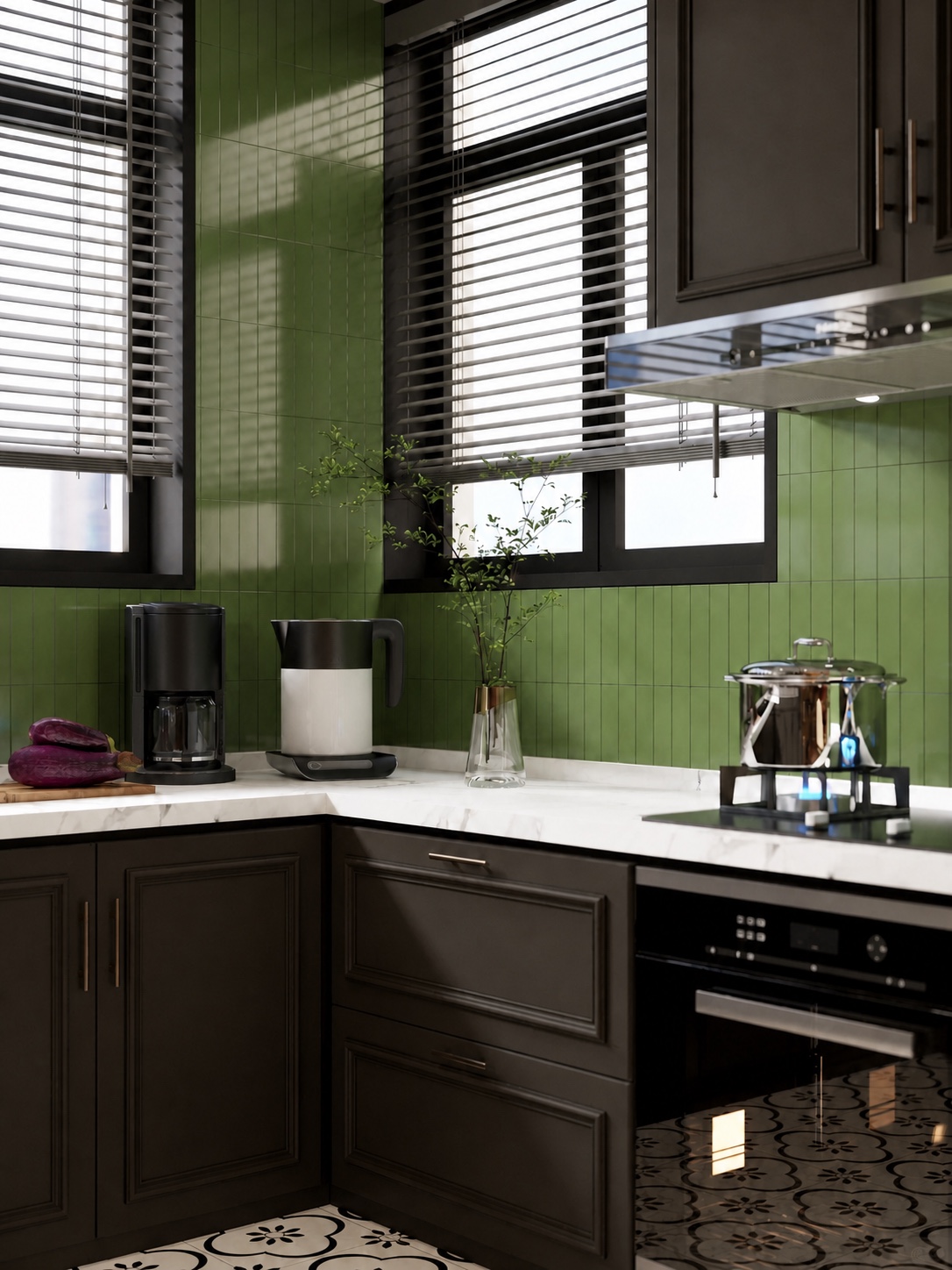
6. Connect zones through flooring and repeated details
Open layouts need boundaries as well as continuity. Herringbone timber can define the main living area, while patterned tile signals a breakfast nook or utility route. Repeat black outlines, cane panels or warm wood on both sides of the transition. The eye recognizes the spaces as related even when the floor finish changes.
7. Style surfaces with restraint
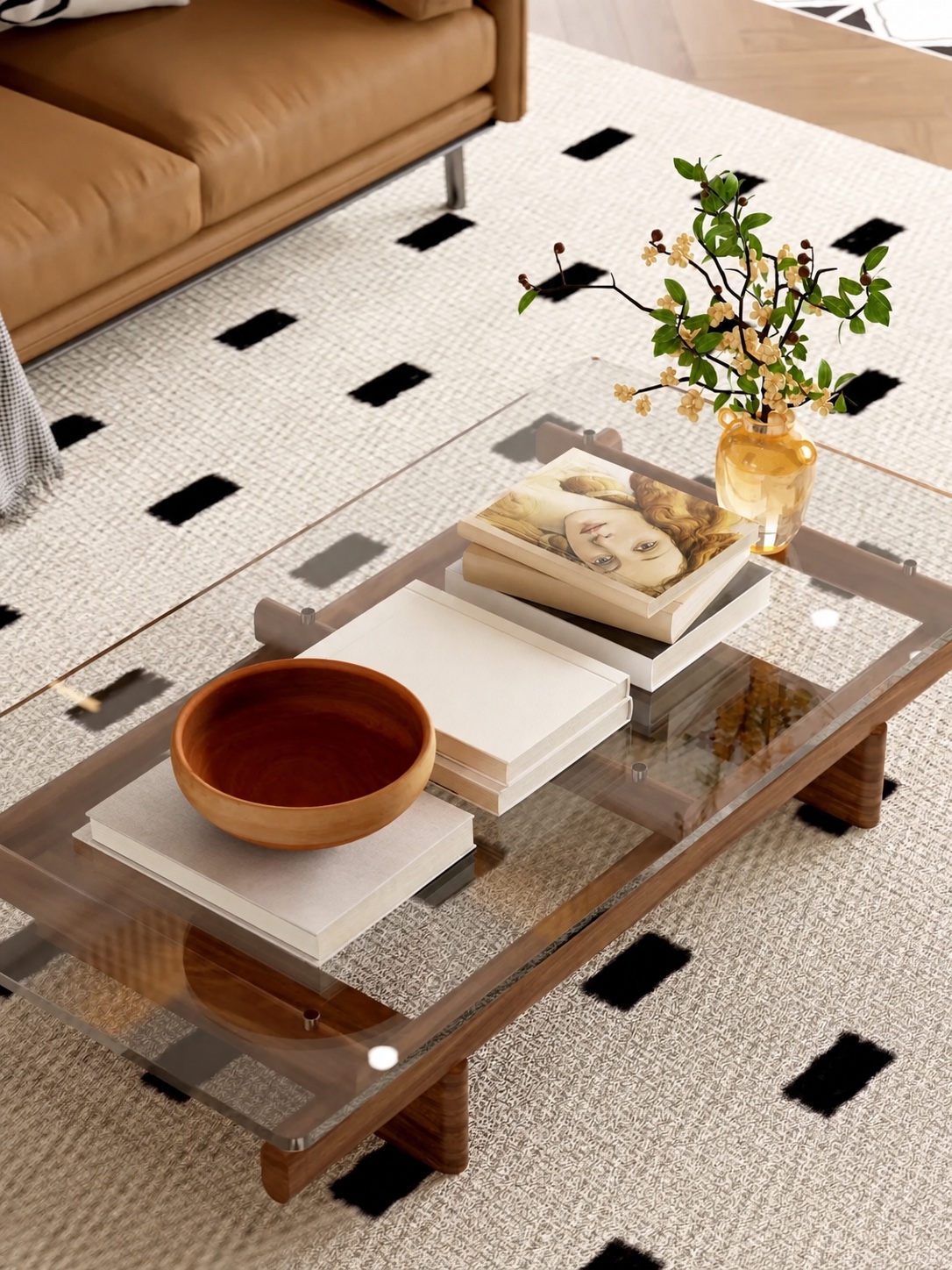
Vintage-inspired rooms can quickly become busy. Leave part of every surface empty and group objects by purpose: a short stack of books, one handmade bowl and a small branch arrangement are enough for a coffee table. Vary height and material, but keep the palette close to the room. The goal is evidence of daily life, not a showroom display.
A timeless home starts with a coordinated plan
The strongest warm American vintage interiors are planned as a complete material story: wood tone, upholstery, metal finish, lighting temperature and accent color are considered together. If you are furnishing several rooms, a coordinated specification reduces costly mismatches and creates a home that feels personal, practical and lasting.
Explore Ratahome’s furniture collections, learn how every project commitment is documented in our warranty policy, or talk with our team about a whole-home furniture plan.