Materials & Craft
What We Check Before Shipping Custom Cabinets
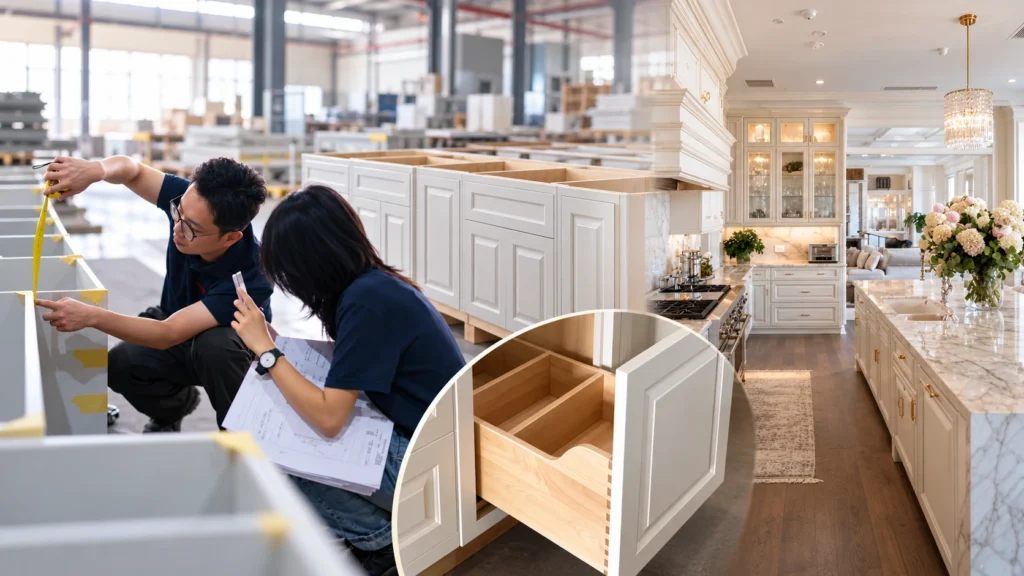
Learn what to inspect before shipping custom cabinets, including drawings, dimensions, trial assembly, hardware, finishes, accessories, packing and final factory…
Read article →

A practical guide to evaluating upholstered furniture—from the hidden frame and support system to foam, fabric, leather, stitching, dimensions, comfort and final quality control.
Good upholstery is not defined by softness alone. A sofa can feel comfortable in a showroom and still develop loose fabric, collapsed cushions, noisy support or uneven seams after regular use. To judge quality well, inspect the upholstered piece as a complete system: structure + support + filling + cover material + tailoring + dimensions + finishing.
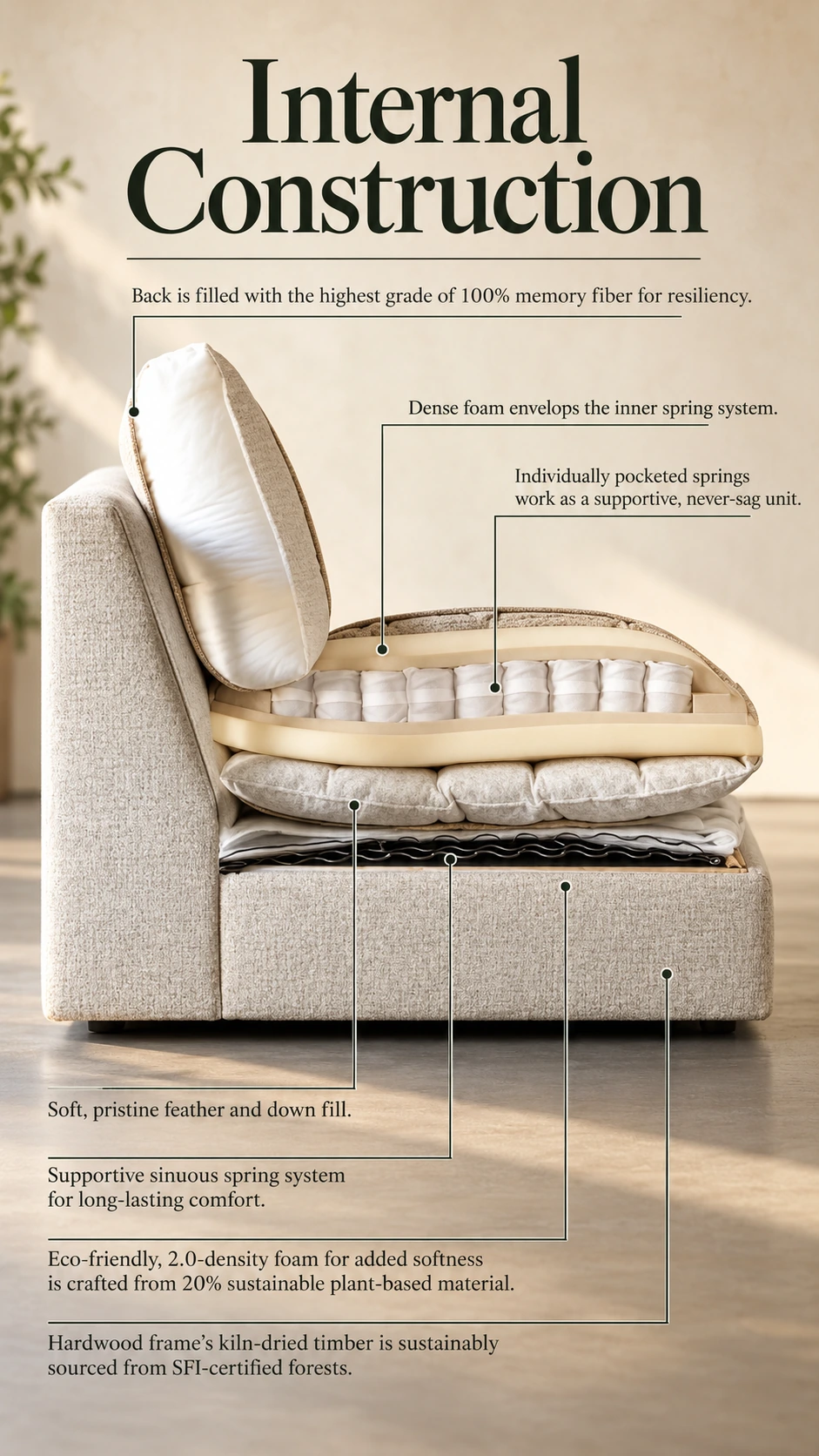
For custom furniture, consistency matters even more because appearance, comfort and durability are created through multiple factory decisions. Ratahome’s sofa construction guide explains the internal build in more depth; this guide focuses on what a buyer can check when comparing samples, approving production or reviewing a finished piece.
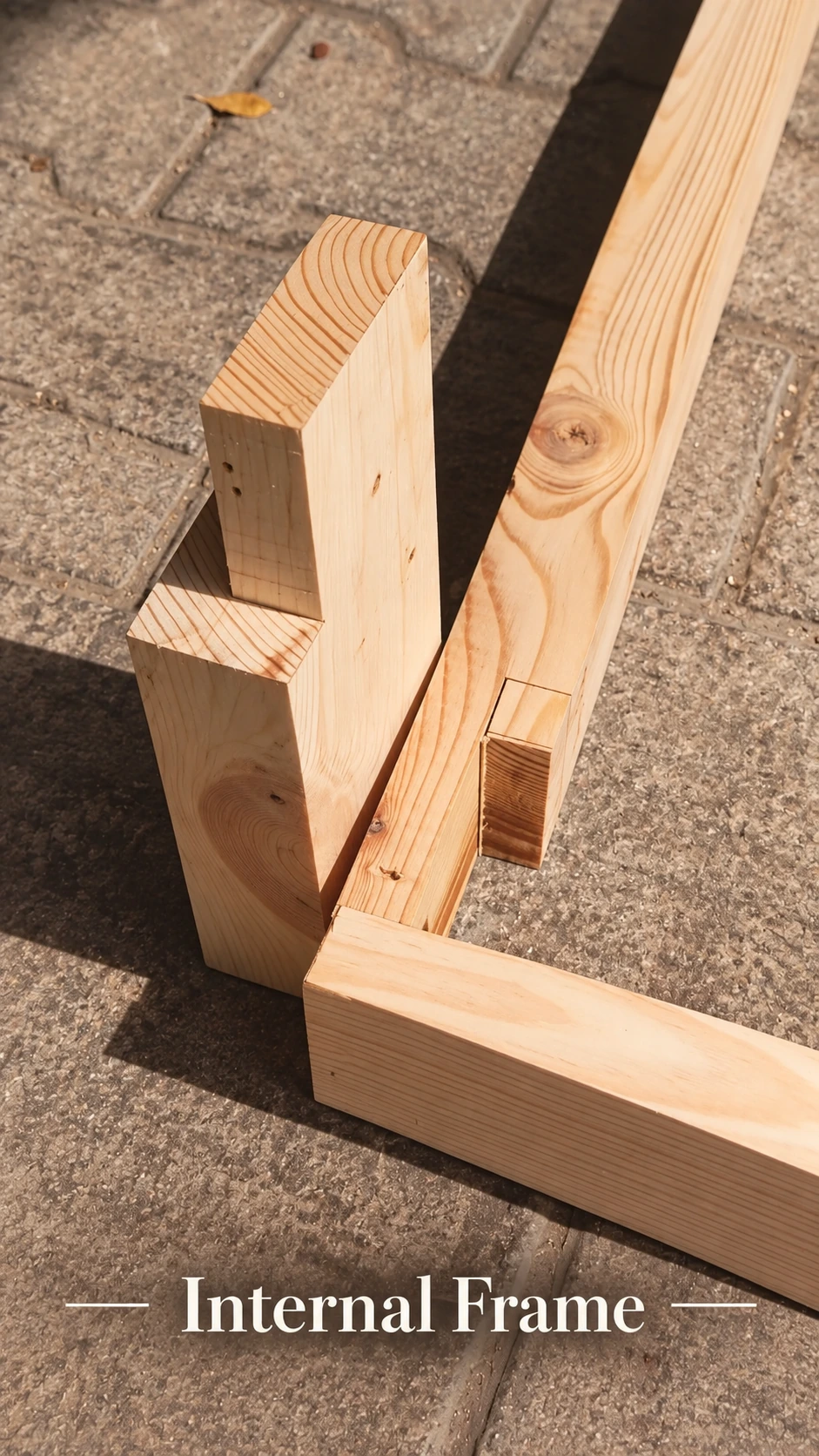
The frame controls geometry and rigidity, while the suspension system controls how weight is distributed across the seat. Before judging fabric, ask how the frame is joined, where reinforcement is added and whether the seat uses springs, webbing or another support system.
Square corners, controlled curves and stable seat platforms give upholsterers a reliable foundation. If the frame is distorted, even excellent foam and fabric cannot hide that problem for long. For more on structural connections, see the Furniture Joinery Guide.
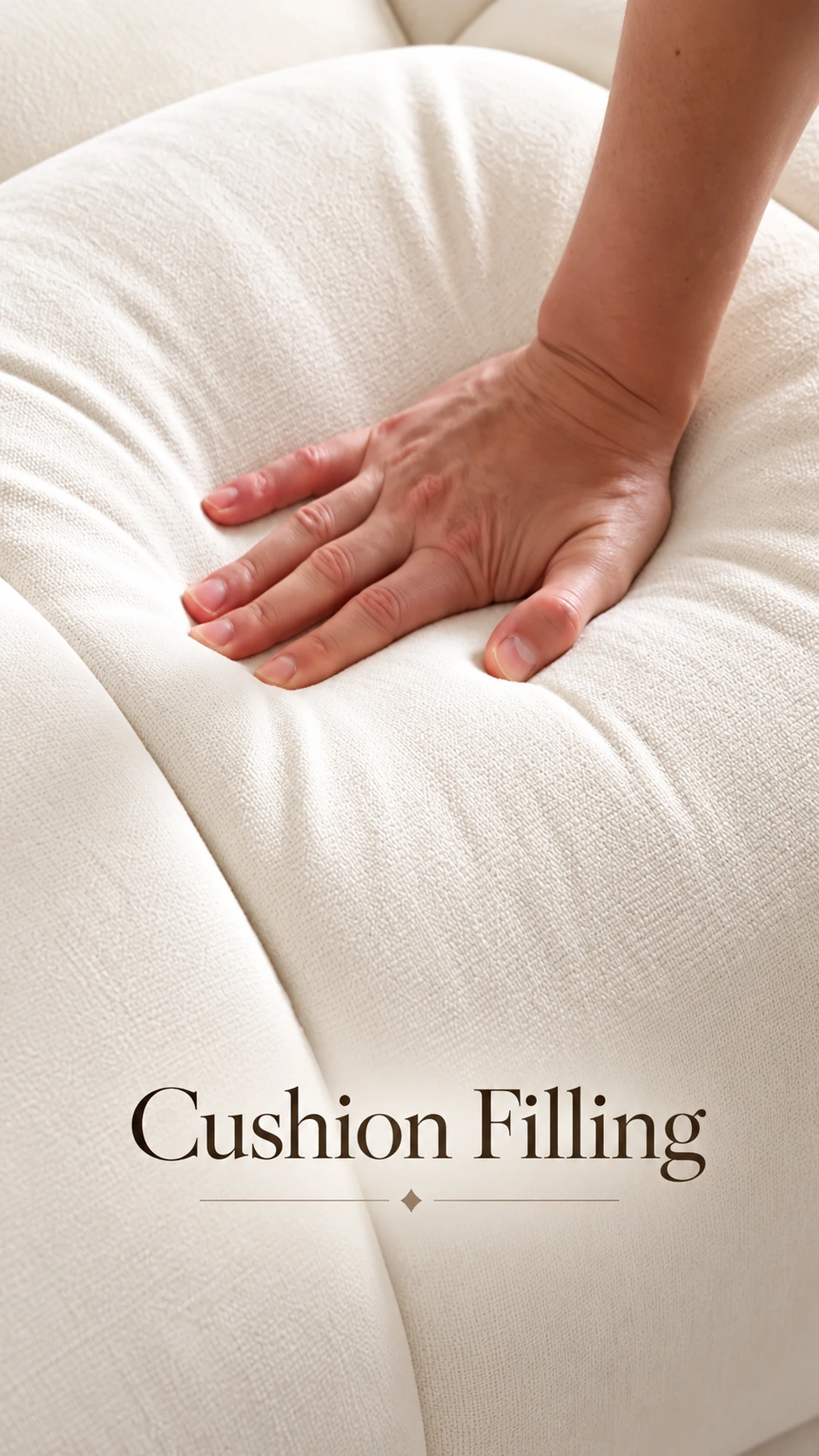
Foam density, firmness and resilience are related but not identical. A seat can be soft yet durable, or firm yet low quality. What matters is whether the cushioning specification matches the seat geometry, expected use and desired comfort.
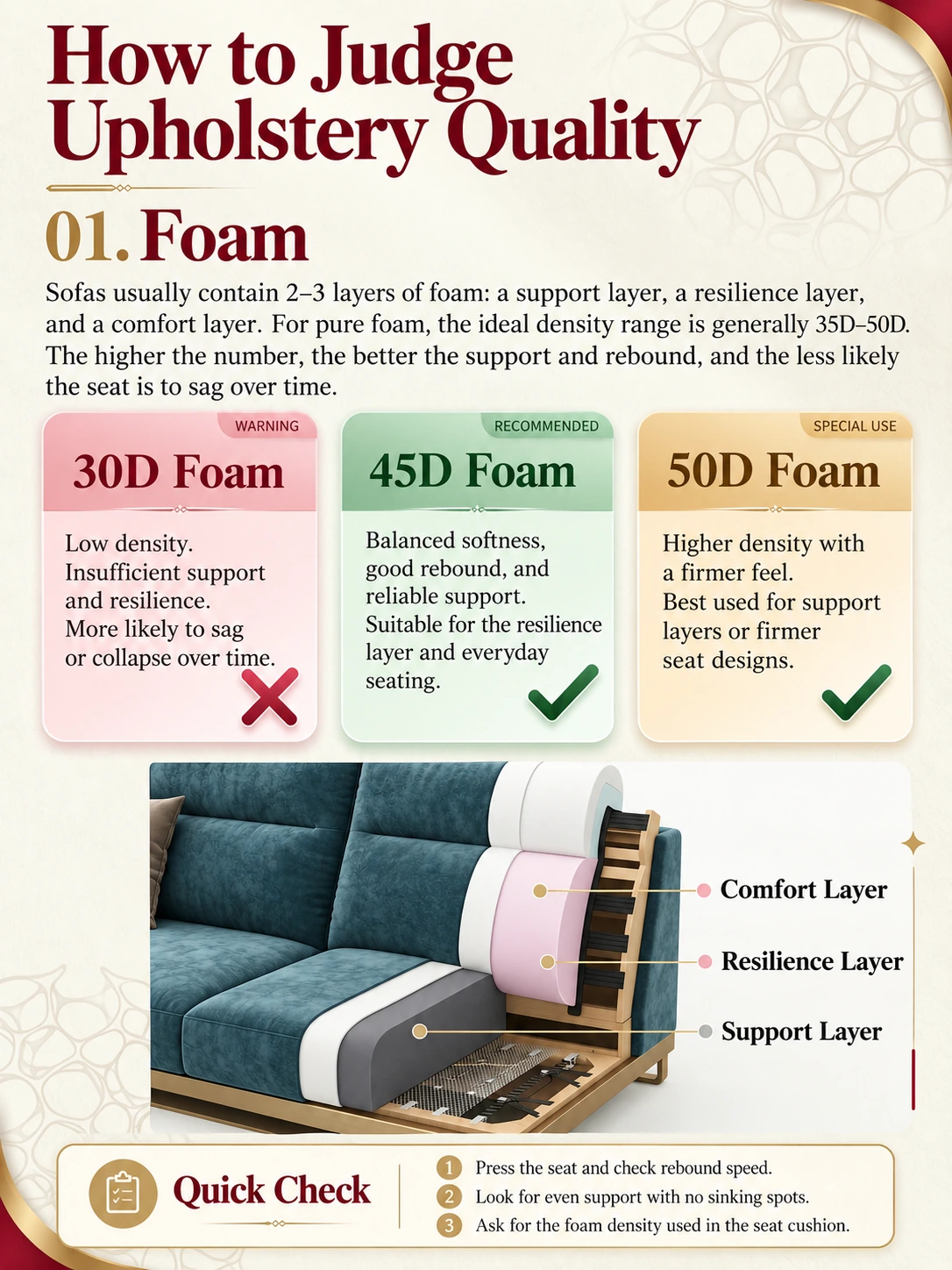
Press several areas by hand and sit in more than one position. After unloading the seat, watch the recovery. Slow or uneven recovery, permanent depressions, hard edge transitions or inconsistent cushion heights can indicate problems in foam selection, cutting, layering or filling distribution.
The six reference sheets in the ZIP belong to one numbered series. They are kept together here in sequence so fabric, filling and leather categories can be compared without breaking the visual logic of the source set.
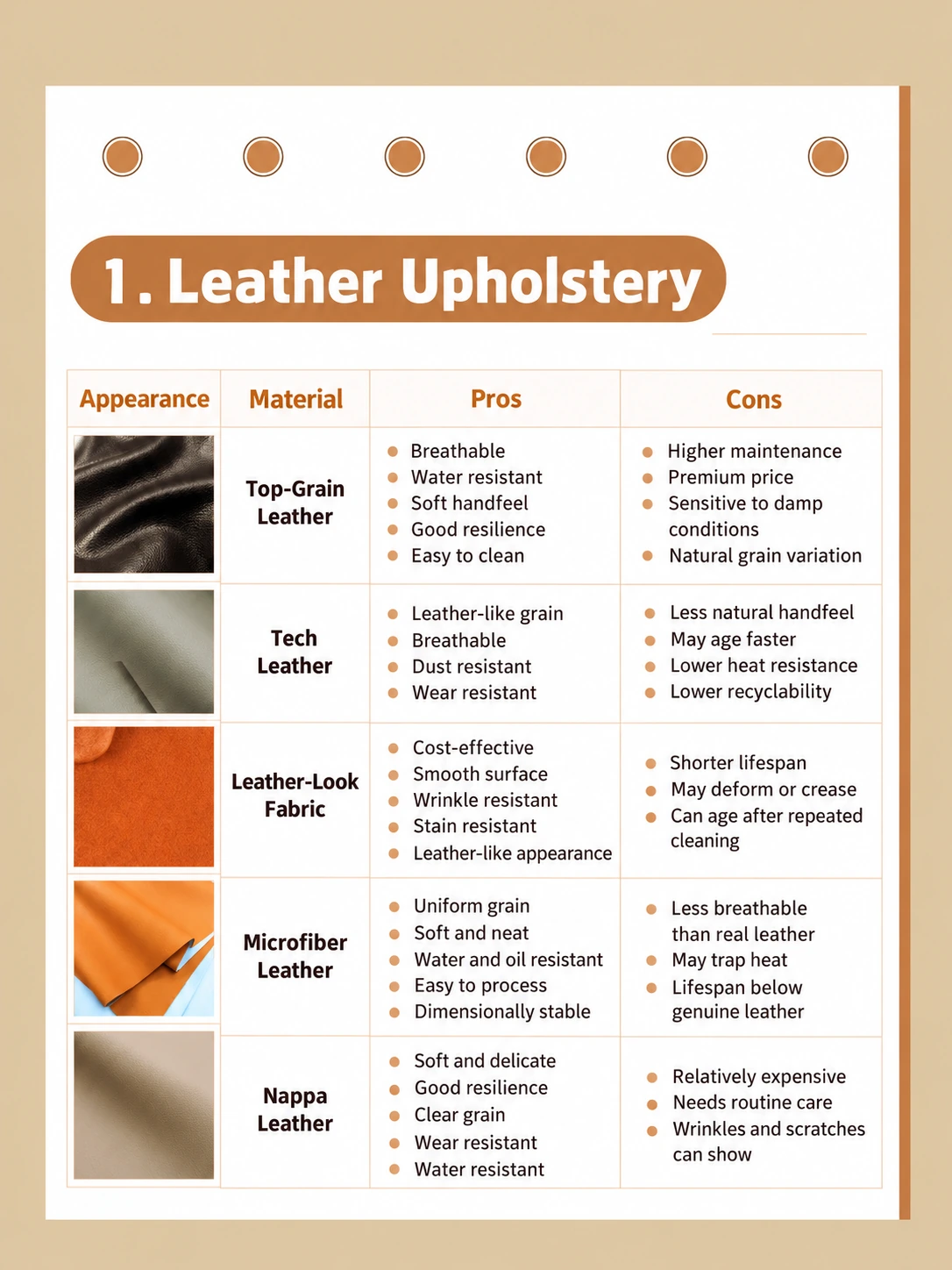
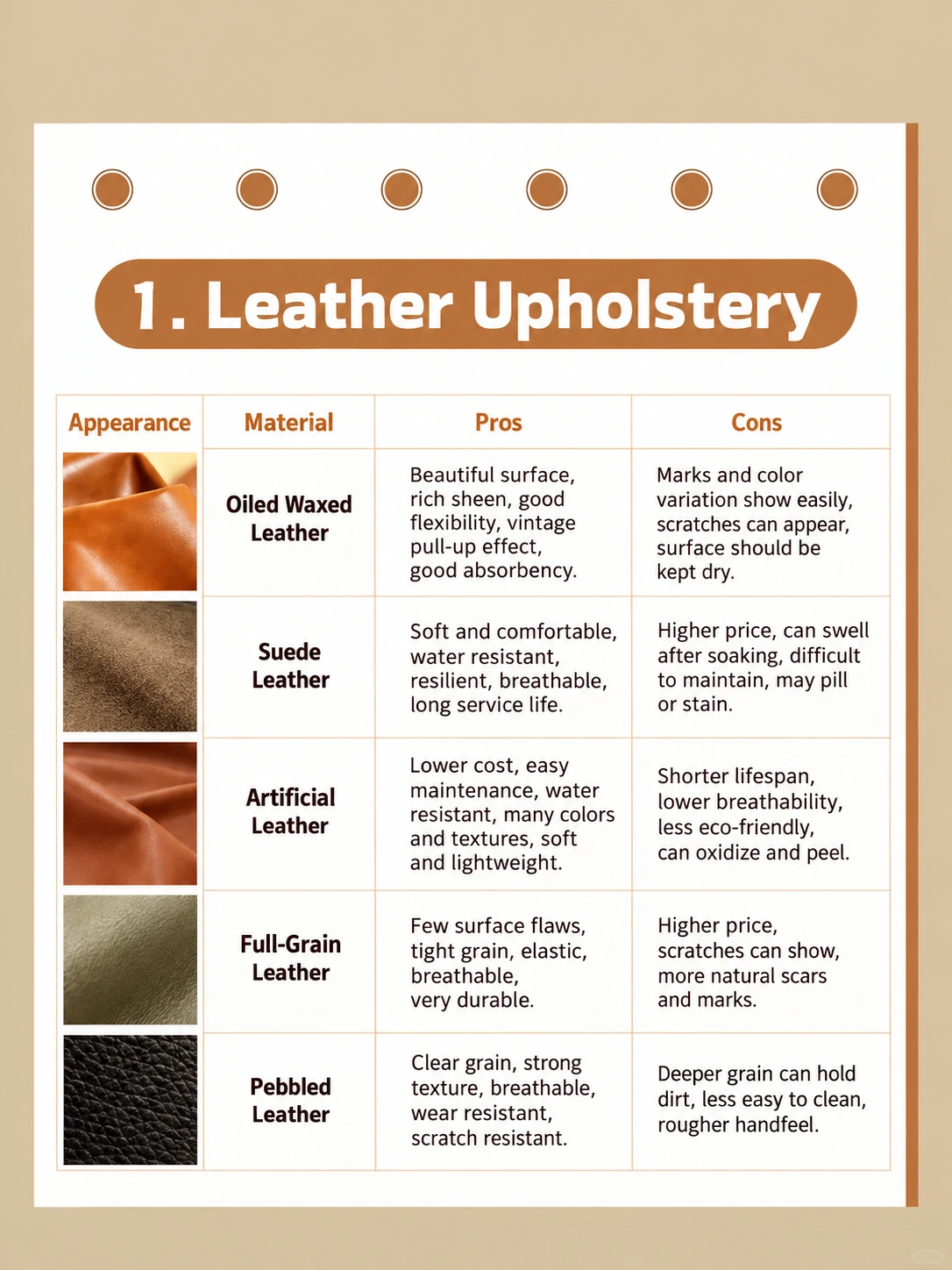
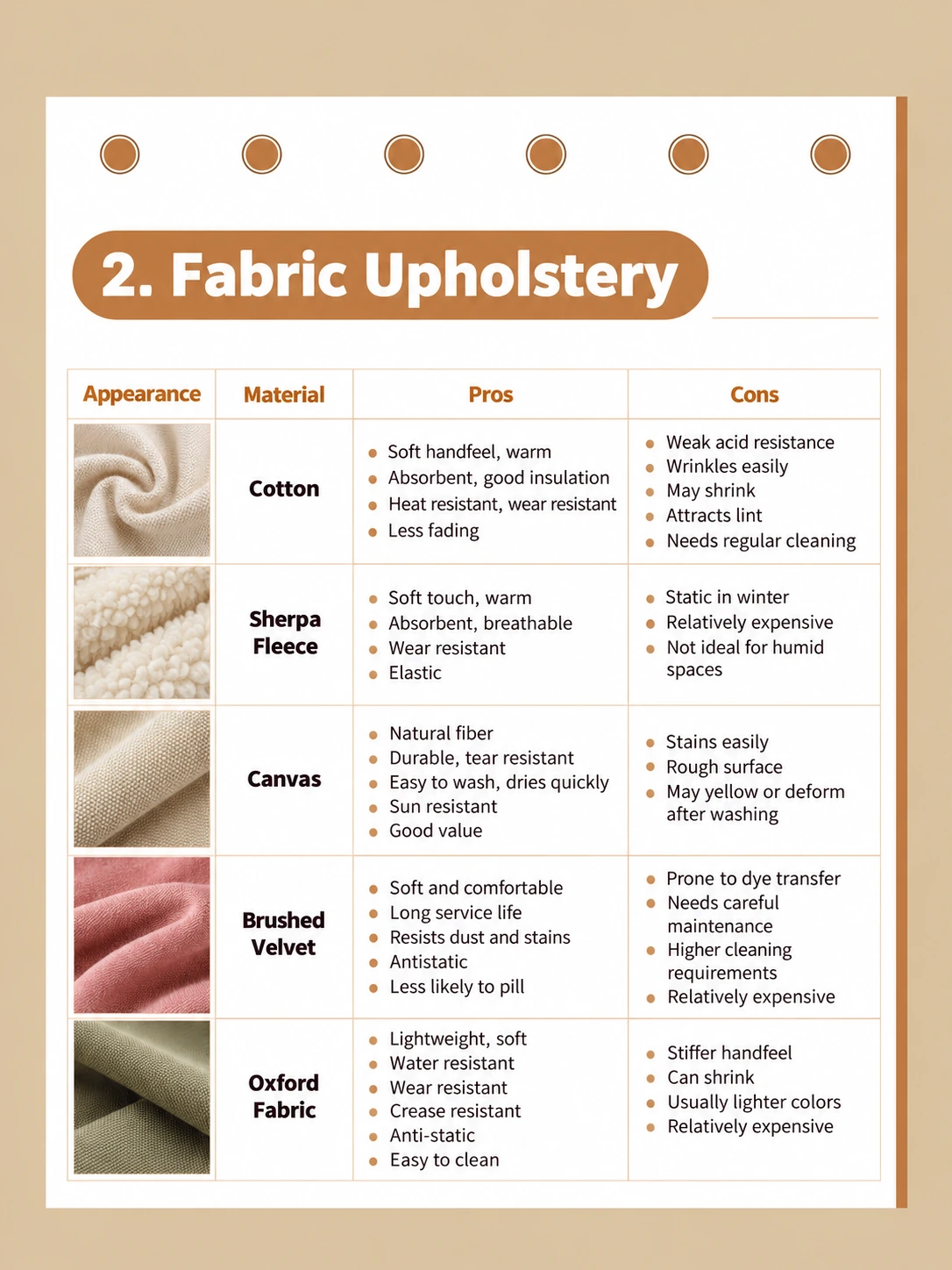
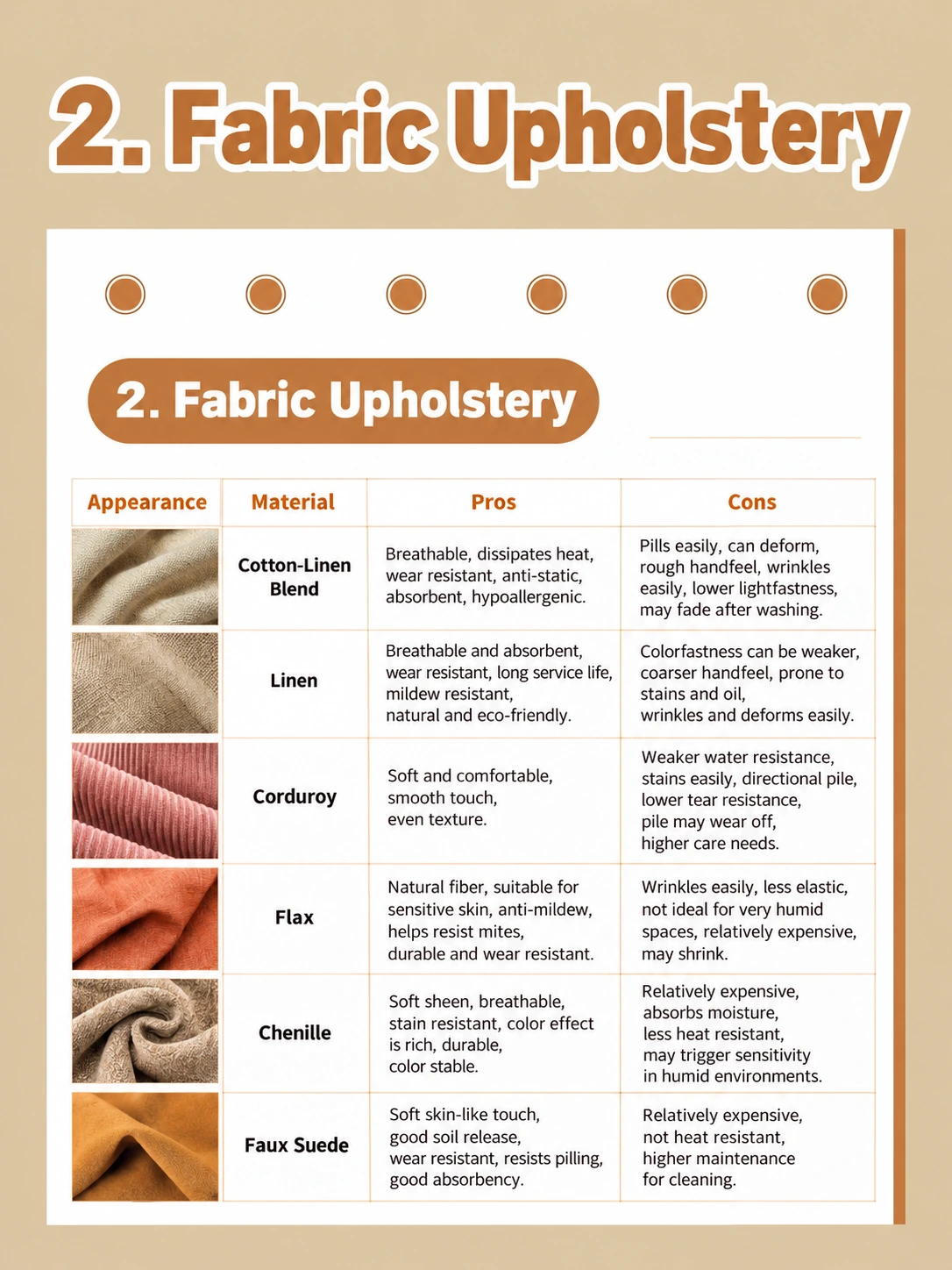
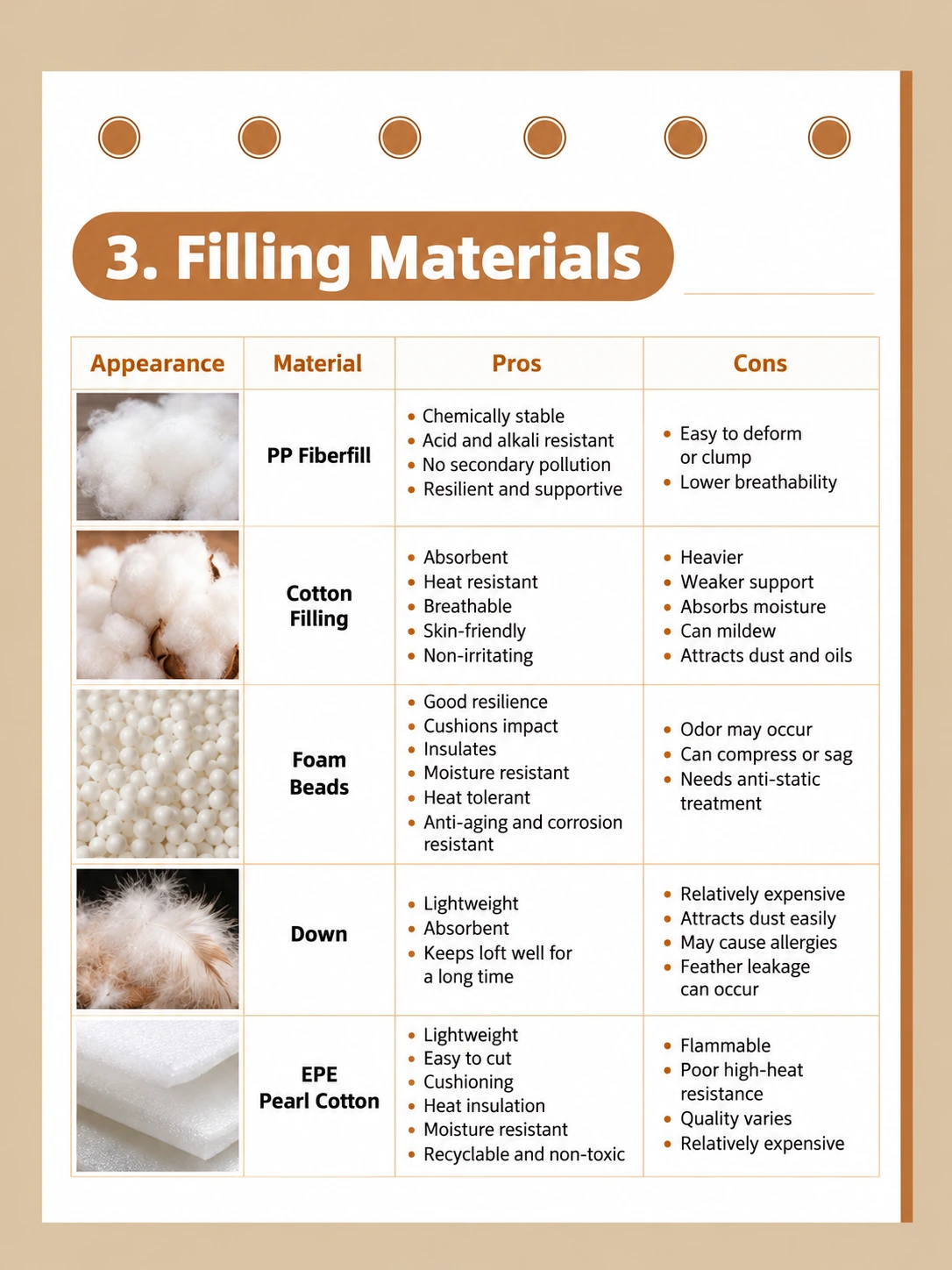
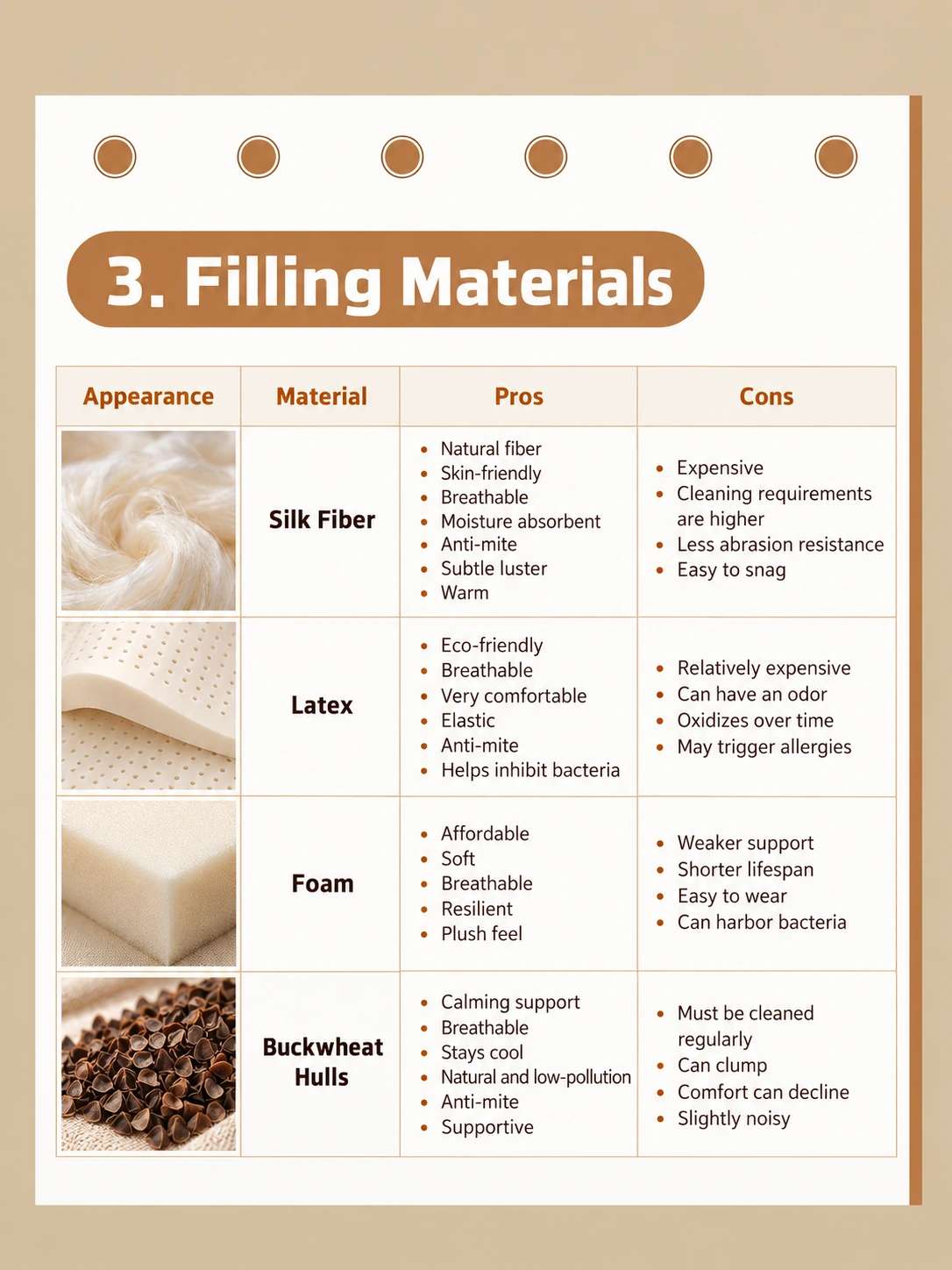
Reference sequence corrected to follow the category numbering shown on the source sheets: 1. Leather Upholstery → 2. Fabric Upholstery → 3. Filling Materials. Pages within each category remain together.
Use this inspection sequence to connect what is visible on the finished upholstery with the hidden build underneath it. The construction-focused images stay together here; the fabric, leather/finished-surface, stitching and dimension images are placed directly beside Sections 6–9 so the visual evidence follows the text.
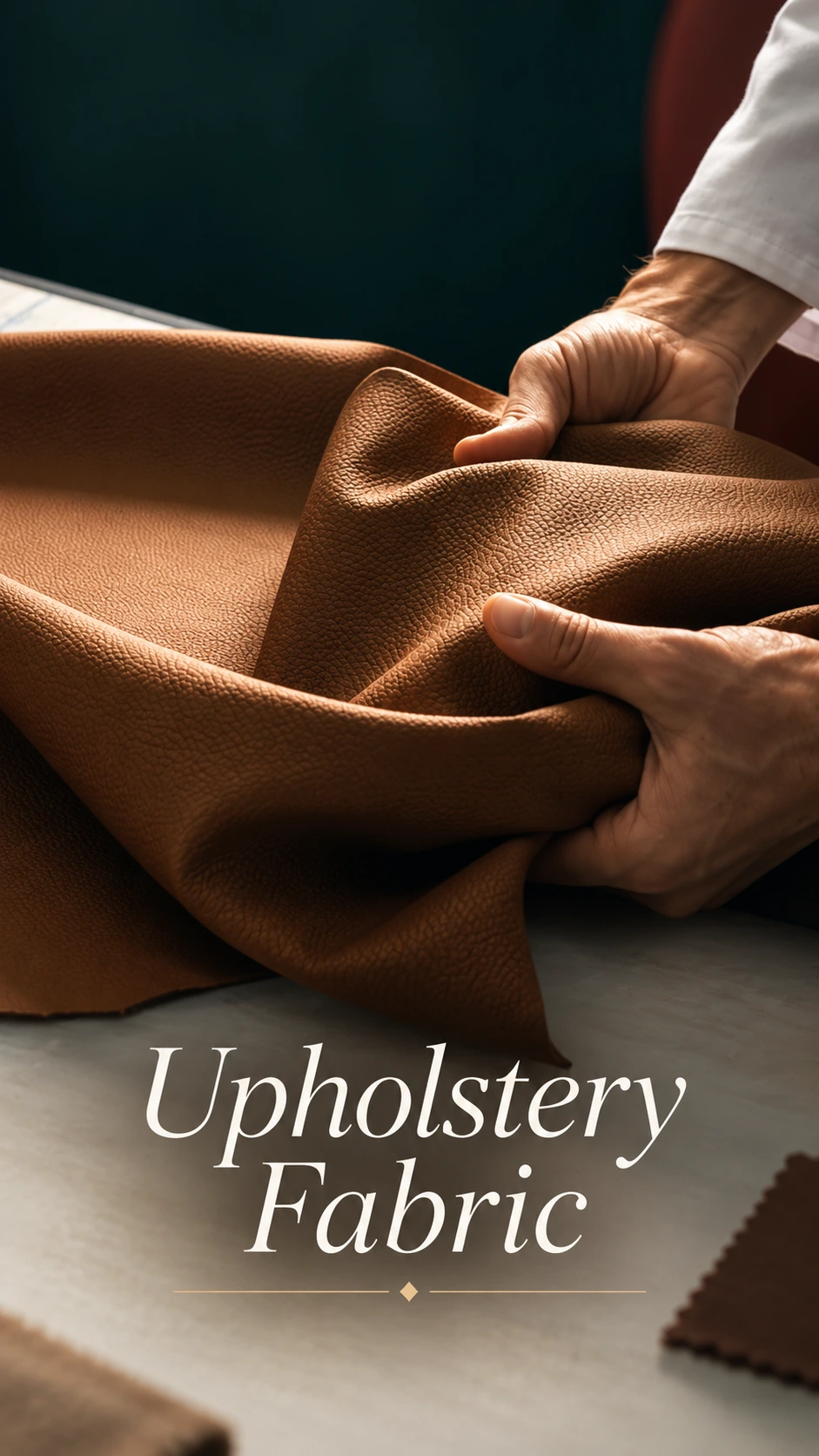
Fabric quality is more than fiber content. Inspect weave density, surface consistency, color, pattern alignment and how the material behaves when pulled over curves and corners. A good upholstery fabric should suit the expected level of use and the furniture geometry.
Arms, front rails, piping, seat edges and tight curves show tailoring quality quickly. Fabric should not look overstretched, baggy or distorted. On patterned upholstery, check that the pattern is intentionally centered and aligned where panels meet. Compare the approved swatch under the same lighting used for final inspection.
Leather varies by type, surface treatment and finishing. The most expensive-looking surface is not automatically the best choice for every project. Some leathers emphasize natural character; others use protective finishes to improve consistency and maintenance.

Inspect color consistency under natural light, then compare panel-to-panel variation. Some variation is desirable in natural leather, but it should still look intentional across the finished piece. Bend and press the material to see whether the surface feels natural rather than brittle or excessively coated.
Seams are one of the fastest ways to judge upholstery craftsmanship because they show whether cutting, tension and sewing are controlled. Look for straight stitch lines, even seam allowances, clean corners and consistent piping.
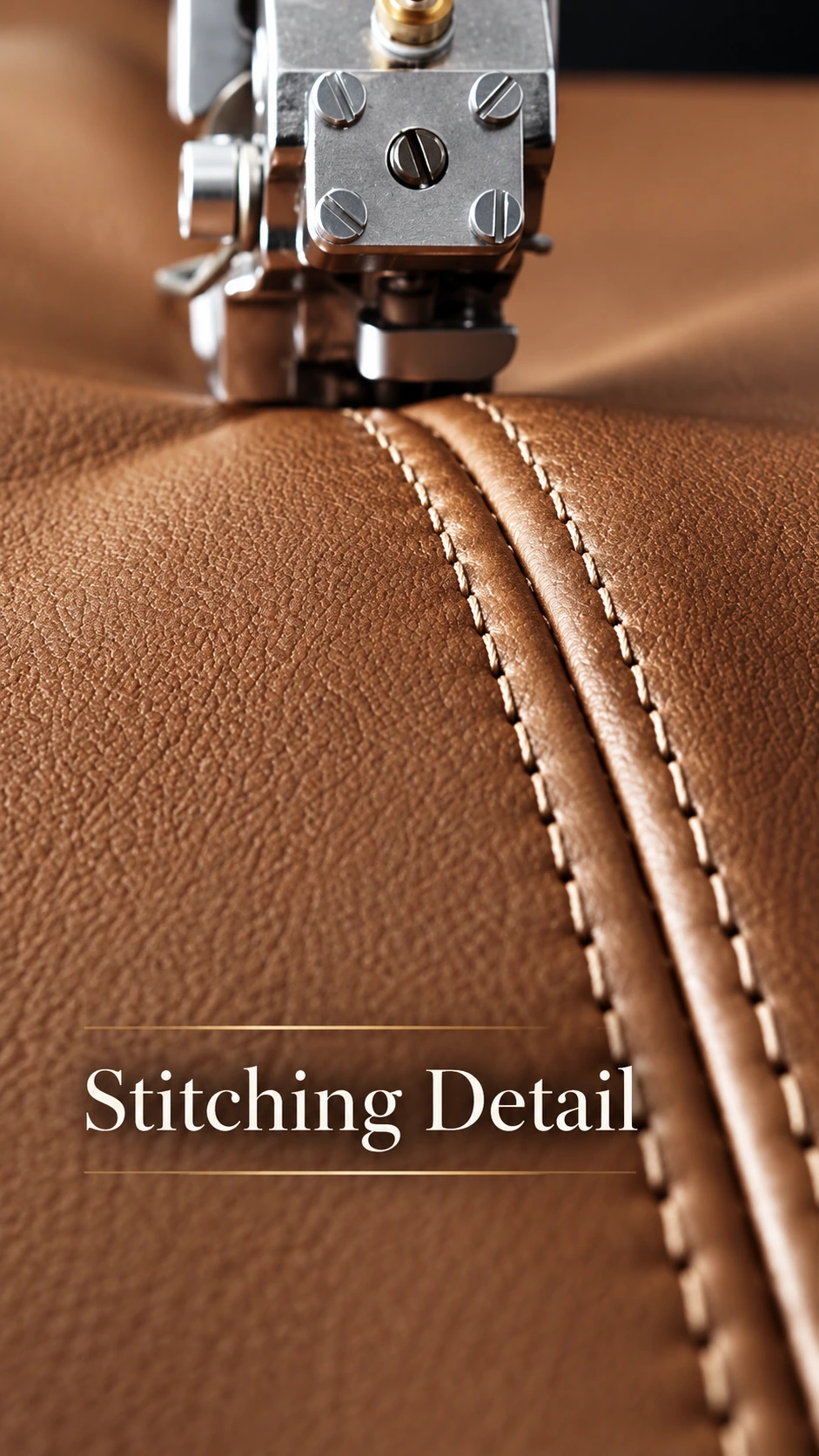
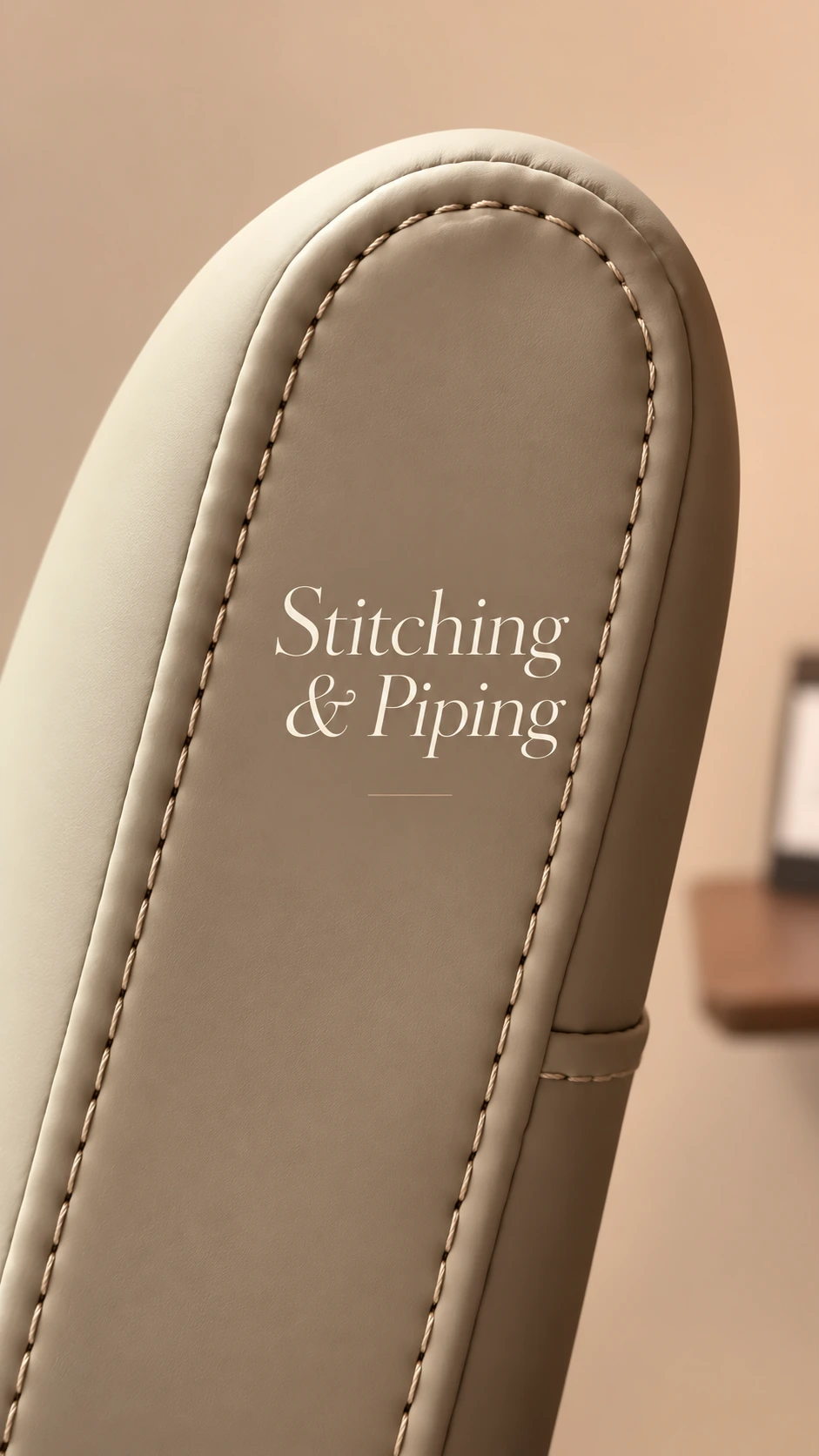
Watch for wandering stitch lines, puckering beside seams, piping that changes thickness, unmatched corners, loose thread ends and sudden changes in cover tension. These are often small details, but repeated inconsistency usually points to weak process control.
Two sofas can look similar but sit completely differently. Seat height, seat depth, back height and arm height determine posture and comfort. For custom upholstery, approve dimensions before production and verify them again on the finished item.
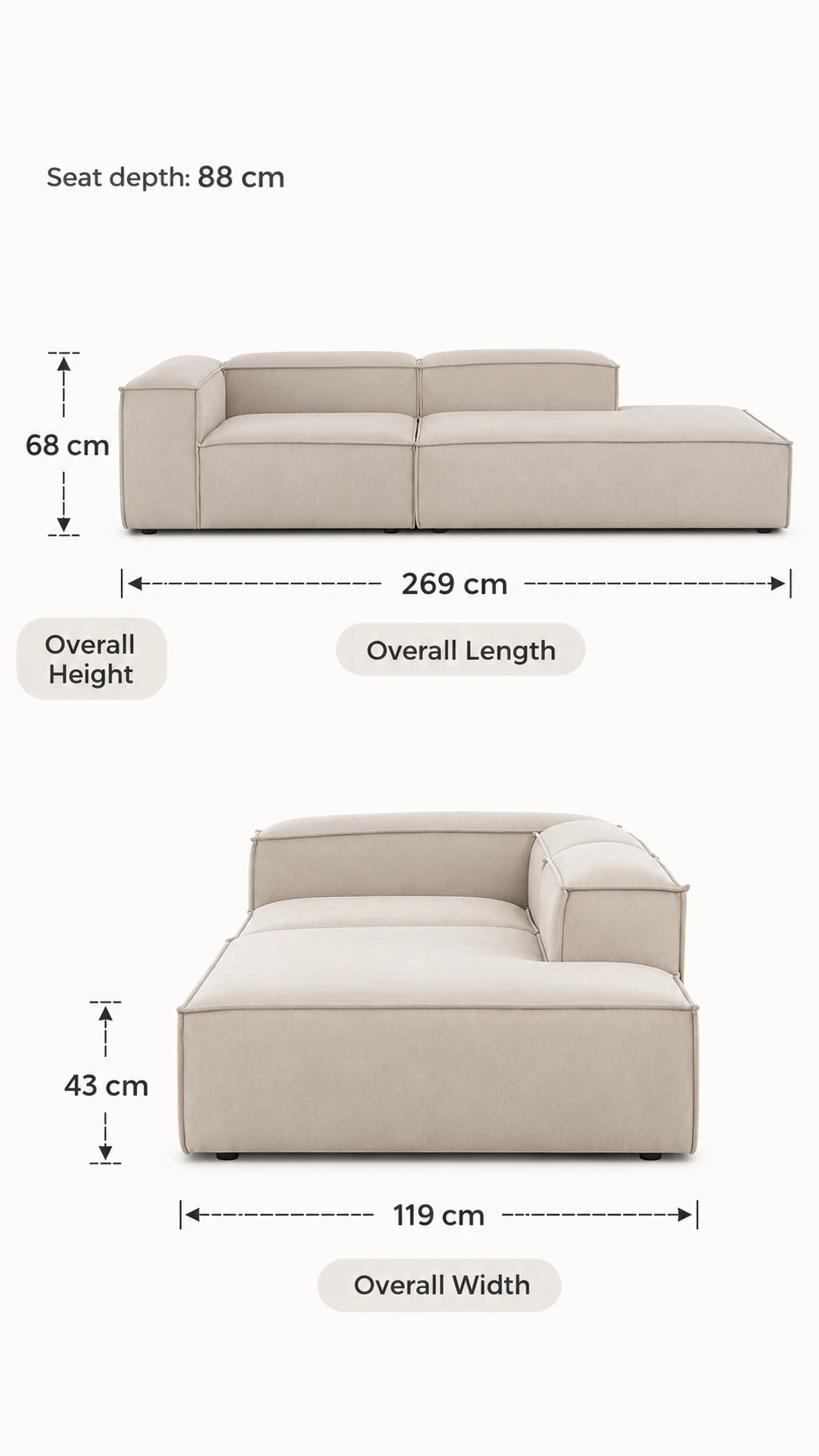
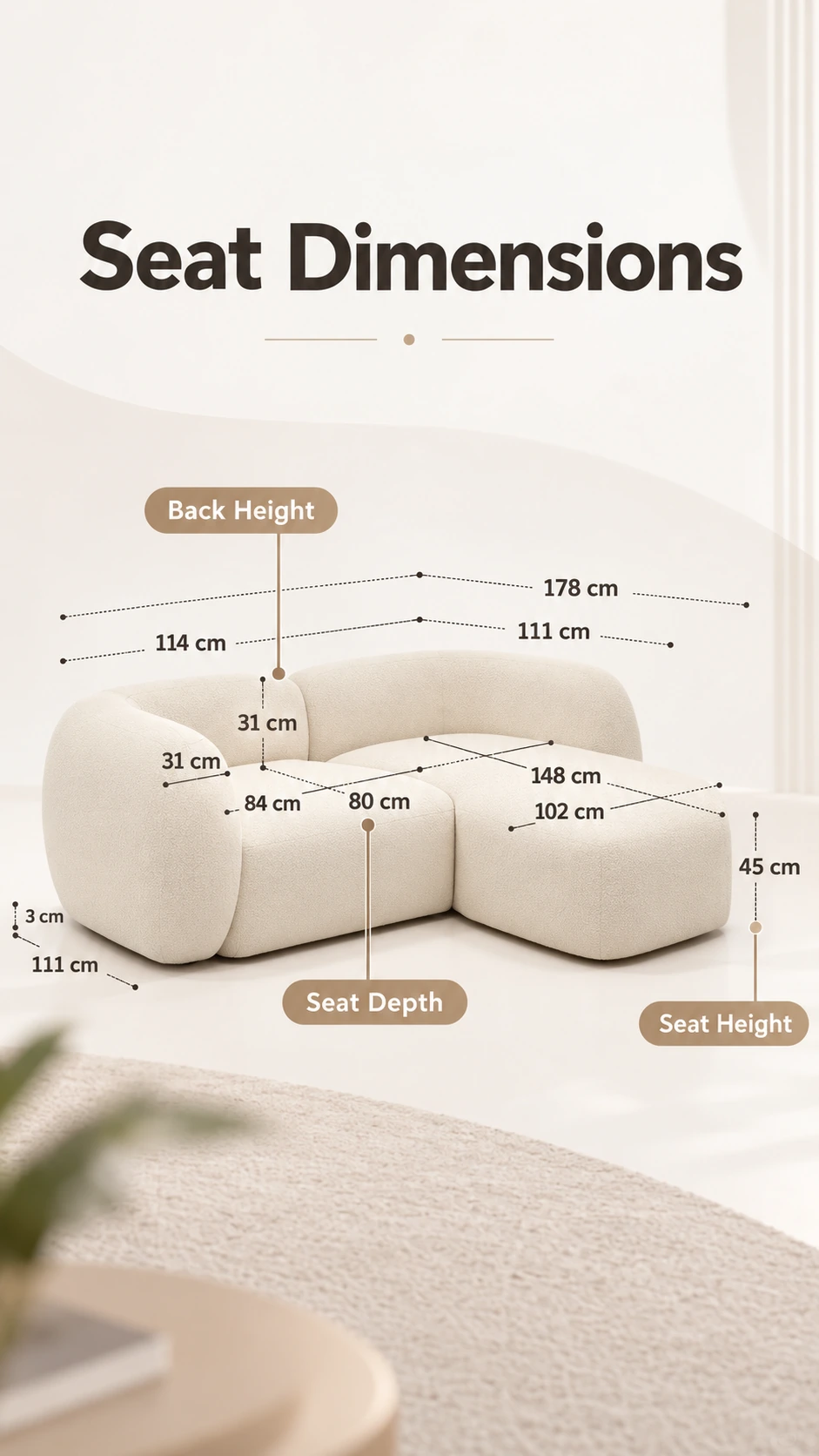
Measure the finished furniture against the approved drawing, then sit in several positions rather than testing only the center cushion. Weight should feel evenly supported. After standing, watch how quickly cushions recover and whether the cover returns to a controlled shape.
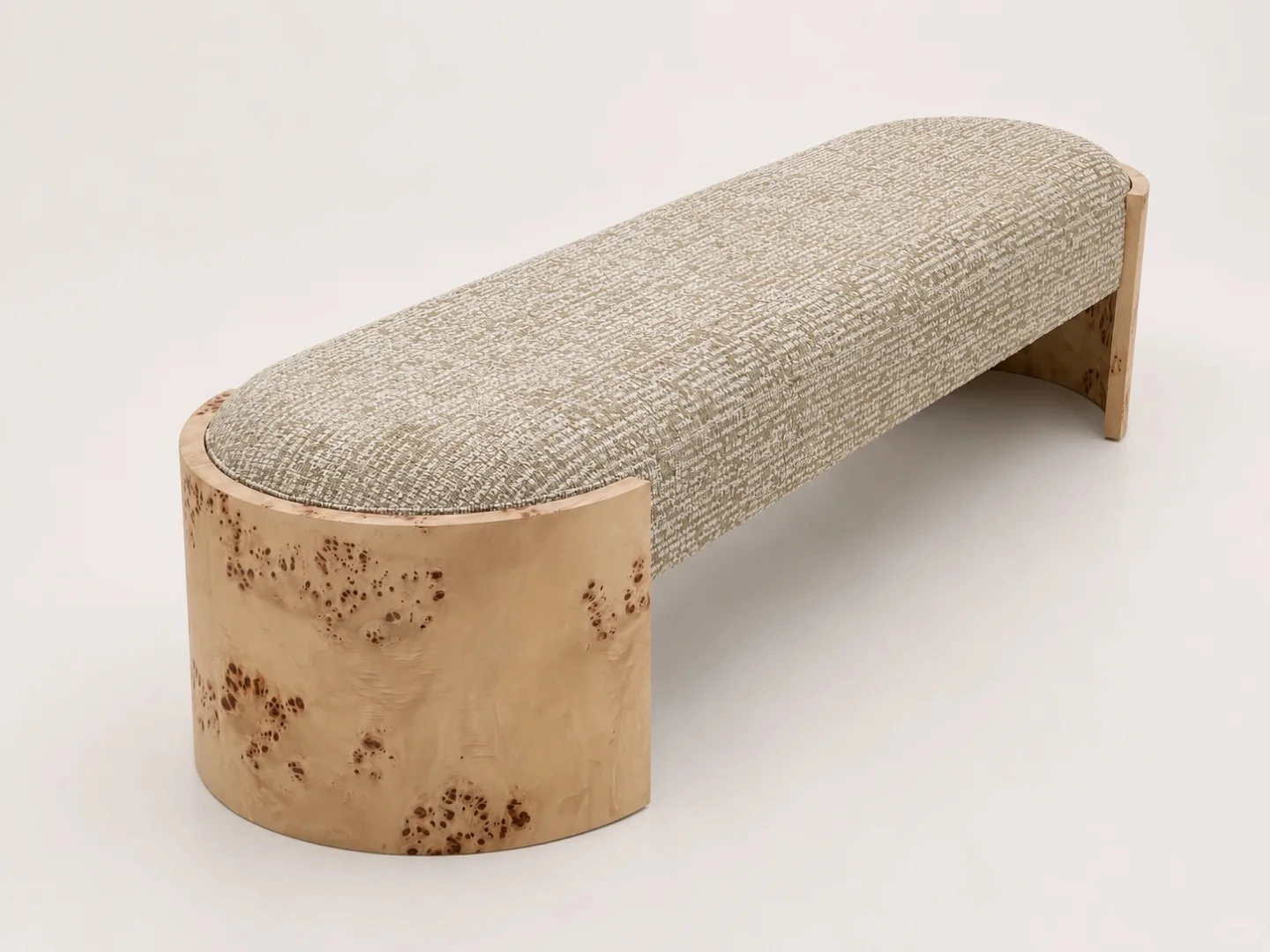
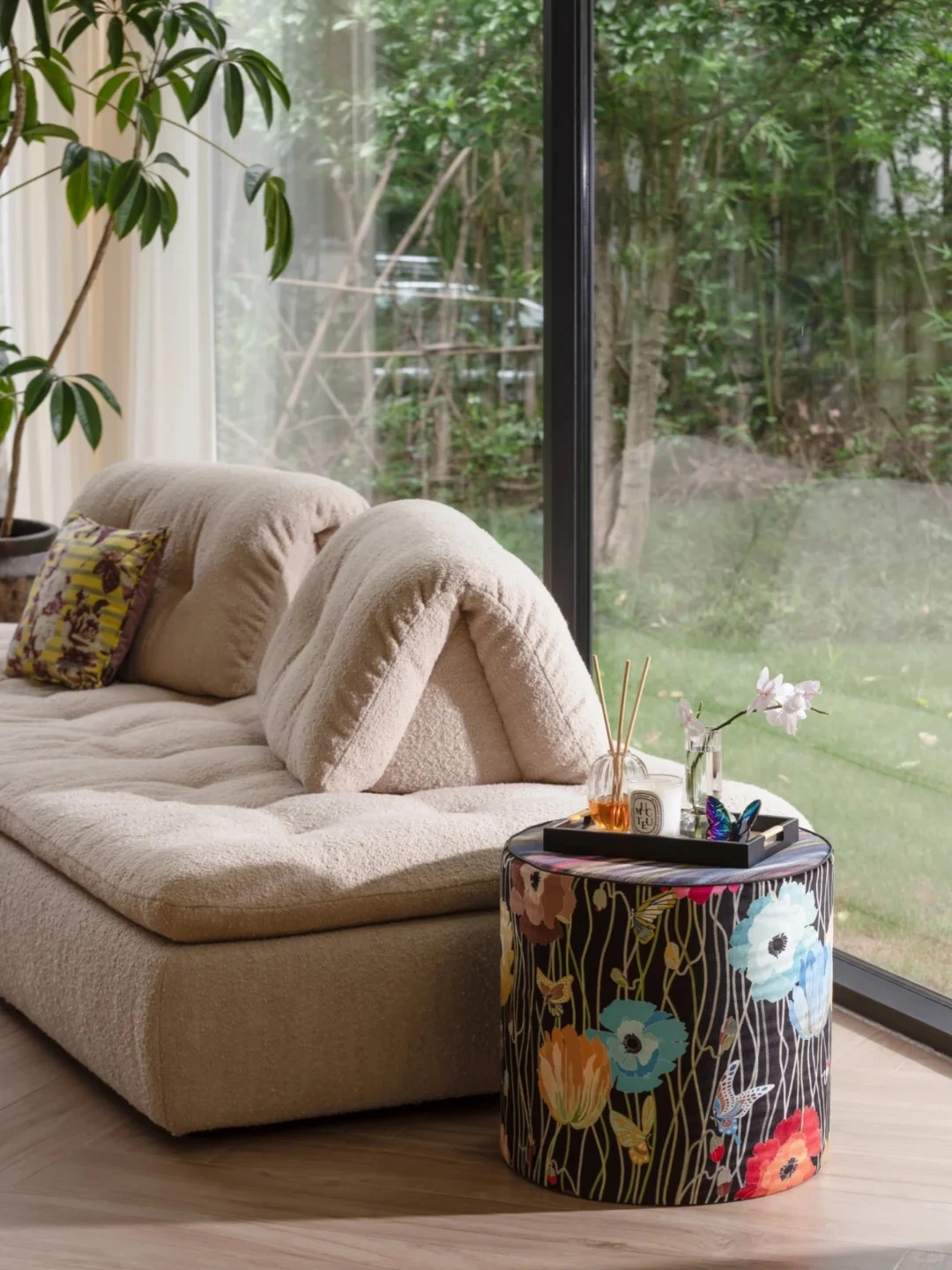
Series order preserved: Upholstery furniture (1) → (9).
For made-to-order furniture, the final inspection should compare the physical piece with the approved drawing, material sample and finish standard. Appearance is important, but the inspector should also test stability, dimensions, cushion recovery and workmanship.
| QC area | What to check | Typical warning sign |
|---|---|---|
| Frame & support | Stability, noise, flex, support spacing | Rocking, squeaks, uneven support |
| Foam & filling | Height, feel, recovery, symmetry | Permanent dents, mismatched cushion heights |
| Fabric / leather | Color, grain/weave, tension, defects | Shading mismatch, pulls, loose cover |
| Stitching | Straightness, piping, thread ends, corners | Puckering, wandering seams, uneven piping |
| Dimensions | Overall size, seat height/depth, arm/back height | Finished size outside approved tolerance |
| Final appearance | Shape, symmetry, cleanliness, hardware | Uneven cushions, wrinkles, stains, loose parts |
For a broader construction overview, also read Ratahome’s Sofa Construction Guide, Furniture Joinery Guide and Wood Selection Guide.
No. Firmness is a comfort characteristic, not a complete quality grade. The right foam should match the intended comfort, seat geometry and expected use while maintaining acceptable recovery over time.
Not always. Some relaxed upholstery styles intentionally show soft creasing. The key is whether the appearance is consistent with the approved design and whether excessive looseness develops in high-use areas.
Uneven seams, inconsistent piping, asymmetry and poor cover tension are often visible immediately. Structural and filling problems require sitting, pressing and checking the furniture from multiple angles.
Share your drawings, reference images, dimensions and preferred materials with Ratahome. We can help coordinate material selection, sampling, production and quality review for custom furniture projects.
Start Your ProjectLearn what to inspect before shipping custom cabinets, including drawings, dimensions, trial assembly, hardware, finishes, accessories, packing and final factory…
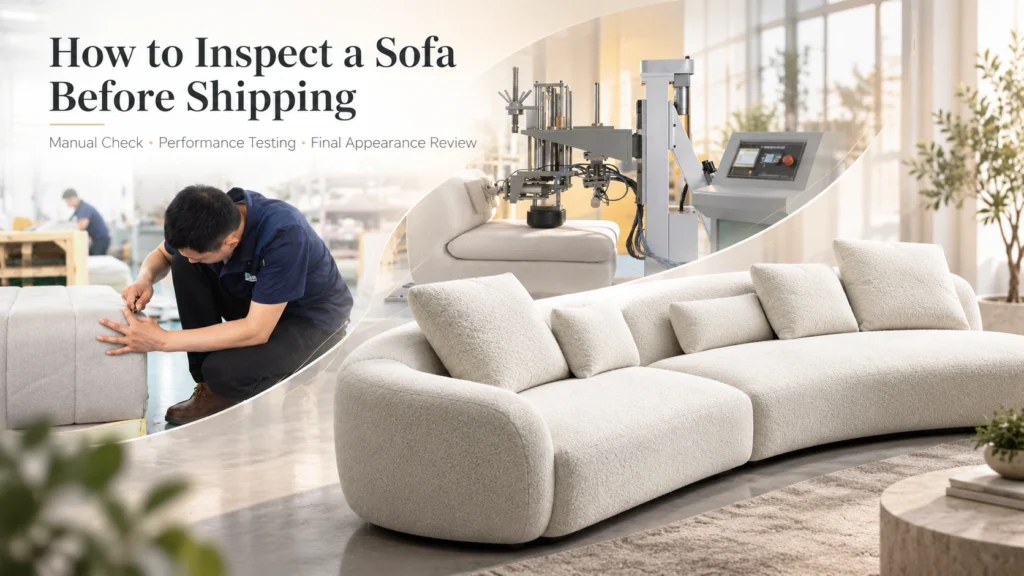
Read article →Learn how to inspect a sofa before shipping with a practical factory QC process covering frame structure, springs, cushions, upholstery,…
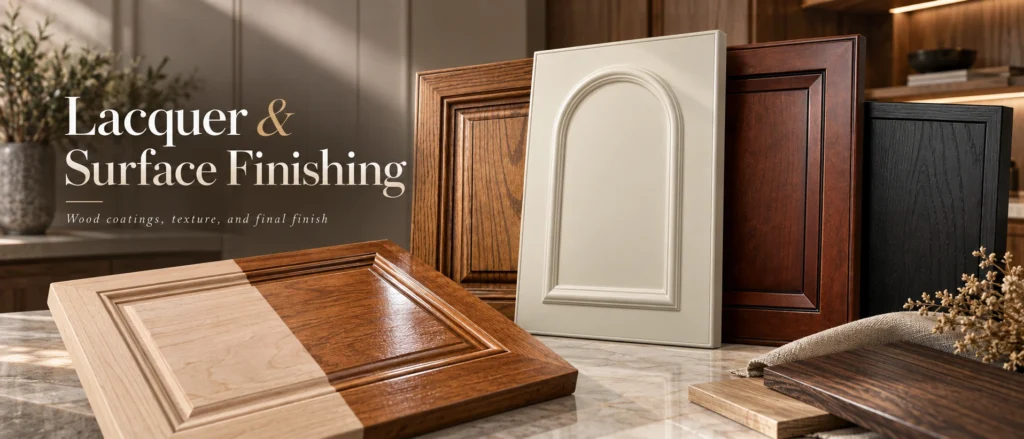
Read article →Learn how lacquer and surface finishing are used in furniture manufacturing, from substrate preparation and grain control to sanding, spraying,…
Read article →