
Engineered Wood for Furniture: MDF, Plywood, Particle Board & Veneer Compared
Learn how MDF, plywood, particle board and natural wood veneer behave in real furniture—and how to choose the right core, finish, edge detail and moisture specification for custom cabinetry, wardrobes and whole-home furniture.
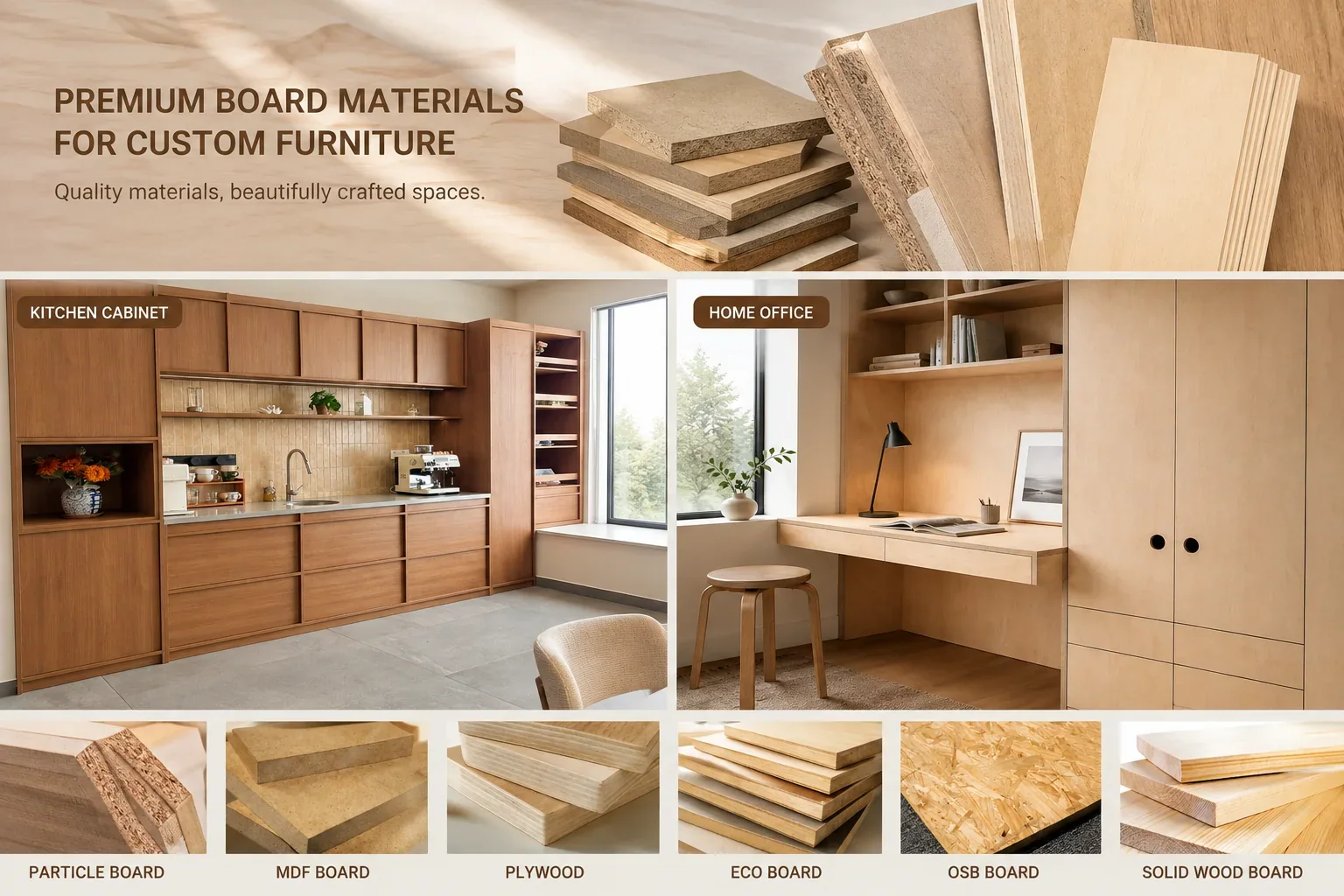
“Solid wood” sounds simple and premium. “Engineered wood” often sounds like a compromise. In real furniture manufacturing, that distinction is too crude. A well-built cabinet may deliberately combine plywood, MDF, particle board and natural veneer because each material solves a different problem.
The useful question is not Which material is best? It is Which material should be used for this part, in this room, with this finish, and with this hardware? This guide is written to help buyers understand those decisions before comparing quotations or approving a custom furniture specification.
1. What engineered wood actually means
Engineered wood is a broad family of wood-based materials made by reorganizing fibers, particles or thin layers of timber into a more predictable panel. That predictability is valuable in furniture: panels can be flat, consistent in thickness, easier to machine in quantity and less dependent on the movement of one wide piece of solid timber. For whole-home joinery, Ratahome coordinates these decisions through its Materials & Finishes library and Manufacturing & Quality process.
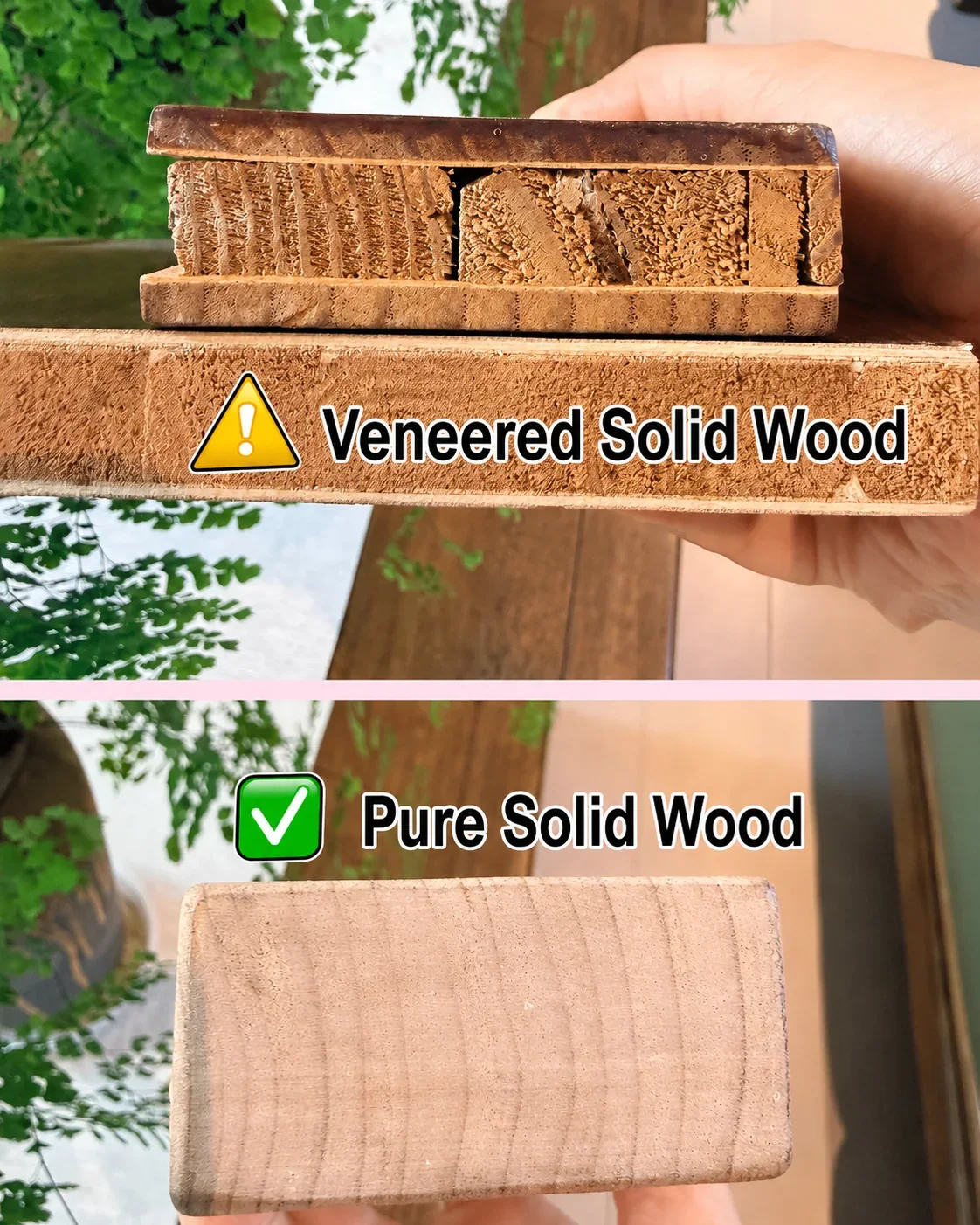
But one important distinction prevents a lot of confusion: veneer is usually not the core board. Natural veneer is a thin surface layer of real wood. It can be pressed onto MDF, plywood or another stable substrate. So a description such as “walnut veneer cabinet” is incomplete until you also know what the walnut veneer is bonded to.
The board that carries shape, thickness, fasteners and structural load.
Paint, lacquer, melamine, laminate or natural veneer creates the visible finish.
Edge banding, solid lipping, hinges and connectors often decide long-term durability.
If you are developing a complete cabinetry package, material choice should be coordinated with the finish schedule. Ratahome’s Materials & Finishes guide shows how veneer, lacquer, melamine, stone and metal are considered as one system rather than as separate samples.
2. MDF vs plywood vs particle board vs veneer: quick comparison
| Material | How it is made | Best visual strength | Typical furniture use | Main advantage | Main limitation |
|---|---|---|---|---|---|
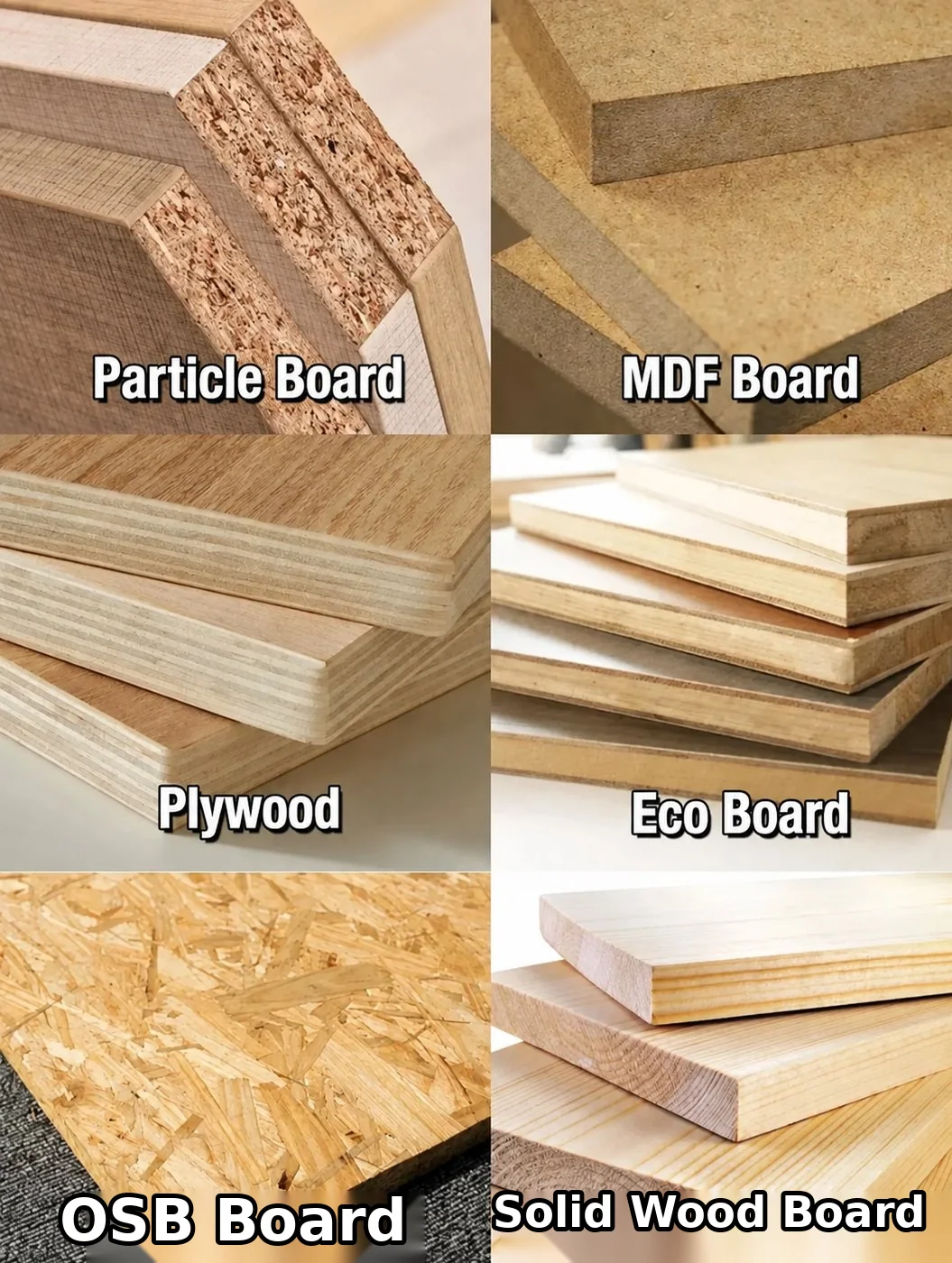
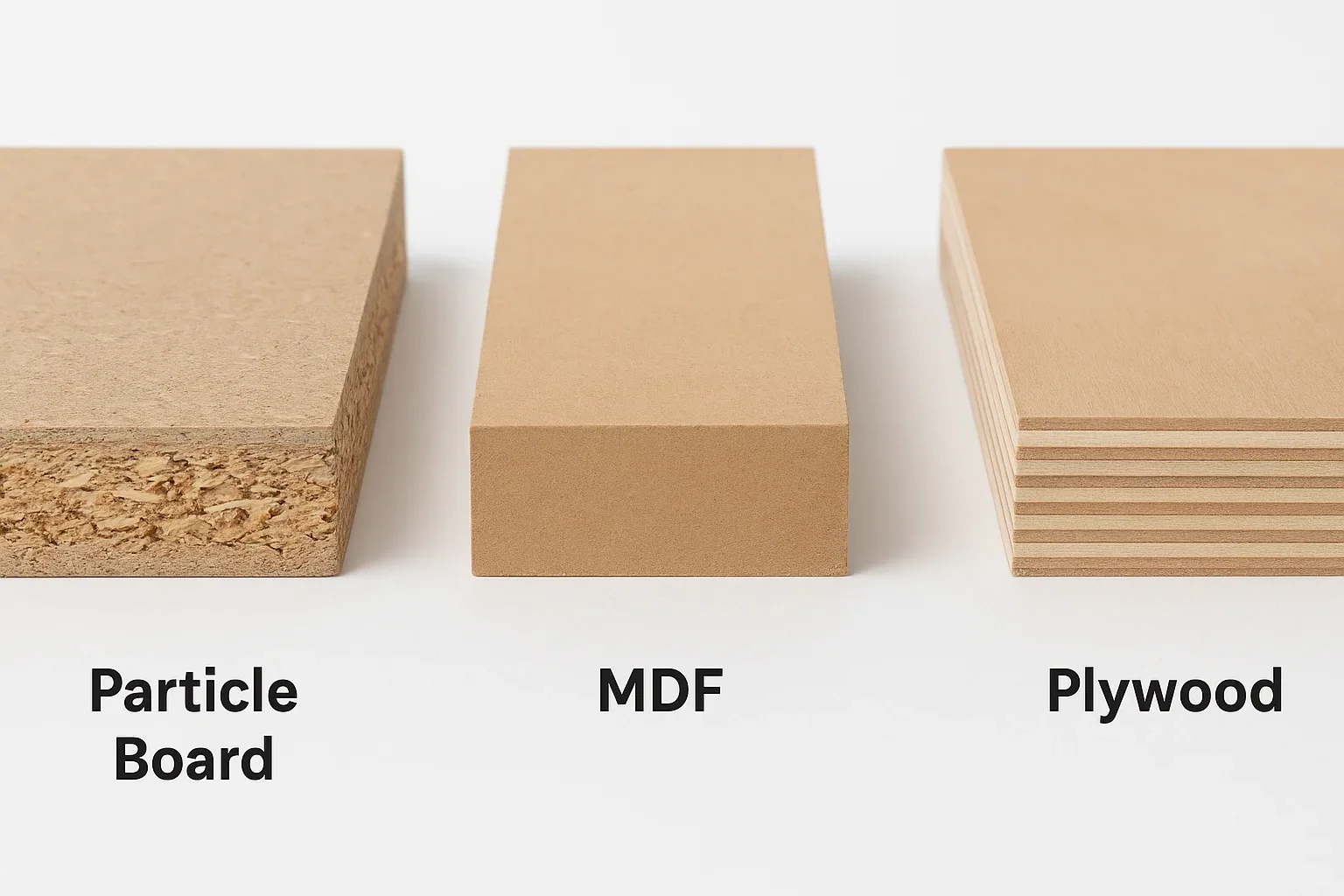
| MDF | Fine wood fibers + resin pressed into a dense, uniform sheet | Very smooth, no visible grain in the core | Painted doors, routed fronts, panels, shelves, decorative details | Excellent machining and paint surface | Heavy; exposed edges and moisture need careful control |
| Plywood | Thin wood plies cross-laminated in alternating directions | Layered edge; can be left exposed intentionally | Cabinet boxes, drawers, beds, desks, high-stress furniture parts | Good stiffness and screw holding | Quality varies by face, core and void content |
| Particle board | Wood particles bonded and pressed into flat panels | Normally hidden under melamine, laminate or veneer | Wardrobe interiors, cabinet shelves, economical casegoods | Flat, consistent and cost-efficient | Edges and repeated fastener points are less forgiving |
| Natural veneer | Thin real-wood sheets bonded over a core | Authentic grain and species character | Doors, wall panels, sideboards, tables, premium cabinetry | Real wood appearance with a stable panel base | Requires grain matching, careful finishing and edge planning |
Actual performance depends on board grade, thickness, adhesive system, moisture condition, edge treatment, hardware fixing and factory workmanship. Material names alone do not define quality.
3. MDF: the best choice when the surface needs to be smooth
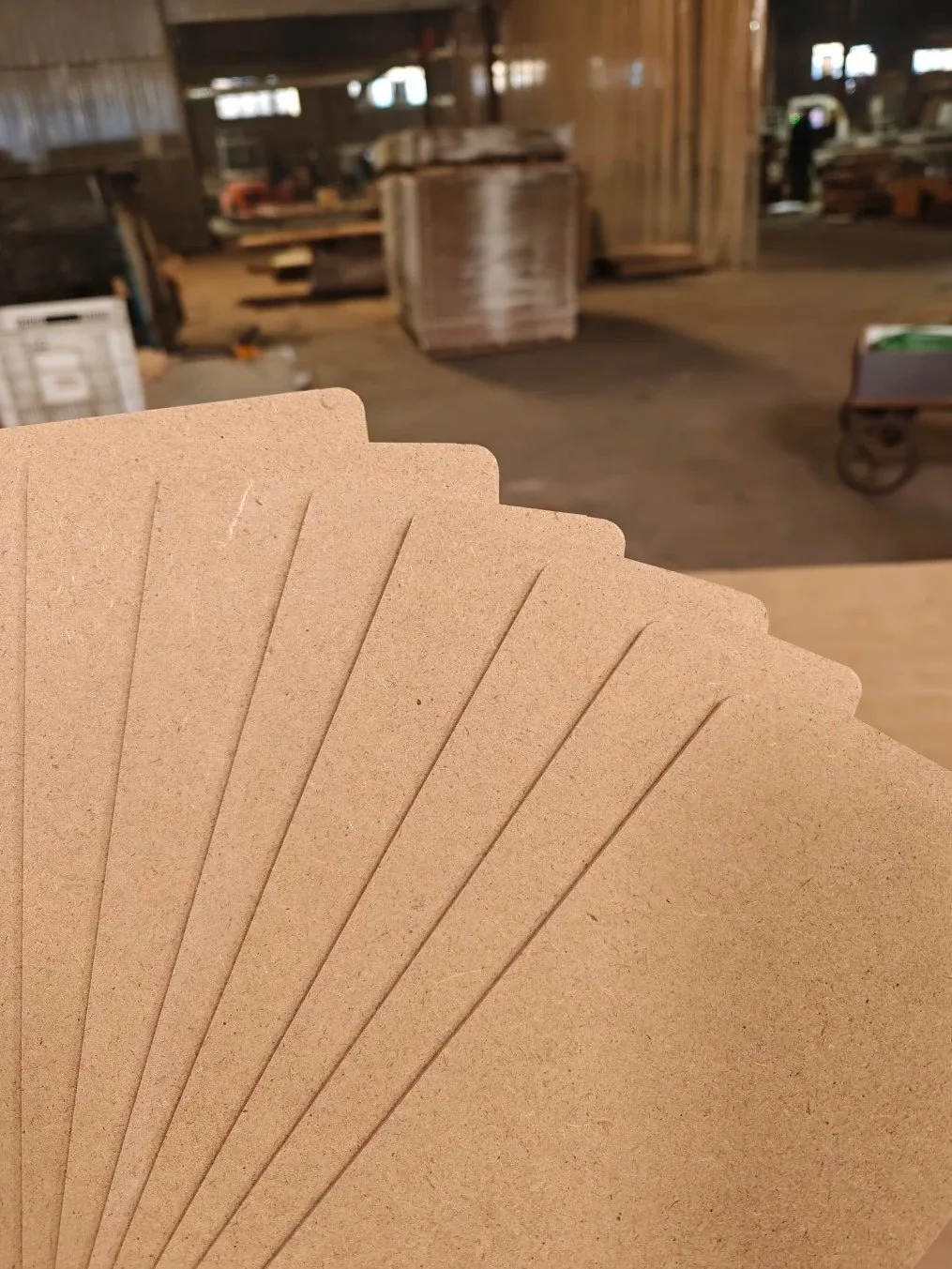
MDF (medium-density fiberboard) is made from fine wood fibers compressed with resin into a dense, uniform sheet. Unlike plywood, it has no layered grain. Unlike particle board, its internal texture is much finer. That uniformity is why it machines cleanly and accepts paint so well.
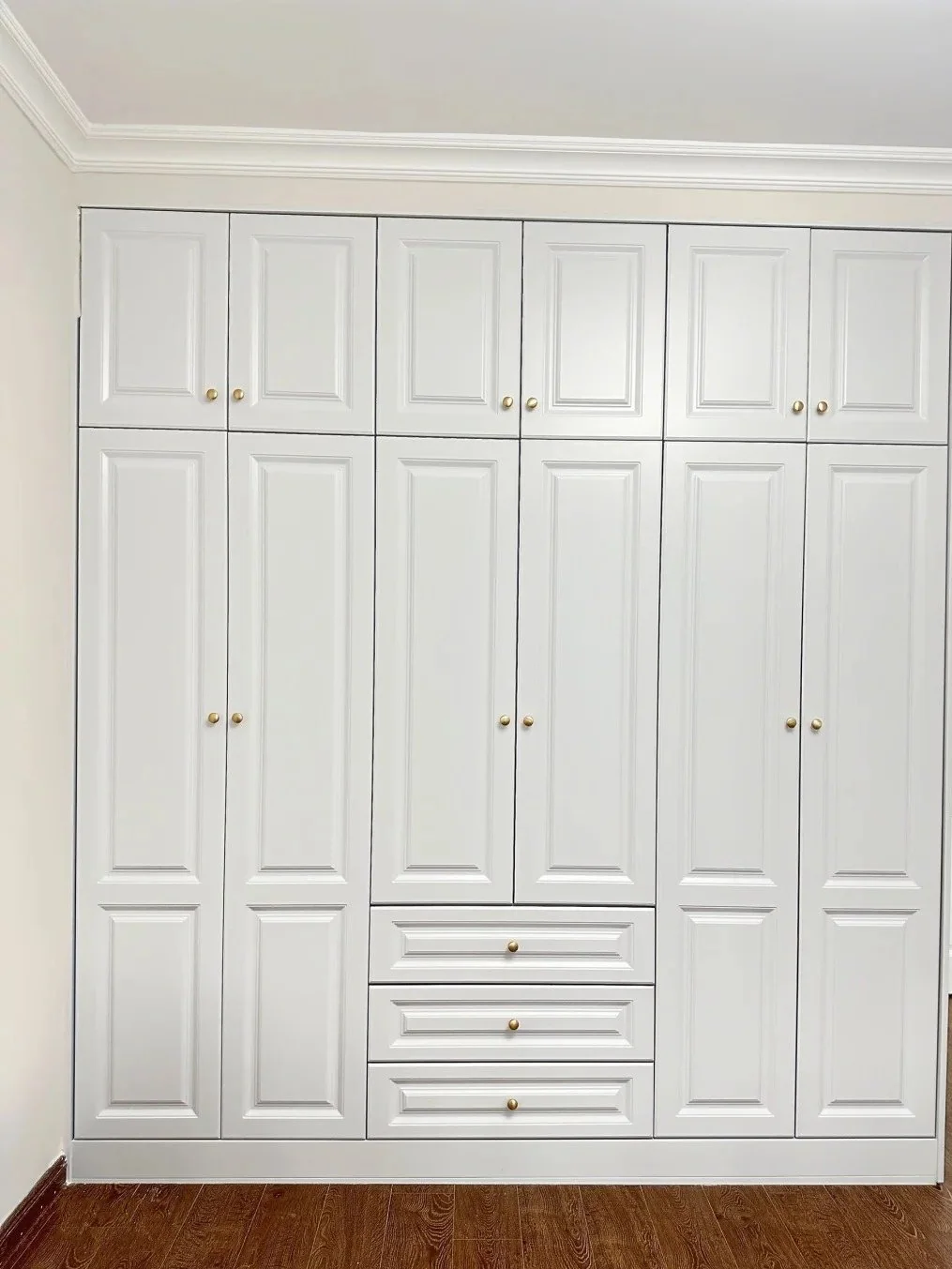
Advantages
- Very smooth face for paint and lacquer.
- Uniform density supports clean routing and decorative profiles.
- No knots or natural grain variation in the core.
- Useful for consistent batch production.
Limitations
- Heavier than many plywood panels.
- Edges need sealing and good finishing.
- Standard MDF can swell if water reaches an unprotected edge.
- Fastener design matters at hinges and repeatedly loaded joints.
4. Plywood: the structural workhorse
Plywood is built from thin wood veneers laid in alternating directions and bonded into a panel. Cross-lamination gives the board useful stiffness and dimensional stability while allowing screws and connectors to engage with continuous wood layers rather than only loose particles or fibers.
That makes plywood a strong choice for cabinet boxes, drawer parts, beds, desks and furniture components that carry load. It can also be used decoratively when the layered edge is part of the design language.
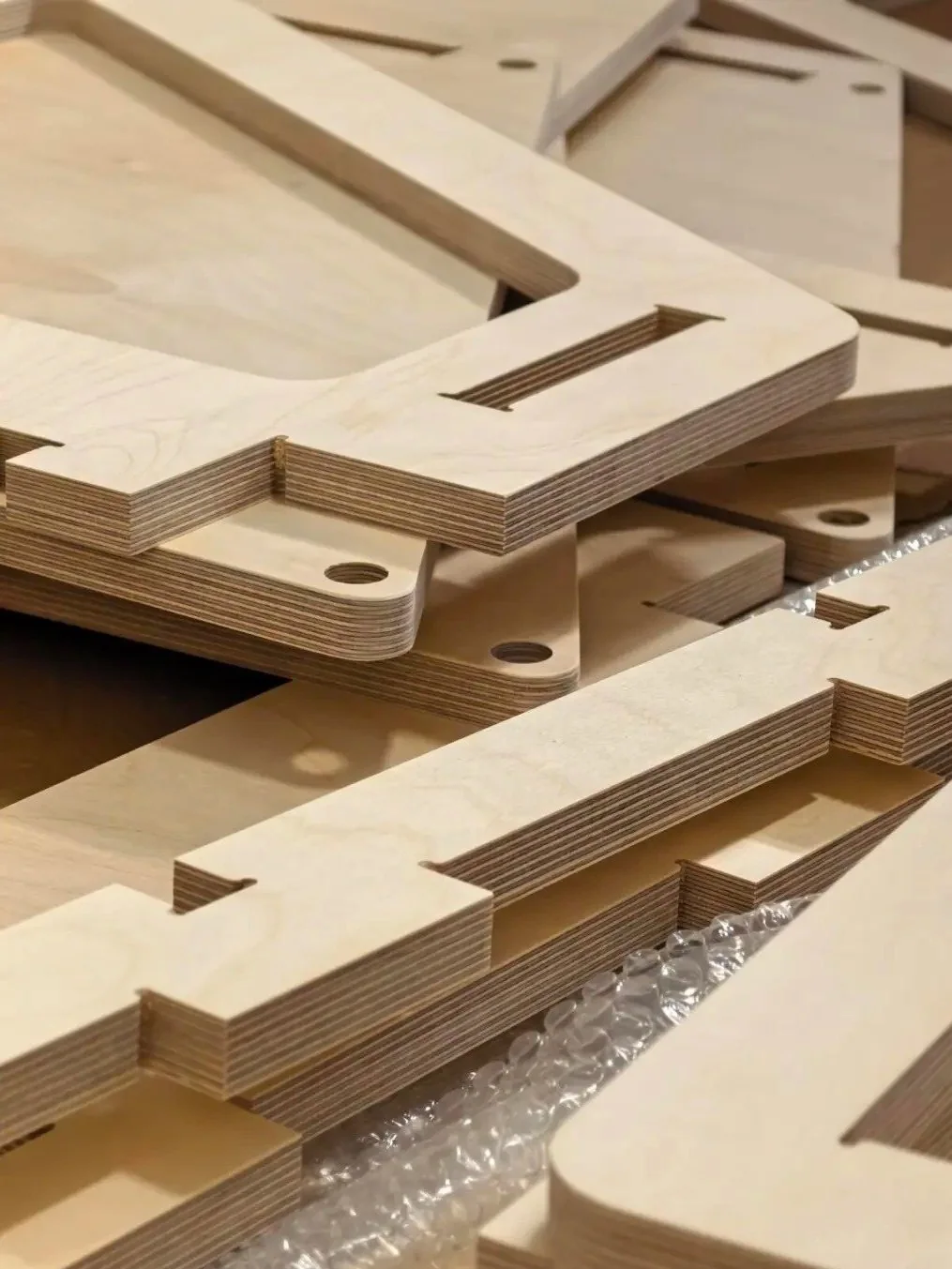
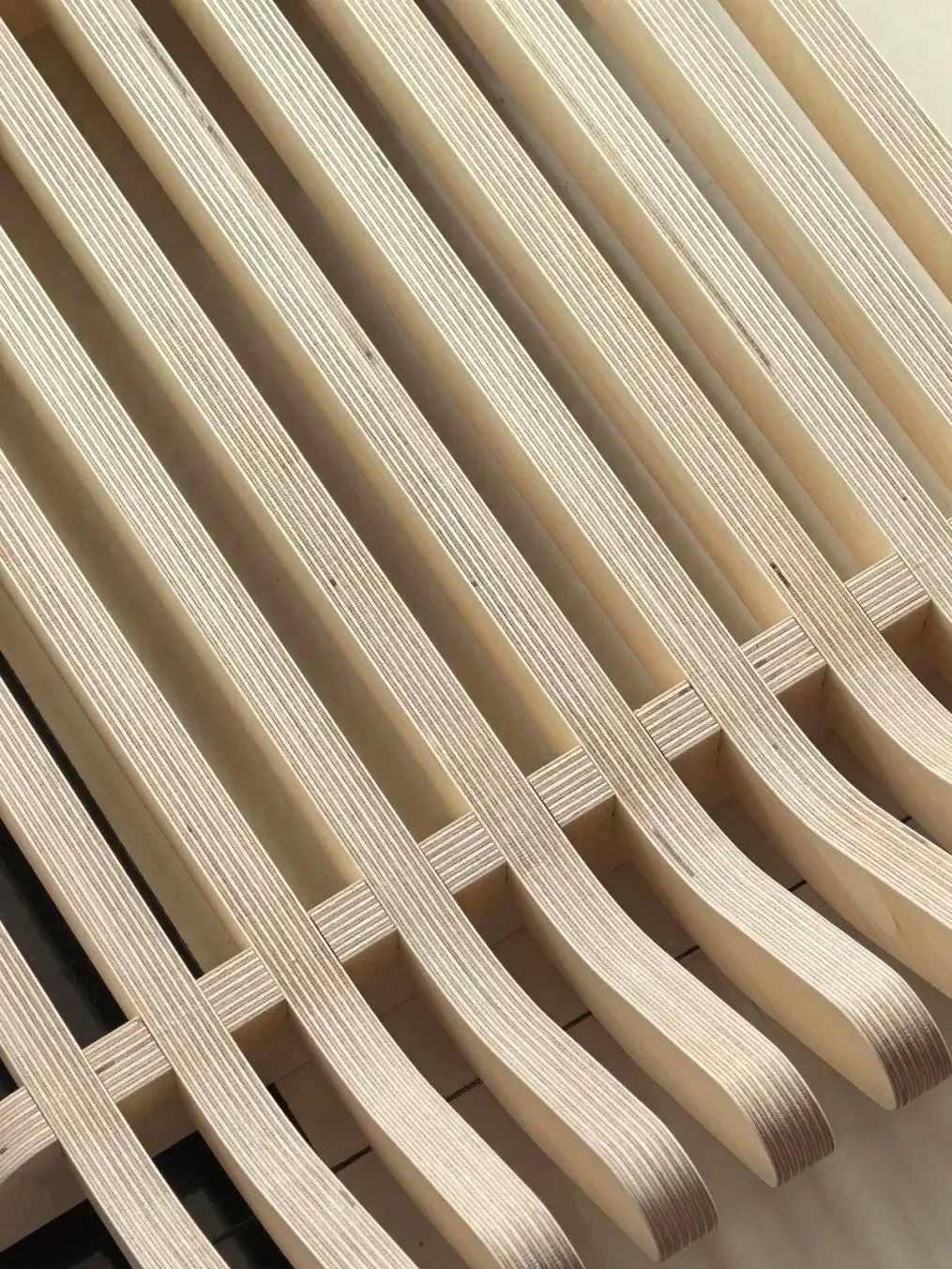
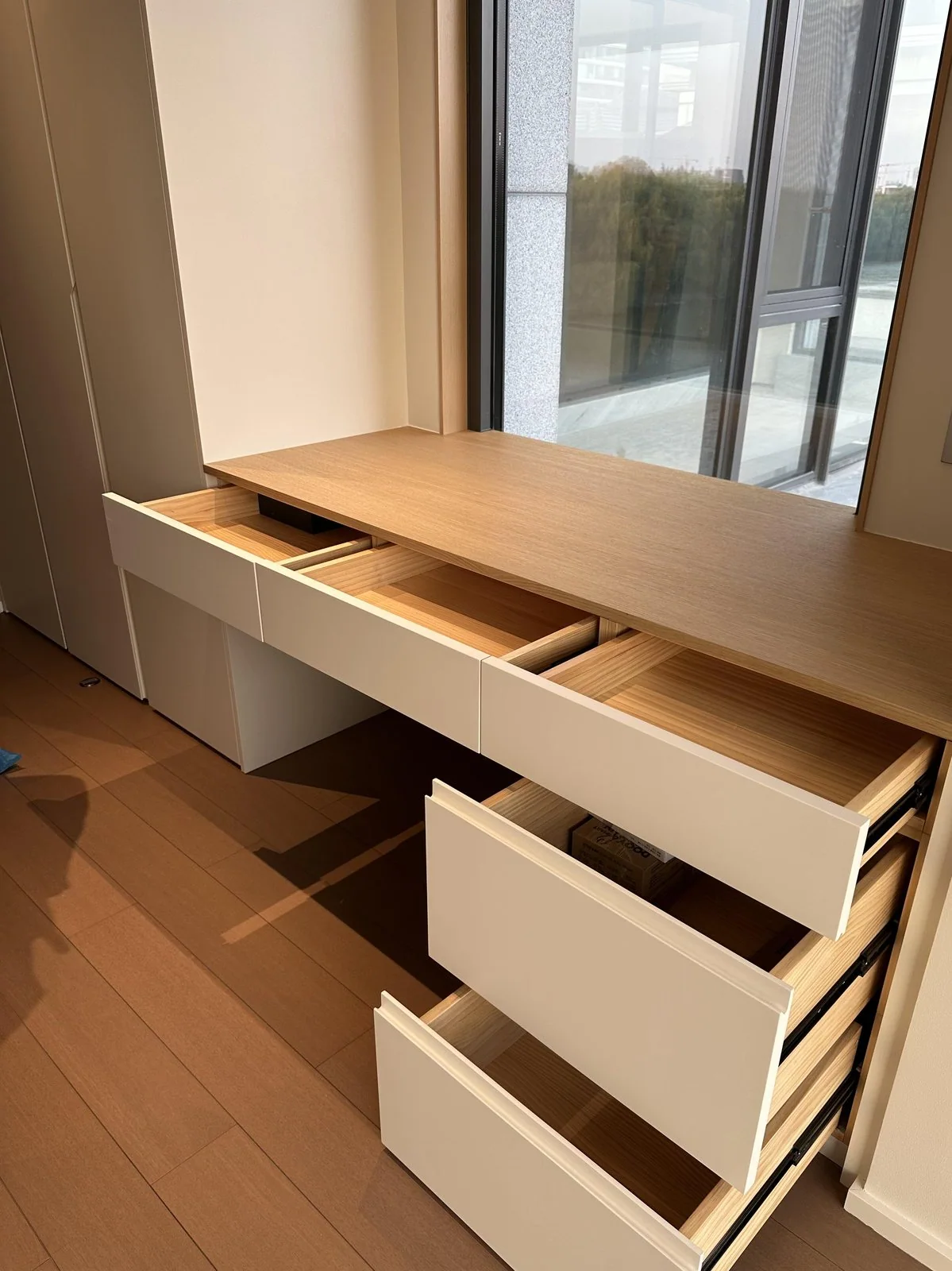
Advantages
- Good stiffness-to-weight for many furniture structures.
- Generally stronger screw holding than MDF or particle board.
- Suitable for cabinet boxes, drawers and furniture frames.
- Can be veneered, laminated, painted or intentionally edge-exposed.
Limitations
- Large quality differences between plywood grades.
- Low-grade cores can contain voids or inconsistent inner plies.
- Edge finishing may require lipping or banding.
- Better grades usually cost more than basic particle board or MDF.
When a quotation says “plywood,” ask what kind. Face quality, number of plies, core species, voids, adhesive and intended exposure all influence performance. A material name without a grade is not a complete specification.
5. Particle board: practical when the design is flat, finished and well protected
Particle board is made by bonding wood particles into a flat sheet. In furniture, it is commonly hidden beneath melamine, laminate or veneer. Buyers often see the finished face and never see the core unless they inspect a cut edge, hinge hole or unfinished back.
Advantages
- Cost-efficient for large volumes of flat cabinet parts.
- Consistent thickness and flatness.
- Works well with factory-applied melamine or laminate.
- Good for interiors that do not need routed decorative profiles.
Limitations
- Exposed edges are more vulnerable to impact and moisture.
- Fastener holding depends heavily on connector choice and density.
- Repeated disassembly is less forgiving.
- It is not usually the first choice for high-stress furniture frames.
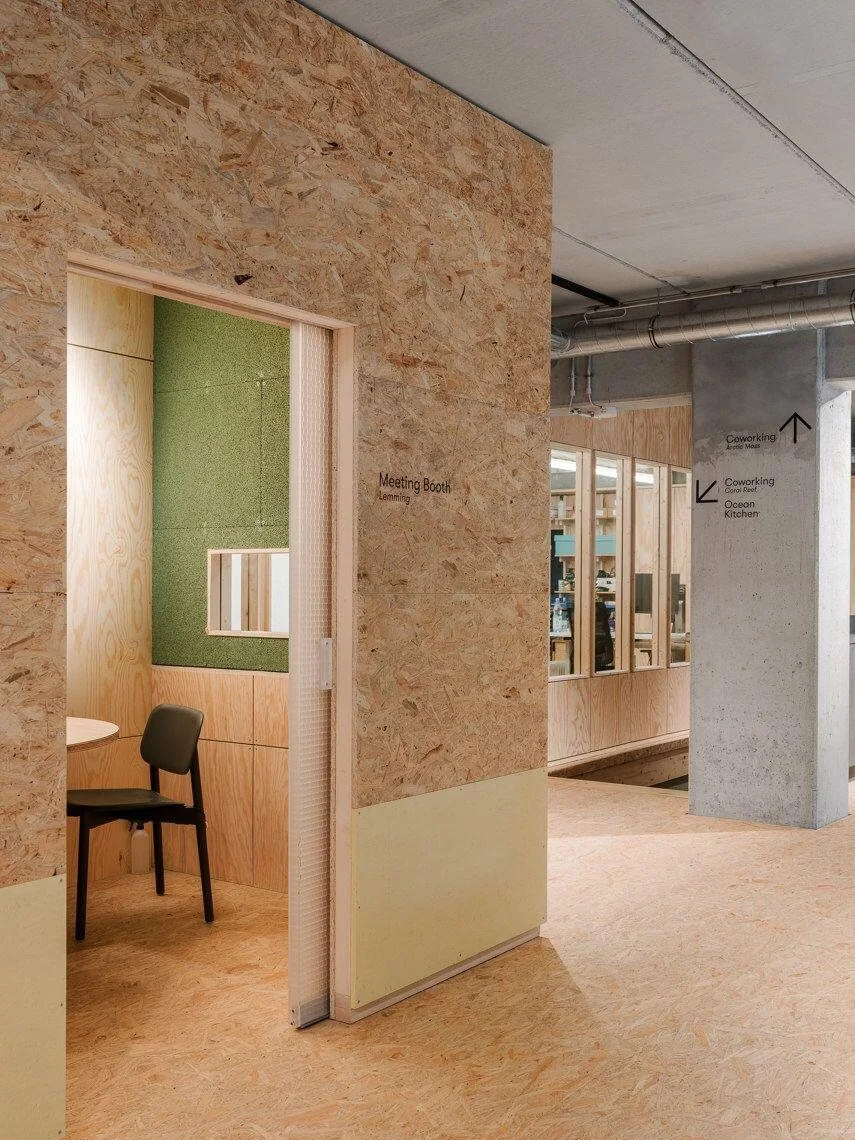
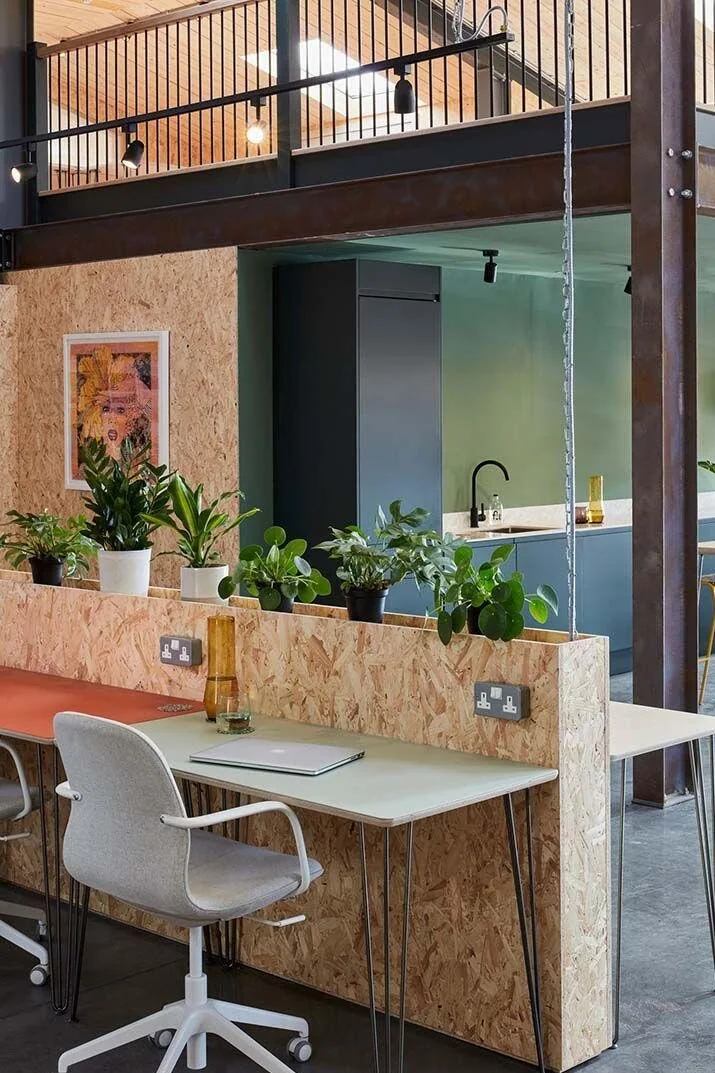
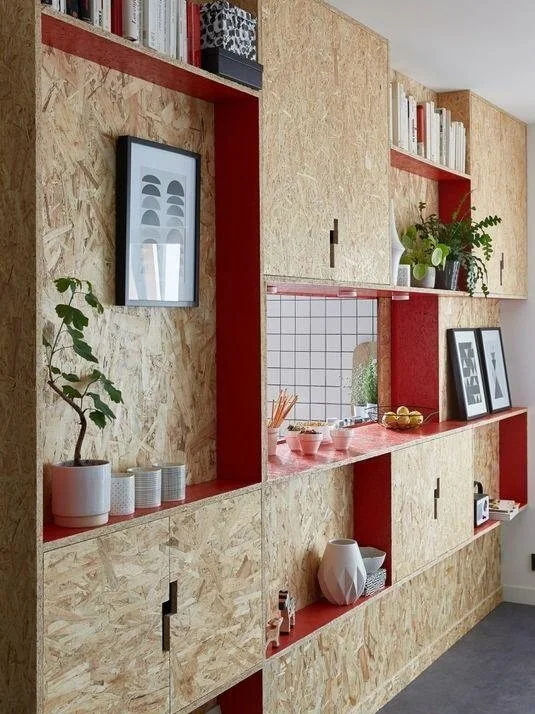
Particle board is not OSB
These terms are often mixed together because both use small pieces of wood, but they are different engineered products. OSB uses larger oriented strands and has its own structural applications. If a supplier uses a vague phrase such as “eco board” or “engineered board,” ask for the exact core material instead of approving the marketing name.
6. Wood veneer: real wood appearance over a more stable core
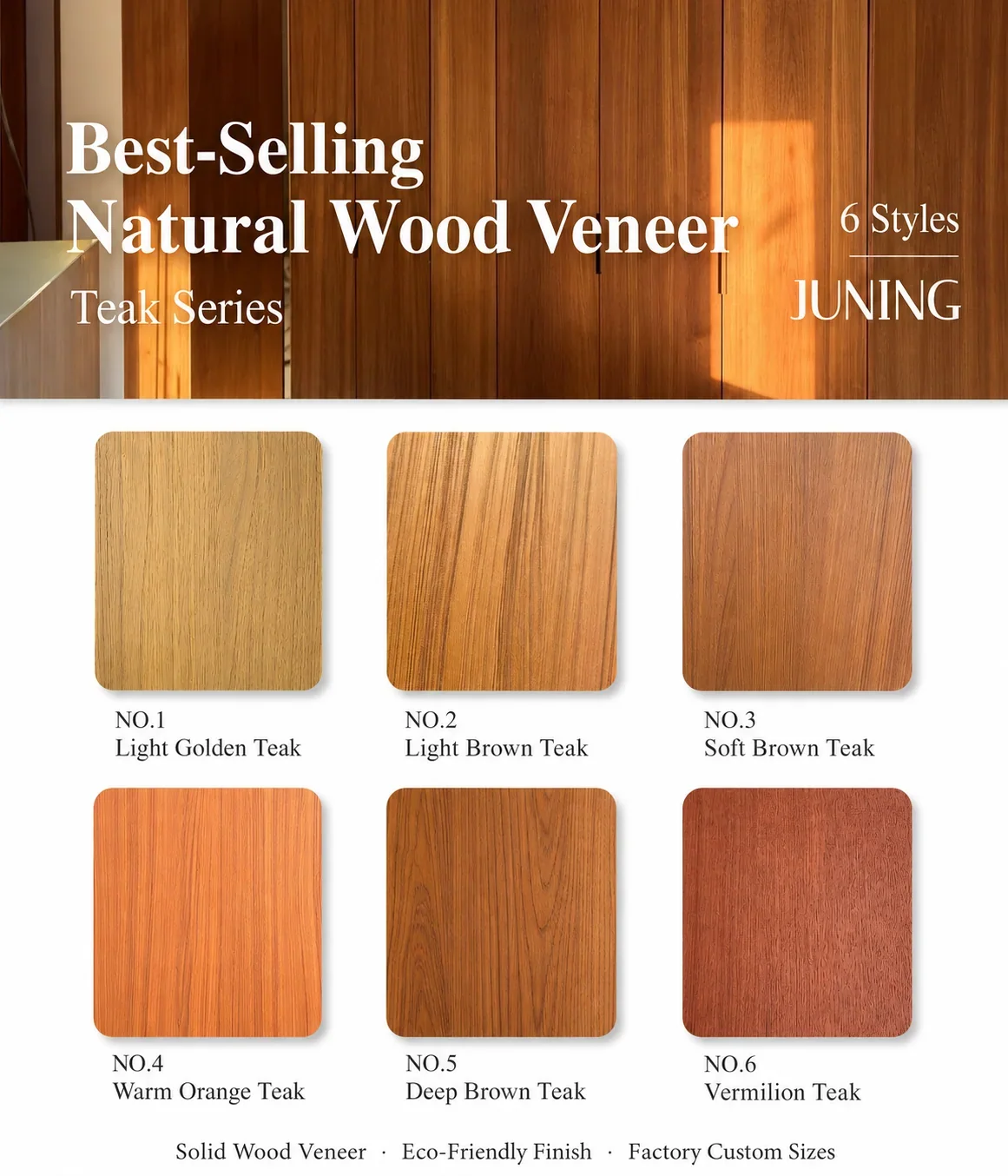
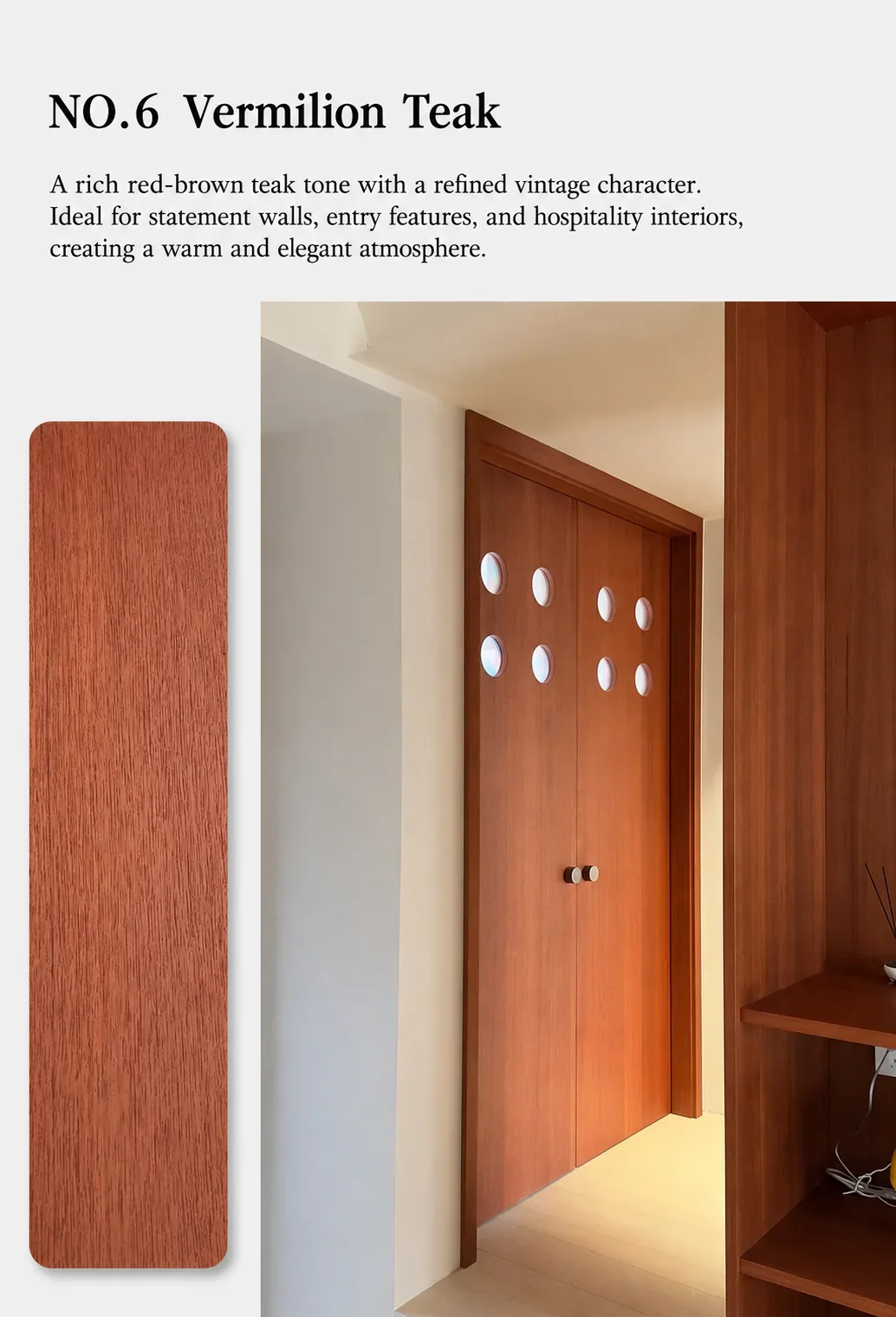
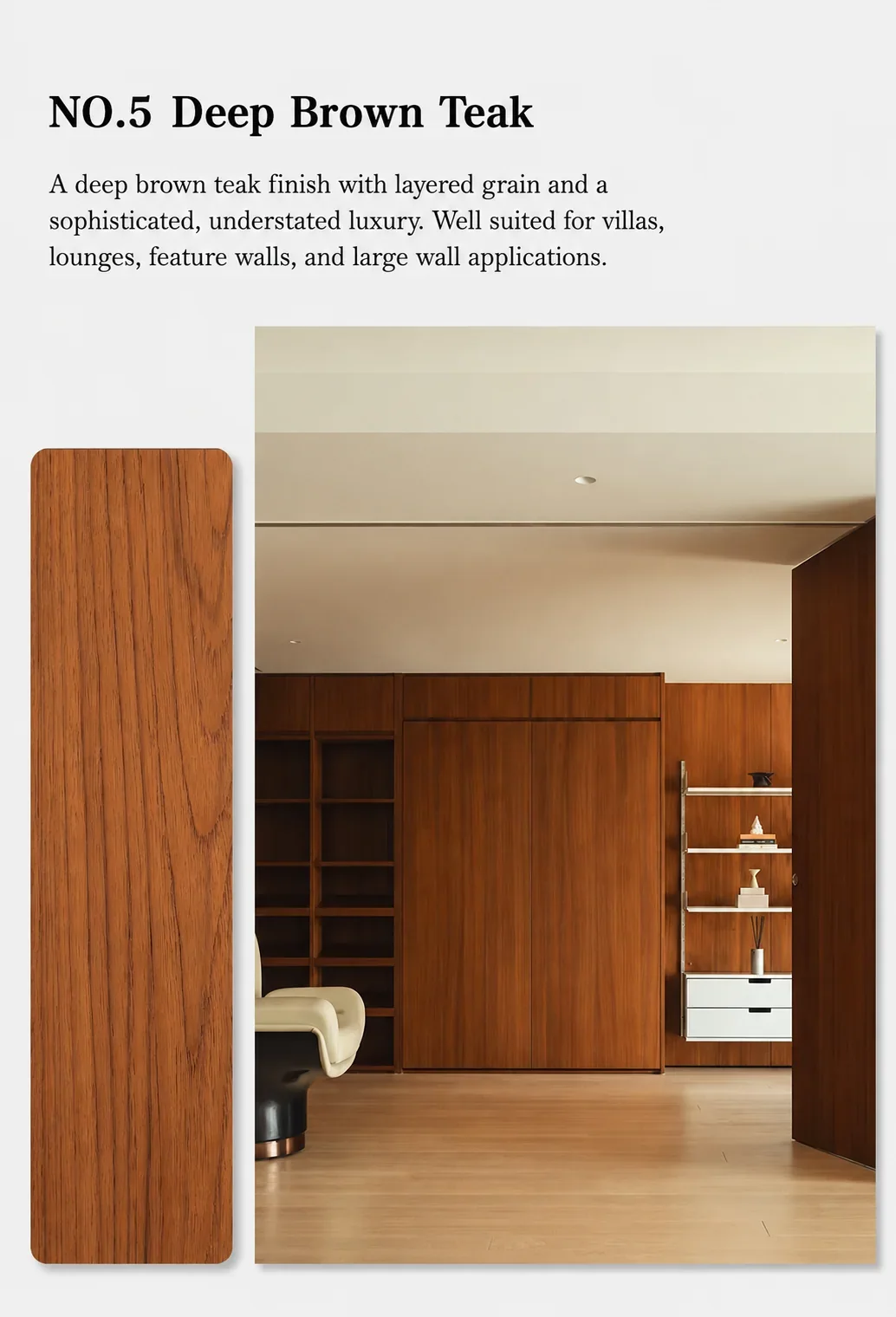
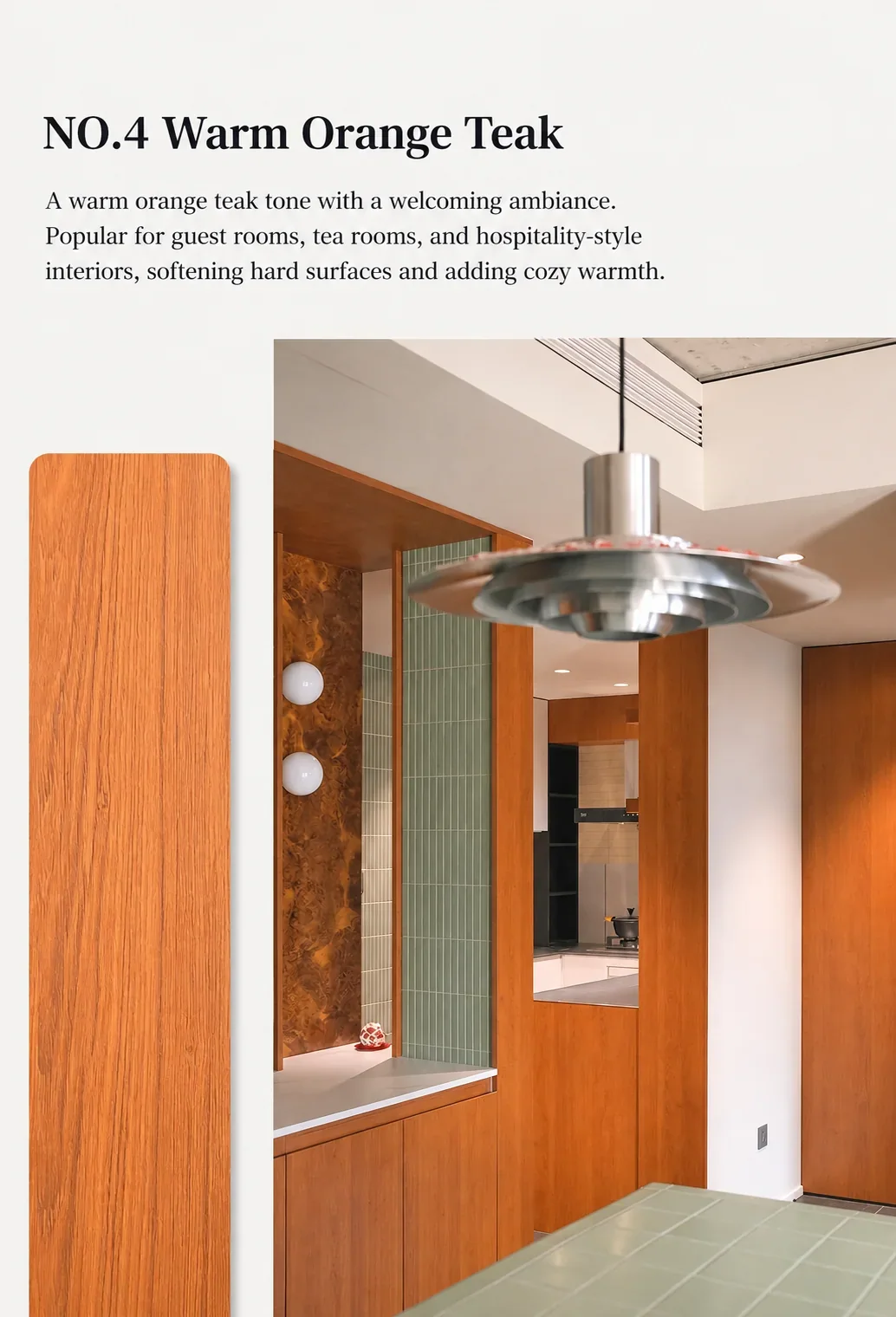
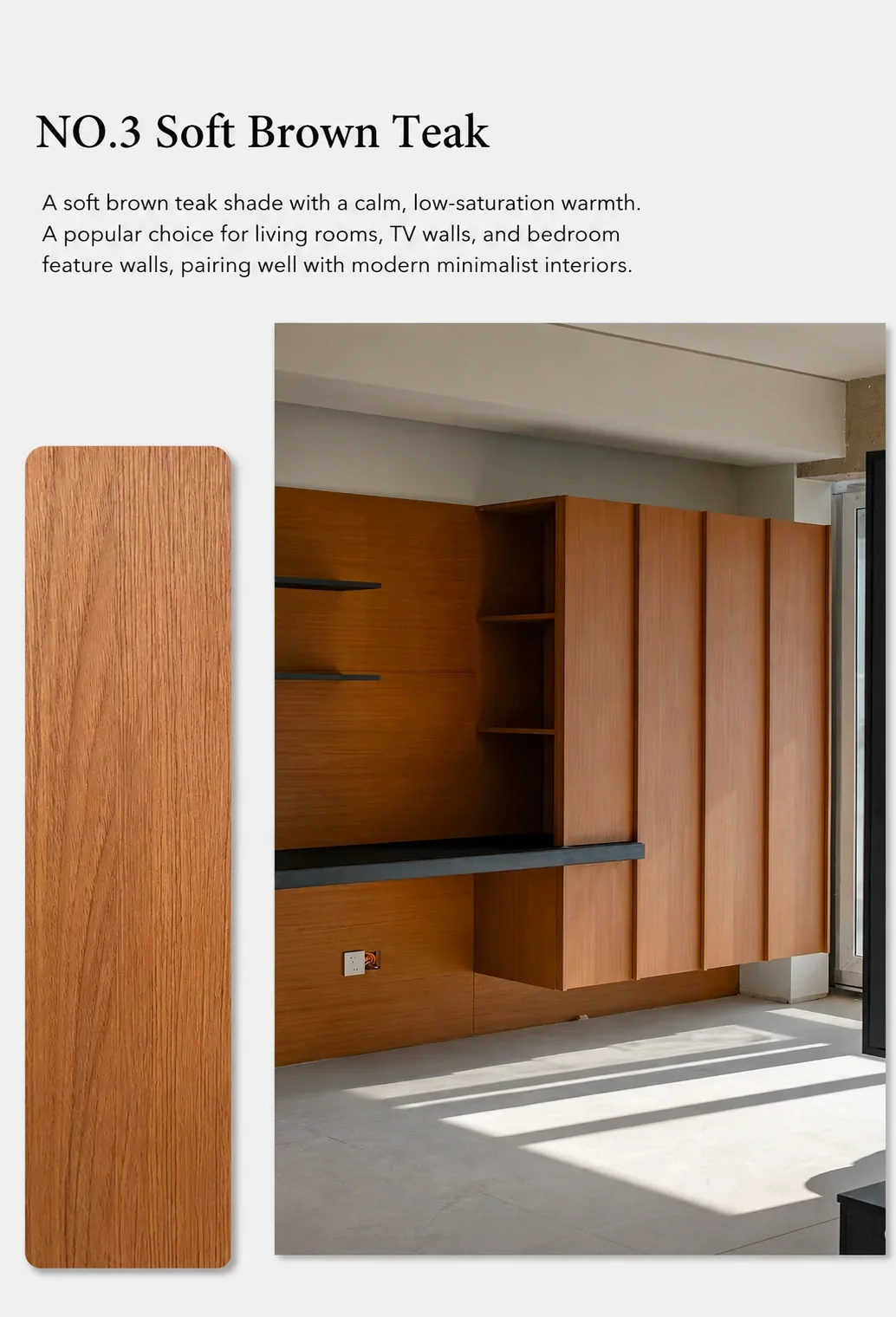
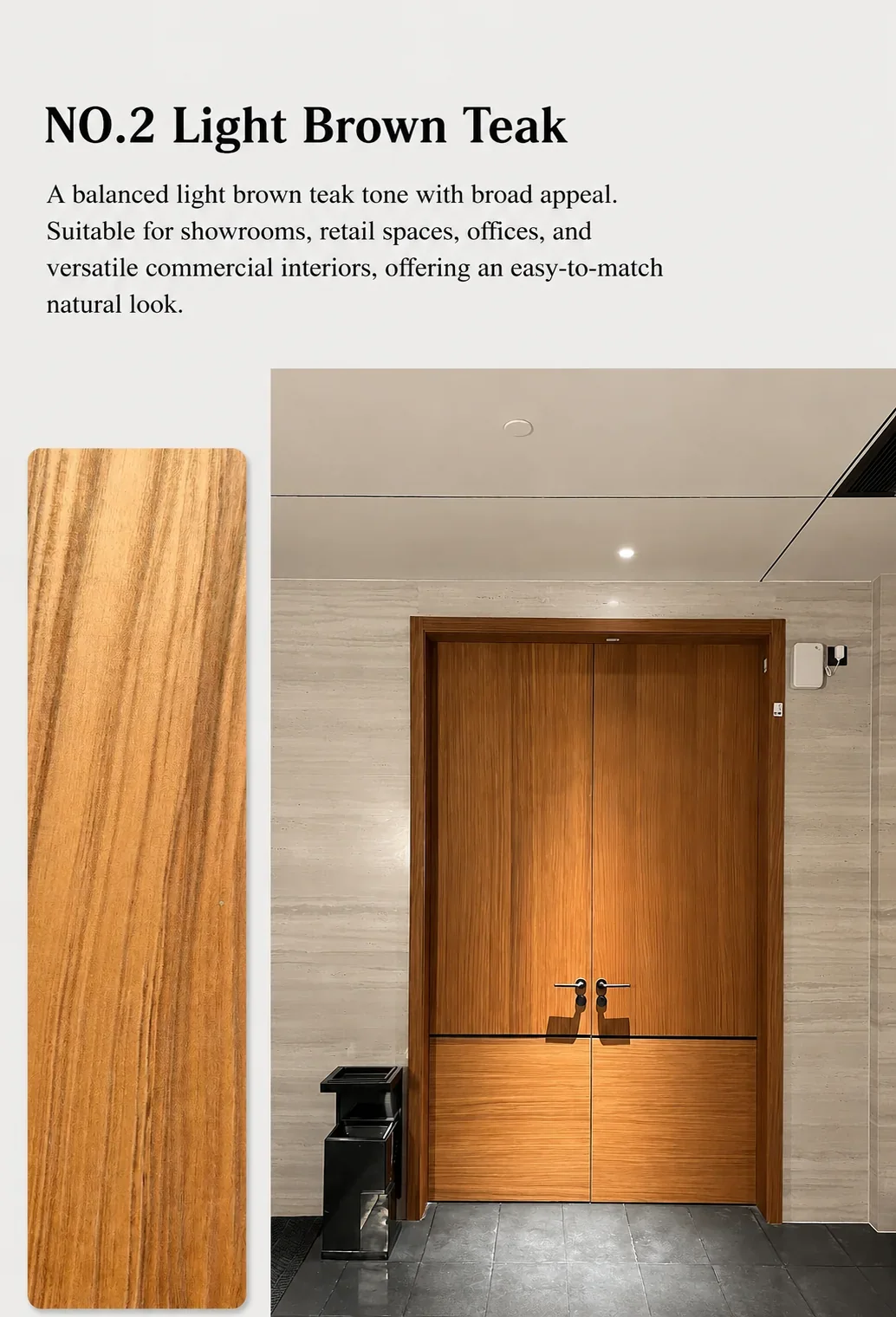
Natural wood veneer is a thin slice of real timber applied over a substrate such as MDF or plywood. It lets designers use the color and grain of oak, walnut, ash, teak-look species and other woods across wide cabinet doors and wall panels without building every flat surface from thick solid boards.
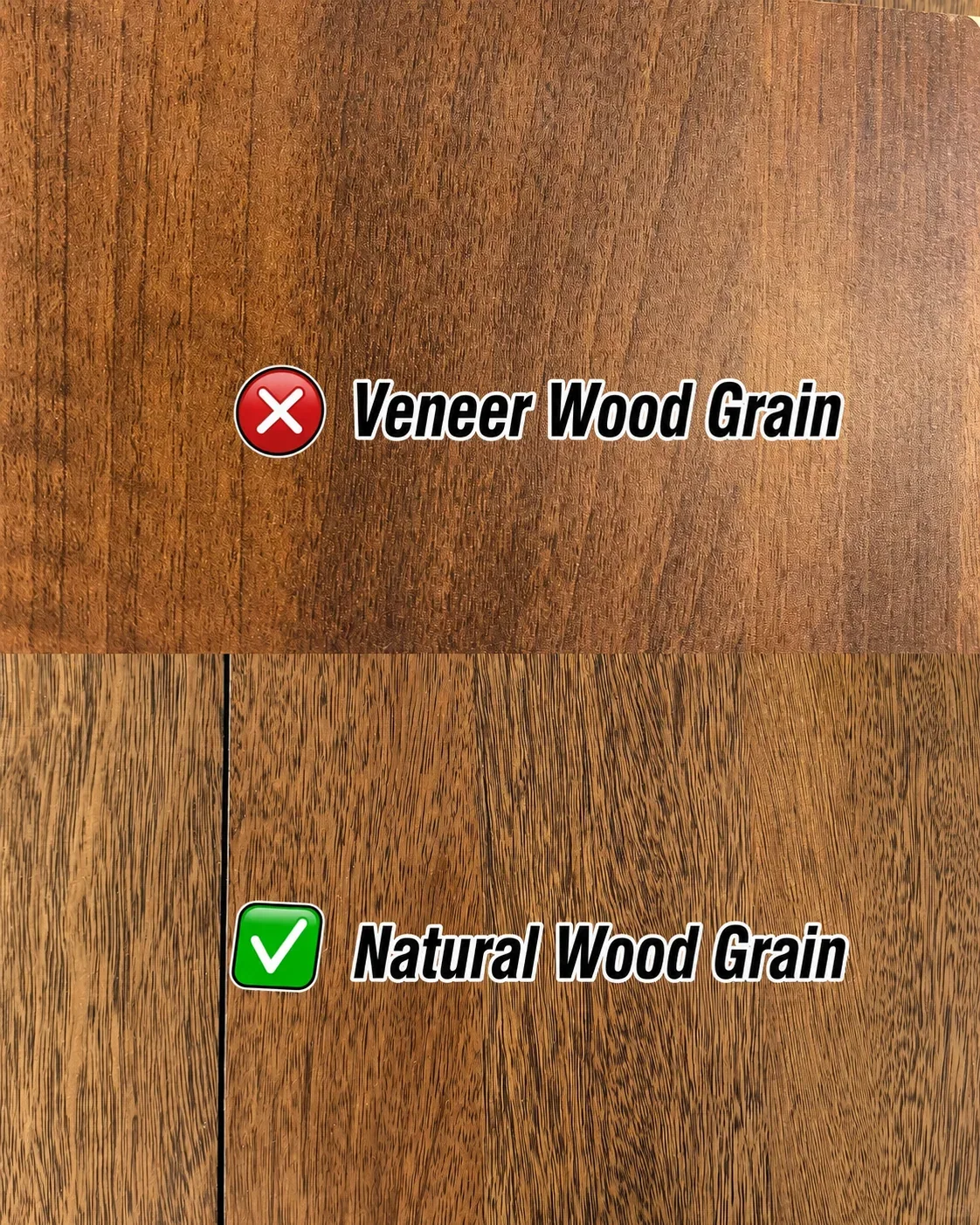
The visual quality of veneer depends on far more than the species name. Buyers should look at grain direction, leaf matching, batch color, panel sequence, edge treatment and final stain. A beautiful veneer sample can still produce a poor room if adjacent doors are cut from mismatched leaves.
Advantages
- Real wood grain and natural visual depth.
- Suitable for large, flat architectural surfaces.
- Can coordinate furniture with wall panels and cabinetry.
- Uses valuable timber efficiently.
Limitations
- Natural grain and color vary from leaf to leaf.
- Thin surfaces can be damaged by aggressive sanding or repair.
- Edges and corners need deliberate detailing.
- Premium appearance depends on matching and finishing skill.
Ratahome’s materials library treats veneer as a finish family and coordinates it with lacquer, metal, glass and stone so the entire room reads as one material palette.
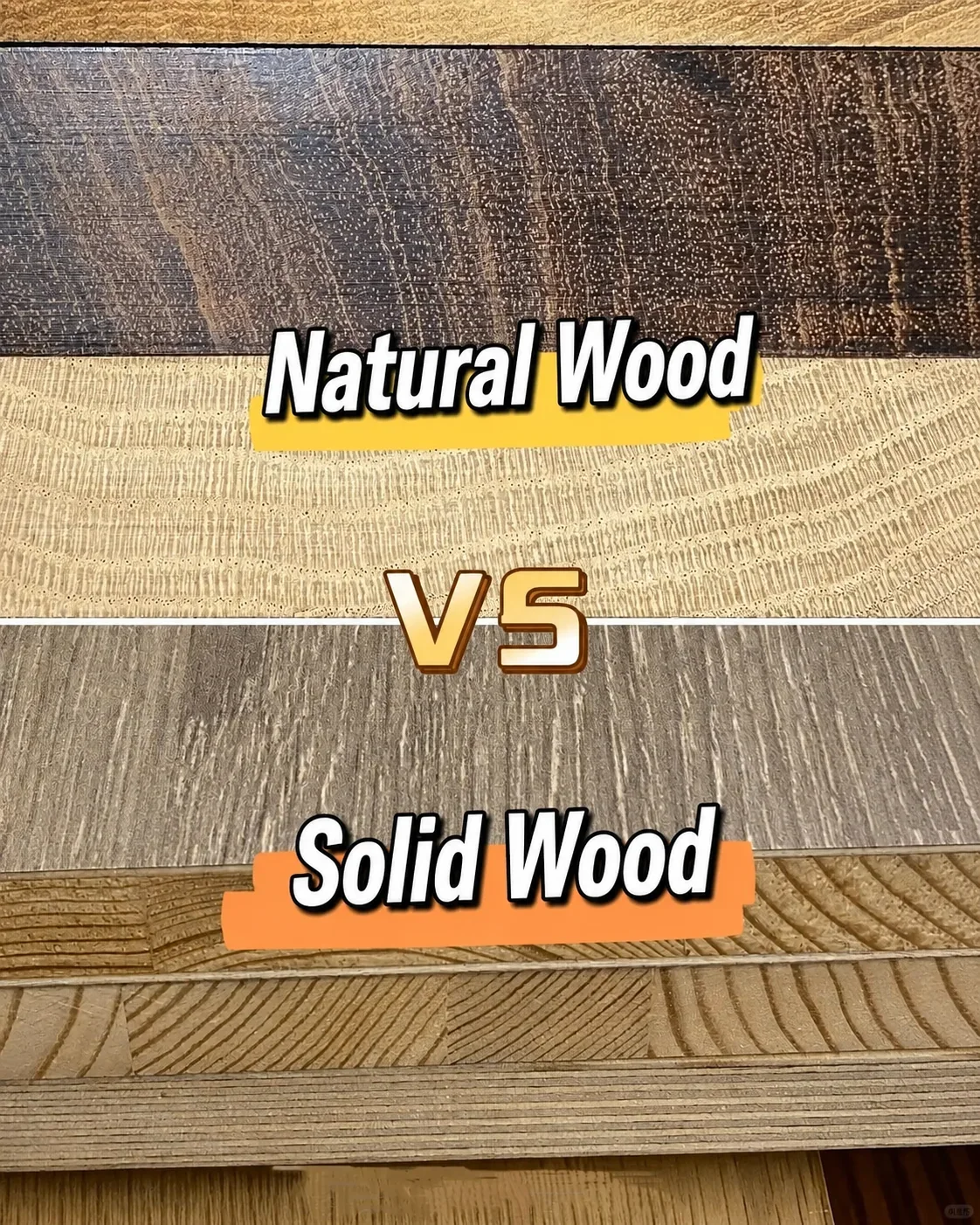
7. Solid wood vs engineered panels: what should actually be solid?
Solid wood is valuable where the part benefits from thickness, shaping, repairability or exposed end grain: chair frames, table legs, rails, sculpted edges and certain door frames. Large flat cabinet doors, wall panels and long casegood faces often benefit from a stable engineered core instead.
In other words, premium furniture does not need to be “100% solid wood” to be well made. In many cases that promise can actually work against dimensional stability. The better specification assigns each material to the job it is best at.
| Furniture part | Often sensible material choice | Why |
|---|---|---|
| Chair legs / rails | Solid wood | High localized stress, shaping and visible edge detail. |
| Large cabinet door | MDF or plywood + veneer / paint | Flatness and dimensional stability matter across a wide surface. |
| Cabinet box | Plywood or faced particle board | Depends on budget, fixing method, load and room conditions. |
| Painted routed door | MDF | Uniform core machines and paints cleanly. |
| Premium walnut sideboard front | Natural walnut veneer over stable core | Controls grain across wide drawer and door faces. |
| Table edge / shaped profile | Solid lipping or solid wood component | Protects the edge and gives enough material for shaping and repair. |
For a broader look at how these material choices become buildable components, see Ratahome’s Manufacturing & Quality process and Quality Control checklist.
8. Which panel is best for different furniture?
| Application | Strong starting point | What to verify |
|---|---|---|
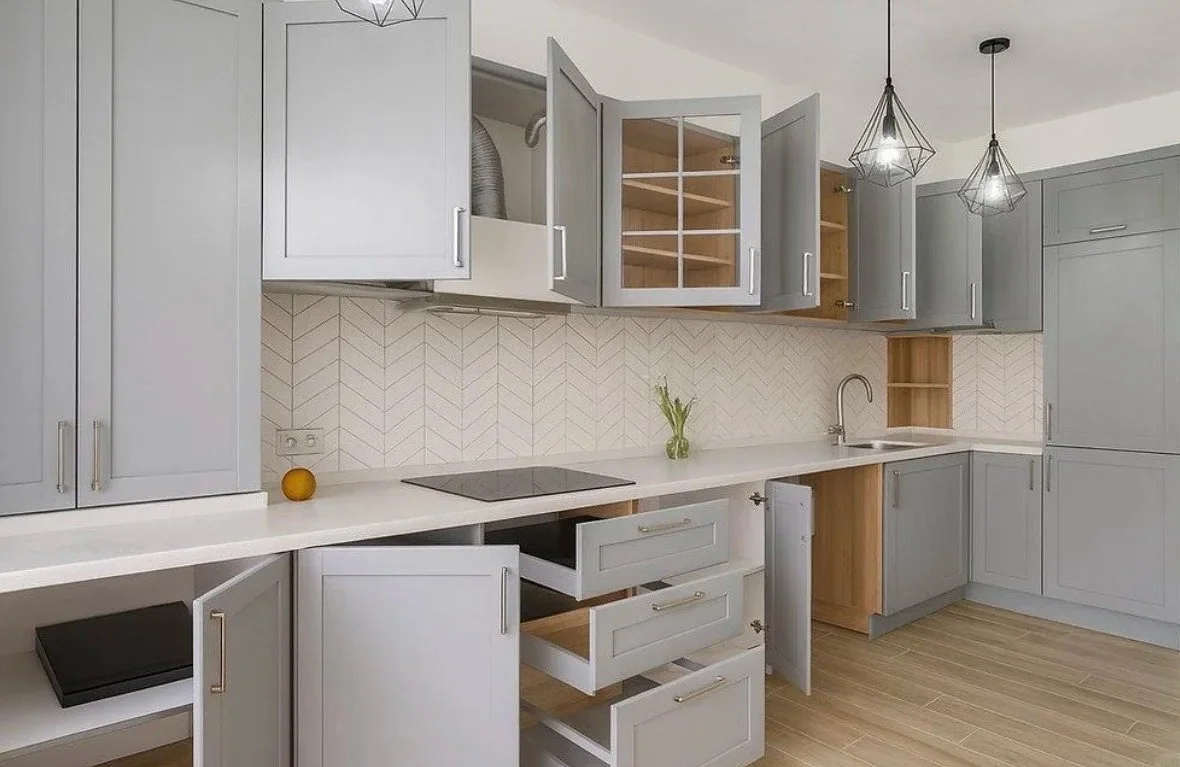
| Kitchen cabinetry | Plywood or quality faced board for boxes; MDF for painted fronts; veneer over stable core for wood fronts | Moisture zones, sink cabinet, edge sealing, hinges, drawer hardware, finish samples |
| Wardrobes | Faced particle board for interiors; MDF or veneer panels for feature doors; plywood where fixing strength matters | Shelf span, hanging loads, hinge density, edge banding and internal finish |
| Dressers & sideboards | Plywood/MDF carcass combinations with veneer, paint or lacquer surfaces | Drawer runners, back-panel structure, top loading, veneer sequence |
| Dining tables & desks | Plywood or engineered core with veneer; solid wood for legs, frames or durable edge details | Top thickness, reinforcement, edge design, heat/moisture exposure |
| Beds | Plywood and solid wood in load-bearing areas; MDF for decorative non-structural panels | Rails, center support, fastener system, repeat assembly and floor contact |
| Wall panels & built-ins | MDF for paint; plywood/MDF with veneer for natural wood look | Substrate flatness, panel joints, grain matching and service access |
For application-specific planning, compare this material guide with Ratahome’s Kitchen Cabinetry and Wardrobes & Closets pages. The material name should never be selected independently from door size, hardware, moisture exposure, finish and installation detail.
9. Moisture and humidity: the invisible part of the specification
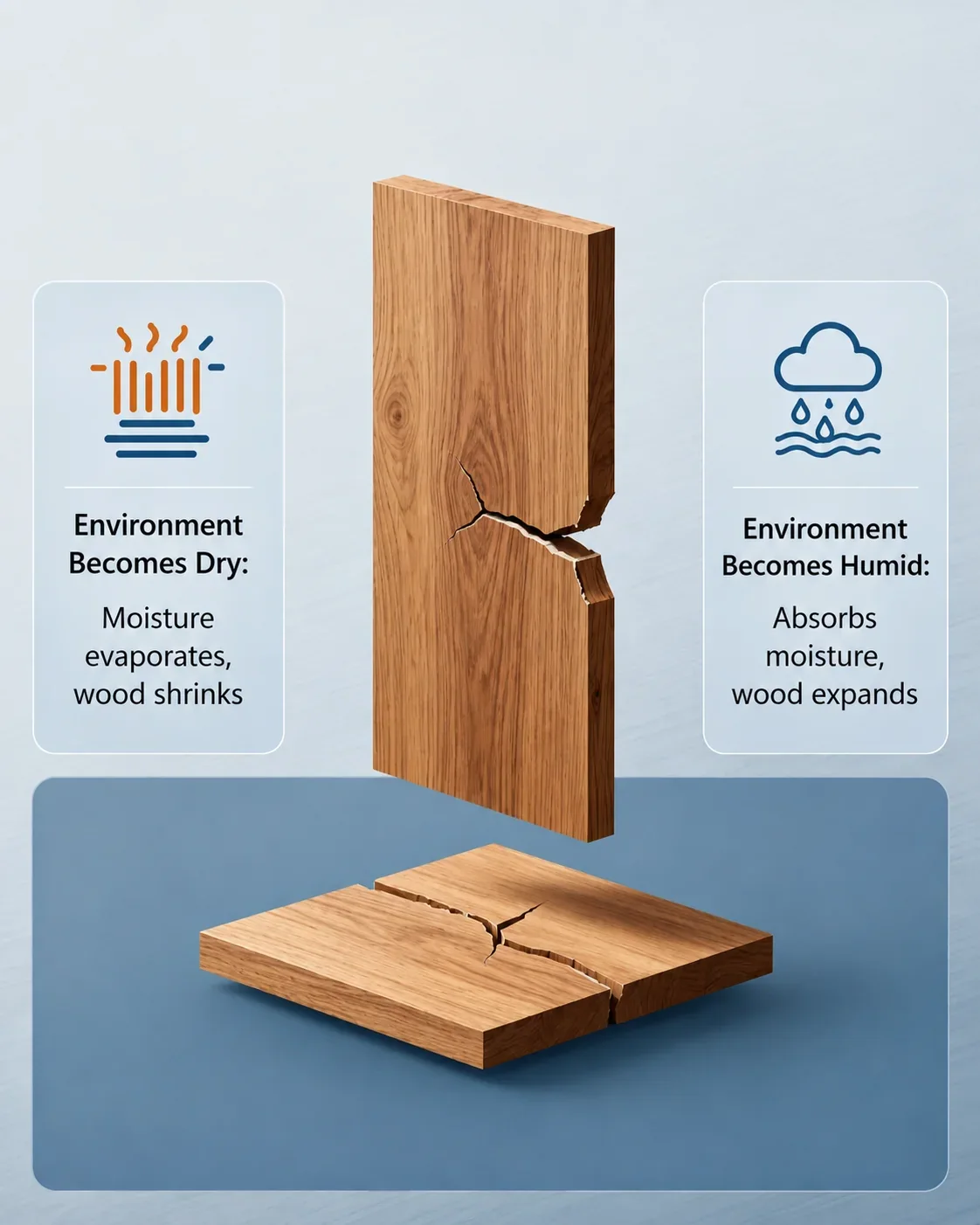
No wood-based panel likes uncontrolled water. The difference is how quickly moisture reaches the core, how the board responds and whether the construction allows the damaged part to be replaced.
Moisture-resistant is not waterproof
A moisture-resistant grade can improve performance, but a cut edge beside a sink, a cabinet touching a wet floor or an unsealed service opening can still become a failure point. Ask the factory to identify wet-zone details on the shop drawings rather than relying only on a board label.
- MDF: protect cut edges, sink zones and floor-contact details; select the appropriate grade where humidity is expected.
- Plywood: check the plywood grade and adhesive system; exposed edge layers should be sealed where moisture can enter.
- Particle board: edge banding and penetration sealing are especially important because water can swell the particle core.
- Veneer: the surface itself is thin natural wood; moisture performance depends heavily on the substrate, adhesive, finish and edges below it.
10. Edge banding and hardware often matter more than buyers expect
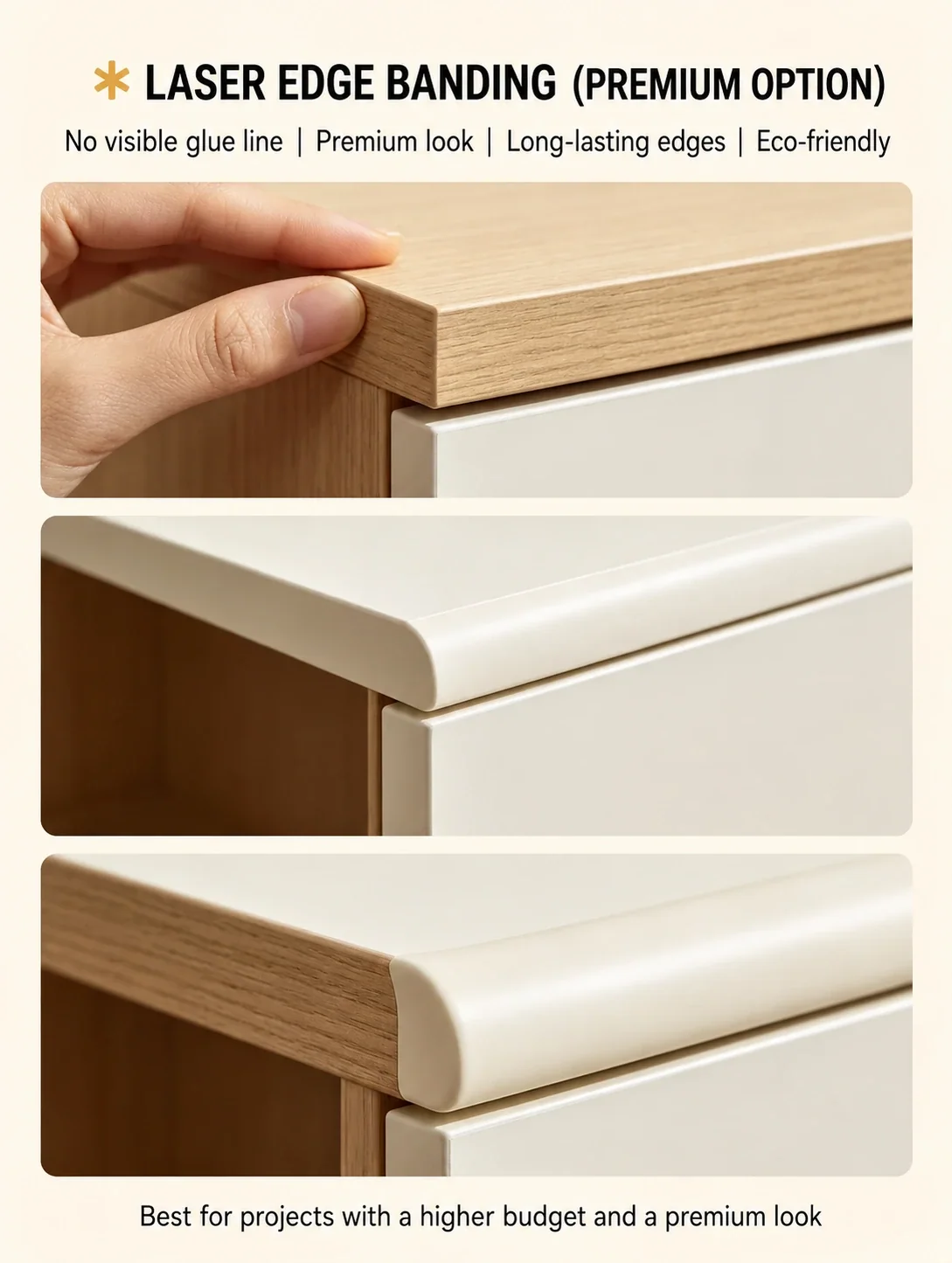
Two cabinets can use the same board and age very differently. The difference is often at the edge or the hinge. A panel may look perfect on the face while the edge banding is thin, poorly bonded or damaged by machining. A heavy door may also fail because the hinge screws were fixed into a weak area without enough material or reinforcement.
When comparing factories, this is the point where a showroom photo stops being enough. The Foshan Furniture Market guide recommends comparing the hidden construction, substrate, joinery and finishing details behind similar-looking products.
11. Finish and color control: the core is only half the story
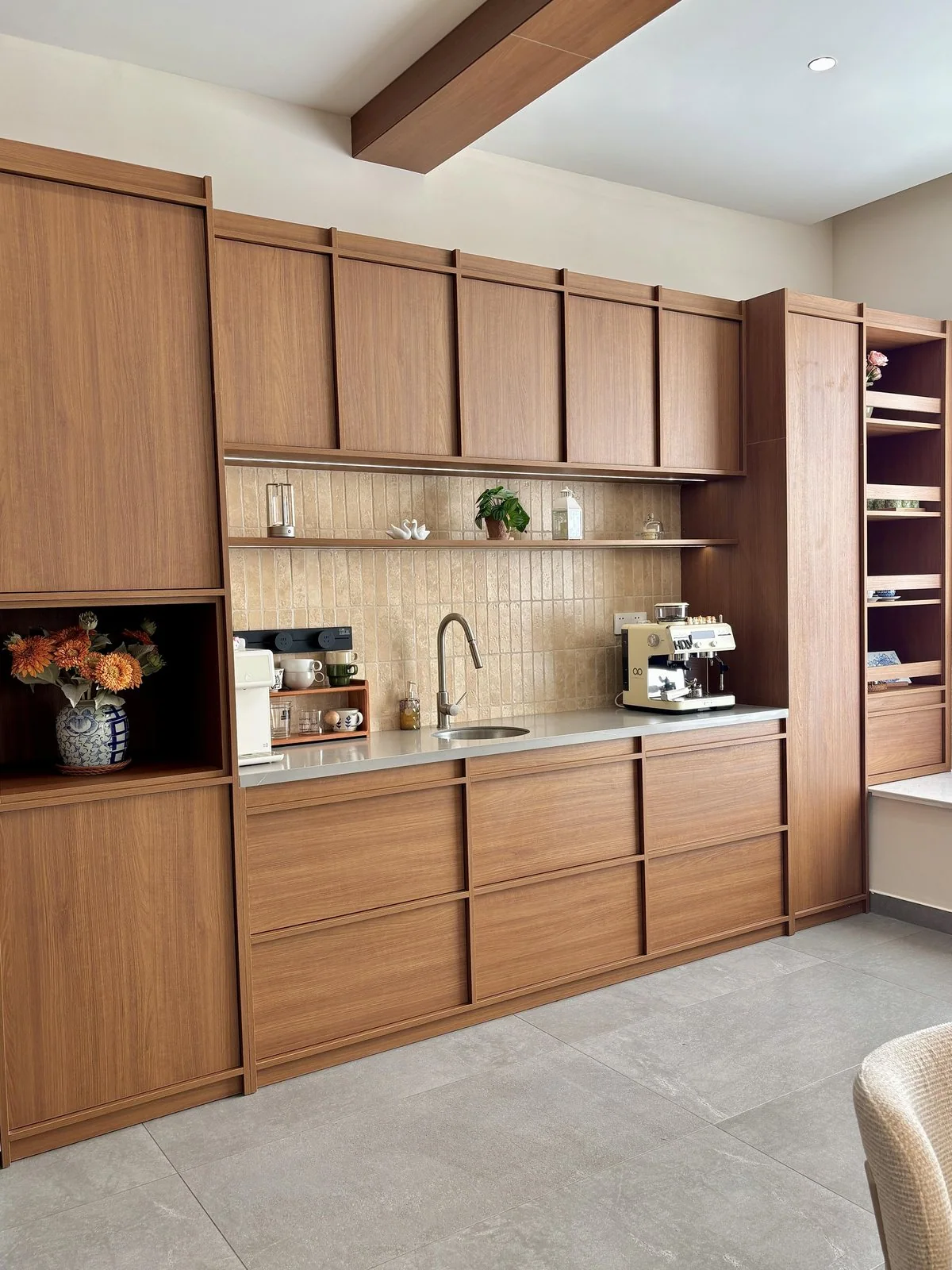
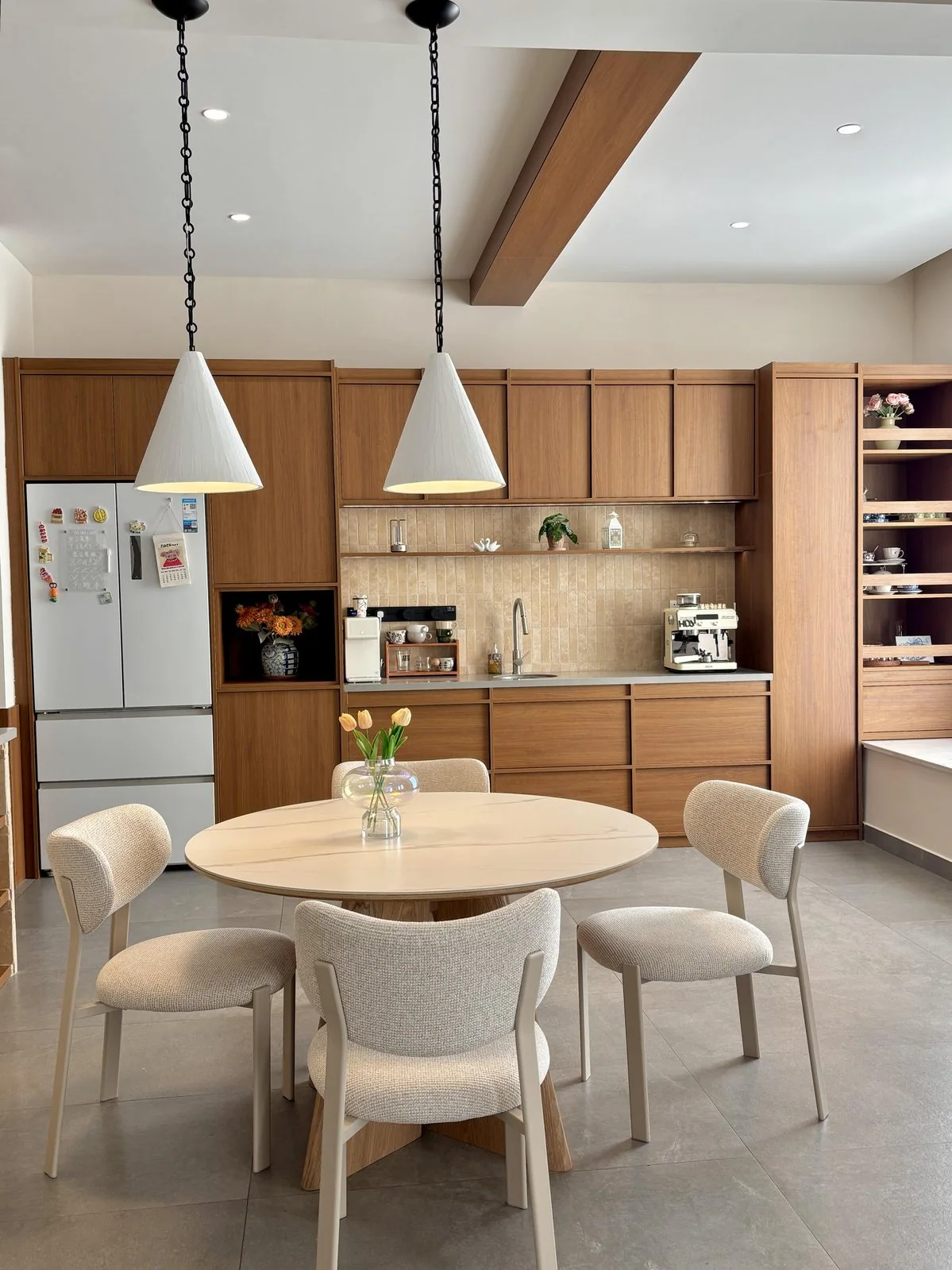
Painted MDF, melamine-faced particle board, veneered plywood and veneered MDF can all produce premium-looking furniture. The visible difference is often determined by factory process rather than the core name.
- Paint / lacquer: inspect primer coverage, edge smoothness, sanding marks, gloss level and color consistency under normal room light.
- Melamine / laminate: inspect edge color match, seam quality, surface texture, scratch resistance and panel direction.
- Natural veneer: approve a physical finish sample, veneer sequence, stain color and grain direction before full production.
- Mixed materials: check junctions where timber meets stone, metal, glass or upholstery; those transitions reveal workmanship quickly.
12. Factory quality control: what to ask before approving an order
A professional specification should make the board type visible on drawings and purchase documents. “Wood cabinet” or “engineered wood” is not precise enough for a custom order.
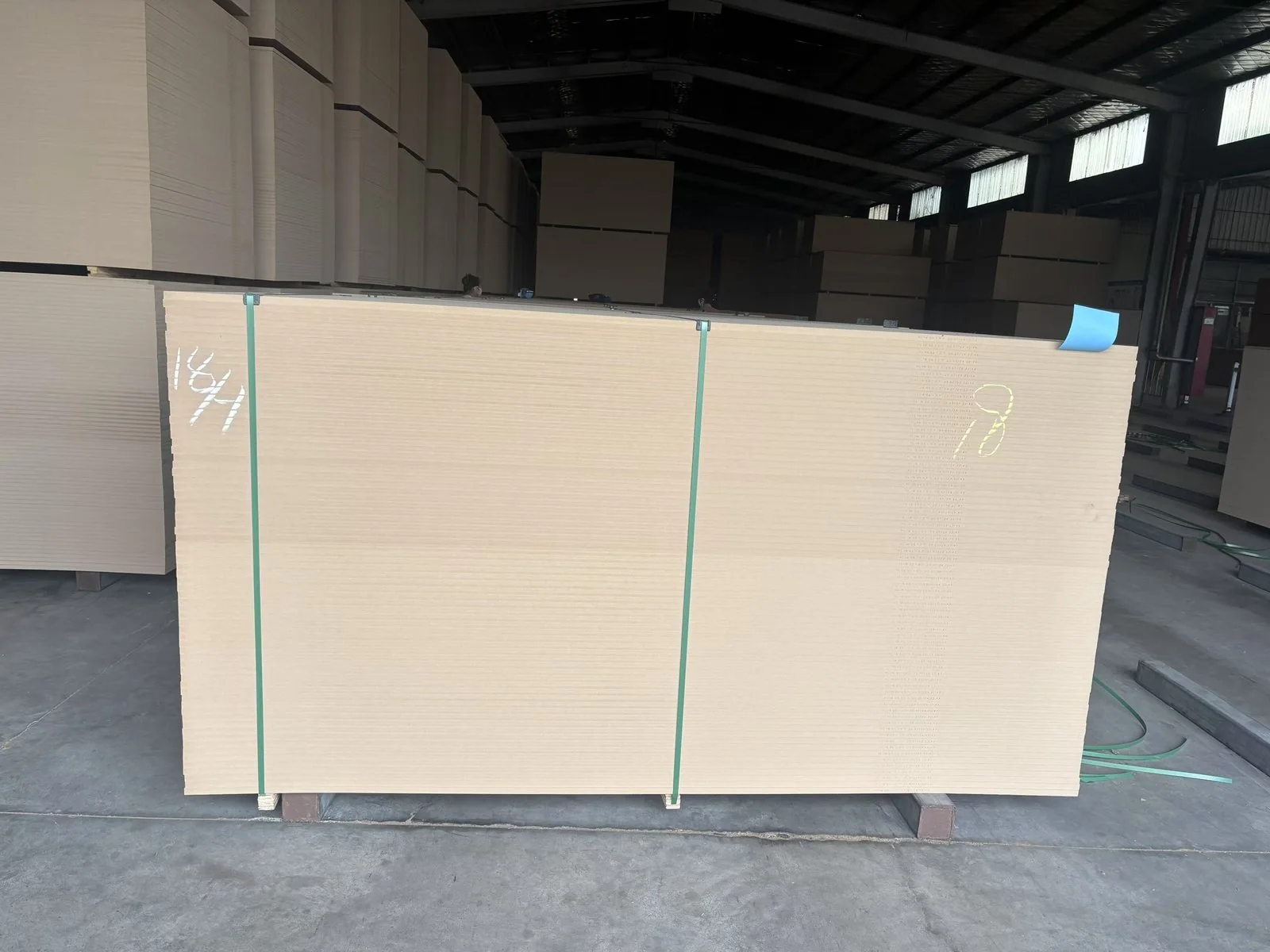
Ratahome’s Quality Control system places material selection, incoming inspection, production monitoring, assembly review, final inspection and packing checks into one documented process. For engineered panels, the most useful checks happen before the doors are fully finished and the core becomes invisible.
- Confirm panel material and thickness against the approved drawing.
- Inspect cut edges and core consistency before edge banding.
- Check flatness and obvious moisture damage before machining.
- Verify hinge, connector and drawer-runner fixing positions.
- Approve veneer sequence and finish sample before full batch finishing.
- Inspect edge banding, corners, drilled holes and service cut-outs after assembly.
- Compare repeated units side by side for color, door gaps and alignment.
13. How to choose engineered wood for a whole-home furniture project
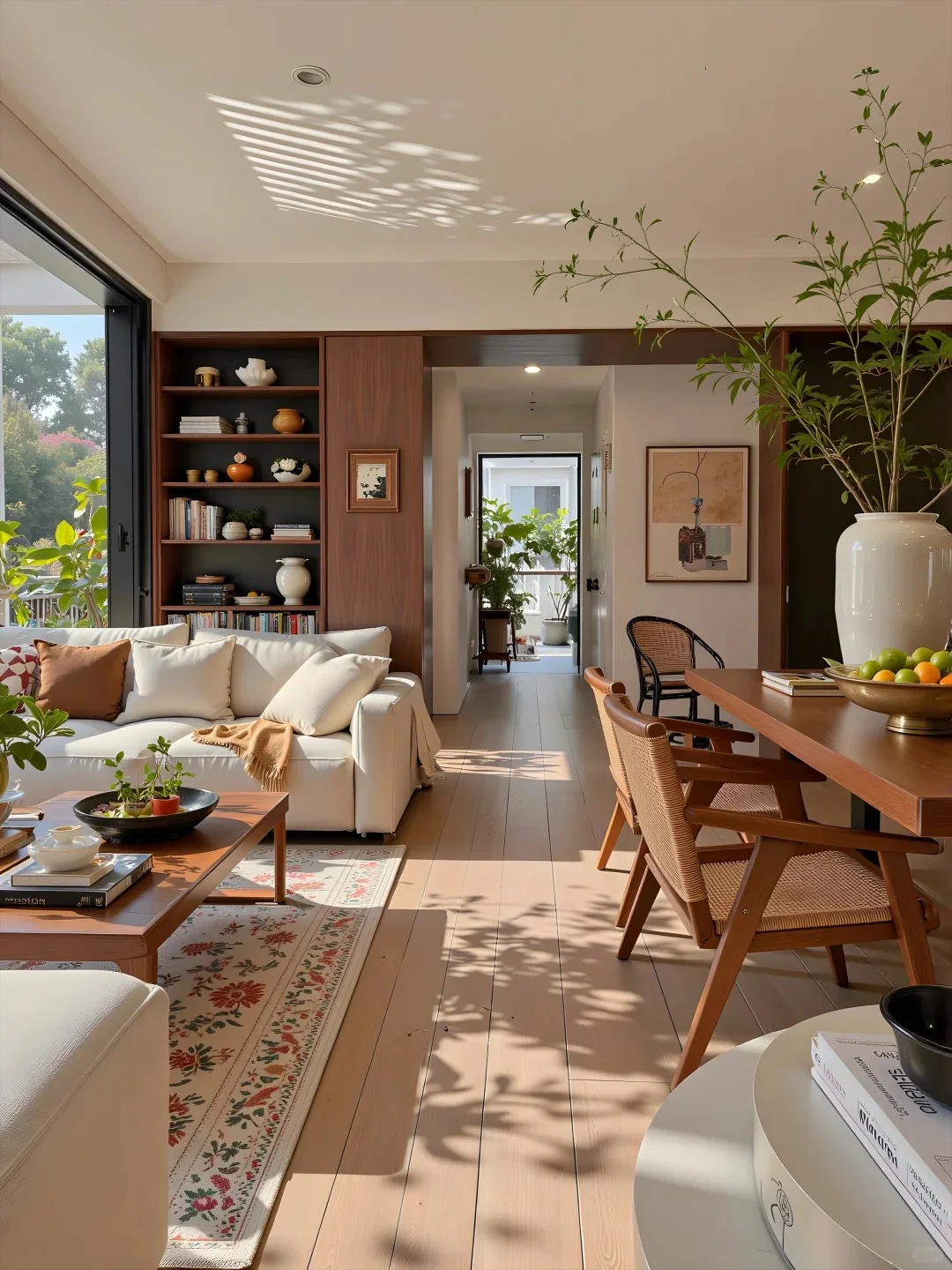
For a single cabinet, the choice can be simple. For a whole home, the better approach is to build a material hierarchy so the same logic repeats across kitchens, wardrobes, sideboards, vanities, desks and wall panels.
Identify load, moisture, size, hardware and how often the item will be moved or reassembled.
Select MDF, plywood or particle board based on structure and machining rather than appearance.
Paint, lacquer, melamine, laminate or natural veneer should follow the design language.
Edge banding, solid lipping and corner construction protect the weakest transitions.
Physical color and finish samples should be approved before the full production batch.
Put core, thickness, finish and hardware into the drawings and purchase documents.
For projects that combine loose furniture with cabinetry, Ratahome’s whole-home solutions and joinery service show how furniture selection and fixed cabinetry can be coordinated as one project instead of being sourced as unrelated items.
FAQ
Is MDF good for custom cabinets?
Yes. MDF is excellent for painted cabinet doors, routed profiles and smooth lacquer finishes. For cabinet boxes, heavy hardware or wet zones, select the core separately instead of assuming the same MDF should be used everywhere.
Which is stronger: plywood or MDF?
For structural furniture parts and screw holding, good plywood is usually the stronger option. MDF is more uniform and often better for decorative machining and paint. The correct choice depends on the part rather than the product category alone.
Is particle board low quality?
Not automatically. Good particle board with proper density, surface facing, edge banding and hardware can be practical for wardrobe interiors and cabinet parts. It becomes a problem when it is used in the wrong location or the edges and fasteners are poorly detailed.
Is veneer real wood or fake wood?
Natural veneer is real wood cut into a thin sheet. What matters is the substrate underneath, the adhesive, grain matching, edge treatment and finish quality.
What board is best for a kitchen?
There is no one-board answer. A kitchen can mix plywood or faced board cabinet boxes, MDF painted doors and natural veneer feature fronts. Wet-zone detailing, hardware and edge sealing are as important as the core material.