
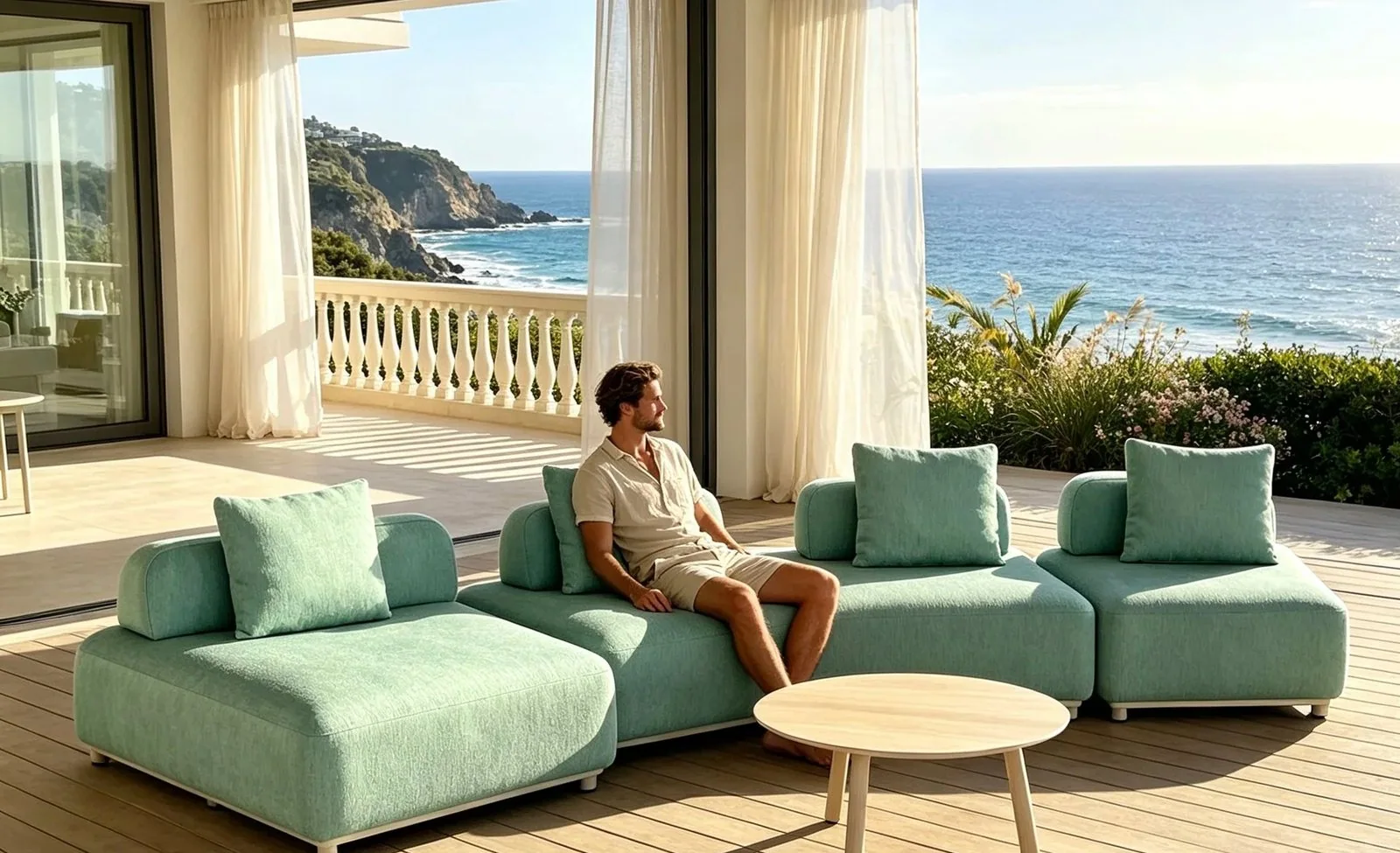
Outdoor furniture does not fail because it looks wrong in a showroom. It fails because the material, cushion system, dimensions, or construction were wrong for the climate and the way the space is used.
Use this guide as a practical checklist before buying a patio sofa, chaise, dining set, or full outdoor package. For broader guidance on materials, sizing, and furniture quality, cross-reference the Ratahome Furniture Guide.
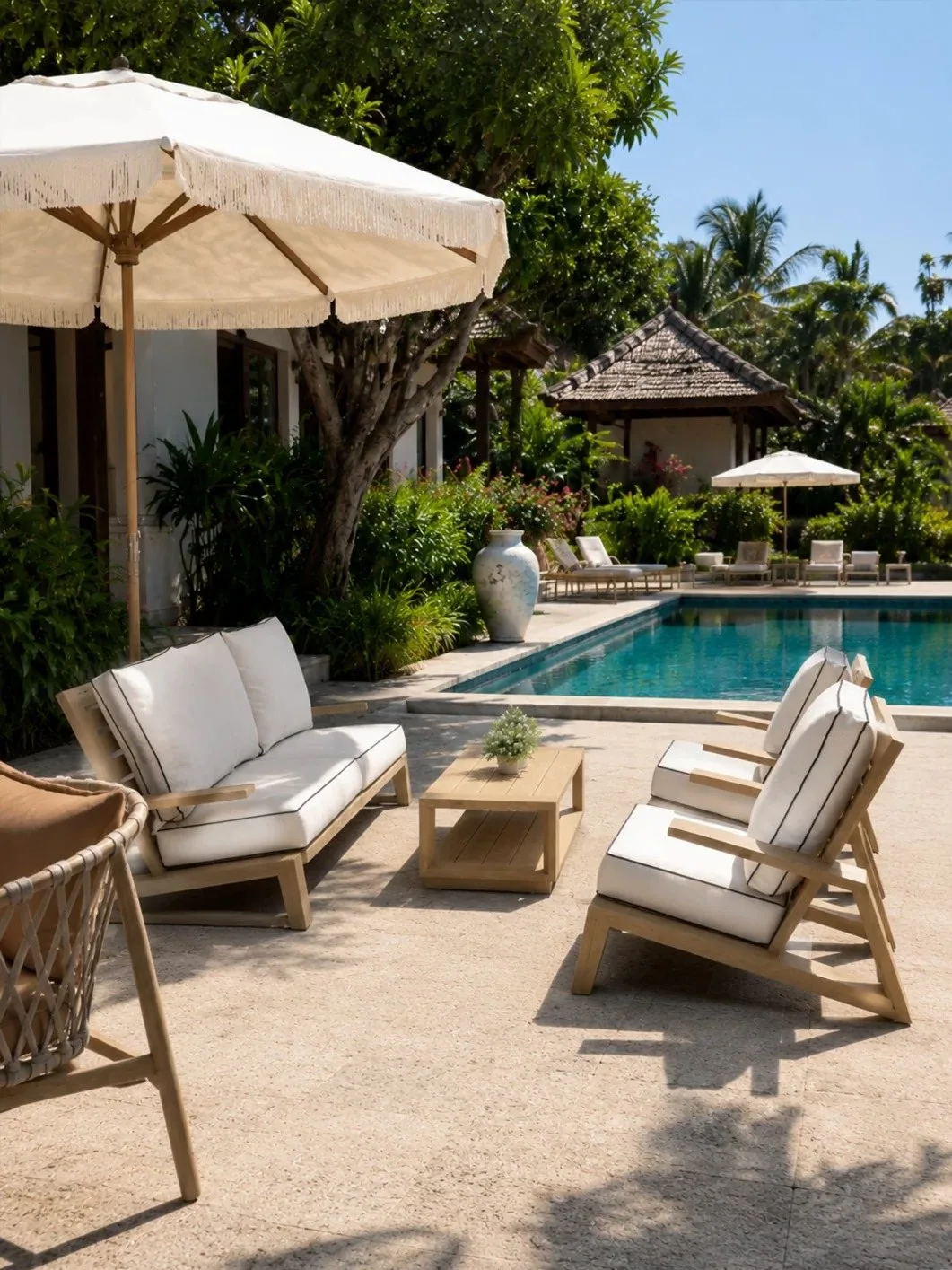
1. Start with Exposure and Daily Use
Before comparing teak with aluminum or waterproof fabric with quick-dry foam, define the environment. A covered city balcony and an open beachfront terrace are completely different engineering problems.
Four questions to answer first
- Will the furniture be fully exposed to rain, pool splash, or sprinklers?
- Is the location humid, coastal, windy, or exposed to intense UV?
- Will cushions stay outside 24/7, or can they be stored after use?
- Is the priority deep residential comfort, commercial durability, or fast drying?
Choose materials for the harshest condition the furniture will regularly face — not for the best-weather day.
2. Choose the Right Frame and Surface Materials
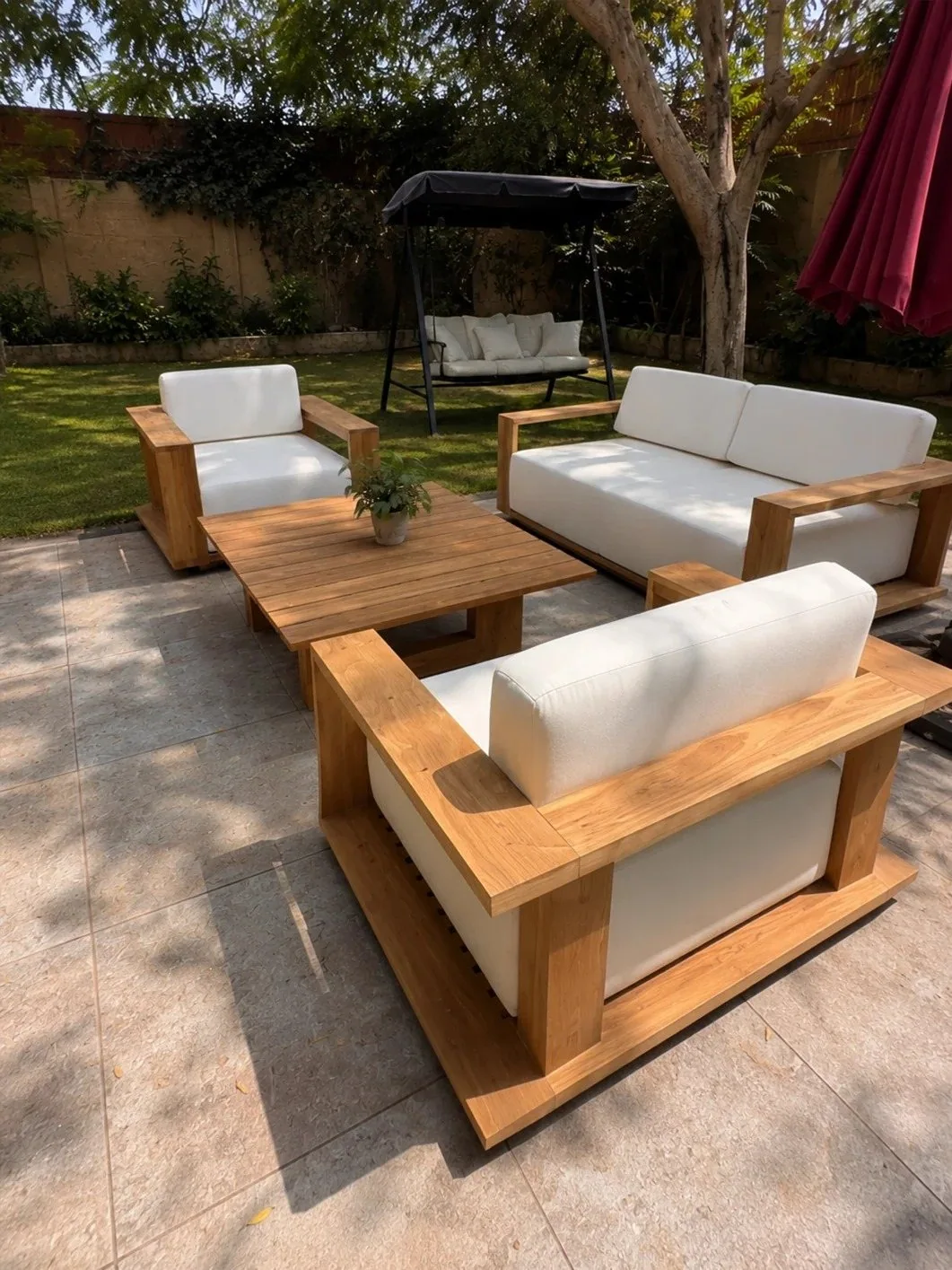
Frame material controls weight, corrosion resistance, maintenance, and visual character. The goal is not to find a universally “best” material; it is to match the material to exposure, design language, and maintenance expectations.
| Material | Best use | Key risk to check | Maintenance |
|---|---|---|---|
| Powder-coated aluminum | Modern seating, coastal patios, hospitality | Thin tubing, poor welds, weak coating prep | Low |
| Teak | Premium residential, resort, garden | Sapwood, cracking, inconsistent drying | Low–medium |
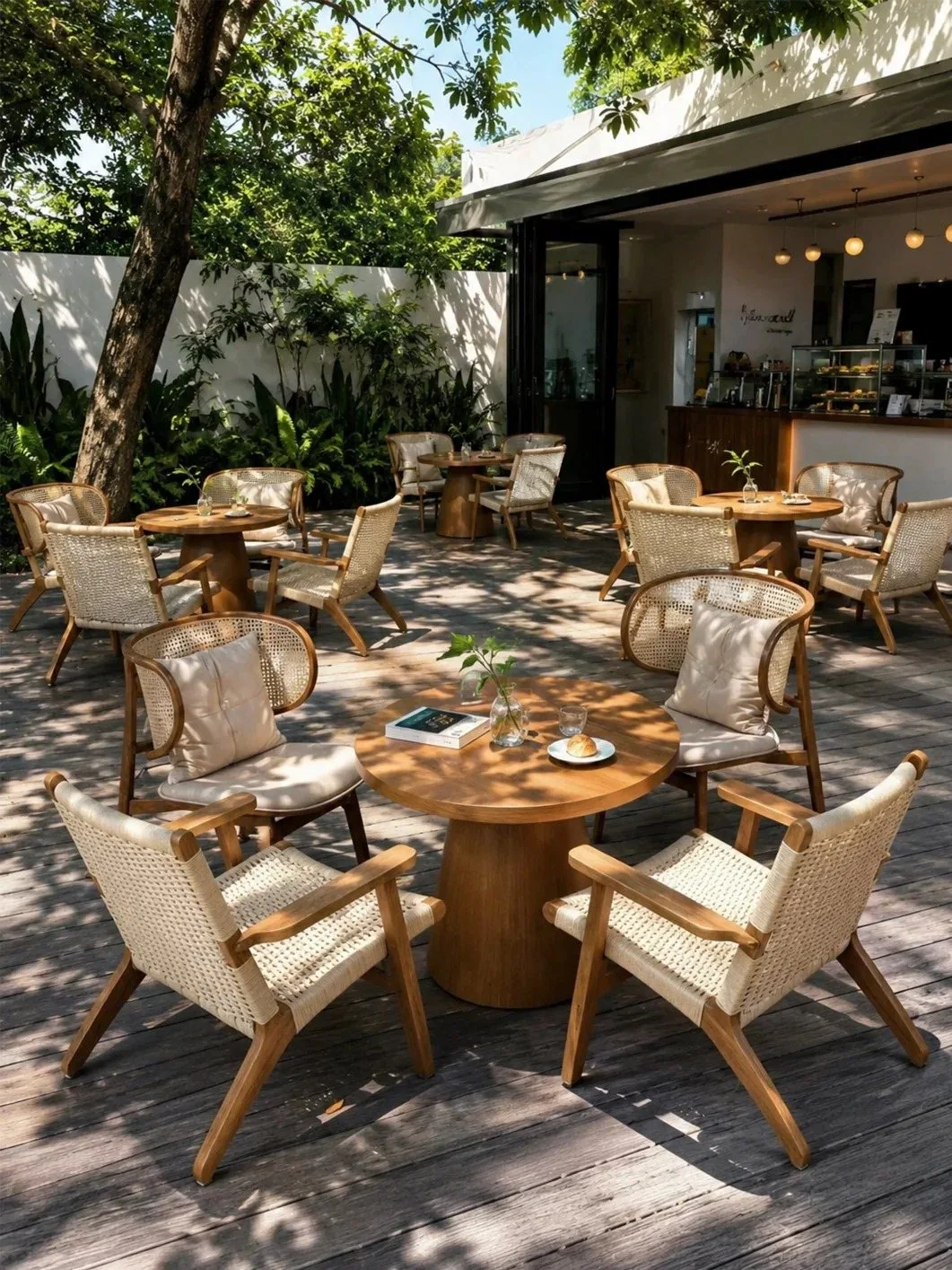
| PE rope / rattan | Woven chairs, lounge seating, cafés | UV fading, loose weave, poor frame beneath | Low |
| Sintered stone | Coffee and dining tabletops | Edge chips and weak transport protection | Very low |
| Tempered glass | Lightweight visual schemes | Edge damage and thermal shock | Low |
For factory-side material selection, sampling, and production capability, see Ratahome Manufacturing Capability.
3. Build the Cushion System, Not Just the Fabric
Outdoor comfort is a system: outer fabric, inner liner, foam, drainage, stitching, ventilation, and whether the cushion can be removed. A premium-looking textile alone does not make a reliable outdoor cushion.
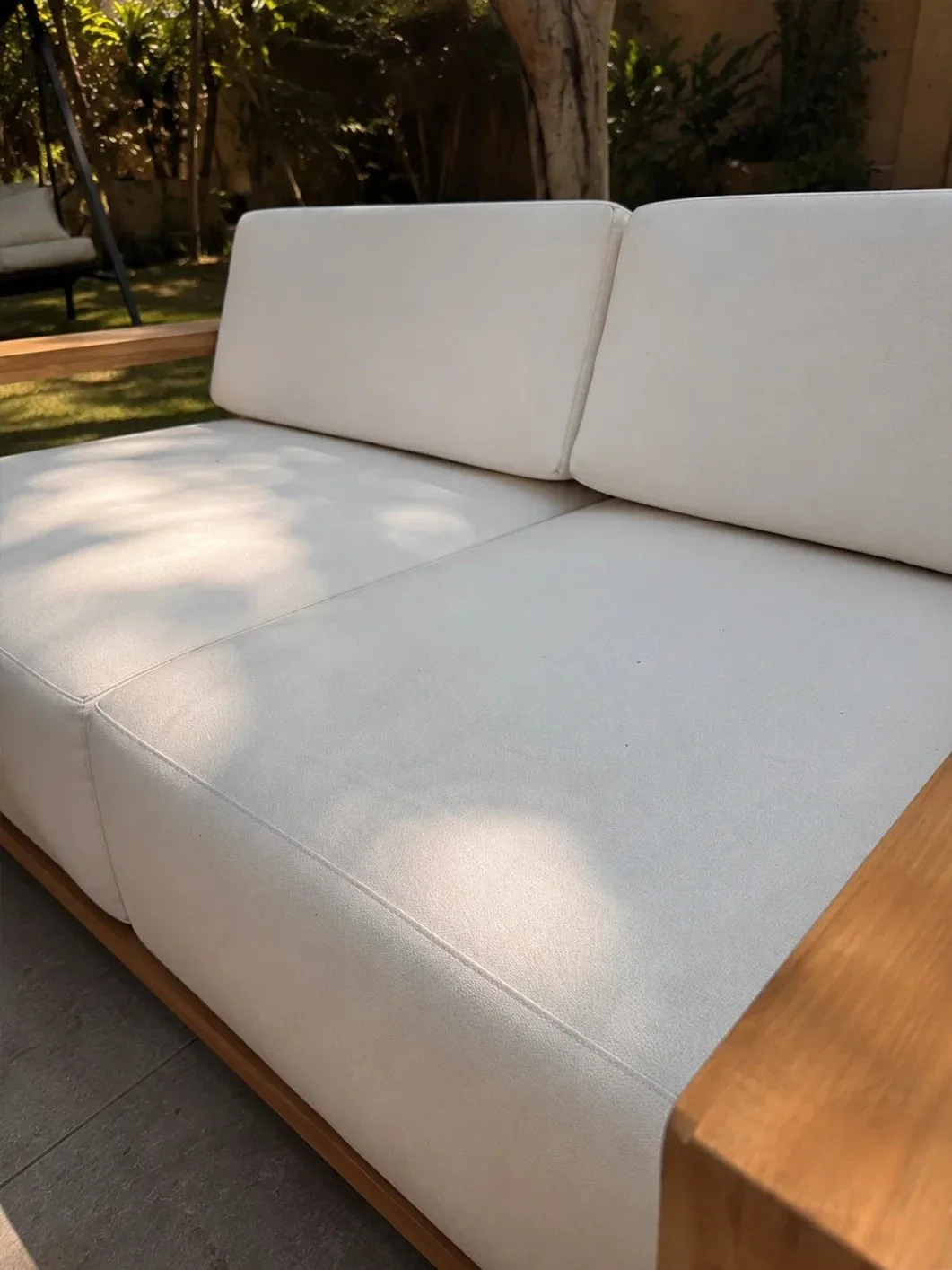
Waterproof fabric + high-density foam
Comfort-first choice for covered patios and situations where cushions are stored after rain. The outer cover limits water entry, while the denser foam gives a softer indoor-like sit.
Water-repellent fabric + quick-dry foam
Better for open-air poolside and hospitality zones. The fabric sheds light water while open-cell foam helps water drain and airflow return faster after soaking.
“Waterproof” and “water-repellent” are not interchangeable. Even waterproof covers can allow moisture through stitching, zippers, or seams. For repeated wetting, drainage and airflow matter as much as surface beading.
4. Check Construction Before You Judge the Look
Two outdoor chairs can use the same visible materials and still have very different lifespans. Check what sits underneath the finish: frame gauge, welds or joinery, hardware grade, tension, glides, and replaceable parts.
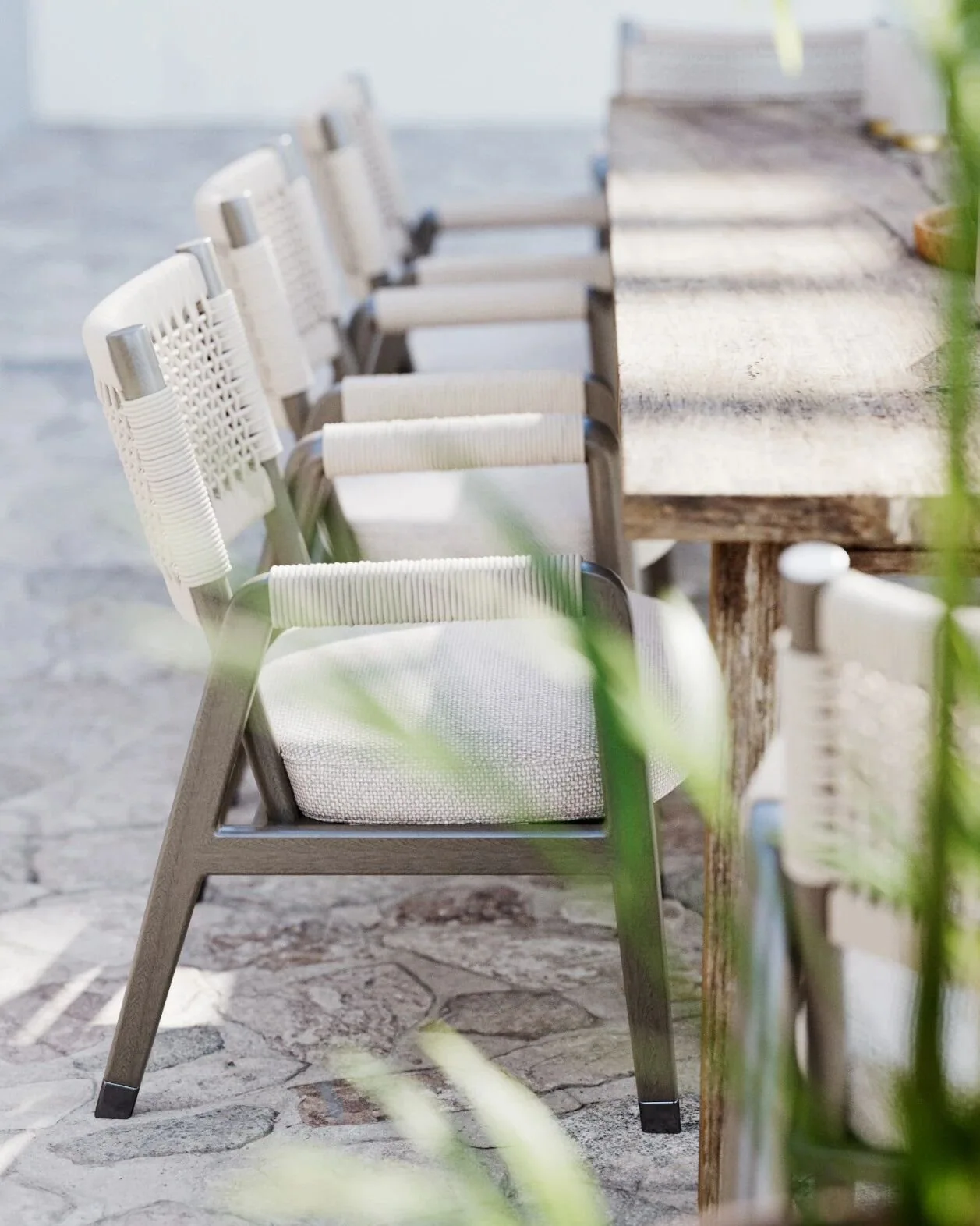
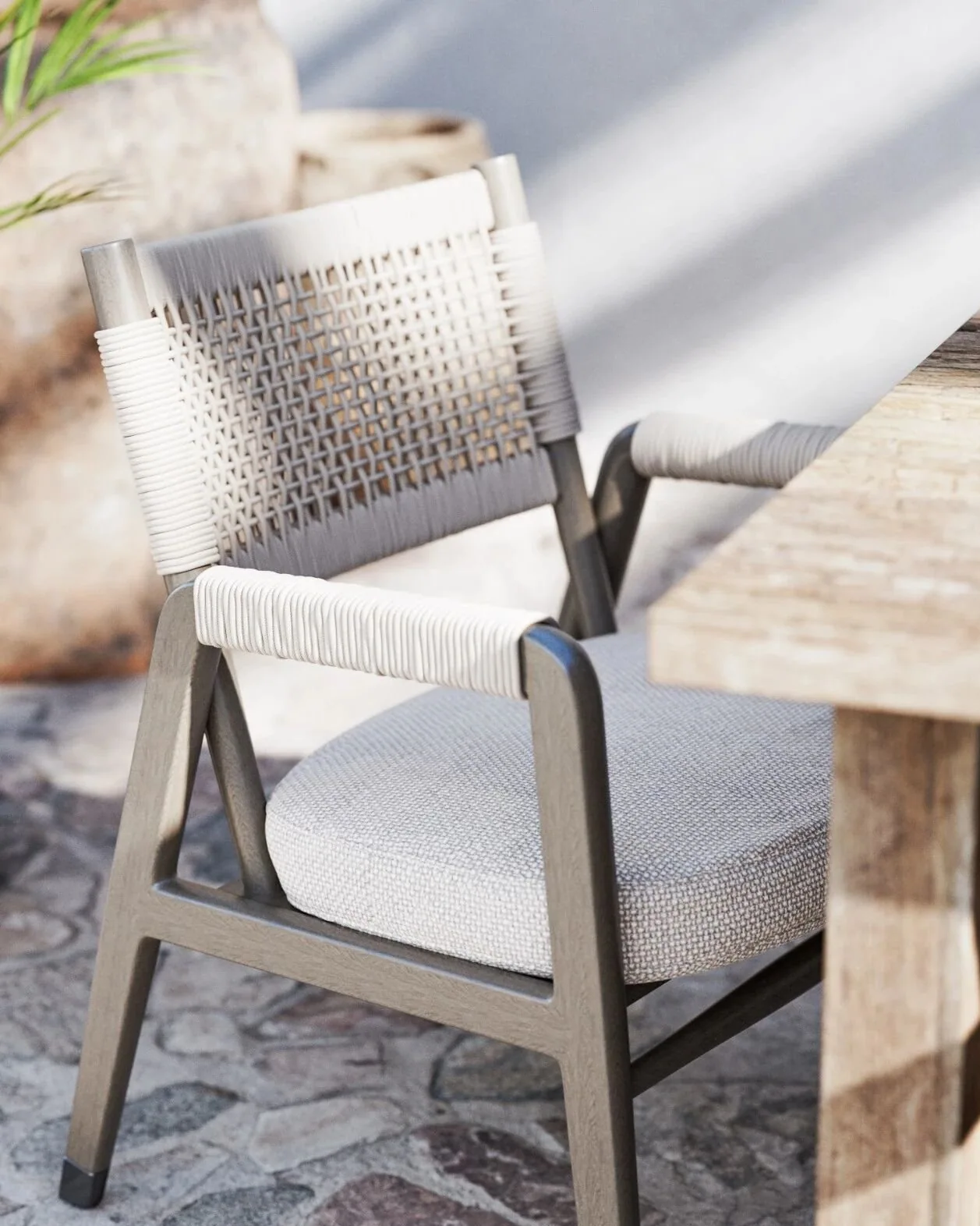
- Aluminum: look for clean welds, good corner reinforcement, consistent wall thickness, and durable powder coating.
- Wood: check joint accuracy, stable timber, drainage at horizontal surfaces, and hardware that will not corrode outdoors.
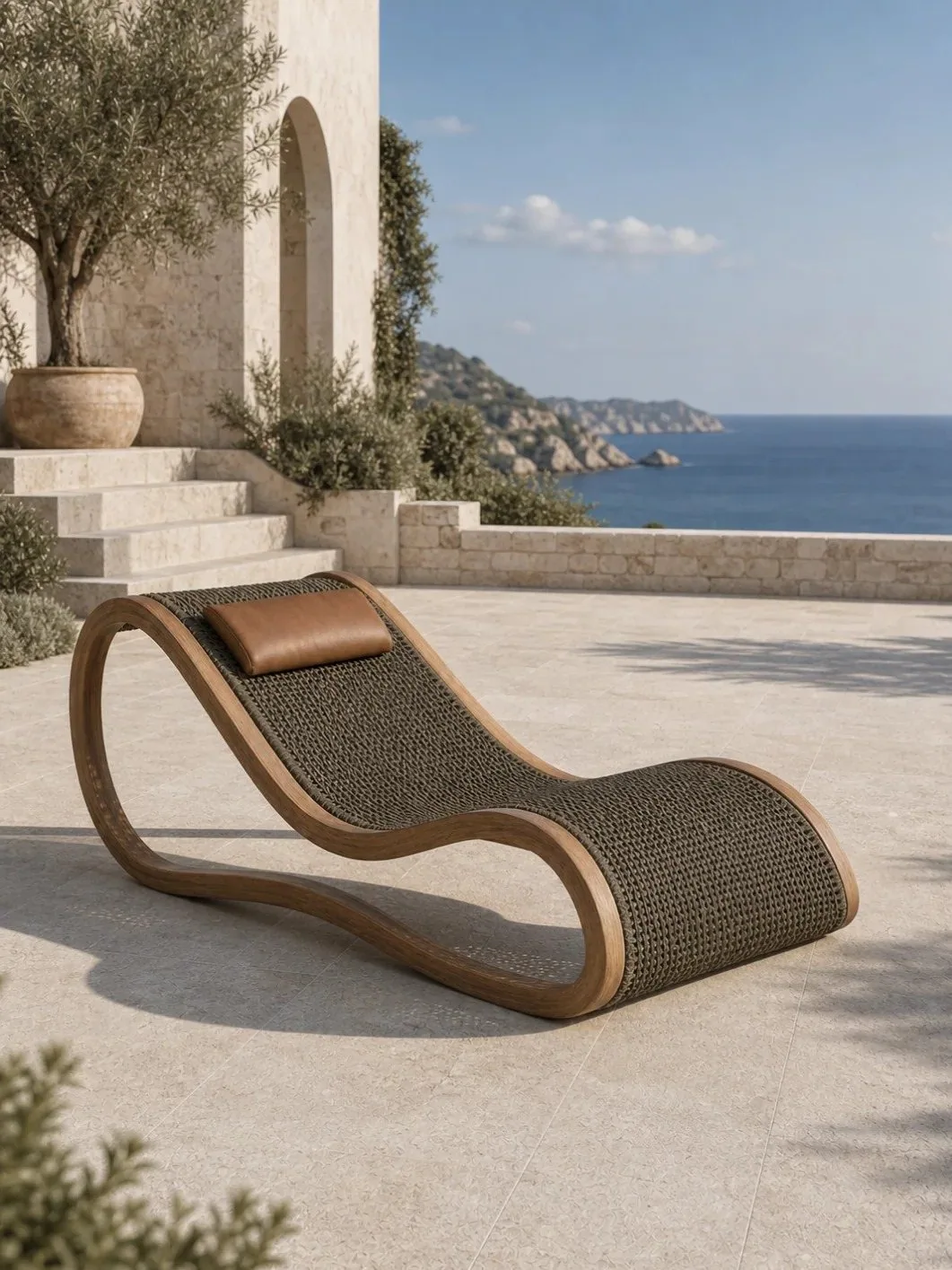
- Rope or rattan: tension should be even, ends should be cleanly finished, and the substrate frame should feel rigid.
- Hardware: ask which stainless-steel grade is used and where fasteners are exposed to rain or salt air.
- Feet: replaceable glides protect stone decks and help isolate the frame from standing water.
Ratahome documents production and export preparation through its Quality Control process, including material, assembly, final-product, packing, and shipment checks.
5. Match Style to Architecture — Then Plan the Layout
Outdoor furniture is visually exposed. It sits against architecture, landscaping, sky, water, and hardscape, so proportion and silhouette matter more than trend-driven decoration.
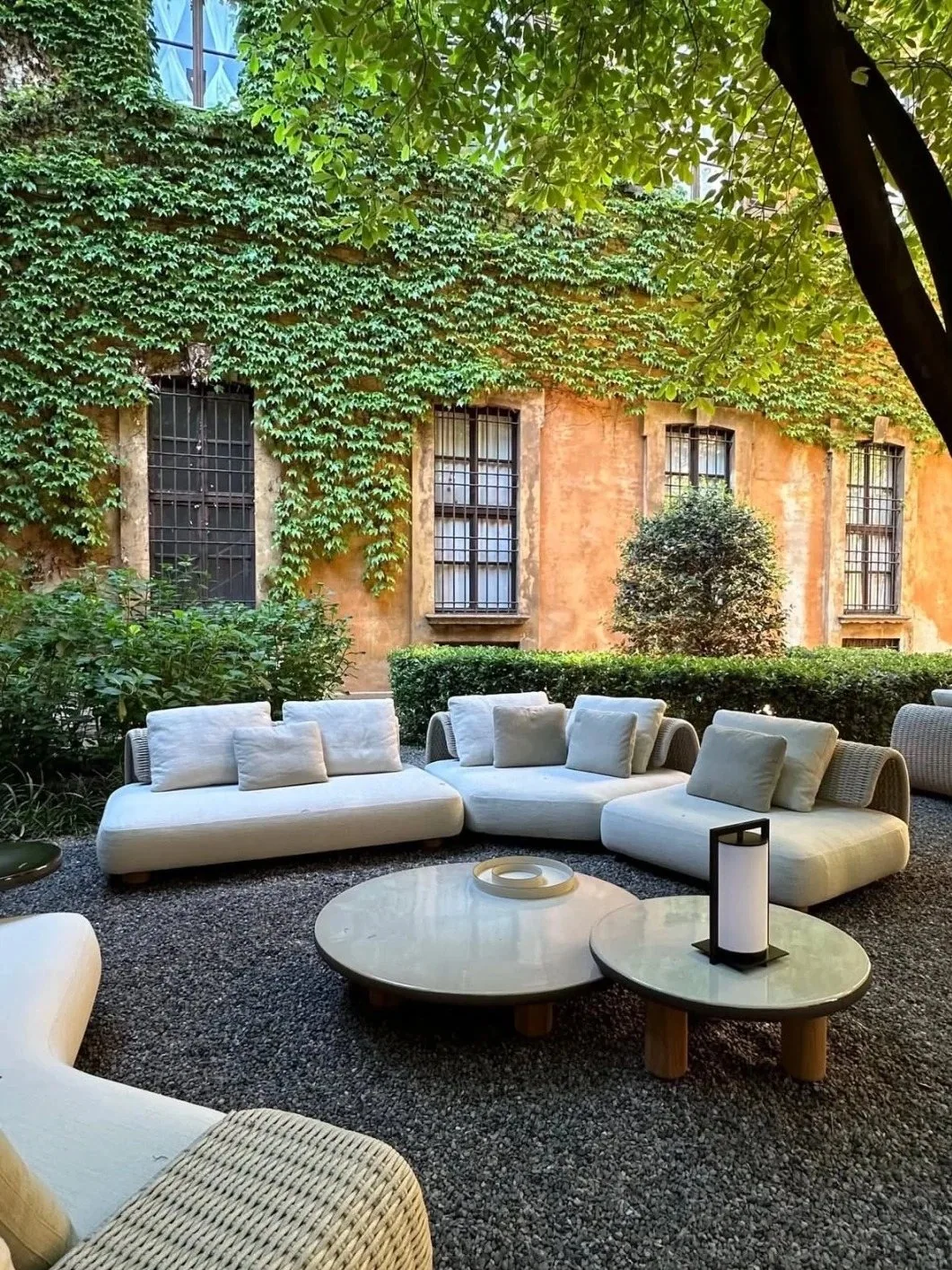
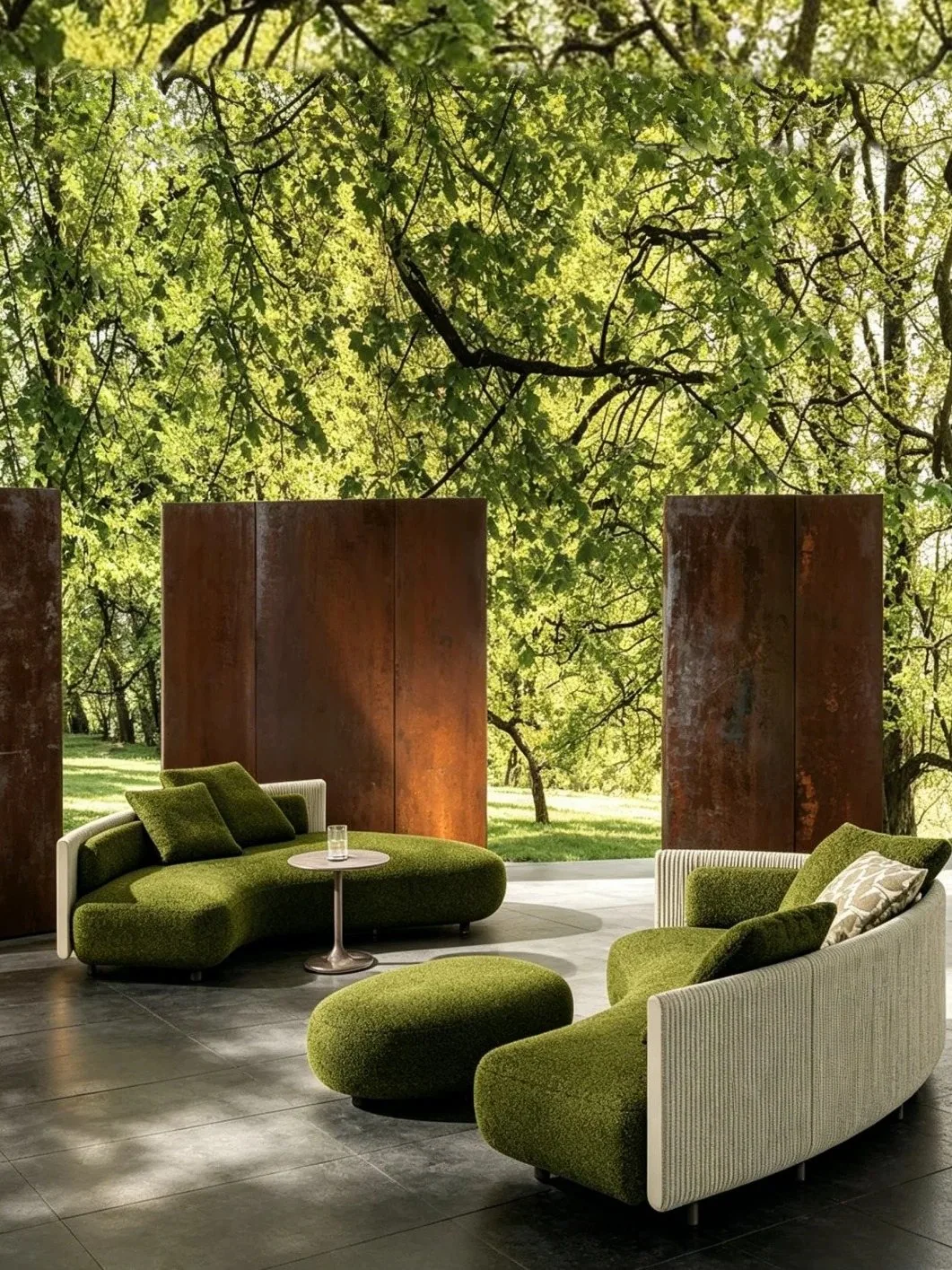
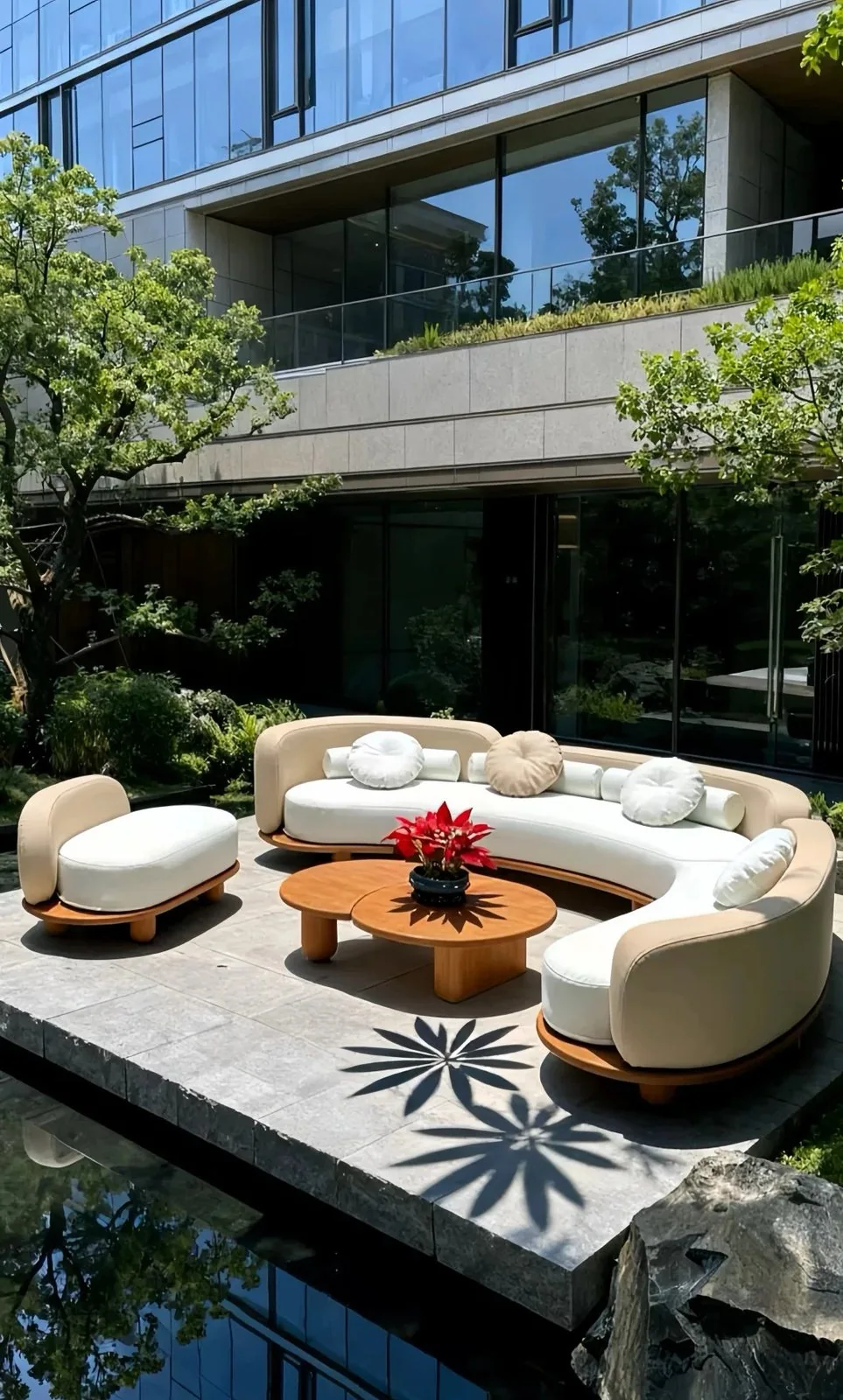
For whole-home projects, the outdoor area should not feel disconnected from the interior. Review the same palette, proportions, and material language used inside. Ratahome’s project pages show how furniture, lighting, and custom pieces can be coordinated as one design language.
6. Get Dimensions, Circulation, Shade, and Comfort Right
Outdoor spaces often need more clearance than interior rooms because people move chairs, carry drinks, walk around planters, and circulate between doors, pools, grills, and garden paths.
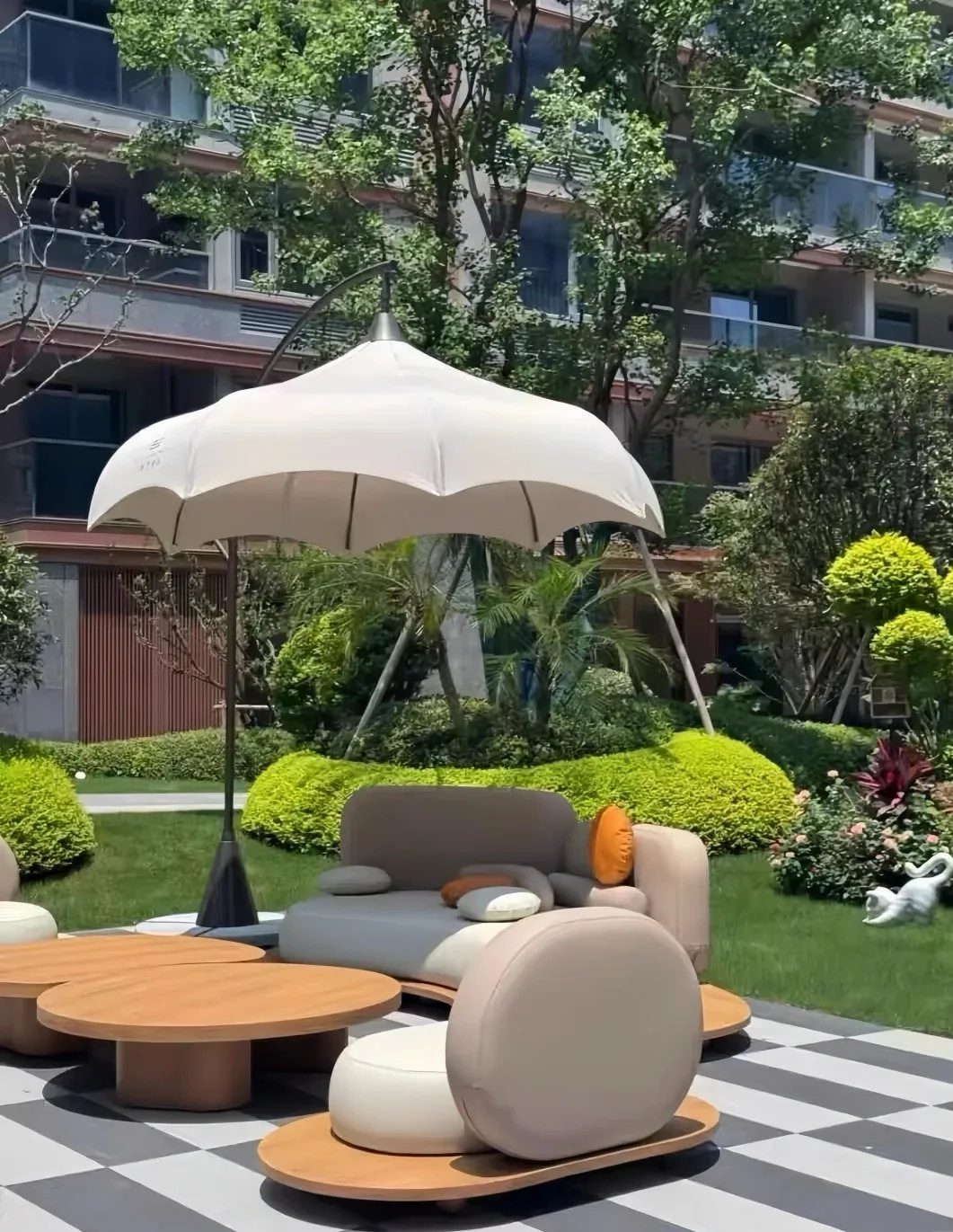
| Planning point | Practical starting range | Why it matters |
|---|---|---|
| Primary walkway behind seating | About 90 cm / 36 in minimum | Keeps circulation comfortable and avoids brushing past furniture |
| Dining chair pull-out zone | About 75 cm / 30 in | Allows the chair to move without blocking the route behind it |
| Coffee table to sofa | About 40–45 cm / 16–18 in | Reachable without crowding knees or standing space |
| Side table to arm | Within easy reach; near arm height | Prevents awkward reaching and improves daily use |
Do not ignore ergonomics

7. Inspect Quality, Customization, and Real-World Use
Quality should be visible in details and documented in specifications. Ask for photos that go beyond the hero angle: the underside, seams, hardware, corners, open zippers, glides, and packed product.
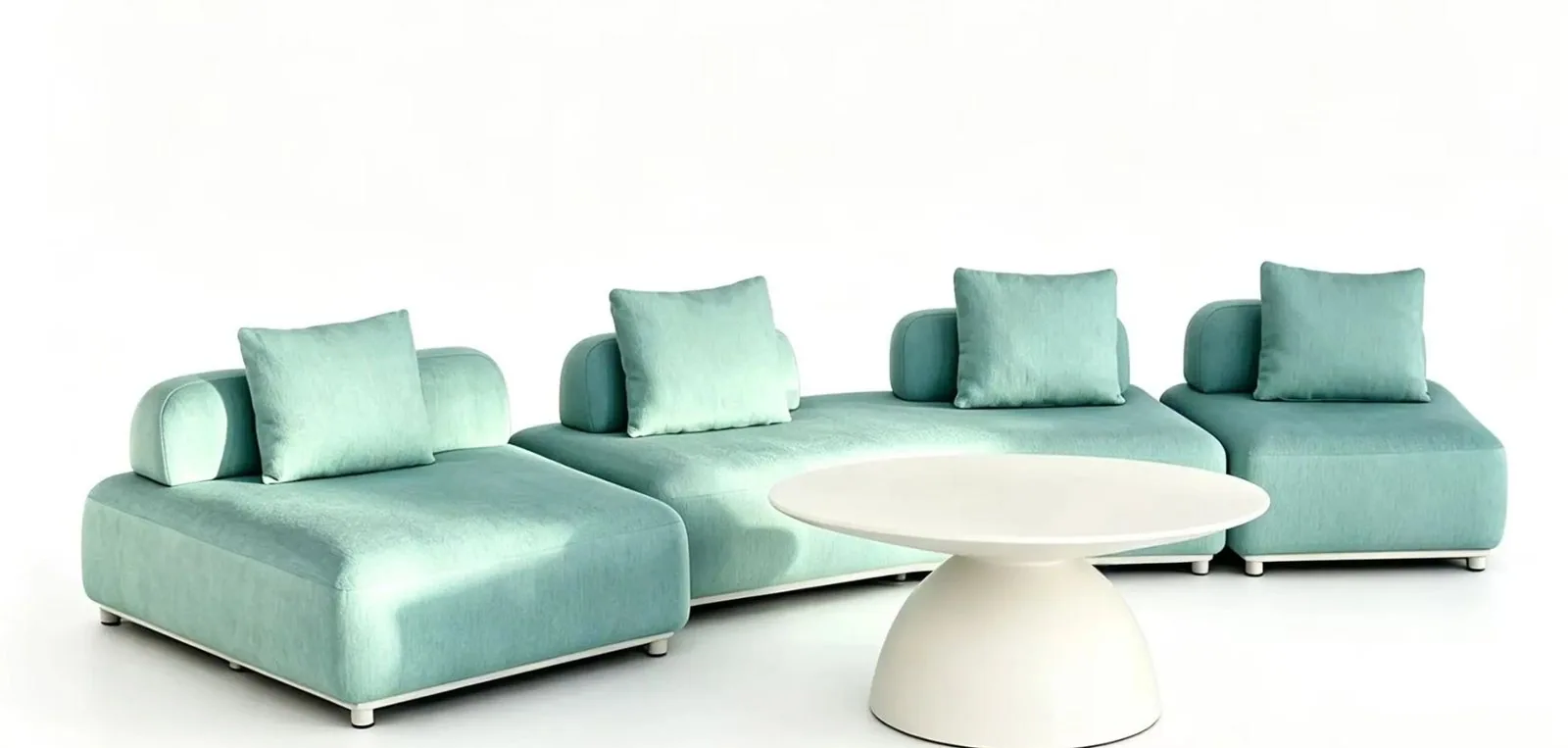
- Sit test: the frame should not rock, twist, or creak.
- Cushion recovery: foam should rebound consistently and not feel hollow at the edges.
- Finish consistency: compare multiple pieces for color, sheen, grain, weave, and weld consistency.
- Replaceability: confirm that cushion covers, glides, connectors, and hardware can be replaced later.
- Custom samples: for a project order, approve one sample or material set before mass production.
For documented inspection points and export packing checks, use the Ratahome Quality Control System. For written coverage periods and claim boundaries, see the current Warranty Policy.
8. Choose the Factory, Packing, and Delivery Plan
Outdoor furniture is a product system, so the supplier needs experience across frame fabrication, weaving, upholstery, finishing, QC, and export packing. A factory that only shows finished catalog photos is harder to evaluate than one that can show process photos, samples, test information, and packed goods.
Supplier checklist
- Can the supplier explain the exact frame, coating, fabric, foam, and hardware specifications?
- Can they show production, assembly, and QC — not only styled photos?
- Do they have a clear process for custom dimensions, sample approval, and revisions?
- Will every carton be labeled by SKU / room / project and protected for ocean freight?
- Are shipping terms, insurance, destination handling, and after-sales responsibilities written down?
For current export packing, FOB/CIF/DDP options, and door-to-door coordination, see Ratahome Global Capabilities. You can also read the step-by-step furniture delivery guide for a broader view of shipping from China.
The safest workflow is simple: approve materials → approve dimensions → approve sample / drawings → inspect production → inspect finished goods → inspect packing → release shipment.
Quick FAQ
What is the best material for outdoor furniture?
There is no universal winner. Powder-coated aluminum is practical and low-maintenance, teak brings natural warmth and premium weight, woven PE materials add texture, and sintered stone is strong for outdoor tabletops. Match the material to exposure and maintenance expectations.
Is waterproof fabric better than water-repellent fabric?
Not always. Waterproof covers help with short rain exposure, while water-repellent performance fabric paired with quick-dry foam can be more practical when cushions may be soaked repeatedly and need to drain quickly.
Should outdoor cushions stay outside all year?
Only if the full system is designed for it. Removable covers, drainage, airflow, quick-dry foam, and a breathable cover strategy matter. Never trap a wet cushion in an airtight cover.
How do I judge an outdoor furniture factory remotely?
Ask for production-stage photos, material specs, hardware grades, QC documentation, sample procedures, packing photos, and a written after-sales process. Ratahome publishes both its manufacturing and quality-control workflows online.
Continue Exploring Ratahome Resources
Planning an Outdoor Project?
Send your floor plan, reference images, location, and target use. Ratahome can help coordinate furniture selection, custom development, manufacturing, inspection, export packing, and worldwide delivery.
START YOUR PROJECT