Great modern dining room ideas with natural materials are not about filling the room with rustic finishes. They are about choosing a few tactile elements with confidence—an expressive wooden table, a beautifully grained stone surface, soft upholstered dining chairs—and letting light and proportion bring them together.
Let the grain of wood set the mood
A modern dining room with natural materials starts with a tactile anchor. Oak, ash and walnut each add a different kind of warmth: oak reads open and relaxed, ash feels pale and airy, while walnut introduces deeper contrast. The best dining tables do not need elaborate detailing when the grain and proportions already carry the design.
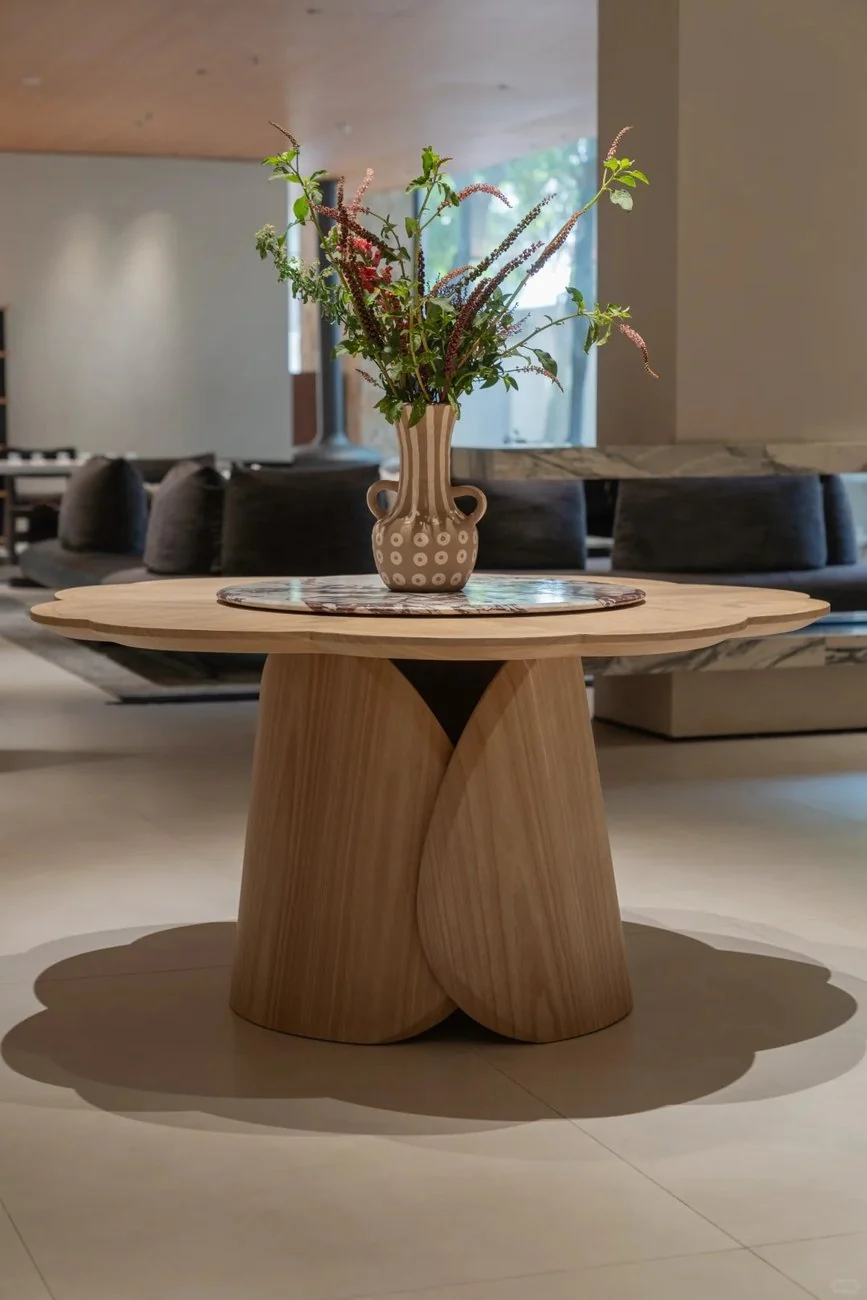
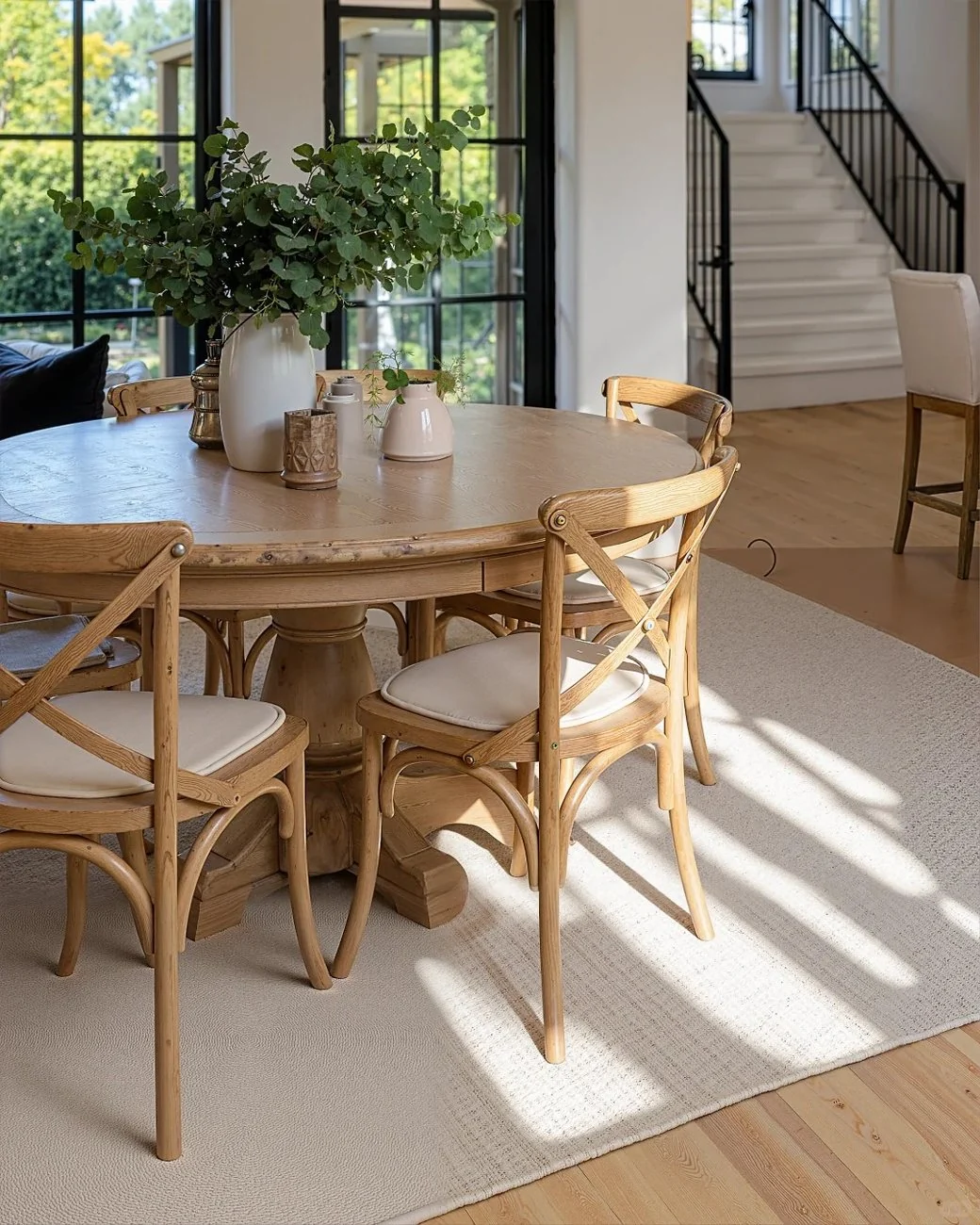
Look for an honest finish that shows the wood rather than covering it. Pair a substantial pedestal or softly rounded tabletop with lighter chair profiles so the composition does not feel heavy. For a cohesive open-plan space, repeat one wood tone in a nearby console, kitchen stools or shelving.
Balance timber with natural stone
Wood brings familiarity; stone adds calm structure. Travertine, marble and limestone introduce soft veining and mineral texture that work beautifully against warm timber. A stone surface can be the centerpiece, or it can appear more quietly in a kitchen island that connects with the dining room.
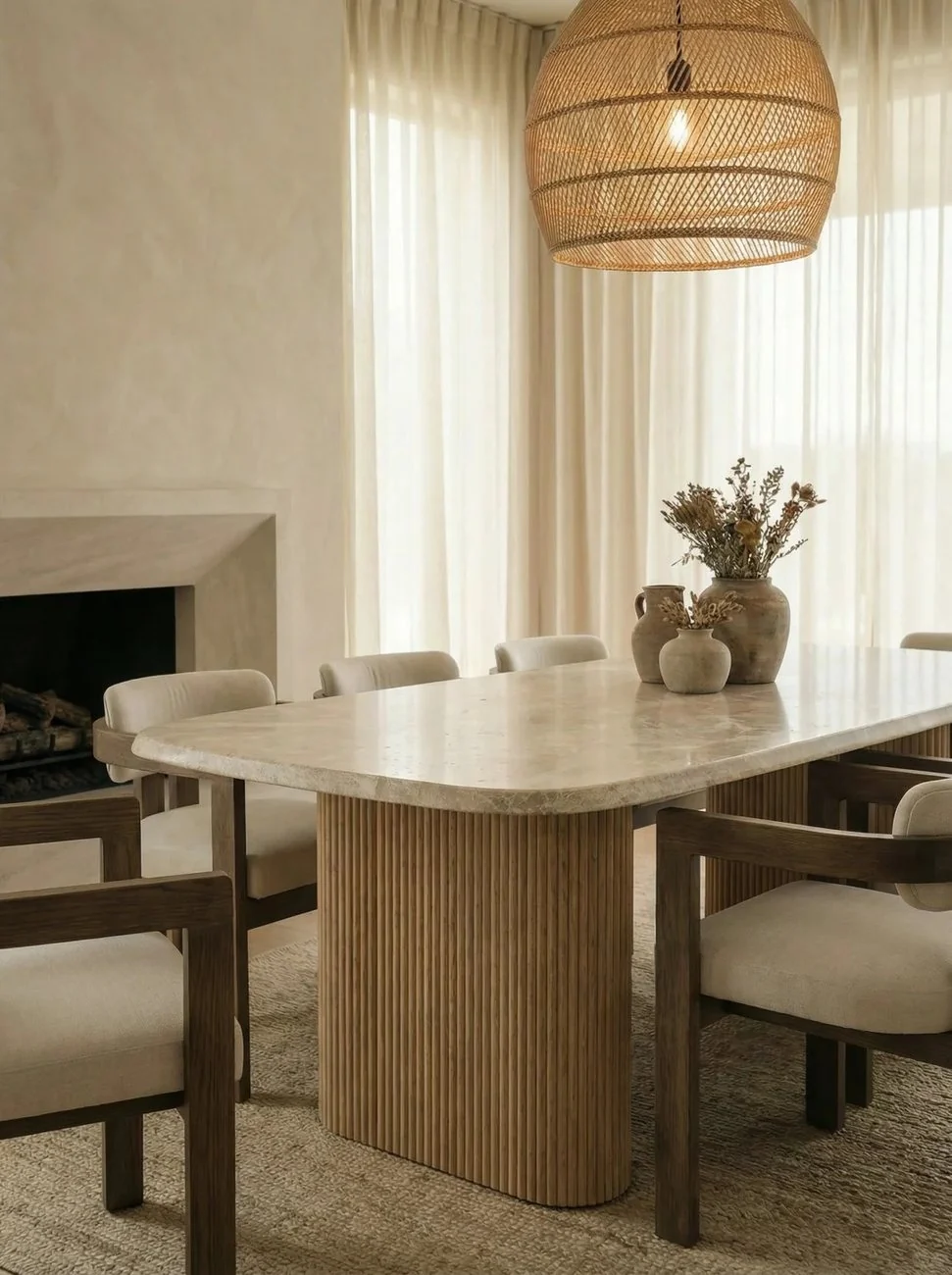
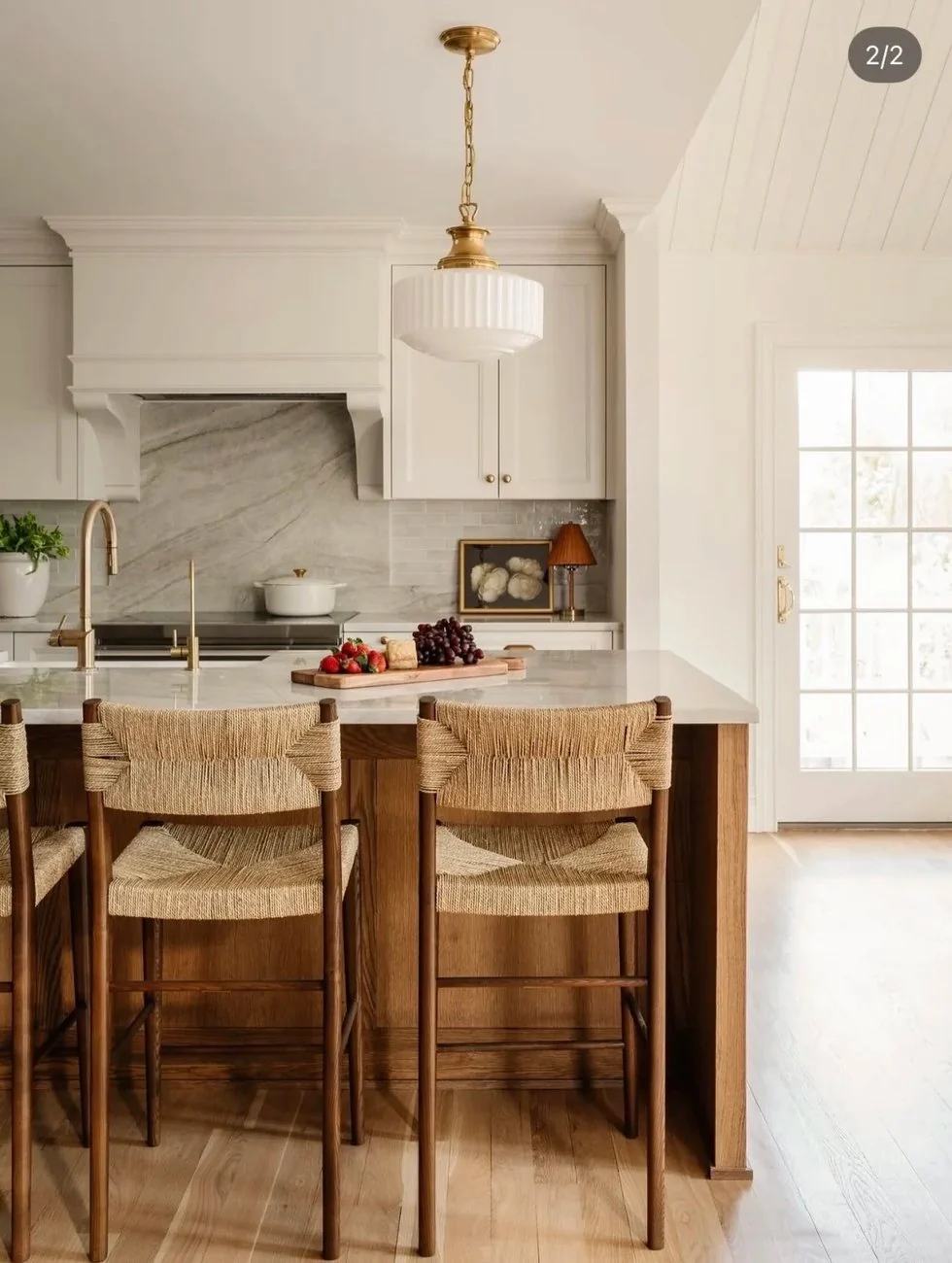
If the stone pattern is expressive, keep the seating visually restrained. When using a more uniform stone, introduce texture through woven seats, upholstery or a handmade ceramic centerpiece. Check porosity, sealing and care requirements before choosing stone for a table that will see daily meals.
Use upholstered dining chairs to soften clean lines
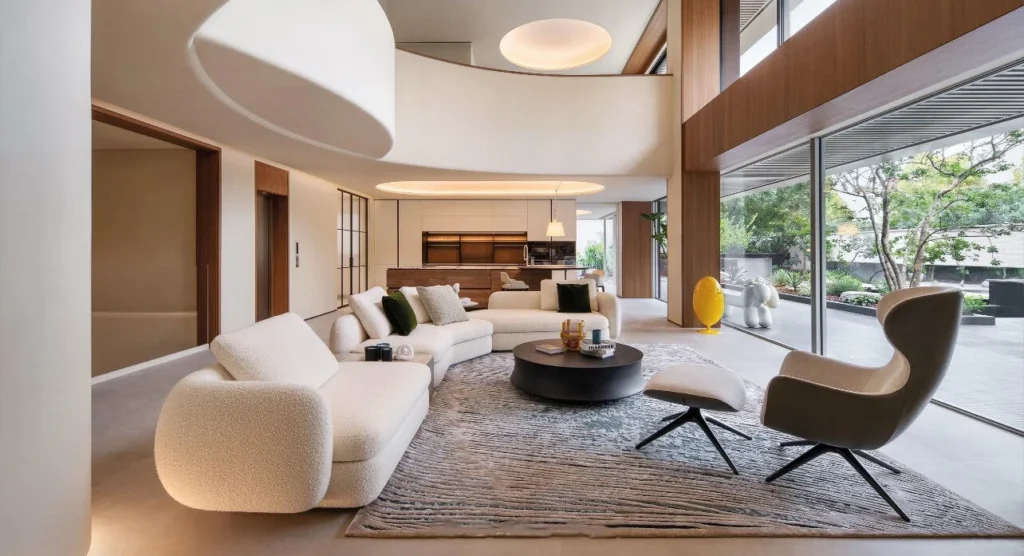
The most inviting dining rooms are designed to linger in. Upholstered seats, curved backrests and gently padded armchairs soften architectural lines and make long meals more comfortable. The contrast between a hard tabletop and tactile upholstery also gives a minimalist room more depth.
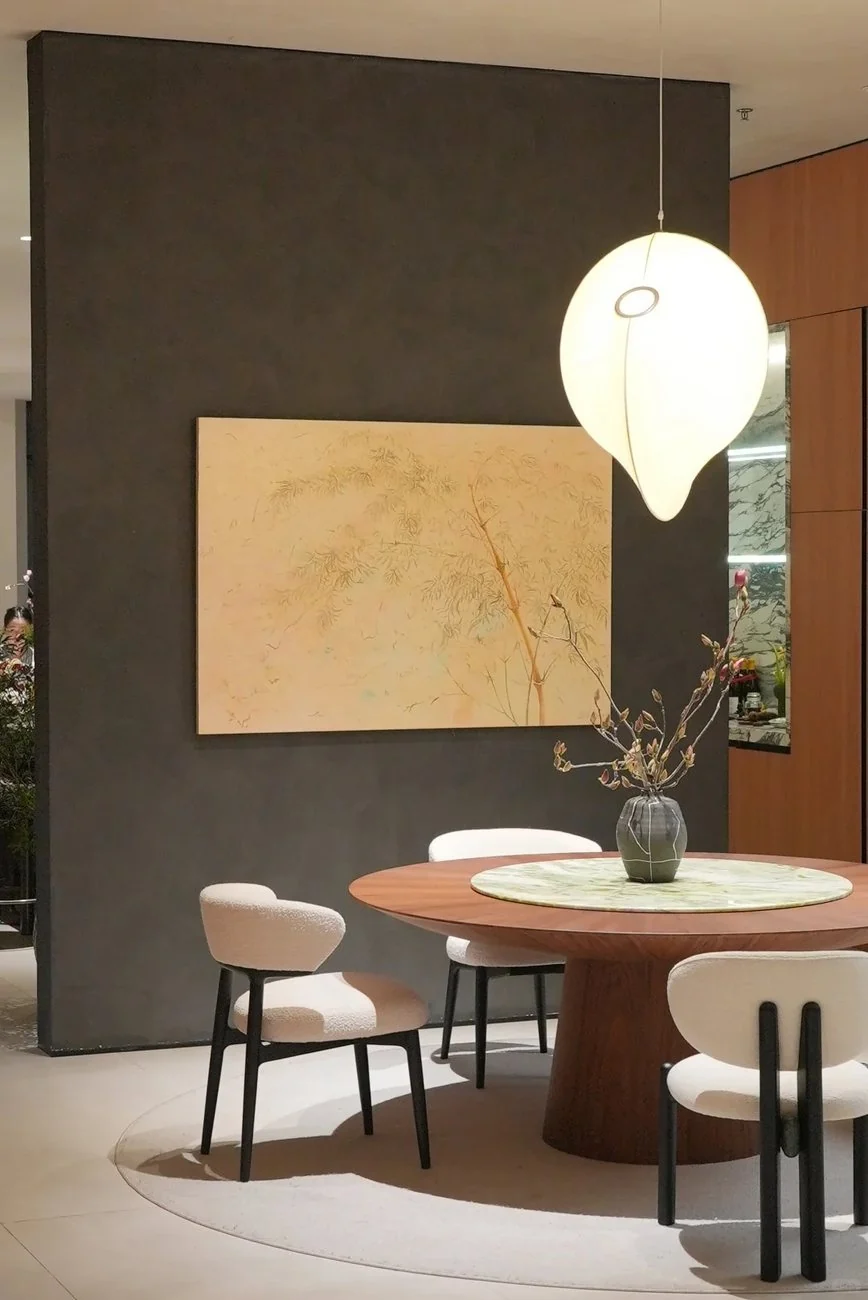
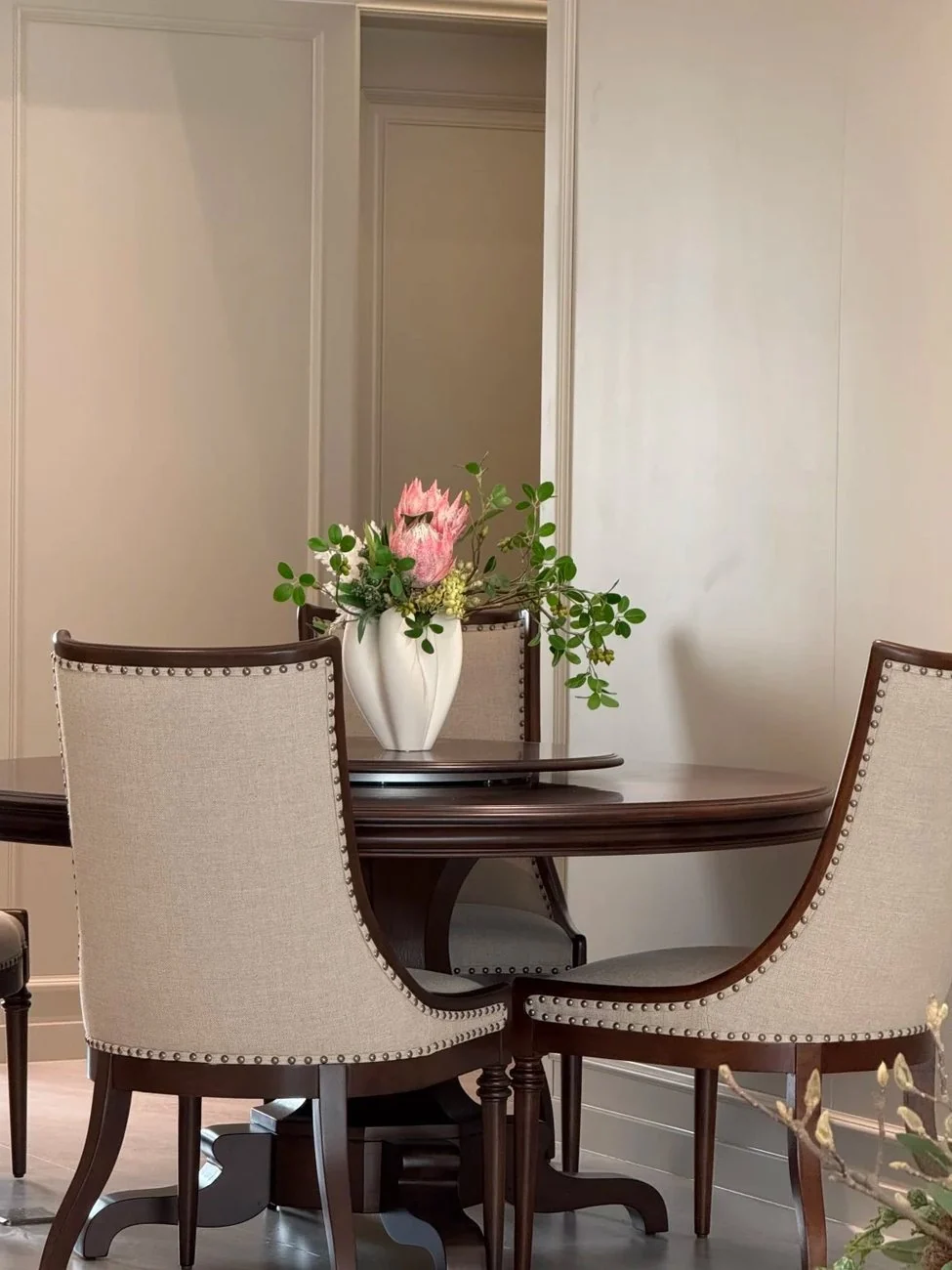
Choose practical woven fabrics or easy-care performance upholstery for family dining. Leave enough clearance to pull out each chair and consider the relationship between seat height, table apron and armrests before selecting a design.
Choose sculptural curves instead of visual clutter
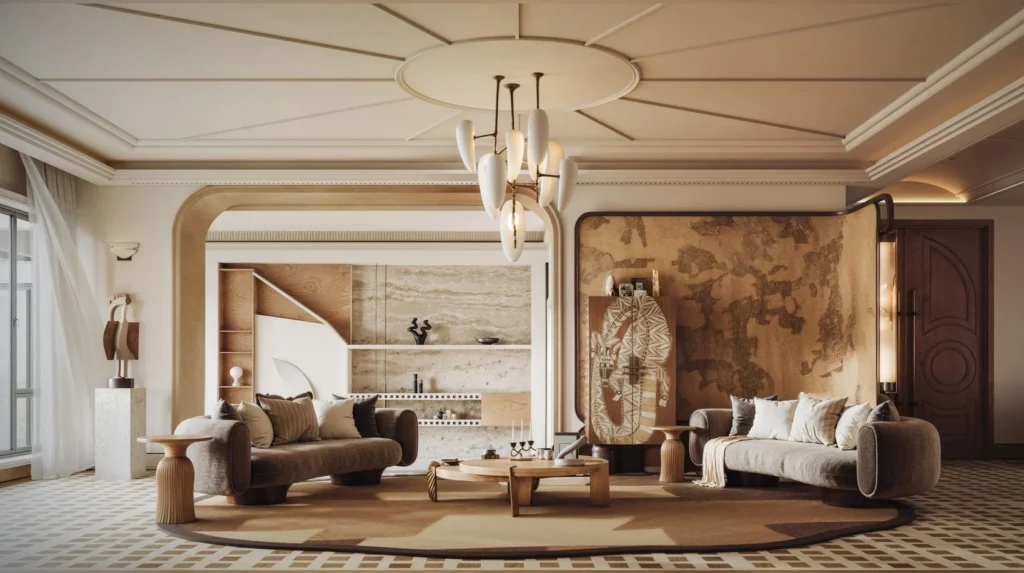
One memorable silhouette often does more than a collection of decorative objects. Round dining tables encourage conversation; oval tops work beautifully in narrow rooms; a pedestal base frees up legroom and keeps chair arrangements flexible. These organic forms create movement without making the room feel busy.
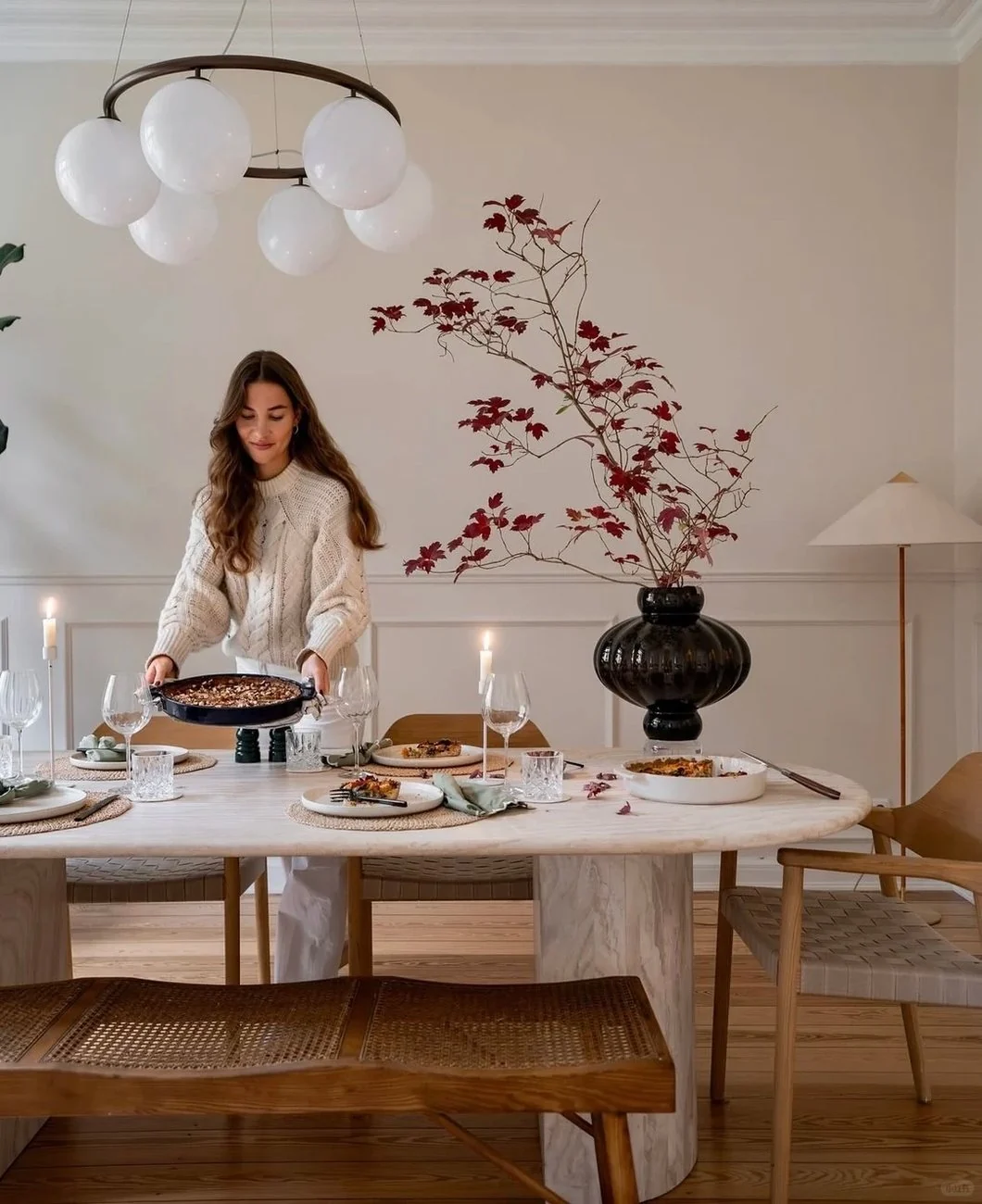
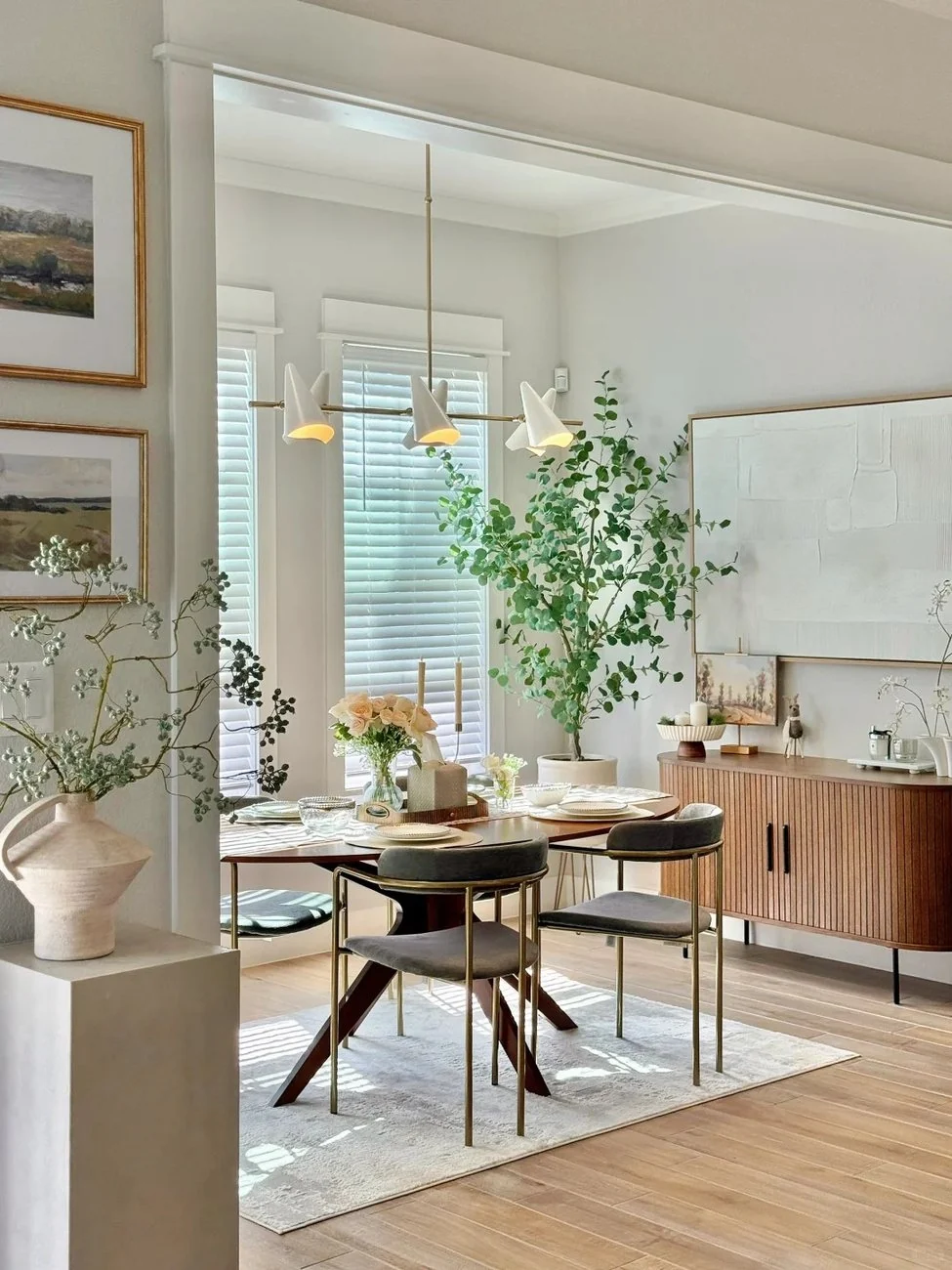
Use curves with restraint. Let a round or oval dining table be the main gesture, then balance it with simple lighting and quietly detailed chairs. The aim is a cohesive interior, not a room where every object competes for attention.
Build a warm neutral palette with quiet contrast
Cream, oat, sand and warm white make natural materials look especially inviting. Rather than relying on pure white everywhere, layer gentle tonal changes: pale walls, a honeyed table, stone accessories and slightly darker chair legs. Muted greens or deep brown accents provide definition without overwhelming the room.
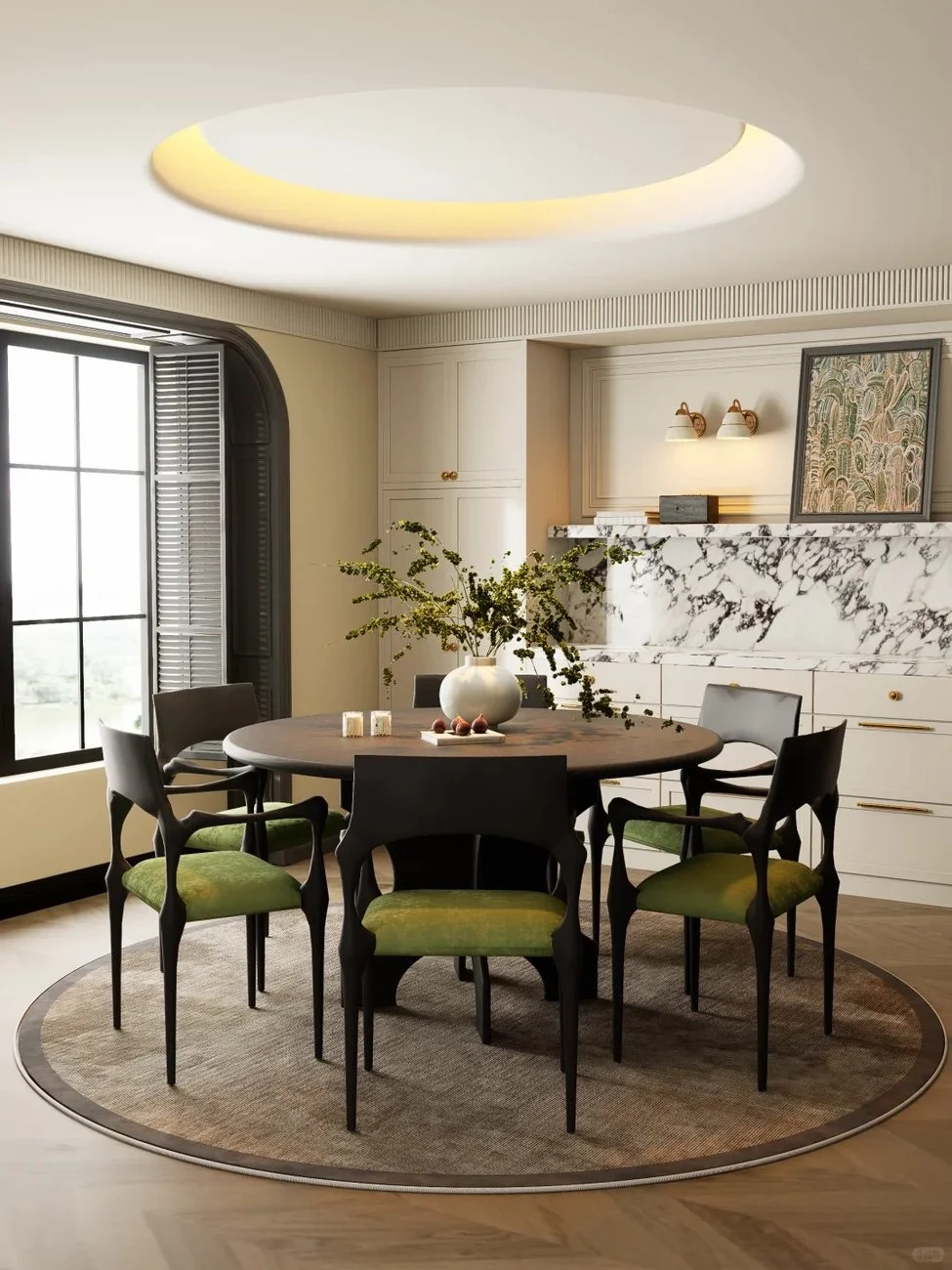
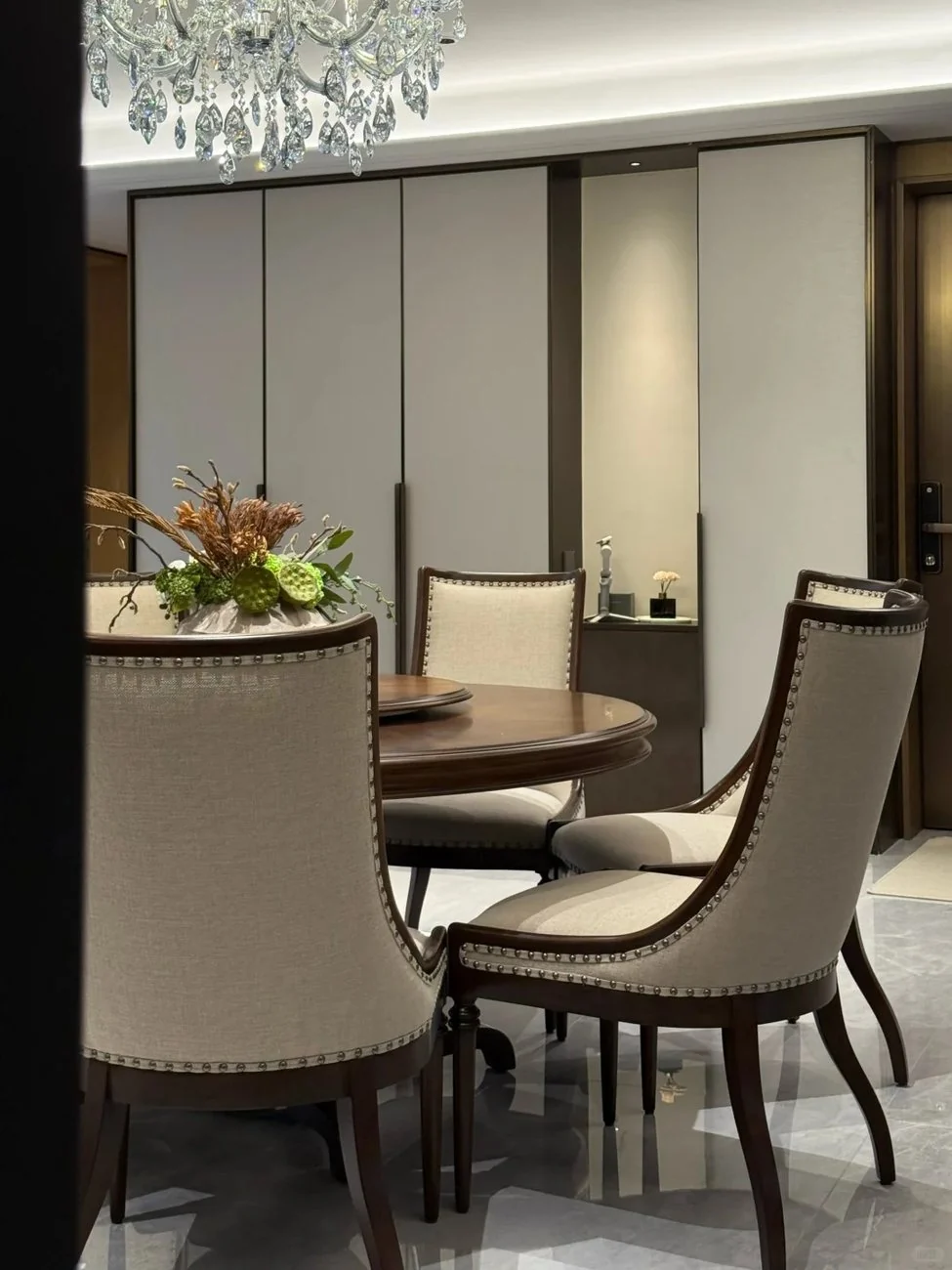
A useful approach is to choose one dominant wood tone, one upholstery color and one smaller accent. Repeating these elements between the dining room and adjacent living area makes an open-plan home feel thoughtfully composed.
Layer daylight with gentle evening lighting
Natural light reveals the grain of timber and subtle shifts in stone. In the evening, a well-placed pendant or chandelier becomes the room’s second visual anchor. Rather than flooding the entire room with cool light, combine comfortable overhead illumination with softer ambient light from nearby spaces.
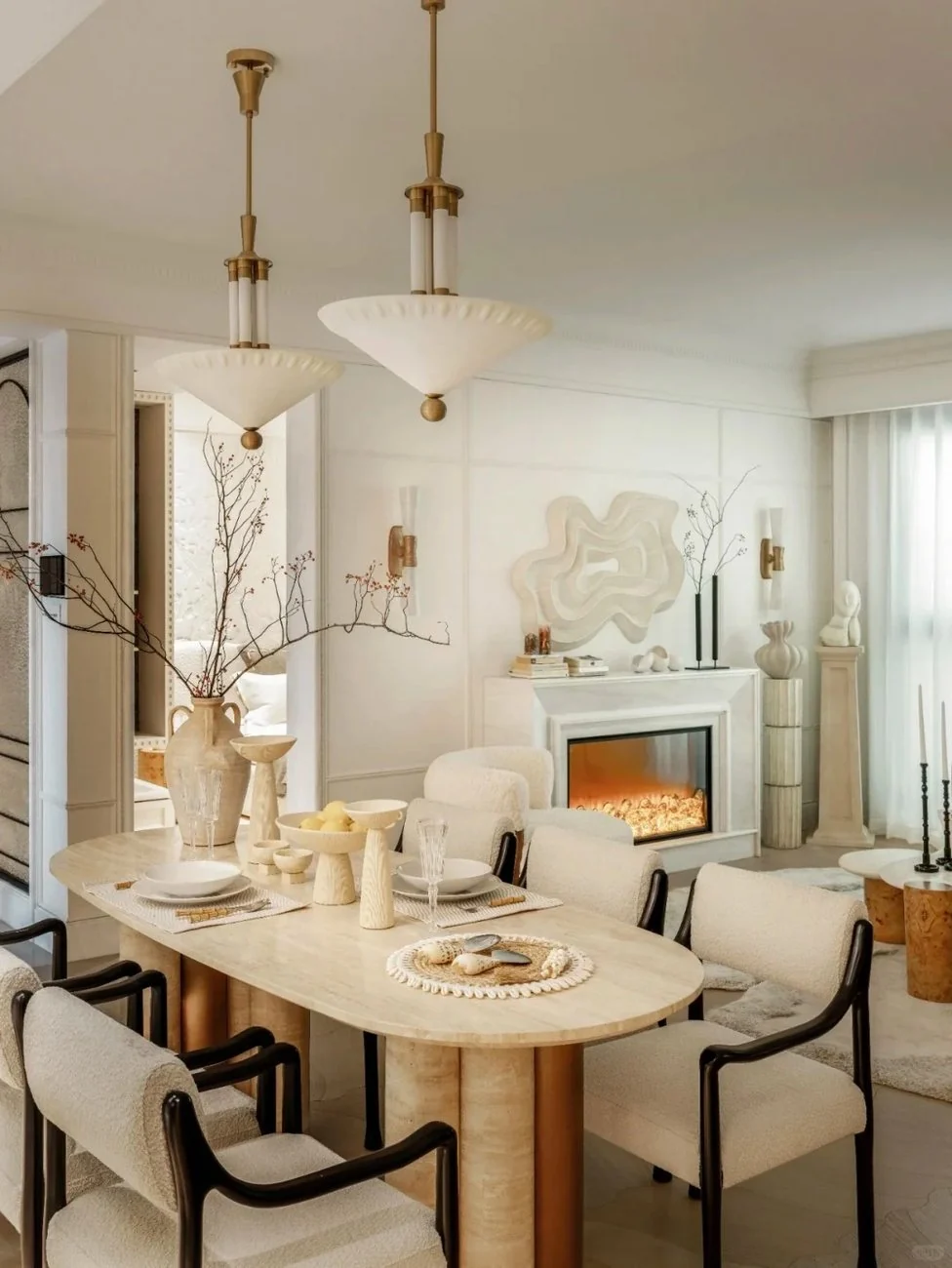
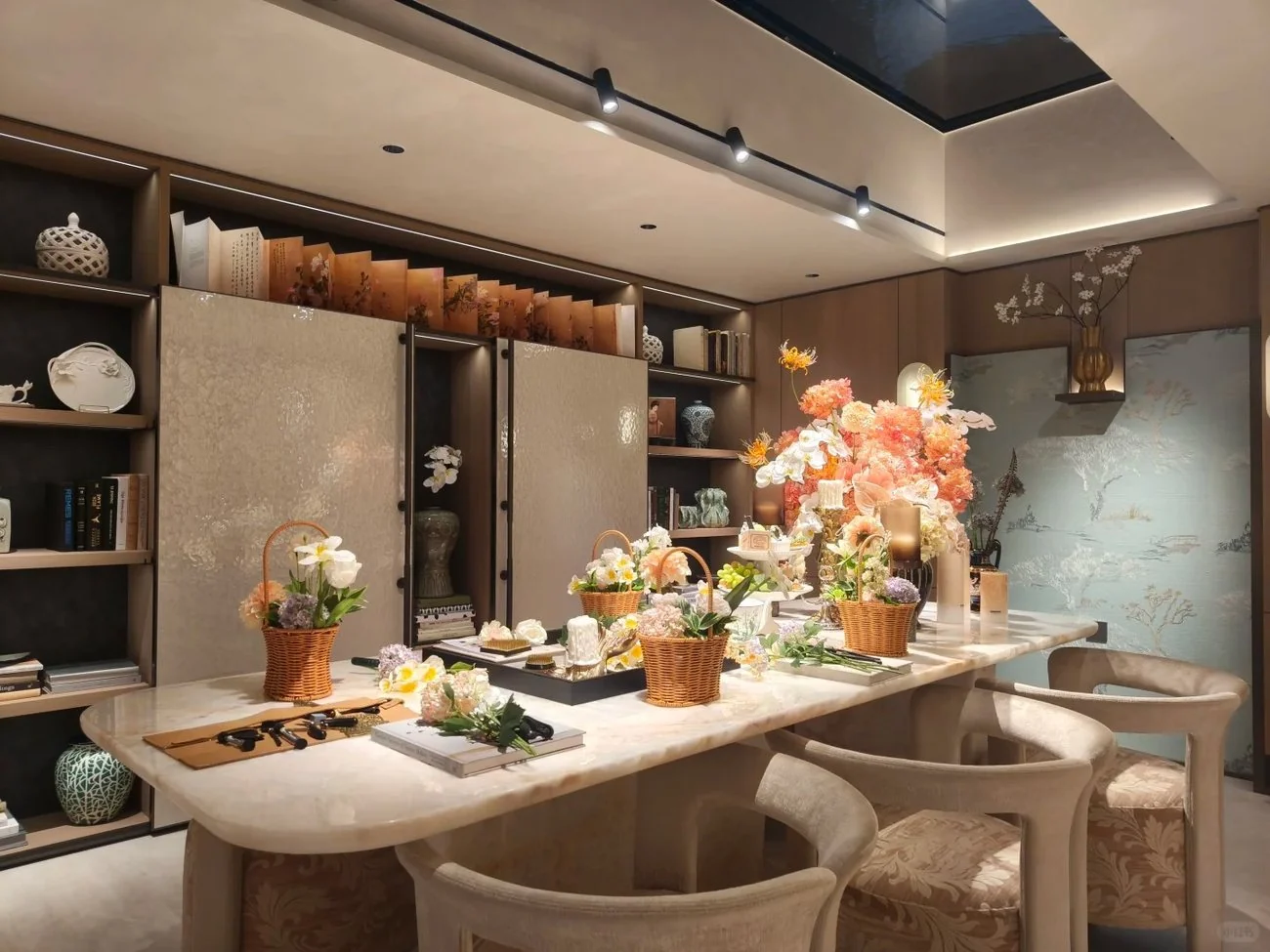
For a dining table, lighting should feel centered on the furniture rather than an arbitrary point in the ceiling. Consider a dimmer and a warm color temperature, and ensure the fixture is hung high enough to preserve sightlines across the table.
Make natural materials flow between dining and kitchen
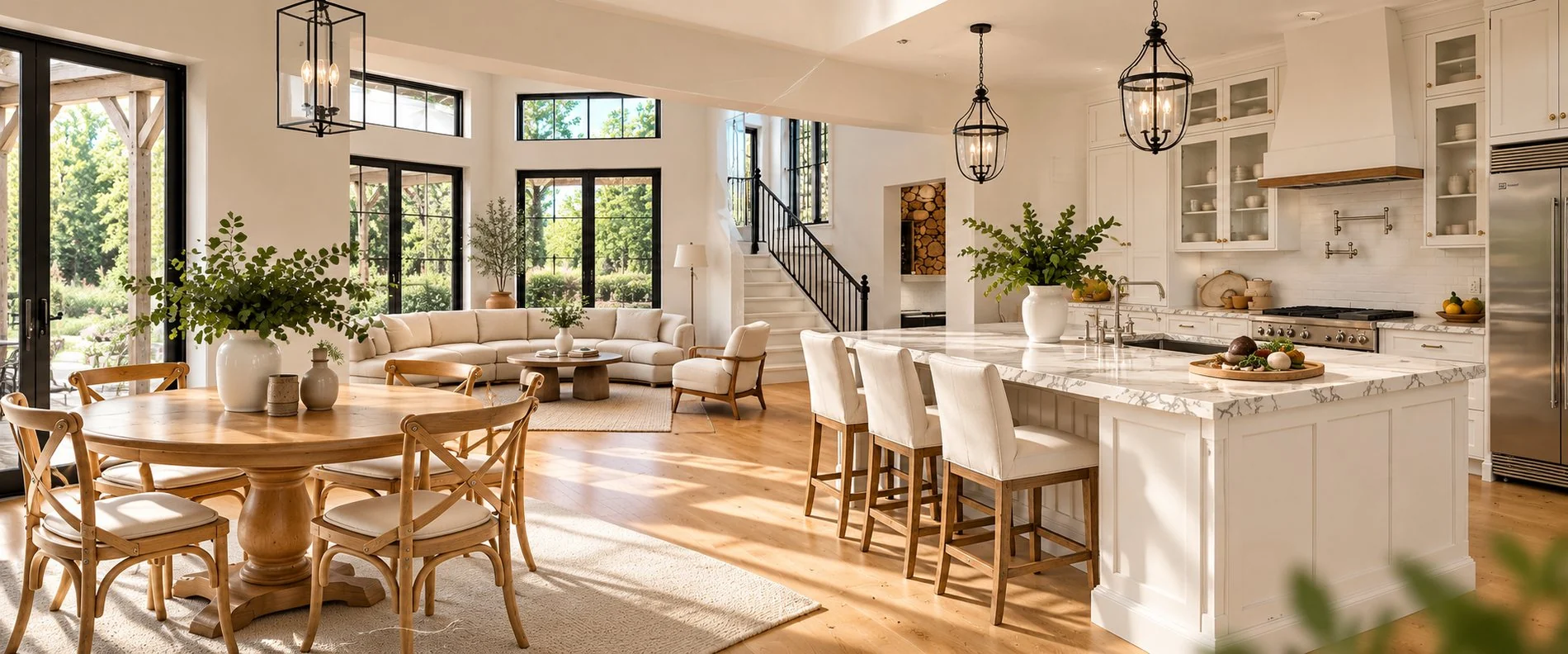
Today’s dining room often sits within a larger kitchen-living environment. Coordinating the dining table, cabinetry, bar stools and floor finishes creates a stronger impression than treating each area as a separate design project. The key is visual continuity, not matching every item exactly.
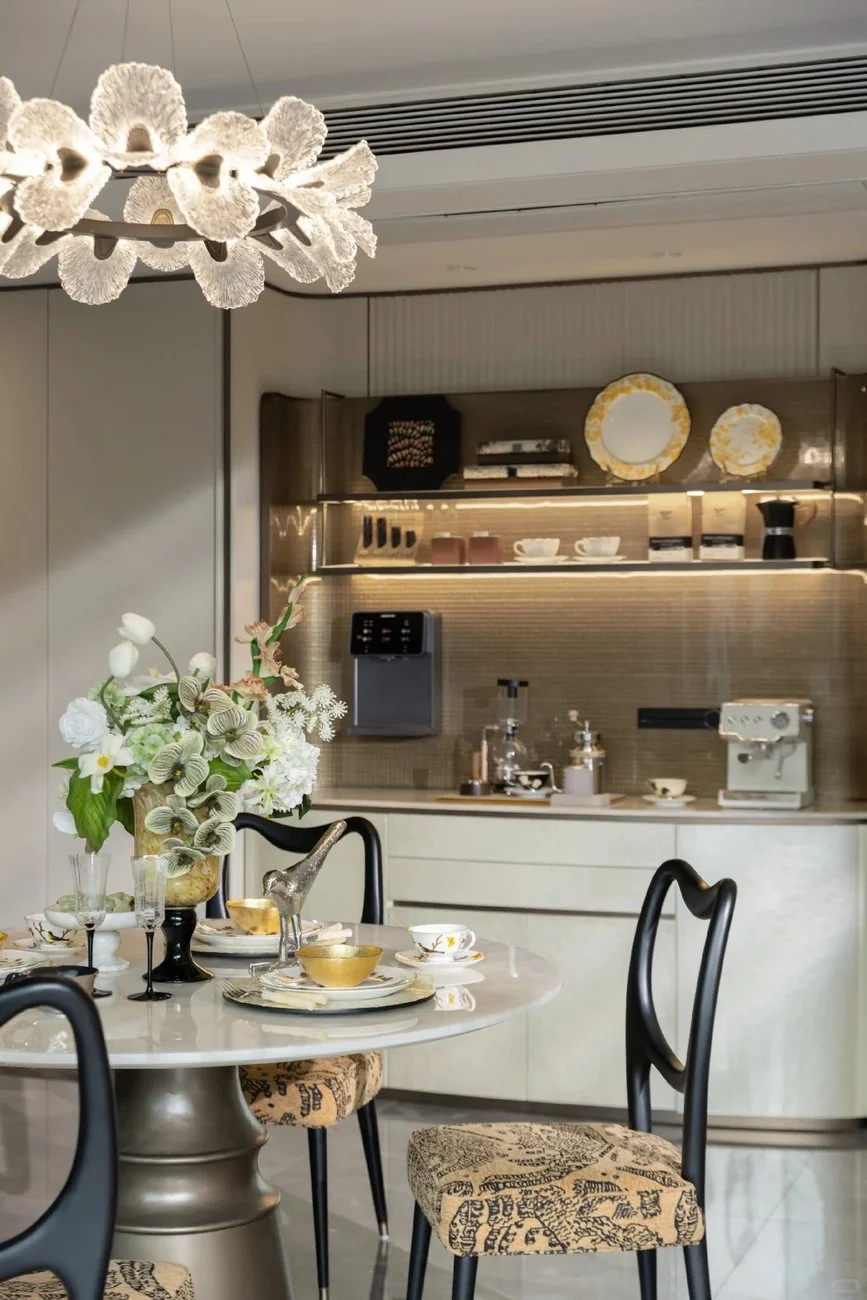
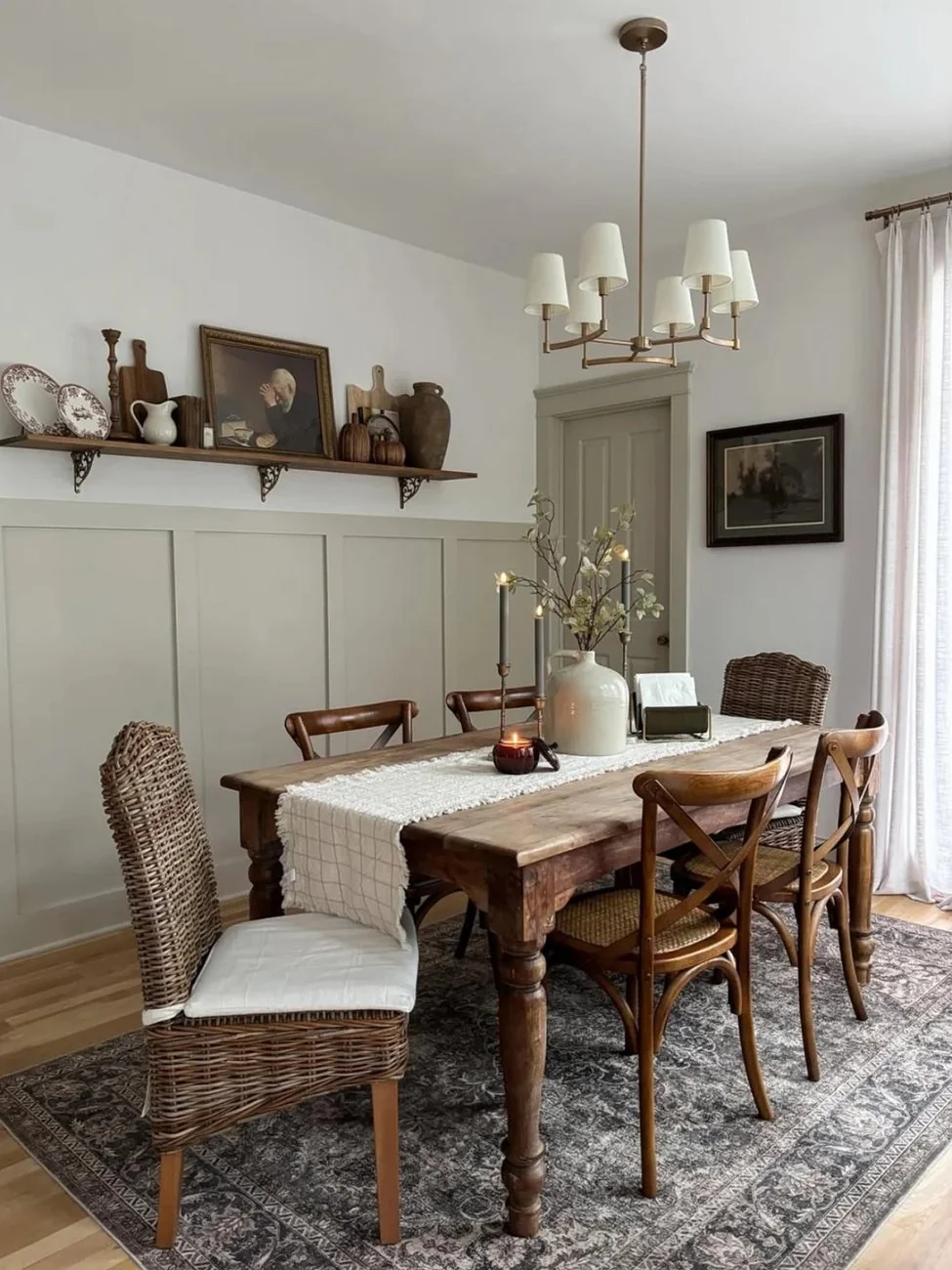
Use similar undertones in wood, stone and upholstery while varying their finishes and scale. A round table can soften an angular kitchen, and wood dining chairs can warm up sleek white cabinetry. The result feels collected, functional and genuinely lived in.
Bring your dining room inspiration to life
Found a material palette or dining table silhouette you love? Share your floor plan, measurements, favorite images and budget with the Ratahome team to start building a coordinated furniture brief.
Explore Ratahome & Get in TouchFrequently Asked Questions
What natural materials are best for a modern dining room?
Solid wood, natural stone, linen, wool, leather and woven fibers are effective choices. Solid wood and stone often anchor the space, while upholstery and textiles add comfort.
Is a round dining table better for a small room?
A round table can improve movement and conversation in a compact or square room. For long, narrow spaces, an oval or rectangular table may make better use of the floor area.
How do I mix wood and marble in a dining room?
Start with a dominant material and use the other as a supporting contrast. For example, a wooden table can pair with marble accessories or a nearby stone island, while a stone table benefits from warm timber seating.
How much space should I leave around a dining table?
As an initial planning guideline, approximately 36 inches (91 cm) of clearance around a dining table is comfortable in many homes, with more space helpful along high-traffic routes. Confirm the dimensions for your actual chairs and room layout.