How to Create a Japandi Home: Furniture, Colors & Room-by-Room Design
A practical guide to the warmth of Scandinavian living and the quiet restraint of Japanese-inspired interiors—from natural materials and balanced color palettes to furniture that works beautifully in everyday life.
By Forest, Founder, Ratahome · Published · RATAHOME EDITORIALINTERIOR STYLE & FURNITUREREADING GUIDE · 14 SECTIONS
Quick answer
To create a Japandi home, start with a warm neutral palette, choose a few well-made timber and upholstered pieces, prioritize concealed storage, layer natural textures, and use soft lighting. Keep the layout functional and leave space around each object.
01 / THE GUIDE
What Is Japandi Interior Design?
Japandi is an interior design approach that combines the restraint and craftsmanship associated with Japanese interiors with the comfort, natural light and everyday practicality of Scandinavian design. It favors rooms that feel settled rather than staged: useful furniture, quiet materials, considered storage and enough empty space for the architecture to breathe.
The word is a contemporary blend of Japanese and Scandi. It is not a historical Japanese design movement or a single prescribed look. The best rooms borrow principles thoughtfully instead of relying on a checklist of beige objects. A Japandi interior can be bright or moody, urban or rural, compact or spacious—as long as its proportions, textures and functions work together.
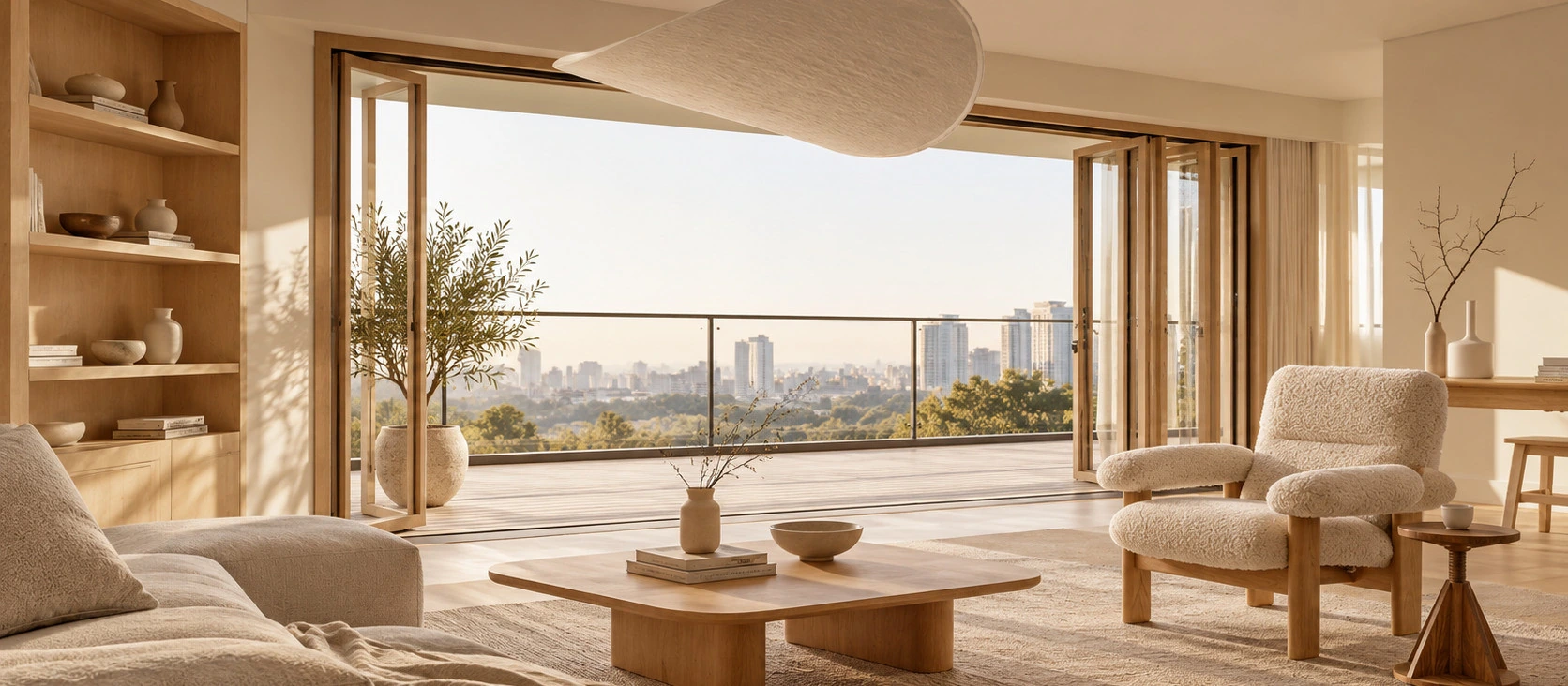
Think of a low timber coffee table that leaves the view open, a comfortable sofa with washable upholstery, a woven chair that adds texture without visual noise, and a closed cabinet that hides the daily clutter. These are small choices, but together they create the sense of calm associated with the style.
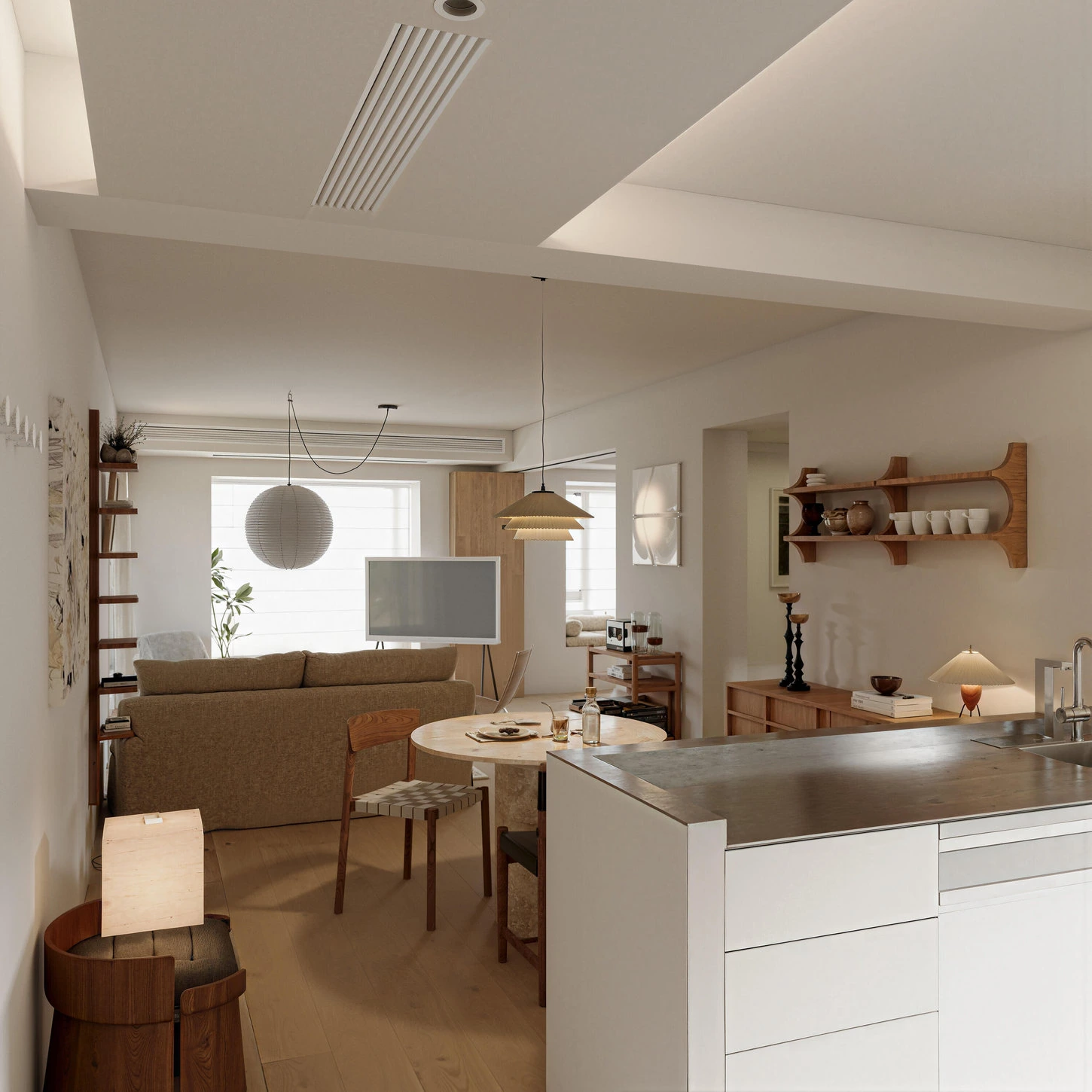
Light wood, restrained furniture and woven details create a soft, functional living area.A clear circulation path and balanced furniture scale allow a compact room to feel open.
In one sentence
Japandi = Japanese-inspired simplicity + Scandinavian comfort, expressed through natural materials, functional furniture, muted colors and deliberate negative space.
02 / THE GUIDE
Six Characteristics of a Japandi Home
Instead of buying everything in one style, use these six principles as a filter for every decision. A piece should support the room's use, feel good to touch and contribute to a coherent whole.
01
Purposeful simplicity
Keep the items you use and love; give the rest a place behind closed doors.
02
Low, balanced silhouettes
Favor visually light furniture, quiet outlines and proportions that leave room to move.
03
Natural material honesty
Let wood grain, woven fiber, linen texture and handmade ceramics remain visible.
04
Comfort without clutter
Soft seating, layered textiles and accessible storage make minimalism livable.
05
Subtle imperfection
Matte finishes, varied grain and gently irregular objects feel more human than perfect symmetry.
06
Light and connection to nature
Use filtered daylight, gentle lamps and a few well-placed plants rather than excessive decoration.
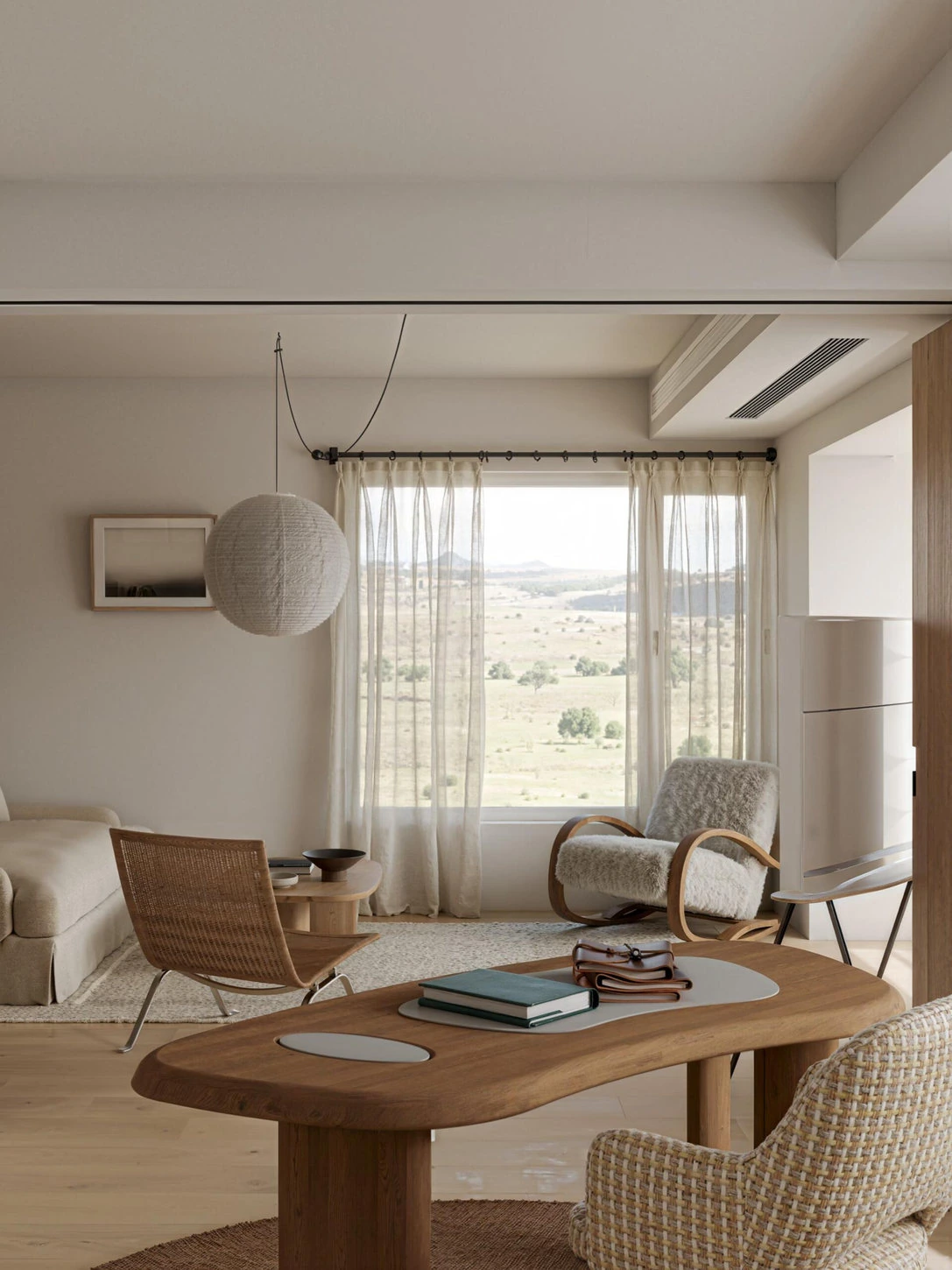
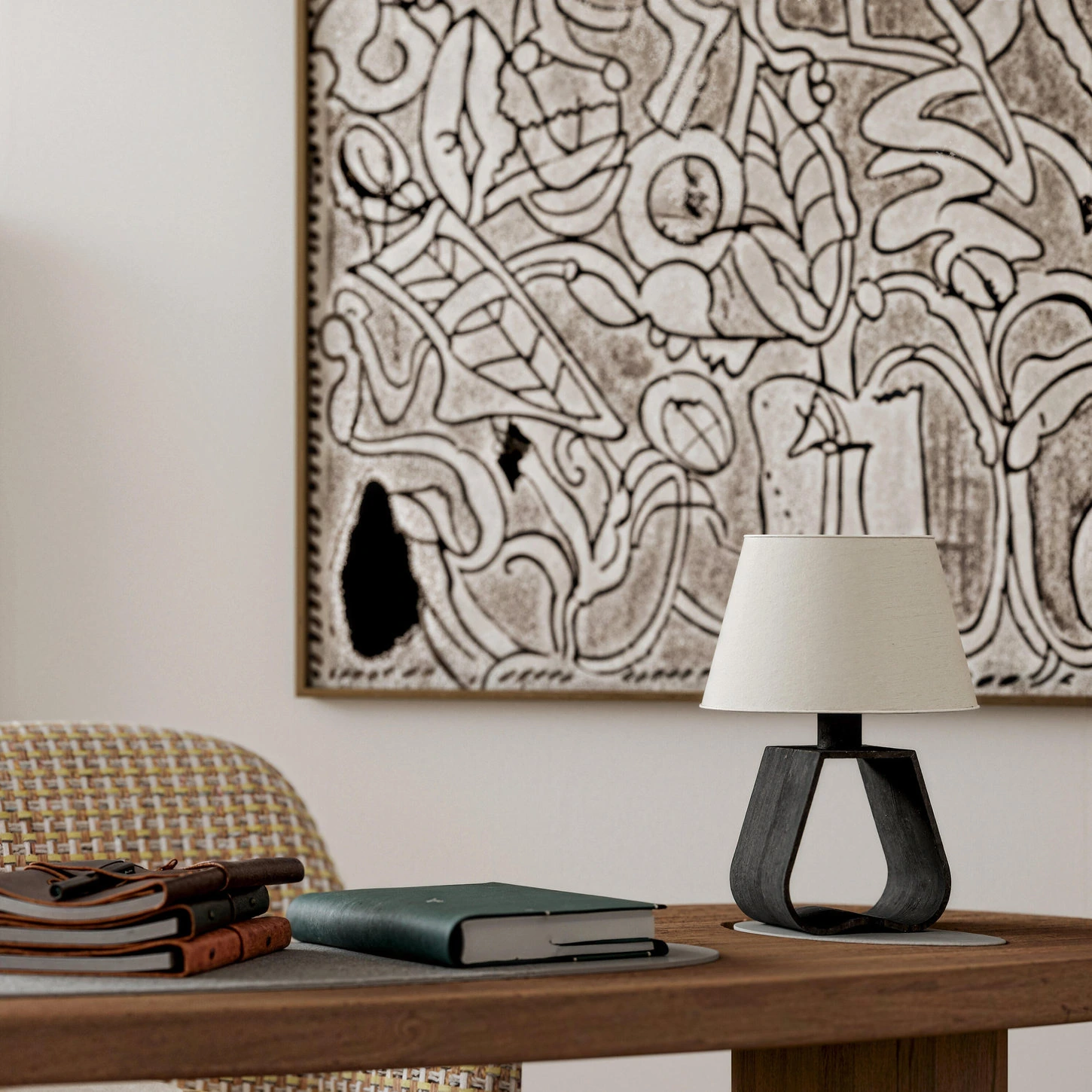
A simple timber table, an airy chair and diffuse light illustrate restraint without austerity.Texture and an understated lamp bring visual interest without adding unnecessary objects.
Japandi is often connected with the Japanese idea of wabi-sabi, which values the character of natural change and imperfection. The two are not interchangeable: wabi-sabi is a broader aesthetic sensibility, while Japandi is a contemporary interior-design label. In practice, a softly worn timber surface or a handmade bowl can bring character to an otherwise orderly room.
03 / THE GUIDE
How to Choose a Japandi Color Palette
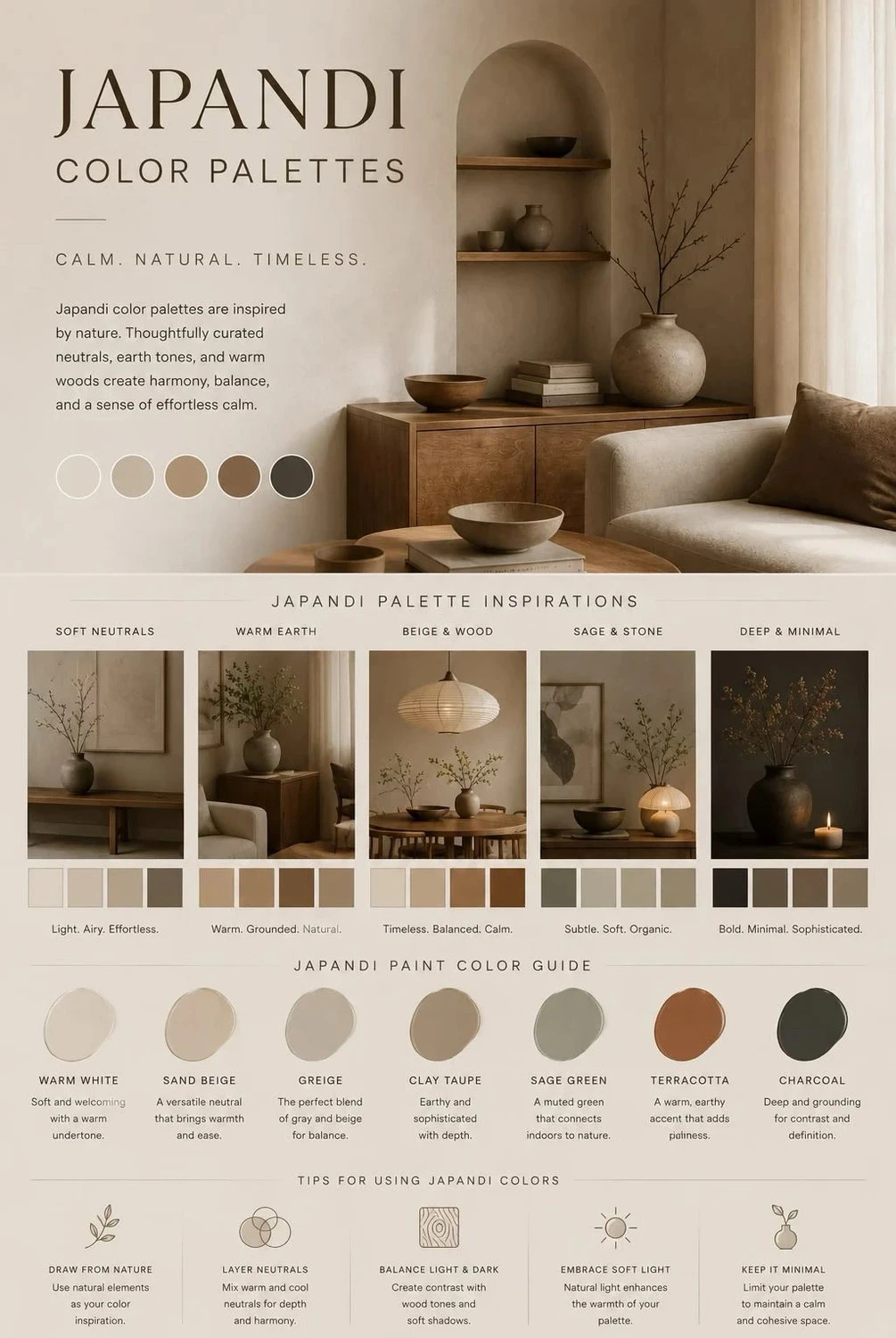
Begin with a calm foundation, then build depth through tone and texture. Warm white, oatmeal, sand, greige and pale oak can make a small room feel open. Taupe, clay, sage and charcoal create grounding accents. The goal is not to make every surface the same beige; it is to keep contrast deliberate.
Warm White#EAE2D5
Sand#D4C4AF
Greige#B8AD9E
Clay Taupe#A48E78
Sage#899080
Terracotta#9B6B50
Charcoal#41423D
These hex codes are illustrative mood-board references, not manufacturer paint specifications. Always sample finishes in the actual room under morning, afternoon and artificial light.
Three palette directions that work
Light & airy: warm white walls, pale oak, oat linen and a small amount of black for definition.
Earthy & layered: sand, clay, medium walnut, stone and muted green for a more grounded feeling.
Deep & minimal: mushroom walls, smoked wood, dark ceramic and soft ivory textiles to keep the room from becoming flat.
Use the largest surfaces as a quiet backdrop. Bring personality through an accent chair, ceramics, art or seasonal branches—not a dozen competing colors.
Material selection is where Japandi becomes tangible. Light oak and ash emphasize Scandinavian brightness; walnut and smoked timber add a darker Japanese-inspired mood. Neither is automatically better. Choose a consistent wood direction across major pieces, then vary texture rather than introducing too many unrelated wood tones.
Material
Why it works
What to check
Oak or ash
Visible grain, warm light color, versatile for tables and cabinetry
Solid vs. veneer construction, finish consistency, moisture control
Walnut or dark veneer
Creates a grounding contrast and a more intimate atmosphere
Veneer matching, substrate, edge treatment and repairability
Linen, cotton or wool blends
Breathable, soft, tactile upholstery and layered textiles
Rub performance, cleanability, pilling and care requirements
Rattan, cane and woven fiber
Adds lightness and handmade character to seating or doors
Weave tension, frame strength and suitability for humidity
Stone, ceramic and plaster
Matte, mineral texture for tables, lamps and accessories
Porosity, sealing, weight and maintenance
For made-to-order furniture, ask whether the visible surface is solid timber, natural veneer or a printed laminate. The appearance can be similar in a photograph, but the construction, cost and care requirements differ. Ratahome's materials and finishes guide provides a useful starting point for specification discussions.
Soft woven textiles and a simple timber side table create depth through touch.
What about sustainability?
Durability matters more than a trend label. Favor repairable finishes, replaceable upholstery, strong joints and furniture you will still want to use years from now. If sustainability claims matter to your project, ask suppliers for specific material documentation rather than relying on words such as “natural” or “eco-friendly.”
05 / THE GUIDE
How to Select Japandi Furniture That Lasts
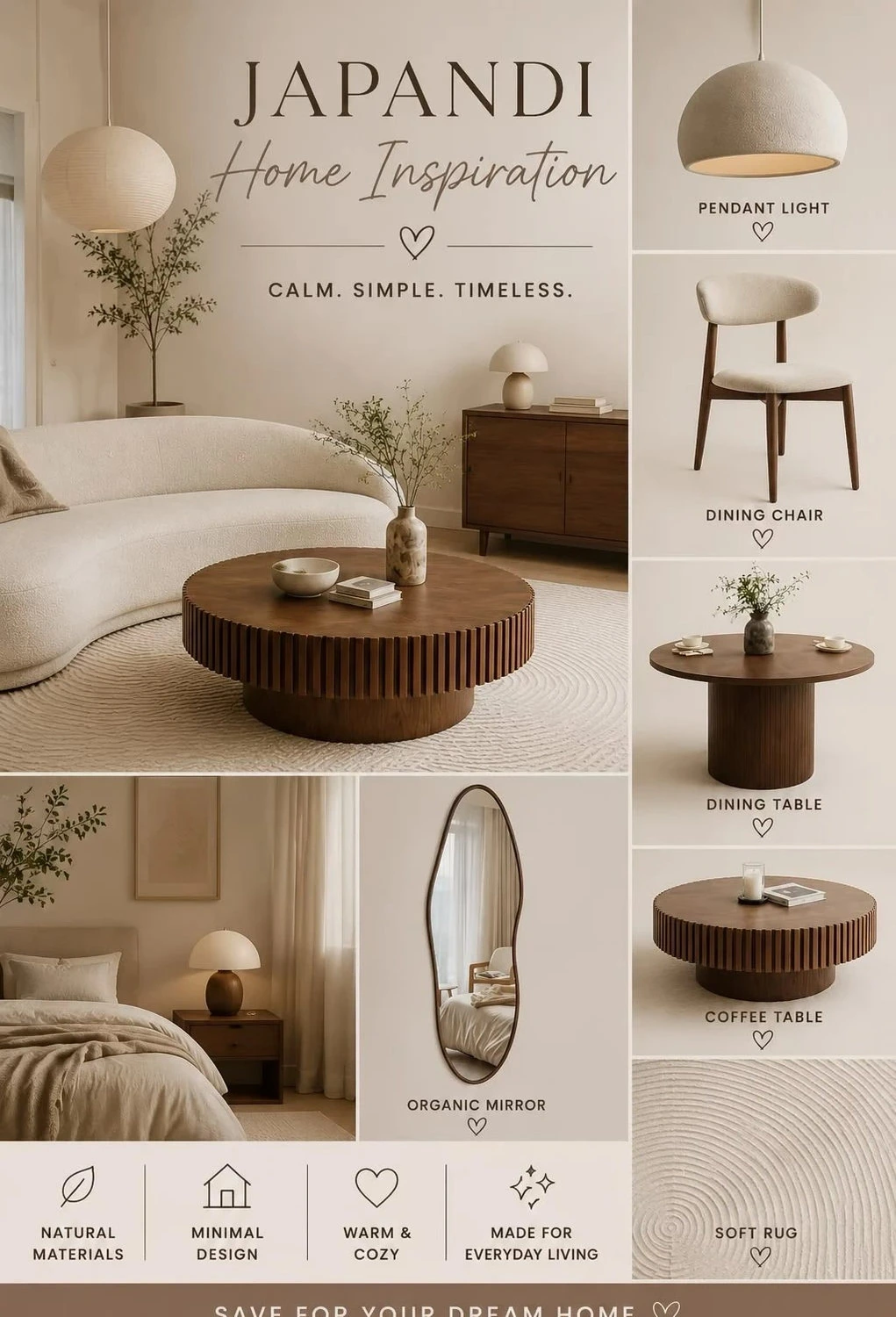
The strongest Japandi rooms are built around a few well-chosen pieces. A low sofa, a generous coffee table, a comfortable timber chair and a practical storage unit usually matter more than decorative accessories. Avoid selecting furniture only because it looks minimal in a product photo: comfort, proportion and build quality determine whether the room works in daily life.
Proportion checkBefore ordering, mark furniture footprints on the floor with painter's tape. Check circulation, door swings and the view from the entrance—not just the wall measurements.
06 / THE GUIDE
How to Design a Calm Japandi Living Room
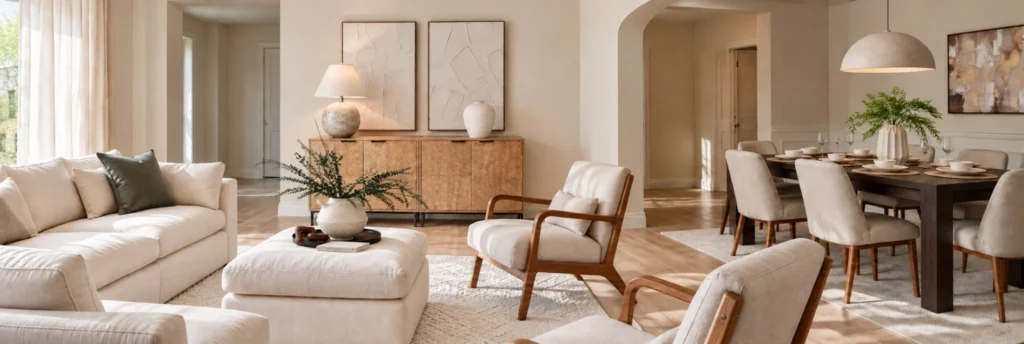
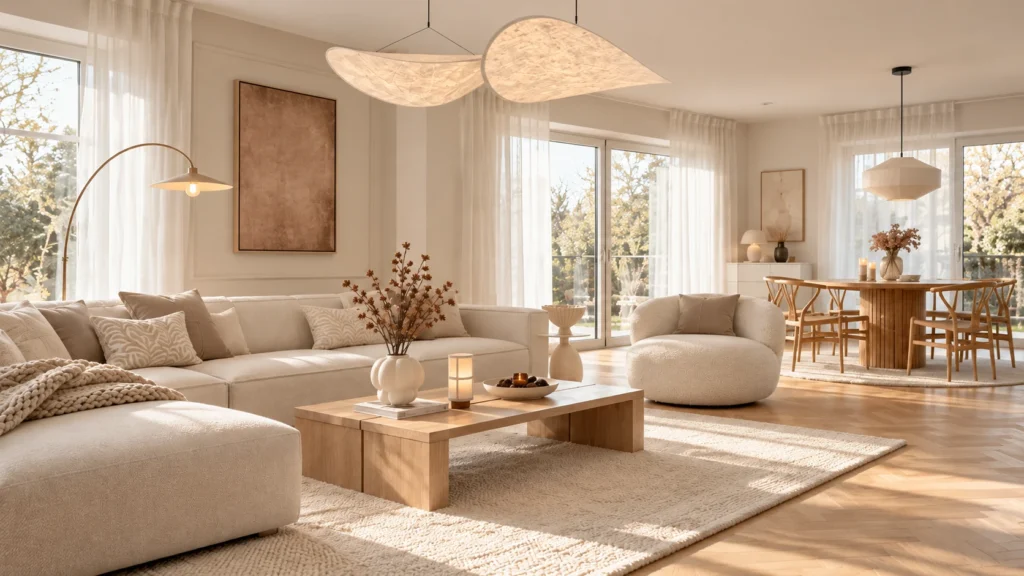
Start with how the room is used. For a family living room, a deep, supportive sofa and a washable rug may be more important than a perfectly symmetrical layout. For a compact apartment, a raised-leg sofa and a low coffee table can keep the floor visually open. Leave a clear route between the entrance, seating and adjacent rooms.
Layer comfort with a linen or textured-fabric sofa, a timber table, one lounge chair and a few ceramics. Use greenery where it receives appropriate light; do not force plants into dark corners simply to match a reference image.
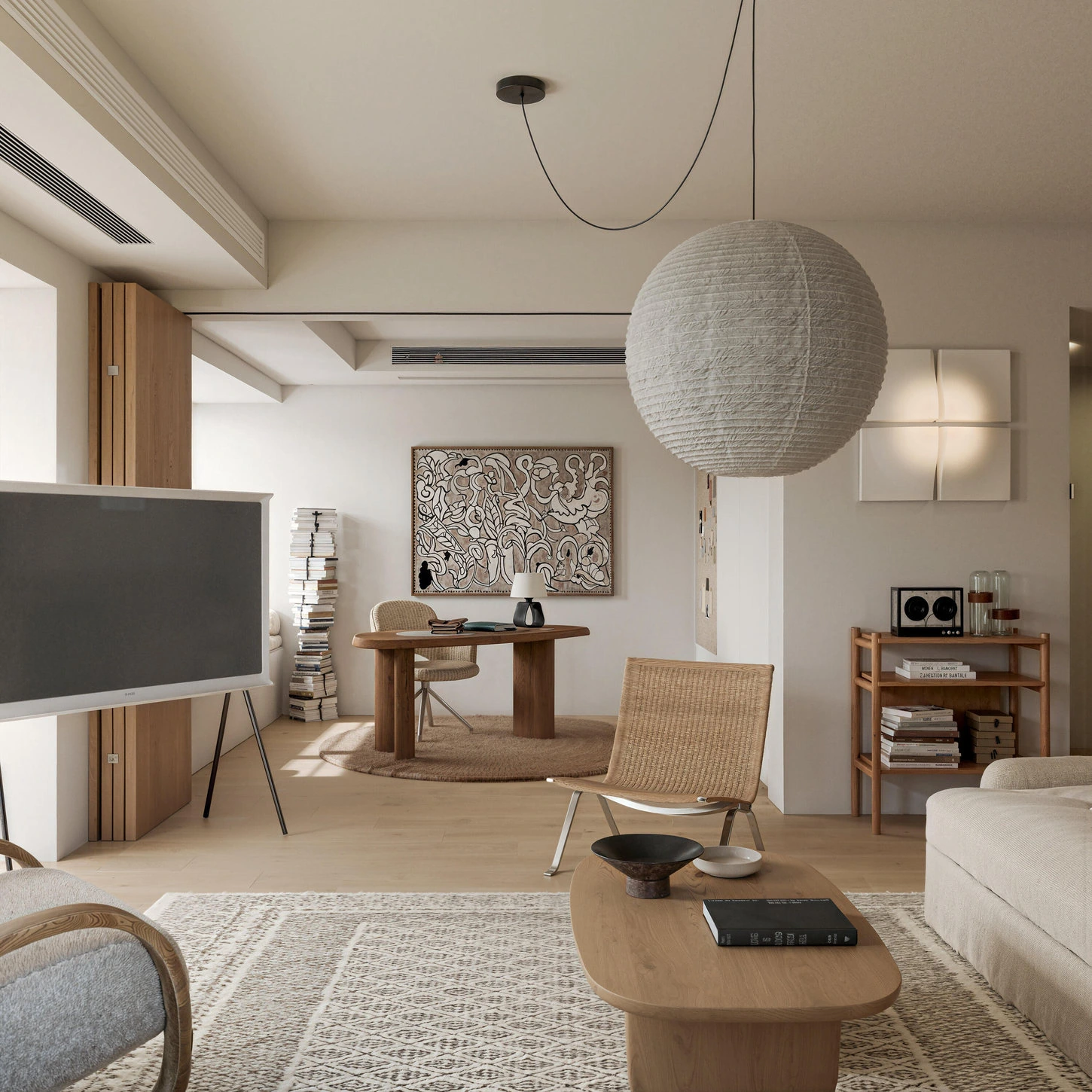
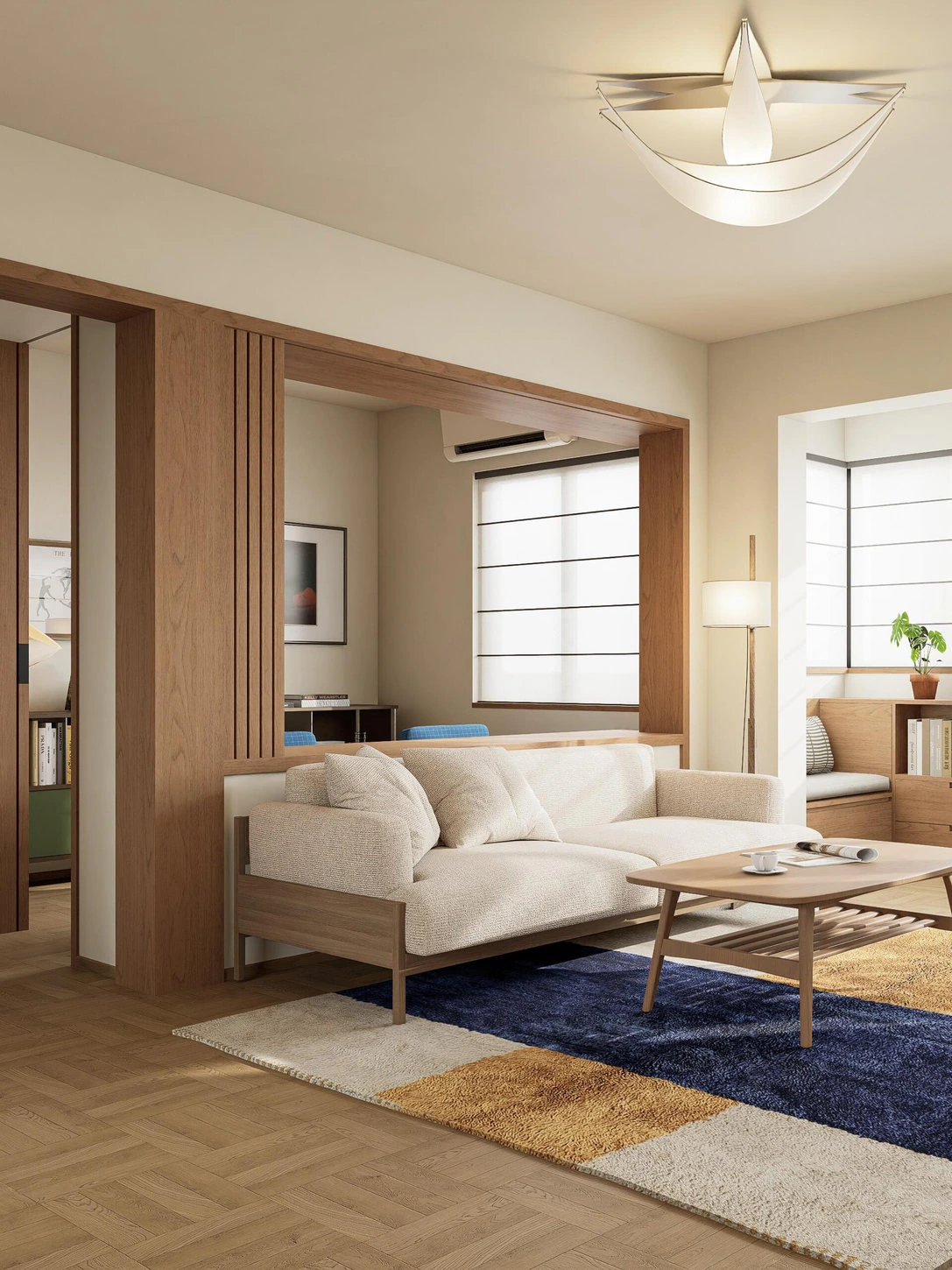
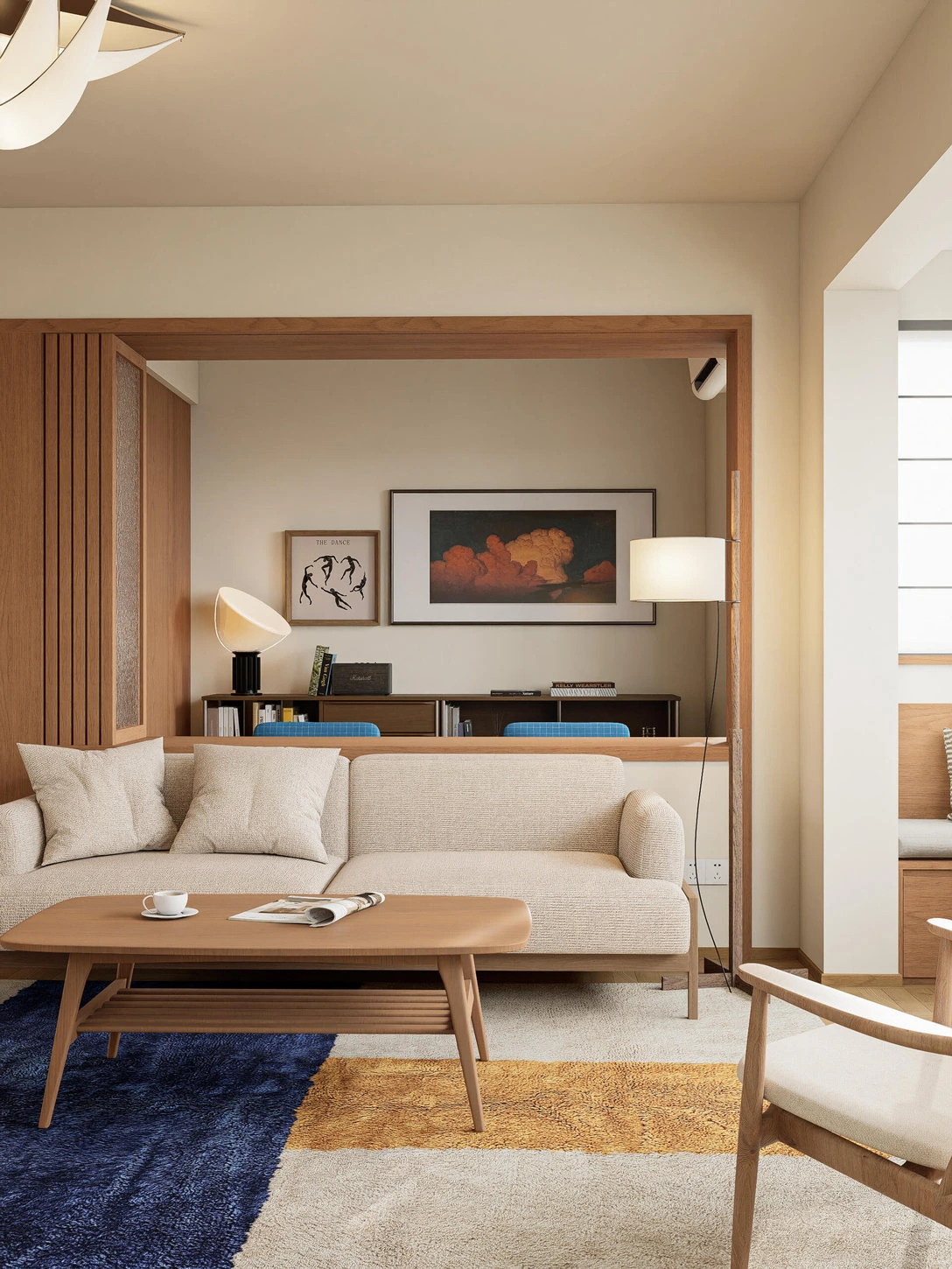
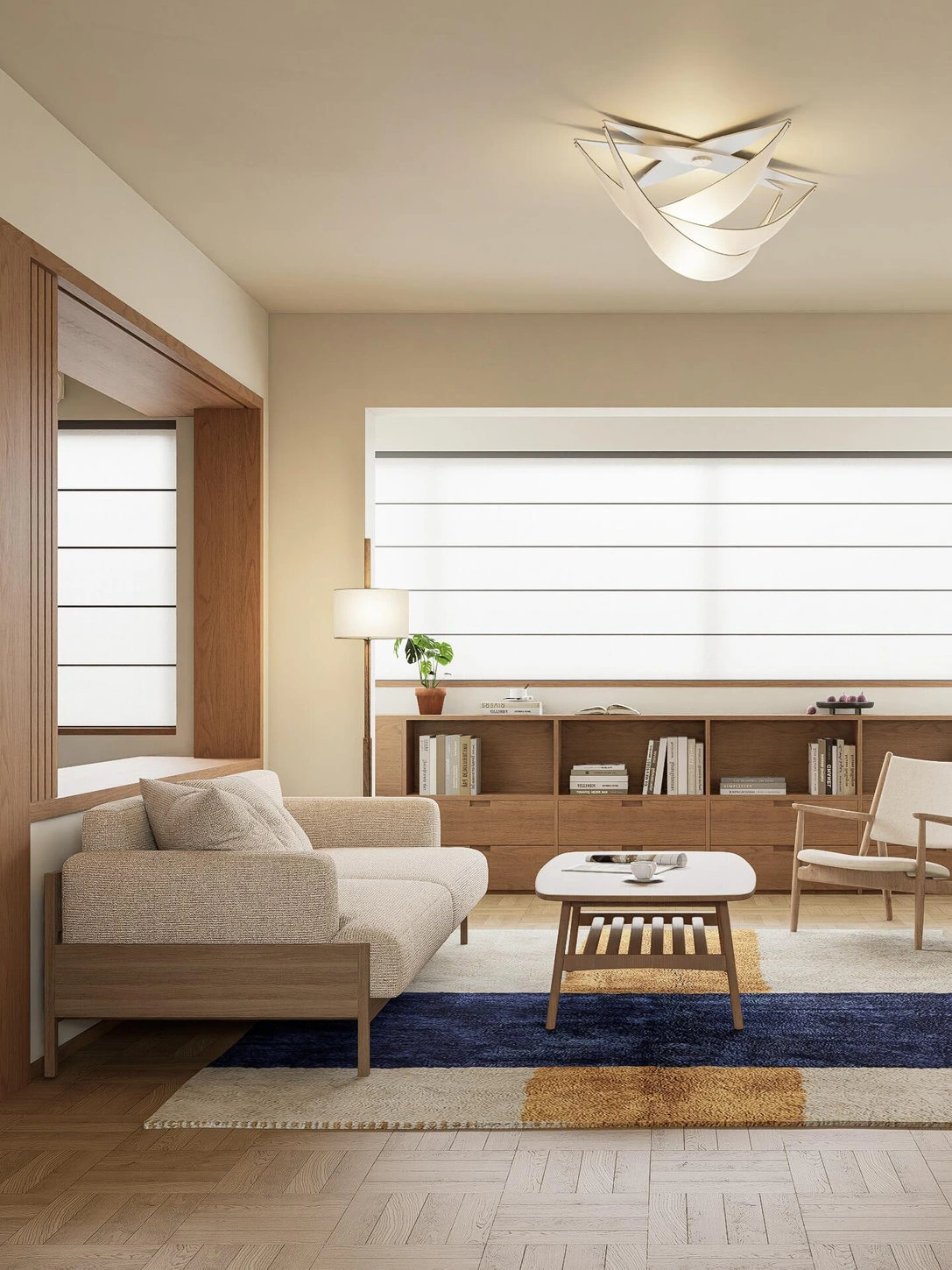
A warm neutral sofa, timber table and muted accent rug keep the room practical and welcoming.A low sofa and simple timber coffee table create a comfortable everyday seating group.The palette stays calm while the rug adds enough contrast to define the sitting area.
Design reference · Shenzhen apartment
The external design reference describes a 92 m² renovation for a two-person household, designed by Jingxiang Space Design. Its living area combines a pale fabric sofa, timber furniture, a contrasting rug and practical window-side storage. This is an external design reference, not a Ratahome project. The transferable lesson is that Japandi can feel warm and personal even in an ordinary urban floor plan.
07 / THE GUIDE
Japandi Dining Rooms and Kitchens: Warmth Meets Function
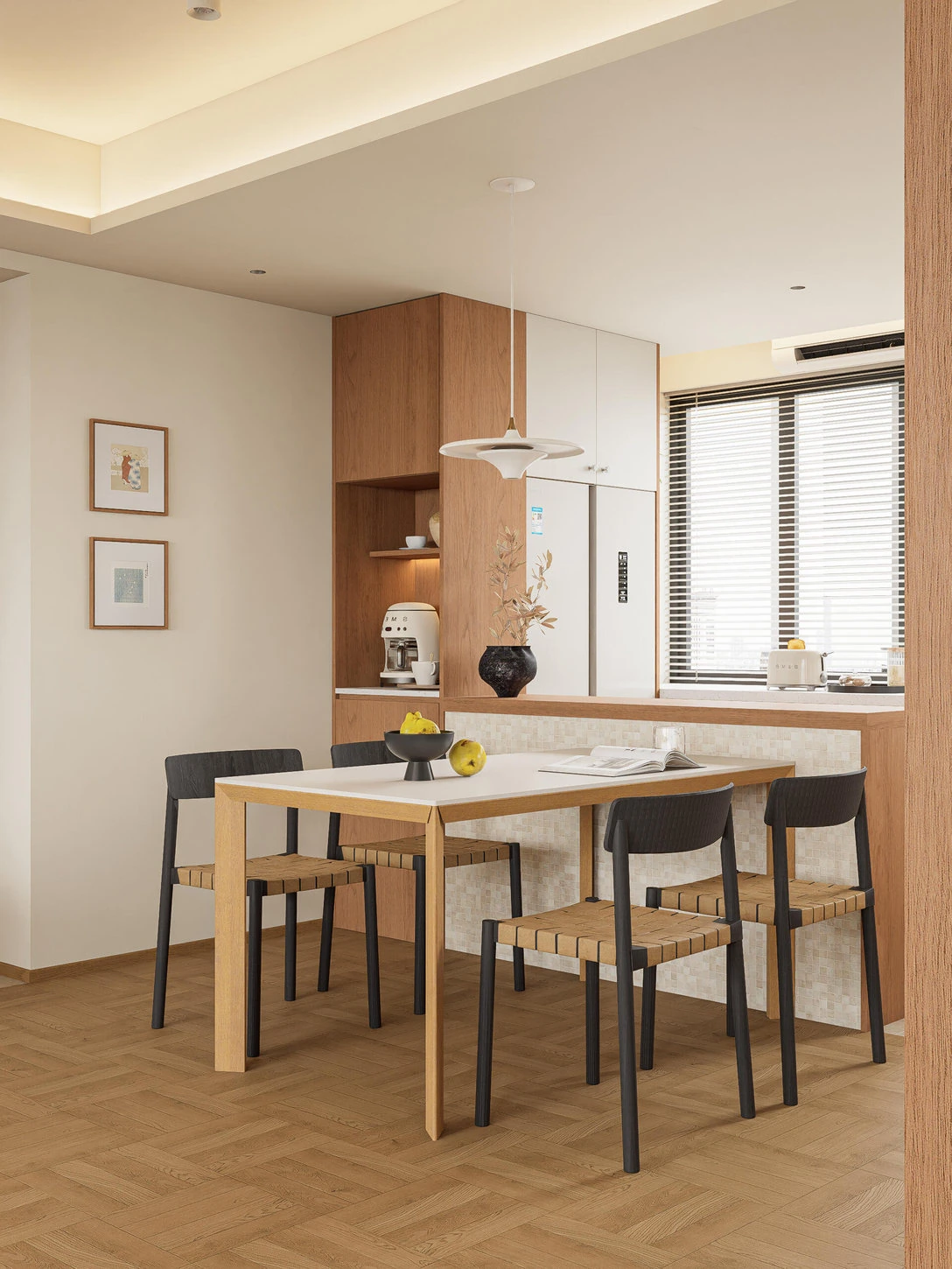
A Japandi dining room works best when the table is generous enough for real meals but not so large that chairs block circulation. Round tables soften compact spaces; rectangular tables can make better use of a long room. Mix simple timber forms with upholstered or woven seats to avoid an overly hard look.
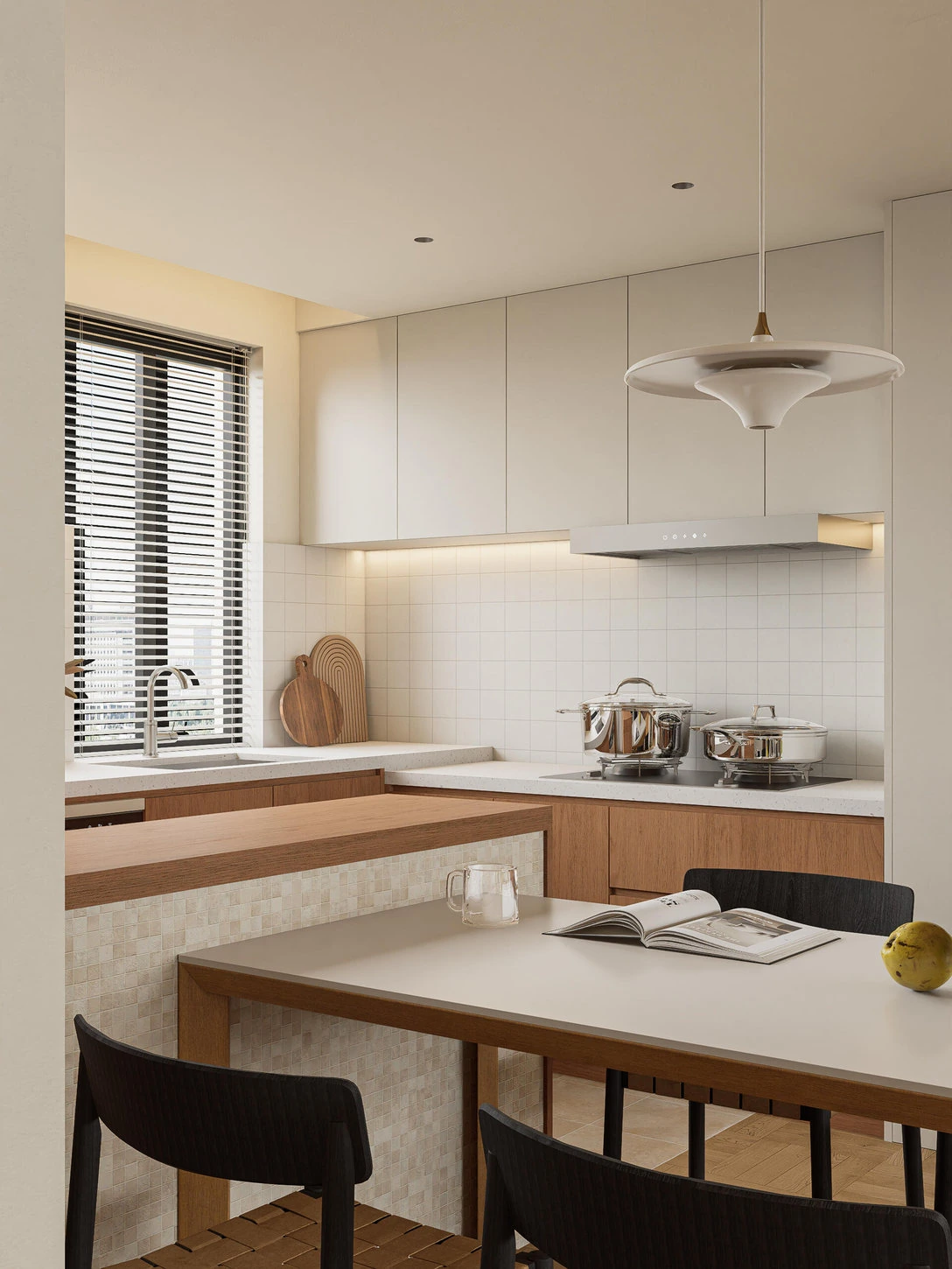
In the kitchen, let storage and maintenance lead. Pale cabinet fronts, timber accents and restrained hardware can look quiet, but work surfaces still need appropriate durability. Consider the cleaning requirements of open shelving before installing it everywhere. Closed cabinetry often does more to maintain the Japandi feeling than a decorative display.
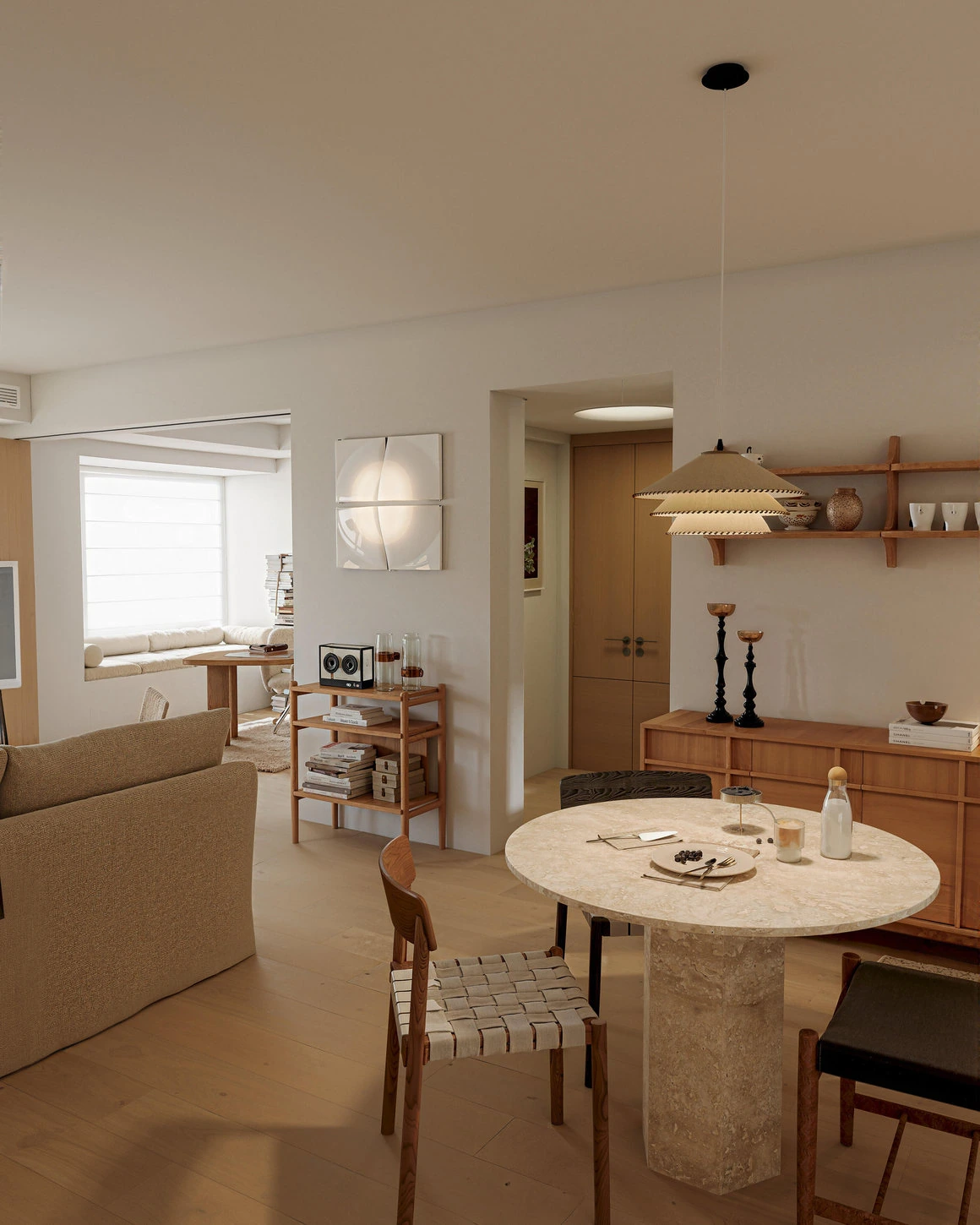
An open-plan dining setting connects naturally to the adjoining living area.A compact kitchen uses pale cabinetry and timber accents for a unified palette.
A compact dining table and woven chairs support everyday meals without visual clutter.Pale cabinetry, clean counters and natural light keep a working kitchen calm.
If you're coordinating dining furniture across several rooms, review dining tables alongside cabinetry finishes rather than choosing each piece independently. Matching the undertone is usually more important than matching every wood grain exactly.
08 / THE GUIDE
How to Make a Japandi Bedroom Feel Restful
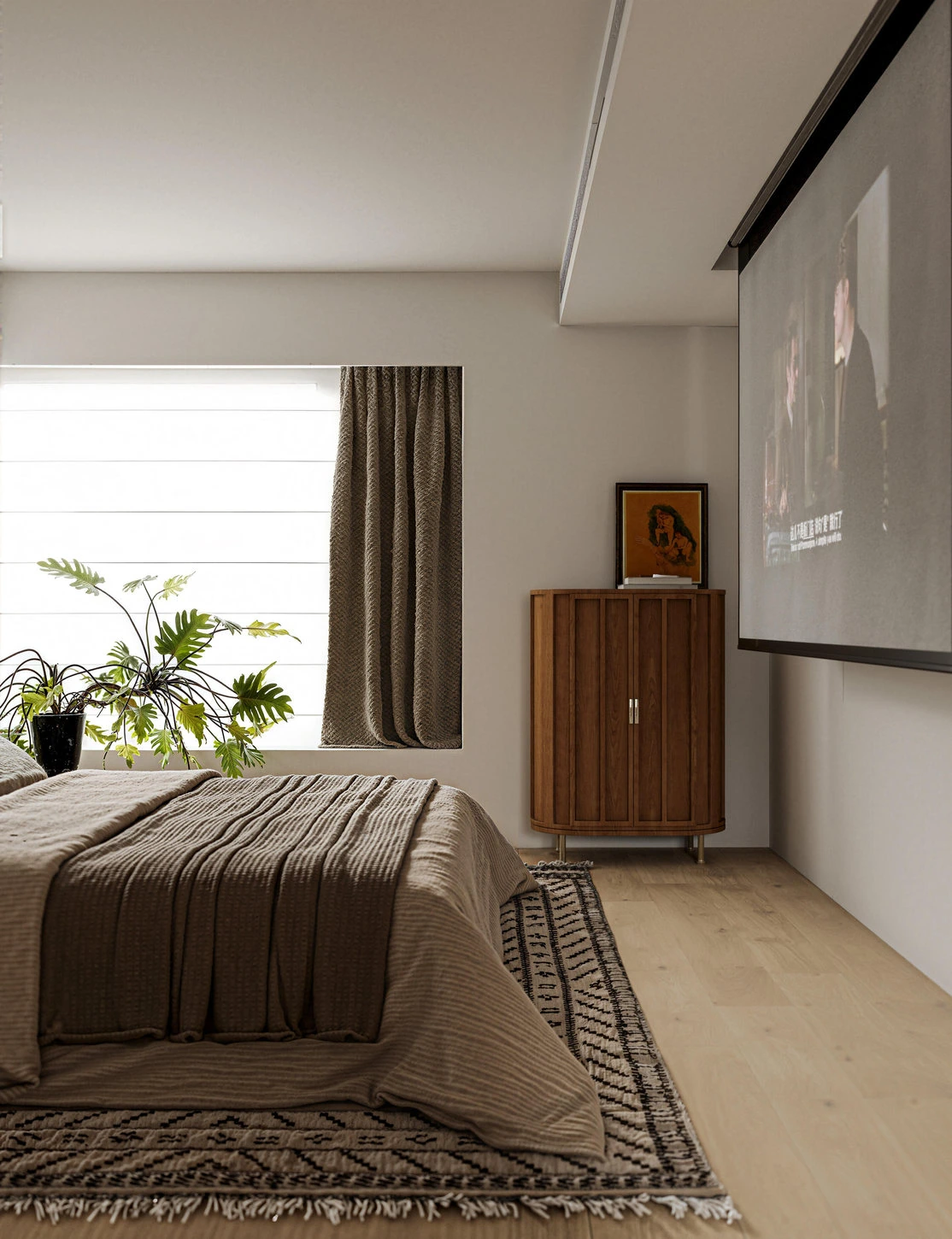
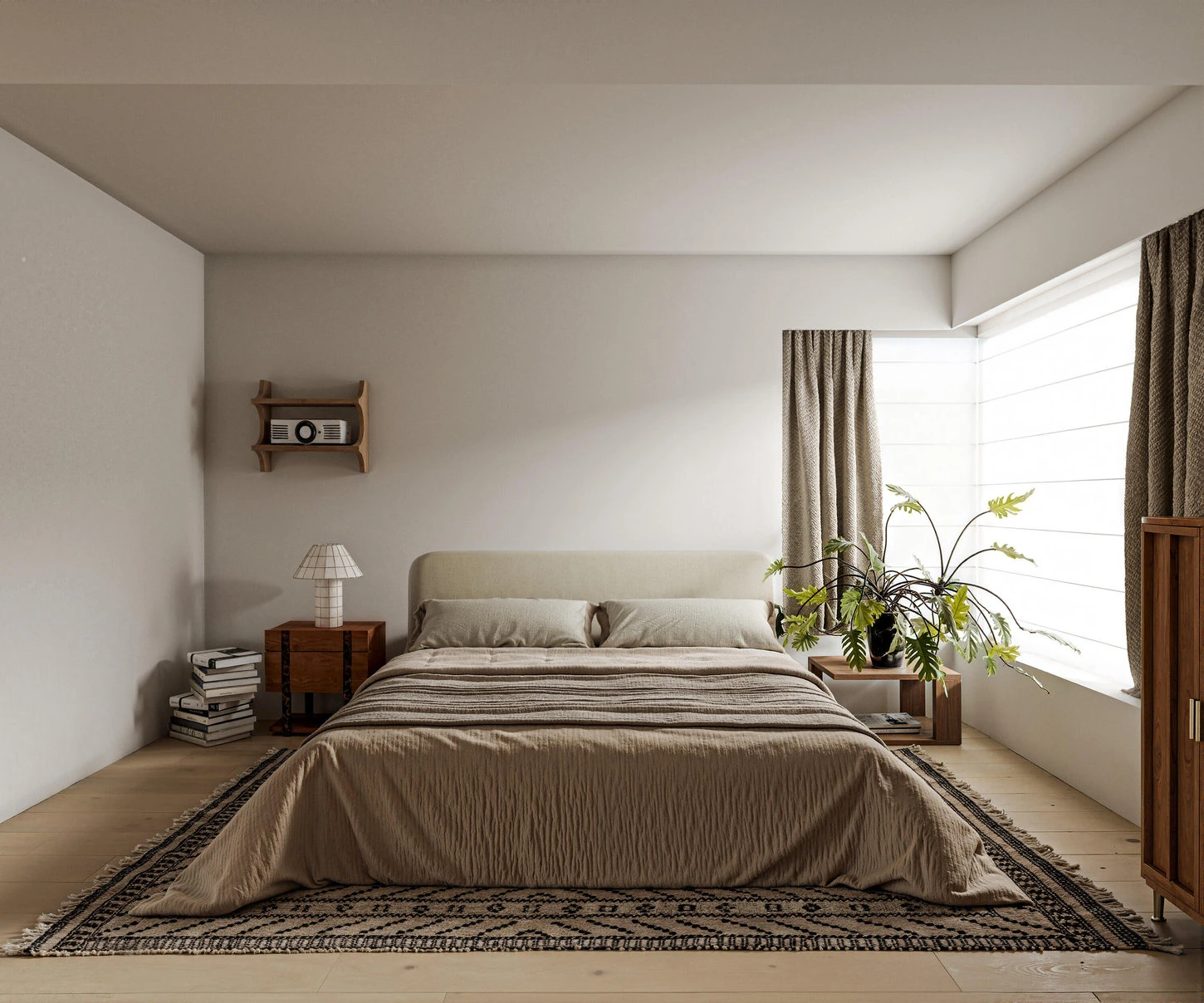
The bedroom benefits most from Japandi's editing discipline. Keep the bed as the visual anchor, choose bedside storage that accommodates what you actually use, and limit decorative objects around the sleeping area. A quiet palette can still be layered: warm white bedding, a taupe throw, a textured rug and a darker wood bedside cabinet make a richer combination than a single flat beige.
Lighting should work for both winding down and reading. Bedside lamps or wall-mounted fixtures can free space on small nightstands. If blackout curtains are needed, choose a fabric and heading that sit naturally with the room's softer textiles.
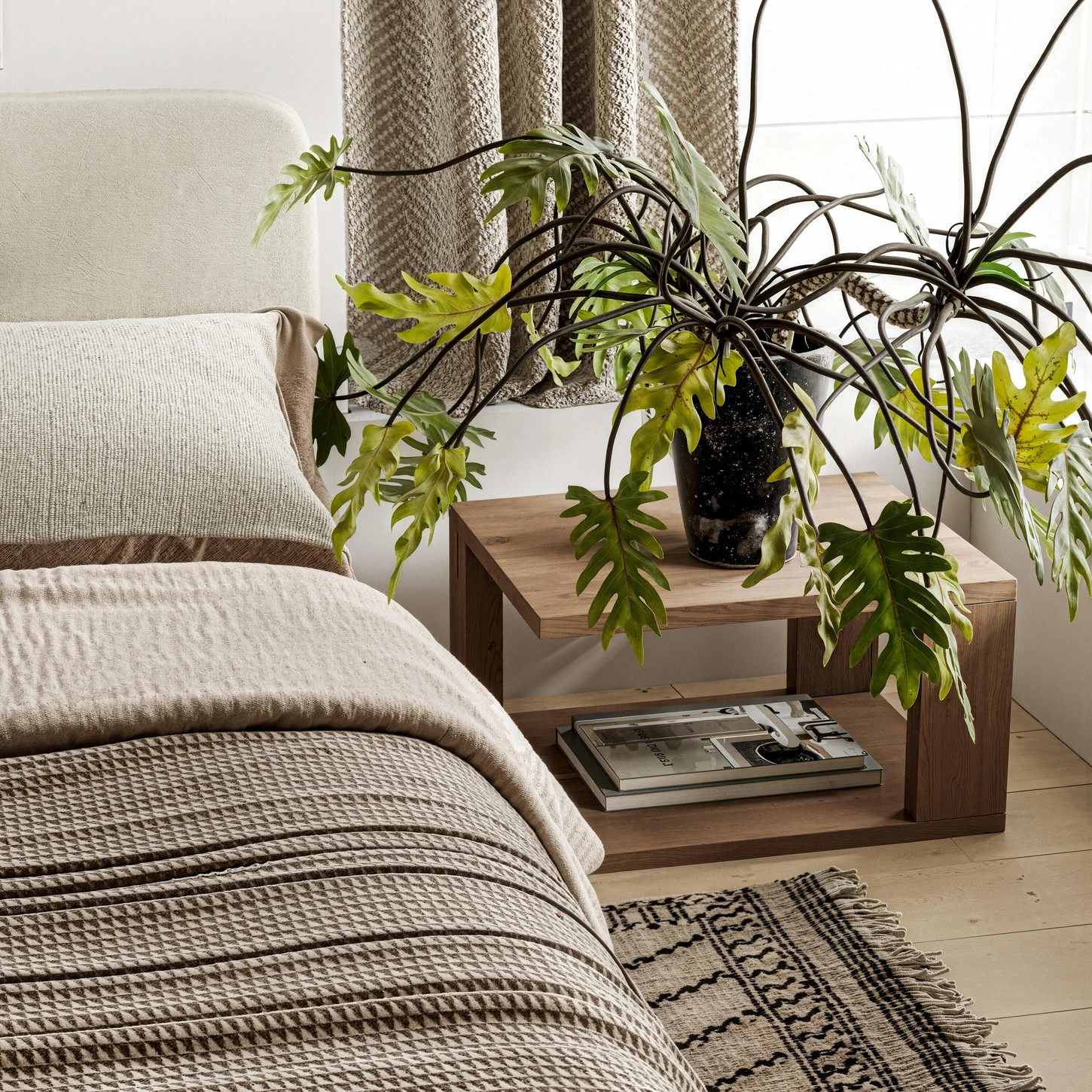
A low bed and subdued color palette give the room an uncluttered silhouette.Textured bedding and a single plant bring warmth to a simple sleeping space.
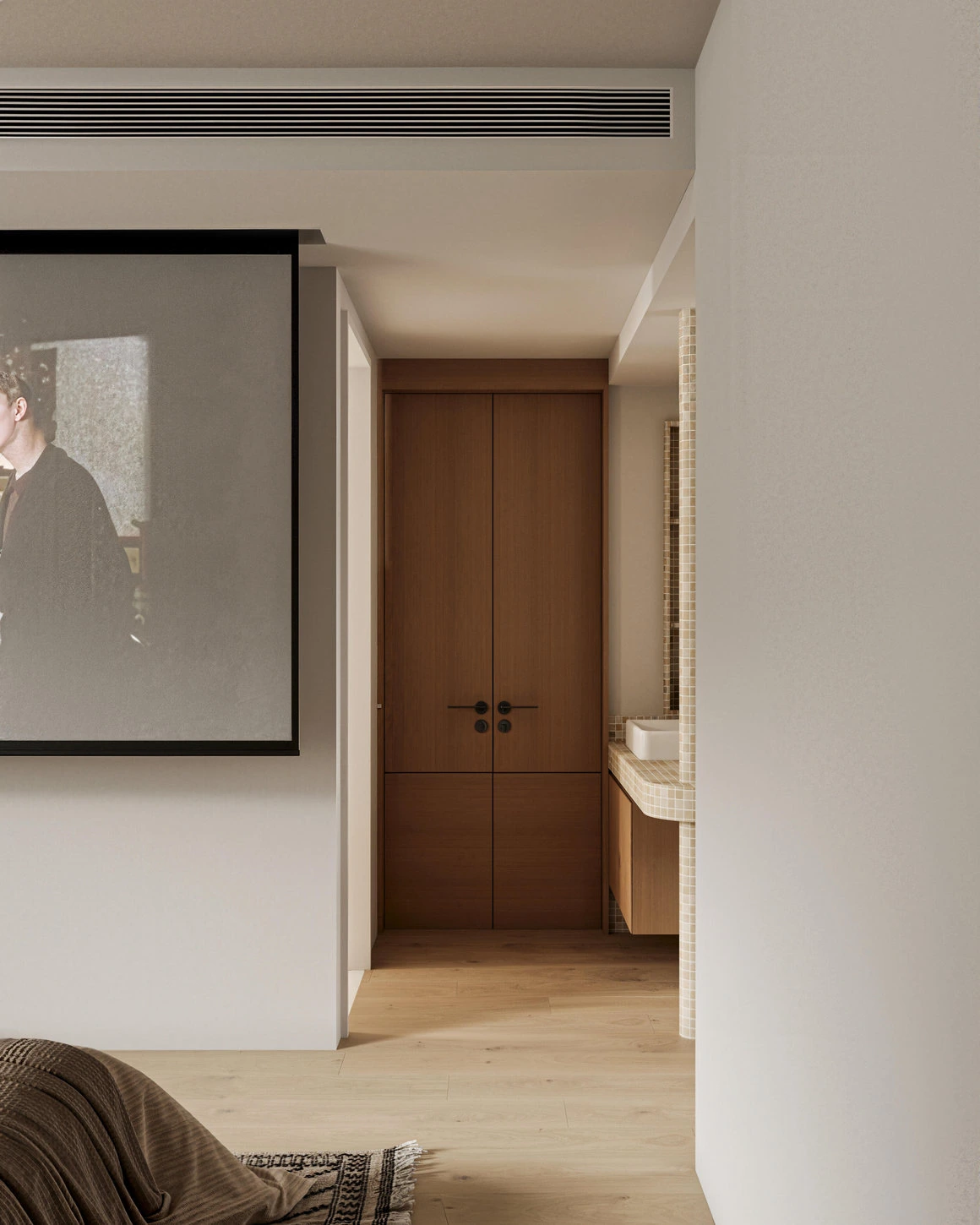
Built-in storage keeps the bedroom corridor visually quiet and functional.
Bedroom furniture checklist
Check bed height with the mattress included, the clearance beside each nightstand, the position of outlets, the depth of wardrobe doors and the space needed to open drawers. For a coordinated scheme, compare beds and bedroom furniture as a group rather than in isolation.
09 / THE GUIDE
Japandi Bathrooms: Wood, Stone and Quiet Storage
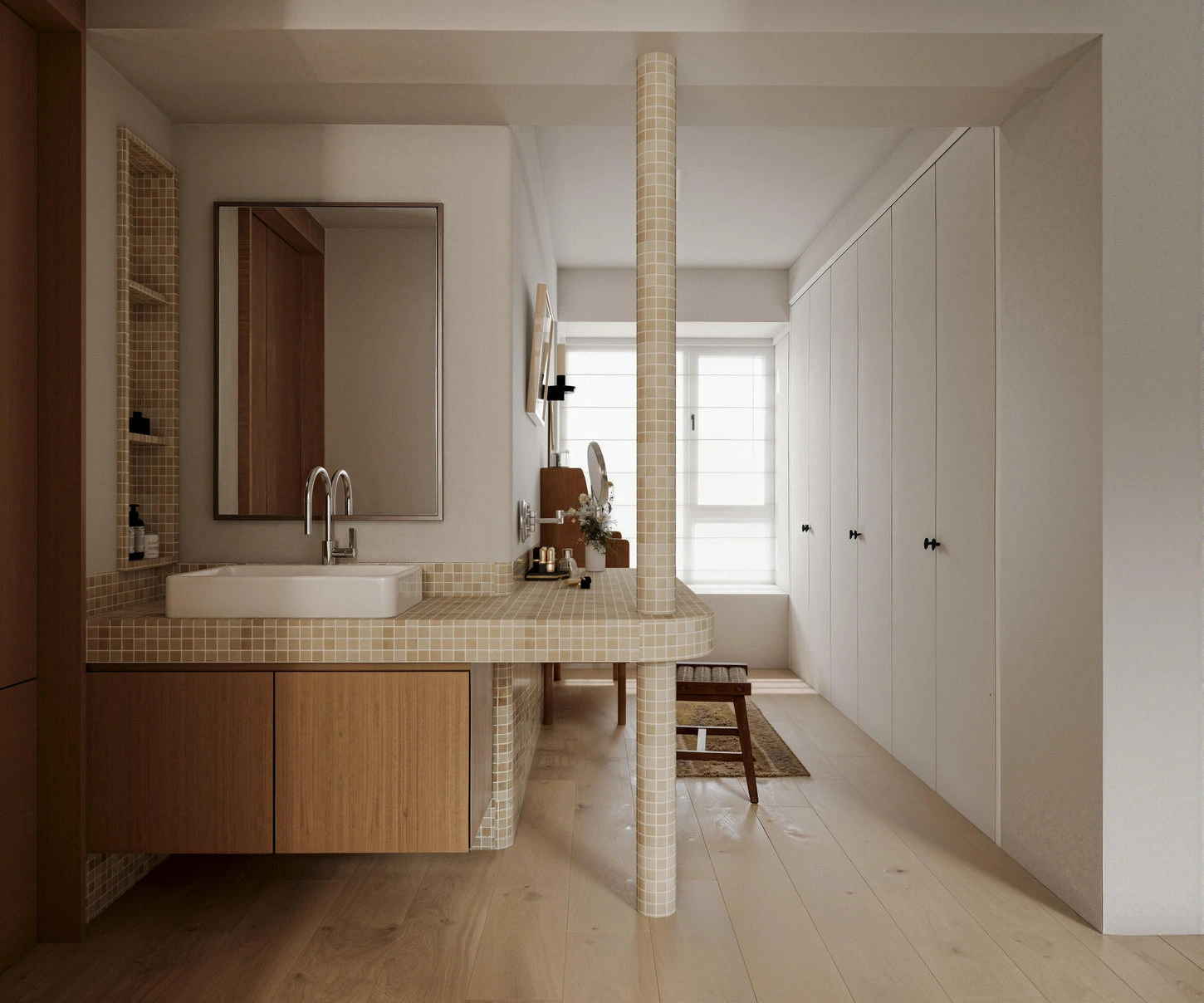
Japandi bathrooms translate the same principles into a more demanding environment: restrained finishes, practical storage and materials suited to moisture. A wall-hung vanity can make the floor feel open, while a wood-look or timber-front cabinet brings warmth against stone or ceramic surfaces.
Do not assume every natural material is appropriate for wet areas. Ask about substrate, edge sealing, ventilation and water resistance. Use task lighting at the mirror and softer ambient lighting elsewhere. The most effective bathroom is one that looks calm and is easy to clean.
A warm timber vanity, restrained tile and integrated storage create a calm, practical bathroom.
For built-in joinery, see Ratahome's materials and finishes guidance and confirm the specifications for the exact installation conditions.
10 / THE GUIDE
A Japandi Home Office That Still Feels Connected
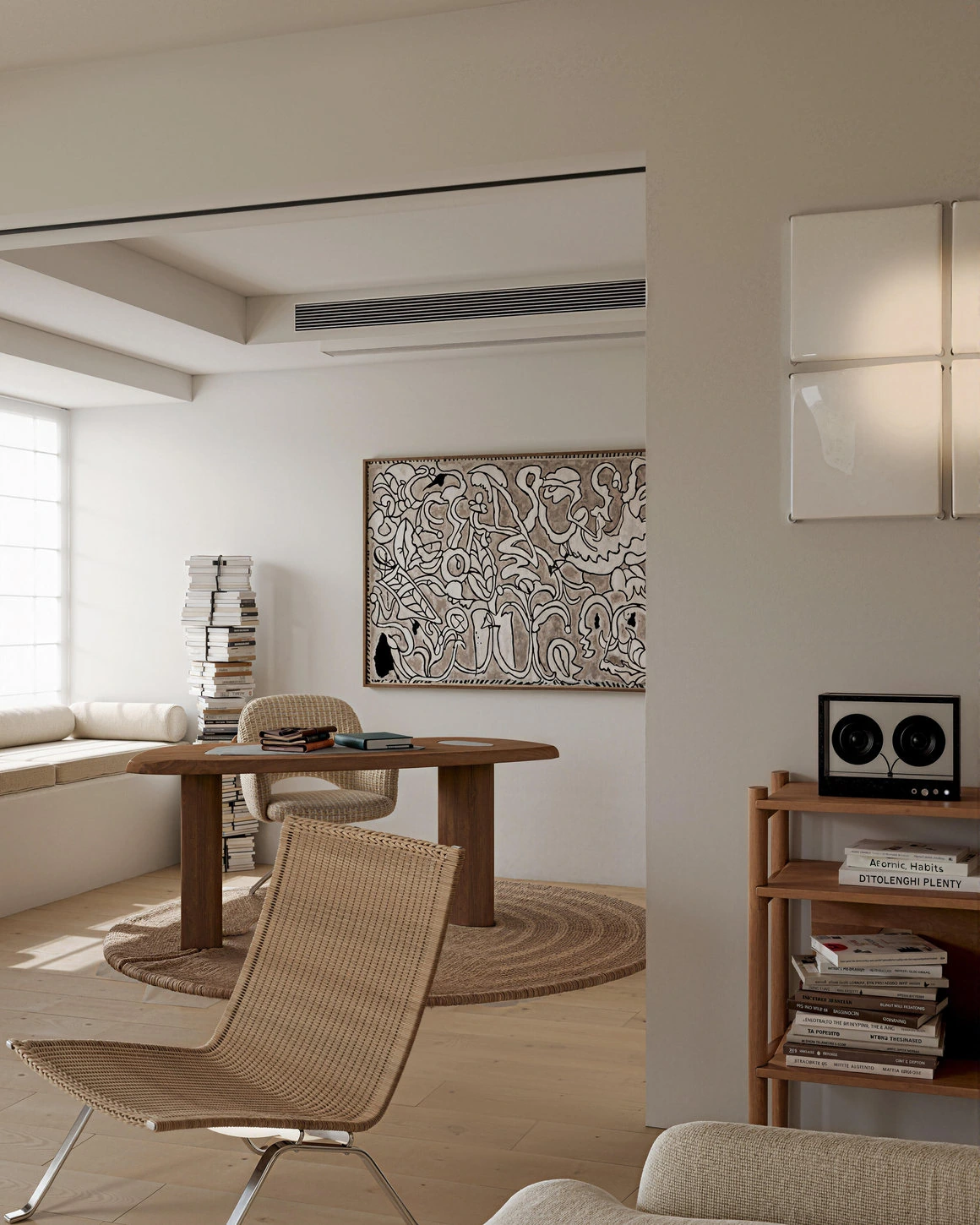
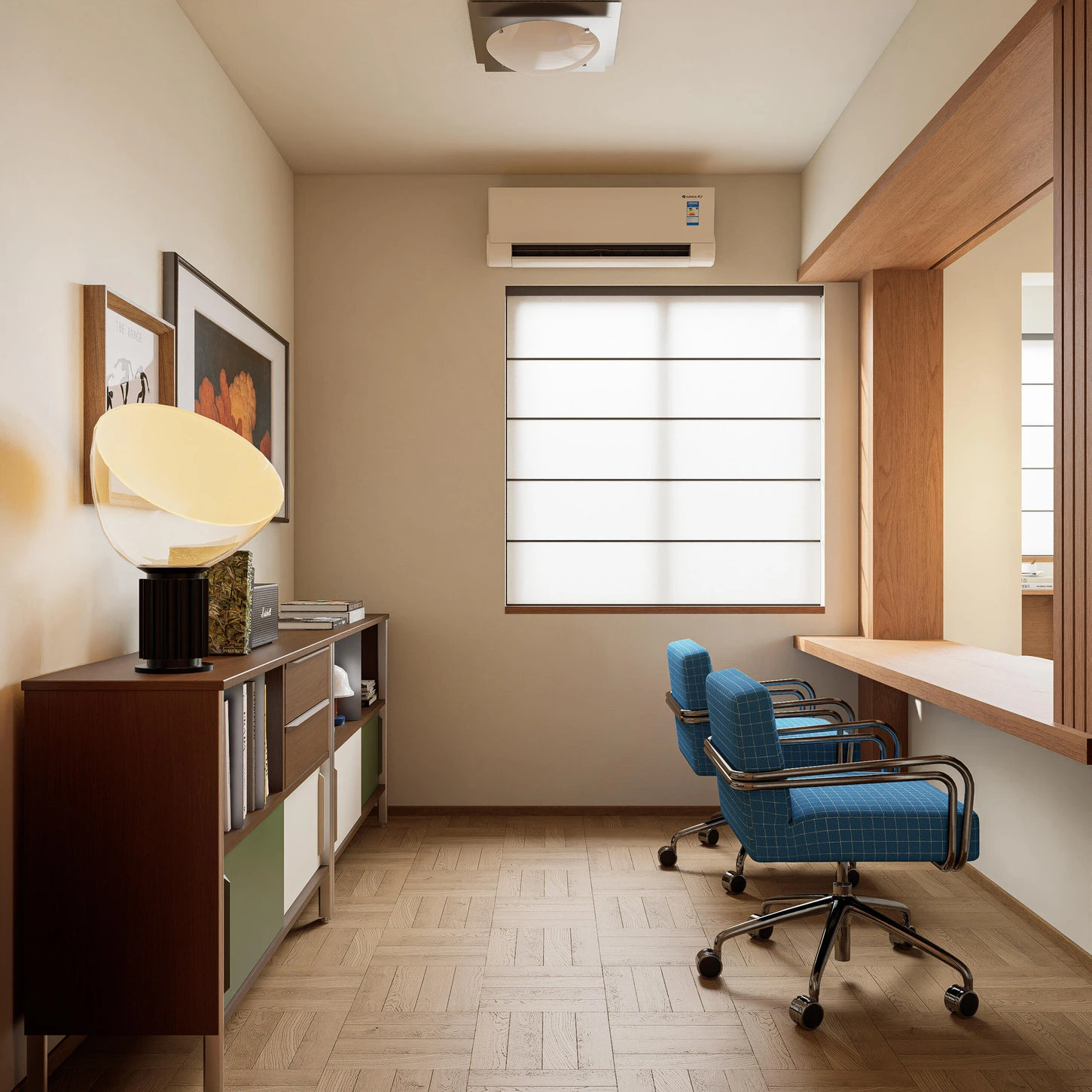
A minimalist workspace does not need to feel isolated. The Shenzhen renovation reference describes a semi-open study that supports concentration while allowing interaction with the rest of the home. That idea is especially useful in smaller apartments where a fully separate office would sacrifice valuable living space.
Use a comfortable task chair, an appropriately sized desk, cable management and storage for papers or equipment. Keep the background calm, but do not trade ergonomic support for a beautiful chair that cannot handle a full working day.
A compact home office pairs practical seating and a clean desktop with warm timber storage.
Where a study opens onto a living room, repeat one wood tone and one wall color across both spaces. A sliding panel, curtain or partial partition can offer visual separation when needed.
11 / THE GUIDE
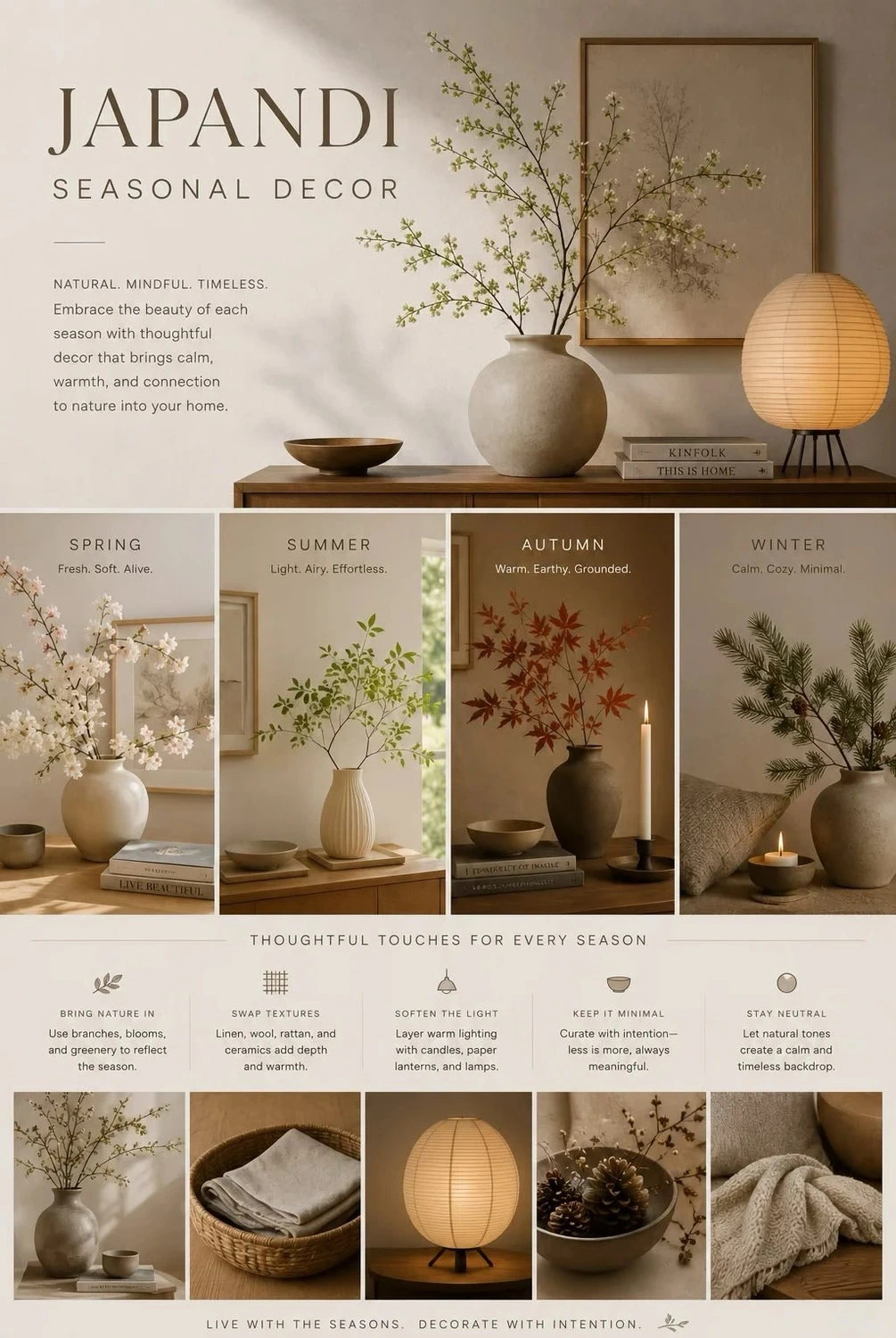
Japandi Lighting and Seasonal Decor: Less, but More Meaningful
Light changes the character of neutral interiors. During the day, sheer curtains diffuse glare without shutting out the view. In the evening, table lamps, paper shades and concealed task lighting create smaller pools of warmth. Avoid making the entire room equally bright; subtle variation adds depth.
Seasonal decorating can be simple. Fresh branches in spring, airy linen in summer, warm clay-colored textiles in autumn and a wool throw in winter are enough to acknowledge the season. The furniture and main palette can stay unchanged.
A four-season approach
Spring: budding branches, a pale ceramic vase and light textiles.
Summer: breathable linen, fewer layers and an uncluttered windowsill.
Autumn: warmer wood accents, rust-colored foliage and a soft lamp.
Winter: wool, knitted texture, low-glare lighting and a few sculptural branches.
Choose decor with intention. An object that is beautiful in a photograph but awkward to dust or store may not belong in a practical Japandi home.
Seasonal styling reference: subtle changes in branches, textiles and warm lighting.
12 / THE GUIDE
How to Plan and Buy Japandi Furniture Without Costly Mistakes
Style becomes a real project when you move from inspiration photos to specifications. Whether you are furnishing one room or a whole home, a simple decision sequence reduces mismatched finishes and uncomfortable furniture.
01
Measure the room, not just the wall
Record the floor plan, doors, windows, ceiling height, circulation paths and major outlet positions. Mark the pieces that must fit first.
02
Build one material and color board
Compare real samples of wood, fabric, stone and metal in the room's lighting. Check undertones side by side.
03
Specify comfort and construction
Confirm seat height and depth, cushion construction, joinery, table stability, finish and cleaning instructions—not just the silhouette.
04
Coordinate pieces across rooms
Keep the palette coherent while allowing one or two contrasting accents. Do not force identical furniture into every room.
05
Review samples, packing and delivery scope
For made-to-order furniture, request photographs, material confirmation and a clear itemized quote. Confirm what delivery and installation include.
Ratahome's ordering process explains how specifications, options, production checks and shipping are reviewed. For a multi-room plan, the whole-home service can be a useful place to start with a furniture list or floor plan.
13 / THE GUIDE
Japandi vs. Scandinavian vs. Japanese Minimalism
These styles overlap, but their emphasis differs. Scandinavian interiors often prioritize brightness, ease and practical comfort; Japanese-influenced minimalism can emphasize spatial restraint, craftsmanship and the relationship between objects and empty space. Japandi is a contemporary interpretation that borrows from both.
There is no official Japandi certification or rigid rulebook. Use the label as a helpful design direction, not as a reason to erase personal belongings or meaningful color.
14 / THE GUIDE
Frequently Asked Questions About Japandi Style
These concise answers address common questions from homeowners and interior designers.
What colors are best for a Japandi home?
Warm white, sand, greige, taupe and muted wood tones form a versatile base. Add sage, terracotta or charcoal in small amounts for contrast. Always test samples in the actual room.
What wood is commonly used in Japandi furniture?
Oak, ash and walnut are common visual choices. Light woods make rooms feel airy, while walnut or darker finishes add depth. Construction quality and finish durability matter more than species alone.
Can Japandi work in a small apartment?
Yes. Compact rooms benefit from multifunctional furniture, closed storage, careful circulation and a limited material palette. A low-profile sofa or a compact dining table can help maintain open sightlines.
Is Japandi the same as wabi-sabi?
No. Japandi is a contemporary interior style combining Japanese and Scandinavian influences. Wabi-sabi is a broader Japanese aesthetic sensibility often associated with imperfection and the passage of time.
How do I make a Japandi room feel cozy rather than empty?
Layer linen, wool, rugs and warm lighting; add one or two natural objects; and choose comfortable furniture. Minimalism works best when the room supports real routines.
Can I mix light oak with walnut in a Japandi room?
Yes. Use one wood tone as the dominant finish and the other as an accent. Compare samples under the same lighting so undertones do not clash.
What should I send a furniture supplier for a Japandi project?
Share your floor plan, room dimensions, reference photos, preferred materials, furniture list, quantities and delivery destination. Ask for itemized specifications and sample confirmation before ordering.
YOUR HOME, THOUGHTFULLY FURNISHED
Bring your Japandi furniture plan together.
Have a floor plan, reference photos or a room-by-room furniture list? Ratahome can review dimensions, materials and finishes with its Foshan sourcing team, then prepare an itemized proposal with the agreed scope and delivery details.
Photography and mood-board images supplied for editorial reference. The 92 m² Shenzhen renovation is attributed in the source post to Jingxiang Space Design; it is not presented as a Ratahome client project. Color swatches are illustrative.
F
Written by Forest Founder, Ratahome
Forest leads Ratahome from Foshan, coordinating custom cabinetry, made-to-order furniture and whole-home projects for homeowners, designers and hospitality clients worldwide. Every guide on this site comes from that day-to-day work with factories, samples, QC and shipping.
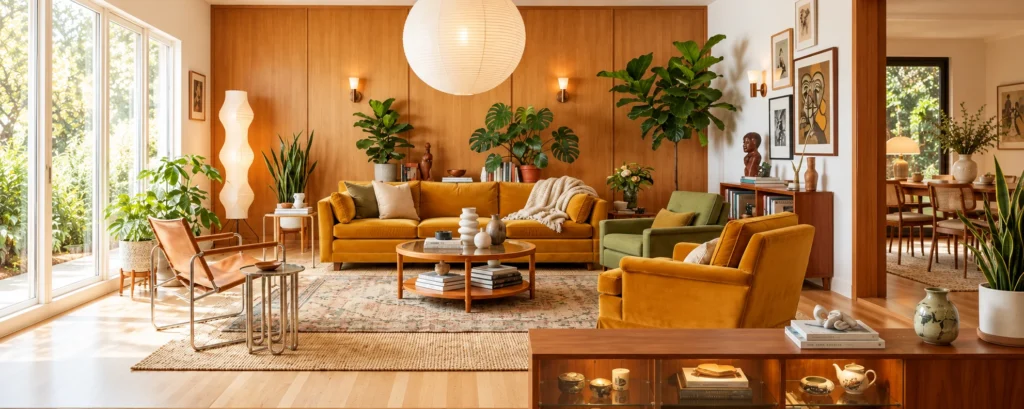
Explore mid-century modern furniture, defining shapes, warm woods, color palettes, iconic pieces, lighting, room ideas and a practical quality checklist.