Skip to content
Send Requirements
Menu
Custom cabinet pre-shipment inspection: factory measurement, trial assembly and finished kitchen installation
Cabinetry · Manufacturing & Quality Control

What We Check Before Shipping Custom Cabinets

A practical factory QC guide for custom cabinetry—from approved drawings and dimensions to hardware, trial assembly, finish quality, packing and final shipment approval.

Custom cabinetry is difficult and expensive to correct after it reaches the jobsite. A pre-shipment inspection is therefore not a beauty check at the end of production; it is a structured verification that the cabinets being packed match the approved drawings, dimensions, finishes, hardware and functional requirements.

· Published

For kitchens, wardrobes, vanities and whole-home built-ins, we recommend checking the project in layers: first the specification, then the cabinet boxes and machining, then trial assembly and moving parts, and finally the finished surfaces and export packing. This sequence makes defects easier to trace and correct before the shipment leaves the factory.

Key idea: the goal is not to prove that one sample cabinet looks good. The goal is to confirm that the production batch is consistent, functional, documented and ready to install.

1. Why pre-shipment inspection matters for custom cabinets

Cabinetry is a system of panels, doors, drawers, hinges, slides, lighting, fillers and site interfaces. A small error in drilling or panel size can affect several downstream parts. Pre-shipment QC reduces the risk of discovering those errors only after international delivery.
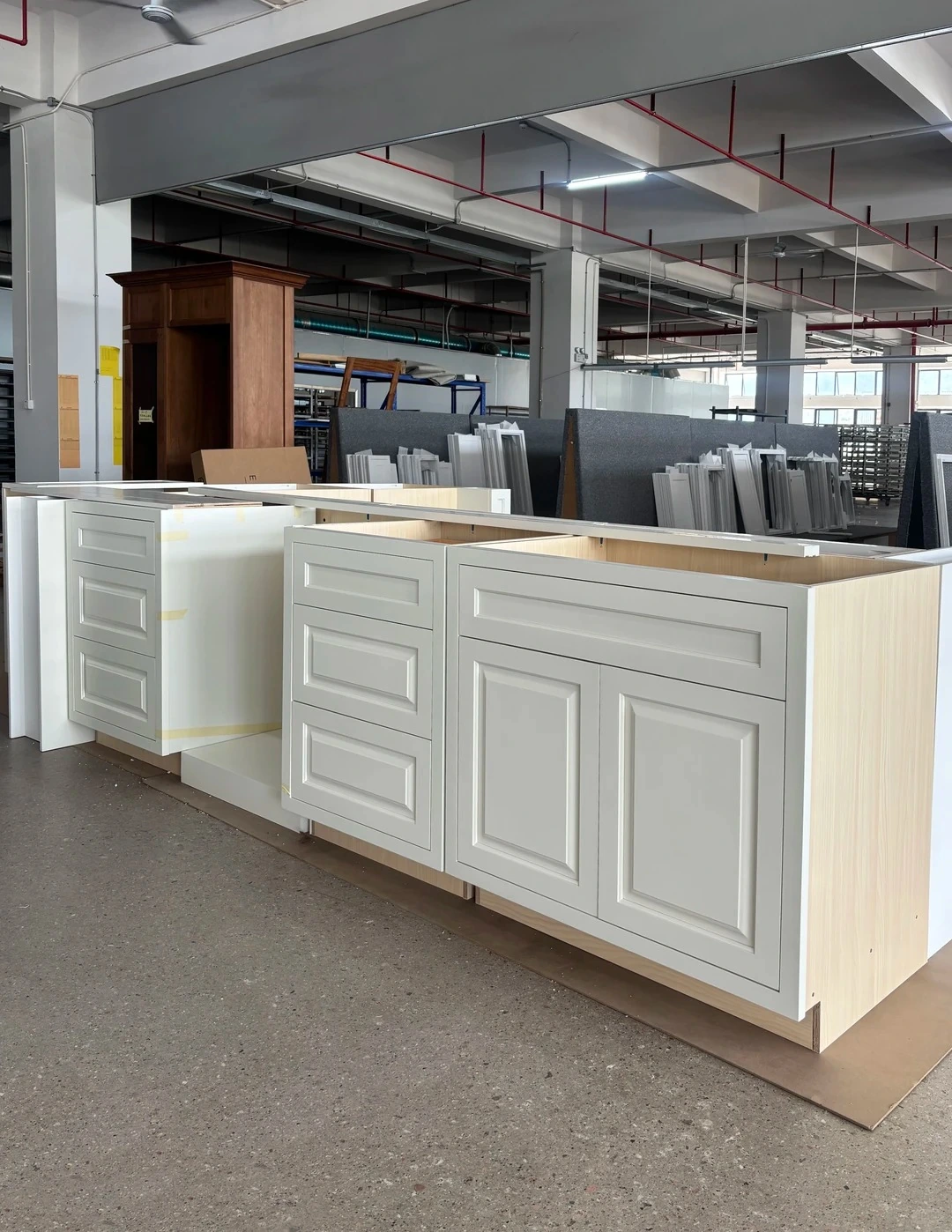
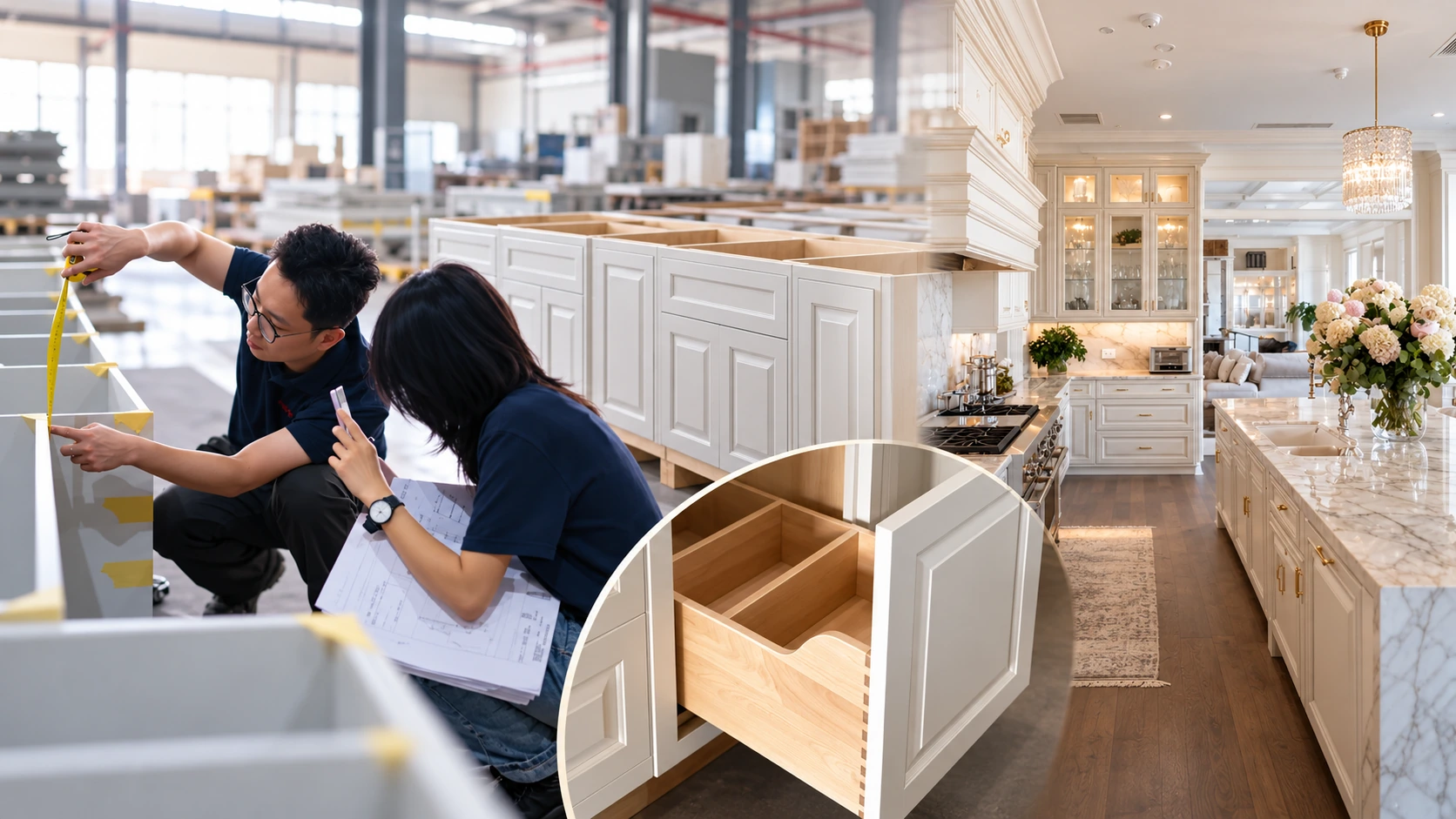
Factory staging makes it easier to compare cabinet modules, finishes and visible alignment before release.
A wider trial-assembly view helps reveal relationships between base cabinets, fillers, doors and adjacent modules.
Pre-shipment inspection should evaluate the cabinet as a system rather than as isolated panels.

2. Start with drawings, finish samples and the order specification

Inspection should begin with the approved production drawings and finish schedule. The inspector verifies cabinet IDs, quantity, door style, finish code, internal configuration, appliance openings and special accessories. If the reference documents are wrong or outdated, a precise measurement can still approve the wrong product.

What should be matched against the drawing?

Overall width, height and depth; toe-kick and filler dimensions; shelf positions; drawer count; hinge side; appliance openings; handle or pull locations; internal accessories; visible end panels; and any lighting channels should all trace back to an approved document.


Re-check the latest approved drawing before measuring or releasing the finished cabinet.
Critical cabinet dimensions should be compared with the drawing at identifiable reference points.
Panel thickness and opening dimensions affect hardware fit, appliance clearances and installation.

3. Verify dimensions, panel thickness and machining

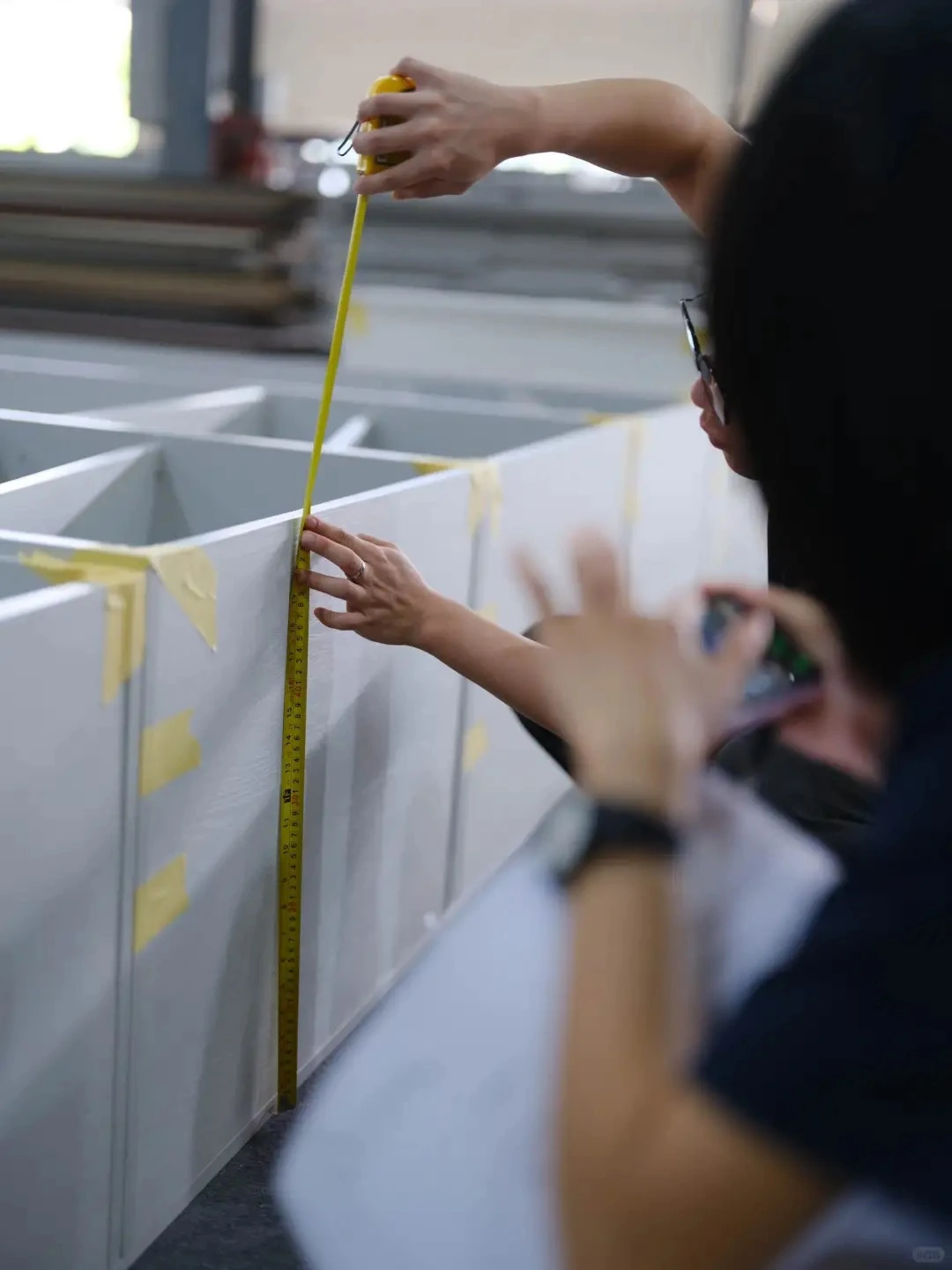
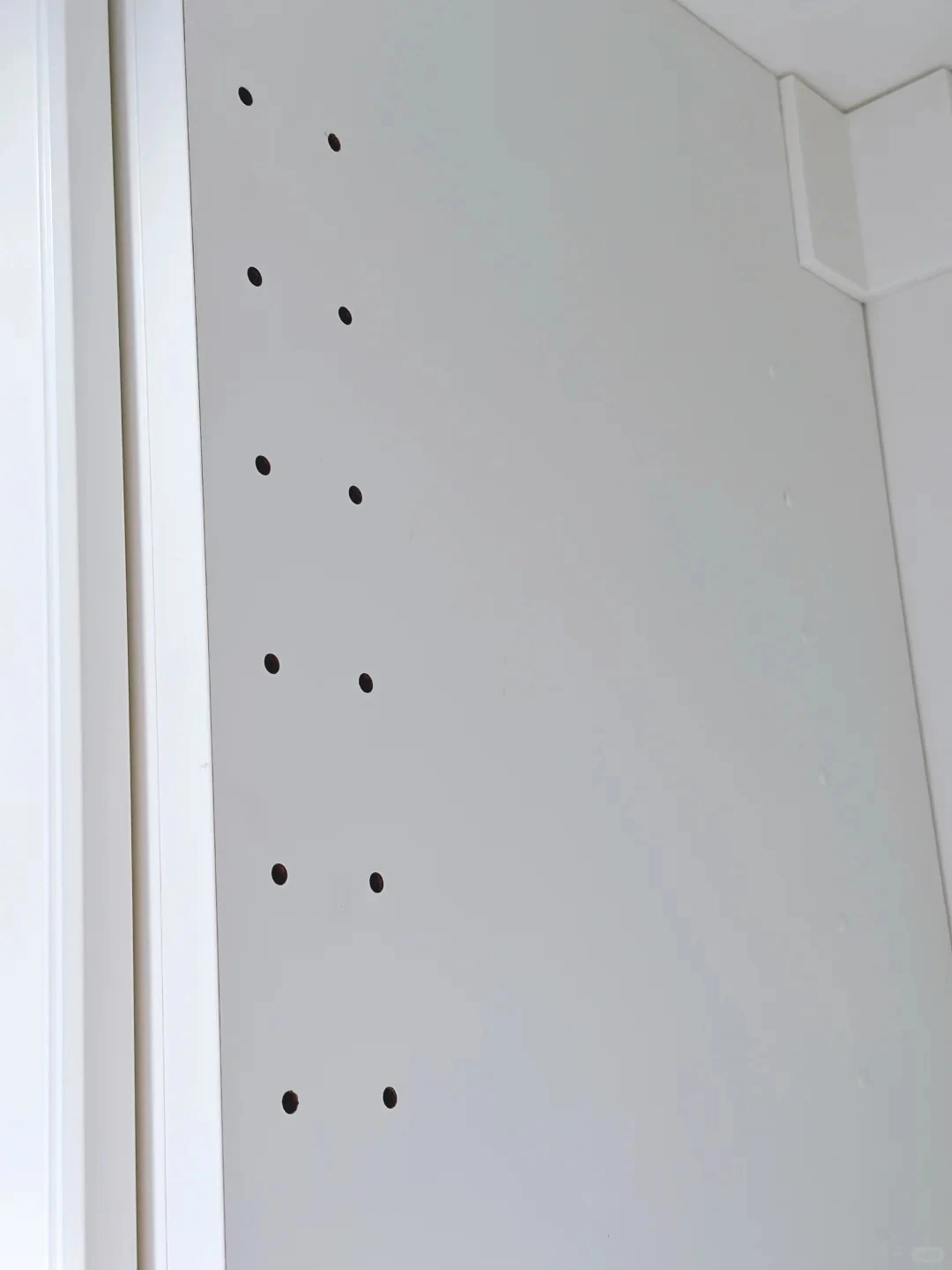
Next, check the physical cabinet against the drawings. Critical dimensions deserve direct measurement rather than visual judgment. Hole locations, shelf-pin rows and panel thicknesses should be consistent enough that installation and replacement parts remain predictable.

Measure cabinet and panel dimensions before packing, especially at openings and interfaces.
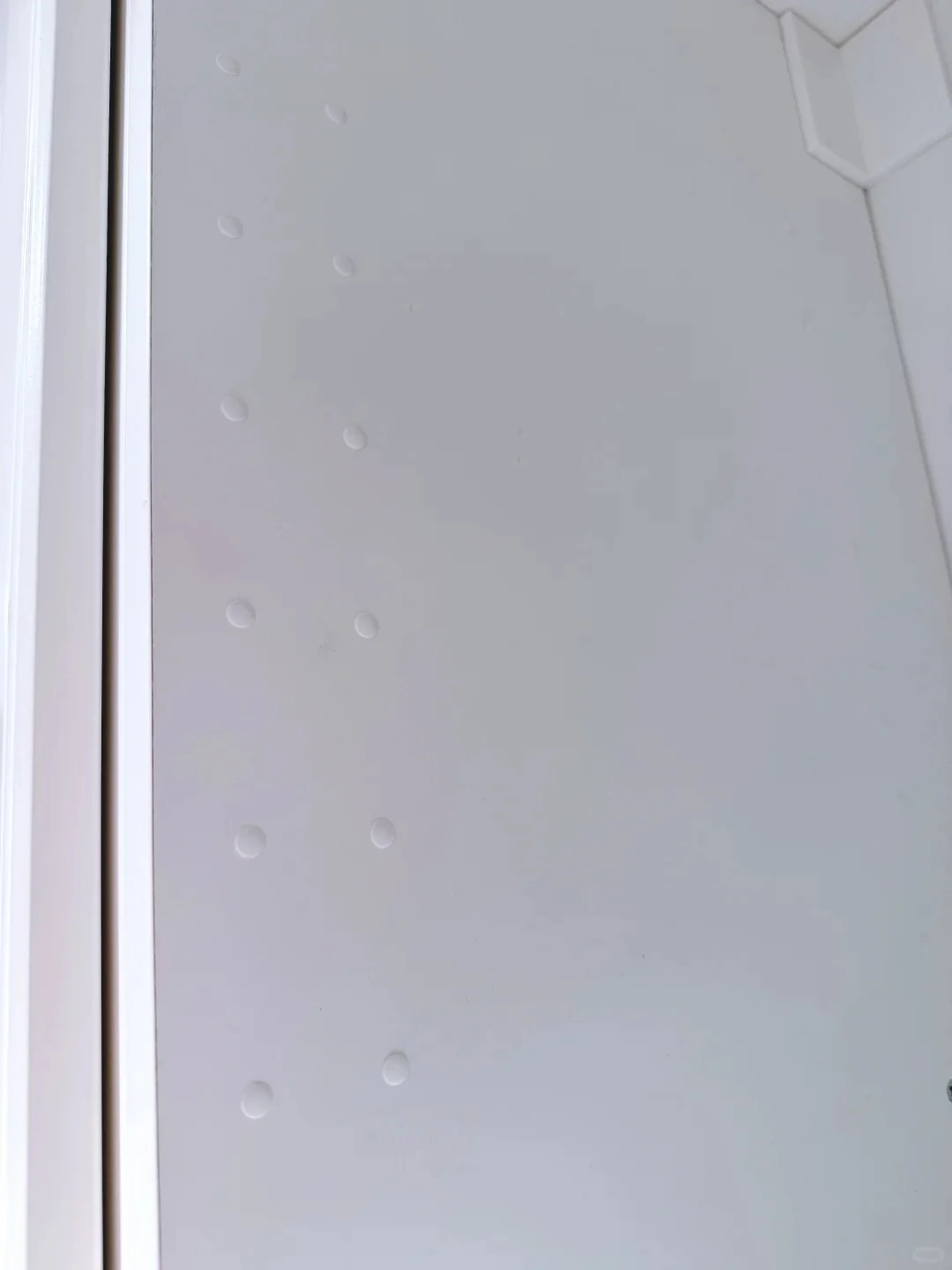
Hole locations should match the approved drilling pattern so shelves, hinges and fittings install correctly.
A second hole-position check helps catch offset drilling or missing machining before assembly.

4. Trial-assemble cabinets before packing

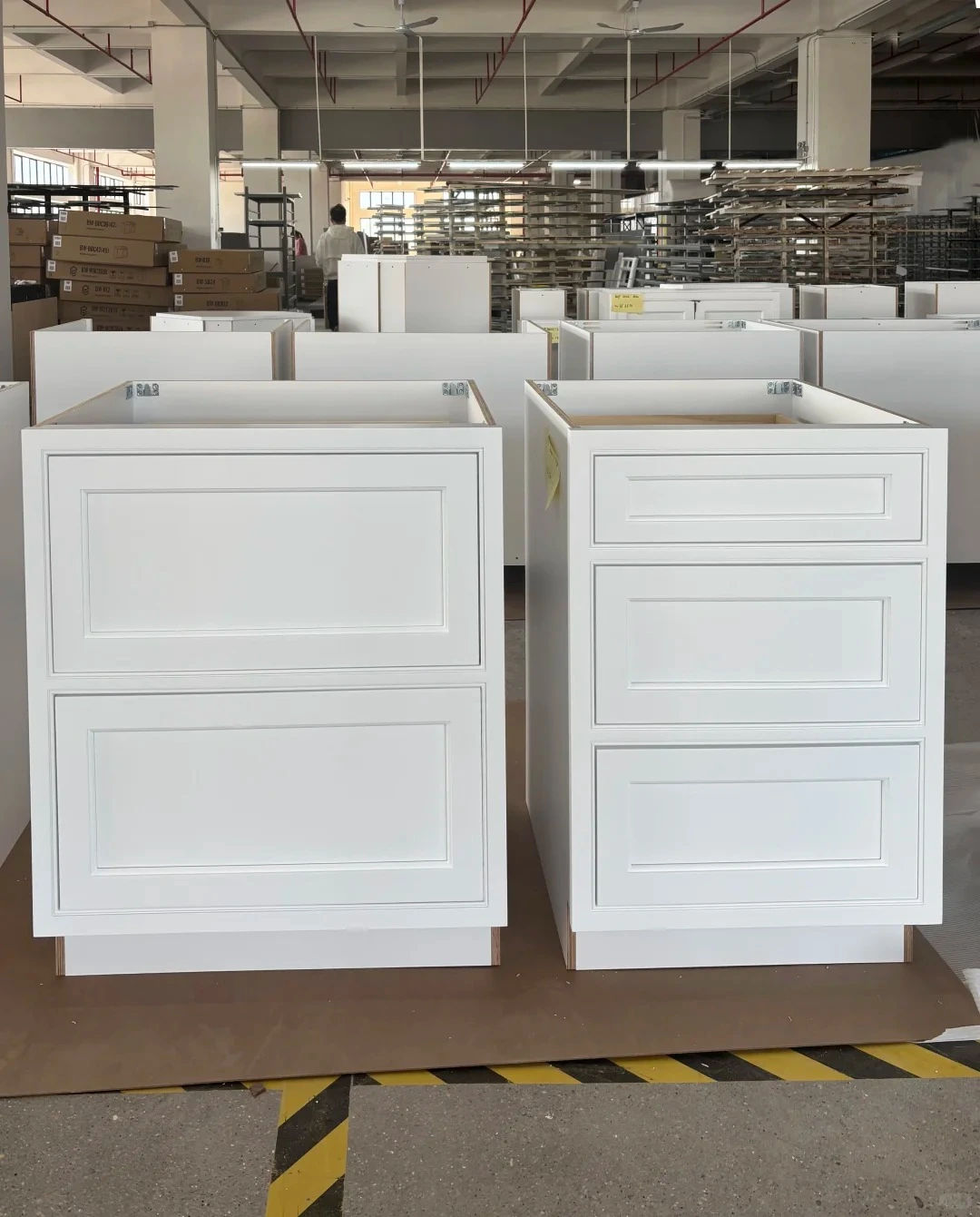
Trial assembly is one of the most useful QC steps for custom cabinetry. It reveals issues that are difficult to see when parts are inspected separately: uneven reveals, incorrect fillers, door interference, drawer conflicts, misaligned panels and inconsistent module heights.

For large projects, photograph cabinet IDs during trial assembly so the inspection evidence can later be matched to the packing list and installation drawings.
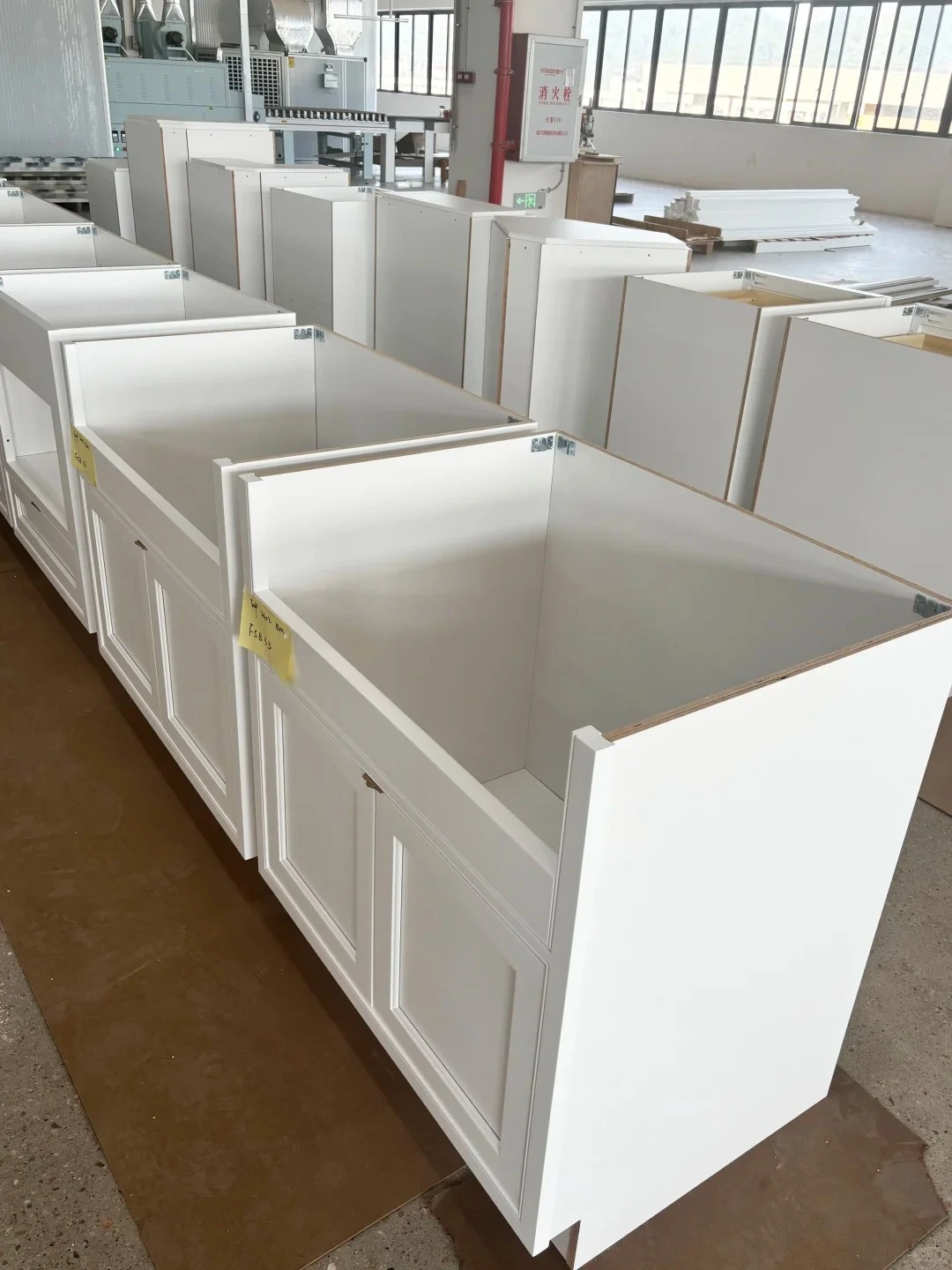
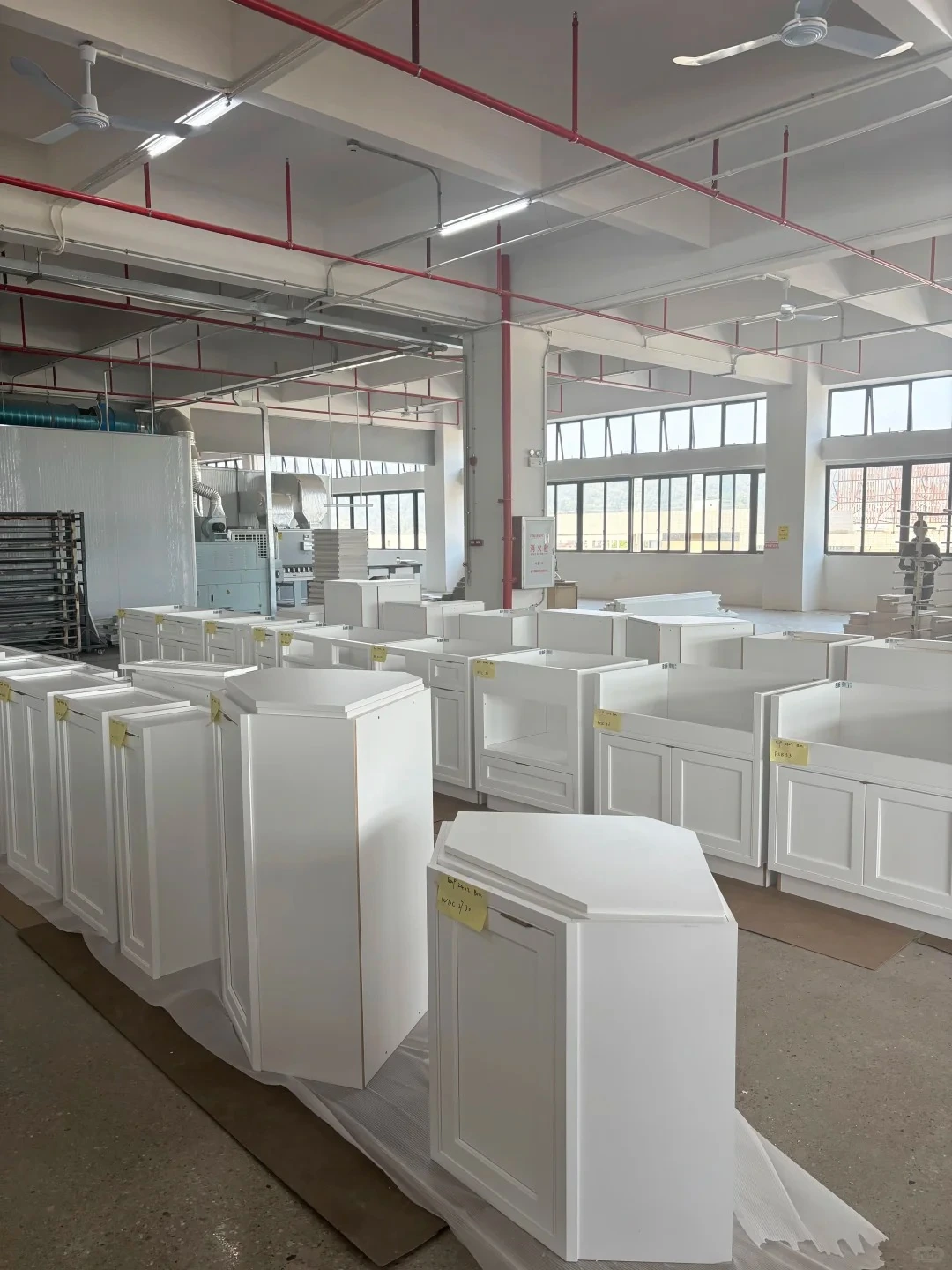
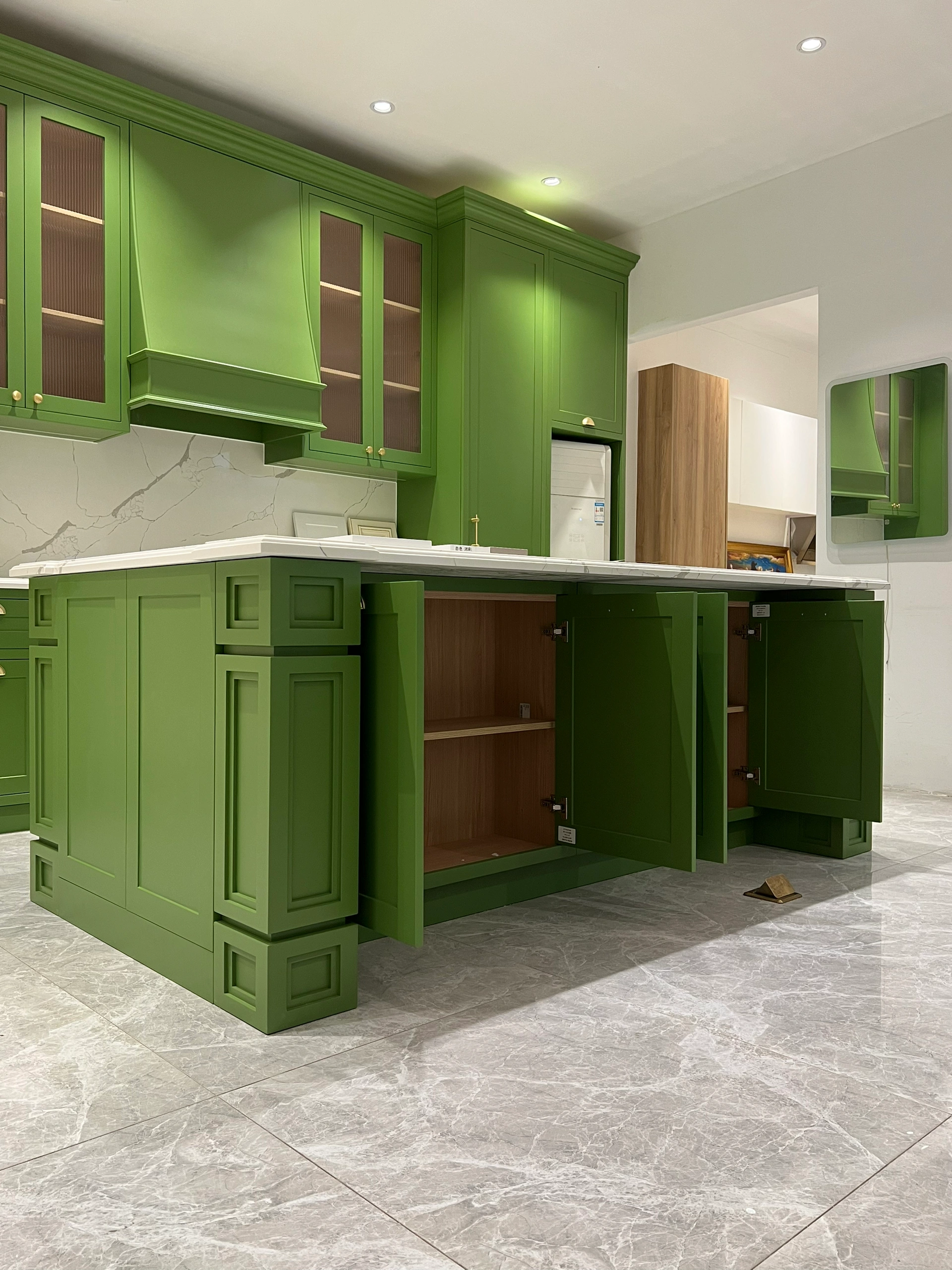
Trial assembly exposes door gaps, module squareness and visible alignment before the cabinets are packed.
Adjacent modules should be staged together when their reveals and fillers must line up on site.
Doors and drawer fronts are easier to evaluate when the cabinet is assembled in its intended configuration.
A broader factory setup can reveal cumulative alignment issues that are difficult to see on a single cabinet.

5. Inspect hinges, slides, drawers and internal hardware

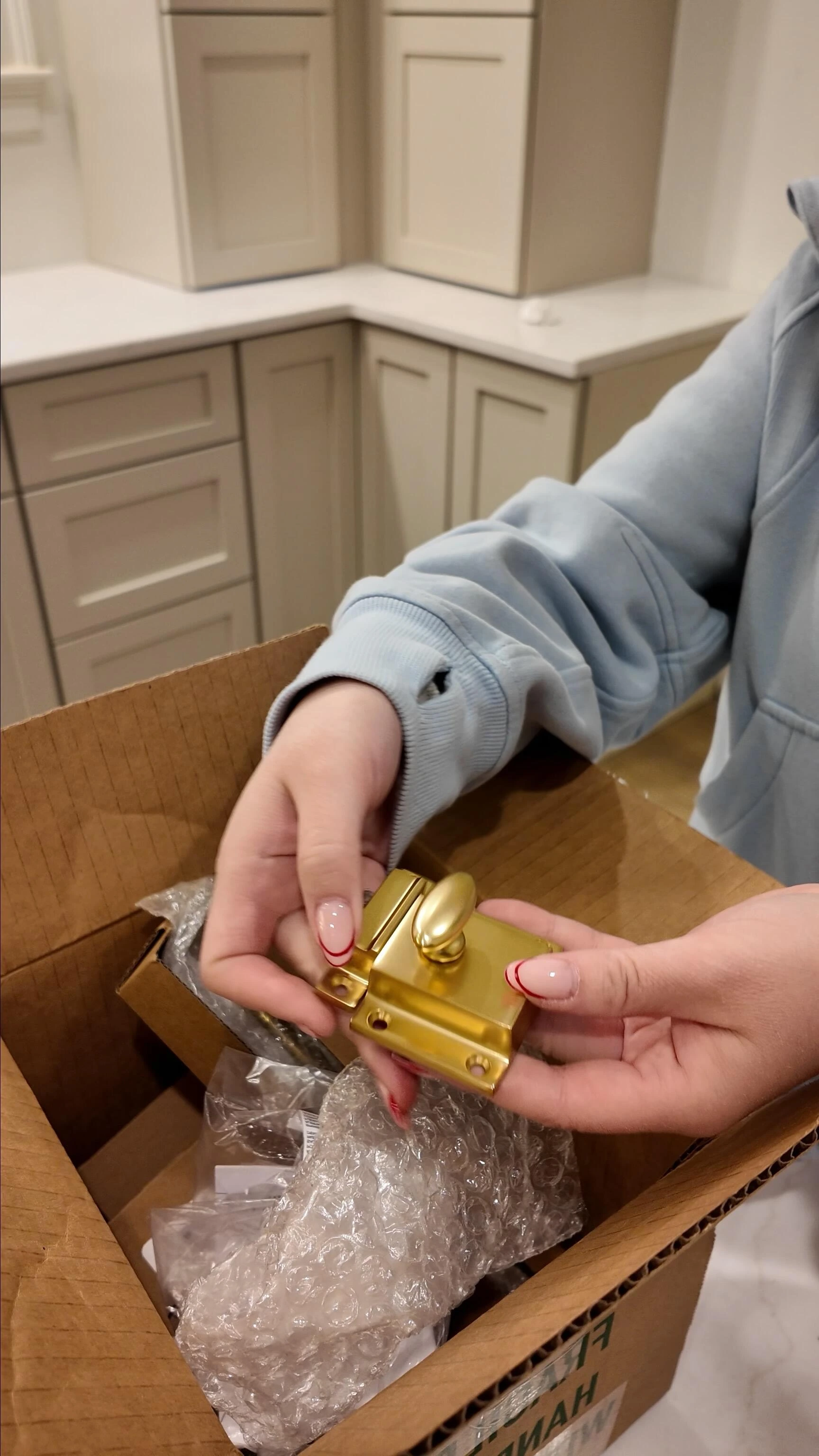
Hardware is not complete simply because it is present. Doors should open without rubbing, hinges should sit firmly and consistently, drawers should travel smoothly, and internal accessories should operate through their full range. Soft-close mechanisms should engage predictably rather than only on selected units.
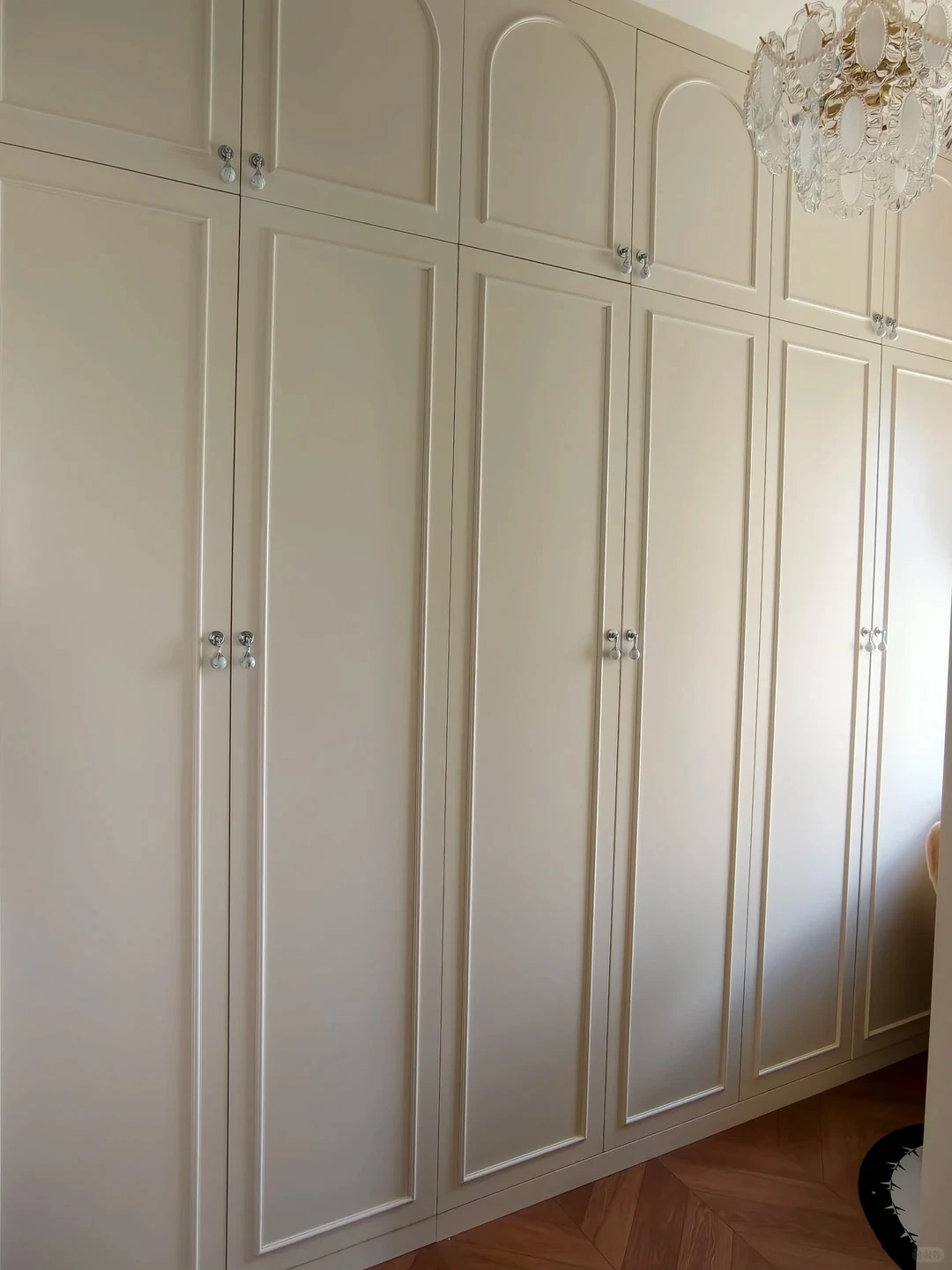
Inspect hinge mounting, fixing screws and adjustment range before the cabinet is released.
Drawer runners and moving fittings should operate smoothly without binding or excessive play.
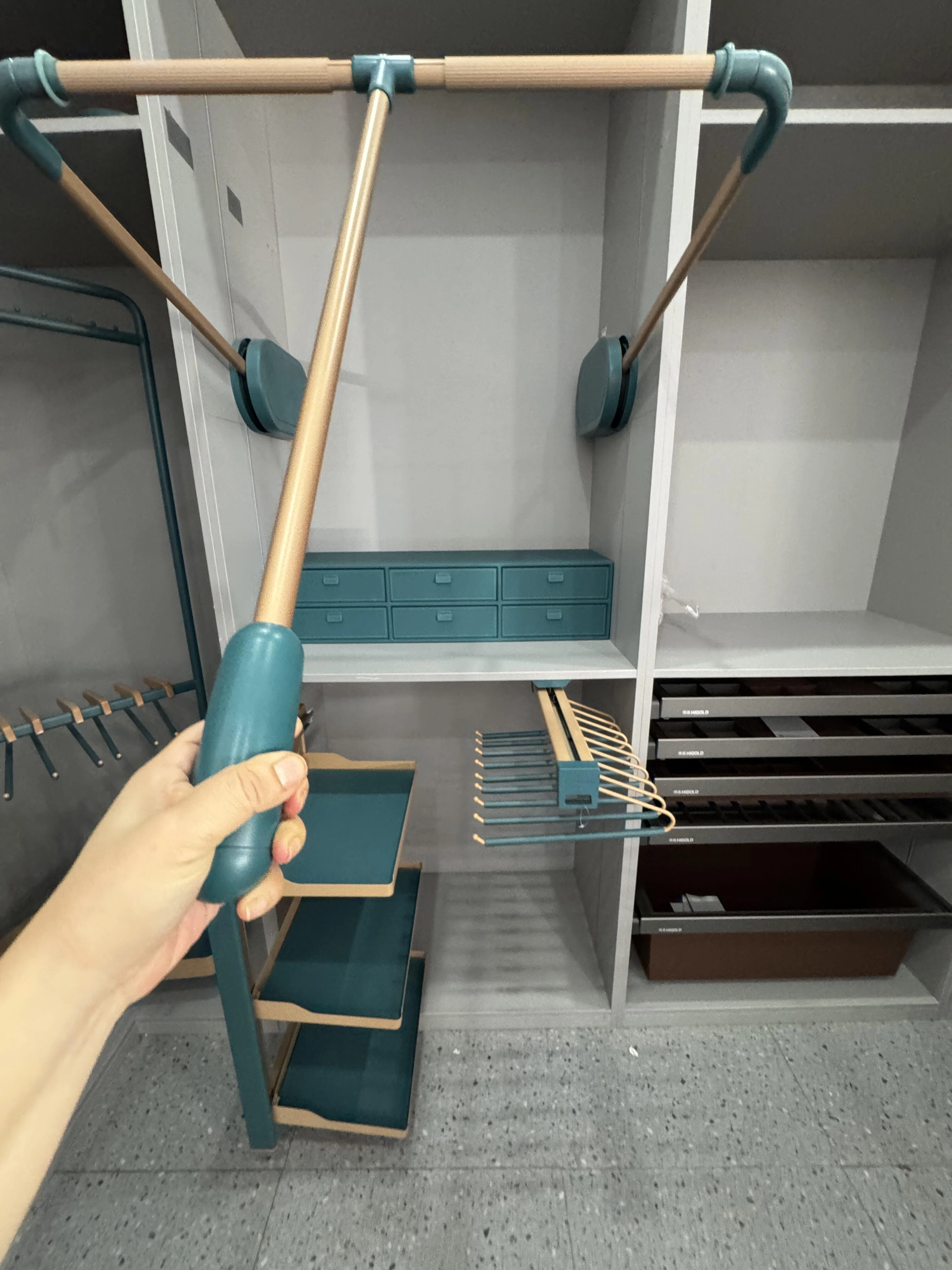
Pull-out wardrobe hardware being tested through its full movement range before shipment.
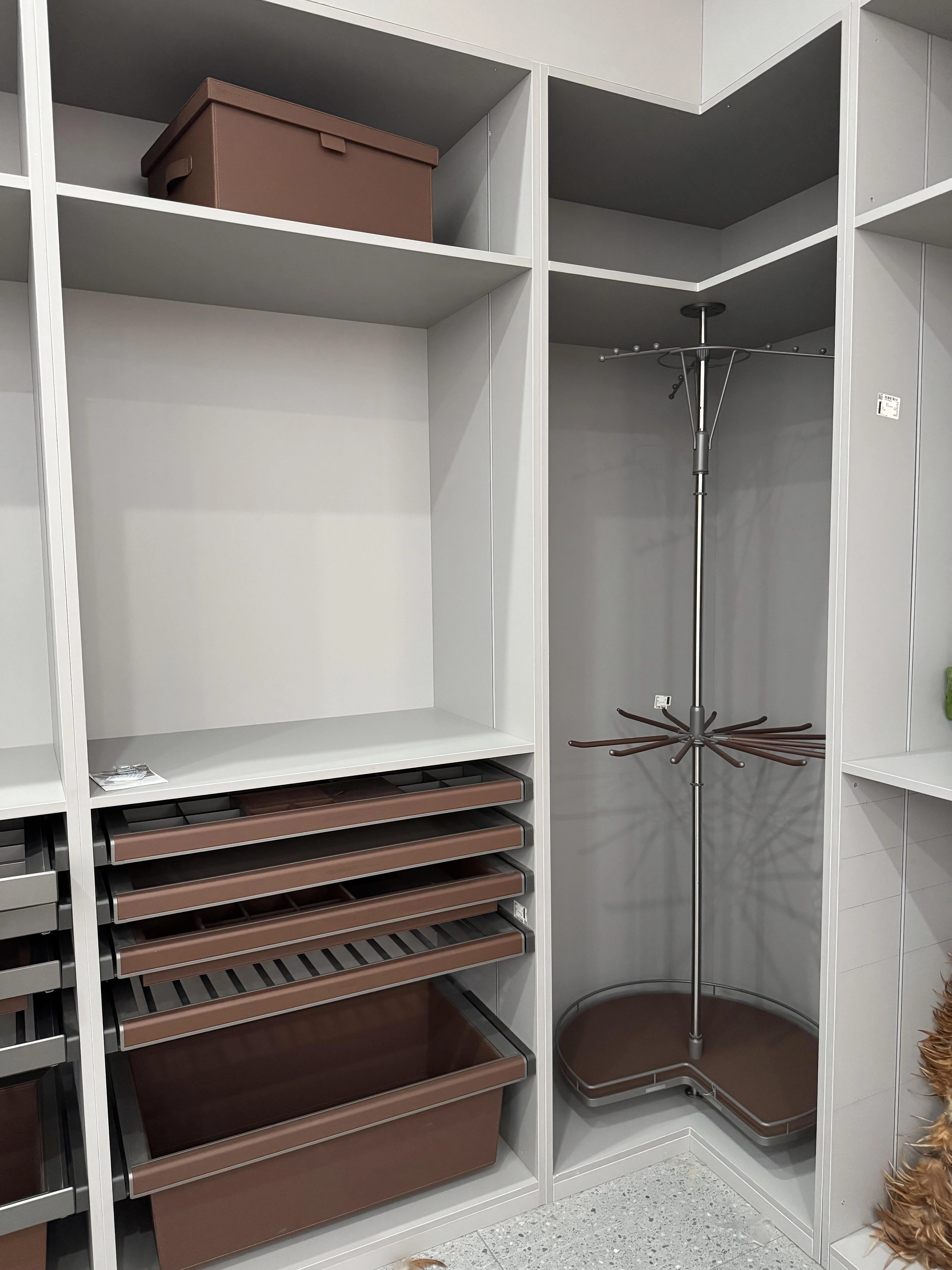
Internal storage hardware should be opened, extended and rotated through its full movement range before shipment.
Pull-outs, baskets and organizers need secure fixing and enough clearance to operate without contact.

6. Check edge banding, joints, surfaces and finish consistency

Edges are high-risk areas because they are handled during assembly and are exposed to moisture and impact in daily use. Inspect for lifting, gaps, chipped corners, excess adhesive, inconsistent edge thickness and visible color mismatch. Finished fronts should also be checked under consistent lighting for scratches, dents, pinholes, color variation and uneven sheen.
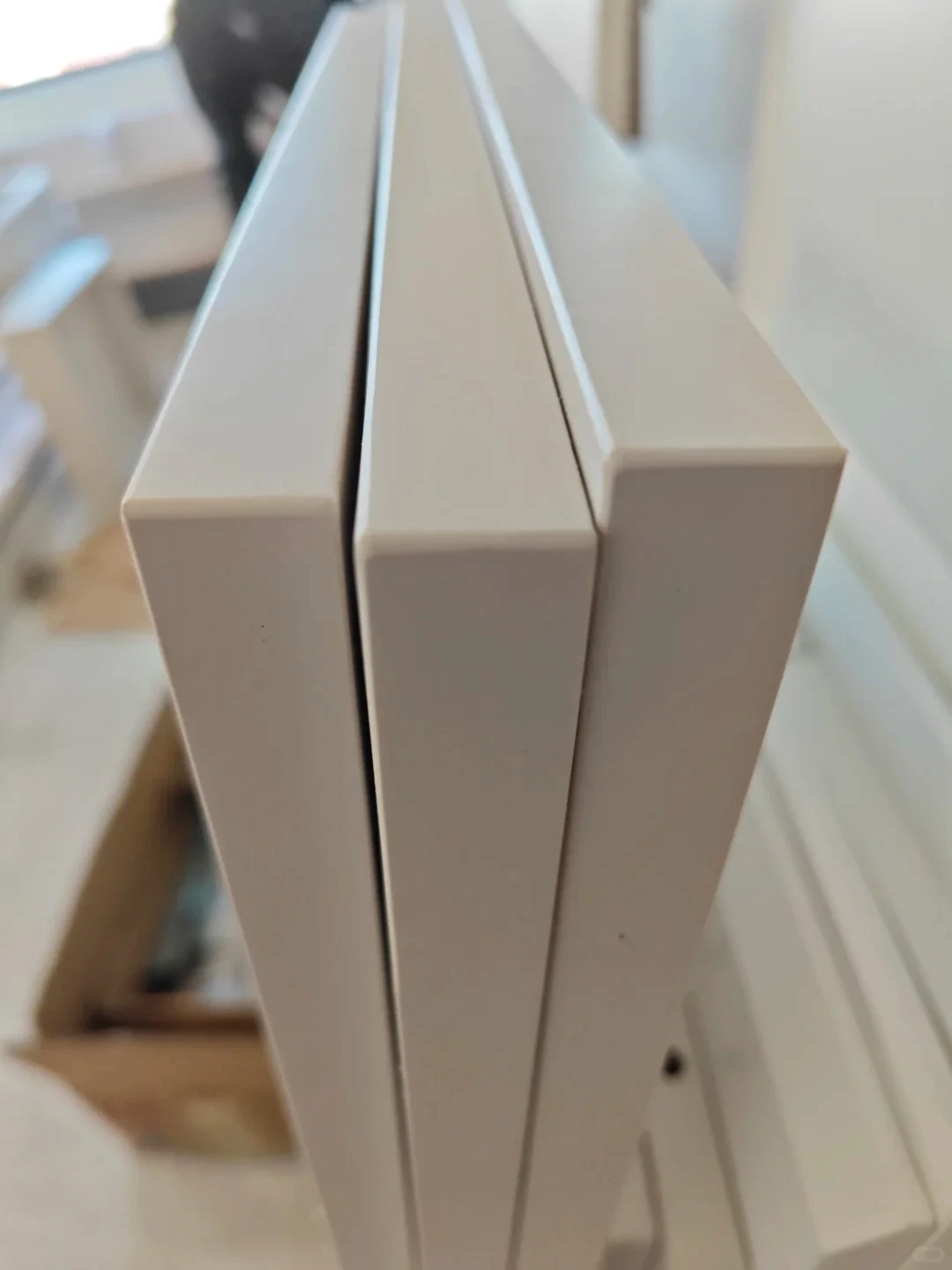

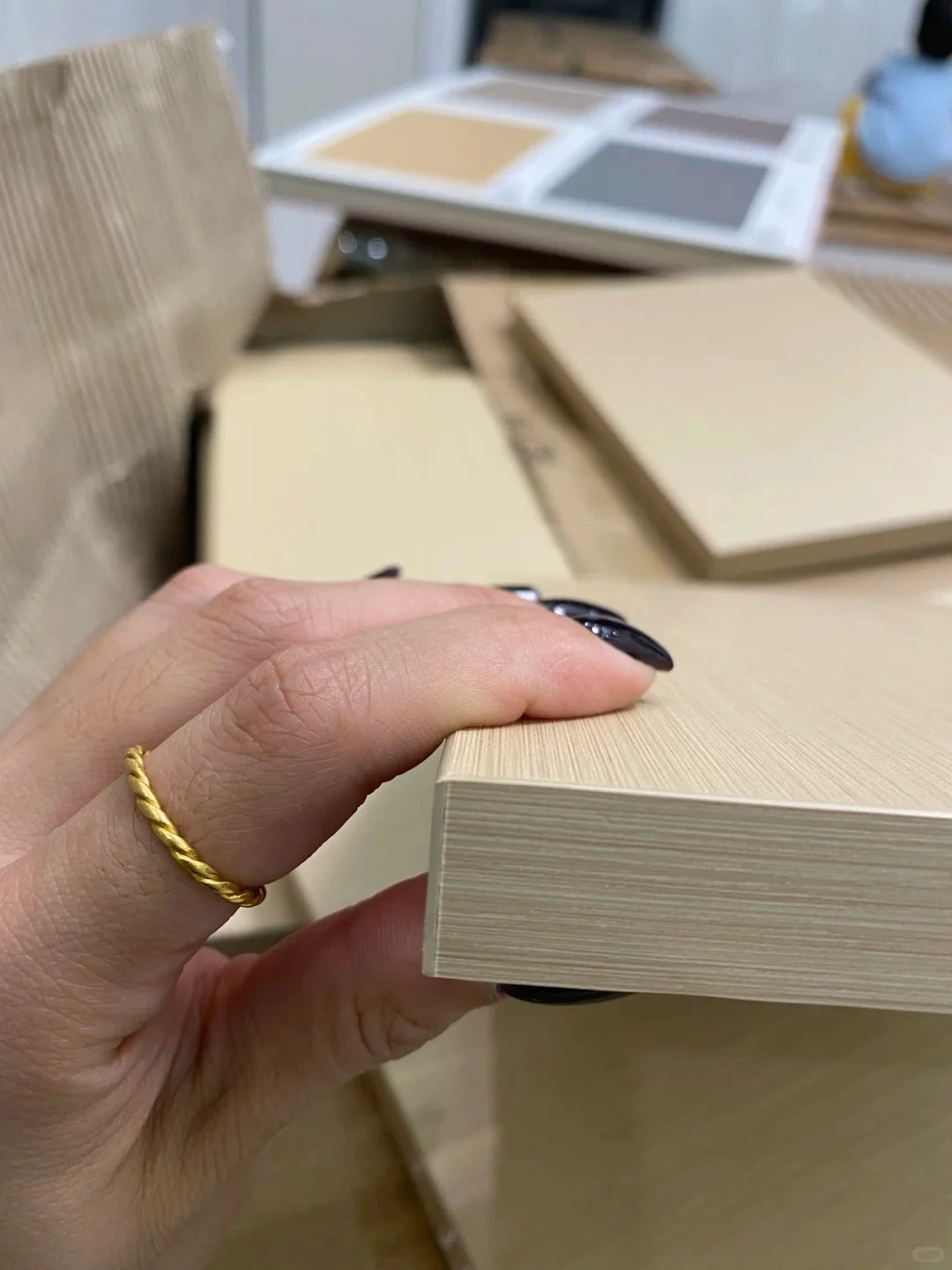
Edge banding should be bonded continuously, with no open seams, lifting or exposed substrate.
Close-up inspection reveals glue lines, chipped edges and inconsistent trimming that a wide view may miss.
Corners and edge transitions should be smooth, clean and consistent across matching components.

7. Test lighting and integrated accessories

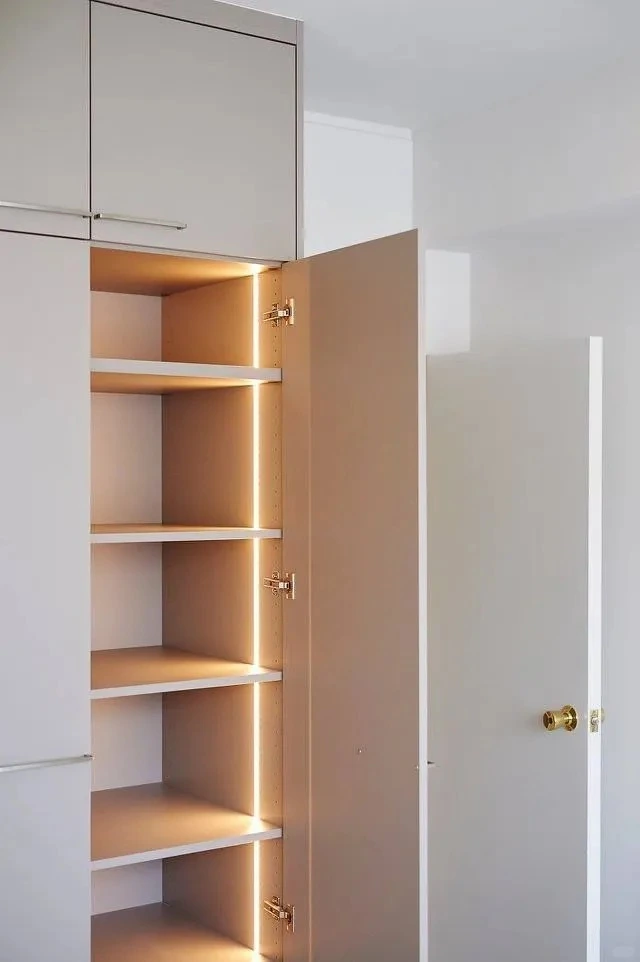
If cabinetry includes LED strips, sensors or integrated power accessories, test them before packing. Confirm that the channel, diffuser and wiring route match the approved design, and that doors or shelves do not interfere with the lighting system.
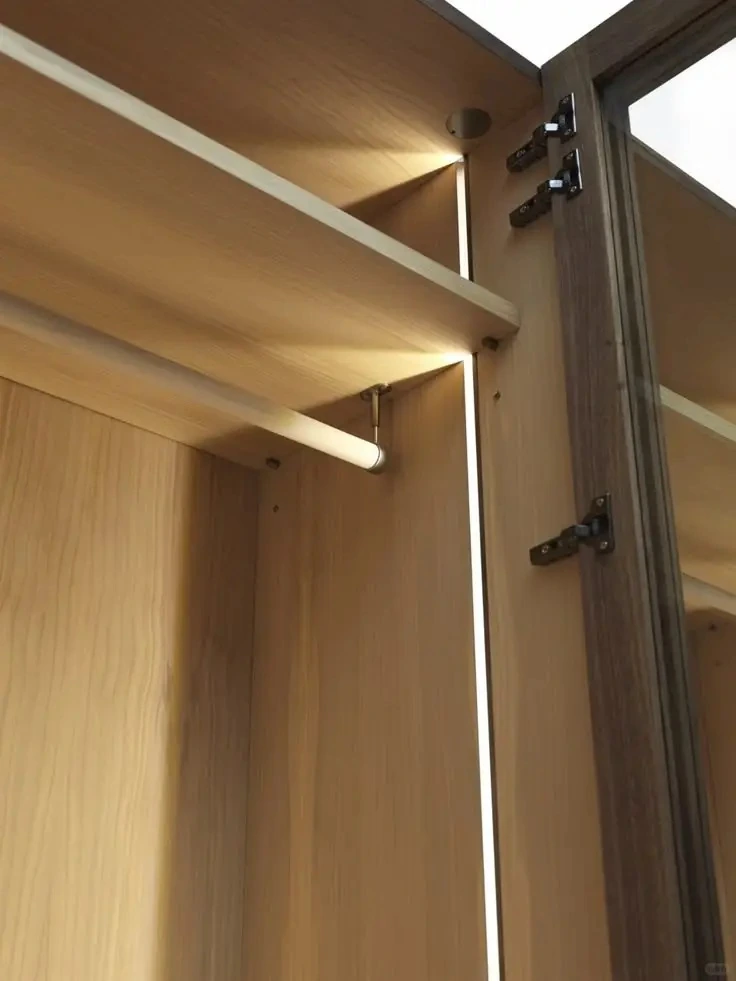
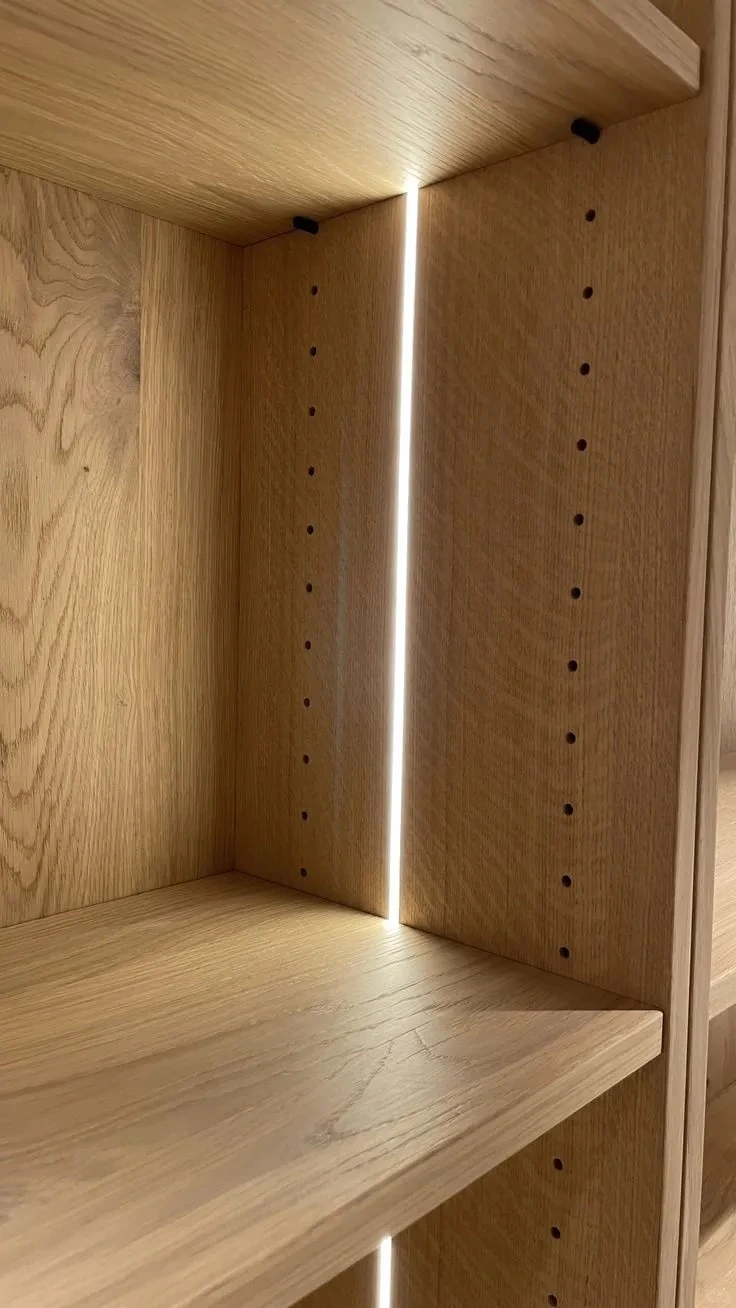
Integrated cabinet lighting should be powered on before packing to verify output and installation position.
Check that LED channels, diffusers and wiring sit neatly and do not interfere with shelves or doors.
Lighting should be checked as part of the finished cabinet, not as a separate accessory after packing.

8. Review the complete cabinet as the client will see it

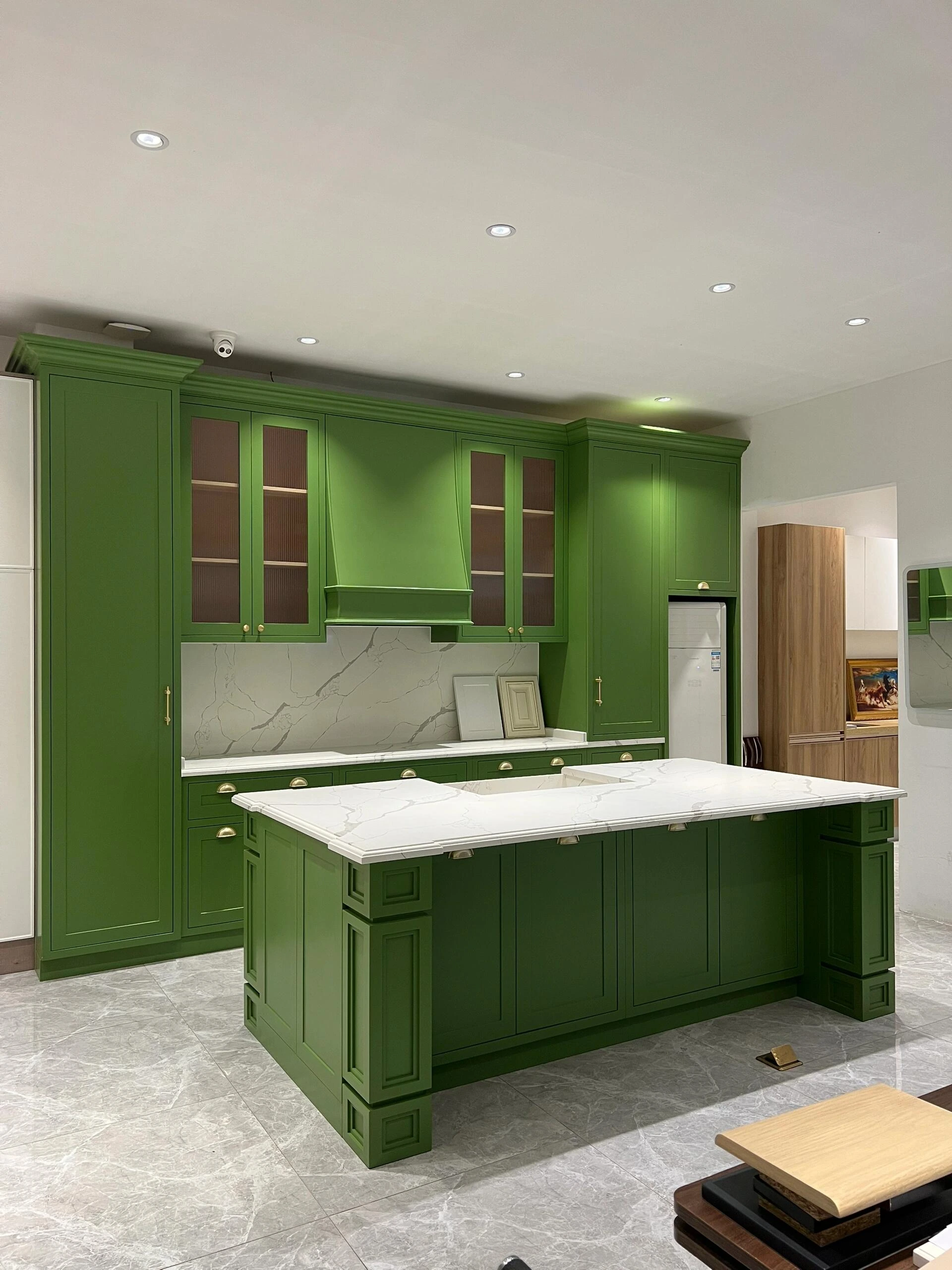
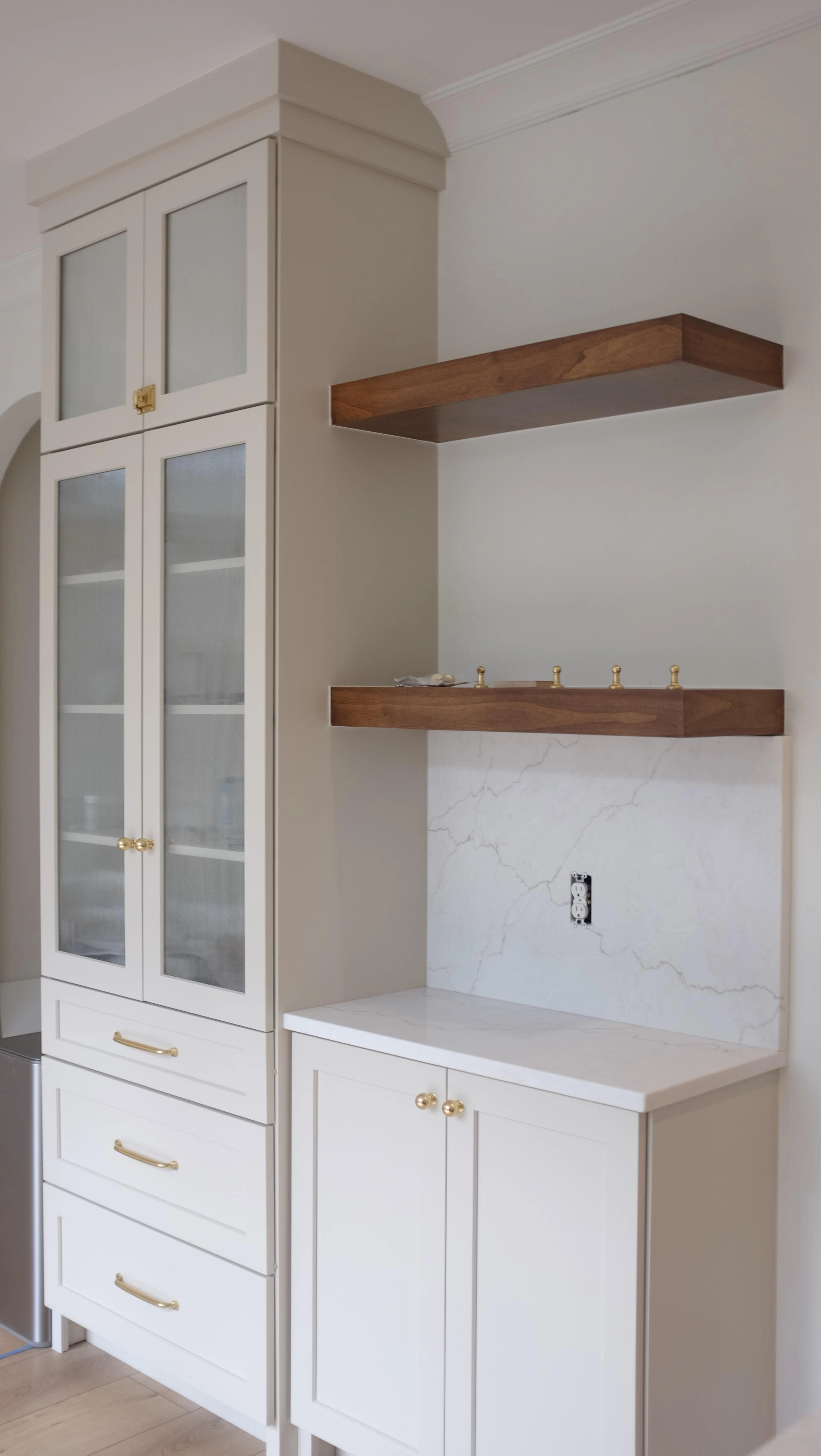
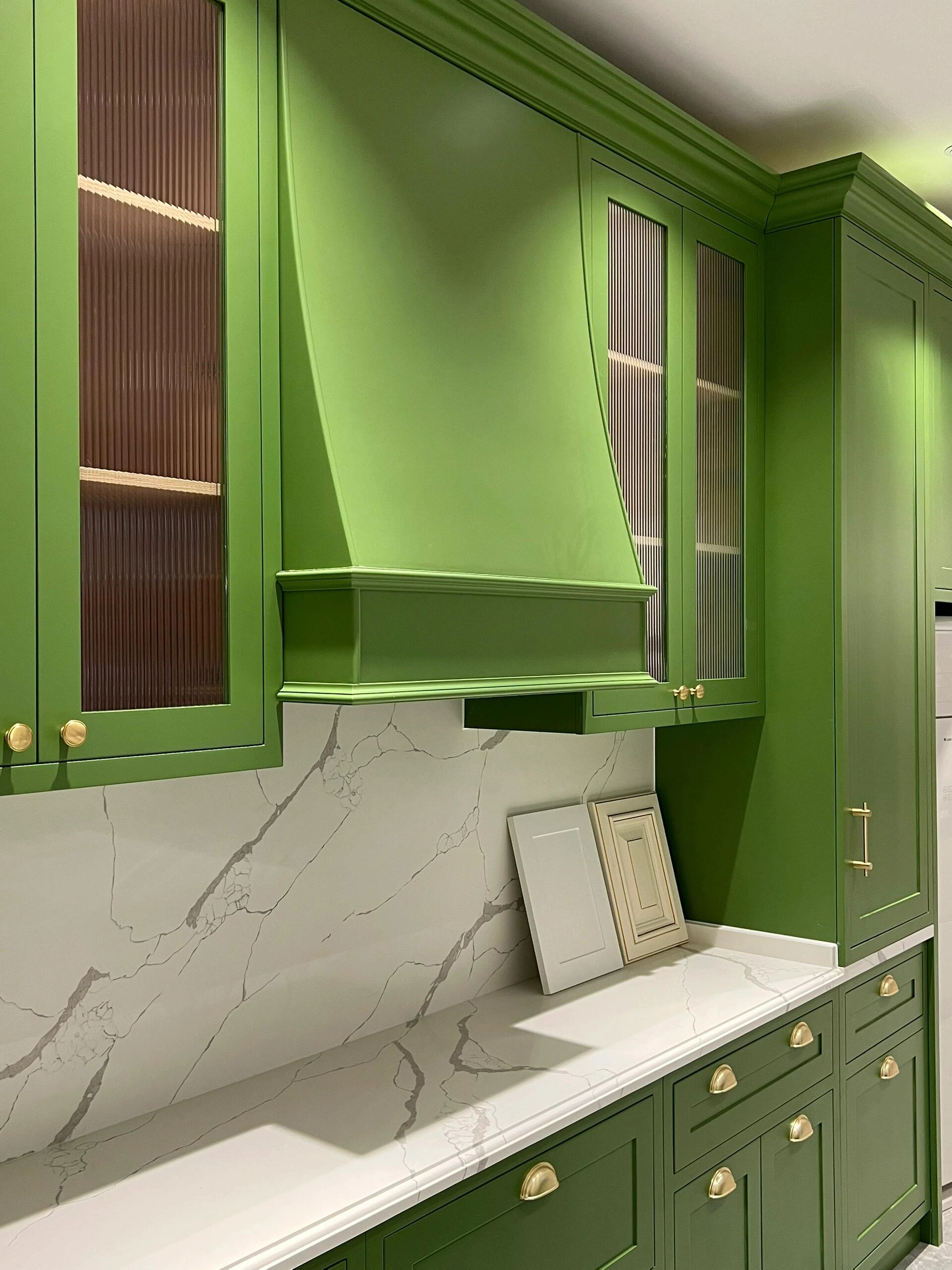
After structural and functional checks, step back and evaluate the visible result. Look at door and drawer reveals, grain or color continuity, handle alignment, symmetry, filler relationships and the overall composition. This is where individual tolerances become a finished visual system.
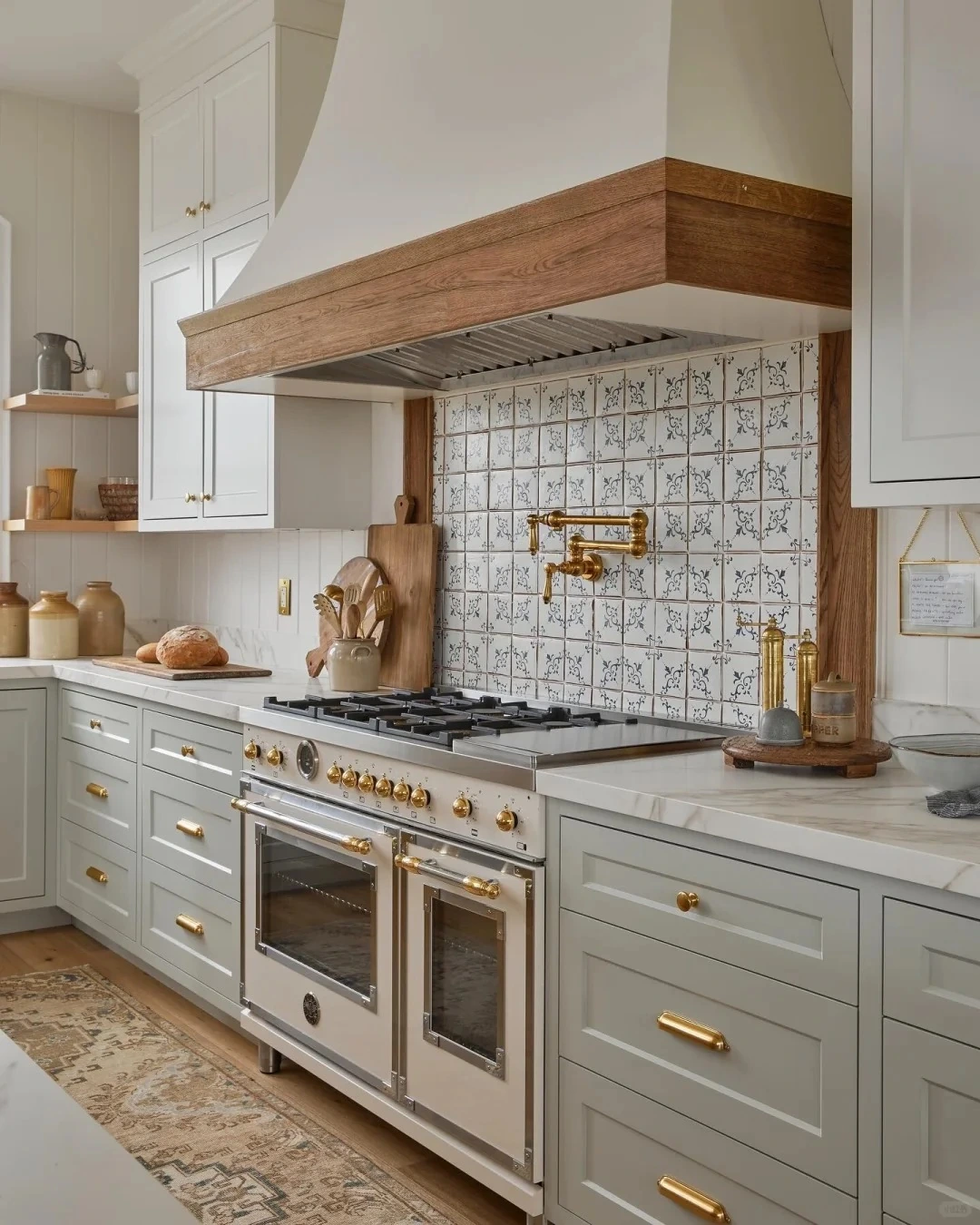

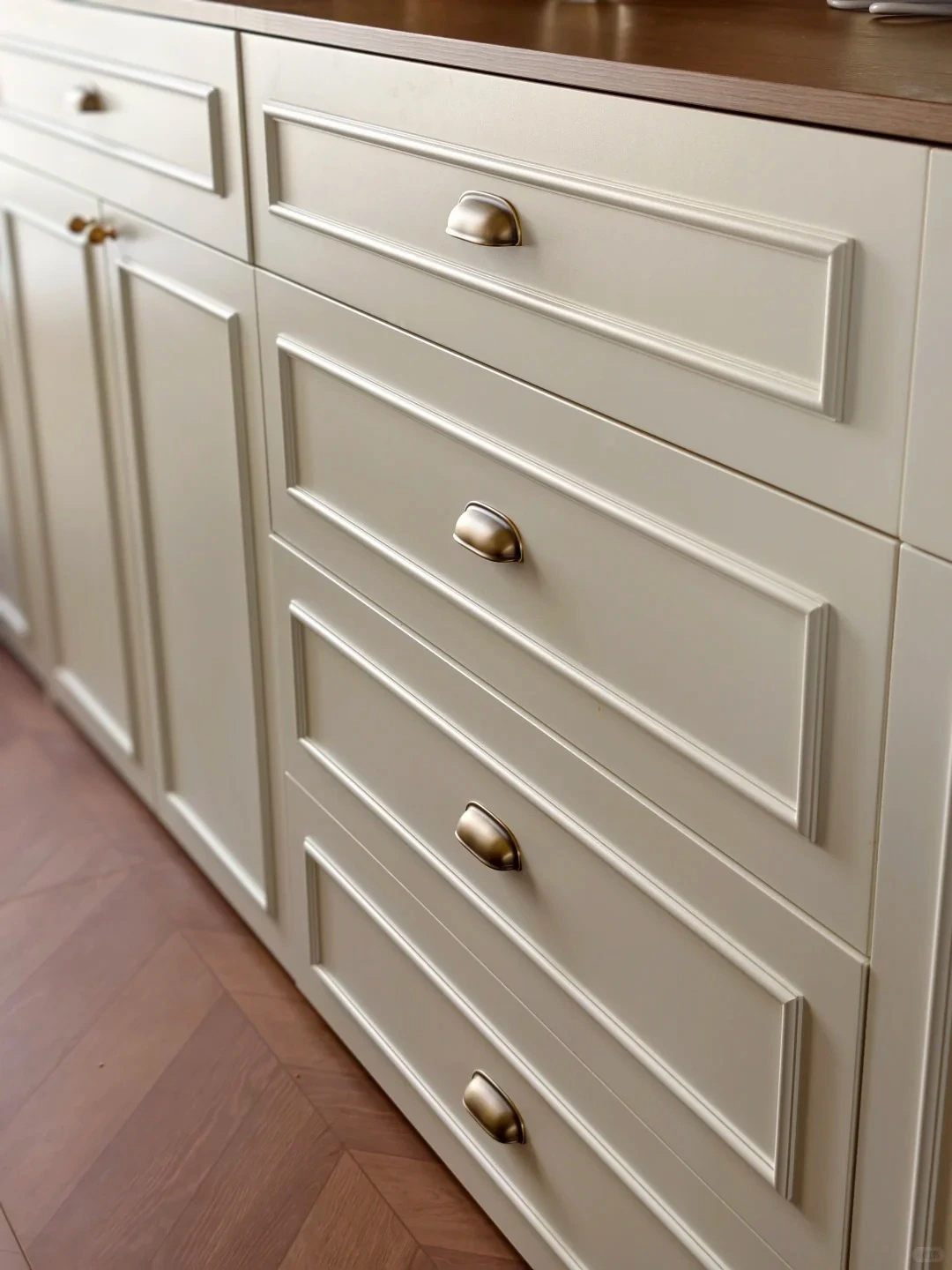
Review the complete installed look for color, proportion, door alignment and visible finish consistency.
Matching cabinet runs should be judged together because small color or reveal differences become more obvious side by side.
A finished kitchen view helps connect factory QC decisions to the appearance the client ultimately sees.
Final appearance review should consider the cabinet in context with countertops, lighting and surrounding finishes.

9. Inspect export packing before the container is closed

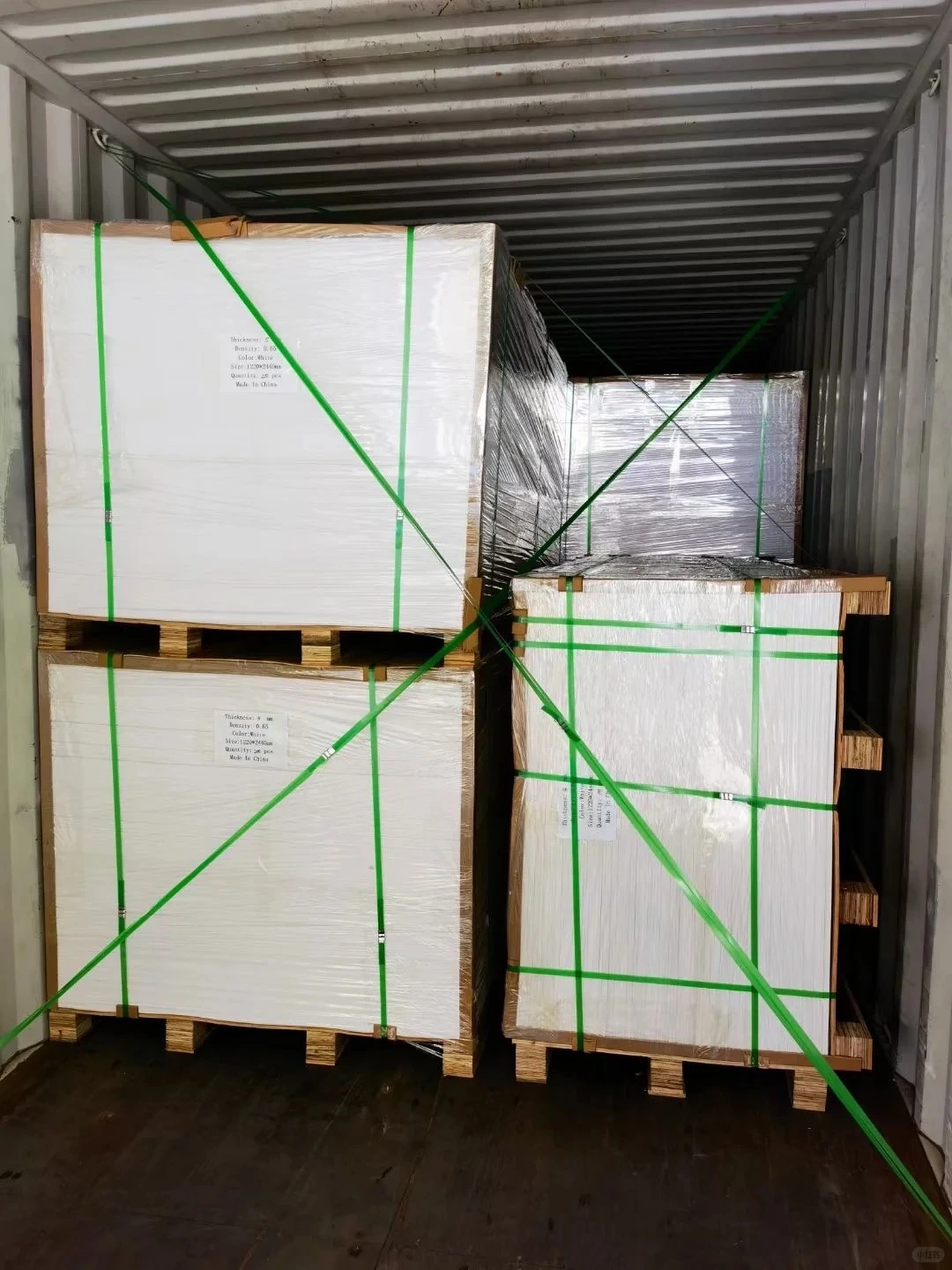
Passing product QC is only half the job. Cabinets must survive handling, consolidation and international transport. Verify corner protection, wrapping, cartons or crates, strapping, pallet support and labels. Parts should be grouped logically so installers can identify each module without opening every package.

For more context on the downstream process, see Ratahome’s Shipping & Delivery information and the broader How It Works workflow.


Export packing should protect finished faces, corners and hardware while keeping each module clearly identified.
Packages should be stable, strapped appropriately and organized to reduce movement during handling.
Before loading, confirm package labels and the packing list against the shipment plan.
Loading is the final factory checkpoint: packages should be secured to reduce shifting and impact in transit.

10. Document defects, corrections and final approval

A useful QC report identifies the cabinet or package, records what was checked, shows any defect with clear photos, and records the corrective action. After repair, the corrected item should be photographed again or re-inspected. This closes the loop between finding a problem and preventing it from being shipped.

QC stageWhat to recordTypical evidence
SpecificationCabinet ID, finish, dimensions, hardwareDrawing + measurement photo
FunctionDoor, drawer, accessory and lighting operationPhotos or short video
AppearanceFinish, edges, gaps, scratches, color consistencyClose-ups + full-module view
CorrectionDefect, repair action and dispositionBefore/after evidence
PackingPackage ID, protection and loading conditionPacking and container photos
Delivery photos provide downstream evidence that packaging and handling protected the cabinet shipment.
Installation results can be compared with factory QC records when a project team documents each stage consistently.

11. Pre-shipment cabinet inspection checklist for buyers

When sourcing custom cabinetry, ask the factory or project team to confirm these items before release:

CheckpointWhat to verify
DrawingsLatest approved revision and cabinet IDs
DimensionsOverall sizes, openings, fillers and critical interfaces
PanelsMaterial, thickness, drilling and edge treatment
Trial assemblyReveals, module alignment, door and drawer clearances
HardwareCorrect model, secure fixing, smooth operation
FinishColor, sheen, grain, scratches and visible defects
AccessoriesLighting, pull-outs and special mechanisms tested
PackingProtection, labels, package list and loading evidence

Related reading: Manufacturing & Quality, Quality Control, Materials & Finishes, and the Furniture Joinery Guide.

12. Quick FAQ

Is a final visual inspection enough?

No. Appearance is only one layer. Custom cabinetry also needs dimensional, functional, hardware and packing checks.

Should every cabinet be fully assembled?

The appropriate sampling and trial-assembly plan depends on project size and construction method. Critical modules and interfaces should receive enough assembly verification to expose fit problems before packing.

What evidence should a buyer request?

Ask for drawing references, measurement photos, trial-assembly photos, hardware/function evidence, finish close-ups, corrected-defect photos and packing/loading records.

Turn your cabinet drawings into a documented production plan.

Share your floor plan, cabinet drawings, finish references and project requirements. Ratahome can coordinate custom cabinetry, factory production, pre-shipment QC, packing and delivery as one project.

Start Your Project →


F
Written by Forest Founder, Ratahome

Forest leads Ratahome from Foshan, coordinating custom cabinetry, made-to-order furniture and whole-home projects for homeowners, designers and hospitality clients worldwide. Every guide on this site comes from that day-to-day work with factories, samples, QC and shipping.

Connect on LinkedIn →
Keep reading

Related articles

More in this topic →