
Terraces, gardens and hospitality
Outdoor furniture sourcing in China
Can wind-driven rain reach your covered terrace, and where will staff dry the cushions? Choose outdoor furniture around those conditions—not just a material name or a photograph taken in a garden.
What makes furniture suitable for your outdoor space?
Describe the sun, rain, humidity, salt and cleaning the furniture will face. Then ask how the frame, finish, fasteners and cushions suit those conditions together. Check an assembled sample, product-specific evidence and care instructions before ordering. A weatherproof label or outdoor photograph cannot tell you all of that.
Tell the supplier what the furniture will face
For example, suppose a covered restaurant terrace has nowhere to store wet cushions during service. That matters when choosing the cushion construction and care routine, even though the roof looks protective in a photograph.
Tell the supplier whether furniture stays out all year, how rain reaches it and whether it is near the sea or pool. A city name alone leaves too much to guess.
| Condition | Record in the brief | Question for the supplier |
|---|---|---|
| Sun and heat | Shade, hours of direct exposure and contact surfaces | What evidence and care guidance support this use? |
| Rain and humidity | Roof cover, wind-driven rain and wet-season storage | How do water and damp air leave the frame and cushions? |
| Coastal or pool setting | Salt exposure, splash and cleaning routine | Which grades, coatings and fasteners are specified? |
| Wind and movement | Exposed position and how furniture is moved or stored | What use limitations and securing instructions apply? |
| Maintenance | Available staff, products and storage space | Can the operator realistically follow the care instructions? |
A sheltered terrace is not automatically an indoor room. Ask what an “outdoor” or “marine-grade” claim means for the exact materials offered, and what cleaning or storage the supplier requires.
Look beyond “metal,” “wood” or “outdoor fabric”
A material name leaves important details unanswered. The grade, joints, coating and care all affect the choice. Use these questions to compare offers; the table is not a ranking from best to worst.
| Material system | Specify or verify | Trade-off to discuss |
|---|---|---|
| Coated metal frame | Base metal, preparation, coating system, welds and fasteners | Handling weight, finish repair and exposed joints |
| Stainless-steel components | Exact grade, fabrication finish and mixed-metal connections | Cleaning requirements in the actual salt or chemical exposure |
| Solid wood | Species, construction, finish and care schedule | Accepted appearance changes and the maintenance commitment |
| Synthetic weave or rope | Material identity, construction and product-specific outdoor evidence | Cleaning access and availability of repair or replacement sections |
| Stone or ceramic top | Exact product, edge, support and fixing design | Handling, weight, impact vulnerability and packing |
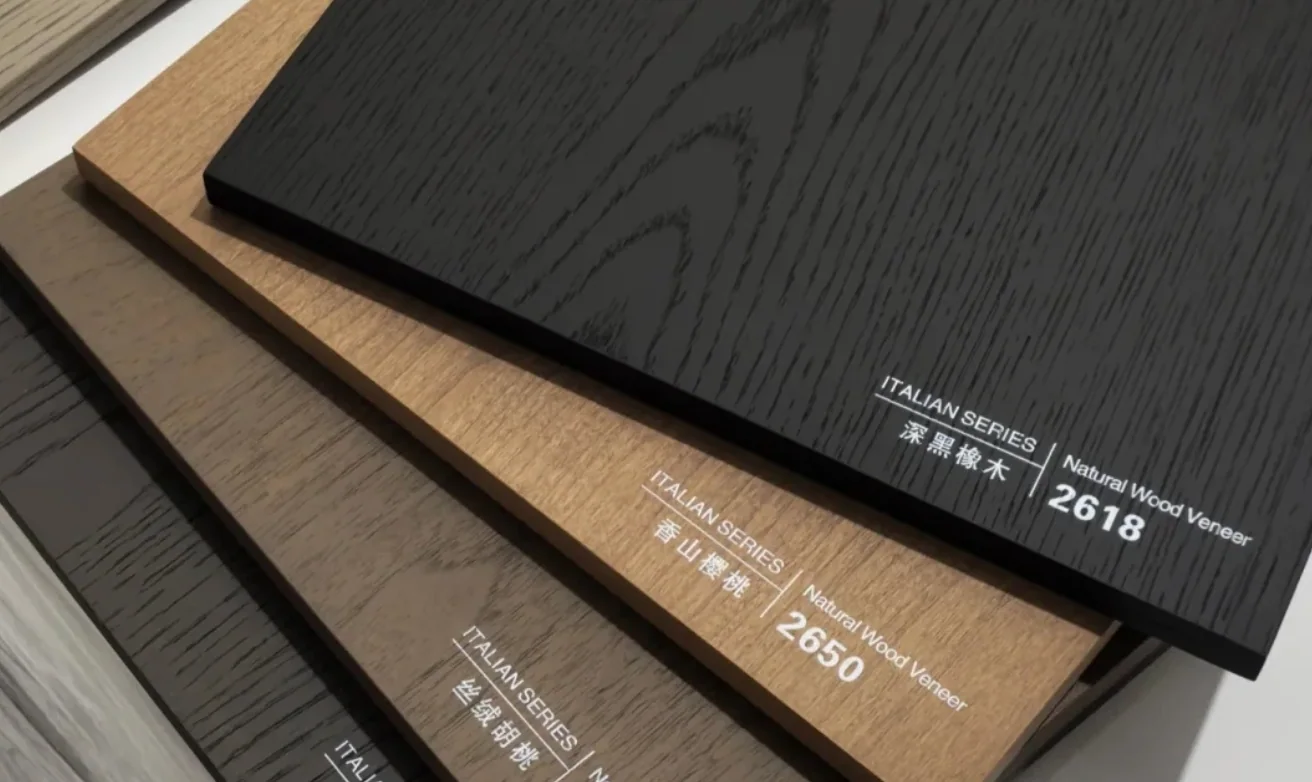
The USDA Forest Products Laboratory Wood Handbook explains moisture-related wood movement and exterior finishes. It helps explain why wood species, construction and finish need to be considered together. It does not certify a supplier’s furniture, and a decorative wood swatch cannot prove outdoor suitability.
Ask what happens to the whole cushion after rain
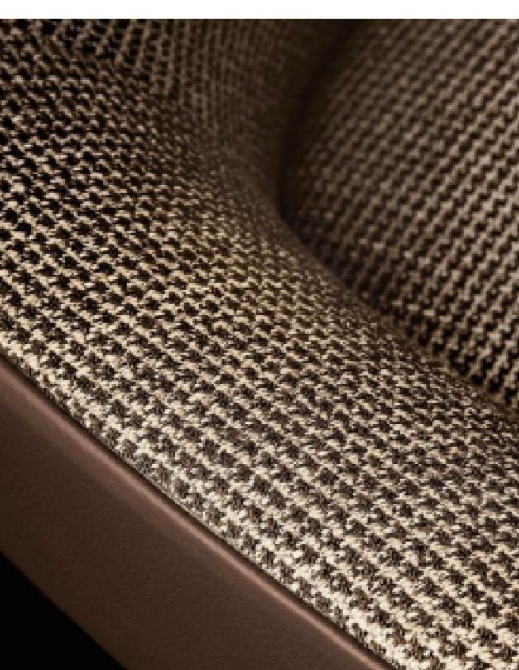
Ask the supplier: “After rain, what should our staff do with this cushion?” The answer should cover the whole cushion—cover, seams, zip, filling, inner layers and underside—not just the fabric brochure.
Work through these questions with the sample in front of you:
- Where can water enter and leave?
- Do the covers come off, and how may they be cleaned?
- How should the cushion be dried and stored?
- Can you reorder the cover and filling by a product code?
Ask for evidence behind colourfastness and weathering claims, including the test method and exact material tested. A report may not cover your chosen colour or construction. Laboratory exposure time must not be turned directly into promised outdoor service years without a justified basis.
For hospitality seating, involve housekeeping. The care instructions need to work with the staff time and storage you actually have.
What happens to the cushion after rain?
A water-resistant fabric label is only part of the answer. Ask about the seams, filling and underside too.
Where could water enter?
Identify the cover, seams and zip; ask what each performance claim actually covers.
What happens inside?
Ask how inner layers and filling manage moisture in the specified construction.
Where can it leave?
Review the underside, support and possible collection points; request the supplier’s explanation of drainage and drying.
What must the operator do?
Confirm post-rain care, removal, drying and storage instructions against the actual staffing and facilities.
Keep in mindAn outdoor fabric reference alone cannot answer how the complete cushion behaves after rain.
The arrows show a review sequence, not a tested water-flow model. Drainage and drying performance remain product-specific claims to verify.
Look closely at joints, feet and places water could collect
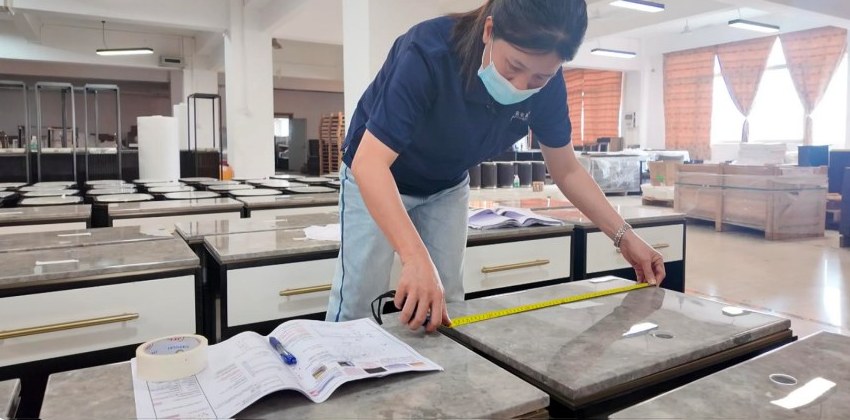
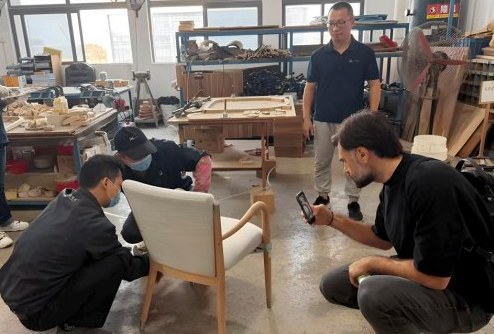
Request the sample you intend to buy, with the quoted fasteners, feet, coating and cushion. Look beneath it and around joints, drainage paths, sharp edges and folding or adjustment mechanisms. Check where it touches the ground.
Have the supplier explain use limits, handling, storage and safe maintenance. Do not improvise load or wind tests in the showroom. A competent specialist should define testing for the product and intended setting.
Write down what you have checked and what remains unknown. You can see an unfinished edge; you cannot see proof of long-term corrosion resistance. If materials or coatings change later, ask which tests and approvals need to be reconsidered.
Also check who makes the furniture using the China furniture manufacturer verification guide.
Read the care instructions before you buy
Who will clean the furniture, with which products and how often? Ask whether the warranty depends on cleaning, seasonal storage or other maintenance. Check that the operator can do—and record—the required work.
Talk about appearance too. If you want the original showroom colour to remain unchanged, say so. Someone happy with a natural material’s changing colour has a different brief; neither expectation should remain unstated.
For a terrace, connect care to the restaurant’s daily routine. For a resort, include cushions, replacement covers and storage in the hotel furniture and equipment list.
Check the packed size before comparing shipping costs
A small-looking chair may take considerable container space if it cannot stack or come apart. Get packed dimensions and weights before comparing freight. The lowest unit price need not be the lowest delivered cost.
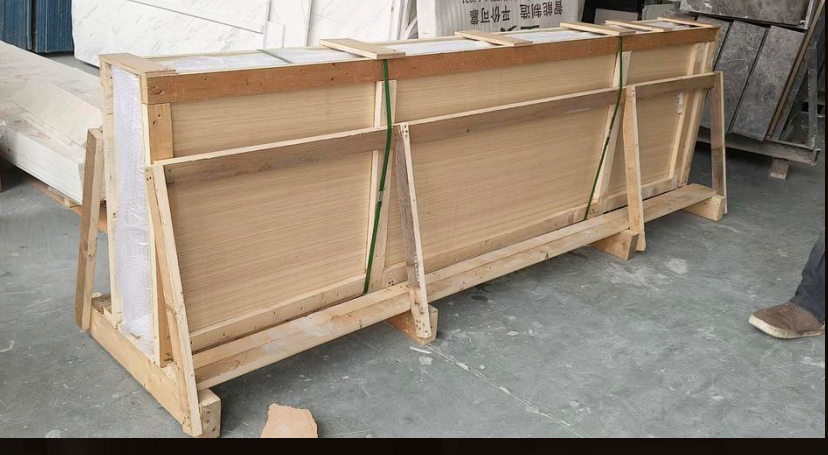
Outdoor furniture still needs shipping protection for surfaces, projecting legs and fragile tops. Ask whether stacked chairs need protective pads at contact points. Label cushions and hardware so they can be matched to the right model.
For heavy tops, ask the supplier and freight provider how they will be supported, handled and unpacked. The China buying guide explains packing, combining suppliers’ goods and transport in more detail.
Give suppliers enough detail to price the same furniture
Send the destination, exposure description, quantities, dimensions and style references. Add preferred materials, cleaning and storage plans, and any required tests. Mark undecided details so suppliers can explain alternatives rather than guess.
Ask each quotation to identify materials and any departures from your request. Include minimum quantities by model and finish, sample cost, packing and spare parts. Confirm lead time once the furniture details and approval steps are understood.
Ratahome helps with sourcing and coordination; it does not manufacture or certify outdoor furniture. The contract furniture guide helps you decide who approves technical details, places orders and handles local delivery.
Buyer questions
Practical questions, answered
What is the best outdoor furniture material for a coastal site?
The material name alone cannot tell you. Describe salt, sun, moisture, cleaning and storage, then compare the exact grades, coatings and connections offered. Ask for product evidence and care instructions for those conditions.
Does waterproof fabric make a cushion waterproof?
Not necessarily. Water may behave differently around seams, zips, filling and the underside. Ask how the whole cushion manages water, how to dry and store it, and what the supplier’s warranty covers.
Can I leave all outdoor furniture outside throughout the year?
Check the instructions, evidence and warranty for your conditions. Frames, tops and cushions may have separate covering or storage requirements. Do not assume the word outdoor means no seasonal care.
Can a photograph prove that furniture is outdoor rated?
No. A garden photograph cannot show material grade, weathering resistance or limits on use. Request the written details and relevant evidence for the exact furniture being quoted.
Want to check the details?
Official sources and notes
The examples are for planning, not quotations or past client projects. Photos illustrate the subject; they do not prove factory ownership or product certification. Check current requirements and dates with the relevant authority or organiser.
- USDA Forest Products Laboratory: Wood Handbook — Reference on wood moisture, physical properties and exterior finishing; not a furniture product certification.
- USDA: Chapter 16, Finishing Wood — Background on wood, water, sunlight, weathering and finishes.
Have a project in mind?
Tell us what you need, where it will be delivered and when you need it. A furniture list or a few reference photos is a useful place to start.
Ratahome helps coordinate suppliers, samples and delivery in Foshan. We work with manufacturers; we do not manufacture the furniture ourselves.
Talk about your project