

Furniture for commercial spaces
Contract furniture sourcing in China
If a reception desk and stone top come from different suppliers, who checks the fit—and who installs them? Sort out these connections before ordering furniture for your hotel, restaurant, office or outdoor space.
What makes a commercial furniture order different?
Contract furniture means furniture chosen for a business or institutional setting, such as a hotel, restaurant or office. Start with how each space will be used. Then decide who makes each item, who approves it, and who receives and installs it. A complete quotation should cover those practical details—not leave them for the day the furniture arrives.
Start with a working day in the space
Think about who sits in the chair, how often staff move it and what they use to clean it. A quiet reception area and a busy restaurant can need quite different furniture, even if the chairs look alike.
“Commercial grade” does not answer those questions. Describe the intended use before choosing finishes, then use the relevant guide below for the details.
| Project type | The procurement question to resolve first | Detailed guide |
|---|---|---|
| Hotel | Which items repeat by room type, and which are one-off public-area pieces? | Hotel BOQ and FF&E |
| Restaurant | Can furniture withstand the operating and cleaning routine? | Restaurant furniture |
| Office | Does the workstation fit its users, equipment and installation interfaces? | Office furniture |
| Outdoor | What exposure, drainage, storage and maintenance will it receive? | Outdoor furniture |
Keep one overall furniture list so quantities and delivery dates stay together. Within it, keep the needs of each space separate. Matching colours do not make every chair suitable for every room.
Find the gaps between suppliers before ordering
You may use different suppliers for seating, fitted cabinets, outdoor pieces and powered desks. Divide the order by what each supplier can make and install—not simply by floor.
Ask each supplier: “What is included in this price, and what must someone else supply or fit?” Separate confirmed prices from allowances for undecided work. Furniture supply does not automatically include electrical work, plumbing, structural work or installation.
Pay particular attention where two pieces meet: a top and a separately supplied base, a screen and desk, or a cabinet and site wall. Write down the shared dimensions, allowed variation, who checks the fit and when it must be decided. For a desk with lighting or stone, also agree who supplies each part and handles damage.
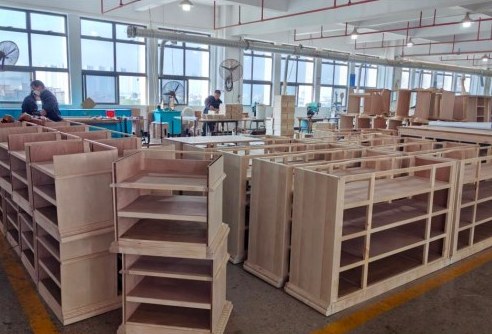
Which part of the project are you furnishing?
A lobby chair, a dining chair and a desk chair may look similar. They still need to do different jobs.
One furniture list
Keep everything on the same list, then note where each piece will go and how it will be used.
Hotel rooms and public areas
Count pieces by room type, try a sample room and plan which areas need their furniture first.
Restaurant service
Review chair-and-table fit, daily handling, cleaning and replaceable wear parts.
Offices
Try the chair, desk and equipment together, including adjustment, legroom and cable access.
Outdoor exposure
Match the complete material system to sun, rain, salt, storage and the actual maintenance routine.
Keep in mindTell suppliers where a piece will be used, not only what you want it to look like.
Each link opens a guide for that type of space. Matching appearances do not mean matching performance.
Write down who decides and who checks
Use this example to start the conversation. Your signed agreement must confirm the actual responsibilities.
| What needs deciding? | Who usually handles it? | What should you keep? |
|---|---|---|
| Design and fit in the building | Appointed designer and site team | Approved drawings and measured dimensions |
| How the product is made and checked | Contracted manufacturer, with buyer review | Construction details, samples and required reports |
| Comparing and coordinating suppliers | Buyer or appointed sourcing coordinator | Comparable quotes and unanswered questions |
| Budget and changes | Authorised client representative | Agreed changes to price, work and dates |
| Import and local approvals | Importer and appointed local specialists | Required documents and written advice |
| Delivery and installation | Appointed receiving and installation team | Delivery checks, assembly approval and faults to fix |
One person may take several roles. The important point is that none is left to “someone else.” Ratahome coordinates sourcing under the agreed service terms; it is not the manufacturer, destination regulator or local installer.
Ask what “commercial grade” means for this product
Ask for a written explanation of claims such as “heavy duty” or “eco-friendly.” Your purchase details should identify the material, construction, intended use and checks the actual item must pass.
The BIFMA standards descriptions distinguish office chairs, public lounge seating, desks and storage. These are voluntary industry standards. Where your project requires one, name the standard and edition, then match the report to the quoted model and components. A brochure logo is not enough.
Mandatory rules depend on the product and destination. U.S. composite-wood and upholstered-furniture flammability rules, for example, cover different issues. Ask qualified advisers which apply; a report for one chair cannot establish compliance for a mixed shipment.
Also carry out factory identity and capability checks. Product test evidence and knowing who will make the order answer different questions.
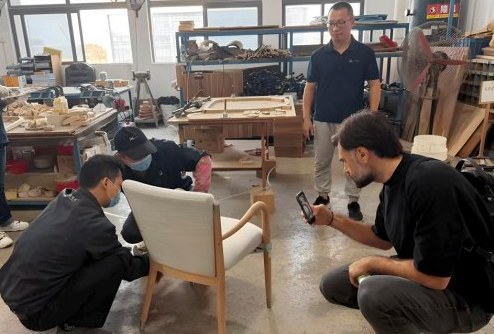
Agree what must be checked before the next step
Finding a wrong finish before production is different from finding it in a packed container. Agree a series of checks so unresolved decisions do not quietly move into the next stage.
- Before detailed pricing: agree items, quantities, exclusions and who makes decisions.
- Before samples: settle drawings, finishes, connections and required tests.
- After the sample review: record accepted details and anything the sample does not cover.
- Before production: give the supplier the agreed drawings and inspection plan.
- Before shipment: recheck corrections, reconcile packing and prepare required documents.
These checks are not an automatic payment schedule. Agree payment terms separately in the contract, including what happens after a failed check. Neither deposit percentages nor lead times are universal.
Keep one list of later changes. A new upholstery choice can affect price, testing and delivery; a wider tabletop can affect the base, stability and packing. Check those consequences before saying yes.

Leave time between delivery and opening day
Furniture still needs unpacking, assembly and checking after it arrives. Allow time to fix problems, and make sure the building is dry, secure and ready to receive it.
Work backwards through local delivery, clearance, shipping, packing, inspection and production. Then check when samples, materials and final measurements must be ready. Ask the person handling each step to confirm the assumptions; a factory completion date does not guarantee arrival.
If the building opens in stages, decide whether saving container space matters more than receiving one zone at a time. Keep the same item code on quotations, carton lists and receiving sheets. Where suppliers use different carton numbers, match them to the master list before loading.
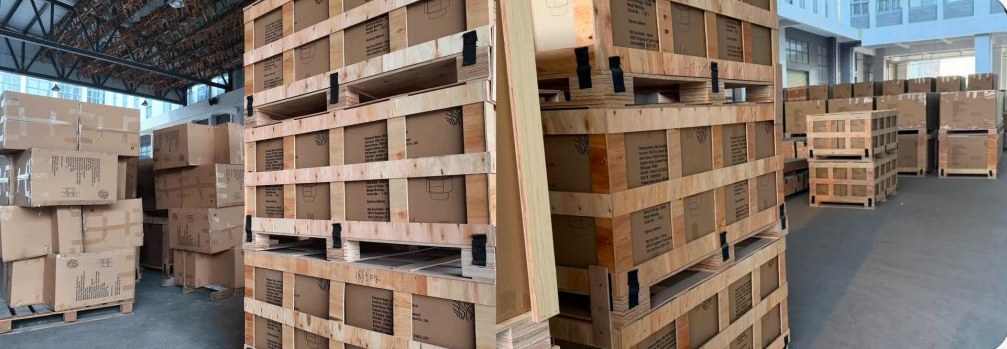
Ask for the instructions and spare-part details now
Before shipment, collect assembly instructions, cleaning guidance, finish details and spare-part codes. Read the warranty beyond its headline duration: who handles a claim, what is covered, what evidence is needed and what remedy is offered?
Choose spares by the item and how it will be used. A replaceable foot, cover or hinge may be more useful than a whole spare chair. Ask about reorder availability rather than assuming a finish will always be stocked.
For an enquiry, send the location, project type, furniture list, drawings and planned delivery phases. Mark what you have not decided yet. The China furniture overview helps you choose where to buy; the buying guide explains orders, inspection and freight.
Buyer questions
Practical questions, answered
What is the difference between contract and residential furniture?
Contract furniture is chosen for a business or institutional setting. The important differences are how it will be used, built, tested and maintained—not simply whether the catalogue calls it commercial grade.
Should a commercial project use one supplier or several?
One supplier can simplify communication, while specialists may suit different products. Either way, find out who makes each item and who checks matching finishes, fitting details and missing components.
Does a test report cover all furniture from the supplier?
No. Match the report to the quoted model, materials and components. Check the standard, edition, results and limitations. A report for a different chair does not answer those questions.
Can Ratahome coordinate a mixed commercial furniture order?
Yes, Ratahome can discuss which buying and coordination services your project needs. Agree who handles suppliers, samples, inspection, combined shipments and delivery. The manufacturers and qualified local advisers have separate responsibilities.
Want to check the details?
Official sources and notes
The examples are for planning, not quotations or past client projects. Photos illustrate the subject; they do not prove factory ownership or product certification. Check current requirements and dates with the relevant authority or organiser.
- BIFMA: Standards Descriptions — Voluntary standards are product- and use-specific; check the edition required by the project.
- CPSC: Upholstered Furniture — U.S. guidance for in-scope upholstered furniture.
- EPA: Composite Wood Products Act FAQs — U.S. composite-wood requirements are separate from furniture durability tests.
Have a project in mind?
Tell us what you need, where it will be delivered and when you need it. A furniture list or a few reference photos is a useful place to start.
Ratahome helps coordinate suppliers, samples and delivery in Foshan. We work with manufacturers; we do not manufacture the furniture ourselves.
Talk about your project