Every week, a buyer walks out of a Foshan showroom convinced they’ve been quoted three different prices for the same sofa. They usually have. What almost nobody explains is that all three prices can be “real” — they’re just measuring different things.
This guide walks through how a furniture price is actually built in China’s supply chain: what a showroom adds, what a factory quote leaves out, and why the cheapest number on the table is often the most expensive decision you can make.
What a showroom price includes
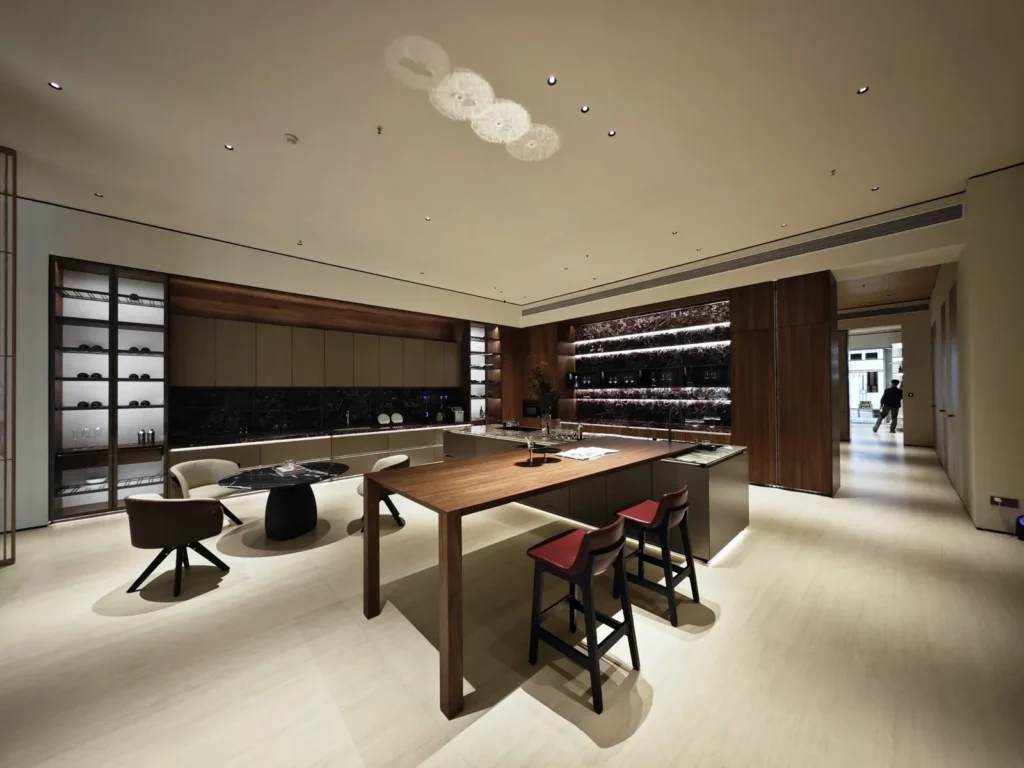
A showroom in Louvre or Sunlink isn’t just a display space — it’s a business layer. Its price includes the rent of a premium location, sales staff, display stock, and usually a distribution margin of 30–50% over the manufacturing cost. In exchange, you get something genuinely valuable: you can see and touch the finished piece before committing.
The mistake isn’t buying from showrooms. It’s assuming the showroom price is the starting point for negotiation. It isn’t — the showroom’s margin structure is largely fixed. The real variable is which layer of the supply chain you’re buying from in the first place.
All three prices can be real. They’re just measuring different things.
What a factory quote leaves out
A factory quote looks dramatically cheaper — often 40% below the showroom tag. But a bare EXW quote is not a landed price. Before comparing numbers, add what it doesn’t include:
- Export packing. Proper crating for a sofa can add 3–5% — skip it and the savings arrive broken.
- Quality inspection. Factories inspect to their standard, not yours. Independent QC is how the standard becomes yours.
- Consolidation and freight. One factory rarely fills a container; someone has to combine, book and document the shipment.
- Duties and delivery. Import duty, port fees and last-mile delivery vary by country and are never in the quote.

So which price should you trust?
Neither, on its own. The honest comparison is landed cost against landed cost: product, packing, inspection, freight, duties and delivery, all the way to your door. On that basis, a “more expensive” factory with export experience routinely beats a cheaper one that’s never shipped abroad — and sometimes the showroom piece, available immediately with no production risk, is the rational buy.
This is most of what a sourcing partner actually does: not finding the lowest number, but making the numbers comparable — and knowing which factory’s quote will still look good after it crosses an ocean.
Key takeaways
- Showroom prices carry a distribution layer — you are paying for certainty and the ability to inspect a finished piece.
- A factory quote is not a landed price. Add packing, QC, freight, duties and delivery before comparing.
- Compare landed cost to landed cost. The lowest quote is often the most expensive decision.