Furniture Styles
How to Create a Scandinavian Home: Furniture, Materials & Room-by-Room Guide
Learn how to create a Scandinavian home with light wood, functional furniture, layered textiles, soft lighting, room-by-room ideas and a…
Read article →
A complete guide to timeless furniture, warm materials and thoughtful interiors.
· Published
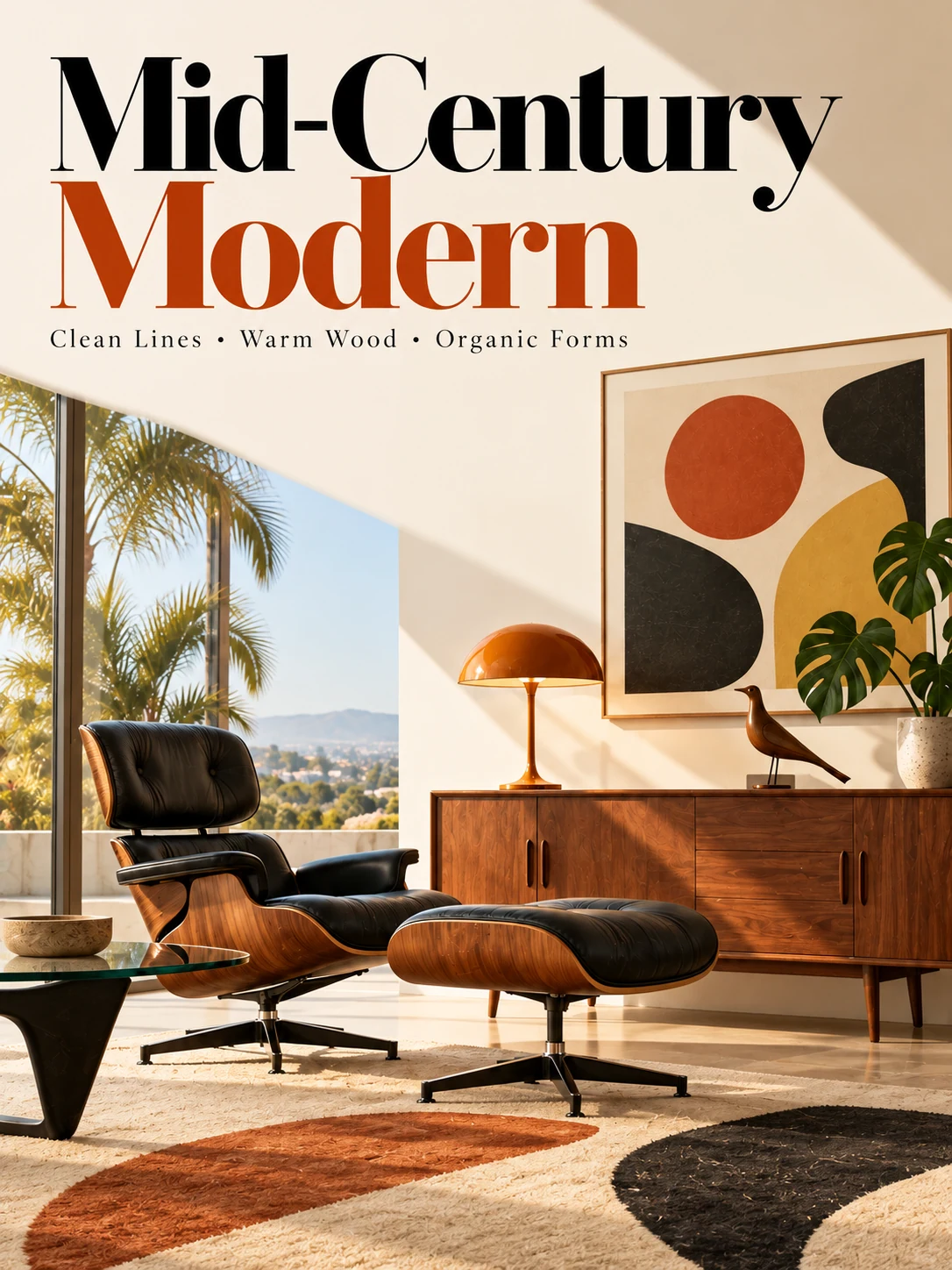
Mid-century modern is more than a retro look. It is a practical design language built around clear silhouettes, useful furniture, natural materials and lasting comfort. This guide shows how to recognize the style, select quality pieces and bring its principles into today's interiors.
Mid-century modern is a design approach associated with the middle decades of the twentieth century, especially the 1940s through the 1960s. Its furniture favors clear silhouettes, practical function, honest materials and a visual connection to the natural world. A gently angled leg, a floating cabinet or a curved plywood seat can become the main design detail—without elaborate ornament.
What makes the style enduring is its flexibility. A single walnut sideboard can bring warmth to a contemporary apartment; a coordinated room of low seating, sculptural lighting and tactile finishes can feel more vintage-inspired. The goal is not to recreate a showroom from 1960. It is to combine comfort, proportion and useful design in a way that still feels relevant today.
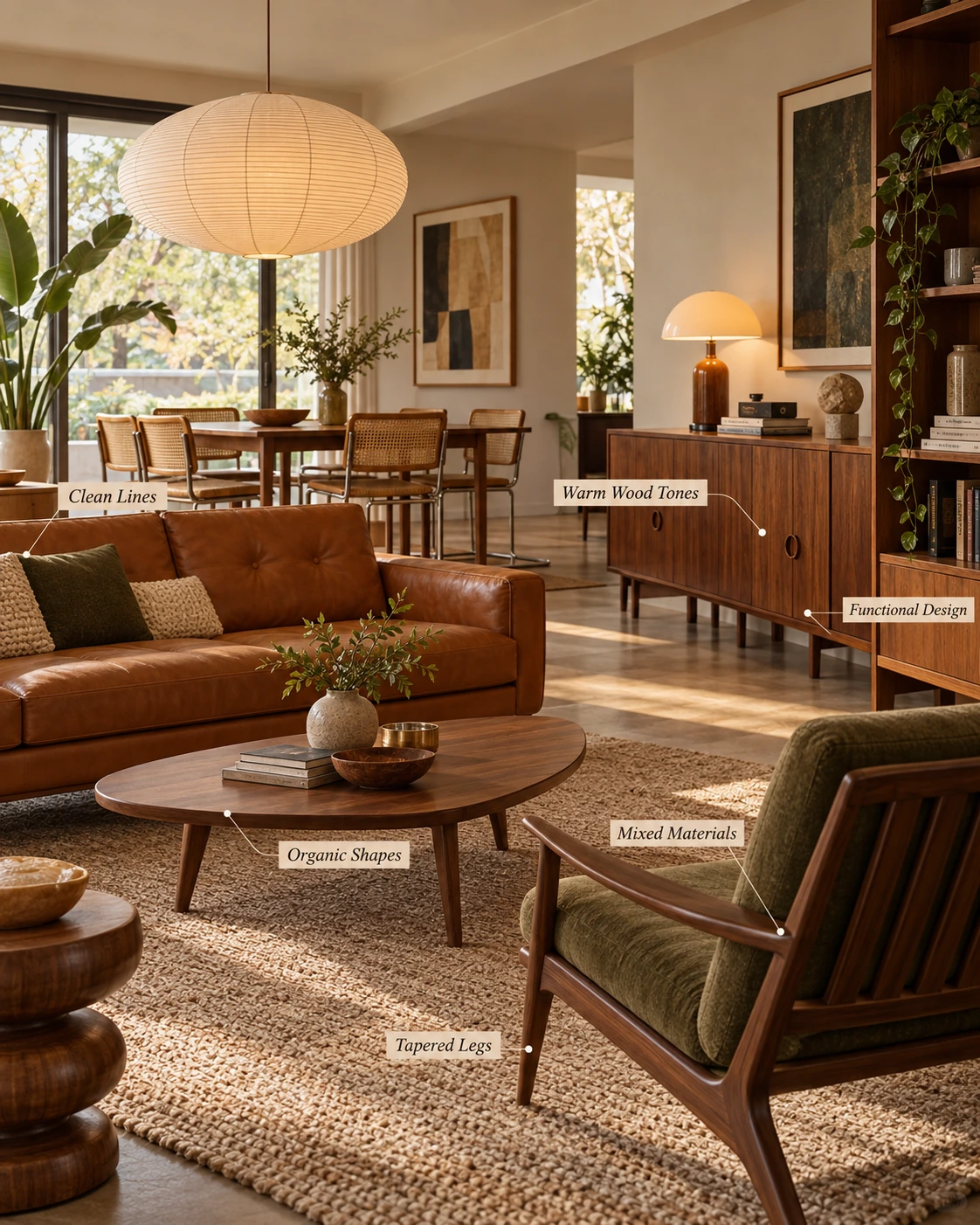
Mid-century interiors can look quite different from one another, but six design principles appear repeatedly. Use them as a guide rather than a rigid checklist.
Furniture forms remain legible: rectangular cabinets, slim tables and gently sculpted seating without heavy applied decoration.
Tapered or splayed legs reveal floor space and make storage furniture look lighter, even when it is substantial.
Wood grain, leather, woven textiles and matte finishes bring depth without needing a complicated color scheme.
Curved backs, rounded tables and molded forms create contrast with flat cabinet fronts and architectural lines.
Plants, windows and uncluttered sightlines connect furniture with the room instead of letting it dominate.
Comfortable seats, accessible storage and useful lighting matter as much as the furniture's appearance.
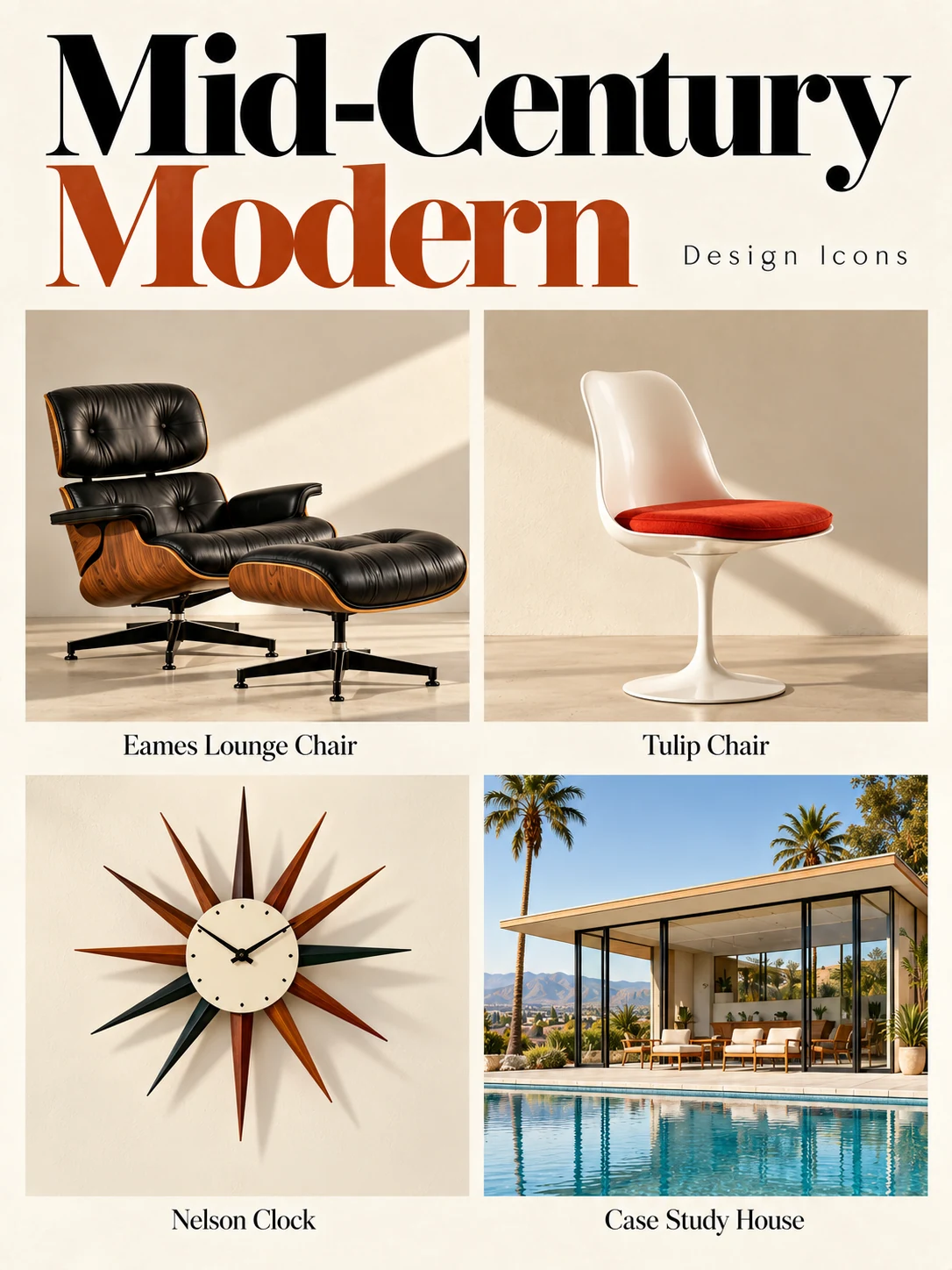
Classic mid-century design is remembered for objects that made structure part of their visual identity: molded lounge chairs, sculptural pedestal seating, starburst clocks and furniture that appears to float on slim supports. Well-known references include the Eames Lounge Chair and Tulip Chair, but a successful room does not require branded design classics.
For a more practical shopping list, look for a curved wood chair, low-profile sofa, rounded coffee table and sculptural lamp. These four pieces create the style's recognizable balance of soft forms and purposeful construction. When buying vintage-inspired furniture, assess how it sits, joins and wears—not only how closely it resembles a famous silhouette.
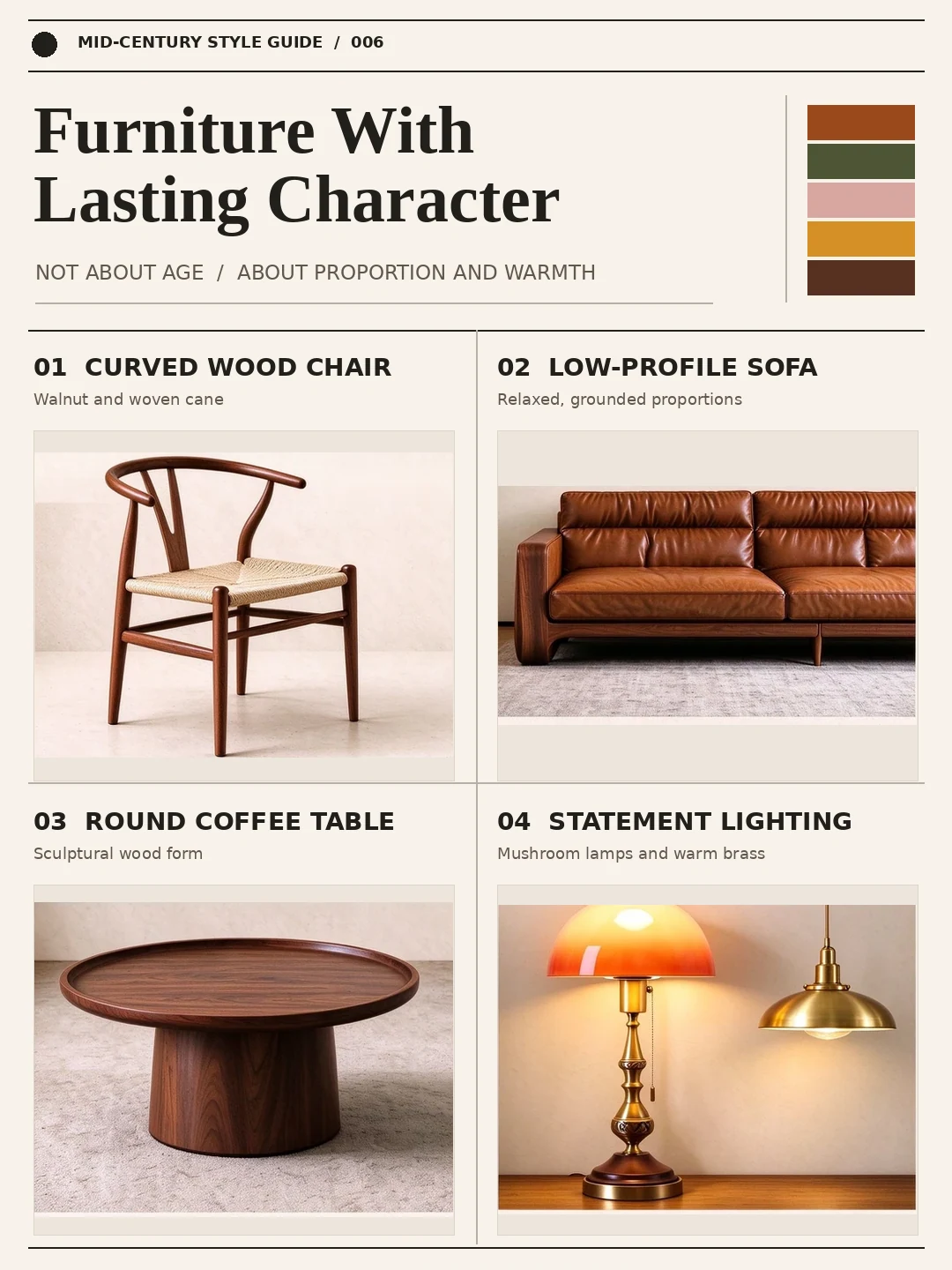
Walnut and teak-inspired tones are closely associated with the style, but oak, ash and carefully selected veneers can also work. For wide cabinet panels, a stable engineered core with a matched wood veneer may be a sensible construction choice. Solid wood can be valuable for shaped legs, edges and structural components. Compare options in Ratahome's wood selection guide.
Leather develops character with use, while bouclé, woven linen and textured upholstery soften hard wood surfaces. A satin or matte wood finish often lets the grain remain visible. Curved edges should feel intentional and smooth to the touch, not sharp or poorly finished.
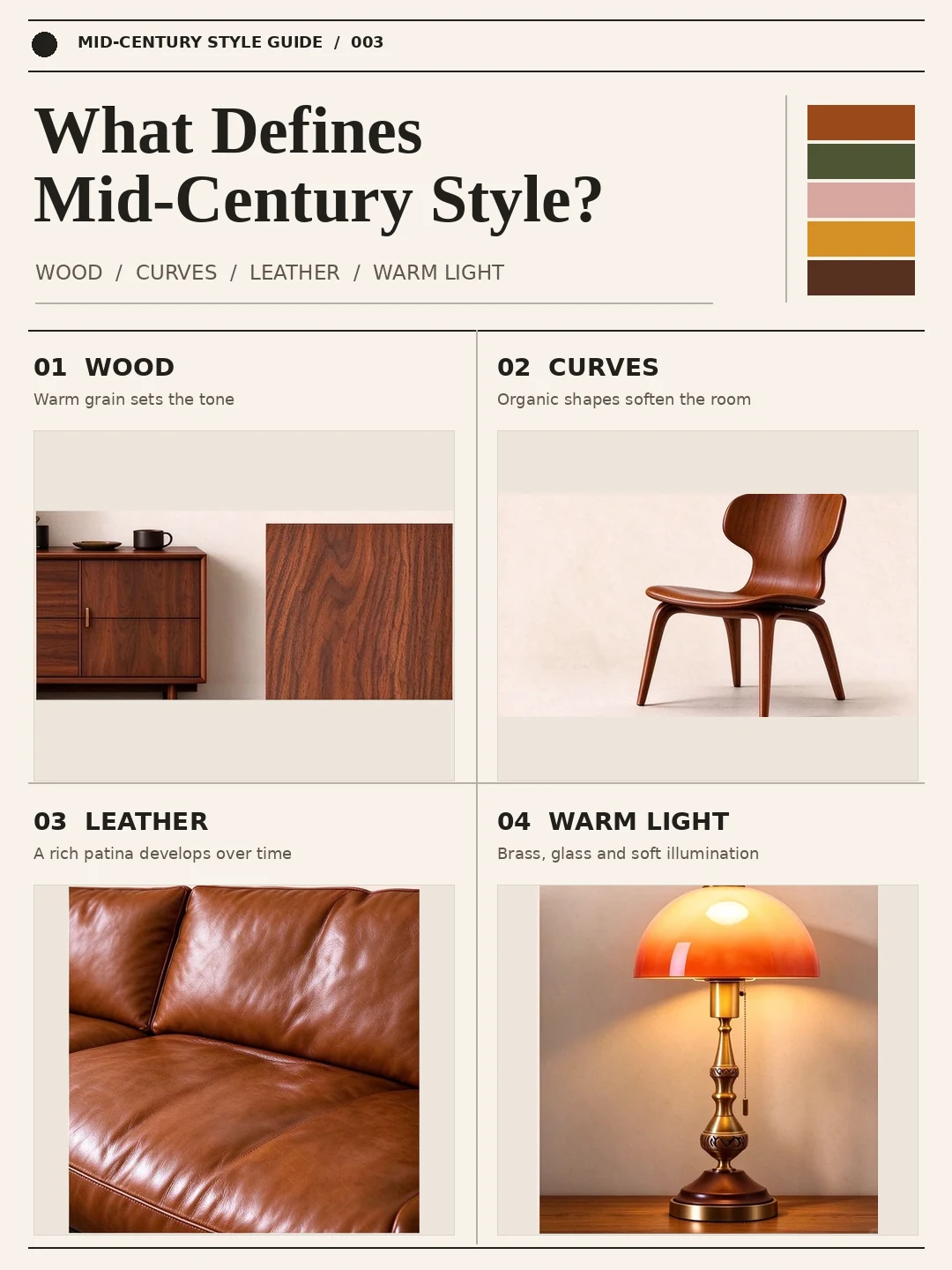
Begin with cream, warm white, tobacco brown or muted olive. Then add ochre, mustard, burnt orange or terracotta through one substantial piece or a few smaller accents. The most successful palettes combine a calm base with one confident color and enough texture to prevent the room from feeling flat.
| Element | Good design direction | What to verify |
|---|---|---|
| Wood cabinetry | Consistent grain, low-profile fronts | Veneer matching, edge finish, door alignment |
| Seating | Low, tailored profiles; tactile upholstery | Frame, cushion support, fabric or leather quality |
| Tables | Rounded edges, sculpted legs | Stability, finish protection, joint strength |
| Lighting | Globe, dome or sculptural shades | Scale, glare, electrical suitability |
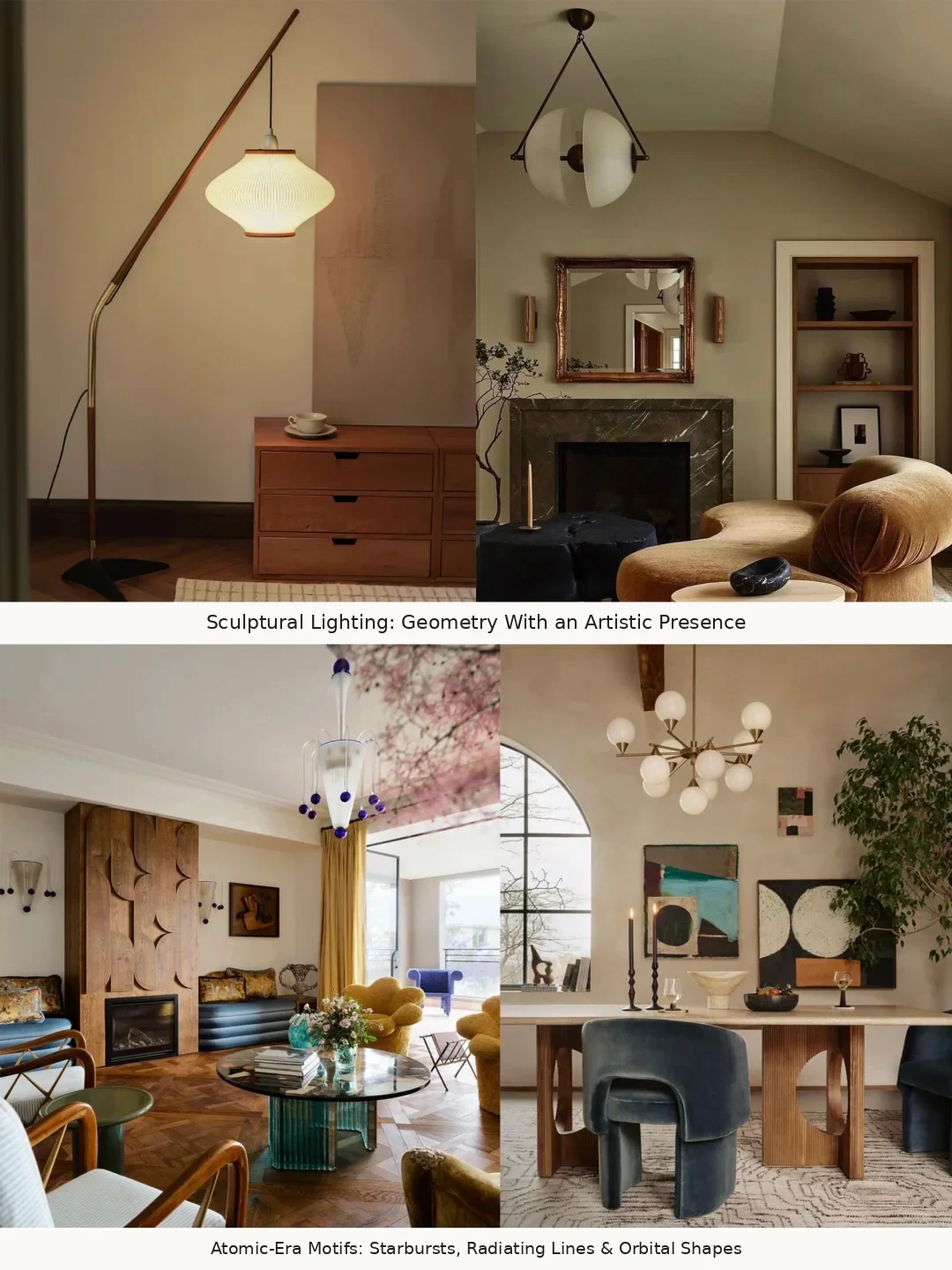
Lighting can establish a mid-century mood even in a room with otherwise simple furniture. Globe pendants, arc floor lamps, dome shades and warm metal details all add sculptural interest. Instead of placing multiple statement fixtures in one sightline, choose one focal light and let smaller lamps provide a softer secondary layer.
Decorative motifs from the atomic era—starbursts, radiating lines, orbital forms and playful geometric artwork—can introduce energy without overwhelming the room. A single expressive light or piece of art is usually more effective than repeating the motif on every surface.
A living room should feel collected rather than staged. Start with a sofa that suits the scale of the room, add a rounded or low wood coffee table and introduce one characterful lounge chair. A sideboard can provide storage while reinforcing the horizontal lines typical of the style.
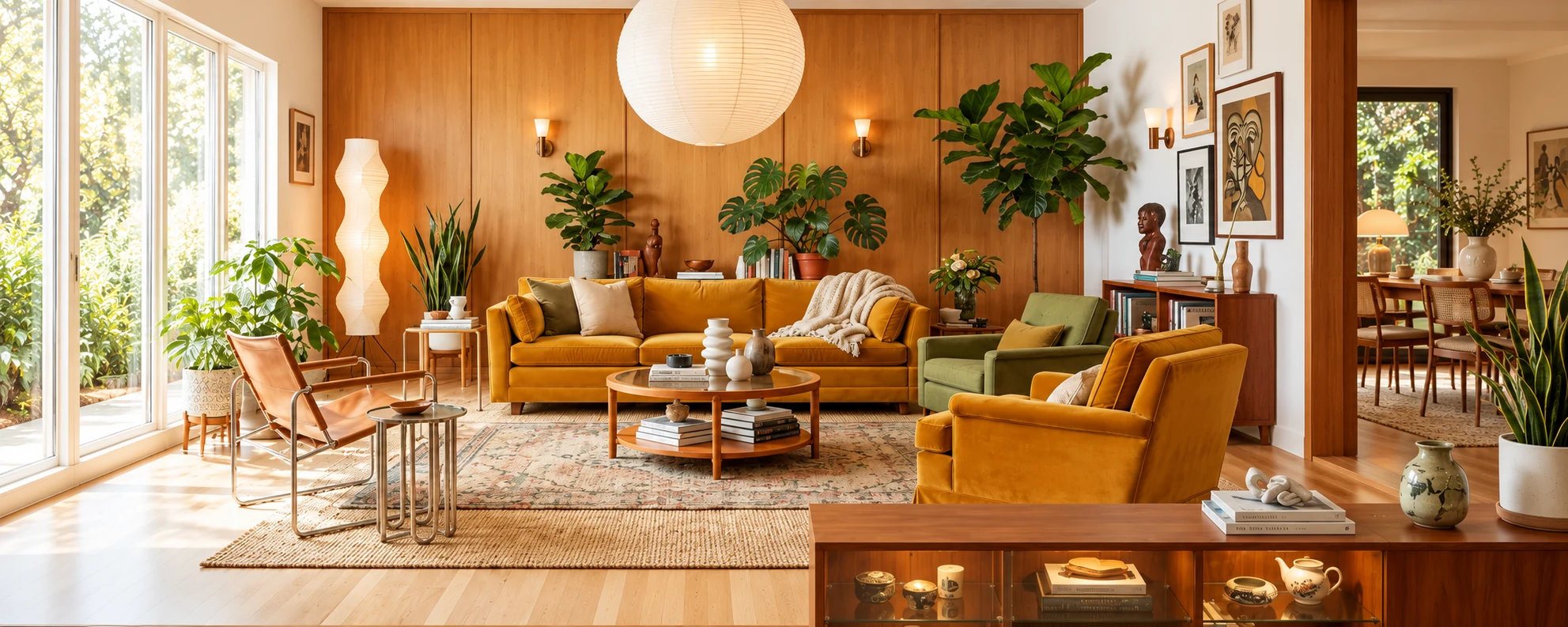
The following rooms demonstrate related approaches to mid-century styling. Mustard and amber upholstery work with warm timber, while low tables, paper lanterns and leafy plants soften the space. Notice how each room has a different personality without abandoning the same underlying design principles.
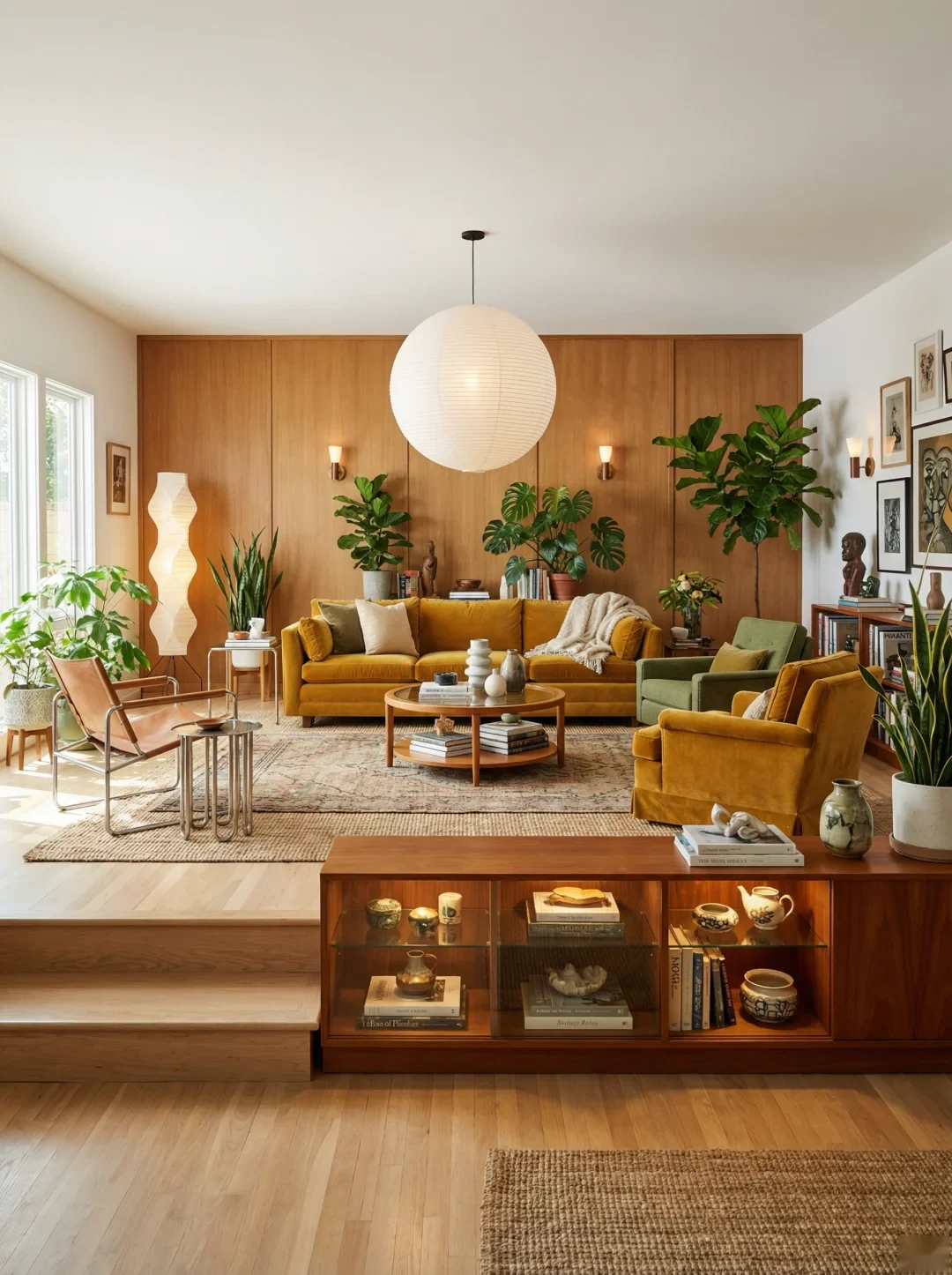
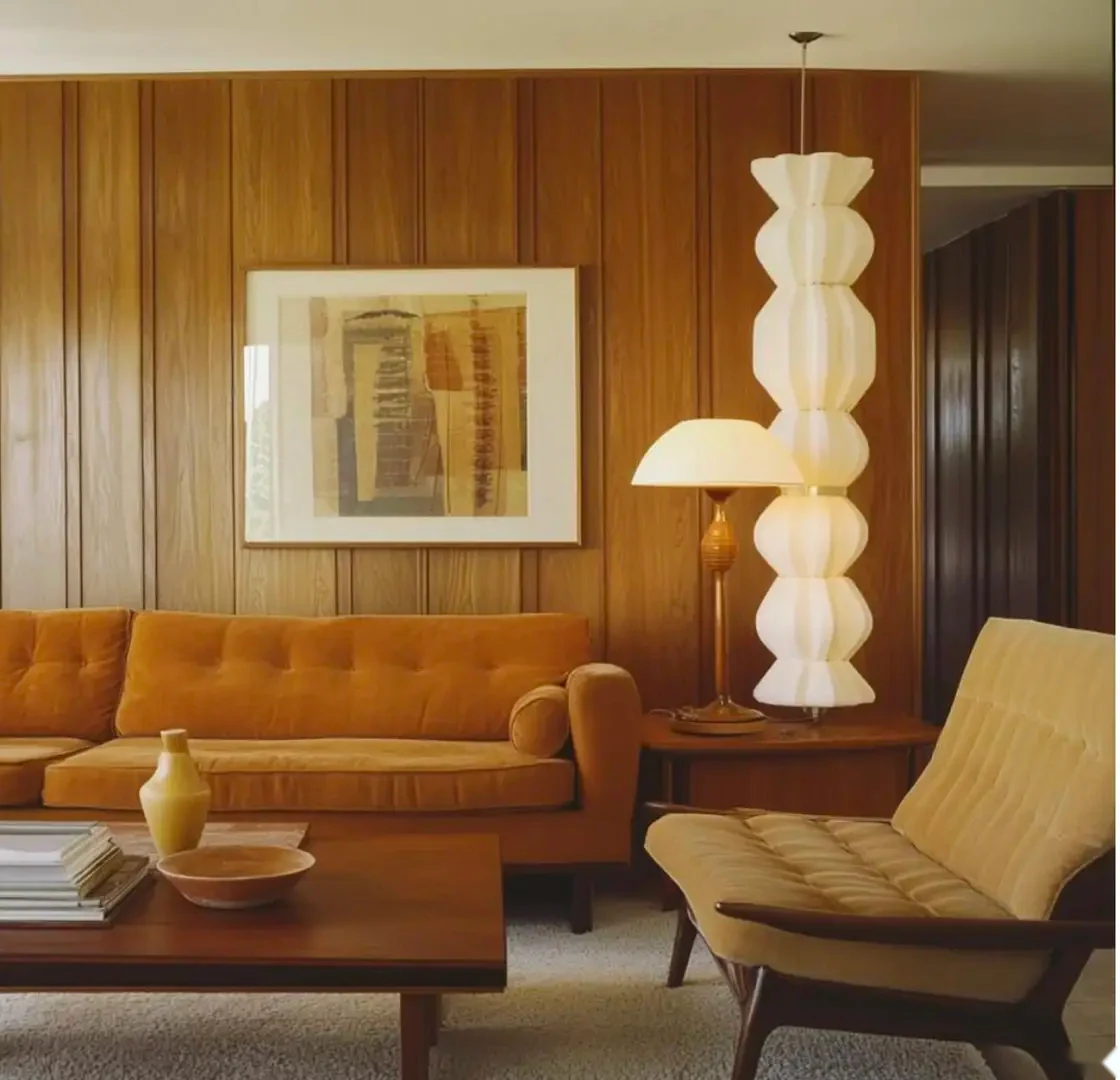
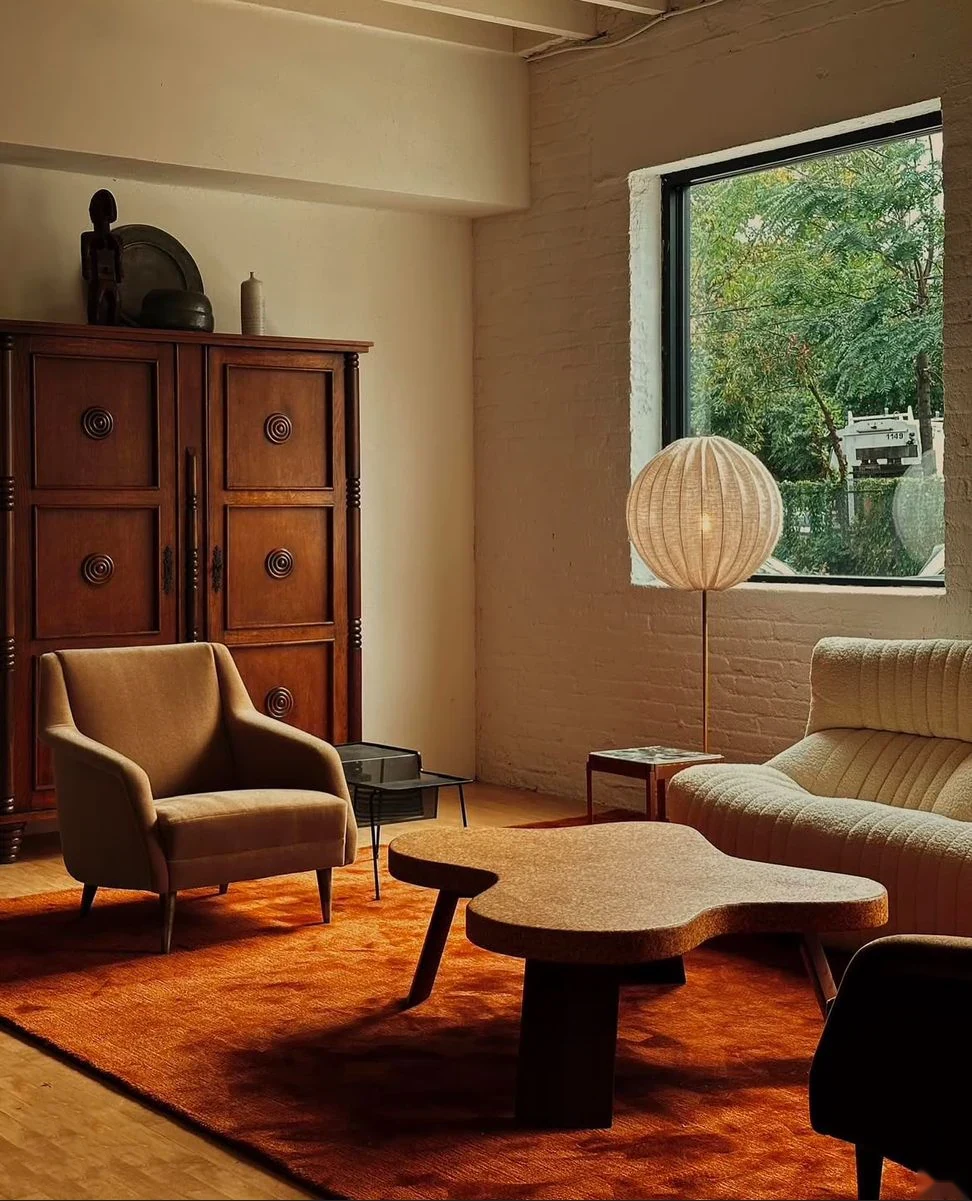
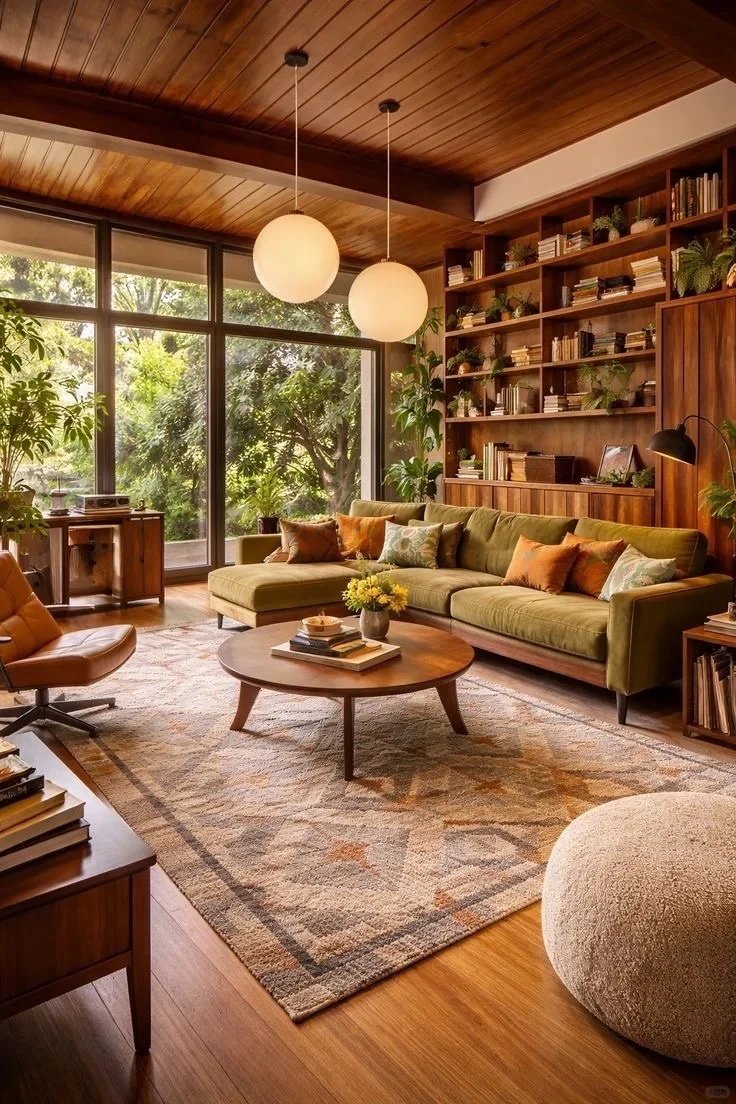
Leave comfortable walking paths around the coffee table and choose a table height that works with the sofa seat. In smaller rooms, raised furniture legs and lighter chair frames can keep the space from feeling crowded. For construction details, read our sofa construction guide.
Dining rooms benefit from the same balance of structure and softness. A simple wood table can be paired with gently curved chair backs, slim legs and a pendant that defines the dining zone. In a compact room, an oval or round table can improve circulation compared with a large rectangular one.
The two photographs below come from the same original room series and remain together in their original order. They illustrate how furniture scale, repeated wood tones and artwork change the character of a dining space.
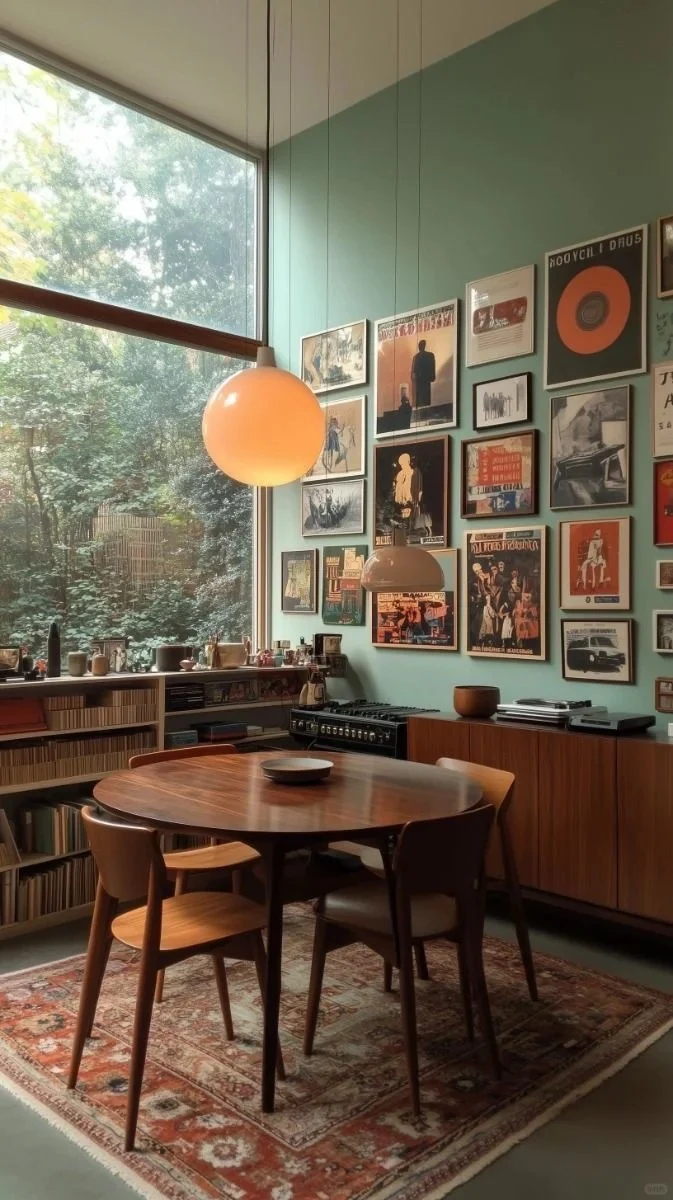
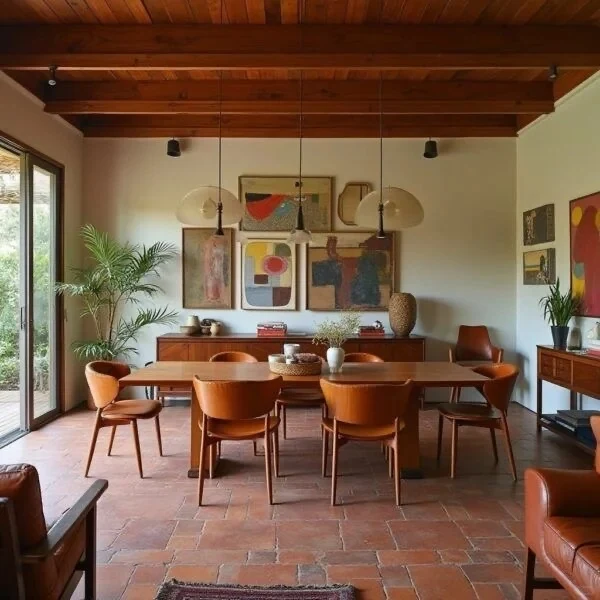
Each chair should sit flat, resist racking when gently moved and support the back comfortably. Examine the joint between seat, leg and backrest, then check upholstery tension and finish consistency. For custom orders, approve a dimensional drawing and finish sample before production.
In a mid-century-inspired kitchen, horizontal cabinetry, simple hardware and uncluttered countertops usually do more than elaborate detailing. Warm timber and strong material contrasts are common, but the style can also be interpreted with contemporary stainless steel or other durable surfaces.
The two examples below show different directions. The first uses warm wood cabinetry, green tile and daylight; the second brings a mustard-colored lounge into an open-plan kitchen with contemporary stainless-steel fronts. Both illustrate how mid-century materials and furniture can coexist with newer construction.
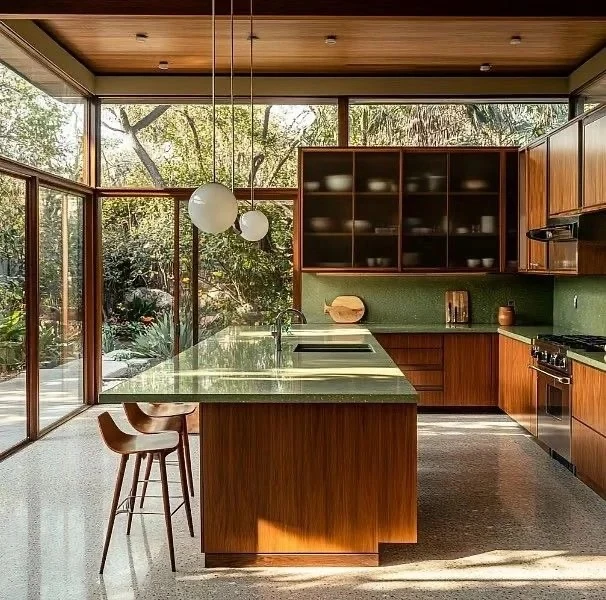
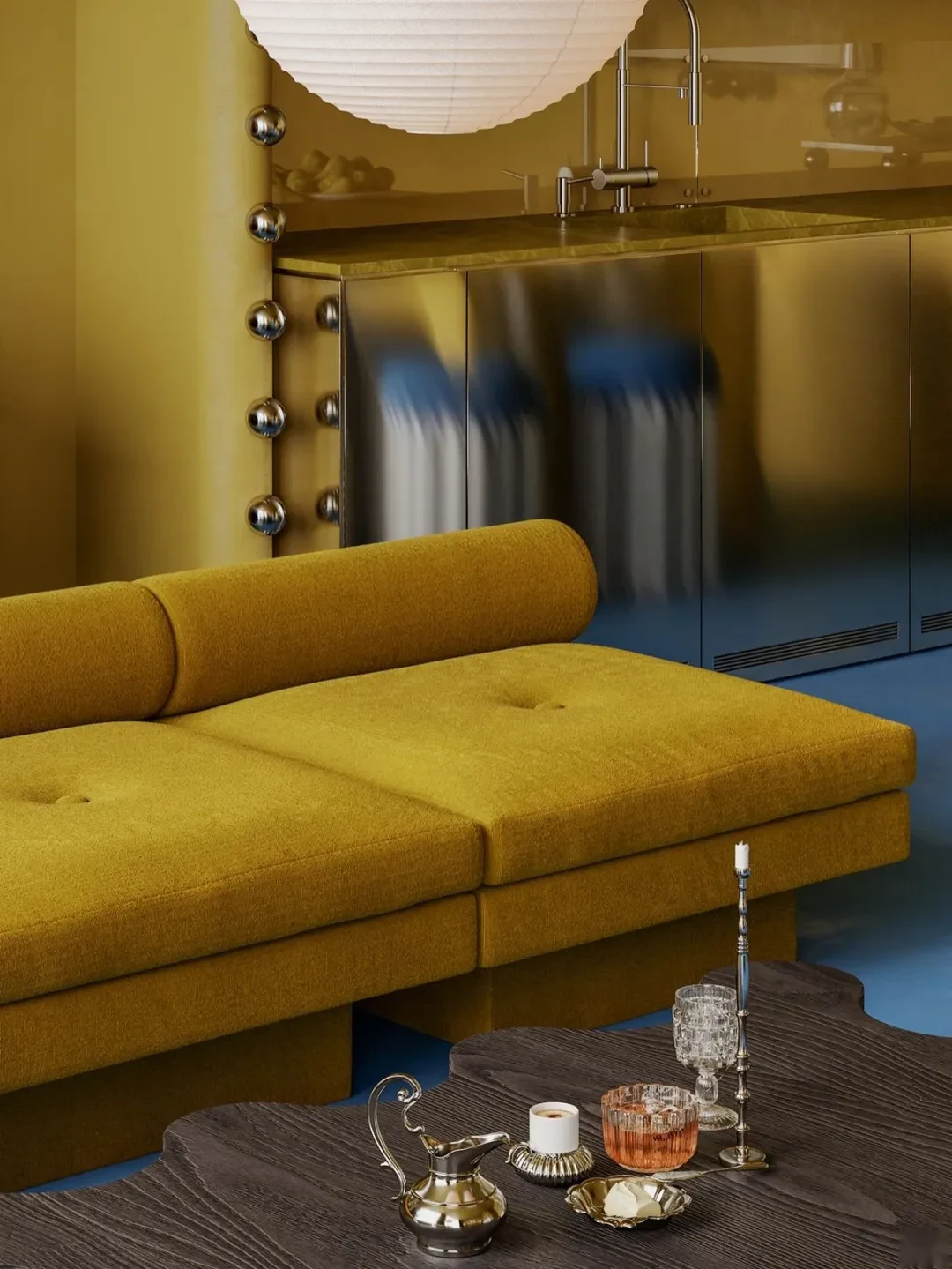
Confirm appliance clearances, drawer access, moisture protection, hinge quality and finish durability before committing to cabinetry. Visual style should never compromise the kitchen's day-to-day function. See Ratahome's joinery guide for related craftsmanship principles.
The design vocabulary extends to bathrooms through furniture-style vanities, green tile, warm wood, globe lighting, rounded mirrors and restrained fittings. A floating cabinet can create the same lightness as a raised mid-century sideboard, while a strong accent color adds character.
Two contrasting examples show how the style translates into practical vanities: one uses green tile and generous daylight, while the other pairs a simple cabinet silhouette with warm architectural finishes.
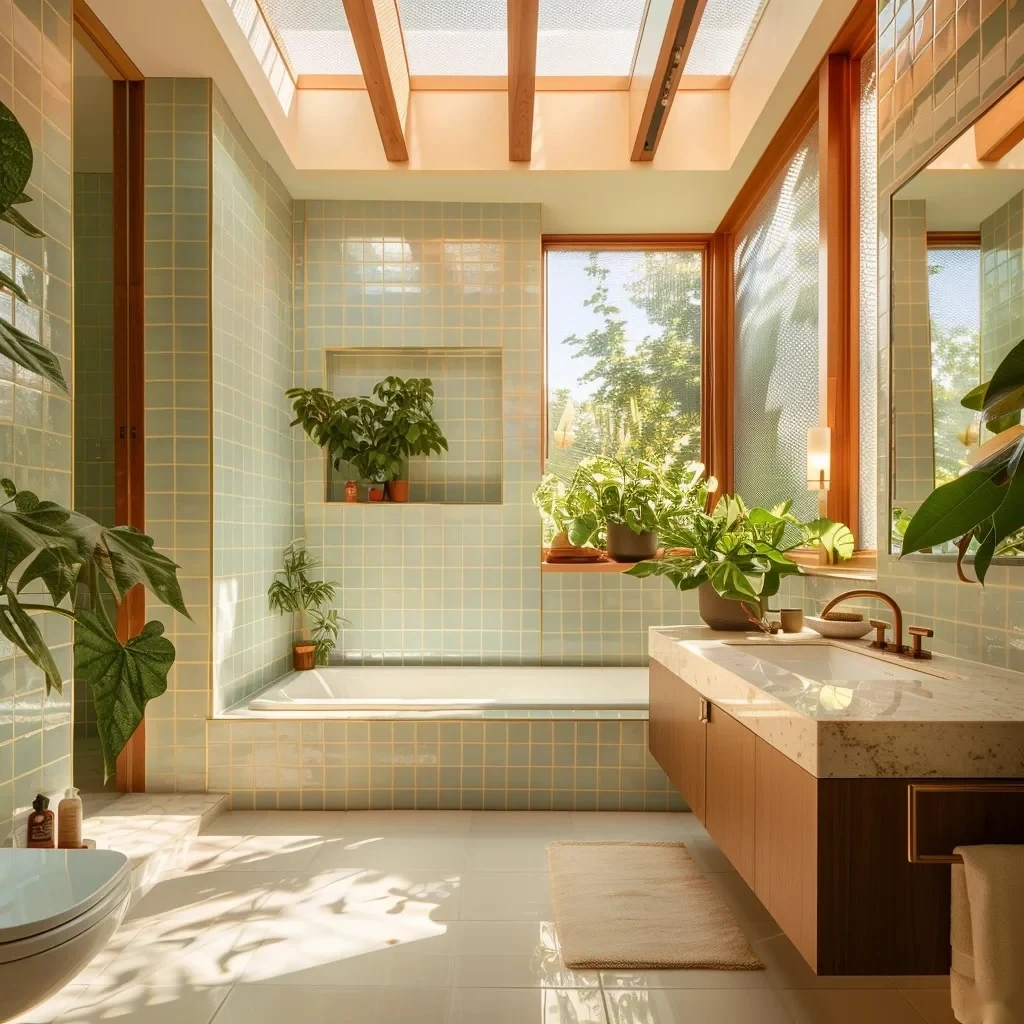
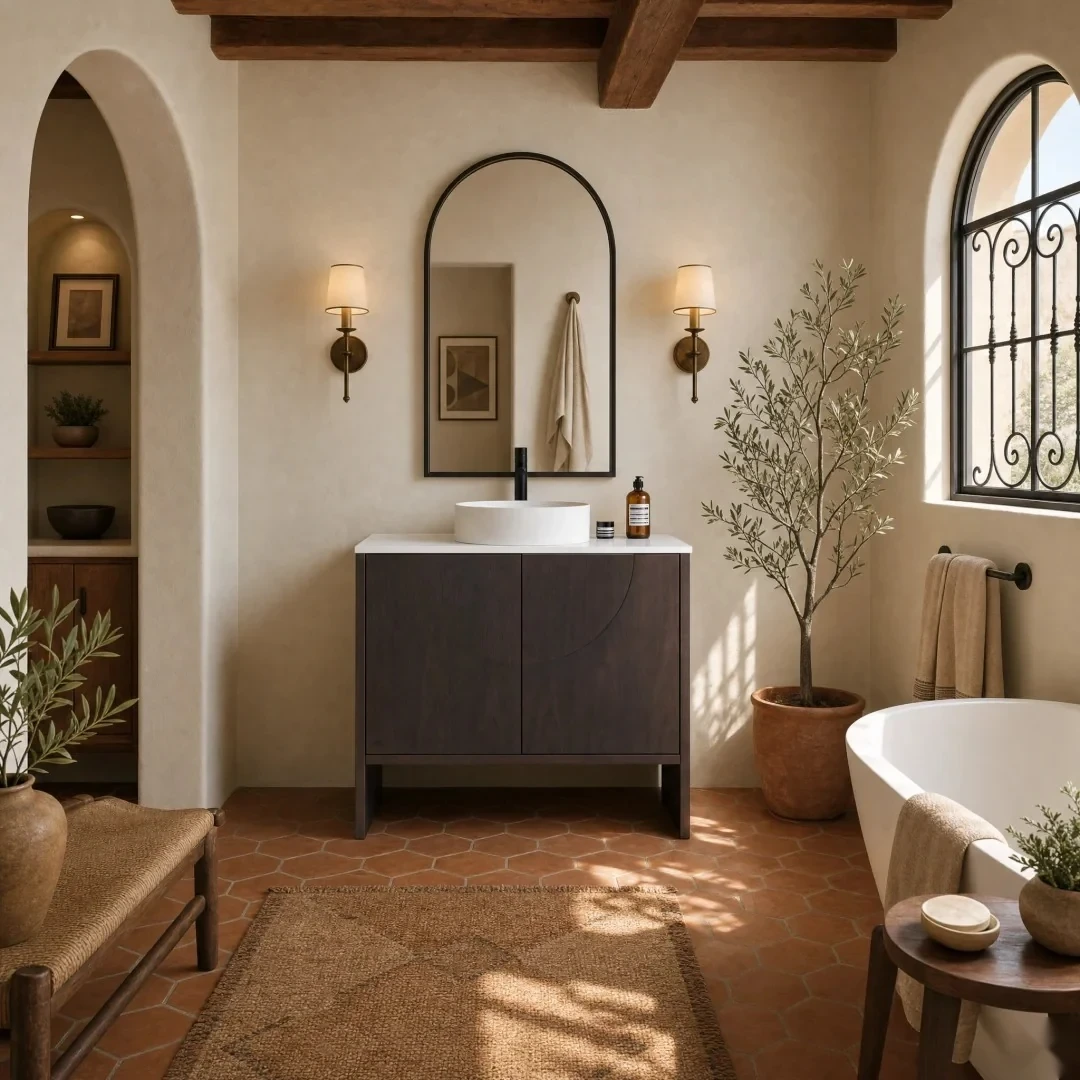
For vanities, specify moisture-appropriate substrates, protected panel edges and corrosion-resistant hardware. An attractive timber appearance alone does not guarantee bathroom suitability.
A convincing silhouette is only the beginning. Whether buying ready-made pieces or commissioning custom furniture, examine the construction details that determine comfort, durability and long-term appearance.
Check whether the frame feels stable, whether legs and stretchers are securely joined and whether the finish is smooth at edges and corners. Ask about solid wood versus veneer construction; a well-executed veneer is not inherently lower quality, but its core, edge treatment and grain matching should be appropriate.
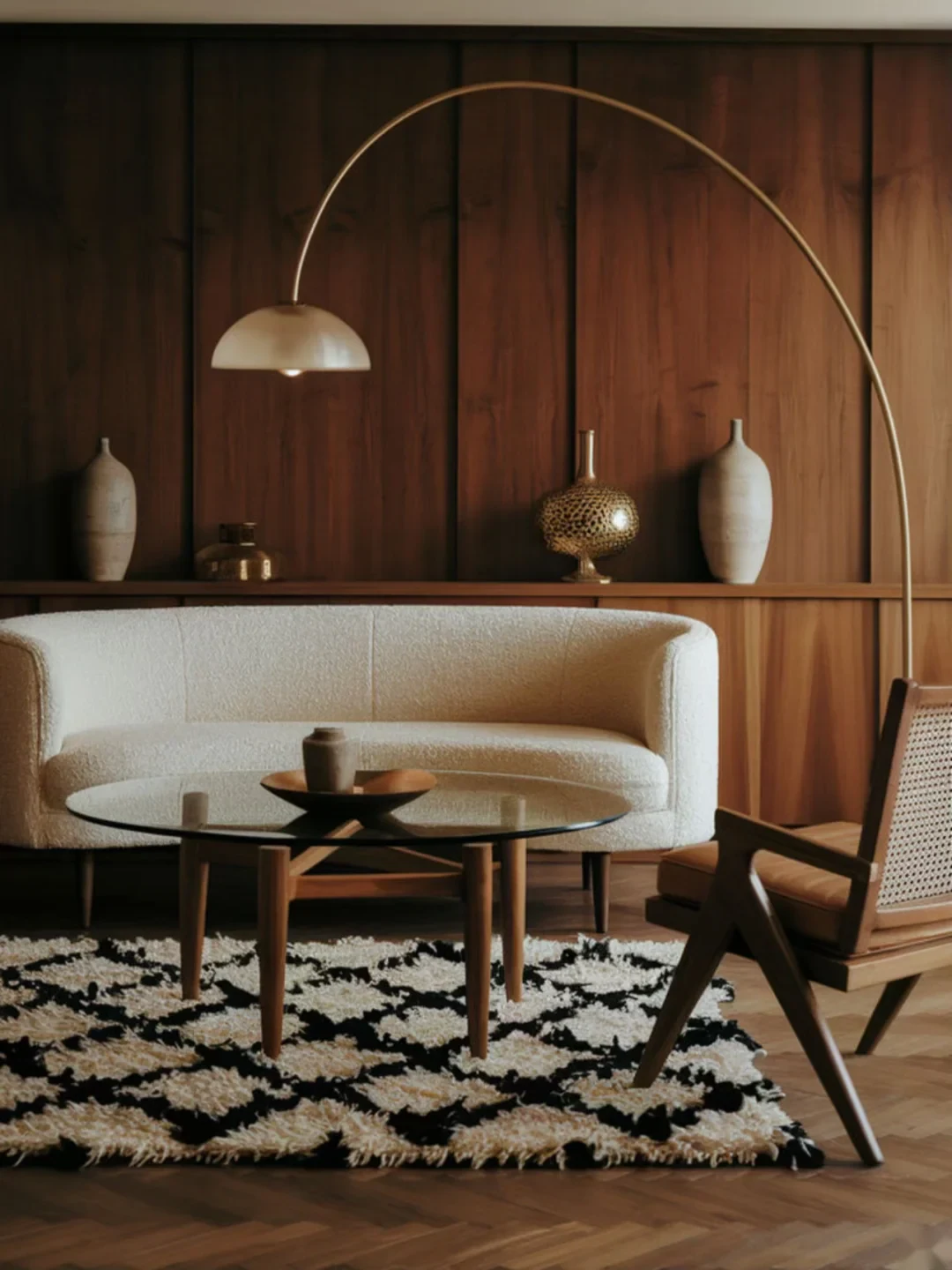
Sit on a chair for more than a few seconds, check the back angle and look for unwanted flex. On cabinets, open each door and drawer fully to check alignment, smooth travel and consistent gaps. Examine fabric seams, leather surfaces and cushion rebound on upholstered pieces.
For made-to-order furniture, request material specifications, finish samples, measured drawings and clear pre-shipment photographs. If a piece is large or delicate, confirm protective packaging and delivery access as early as possible.
For more technical detail, read How furniture joinery works and our wood guide.
Mid-century modern and contemporary interiors can overlap, but they are not identical. Mid-century design refers to a historical design language; contemporary design describes what is current, which can borrow from many periods. Mixing them works best when there is a clear relationship between materials, scale and color.
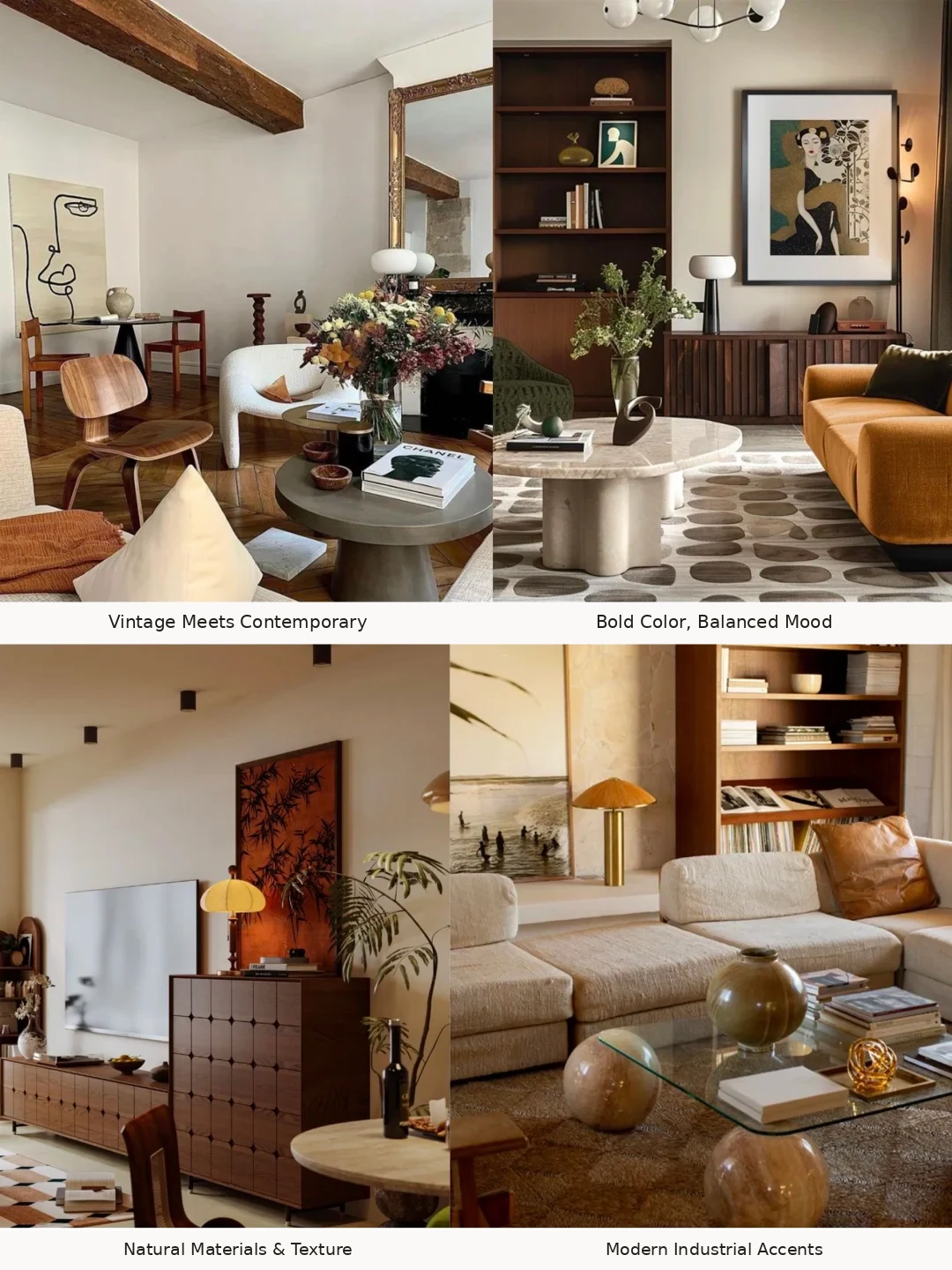
Use the following visual comparison as inspiration: a vintage-shaped chair can sit next to a contemporary stone table; a wood sideboard can work with modern artwork; industrial materials can provide a crisp counterpoint to soft textiles. Keep one dominant material family to make the mixture feel deliberate.
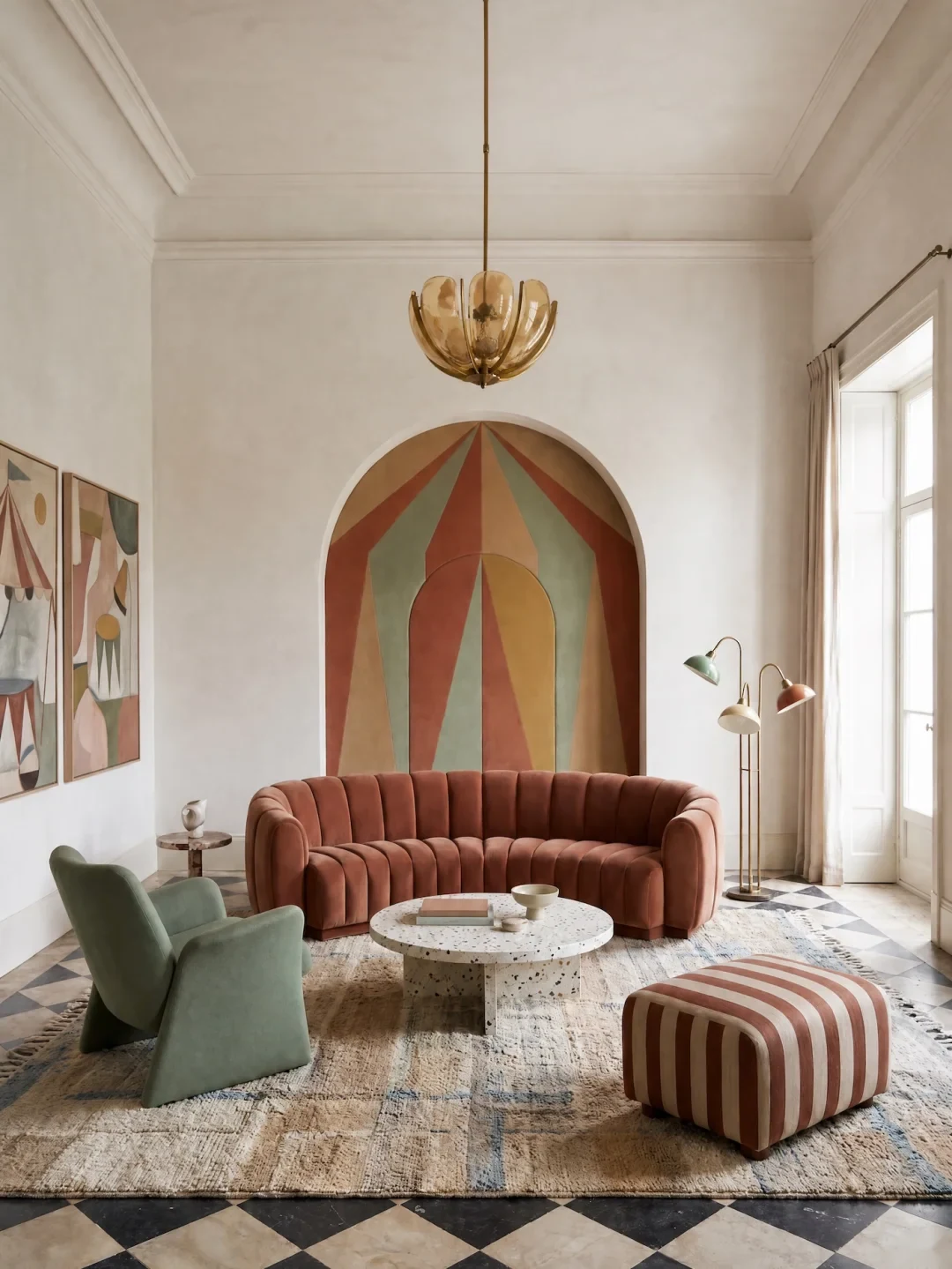
A rounded velvet sofa, striped ottoman or terrazzo table can echo mid-century forms without pretending to be a vintage original. The room below is a playful, modern interpretation rather than a strictly period-authentic interior.
Mid-century modern refers to a recognizable design language from the mid-twentieth century. Modern furniture is a broader term that can describe several design movements or simply furniture with a current, uncluttered appearance.
Walnut and teak-inspired finishes are strongly associated with the style. Oak and other woods can also work when the grain, proportions and finish are chosen thoughtfully. The correct construction depends on the piece and how it will be used.
Yes. Furniture with raised legs, compact proportions, light-looking frames and useful storage can suit smaller rooms. Avoid oversized sofas and allow space for comfortable circulation.
No. A few vintage or vintage-inspired shapes can be combined with well-made contemporary furniture. Prioritize coherent materials and proportions over an exact period match.
Prices vary widely according to design rights, materials, craftsmanship and whether a piece is vintage, licensed or newly made. Compare construction quality and long-term suitability rather than appearance alone.
Planning a coordinated furniture package or custom cabinetry? Share your floor plan, inspiration photos and dimensions with Ratahome to discuss materials, finishes and project requirements.
Learn how to create a Scandinavian home with light wood, functional furniture, layered textiles, soft lighting, room-by-room ideas and a…
Read article →Explore modern furniture style, materials, colors, room planning, quality checks and custom furniture tips in this practical design guide.
Read article →Learn how to create a Japandi home with natural wood furniture, warm neutral colors, room-by-room ideas, material tips and a…
Read article →